-
-
-
Idea generator
-
Idea generator
-
Idea generator
-
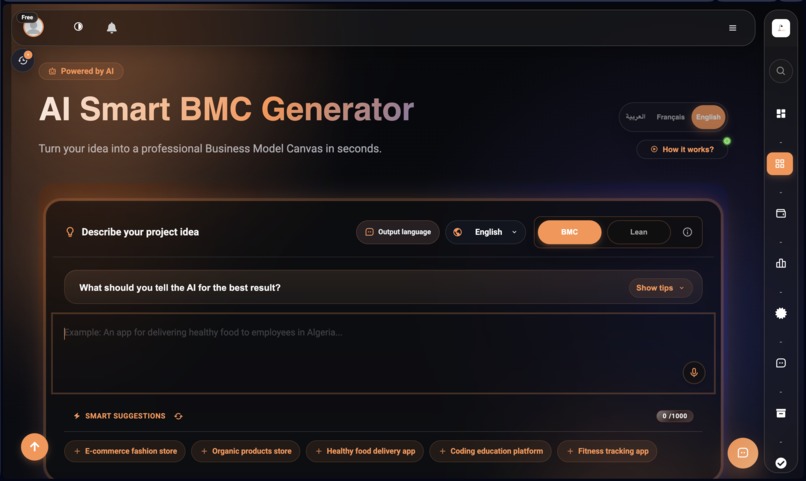
Bmc generator
-
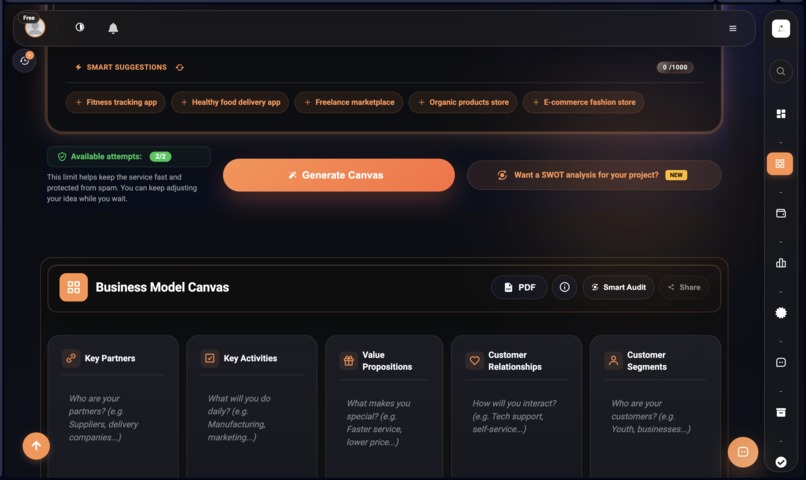
Bmc generator
-
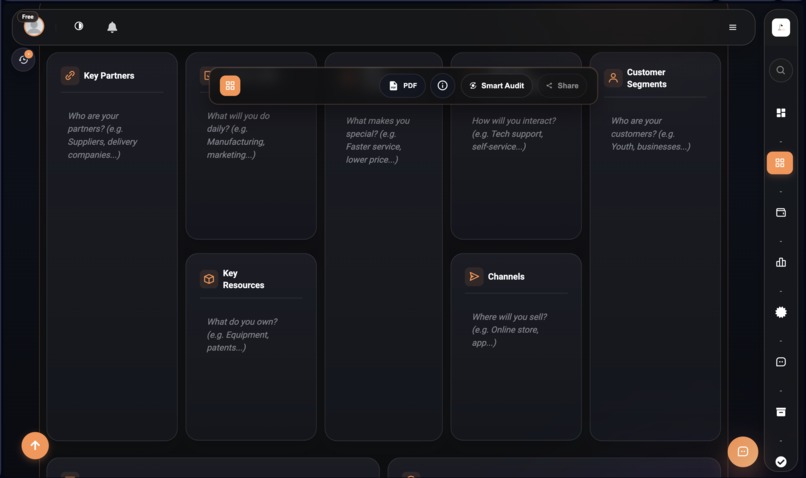
Bmc generator
-
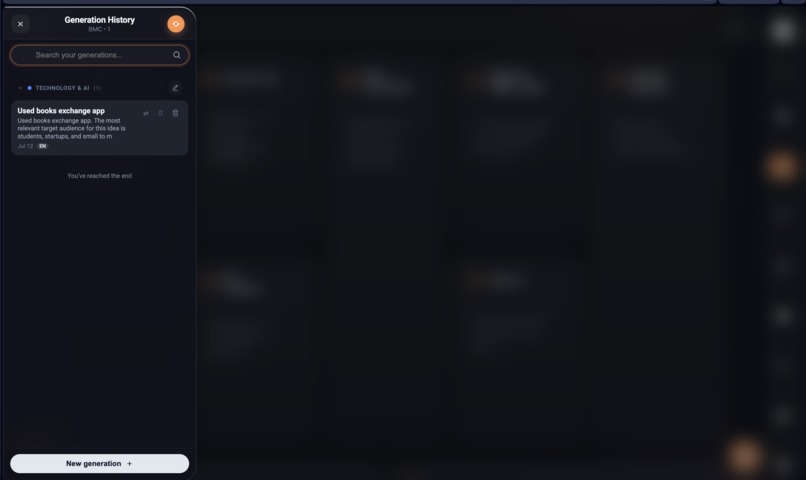
Bmc generator
-
Bmc generator
-
Bmc generator
-
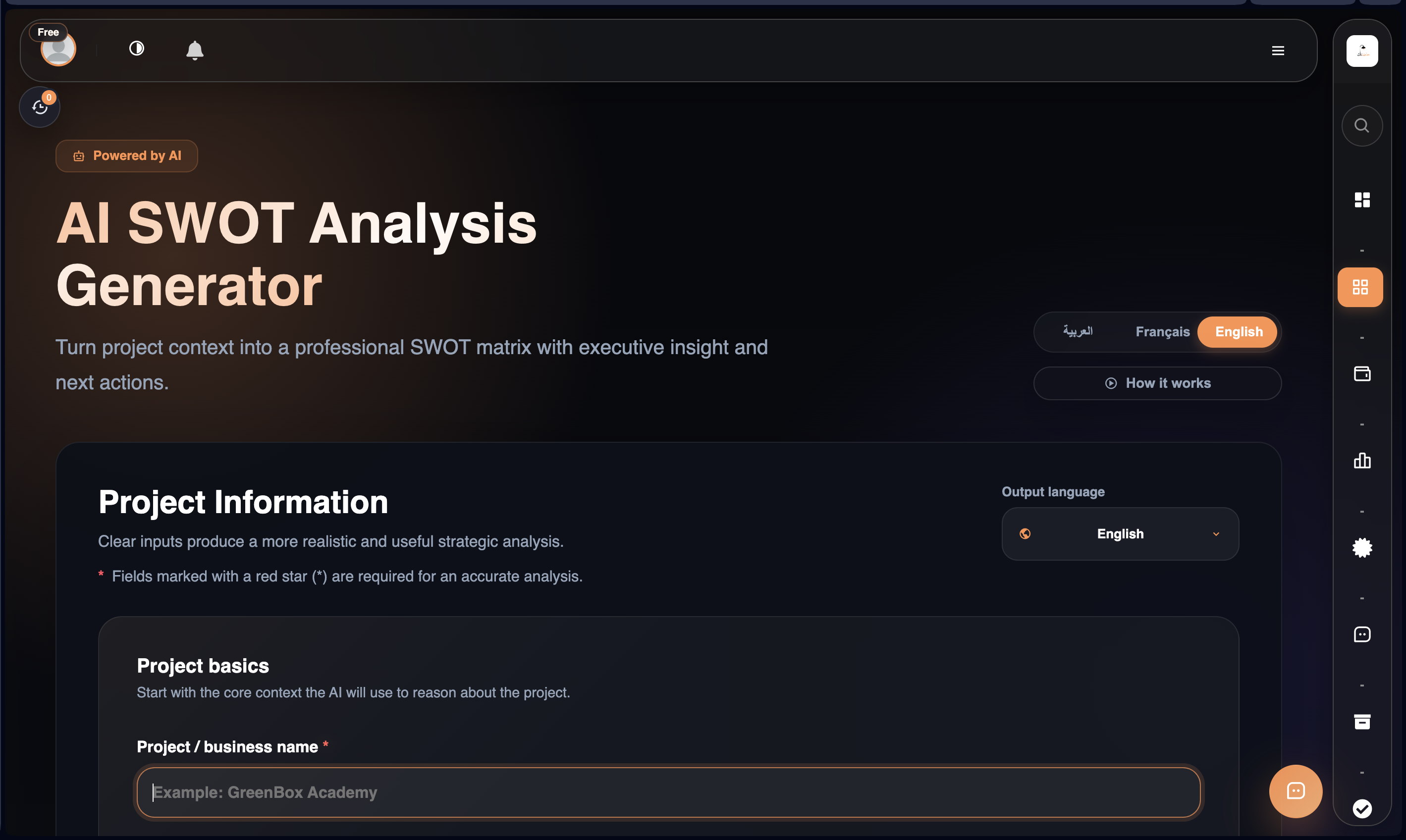
Swot generator
-
Swot generator
-
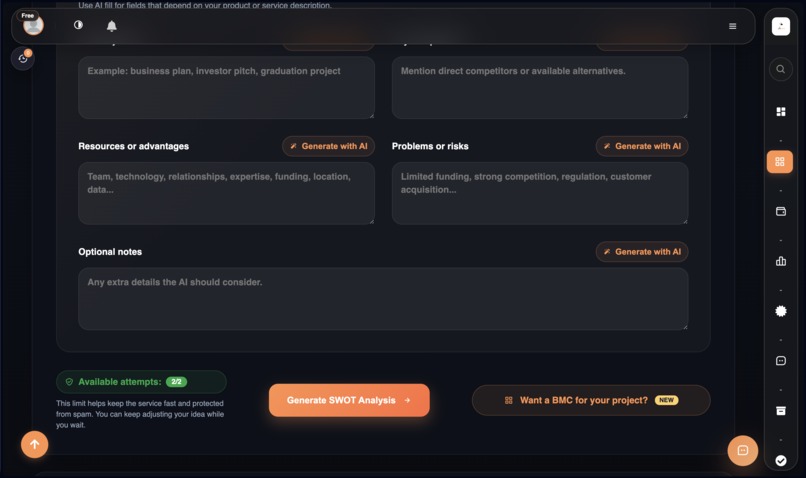
Swot generator
-
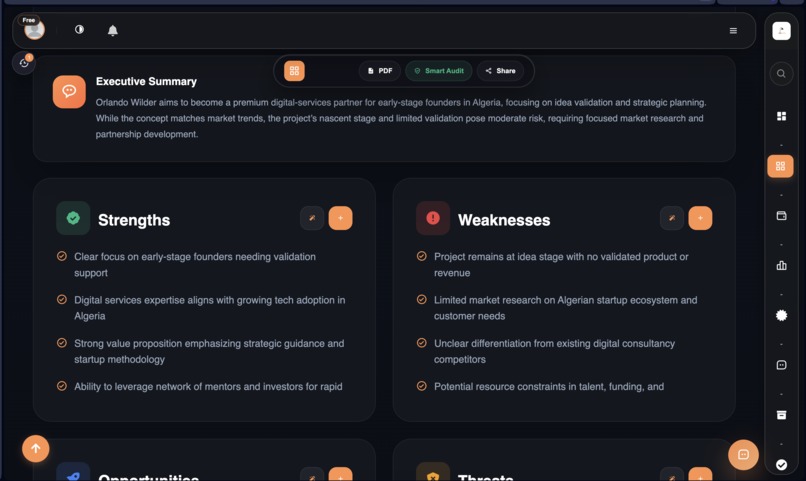
Swot generator
Inspiration
Many students, entrepreneurs, and early-stage founders have promising ideas but struggle to transform them into a clear, structured, and testable business strategy.
The problem is even more visible for Arabic- and French-speaking users, who often have to switch between disconnected tools, translate business terminology manually, and rebuild the same project information several times.
I built Hadinatech AI to create one guided workspace that takes a user from an initial idea to a complete strategic foundation.
What it does
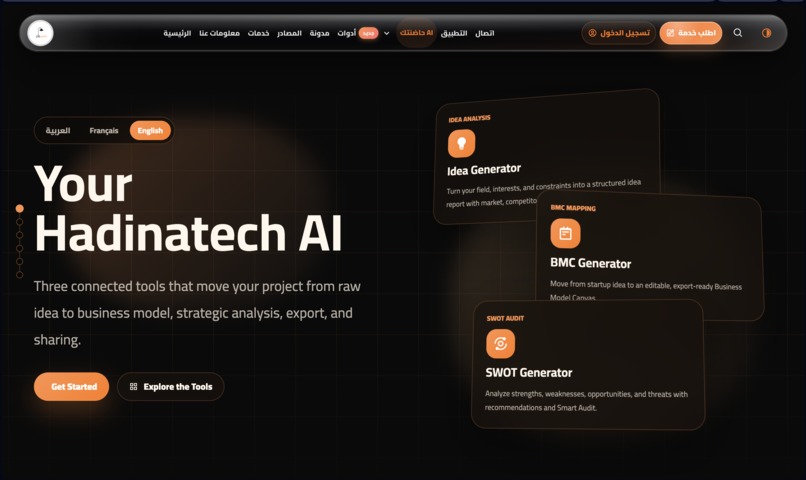
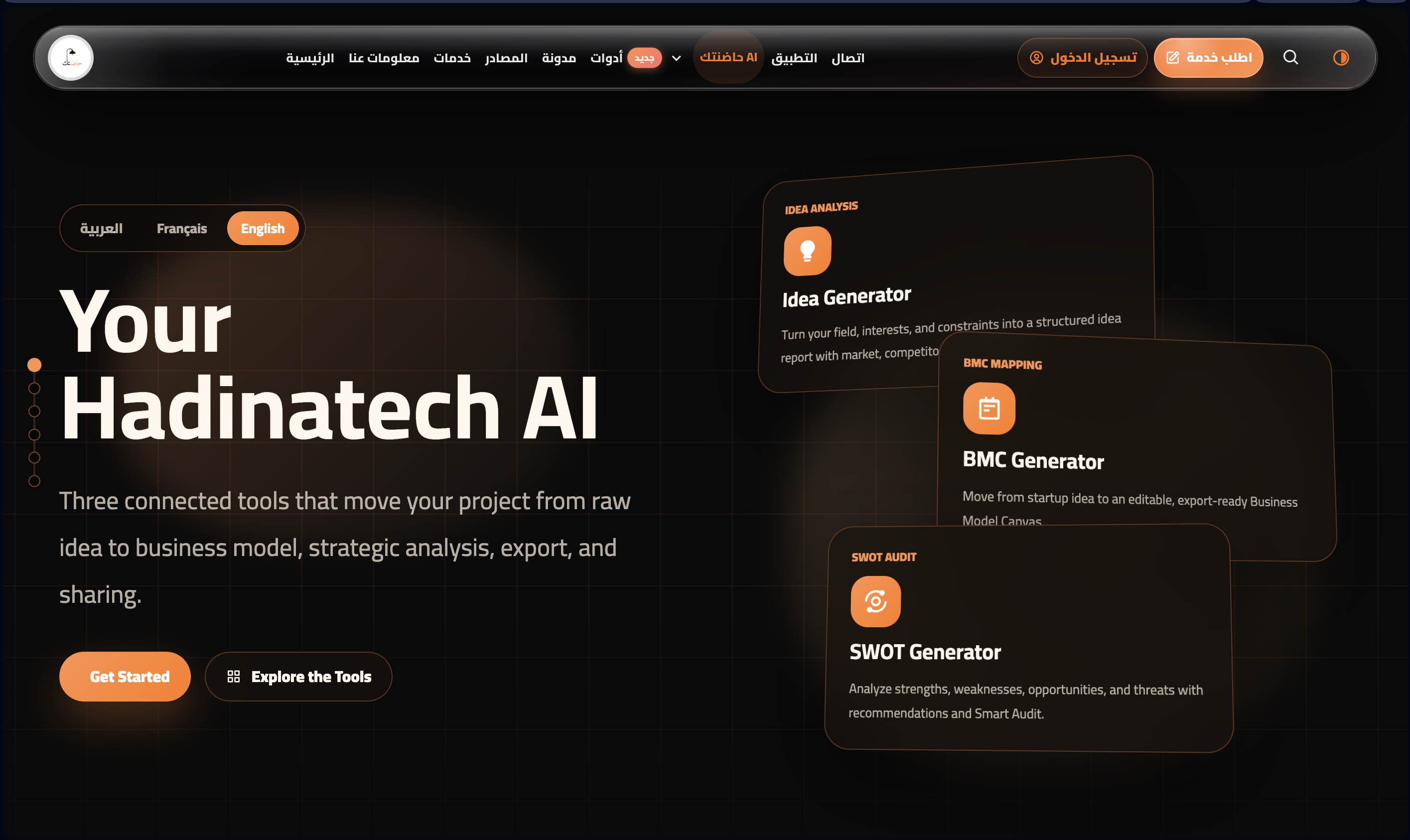
Hadinatech AI connects three intelligent business tools:
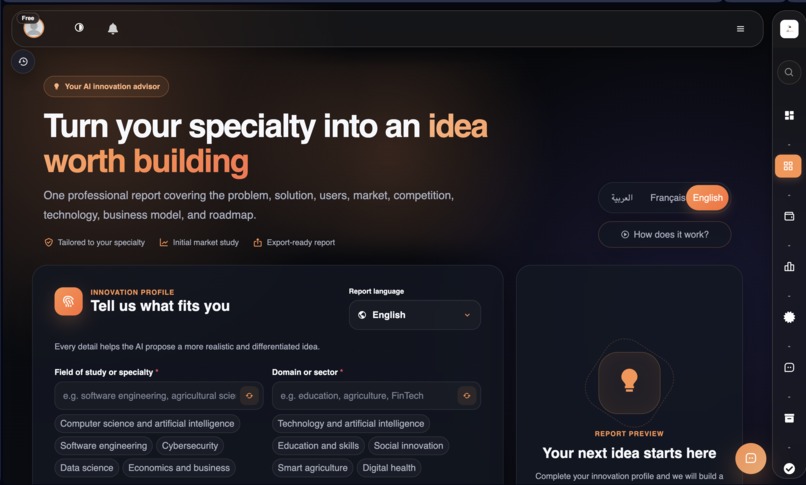
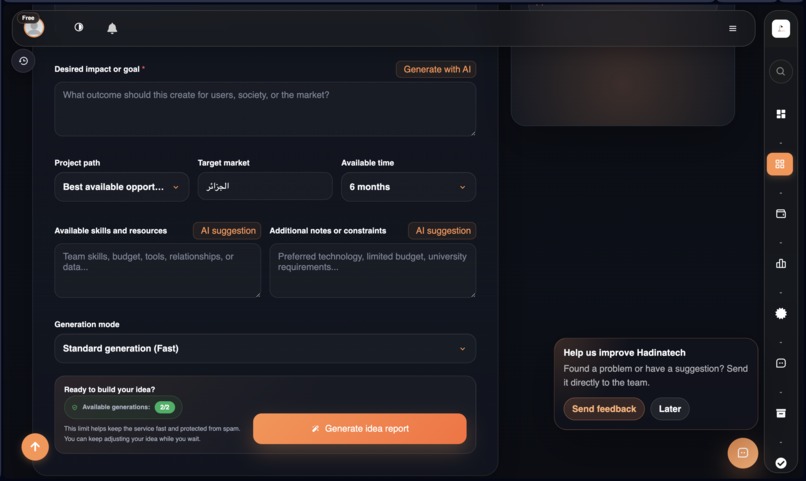
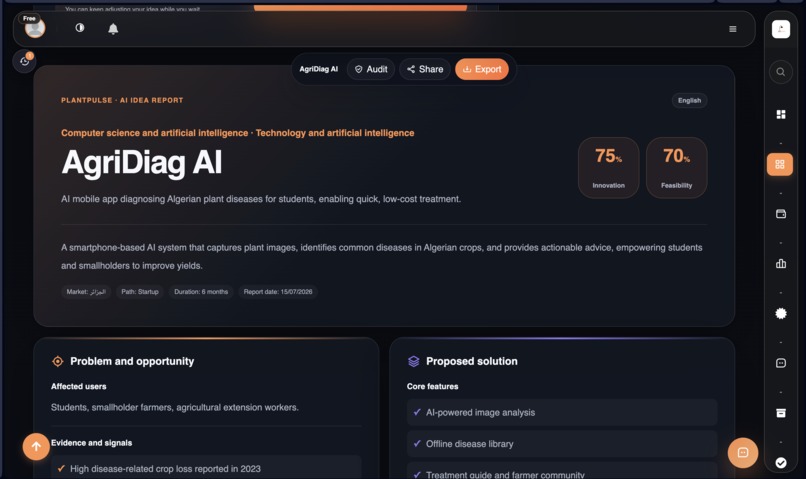
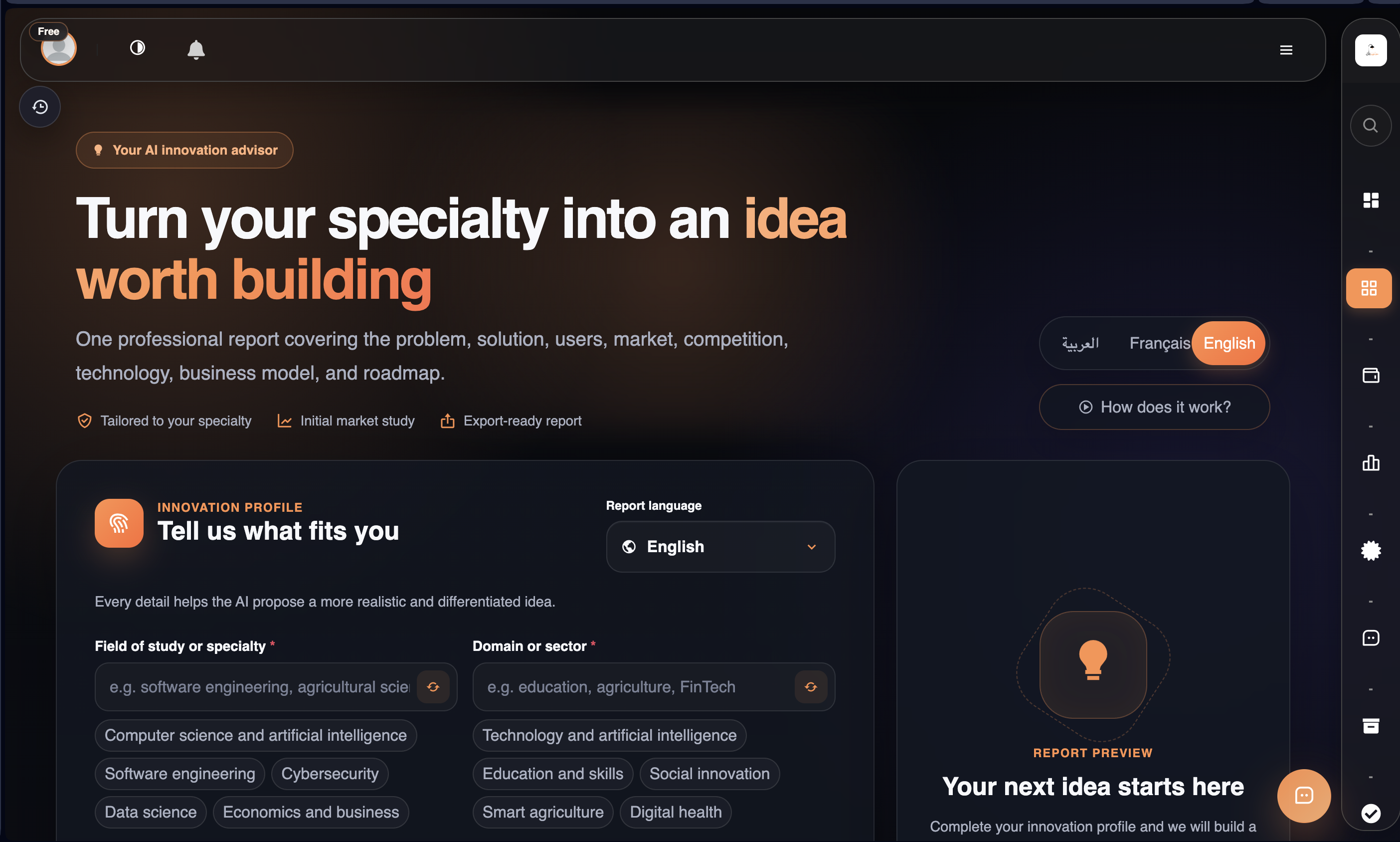
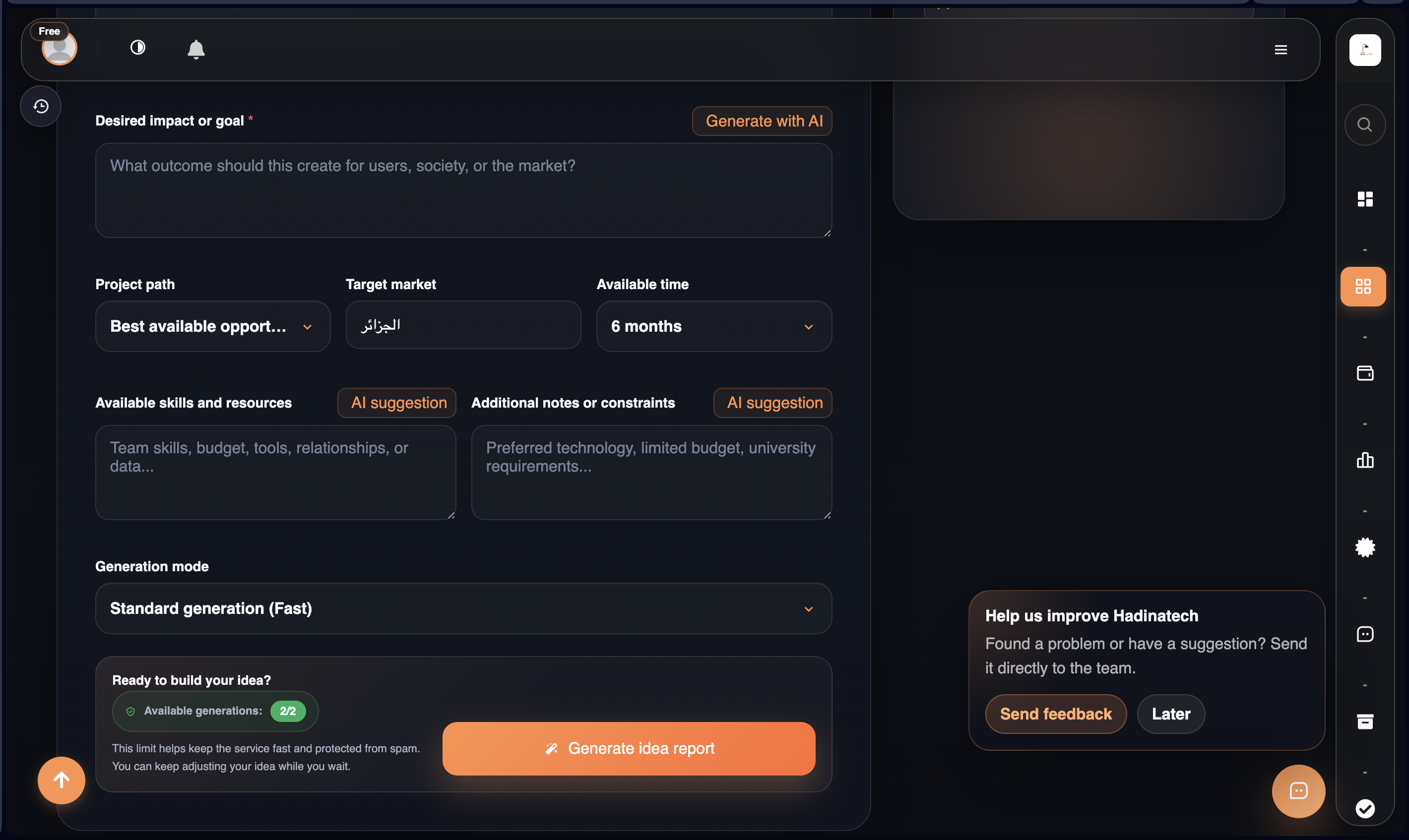
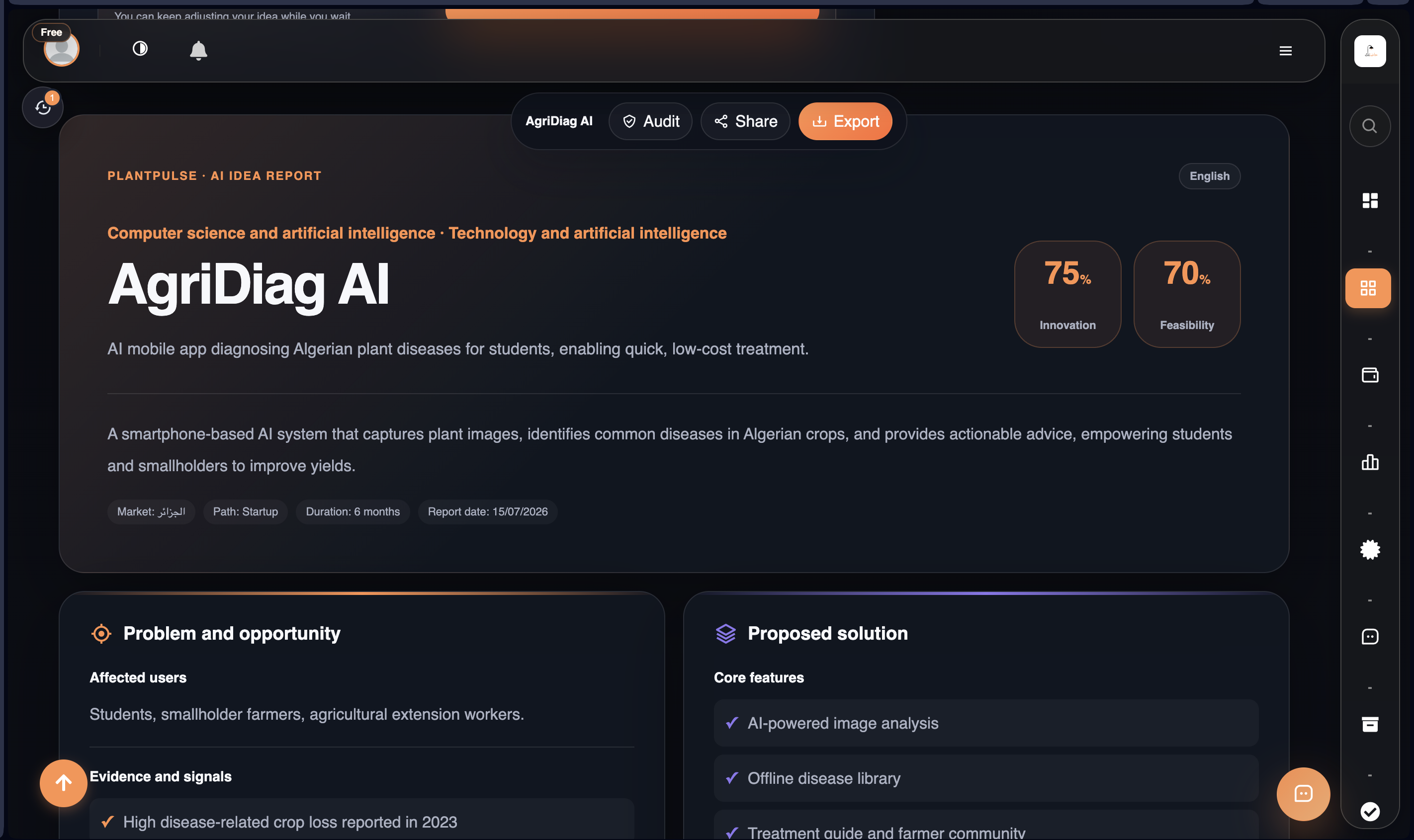
- Idea Generator: transforms the user's interests, skills, available resources, desired impact, market, and constraints into a structured project concept.
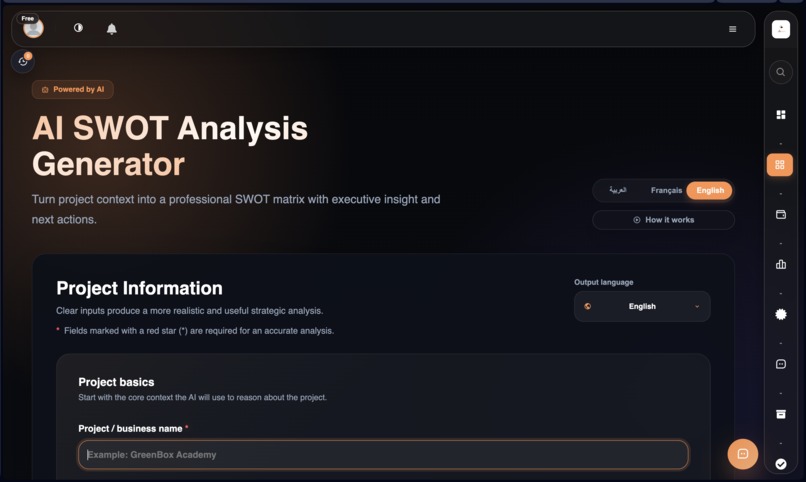
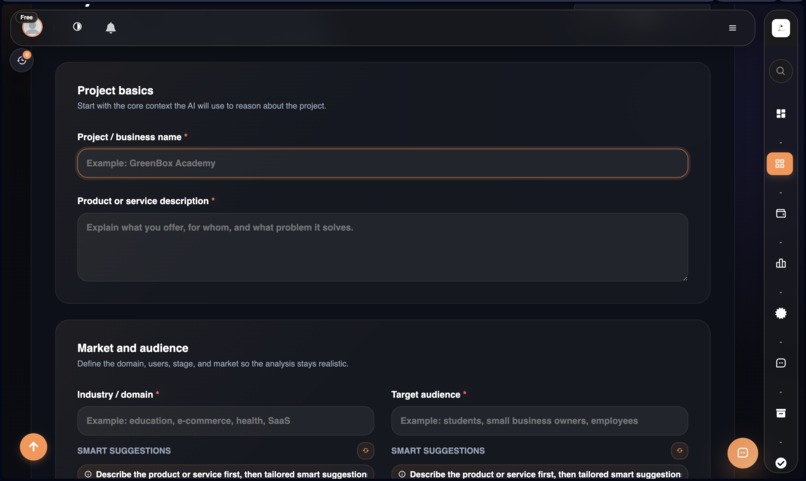
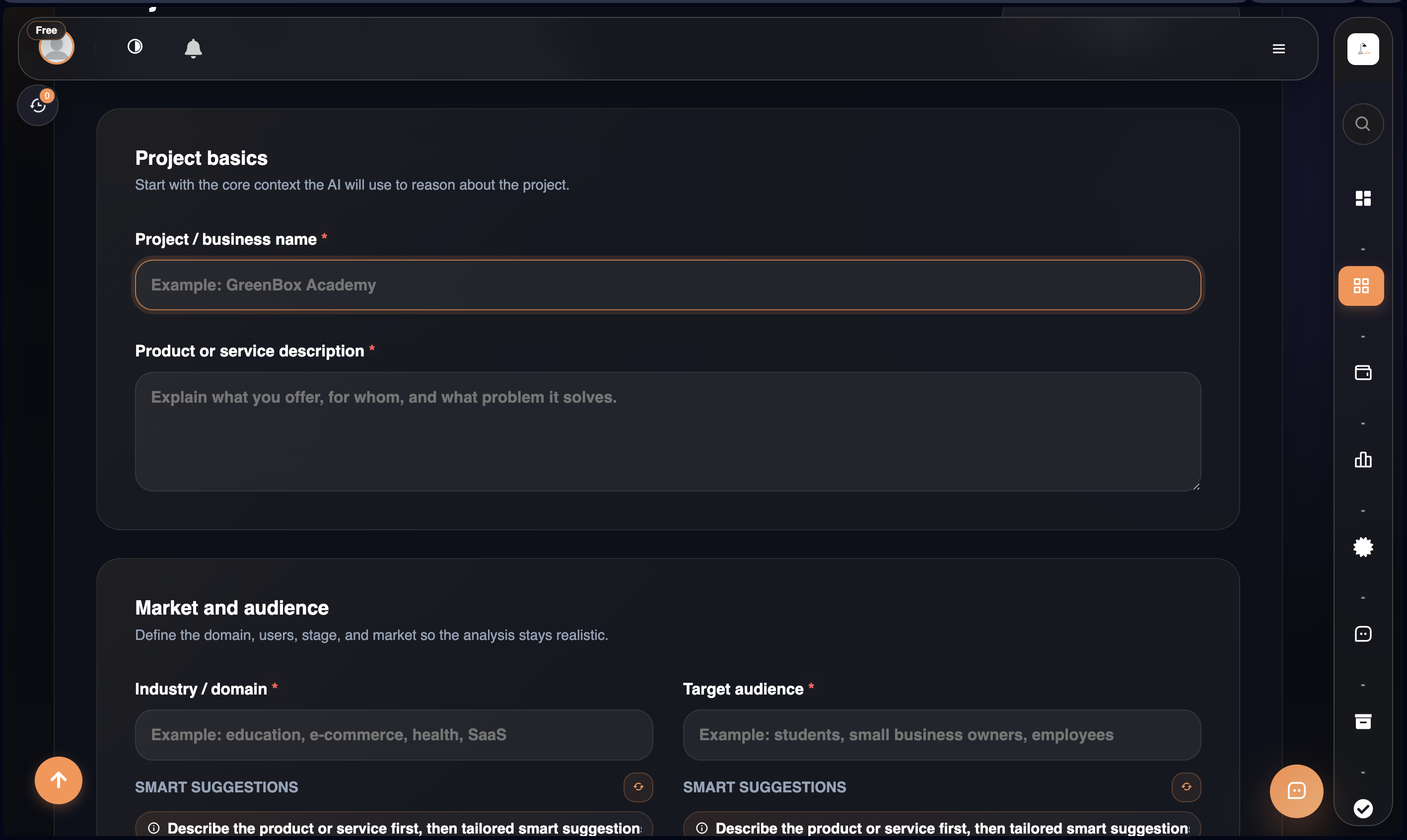
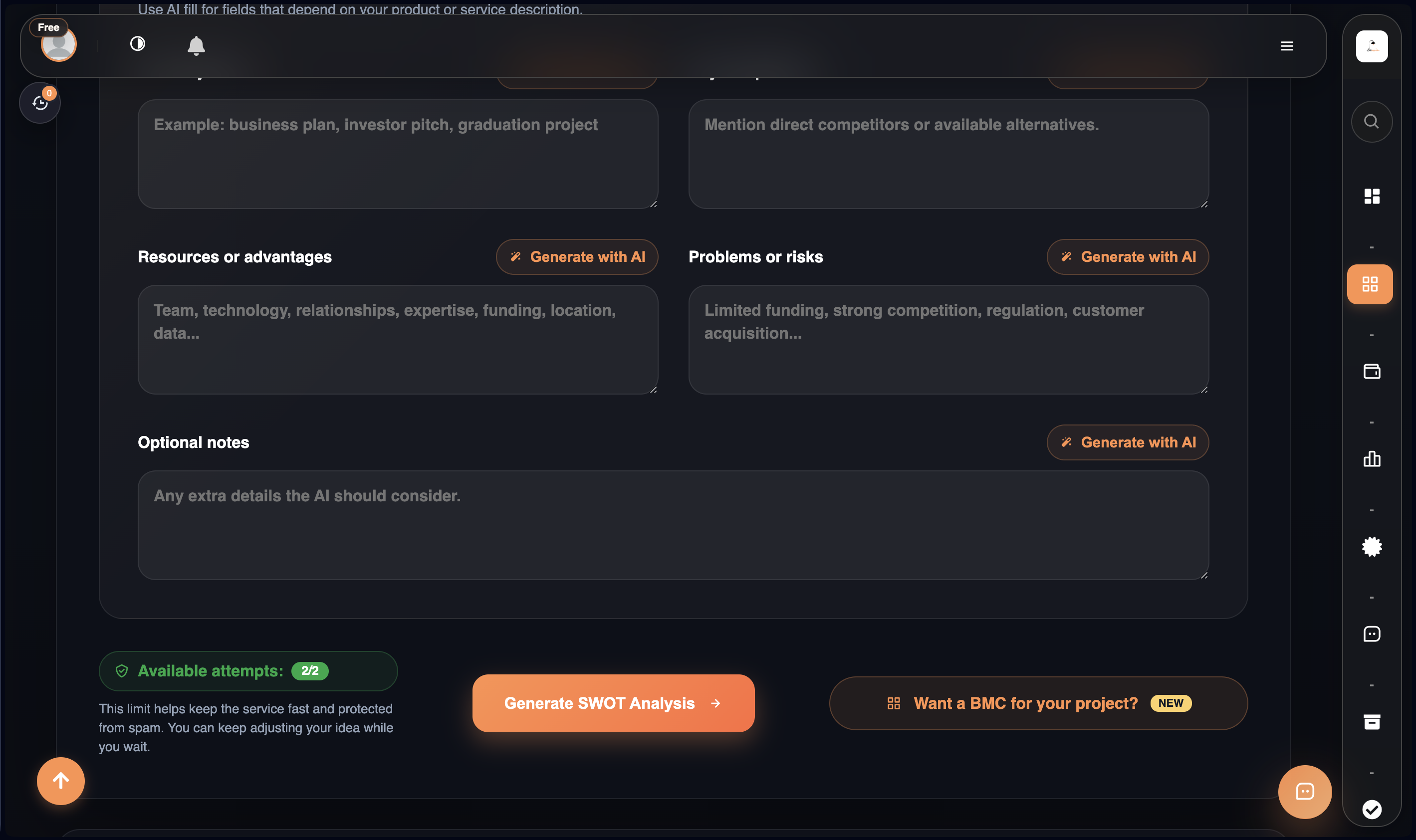
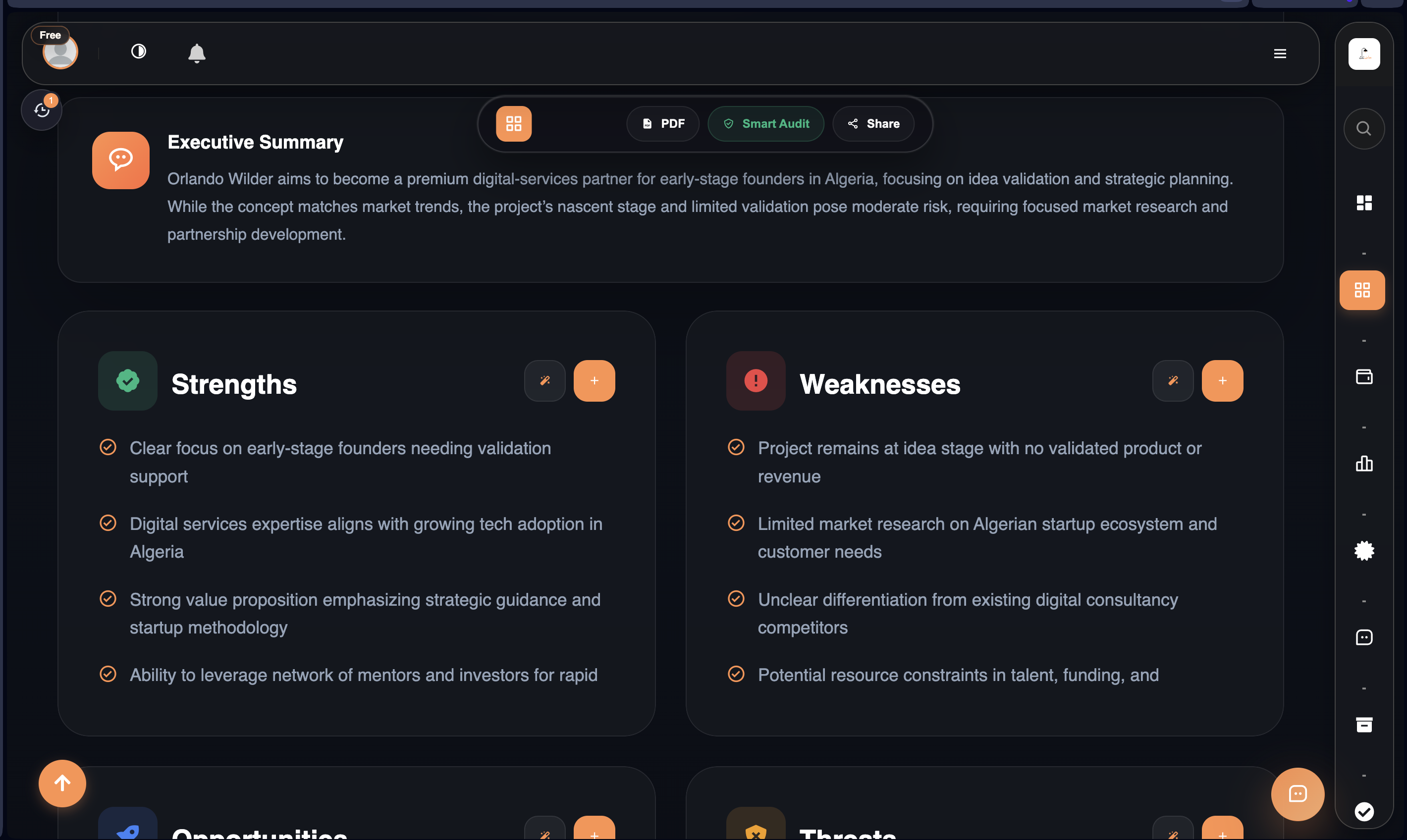
- SWOT Generator: identifies strengths, weaknesses, opportunities, threats, strategic priorities, and actionable recommendations.
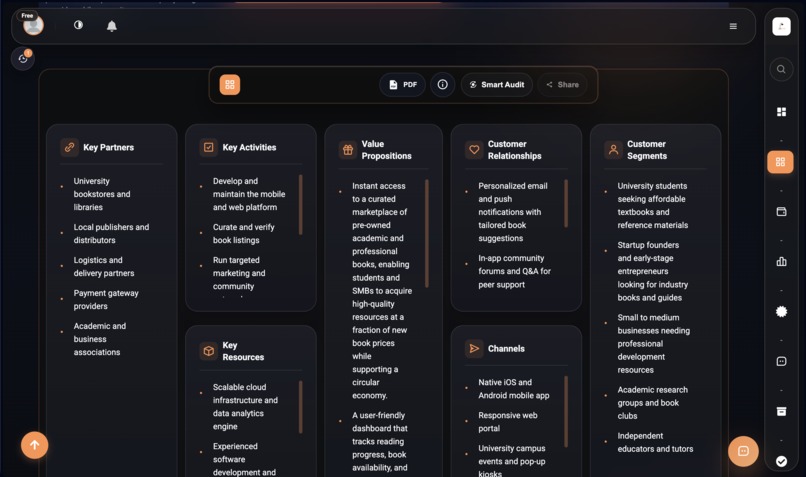
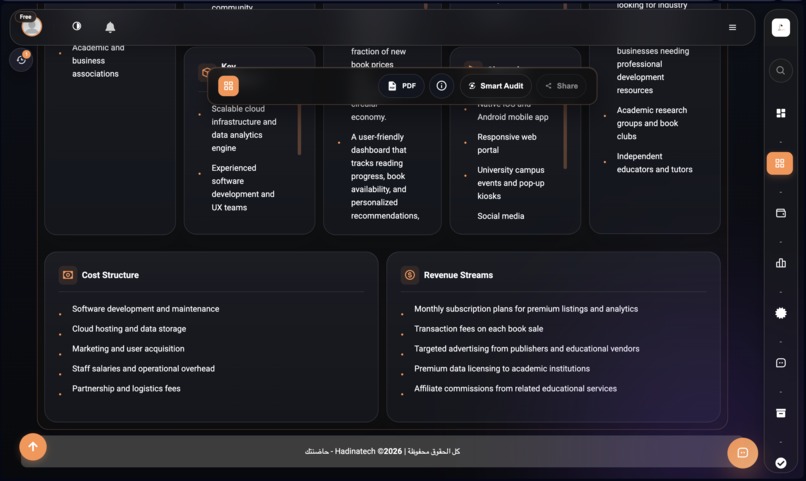
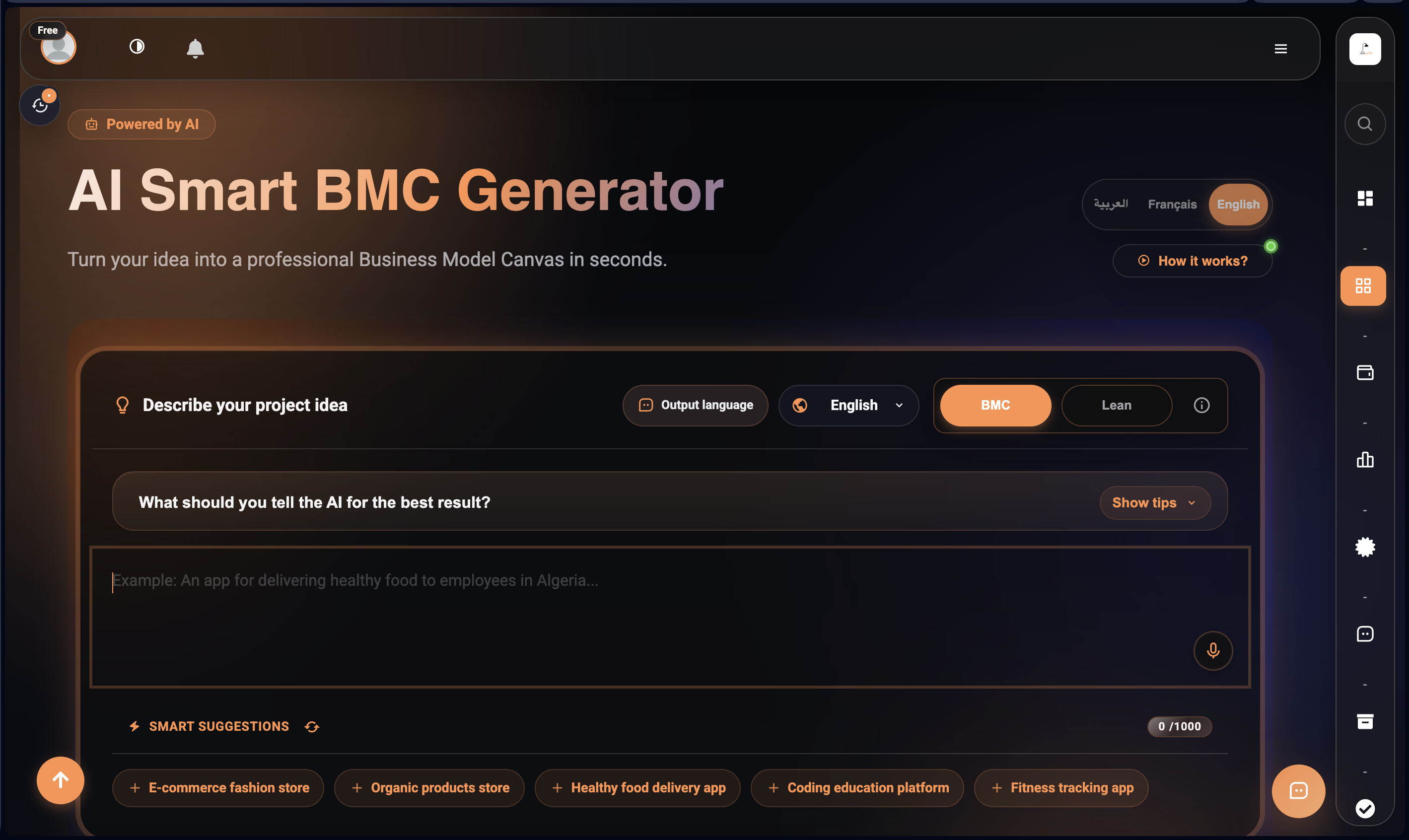
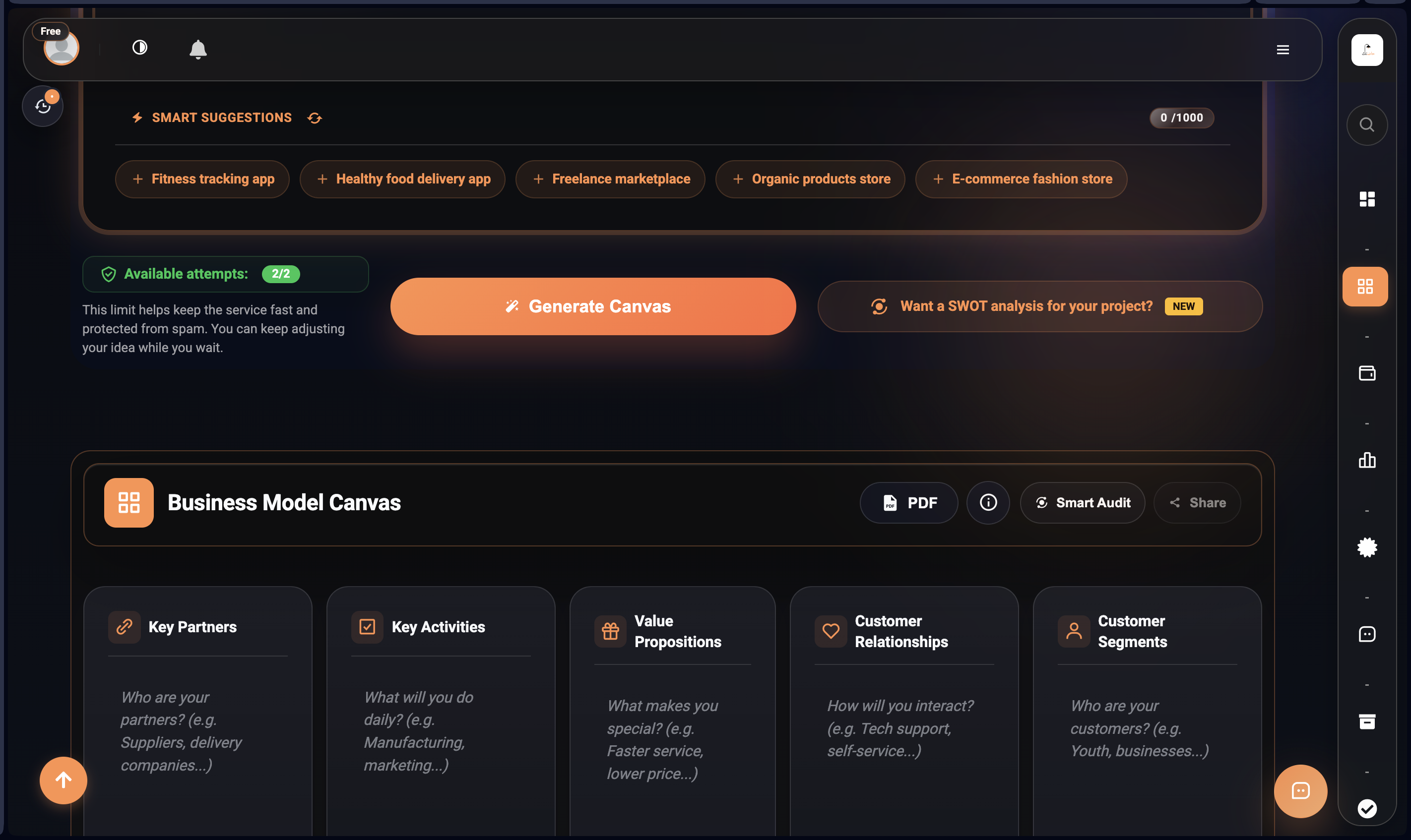
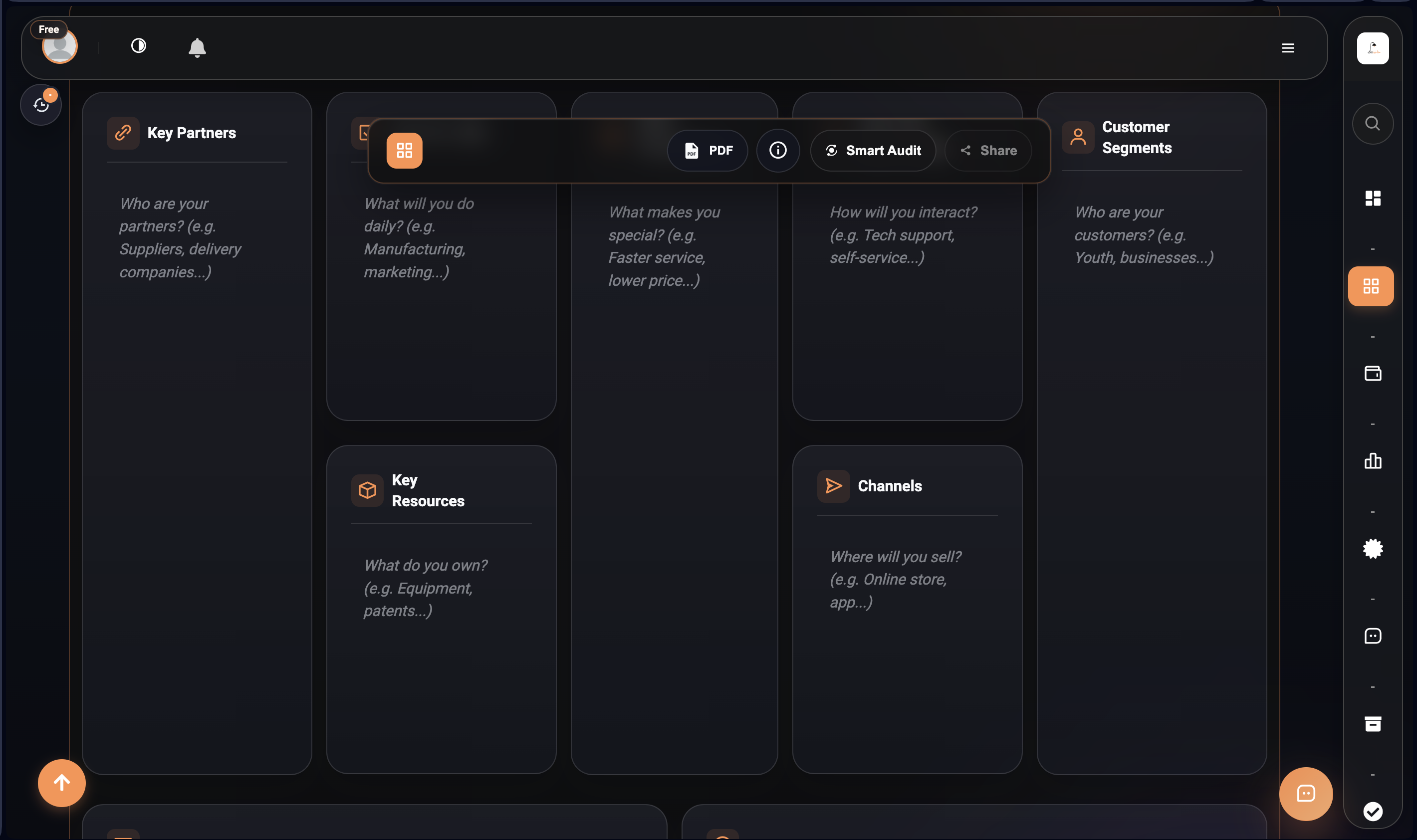
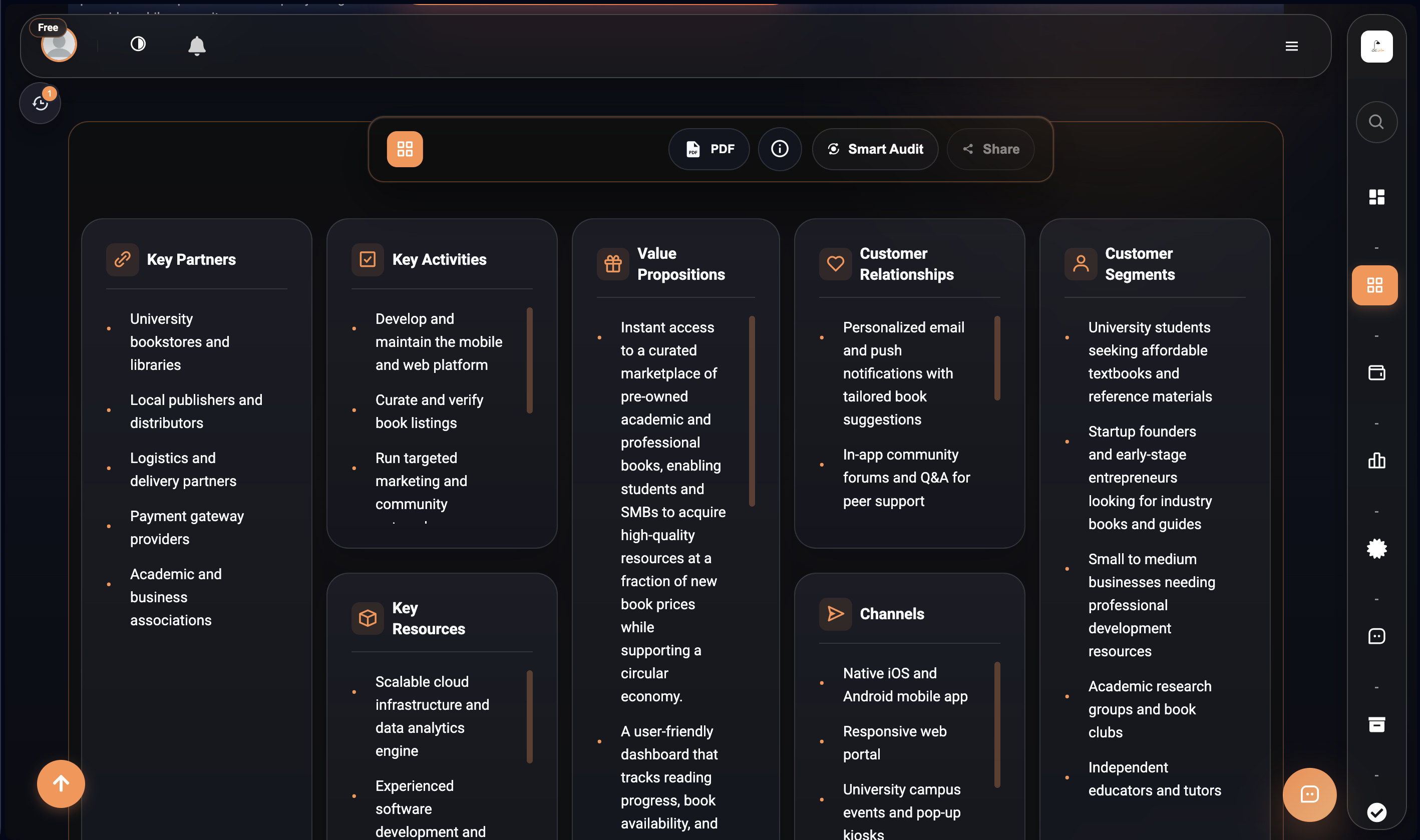
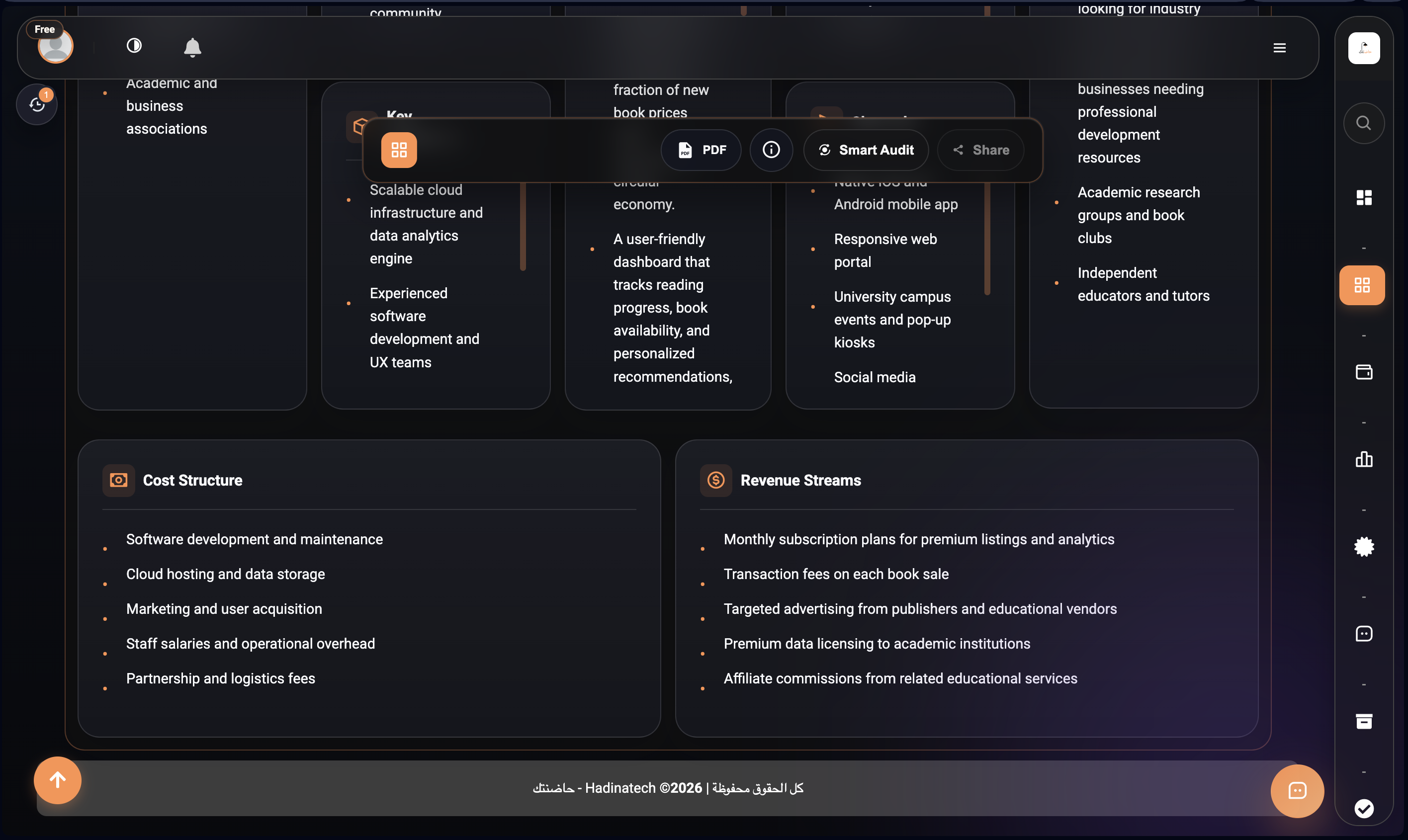
- Business Model Canvas Generator: converts the project into structured customer segments, value propositions, channels, revenue streams, resources, activities, partners, and costs.
The platform also provides:
- Smart suggestions inside form fields.
- AI-assisted generation and editing.
- Per-section regeneration and refinement.
- Smart Audit for checking completeness and consistency.
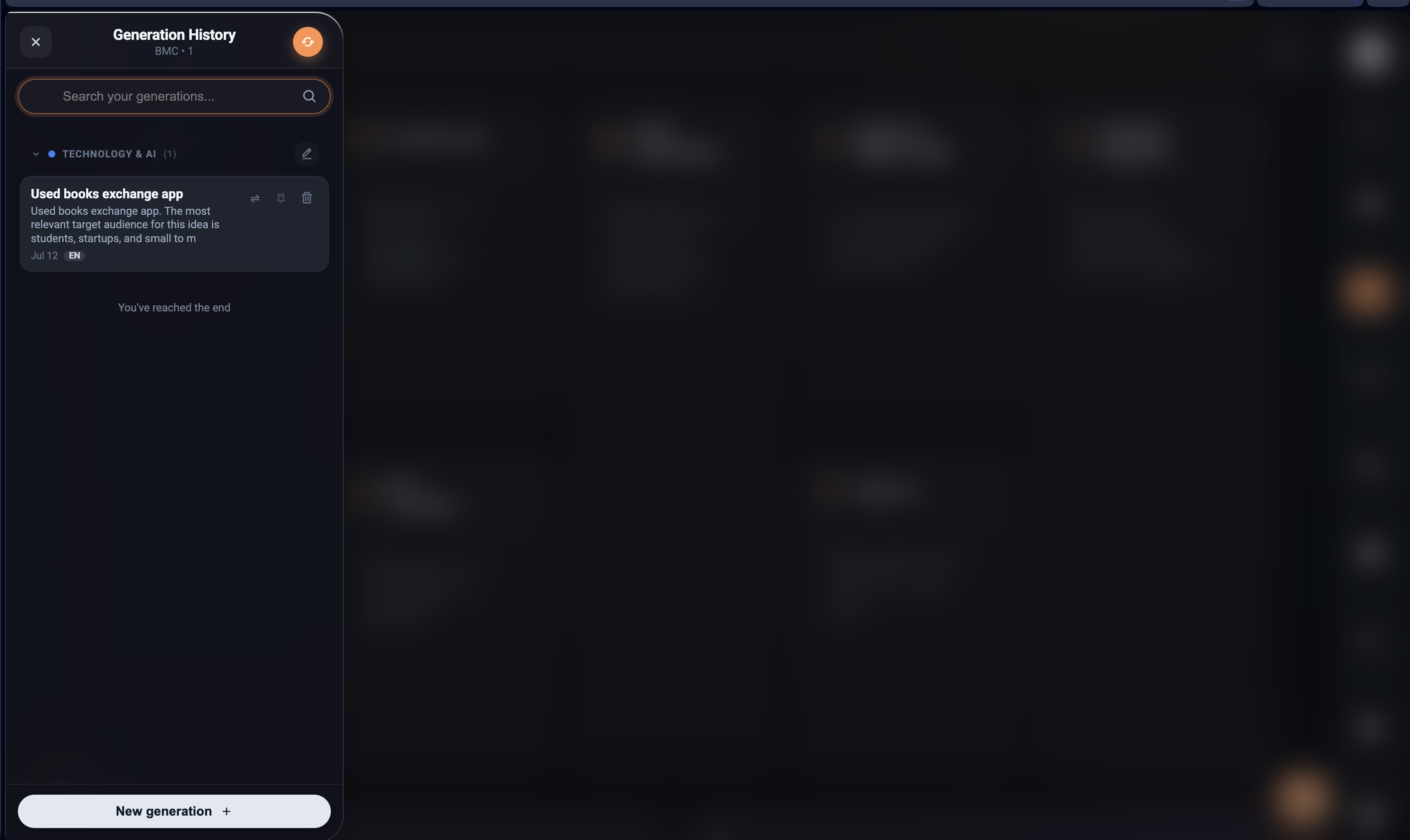
- Saved generation history.
- Transfer of an Idea report directly into SWOT or BMC.
- PDF and document export.
- Secure shareable project reports.
- Arabic, French, and English interfaces.
- Automatic RTL and LTR layout adaptation.
- Responsive desktop, mobile, and PWA experiences.
- Public limited trials and authenticated user workspaces.
The goal is not simply to generate text. The goal is to guide users through a repeatable decision-making workflow from idea discovery to business strategy.
How I built it
Hadinatech AI is built as a modular Flask application.
The backend uses Python, Flask Blueprints, service and controller layers, MySQL, Redis-backed sessions and caching, background services, rate limiting, and server-side export generation.
The frontend uses Jinja templates, JavaScript, HTML, and CSS with a responsive multilingual design system. Arabic content required dedicated RTL handling, Arabic text reshaping, export alignment, and language-aware UI behavior.
The production application is hosted behind Apache on a Linux server, with Redis used for caching, session management, rate limiting, and real-time messaging support.
How Codex and GPT-5.6 were used
Hadinatech existed before Build Week. The submitted Build Week work focuses on the Hadinatech AI workspace and the engineering improvements completed with Codex and GPT-5.6.
I used Codex with GPT-5.6 as an engineering agent to:
- Inspect and understand a large existing Flask architecture before modifying it.
- Trace routes, Blueprints, controllers, services, models, templates, and JavaScript state.
- Build and refine the connected Idea, SWOT, and BMC workflows.
- Diagnose generation-history, entitlement, export, and unsaved-state regressions.
- Create and repair regression tests.
- Review authentication, authorization, session, payment, credit, and data-access risks.
- Harden prompt inputs, rate limits, file handling, security headers, and abuse protections.
- Diagnose mobile Safari and PWA performance problems.
- Improve Arabic RTL behavior and server-generated PDF output.
- Review changes before deployment and produce safer deployment checklists.
Codex did not receive production secrets or unrestricted authority to deploy destructive changes. I reviewed the proposed modifications, constrained the scope, tested important workflows, and retained responsibility for the final implementation.
GPT-5.6 was used as the development and reasoning model; I do not claim that GPT-5.6 is the application's end-user runtime model.
Challenges
One major challenge was maintaining consistent state across three connected AI tools while preventing users from being charged twice when an external AI response failed or returned malformed data.
Another challenge was generating professional PDF and document exports that correctly support Arabic text, RTL alignment, page boundaries, and multiple visual templates.
Mobile performance was also difficult because the application includes responsive navigation, modals, history panels, animations, search interfaces, and interactive AI generation states.
Security was treated as a core requirement. The project handles multiple roles, user-generated content, saved reports, credits, subscriptions, exports, and private dashboards, so improvements had to avoid weakening authorization or exposing user information.
Accomplishments
I am proud that Hadinatech AI now provides one continuous workflow instead of three disconnected generators.
A user can discover an idea, evaluate it through SWOT, convert it into a Business Model Canvas, audit the result, save it, refine individual sections, and export a professional report without repeatedly entering the same information.
The project also supports Arabic, French, and English from the same application, including dynamic RTL/LTR adaptation.
What I learned
I learned that agentic coding produces the best results when the agent is given clear architectural boundaries, security constraints, acceptance criteria, and regression tests.
I also learned that the most valuable use of Codex is not generating large amounts of code blindly. Its value comes from tracing complex workflows, comparing related implementations, identifying hidden regressions, and helping implement small, reviewable changes.
What's next
Next, I plan to improve evidence-based market analysis, collaborative project reviews, AI output evaluation, mobile performance, accessibility, and structured guidance tailored to founders in Algeria and the wider Arabic- and French-speaking markets.


Log in or sign up for Devpost to join the conversation.