-
-
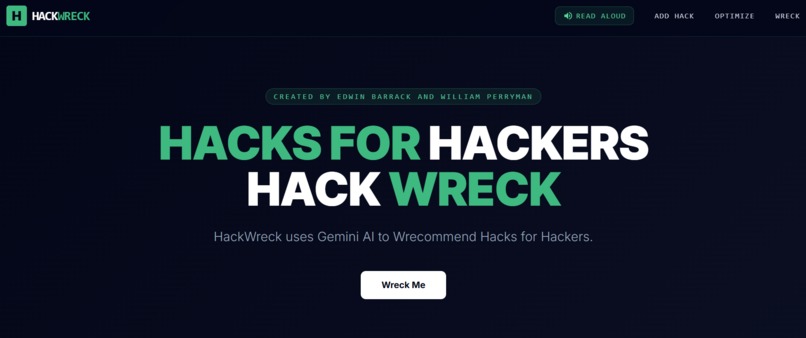
Title Screen
-
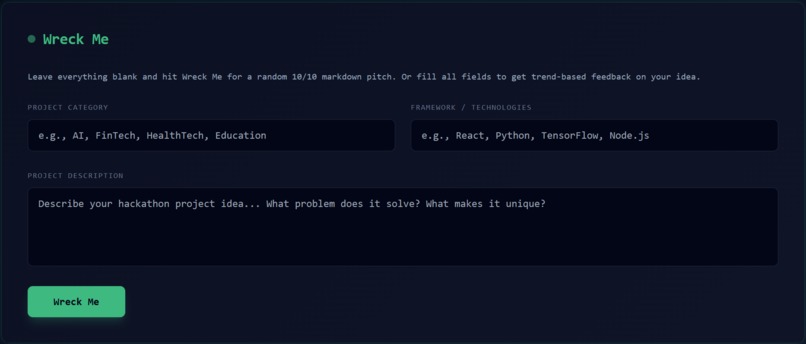
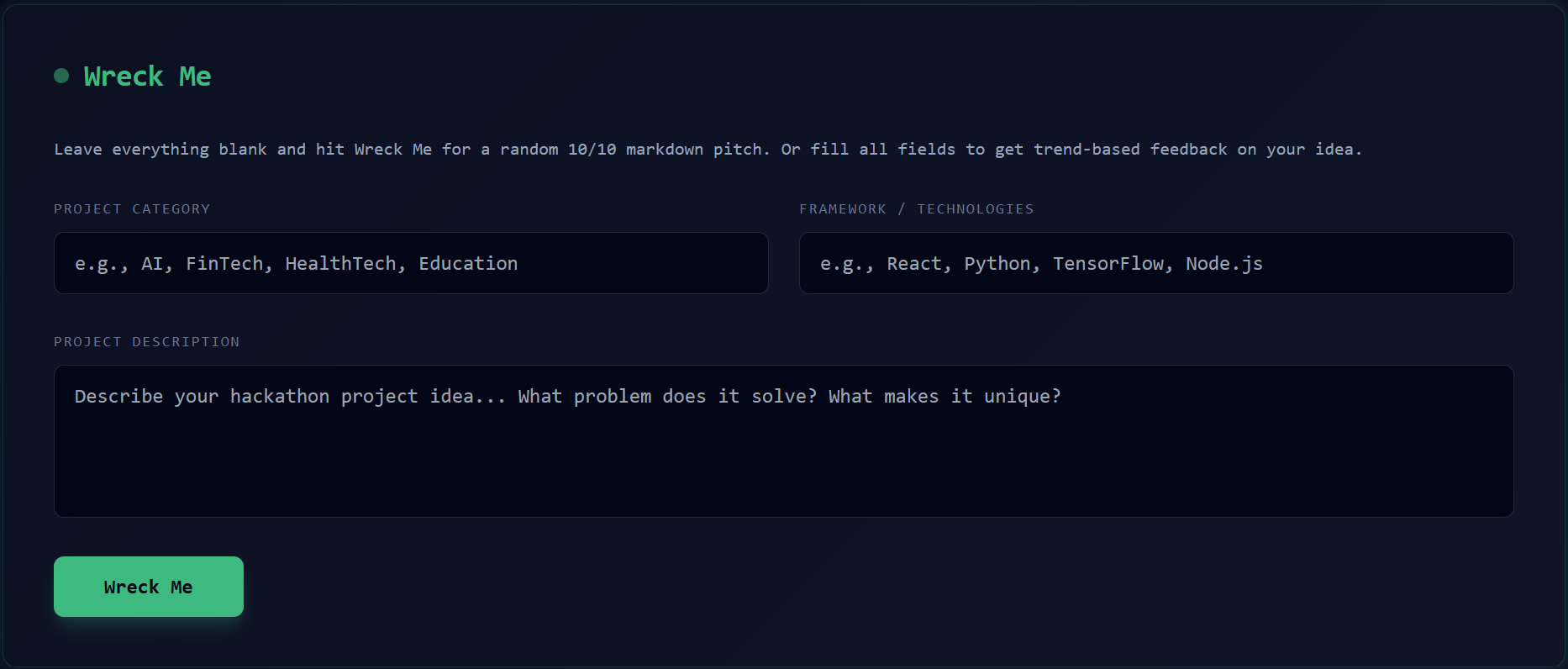
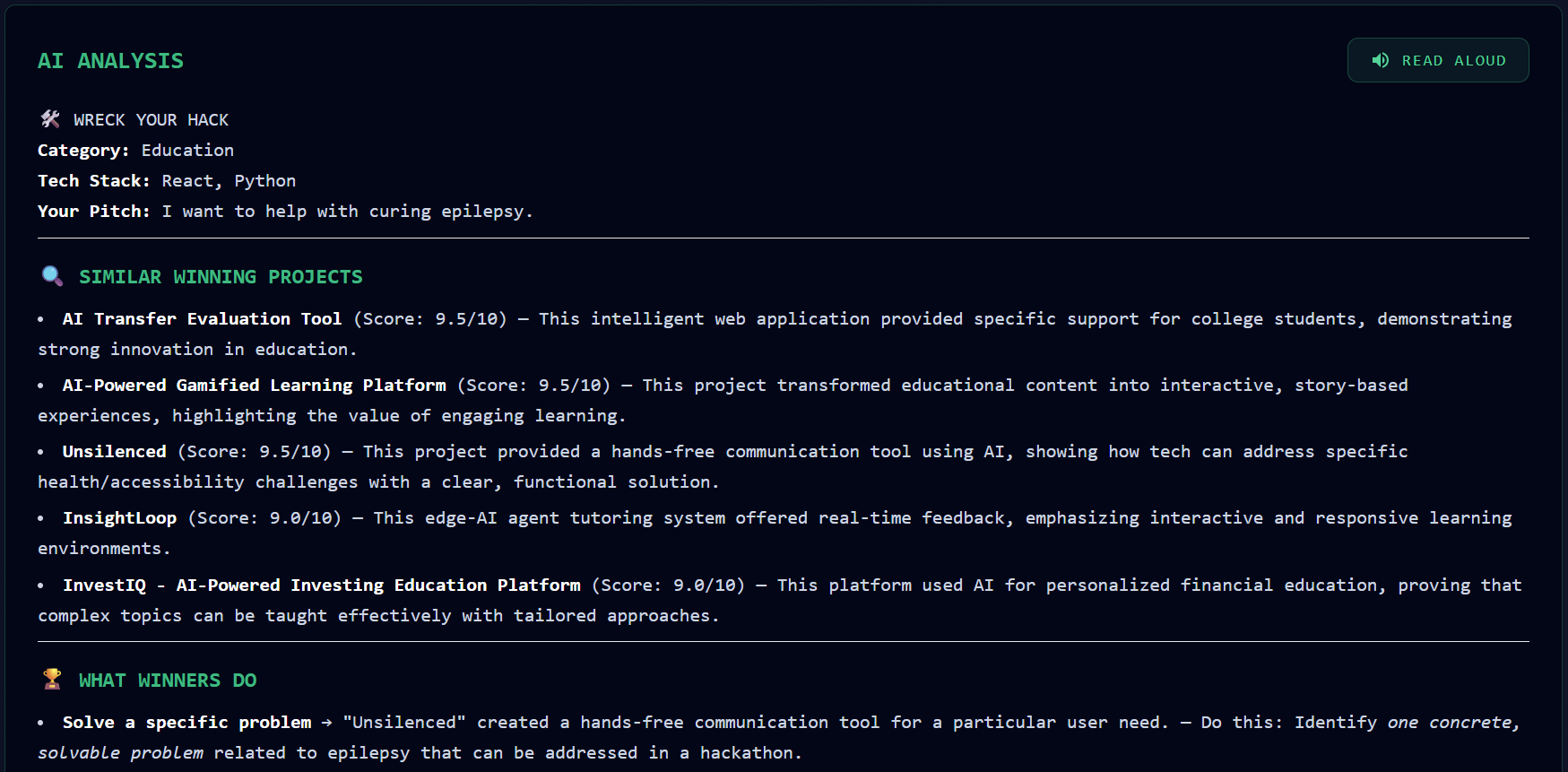
Wreck Me Section
-
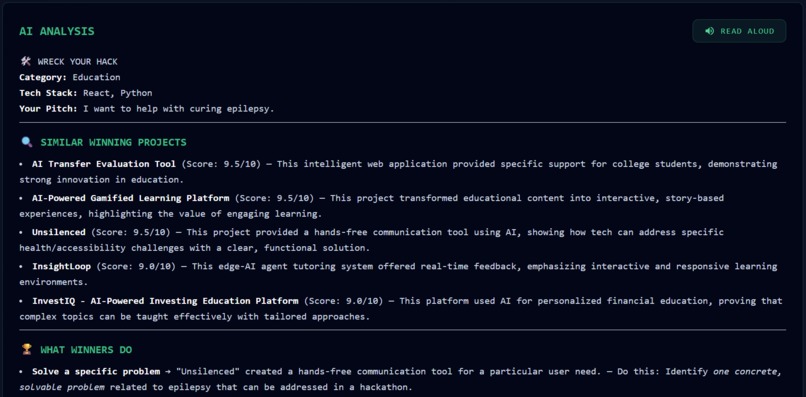
Wreck Me Result pt1
-
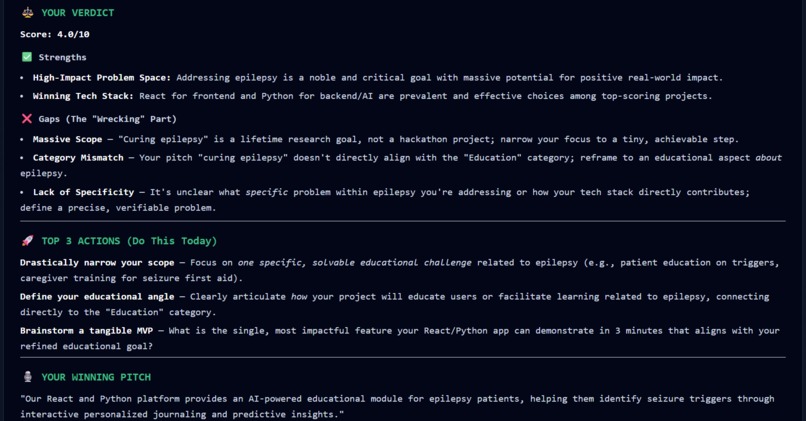
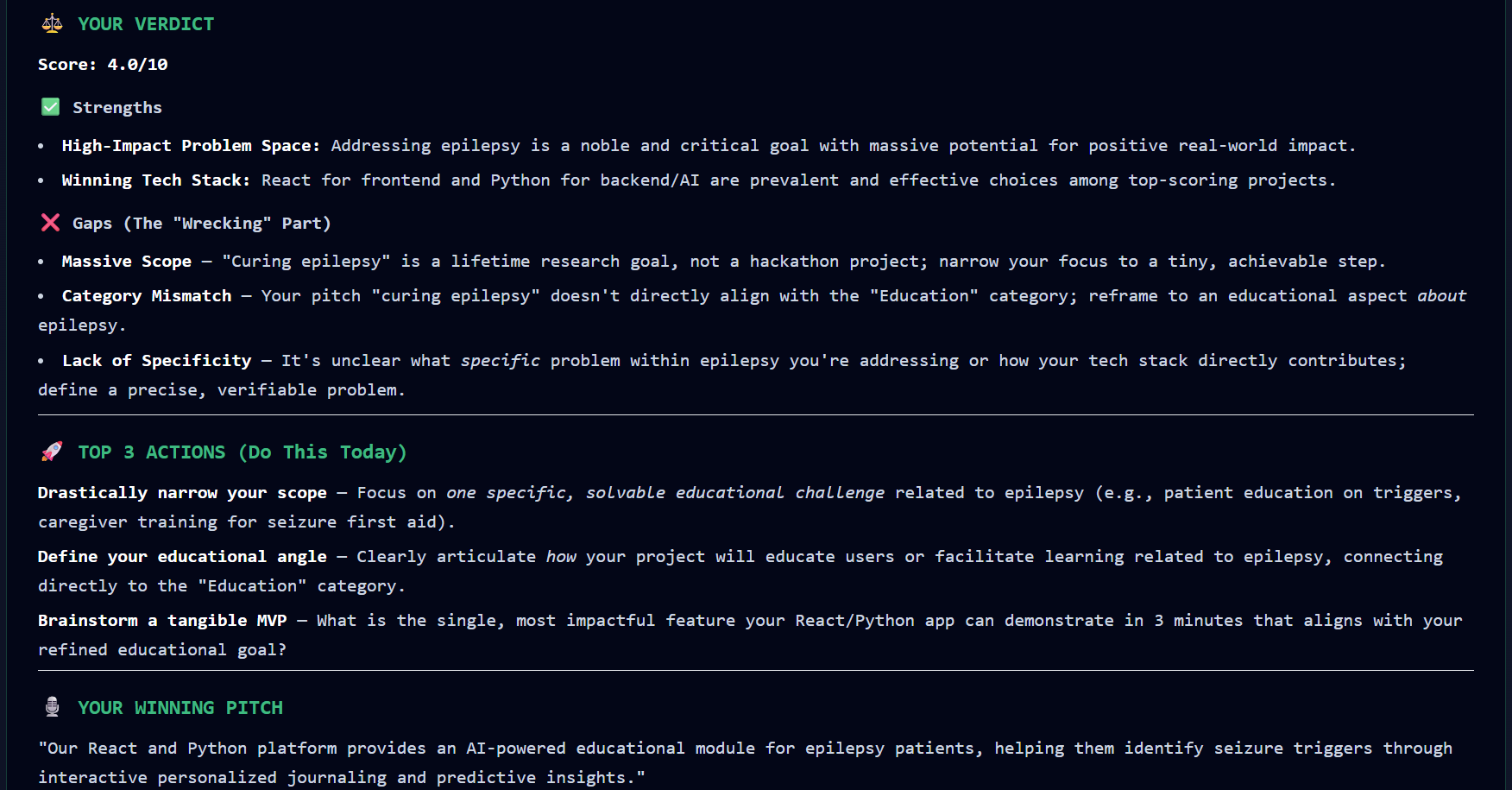
Wreck Me Result pt2
-
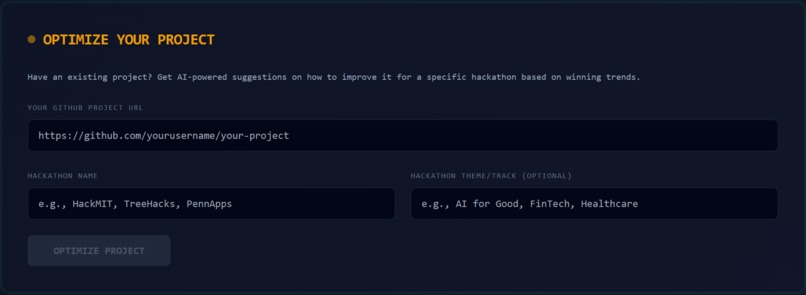
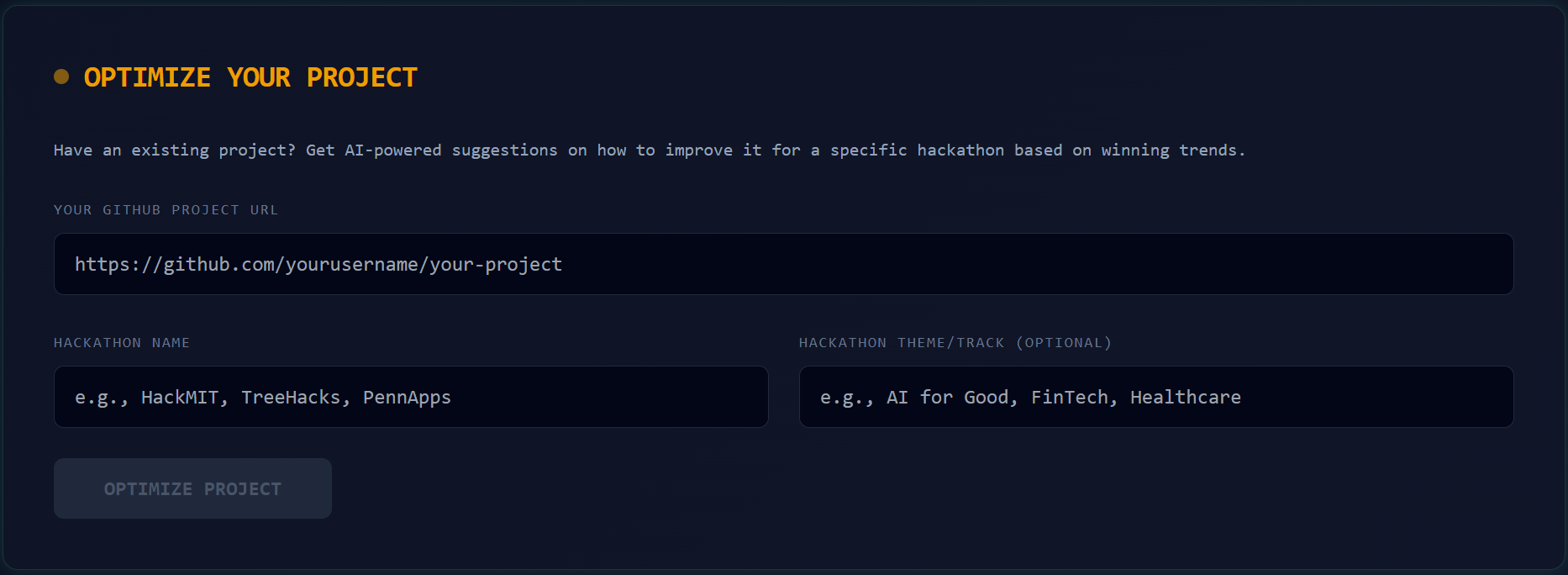
Optimize Your Project Section
-
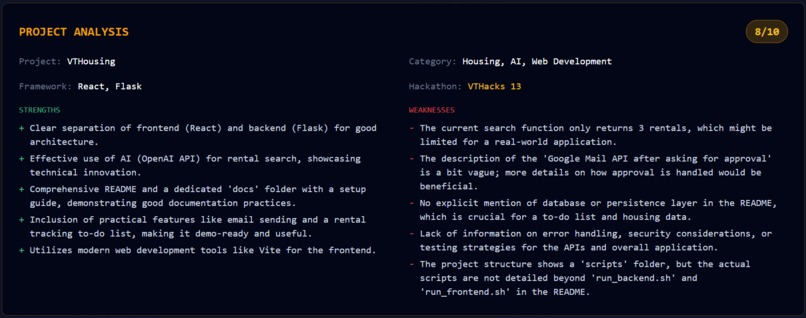
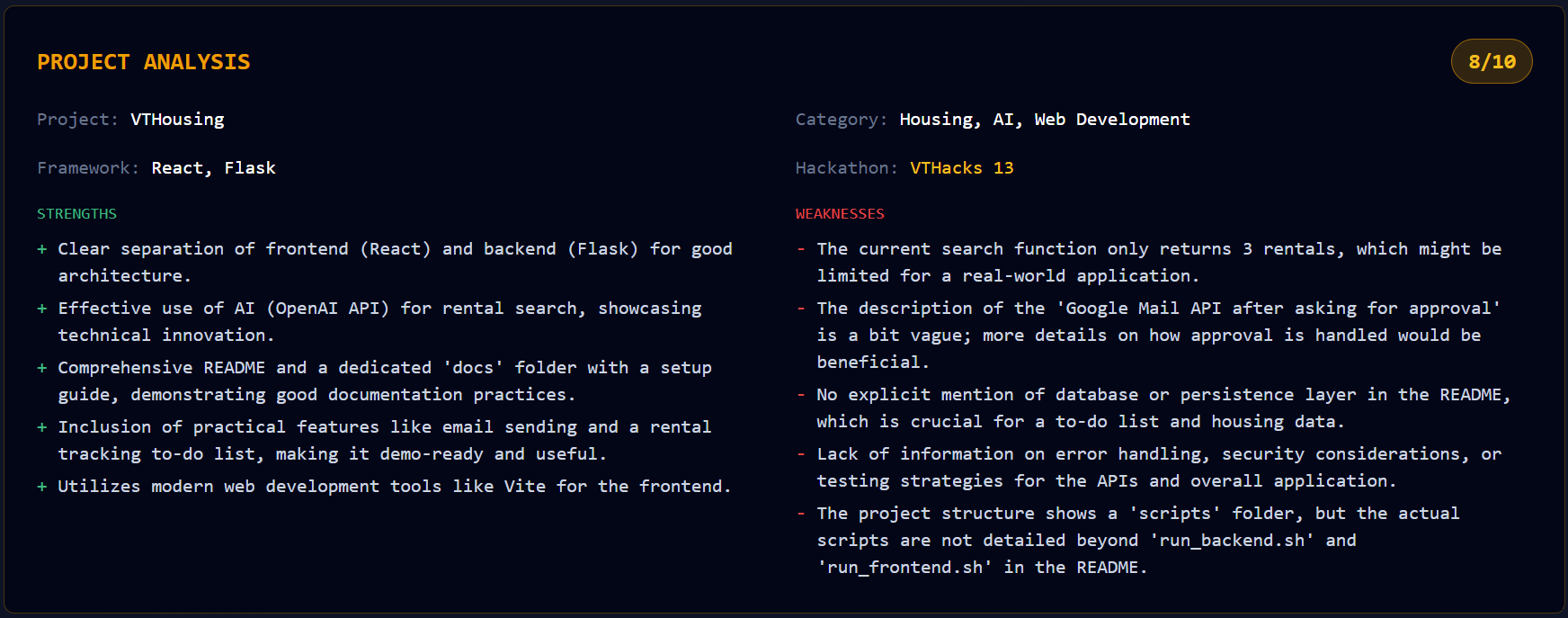
Project Analysis Result
-
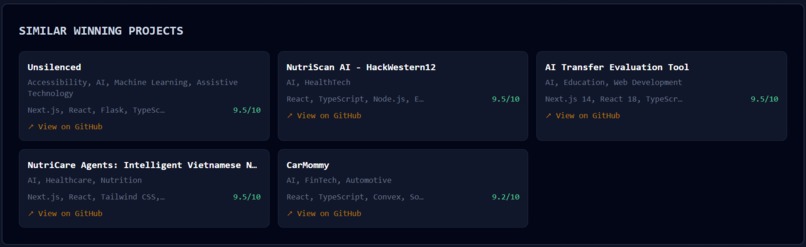
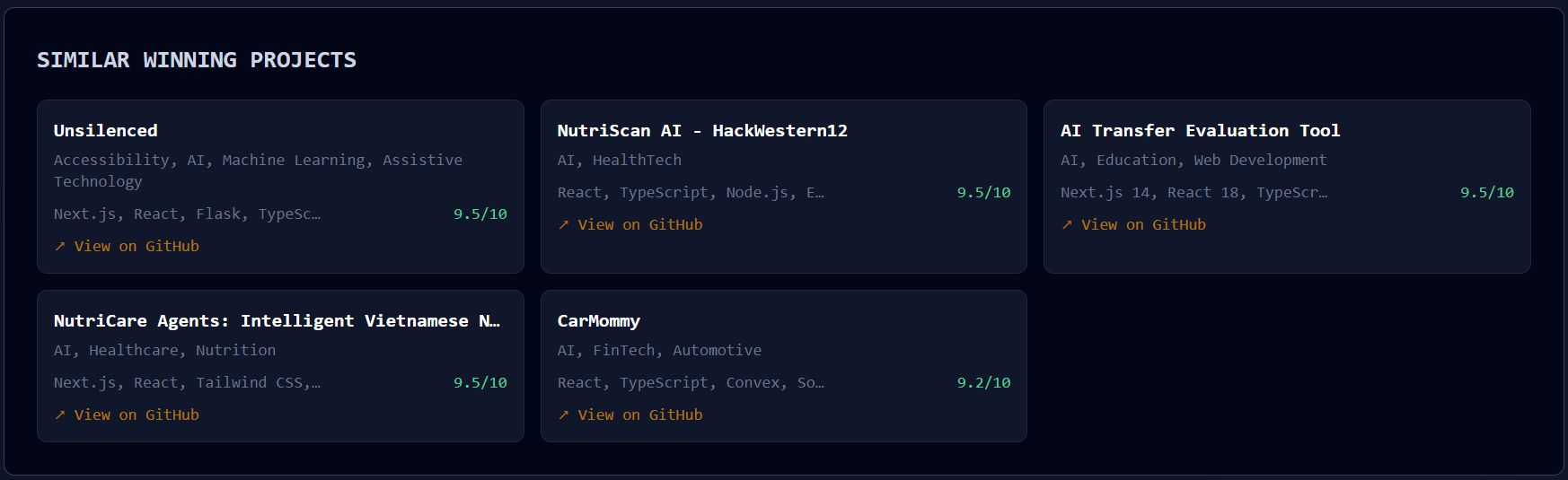
Similar Winning Projects Result
-
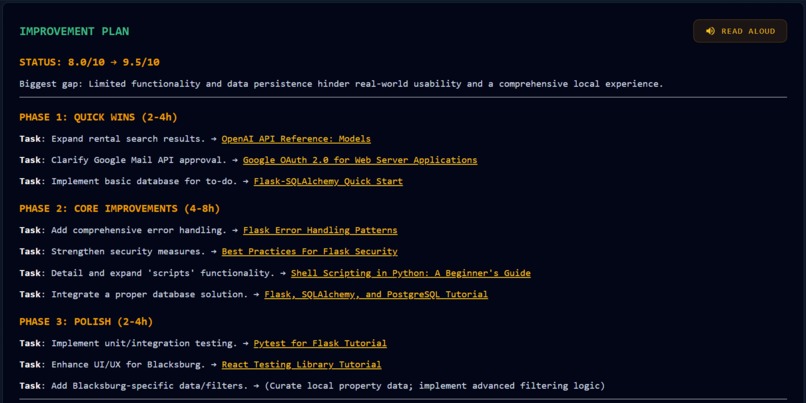
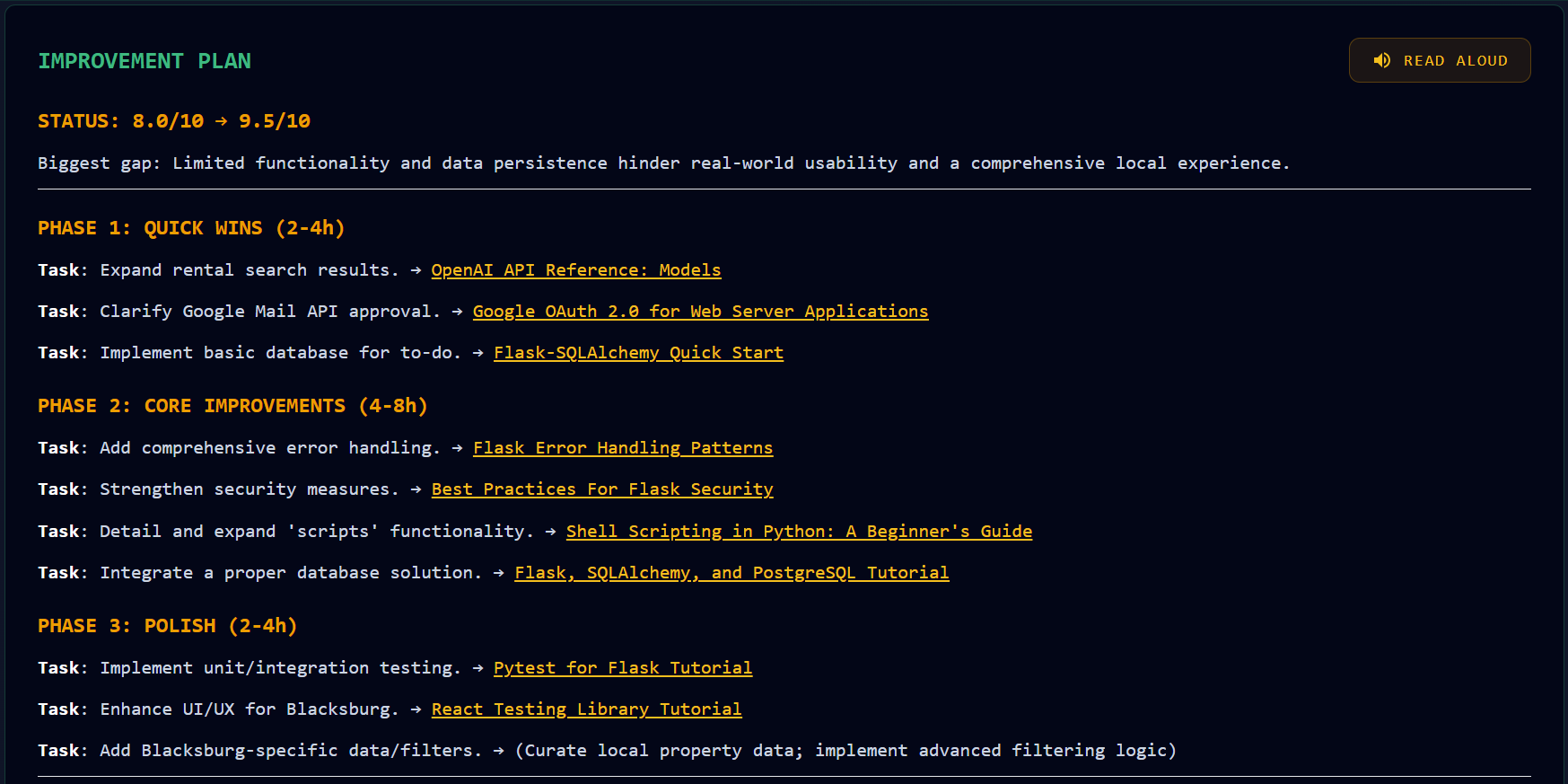
Improvement Plan Result
-
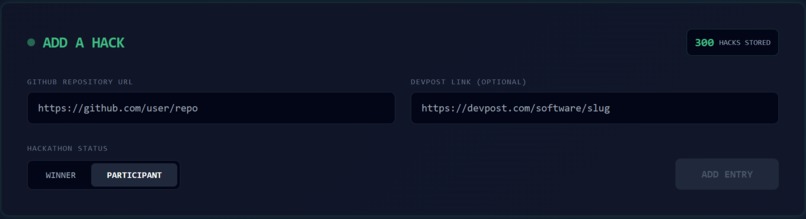
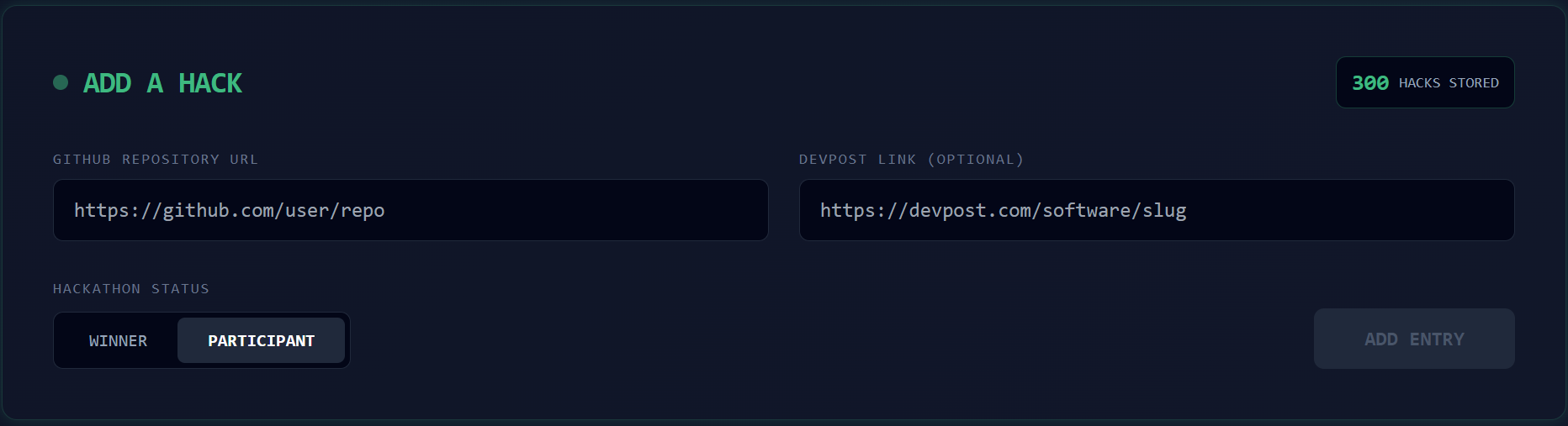
Add A Hack Section
-
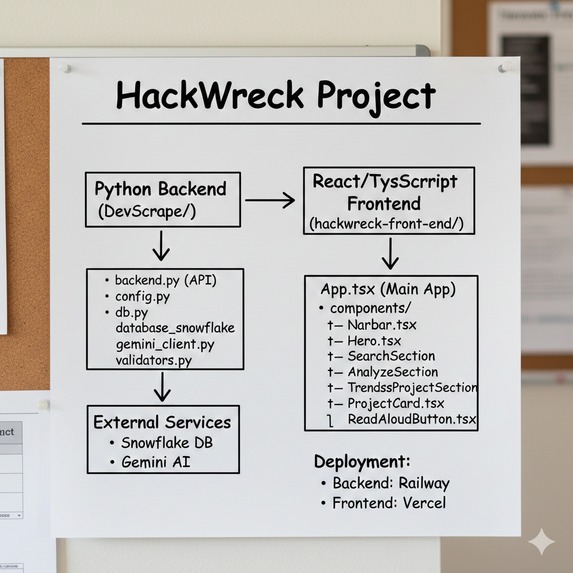
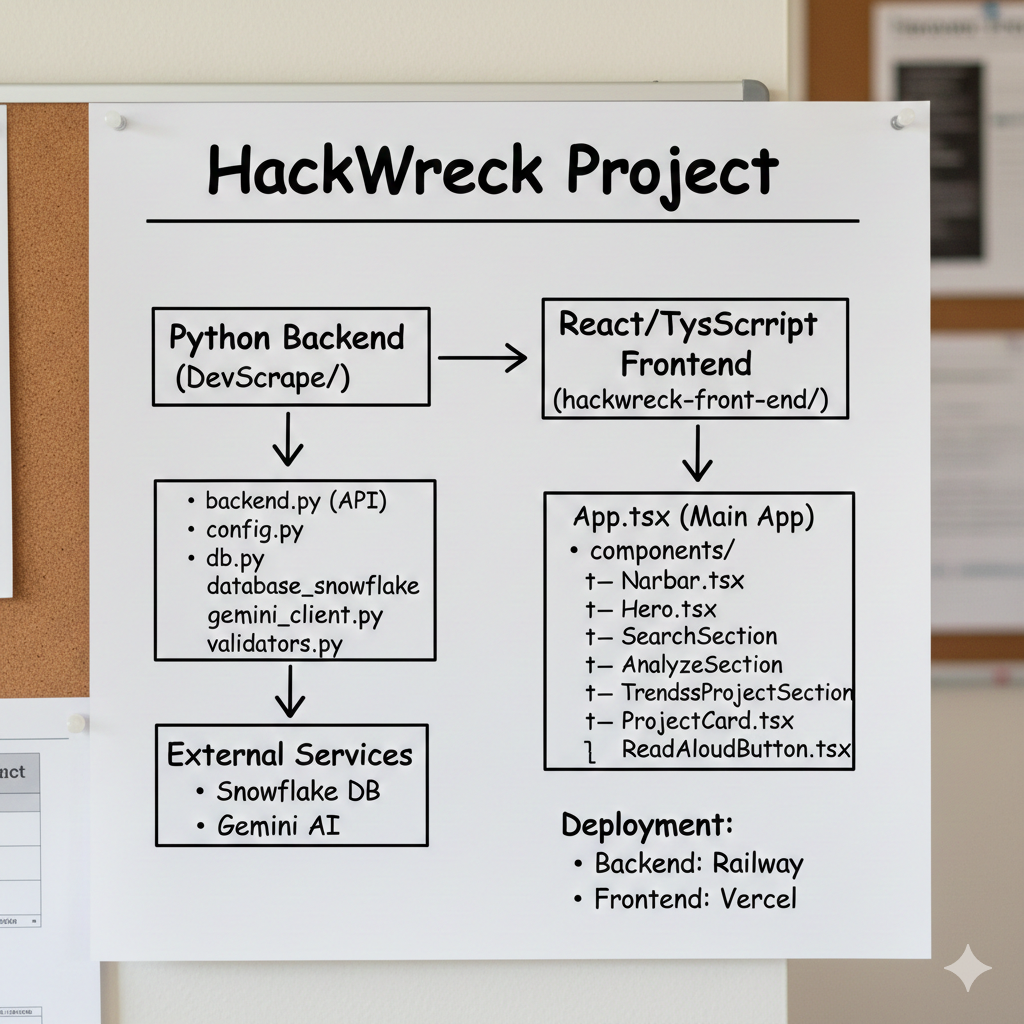
Organized Flow Chart
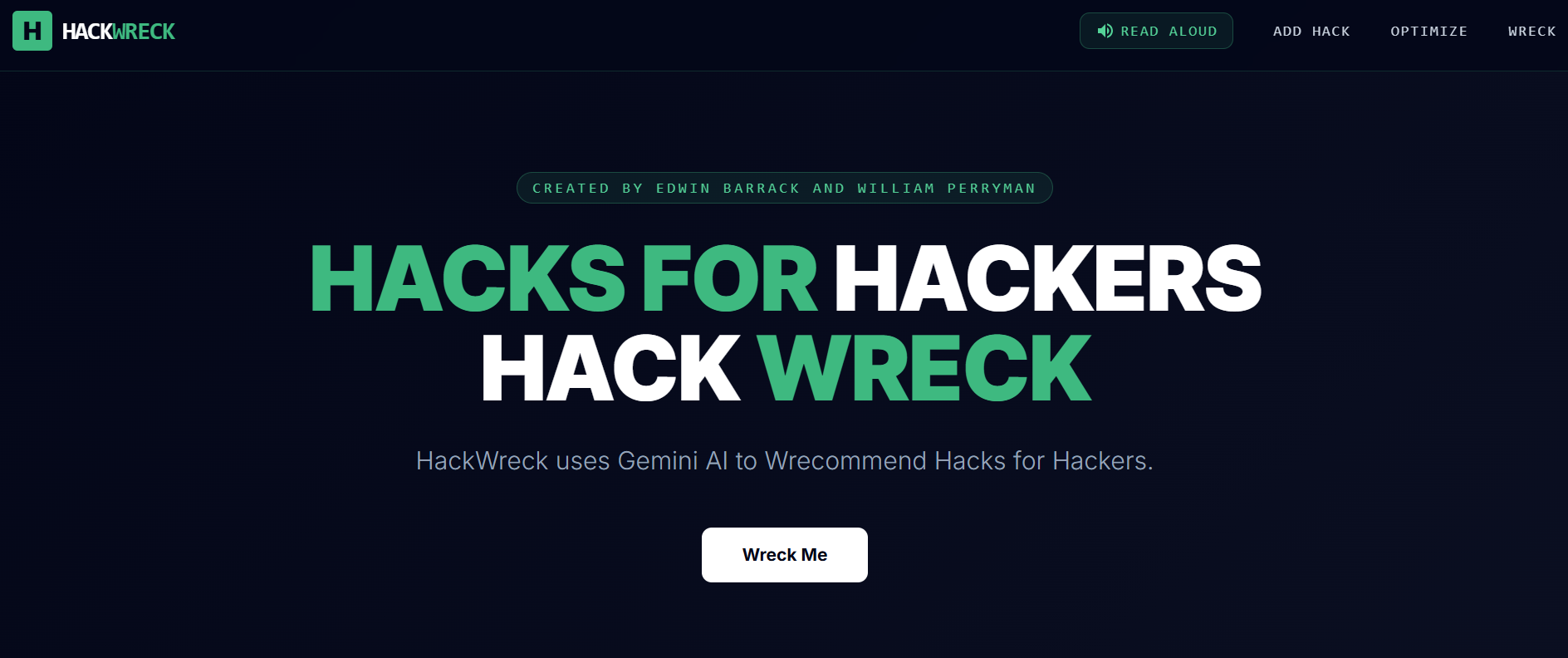
Inspiration
Our inspiration for HackWreck stemmed from an initial interest in utilizing the Gemini API and an SQL database to create a functional website within the hackathon timeframe. When we first started discussing what exactly we wanted to build, we felt stuck; All we had was a name: “HackWreck.” That’s when it clicked. We began brainstorming for a "wrecommendation" website aimed at hackers like us who are looking for help generating project topics or improving hacks they had already started.
What it does
Core Features and System Logic
HackWreck is built around three primary functional modules designed to support different stages of the hackathon lifecycle.
1. The "Wreck Me" Button (Inspiration Engine)
- What it does: Sends a request to the backend API to pull the highest-rated historical projects stored on the Snowflake server.
- The Logic: Gemini analyzes these "winners" to identify architectural patterns and then returns a structured JSON roadmap.
- User Benefit: Provides a high-level blueprint of a successful hackathon project tailored to a specific niche, rendered instantly in the React interface.
2. The "Wreck Your Hack" Button (Stress Test)
- What it does: Processes an initial project idea through a specialized AI reasoning engine.
- The Logic: Gemini evaluates the concept for originality and technical feasibility, assigning a Success Score (0.0–10.0).
- User Benefit: Delivers a "brutally helpful" critique, highlighting specific strengths and potential failure points before development begins.
3. The "Optimize Your Project" Button (Strategic Pivot)
- What it does: Accepts a GitHub repository link and the specific name of a hackathon.
- The Logic: The engine cross-references the repository code against the actual hackathon guidelines and specific prize categories.
- User Benefit: Provides tailored tips and verified documentation links to help the project meet judging criteria, ensuring alignment with sponsor requirements.
4. The "HackWreck" Guarantee (Security and Validation)
- Behind every feature, the system runs an automated Validation Layer to ensure data integrity and user safety.
- Security: Every resource link generated by the AI is pre-checked by the validation script to ensure it is live and leads only to intended documentation or developer resources.
- Accuracy: The system uses "reasoned grounding," combining Gemini’s creative synthesis with Snowflake’s hard historical data. This ensures that strategic advice is not just theoretical but based on actual hackathon success history. ### ## How we built it We began with a single Python script that passed user input to Gemini. We then built the frontend using the Google AI Studio build tab. Next, we utilized the Snowflake API to create a SQL database containing information on previous hackathon winners and participants' projects, providing users with GitHub references to supplement Gemini’s suggestions. After that, we connected the frontend and backend using FastAPI. Finally, we integrated ElevenLabs, Railway, and Vercel to improve the website's overall accessibility and deployment. ## Challenges we ran into After finalizing our vision, we found it difficult to make our own project unique. We asked ourselves: Why not just prompt Gemini directly or browse Devpost for a similar experience? To solve this, we actually plugged our own project into HackWreck. The tool generated tips and video resources that helped us add "wreck-defining" features to our website that we hadn't previously considered. ## Accomplishments that we’re proud of
- Multi-API Integration: We successfully integrated a diverse technical stack, including Google Gemini, Snowflake SQL, FastAPI, ElevenLabs, Vercel, and Railway within a 36-hour timeframe.
- Recursive Optimization: One of our proudest moments was utilizing HackWreck to analyze its own development. By inputting our project into our "Optimize Your Project" tool, we generated unique "wreck-defining" features and identified high-quality video resources that significantly improved our final submission.
- Full-Stack Development: We successfully scaled the project from a single Python script into a fully deployed web application with a functional backend and AI-driven frontend.
- Accessibility Features: By integrating ElevenLabs, we were able to prioritize accessibility, ensuring that our AI-generated strategic advice is available through both text and high-quality audio.
- Efficiency and Execution: We balanced a high technical workload with effective project management, allowing us to deliver a polished, functional product while maintaining a sustainable development pace throughout the hackathon. ## What we learned We gained experience with a variety of powerful tools, including Google AI Studio, the Snowflake API, ElevenLabs, Railway, and FastAPI. More importantly, we learned how to complete a hackathon project while still finding time to sleep! We improved our problem-solving skills and learned how to implement and communicate through previously unknown technologies in a very short timeframe, which made the entire experience incredibly fun. ## What’s next for HackWreck We have several ideas to "wrectify" our project even further:
- Database Expansion: Implement an automatic "project adder" that scrapes data from recently completed hackathons.
- Starter Templates: When receiving a "wreck" from HackWreck, users will have the option for Gemini to suggest a starting code template.
- Leaderboard: Add a competitive element where hackers can track their hackathon wins.
- User Feedback: Add a dedicated feedback section to help improve the site based on user needs.
For now, please send an email to [email protected] if you have any suggestions. Thank you to Hacks for Hackers for an amazing experience!

Log in or sign up for Devpost to join the conversation.