-
-
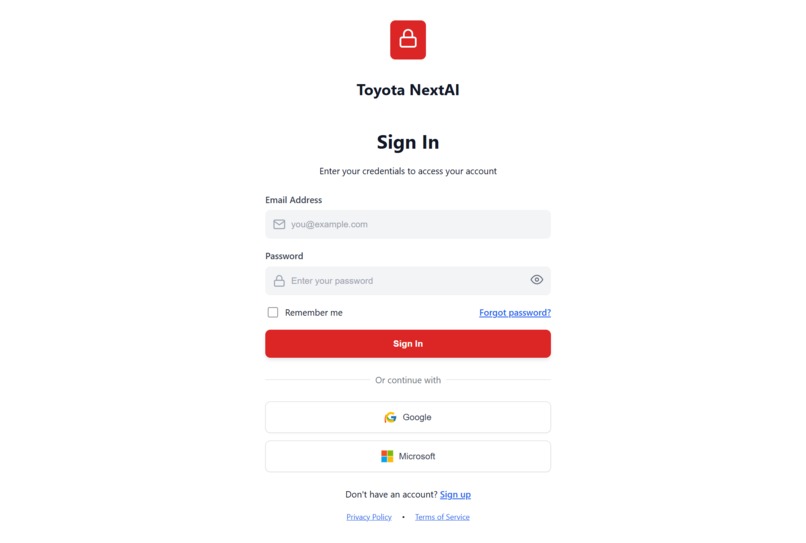
Sign In Page
-
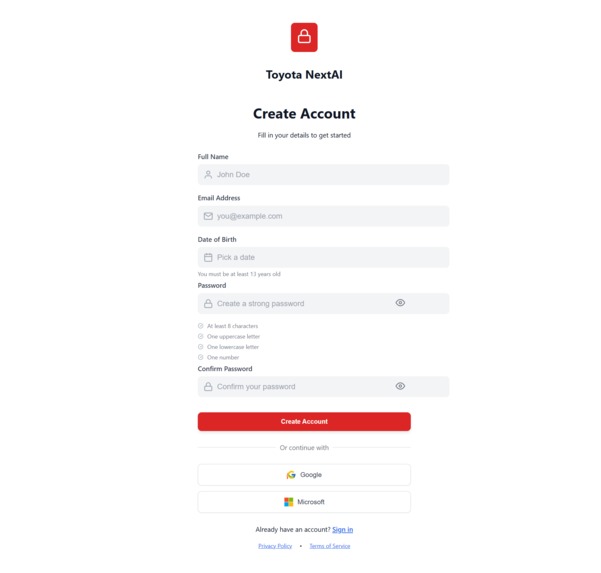
Sign Up/Create Account
Inspiration
Until now, if we or other customers wanted to buy a car that matches our financial situation and personal preferences, we had to manually surf the net, gather information about car models, and compare it. This is a tedious process, and especially, in the generation of autonomous technology, not integrating this technology into car shopping is a shocking. As we all know that the overall process of choosing the right car is a very overwhelming process, when considering factors such as one's financial limitations, lifestyle preferences, and the variety of options available alongside the fact that one most likely has limited time in their personal schedule to dedicate to choosing a perfect car. This inspired us to construct a real-time solution that takes advantage of smart automation technologies to streamline the process of exploring car models to finalizing one that meets one's requirements and limitations.
What it does
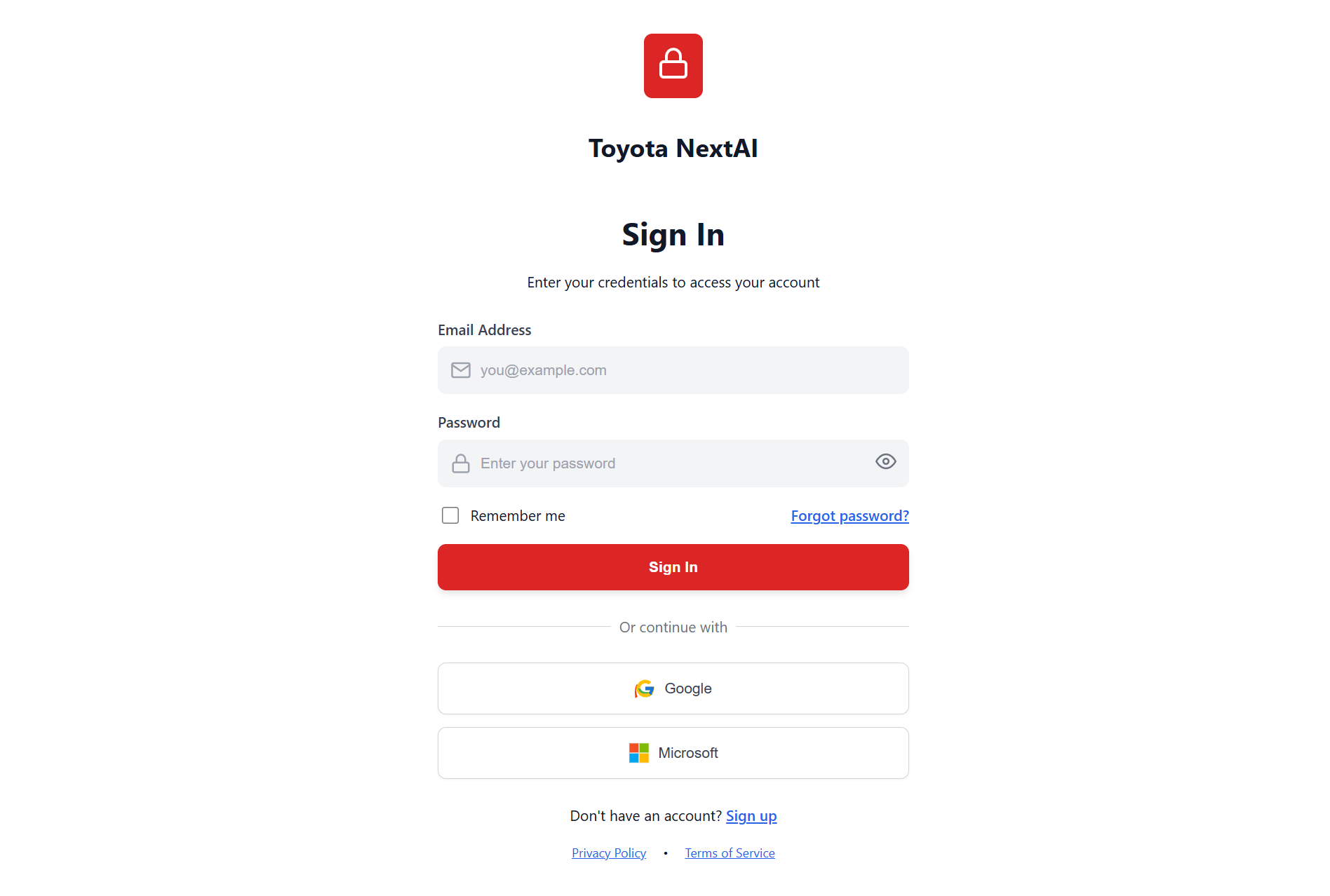
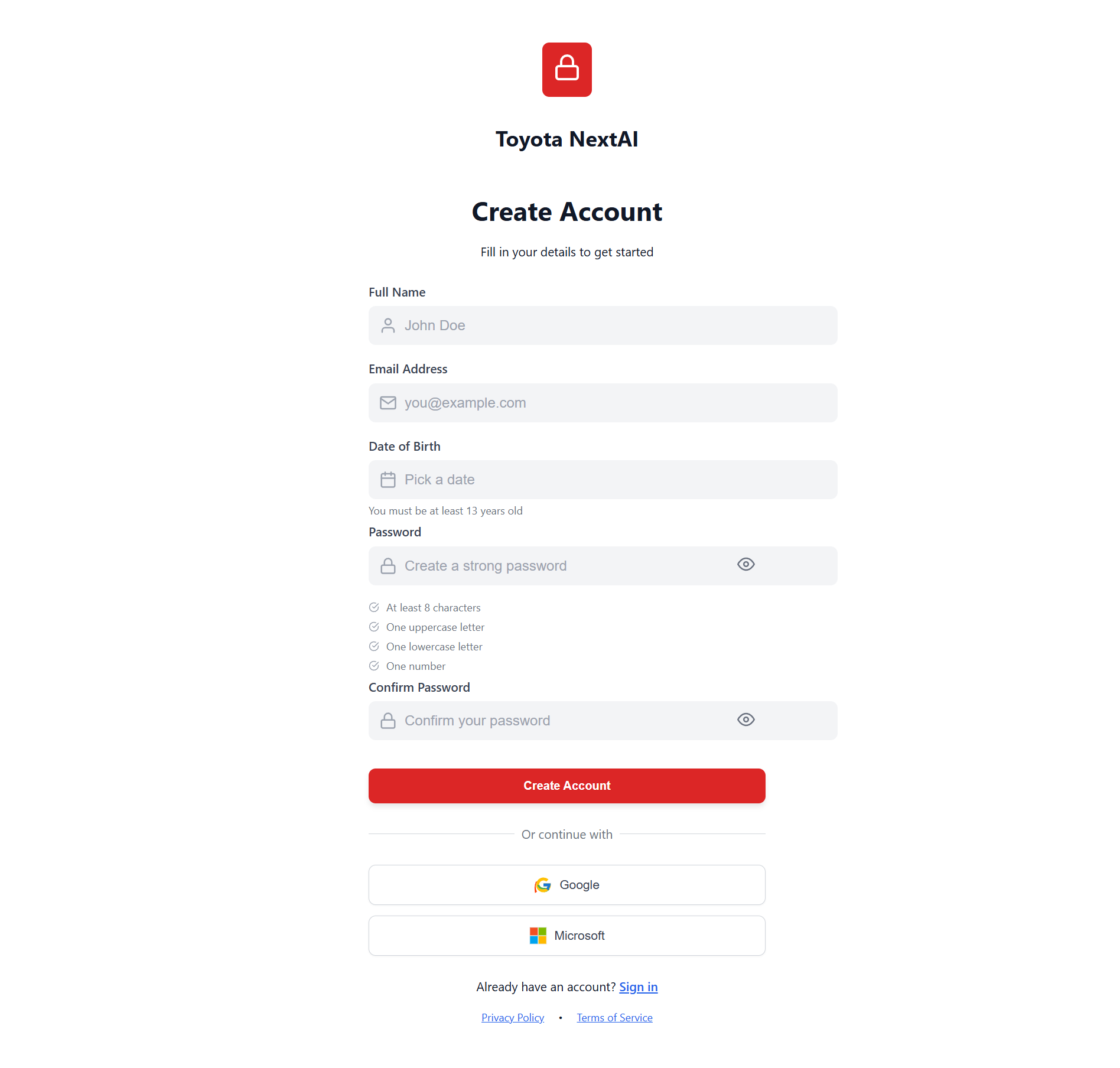
Firstly, the website has a fully functioning login and signup functionality to personalize the experience for users and save their information that they input into the website to a database. The website also include forget password option to further enhance user experience and ensure minimal challenges for the users when they are trying to log in. After the sign up page, the user is asked to enter financial information about themselves because these factors are going to be crucial for the AI to determine which car models and from which dealerships would best match the capabilities of the users. Then, the users are directed to the home page where they can chat with the AI model to get suggestions for cars based on a series of factors--such as suv/compact, number of seats, and other crucial specifications. The users will be able to navigate through several recommendations that will be presented in a easy-to-use UI.
How we built it
We implemented the Software Development Life Cycle to help us successfully construct the solution for the problem we observed. Additionally, SDLC was essential to help us break down the project into smaller and manageable parts, especially given that we only had 24 hours to work on the project. To design the website, we were inspired by Toyota and Capital One websites' color and design theme and a simple and straightforward layout like Google. For the frontend, we utilized react and typescript along with Tailwind CSS to make a professional yet cool website to attract users and keep them engaged during their time on the website exploring the features we offer. For the backend, we first web scraped Toyota for only car data information and stored it in Firebase for our AI model to reference when finding the best car models for the users. Then, we used Flask, APIs, python, and frameworks like Langchain to create the AI model that takes users' input regarding their car preferences and financial background to offer the best and most appropriate car models.
Challenges we ran into
One of our biggest obstacles we faced was designing and planning a clear solution that outlines a clear structure of user input, financial data, and AI recommendations. We also had to select the most effective frameworks and APIs by testing the different options to find the best fit for performance and LangChain integration. Another challenge we had to overcome was finding the appropriate and sufficient data to train our AI model effectively. In order to integrate the database with LangChain, we had to carefully coordinate between the structured data and AI's language model.
Accomplishments that we're proud of
Overall, we are proud of creating a very professional user-friendly interface that solves a real-time problem and one that is annoying to almost everyone. Additionally, we were delighted with the new skills and concepts we learned, explored, and applied to project all within 24 hours.
What we learned
We learned how to collaboratively work on a complex project while maintaining focus, dedication, and stability because we had to face several major challenges at all stages of the development of the website. For instance, in the initial stage, we were discussing what exactly to implement to solve the challenge problem since there were many potential solutions and we had to analyze the potential advantages and drawbacks based on our conceptual understanding and past experience. Additionally, we learned new frameworks and features of coding to execute our project.
What's next for Team Registration
Built With
- beautiful-soup
- cursor
- firebase
- flask
- geminiapi
- github
- python
- react
- typescript


Log in or sign up for Devpost to join the conversation.