-
-
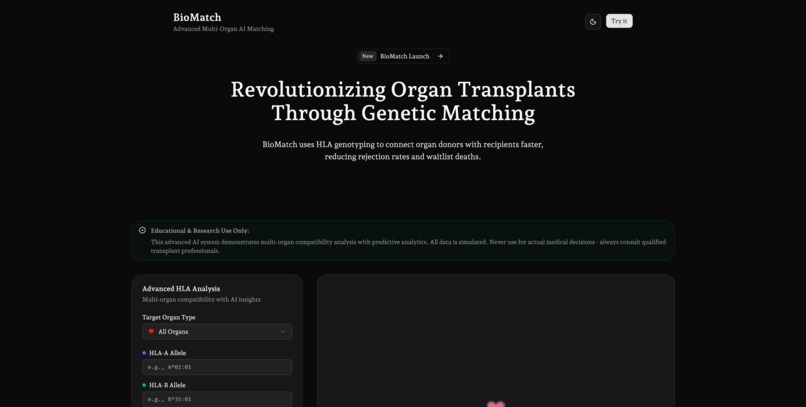
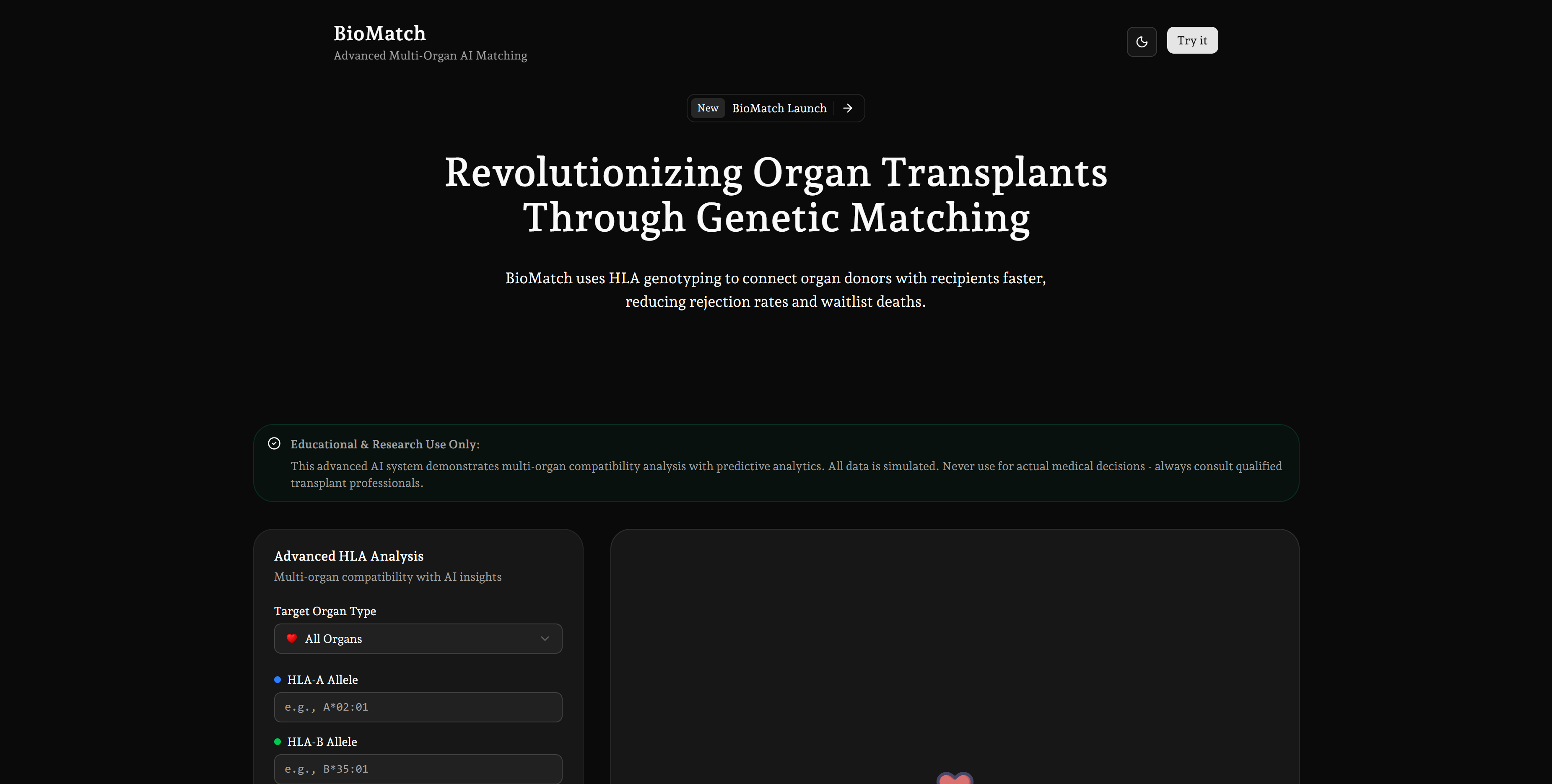
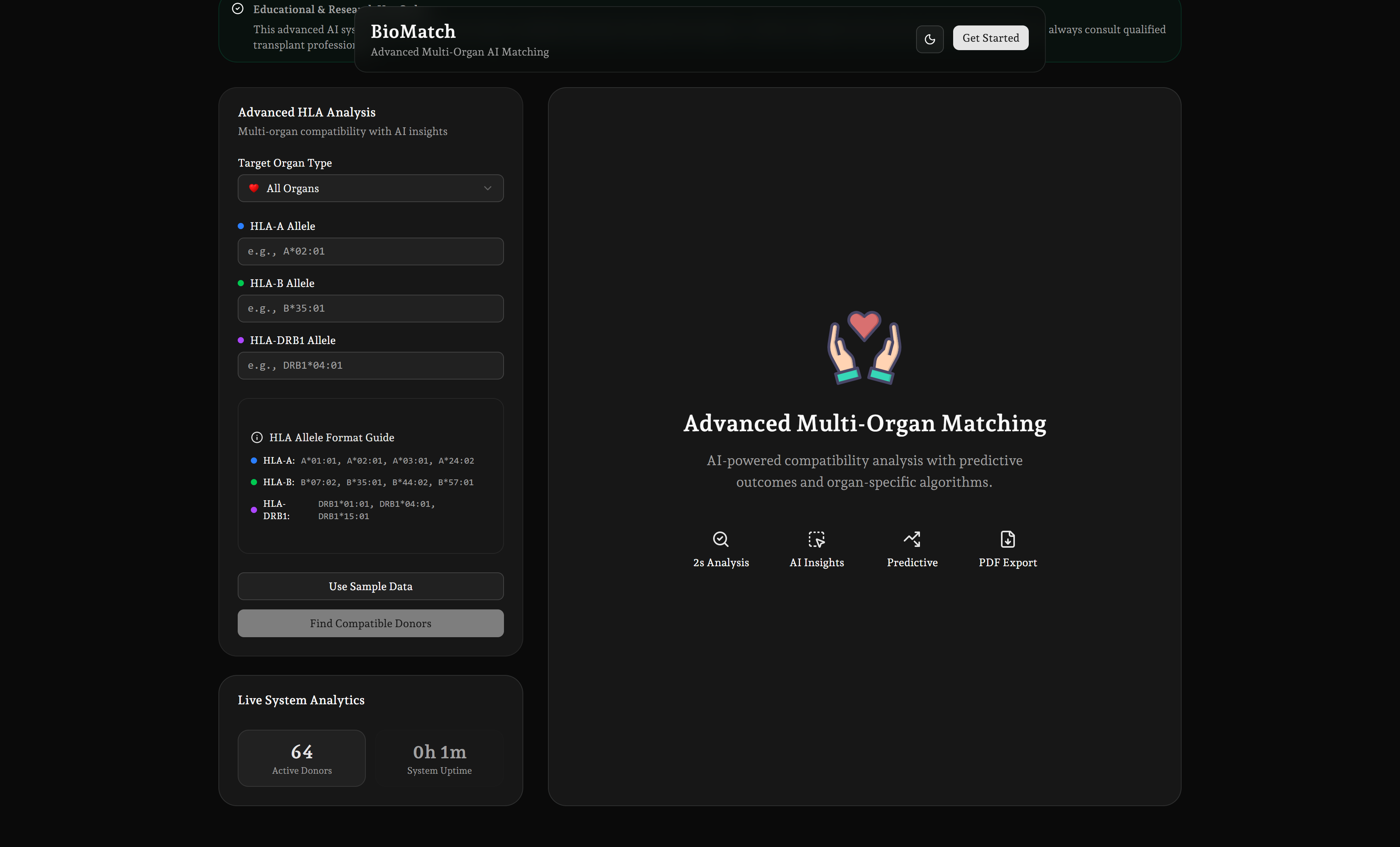
Intro to the app
-
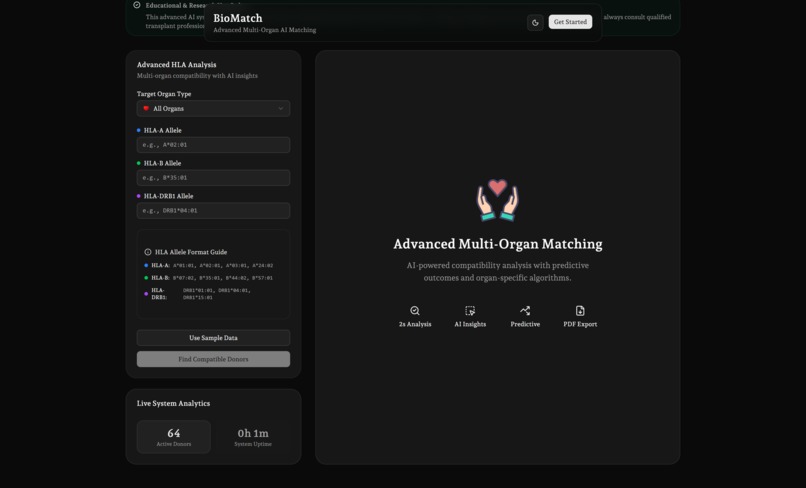
HLA data input area
-
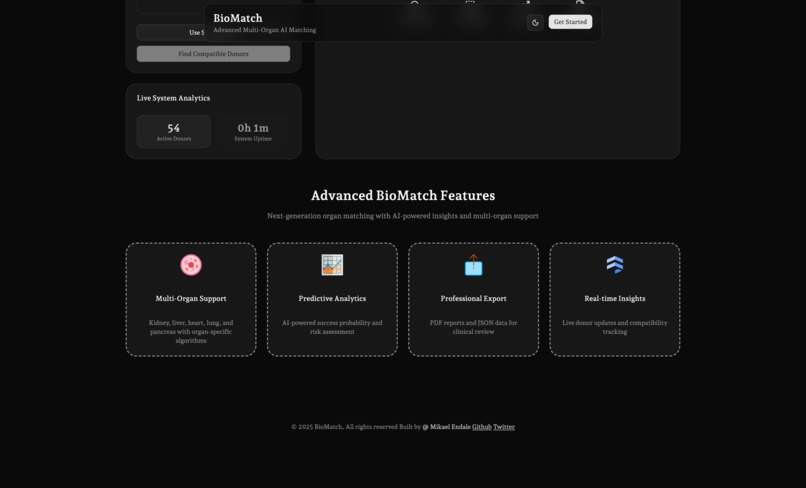
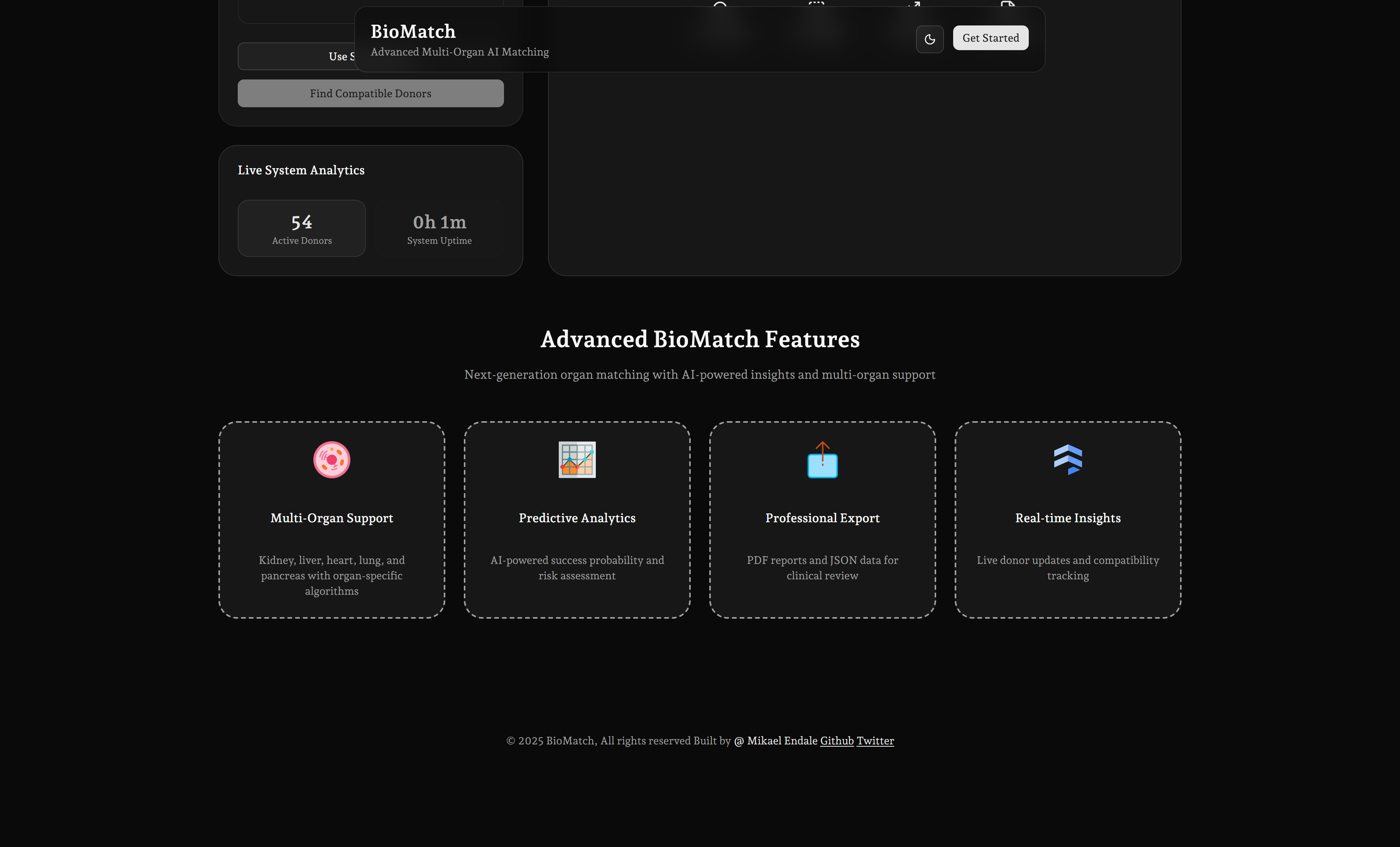
Product features
-
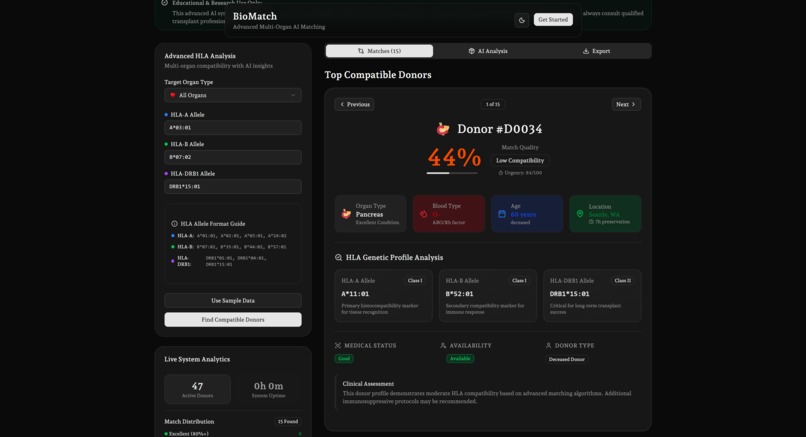
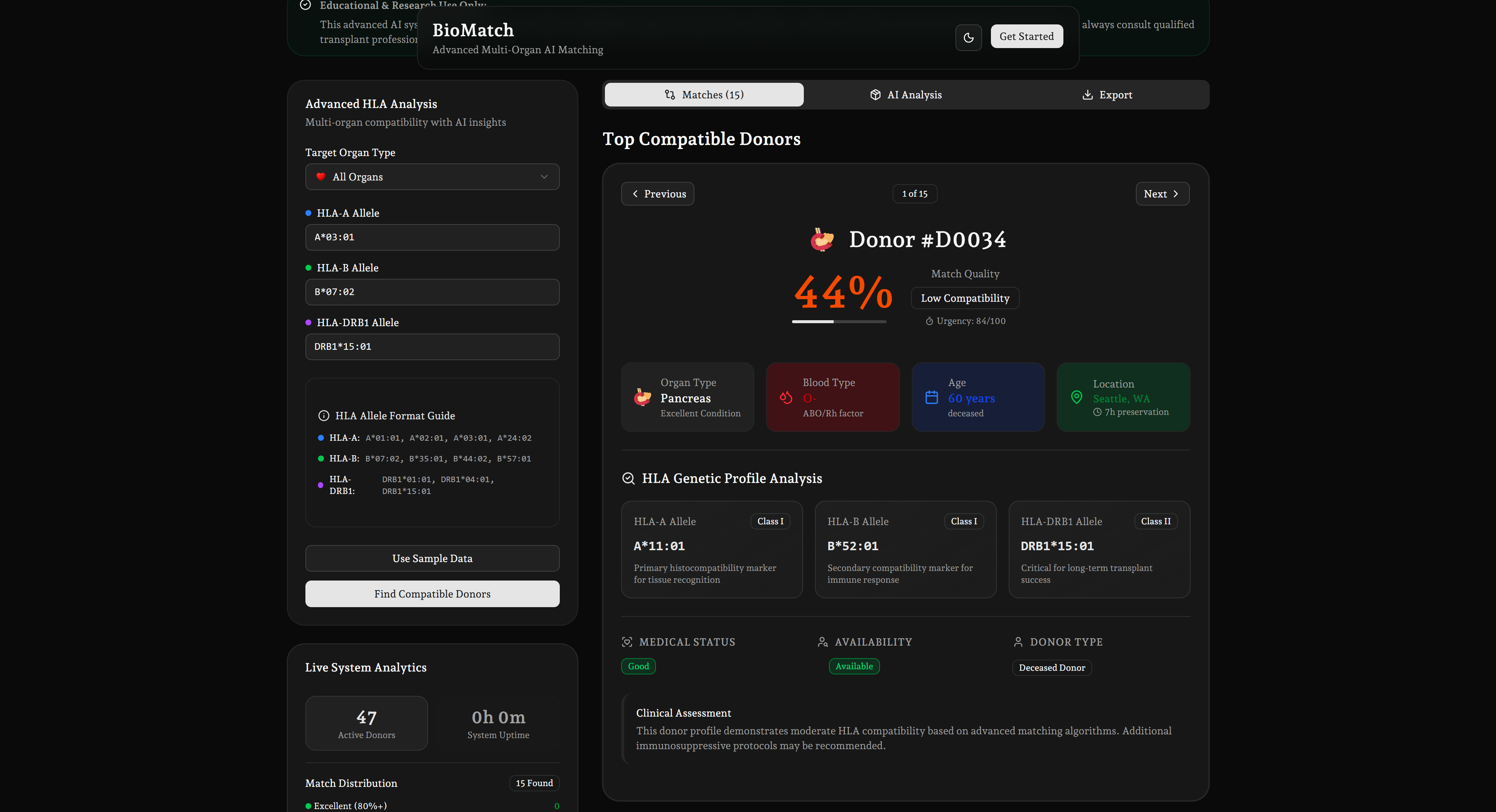
Fetched Donors list from database
-
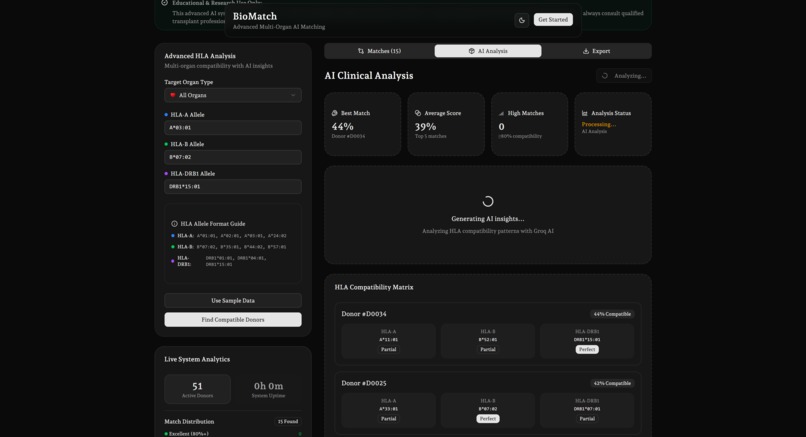
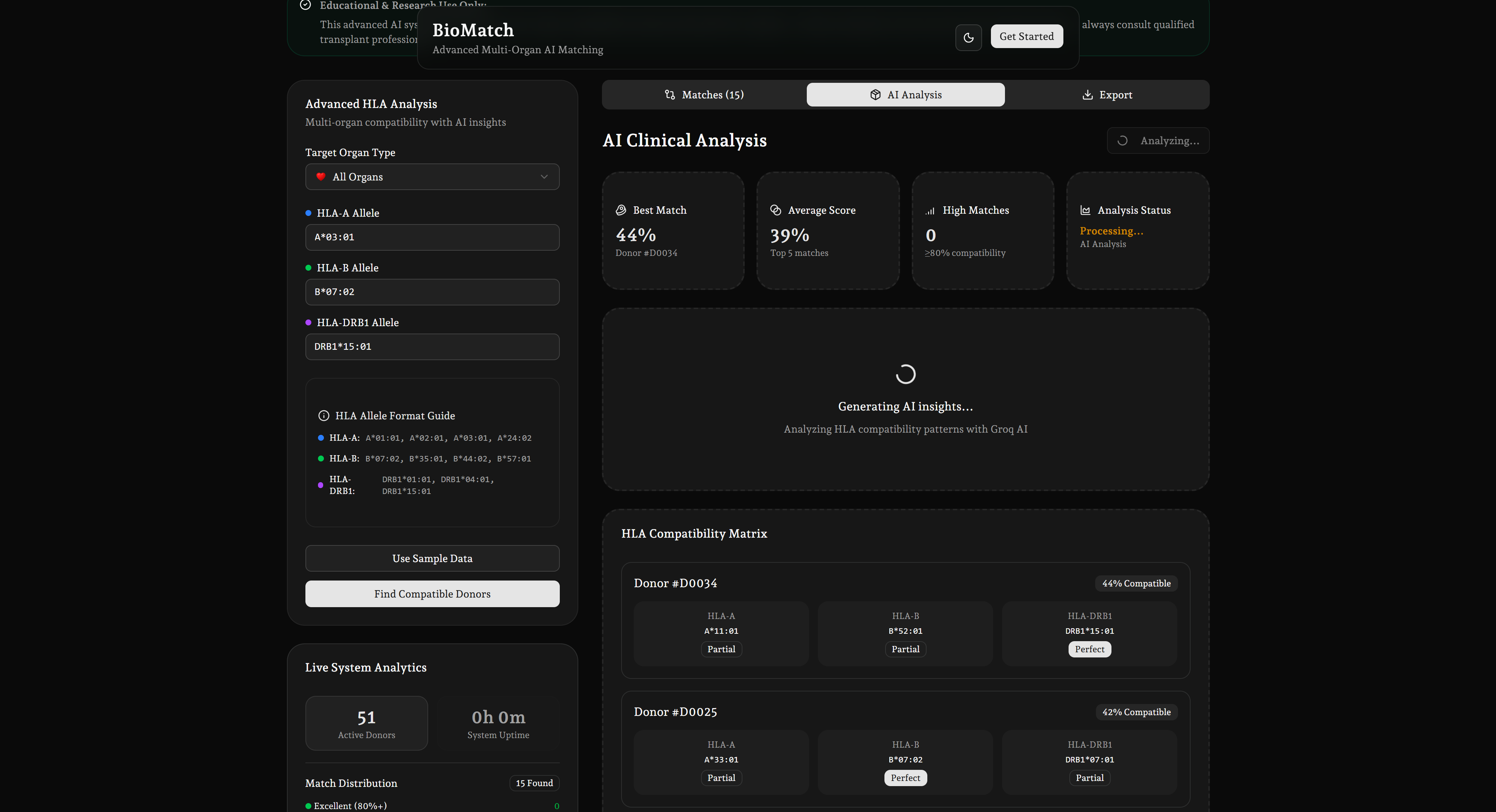
AI analyzing on-process
-
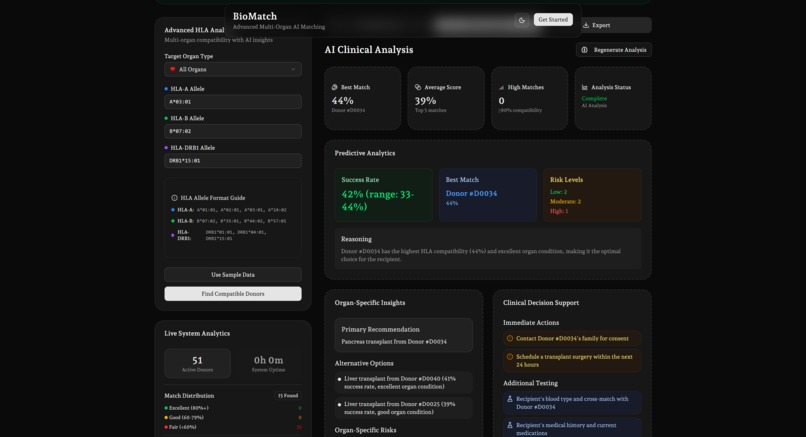
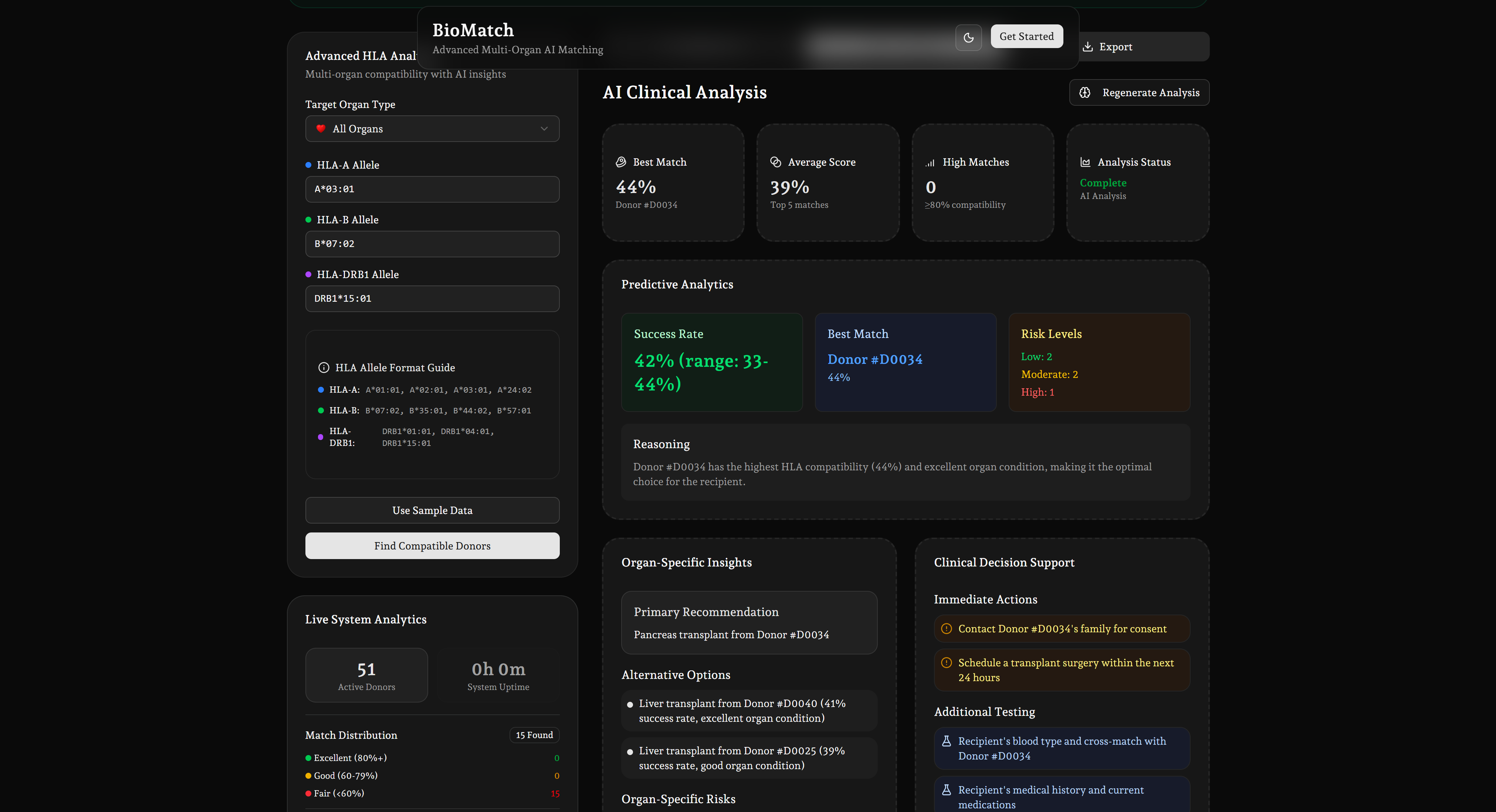
AI match result and recommendation/insights
-
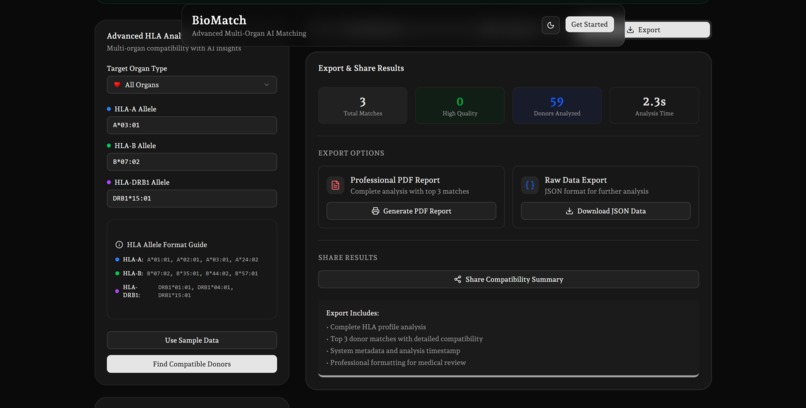
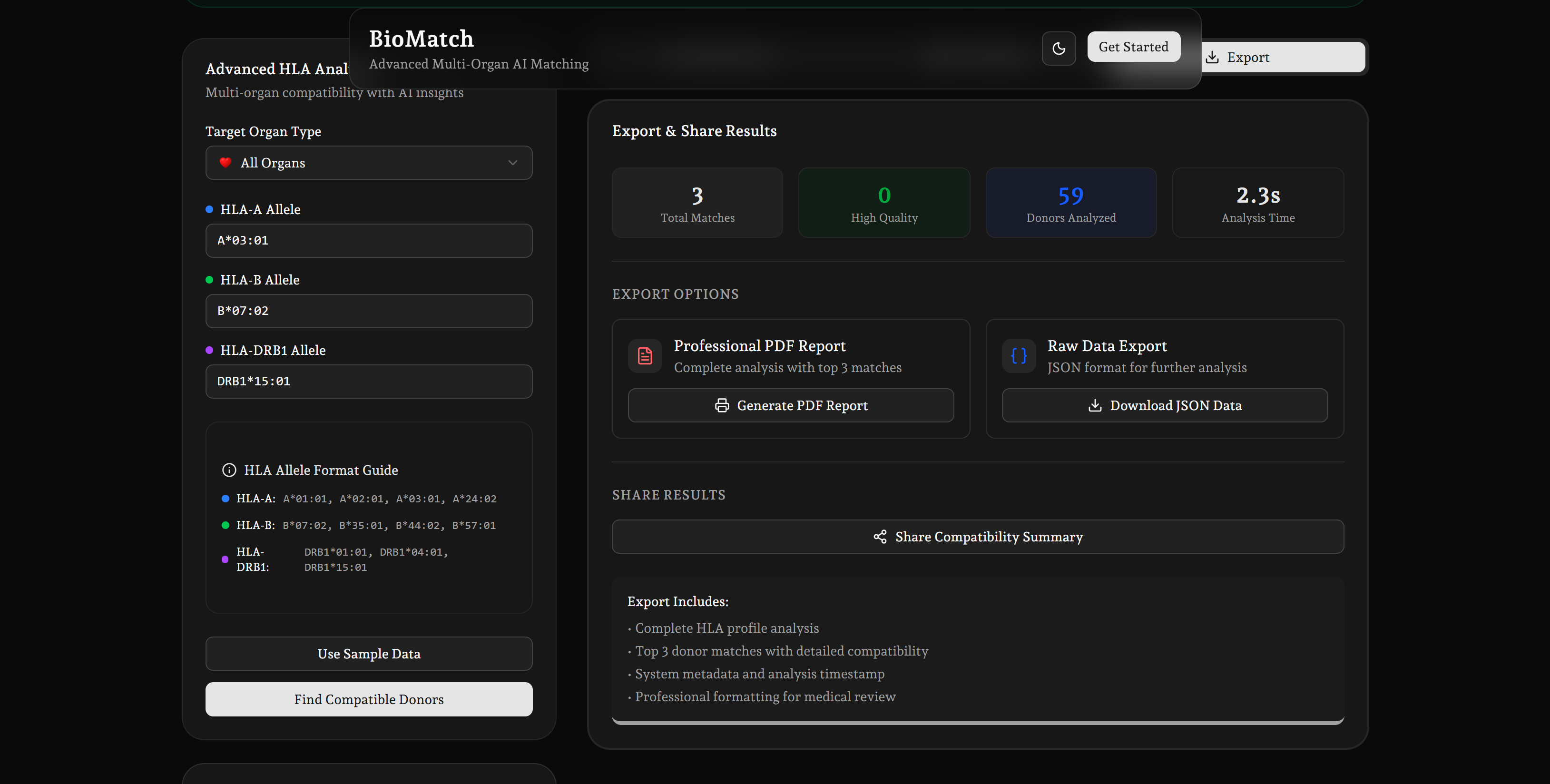
Exporting to desired format PDF/JSON
BioMatch: DNA-Compatible Organ Donor Finder
Inspiration
Every 10 minutes, someone dies waiting for an organ transplant. With over 100,000 Peoples on waiting lists currently (OPTN), I realized that the bottleneck isn't just organ availability, it's intelligent matching. Current systems rely on basic blood type compatibility, but HLA (Human Leukocyte Antigen) genetic matching can reduce rejection rates by up to 40%.
For me, this problem is deeply personal my dad is still waiting for a kidney transplant due to CKD. Seeing firsthand how long and uncertain this process is motivated me to build BioMatch. I wanted to create something that could improve the odds for people like him, and the thousands of families facing the same struggle.
What it does
BioMatch is a DNA-based organ donor matching system that revolutionizes transplant compatibility:
- Multi-Organ Support: Matches kidney, liver, heart, lung, and pancreas with organ-specific algorithms
- Real HLA Data: Uses authentic population genetics data from 8 genetic loci (A, B, C, DPA1, DPB1, DQA1, DQB1, DRB1)
- AI Predictive Analytics: Groq-powered insights predict transplant success rates and rejection risks
- Professional Interface: Medical-grade UI with dark mode, responsive design, and PDF/JSON export
- Real-time Processing: 3 second analysis with live donor database updates
Key Innovation: It doesn’t just find match, it also predicts outcomes using AI analysis of genetic compatibility patterns.
How I built it
- Frontend: React with TypeScript, Tailwind CSS, and responsive design
- AI Integration: Groq API for clinical insights and predictive analytics
- Data Source: Real HLA allele frequency data from population genetics databases Allele Frequency
- Matching Algorithm: Custom compatibility scoring with cross-reactive groups and partial matches
- Architecture: Client-side processing with TSV data parsing and weighted random selection
Technical Highlights:
- Integrated authentic HLA data from 8 TSV files containing real population genetics over 38,000 rows/tsv of data
- Built organ-specific matching algorithms with different compatibility thresholds
- Created AI-powered clinical decision support with structured JSON responses
- Implemented PDF export with comprehensive medical reports
Challenges I ran into
- Data Integration Complexity: Parsing real HLA frequency data from multiple TSV files and handling different population distributions
- Medical Accuracy: Ensuring my matching algorithms reflect actual transplant medicine practices
- AI Response Parsing: Converting Groq's natural language responses into structured medical insights
- Performance Optimization: Loading large genetic datasets without blocking the UI
- React Object Rendering: Debugging complex object structures being passed as React children
Biggest Challenge: Making the system medically credible while keeping it accessible for demonstration.
Accomplishments that I'm proud of
- Real Medical Data: Successfully integrated authentic HLA allele frequencies from population genetics databases
- AI Superiority: Built predictive analytics that go beyond basic matching to forecast transplant outcomes
- Professional Quality: Created a medical-grade interface that hospitals could actually use
- Technical Innovation: Developed organ-specific algorithms with weighted compatibility scoring
- Complete System: From HLA input to AI insights to PDF export a full end-to-end solution
Most Proud: I built something that could genuinely save lives including my dad’s, if deployed in real medical settings.
What I learned
- Population Genetics: Deep dive into HLA allele distributions across different ethnic groups
- Transplant Medicine: Understanding the complexity of organ compatibility beyond blood types
- AI Integration: How to structure prompts for consistent, parseable medical insights
- Medical UI/UX: Designing interfaces that convey trust and professionalism for healthcare
- Data Processing: Efficiently handling large genetic datasets in client-side applications
Key Insight: The gap between current organ matching systems and what's technically possible with AI and genetics is enormous.
What's next for BioMatch
Immediate Enhancements
- Blockchain Integration: Immutable matching records for audit trails
- Mobile App: Emergency matching for on-call transplant coordinators
- API Development: Integration with hospital EMR systems
- Global Network: International organ sharing protocols
Long-term Vision
- FDA Approval: Clinical trials to validate AI predictions against real transplant outcomes
- Hospital Partnerships: Pilot programs with major transplant centers
- Machine Learning: Train models on historical transplant data for even better predictions
- Real-time Network: Live donor database with instant matching notifications
Ultimate Goal: Replace current organ matching systems with AI-powered precision medicine that doubles transplant success rates and saves thousands of lives annually.
Built with ❤️ for saving lives through technology, and for my dad @Mikael Endale


Log in or sign up for Devpost to join the conversation.