-
-
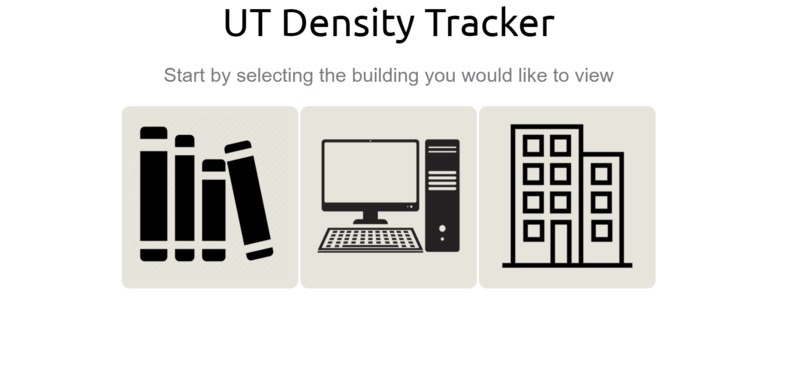
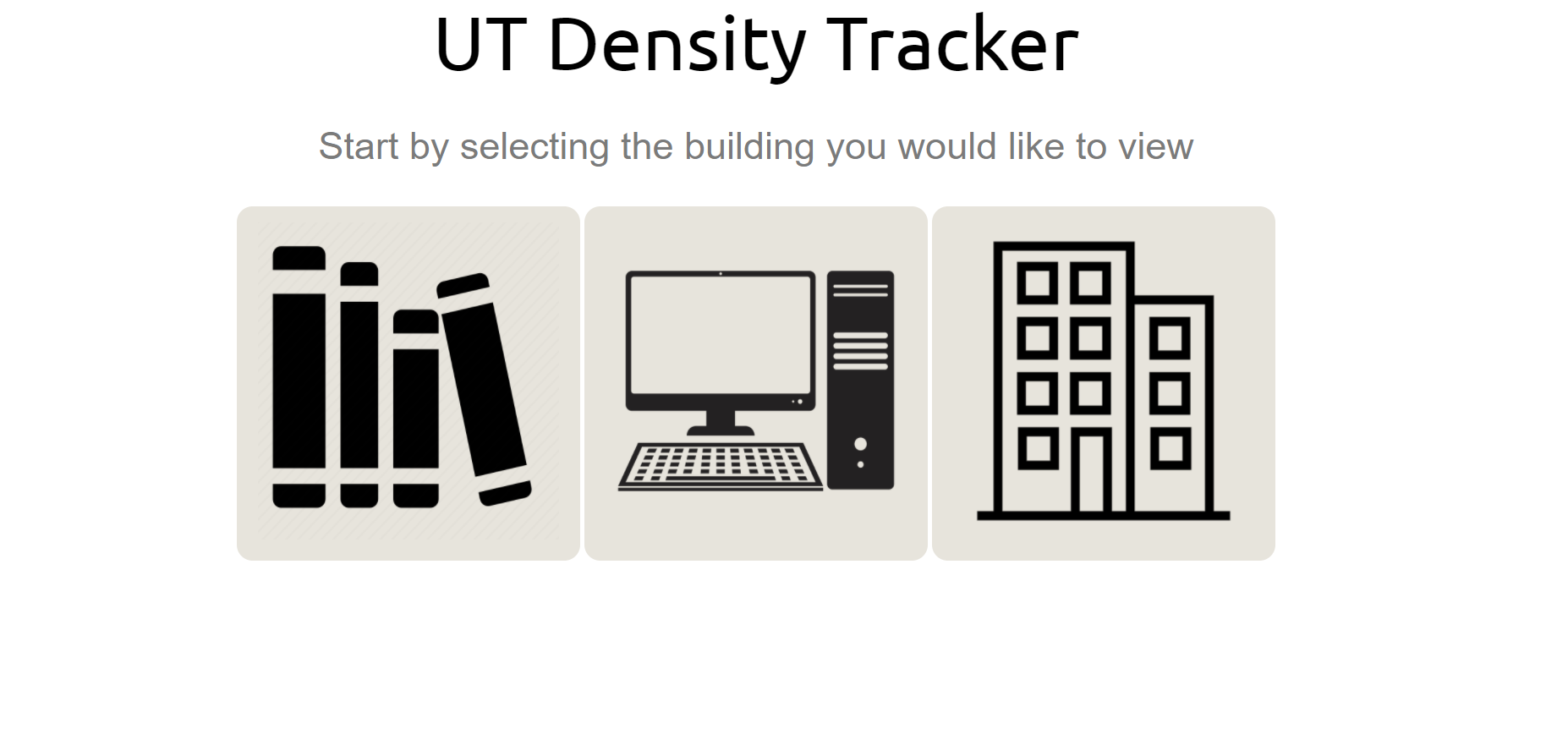
Front page of the html front page
-
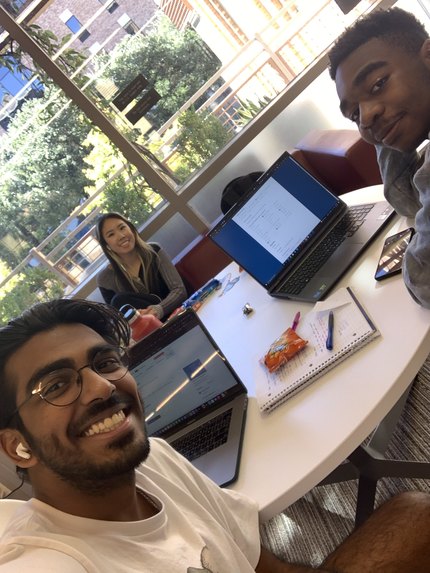
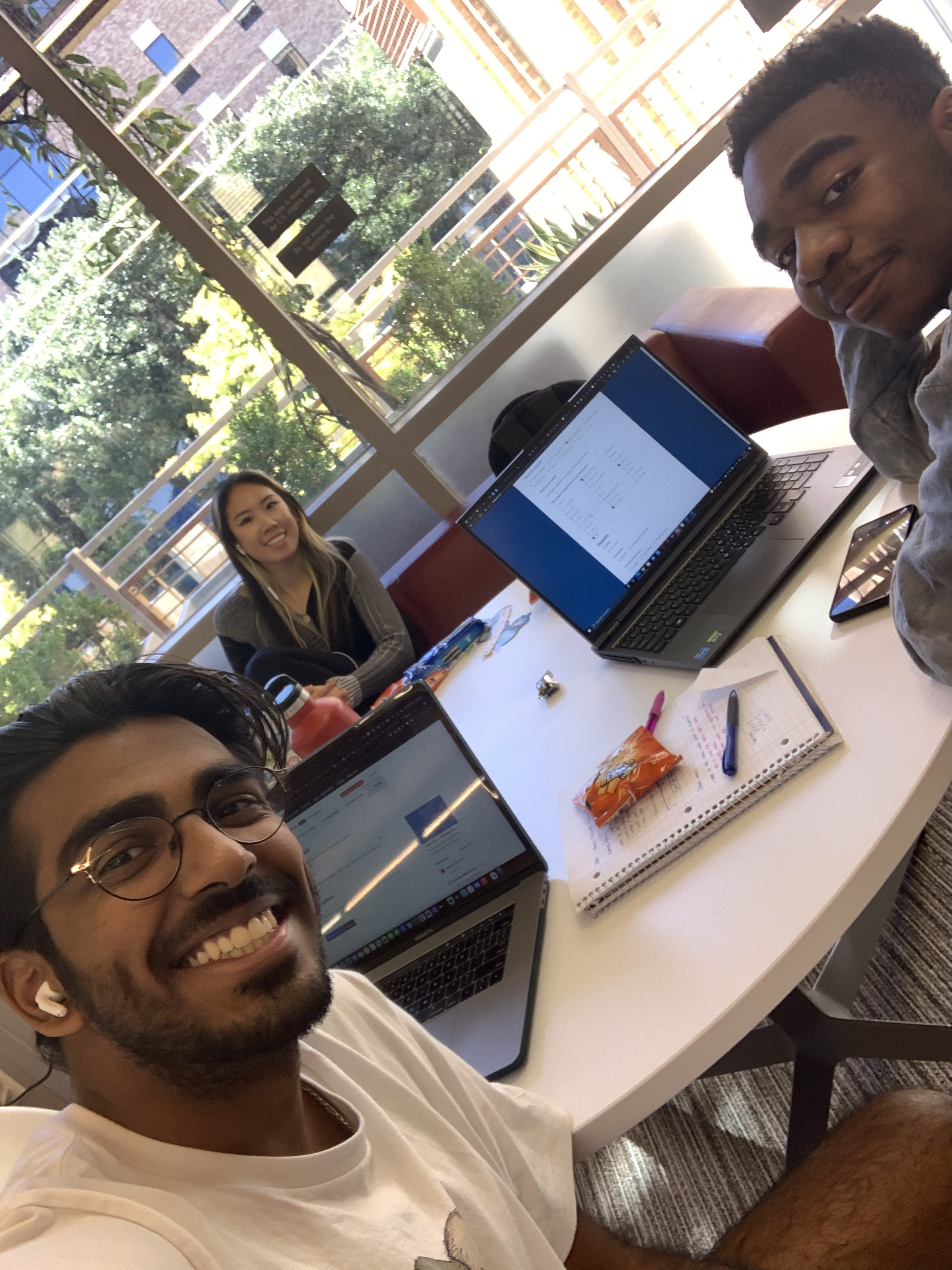
HACKTX 2021 team !
Inspiration
As a team of full time UT students, we've often felt the frustration of wanting to go to a building to study and finding nothing but full tables and packed rooms--we decided that we would take this opportunity to attempt to address this issue by finding a way to display how densely population different UT buildings and floors are. Futhermore, the pandemic has made it apparent how dangerous crowds can be, health-wise. Being able to see how densely crowded buildings are empowers students to choose if they want to avoid a high-density building and study somewhere more sparsely populated.
What it does
The app is simple enough--it greets the use by asking them what building and floor they are interested in, and then displays the "busyness meter". Below the meter, there is an option to input data yourself. Selecting this allows the user to input how busy they interpret that particular floor in that particular building to be. The data is collected, averaged out, and updated to the "busyness meter". Thus, crowdsourcing is utilized to collect real-time data and display it to students planning their next studying session.
How we built it
We used a combination of front-end html and css along with back-end python to build the app.
Challenges we ran into
This is the first Hackathon all three of us have attended, and two of us are not CS majors. We are not very familiar with python for the most part, so we had a lot of difficult figuring out how to translate our ideas into a language that machines could interpret and display. Furthermore, the integration of all of these scripts together into one cohesive application was a daunting challenge that we have not tackled before. Ultimately, we were stumped when it came to combining the front-end and back-end elements. We were able to write the two parts separately, but failed in the process of using flask to have the two communicate.
Accomplishments that we're proud of
We are very proud of the concept and how well we were able to integrate it using coding with out limited knowledge. We spent much of our time googling and youtubing how to do various things in python, html, css, and even in the combination of them all together to create an app. The fact that we were able to use our unique and limited skillset together to create the backend and frontend of this app--we're proud of that.
What we learned
A lesson thing that we learned is that we are limited by our programming knowledge. Many times we would discuss ideas that we had and things that we wanted our app to do only to realize that none of us knew how to do it. Consequently, many desired implementations had to be discarded because they were unrealistic with our level of programming experience. Additionally, we had to lower our expectations once we realized that we were actually struggling in the implementation of the actual app.
What's next for HACKTX21 - UT Density Tracker
The most obvious answer would be to combine the front-end and back-end code into making one cohesive, connected app. Ideally by our next Hackathon, we'll be more familiar with all the lingo and processes of combining different language and components. Furthermore, as aforementioned, there were a lot of implementations that we were not able to act on due to our limited knowledge. We would love to apply these in the future--some of these ideas include a weighted contribution for people who submit data closer to real-time, an incentive program that rewards submitting data, a location-accesser that can automatically find what building you are in and verify your submission, and of course the addition of more buildings to encompass the entirety of the forty acres. All in all, we are happy with the progress made on this project but it's far from its final form.


Log in or sign up for Devpost to join the conversation.