-
-

Main Screen
-
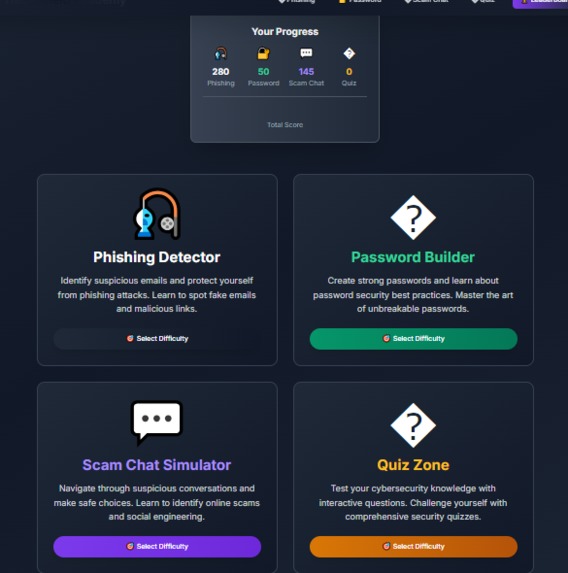
Dashboard
-
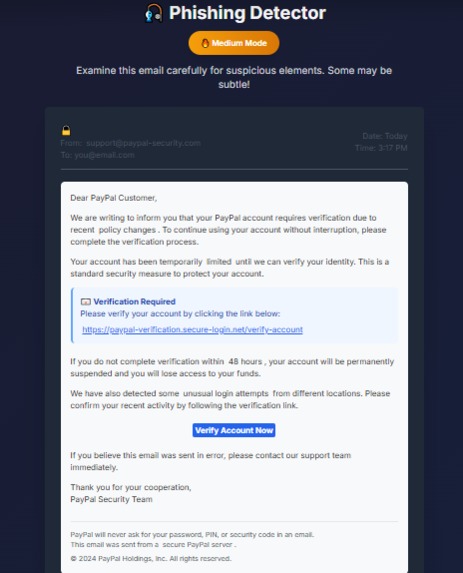
Phishing Detector
-
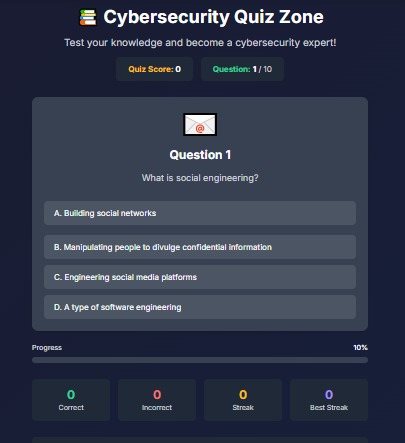
Quiz Zone
-
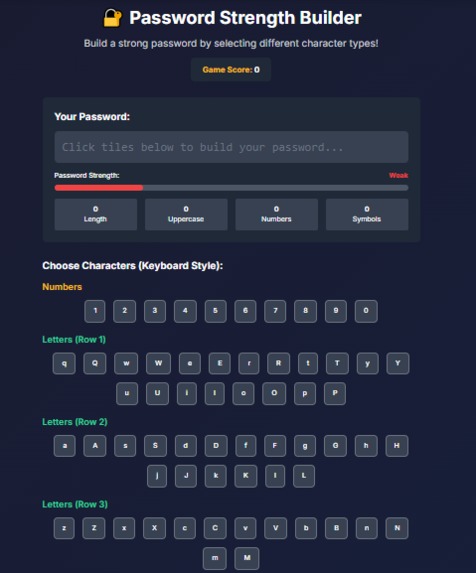
Password Builder
-
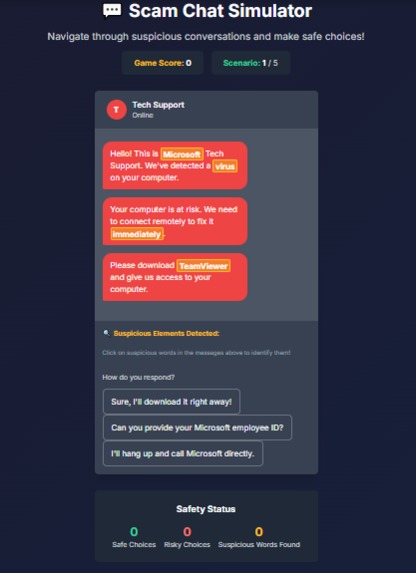
Scam Chat Simulator
-
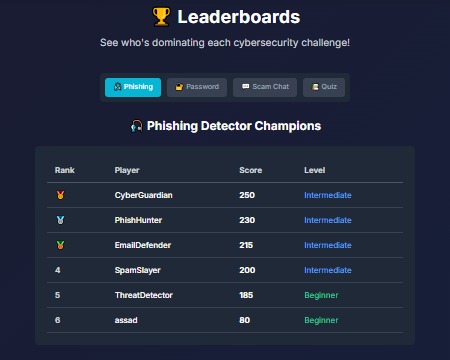
Leaderboards


Inspiration 🚀
In today's digital age, cybersecurity threats are everywhere - from phishing emails to weak passwords to social engineering scams. Traditional cybersecurity education is often dry, theoretical, and fails to engage learners effectively. We were inspired to create HackShield Academy after witnessing how many people, including tech-savvy individuals, still fall victim to basic cyber attacks.
Our inspiration came from:
- Gaming platforms that make learning addictive and fun
- Real-world incidents where simple awareness could have prevented major breaches
- The need for accessible education that doesn't require a cybersecurity background
- Interactive learning principles that improve retention and engagement
What We Learned 📚
Building HackShield Academy taught us valuable lessons:
Technical Skills
- Advanced CSS animations and modern web design patterns
- JavaScript game mechanics and interactive UI development
- Responsive design challenges across different devices
- Local storage management for persistent user progress
- Performance optimization for smooth gaming experiences
Cybersecurity Insights
- Real phishing tactics used by cybercriminals
- Password security best practices and common vulnerabilities
- Social engineering techniques and psychological manipulation
- User behavior patterns when facing security threats
Design & UX
- Gamification principles that drive user engagement
- Progressive difficulty systems that don't overwhelm beginners
- Visual feedback mechanisms that reinforce learning
- Accessibility considerations for diverse user bases
How We Built It 🛠️
Architecture & Design
We chose a vanilla web stack for maximum compatibility and performance:
Frontend Technologies:
- HTML5 - Semantic structure and accessibility
- CSS3 - Modern styling with gradients, animations, and grid layouts
- JavaScript (ES6+) - Interactive game logic and user management
- Tailwind CSS - Rapid responsive design and consistent styling
Development Process
Research Phase \( t_1 \)
- Analyzed real phishing emails and attack vectors
- Studied gamification principles and learning psychology
- Researched existing cybersecurity education platforms
Design Phase \( t_2 \)
- Created wireframes for each game module
- Designed progressive difficulty algorithms
- Developed visual feedback systems
Development Phase \( t_3 \)
- Built modular game components
- Implemented scoring and leaderboard systems
- Created responsive layouts for all devices
Testing Phase \( t_4 \)
- User testing with different skill levels
- Cross-browser compatibility testing
- Performance optimization
Game Development Algorithm
Our difficulty progression follows this mathematical model:
$$ \text{Difficulty Score} = \alpha \cdot \text{(Suspicious Elements)} + \beta \cdot \text{(Distraction Level)} + \gamma \cdot \text{(Time Pressure)} $$
Where:
- \( \alpha = 0.4 \) (weight for suspicious elements)
- \( \beta = 0.3 \) (weight for visual distractions)
- \( \gamma = 0.3 \) (weight for time constraints)
Challenges We Faced 💪
Technical Challenges
Cross-Platform Compatibility
- Different browsers handled CSS animations differently
- Mobile touch events vs. desktop mouse events
- Solution: Implemented feature detection and progressive enhancement
Performance Optimization
- Heavy DOM manipulation in games caused lag
- Large image assets slowed loading times
- Solution: Used CSS transforms, lazy loading, and image optimization
State Management
- Tracking user progress across multiple games
- Maintaining leaderboard consistency
- Solution: Designed a robust local storage system with data validation
Design Challenges
Balancing Realism vs. Usability
- Real phishing emails are often subtle and hard to detect
- Making games too easy defeats the educational purpose
- Solution: Created progressive difficulty with visual hints
Engagement vs. Education
- Gamification shouldn't overshadow learning objectives
- Maintaining educational value while keeping it fun
- Solution: Integrated feedback systems that explain why something is suspicious
Accessibility Concerns
- Color-blind users needed alternative indicators
- Screen reader compatibility for visually impaired users
- Solution: Added multiple feedback mechanisms and ARIA labels
User Experience Challenges
Diverse Skill Levels
- Beginners get overwhelmed, experts get bored
- Different learning preferences and speeds
- Solution: Implemented adaptive difficulty and multiple game modes
Motivation & Retention
- Keeping users engaged beyond first play
- Providing sense of progression and achievement
- Solution: Leaderboards, badges, and progressive unlocking
What's Next 🔮
We're excited to expand HackShield Academy with:
- AI-powered adaptive learning that adjusts to user performance
- Multiplayer competitions and team-based challenges
- Advanced social engineering simulations
- Integration with real security tools and APIs
- Mobile app for on-the-go learning
- Corporate training modules for businesses
Impact & Vision 🎯
HackShield Academy aims to make cybersecurity education:
- Accessible to everyone regardless of technical background
- Engaging through gamification and interactive experiences
- Effective by using proven learning techniques
- Scalable to reach global audiences
We believe that better cybersecurity education today creates a safer digital world tomorrow.
Built With
- css3
- es6+)
- html5
- javascript
- tailwind


Log in or sign up for Devpost to join the conversation.