💡 Inspiration
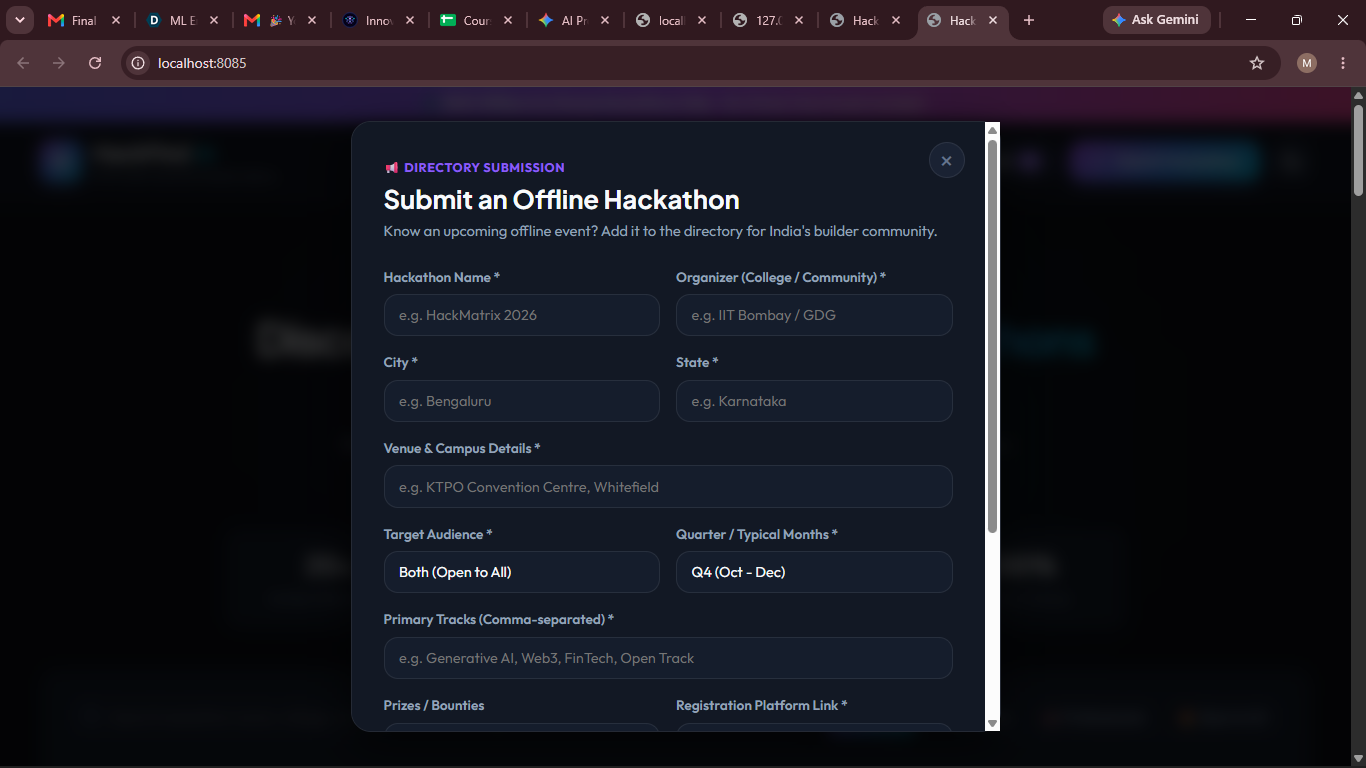
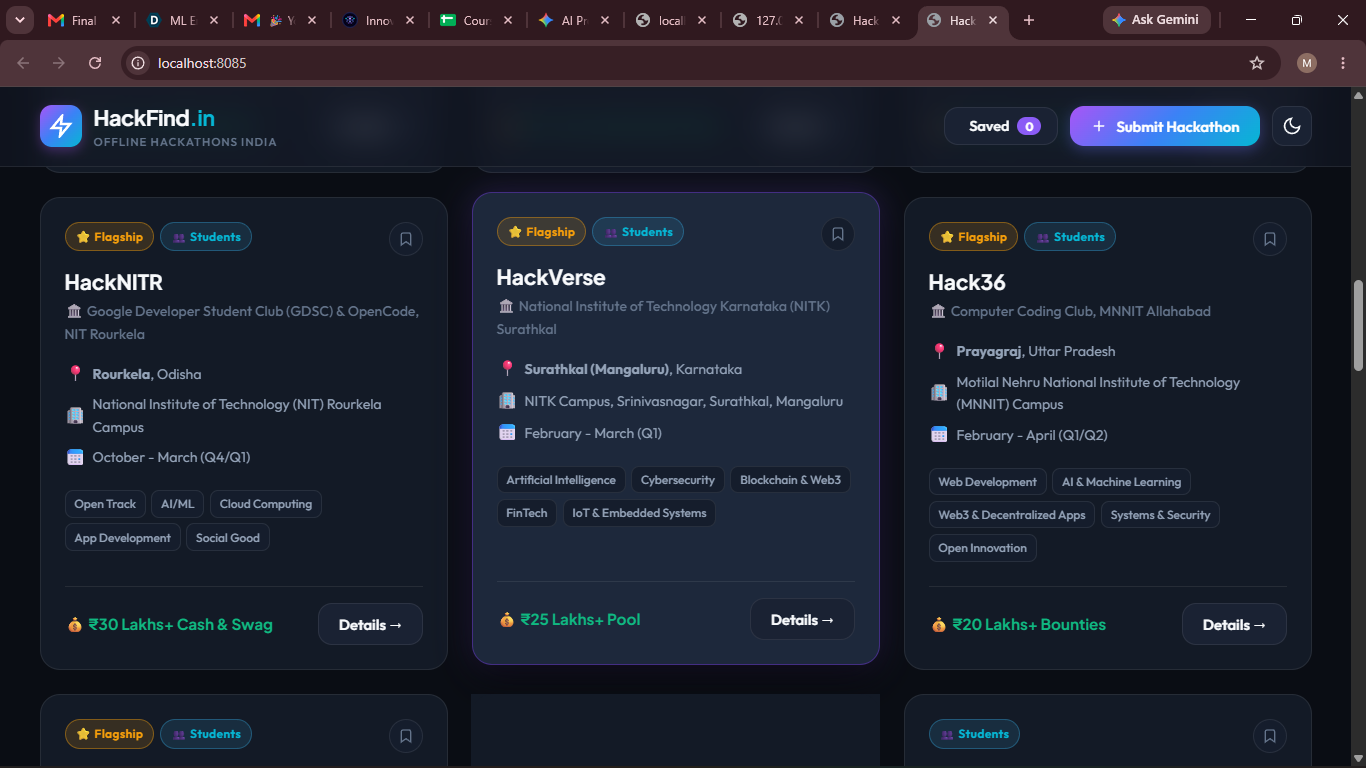
India has one of the largest developer and student communities in the world, with thousands of hackathons held every year. However, finding offline/in-person hackathons is fragmented across dozens of platforms, university portals, and social media channels. Students often miss local opportunities, while event organizers struggle with targeted reach.
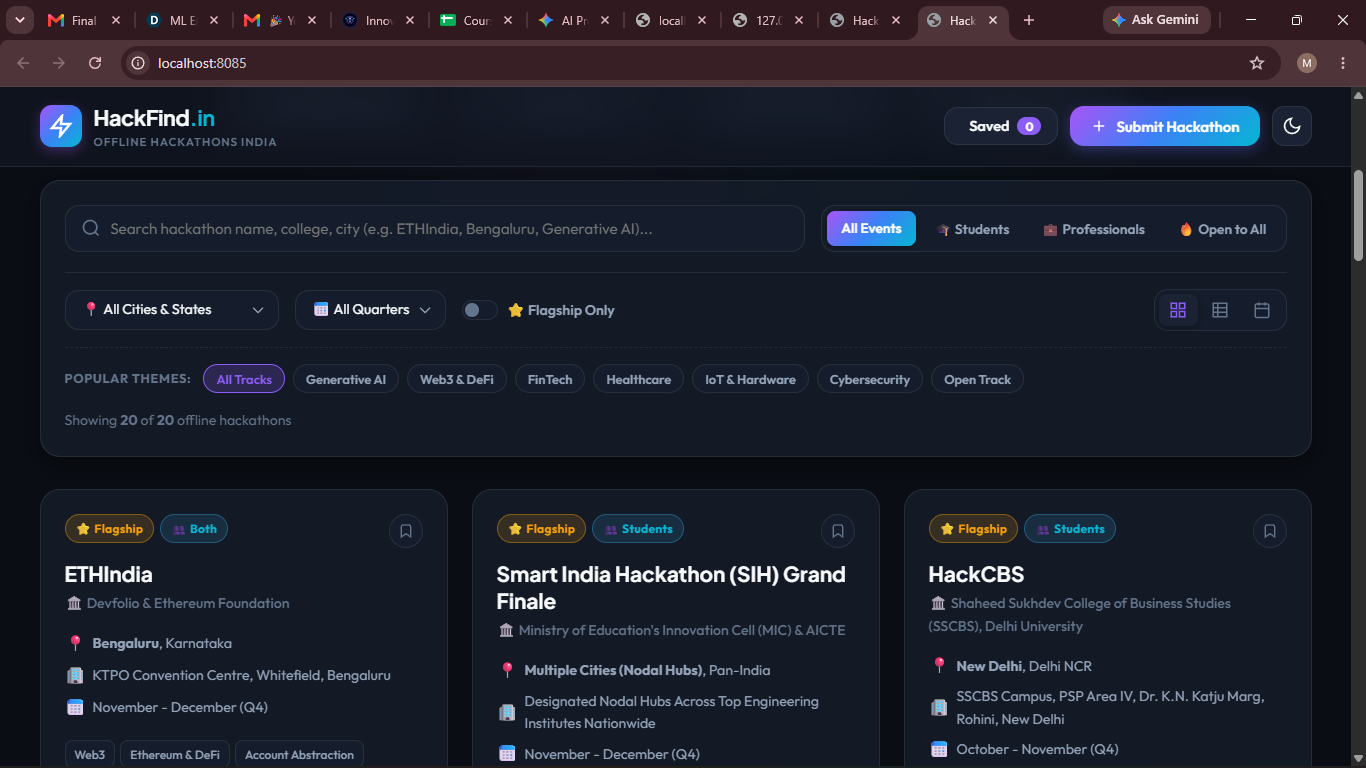
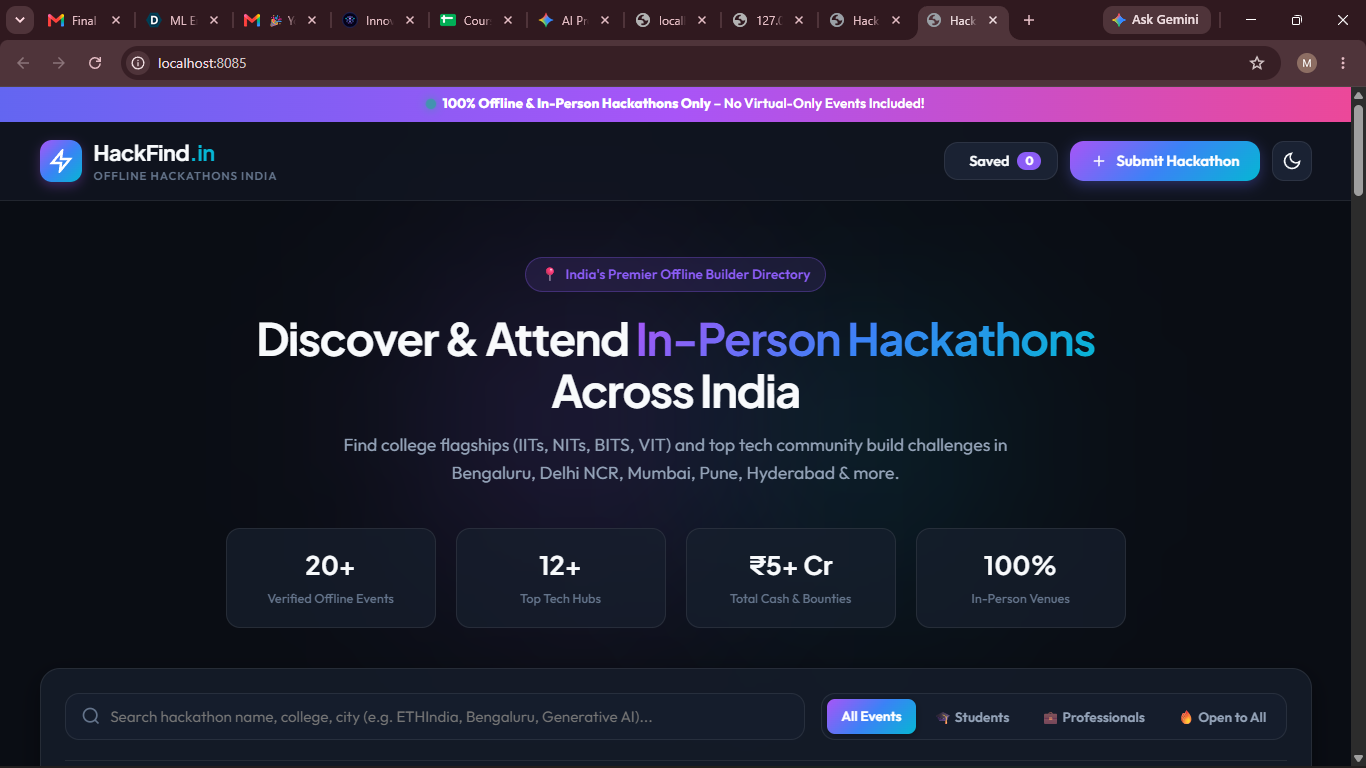
We were inspired to build HackSpot to bridge this gap—creating a unified, intelligent discovery platform that aggregates offline hackathons across India into a single, seamless hub.
🛠️ How We Built It
We developed HackSpot using a modern web architecture focused on real-time data filtering, fast visual load times, and structured data search.
Core Architecture & Formula
To score and rank hackathon relevance for users based on distance, timing, and skill matching, we implemented a custom ranking model:
$$S = w_1 \cdot \left(1 - \frac{D}{D_{\max}}\right) + w_2 \cdot T + w_3 \cdot M$$
Where:
- $S$ = Calculated relevance score for a user
- $D$ = Distance to venue in kilometers ($D_{\max} = 1000\text{ km}$)
- $T$ = Recency / Days remaining before deadline normalized in range $[0, 1]$
- $M$ = Skill match ratio between user profile tags and hackathon tracks
Technology Stack
- Frontend: Built with React / Next.js and Tailwind CSS for a responsive, mobile-first design.
- Database & CMS: Supabase / PostgreSQL database paired with automated data ingestion pipelines.
- Integrations: REST APIs and web scrapers to fetch dynamic event updates from major community hubs like Devfolio, Unstop, and HackerEarth.
🚧 Challenges We Faced
- Normalizing Unstructured Event Data: Offline hackathons list location details in inconsistent formats (e.g., campus shorthand vs. full addresses). We had to build custom parsing logic to extract clean city and venue names.
- Offline vs. Online Filtering: Many hybrid hackathons advertise as offline but are actually 100% virtual. Filtering strictly for physical, on-ground events required strict metadata validation rules.
- Optimizing Search & Filtering Speed: Ensuring instant client-side filtering across hundreds of entries by location, domain track, and dates without page reloads.
🎓 What We Learned
- API Integration & Scraping Ethics: Deepened our understanding of aggregating distributed data sources cleanly and reliably.
- User-Centric UX Design: Discovered how critical intuitive location-based filters and one-click registration buttons are for student adoption.
- Geospatial Queries: Learned how to query database entries using spatial coordinates to calculate proximity between students and host venues.
🚀 What's Next for HackSpot
- Team Matchmaking: Enable developers to find local teammates nearby for upcoming offline events.
- Organizer Dashboard: Allow college clubs and corporate sponsors to directly list and manage their offline hackathons.
- Notification Bot: Instant WhatsApp & Discord alerts when an offline hackathon is announced in a user's target city.
Built With
- algorithms
- api
- css
- css3
- database
- design
- git
- github
- html5
- javascript
- json
- latex
- next.js
- node.js
- postgresql
- python
- react
- rest
- scraping
- supabase
- tailwind
- typescript
- ui/ux
- vercel
- web

Log in or sign up for Devpost to join the conversation.