-
-
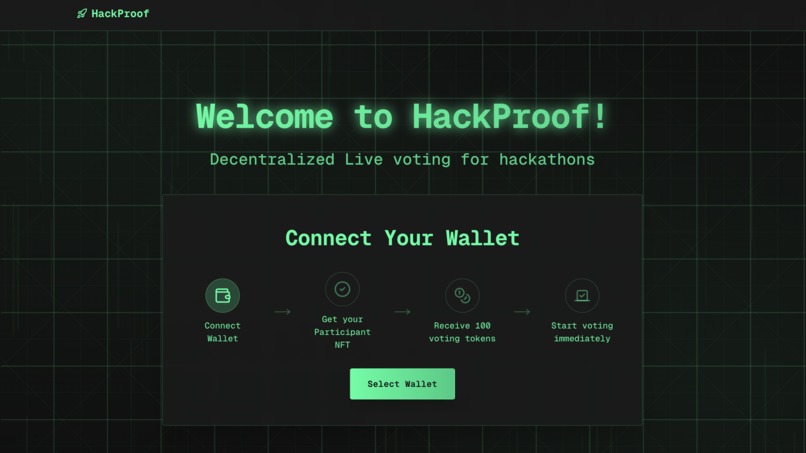
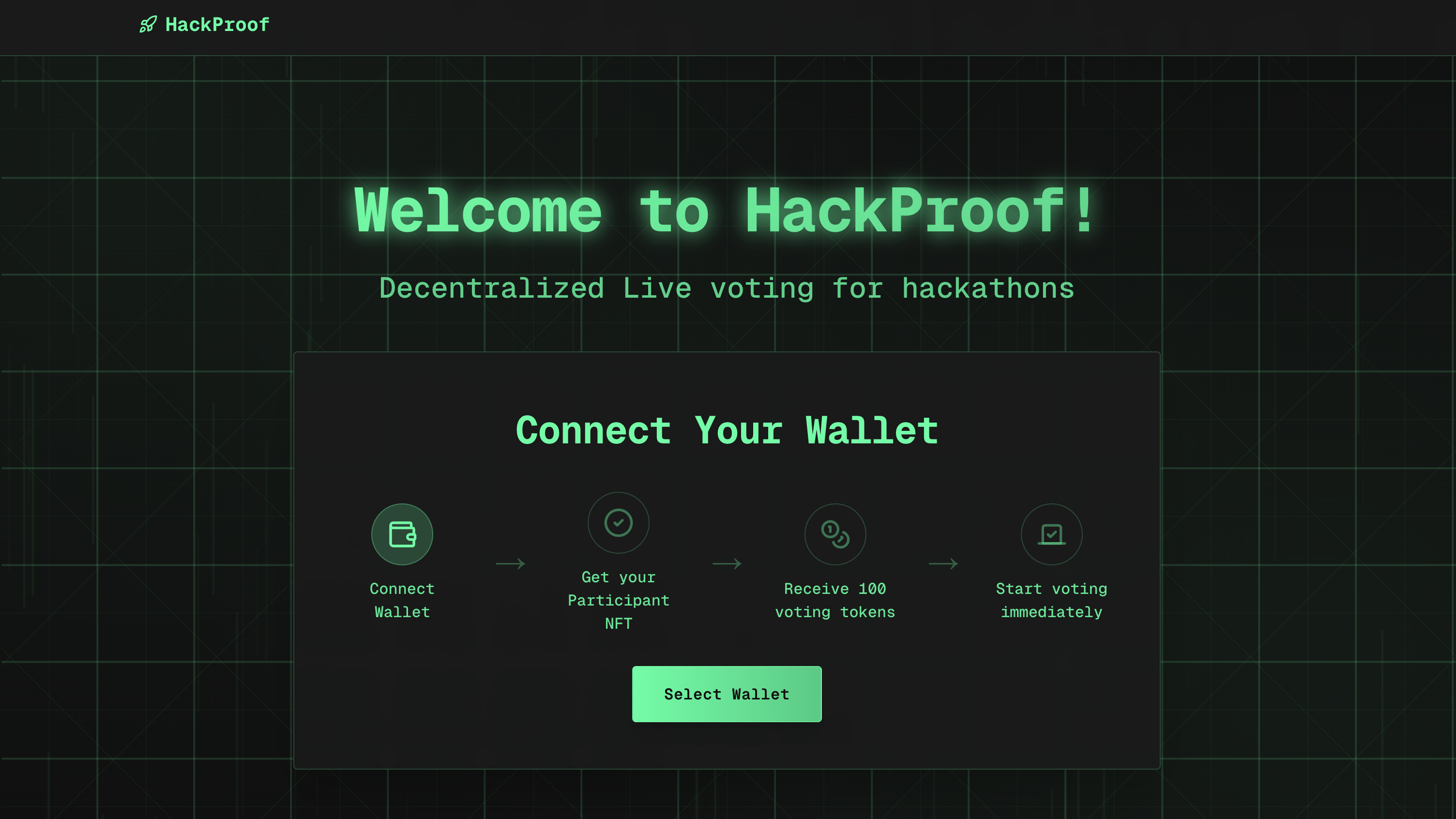
Welcome Screen
-
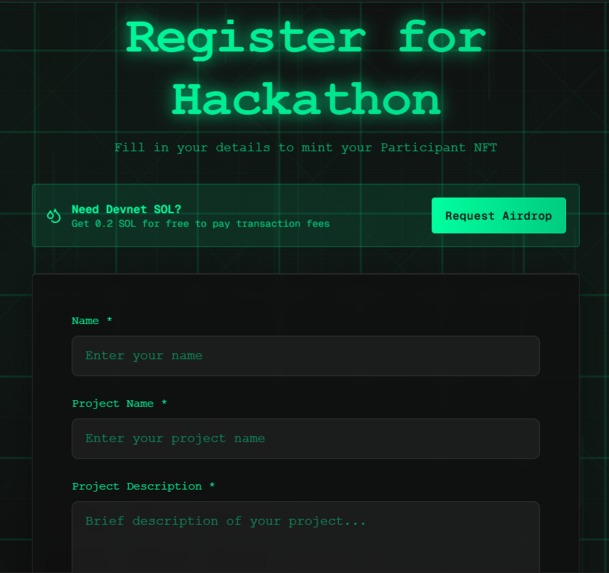
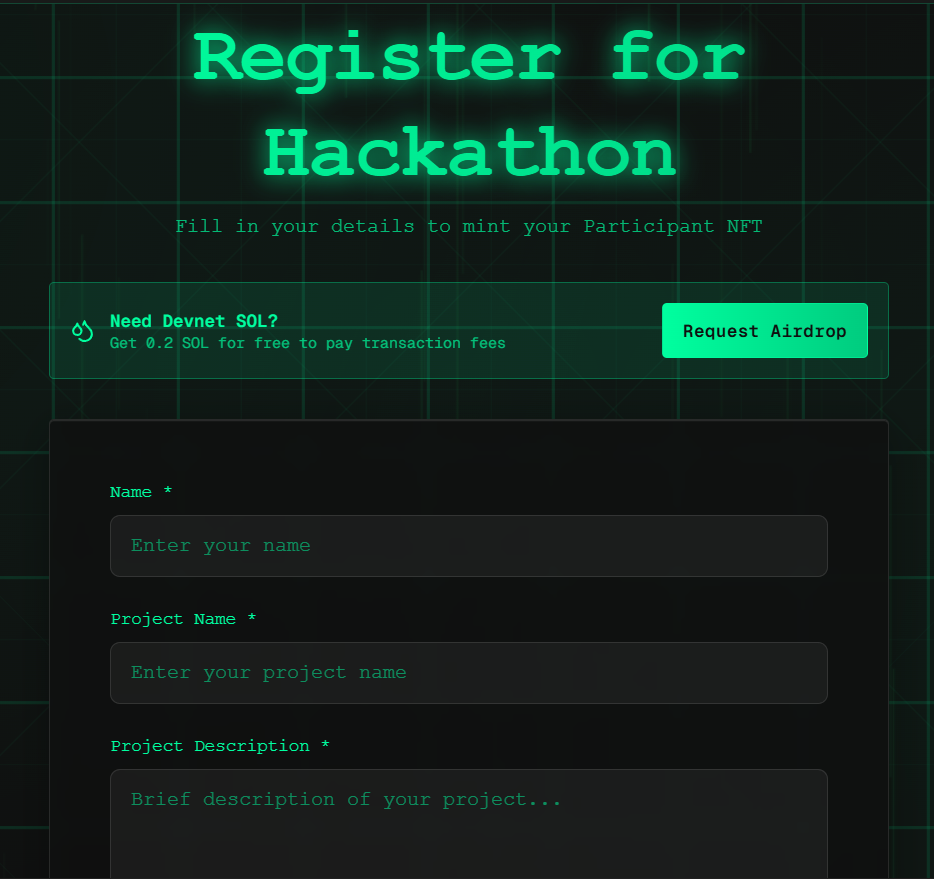
Register
-
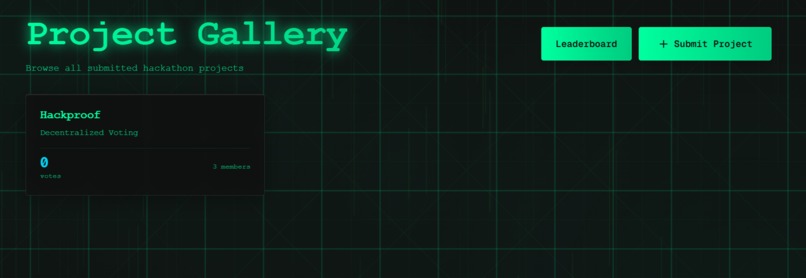
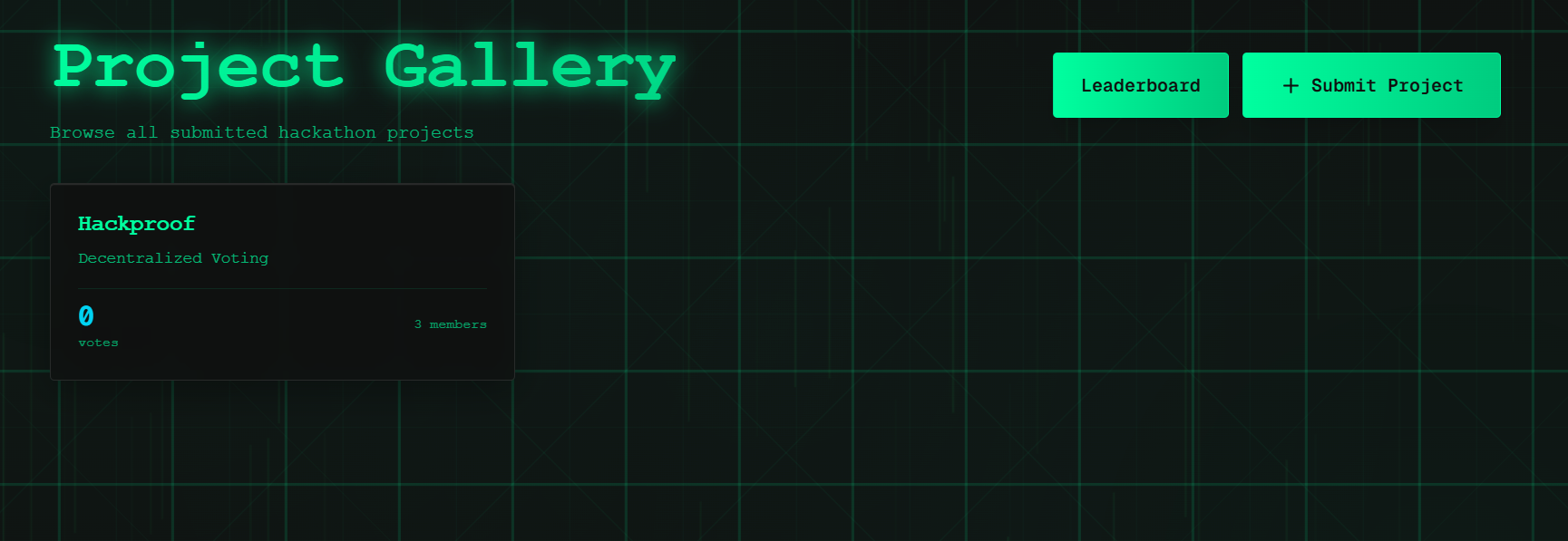
Project Gallery
Inspiration
We were thinking about doing a blockchain-related project, and we thought about the hackathon itself. Our inspiration came from the fact that our hackathon lacks community recognition, in the sense that final project scores are determined by a few judges, and the project assessment process is highly centralized. We hoped to use Web3 technology to decentralize the process and encourage community recognition, which could possibly expand into a bigger project that allows decentralized professional recognition.
What it does
HackProof is a live, decentralized voting system that brings transparency to hackathon judging. Participants get a permanent NFT identity badge when they register, teams can showcase their projects with verifiable project NFTs, and everyone receives 100 voting tokens ($HACK) to vote for their favorite projects. The system tracks all votes on-chain via Solana, ensuring transparency and preventing manipulation. A real-time leaderboard displays the top projects based on votes received. Achievement badges (like "Community Favorite" or "Most Active Voter") are planned to automatically recognize participants and build verifiable reputations that persist across hackathons.
How we built it
We built our project with a Next.js and TypeScript for frontend, Solana devnet for transactions, and Rust for our smart contracts that handle everything from registration to voting. Project info and images are live on IPFS via NFT.Storage, users can connect with direct integration to Phantom wallet, and we're hosting the demo website on Vercel.
Challenges we ran into
Getting soulbound NFTs right was tricky. We also hit some git headaches with uncommitted frontend changes crossing between branches. And we had to tweak the voting economics to keep things meaningful without breaking the gas budget. The Solana smart contracts are also hard to debug and the deployment took us a long time
Accomplishments that we're proud of
We've got a complete working system from registration all the way through voting and results. The on-chain vote counting actually works, and our mobile-friendly QR code voting makes it easy for everyone to participate during live demos. The architecture is clean enough that we can easily add new features like judge weighting or cross-event reputation. The UI/UX is great.
What we learned
Blockchain UX is harder than it looks - users need clear feedback when transactions are processing. Soulbound identities are great for preventing fake accounts but require thoughtful onboarding. We learned the hard way to commit early and often to avoid branch conflicts. And combining on-chain proofs with off-chain storage (IPFS) turned out to be a really practical approach for demos.
What's next for $HackProof
- Add judge-weighted tokens and multi-category voting (design, innovation, impact).
- Cross-hackathon reputation aggregation — make achievements portable.
- Integrate GitHub contribution verification for stronger project claims.
- Add ZK-friendly options for privacy-preserving badges.
- Move from Devnet to Mainnet (after security audits and cost analysis).
Built With
- Next.js, TypeScript, Tailwind (frontend)
- Rust (Solana programs)
- Solana Devnet & SPL tokens
- NFT.Storage / IPFS (metadata)
- Phantom wallet integration
- Vercel (hosting)
Built With
- next.js
- rust
- solana
- typescript


Log in or sign up for Devpost to join the conversation.