-
-
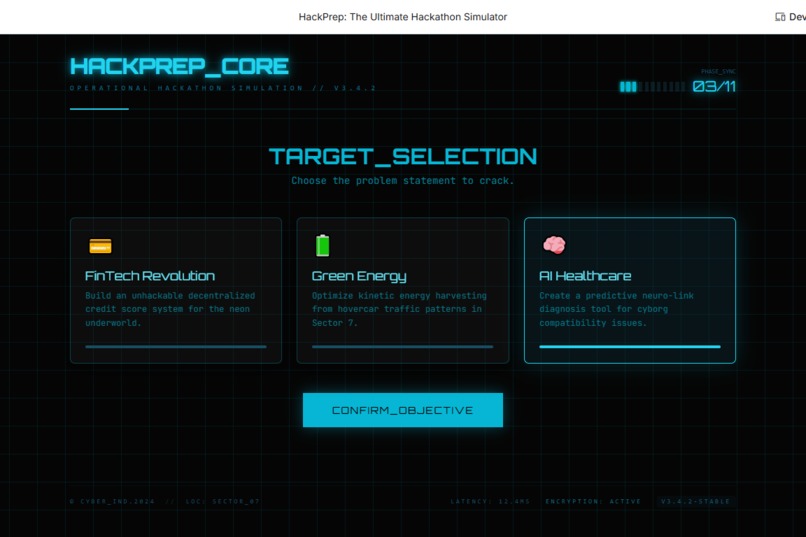
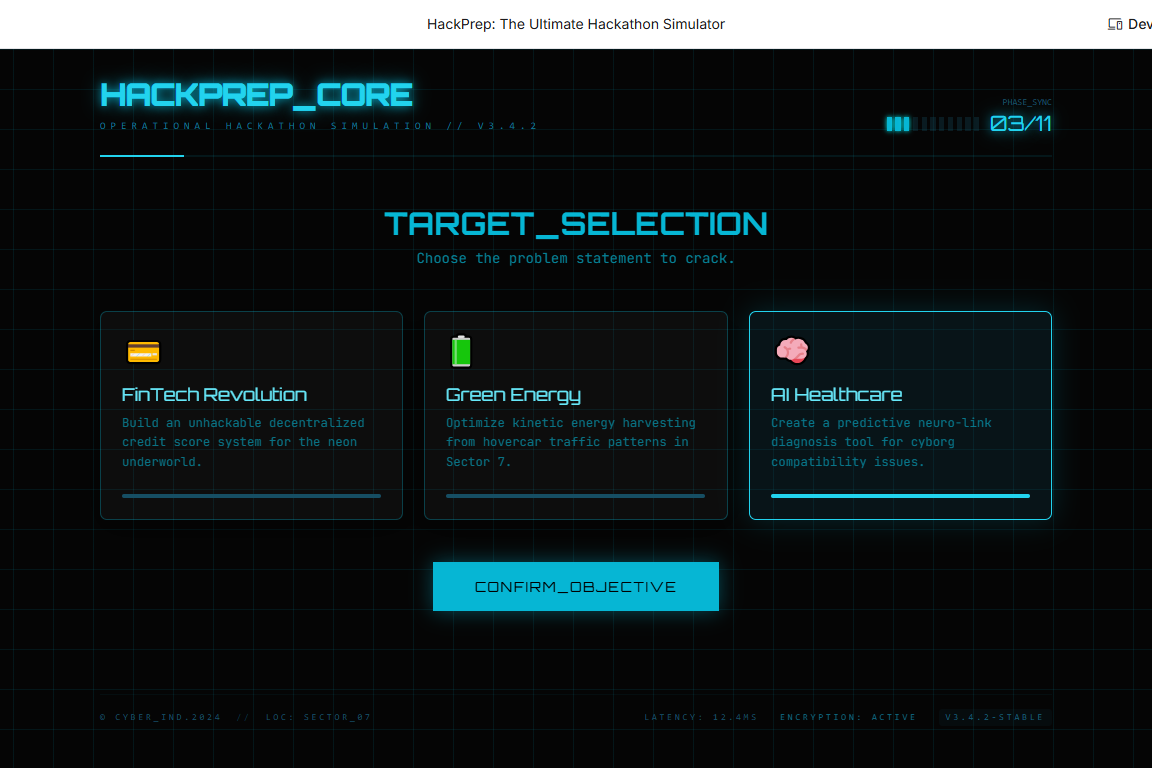
Mission Start: AI Organizer generating unique tracks like FinTech and AI Healthcare with custom constraints.
-
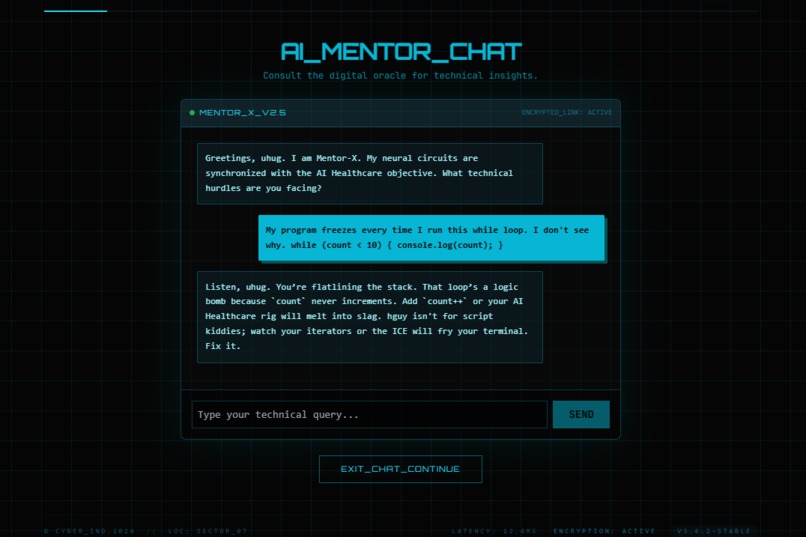
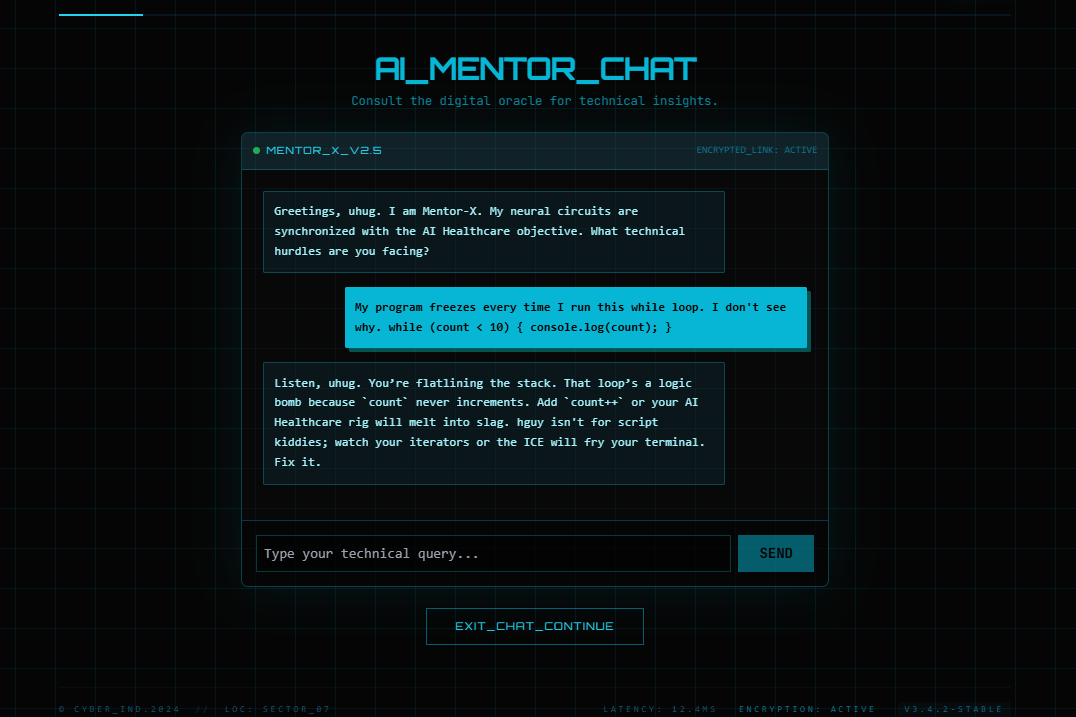
Mentor-X: Real-time AI analysis detecting logic bombs and providing thematic, high-pressure feedback.
-
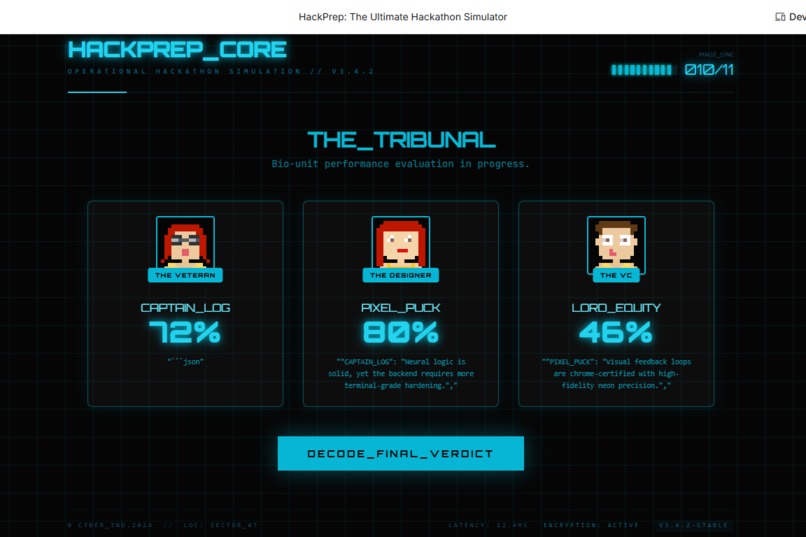
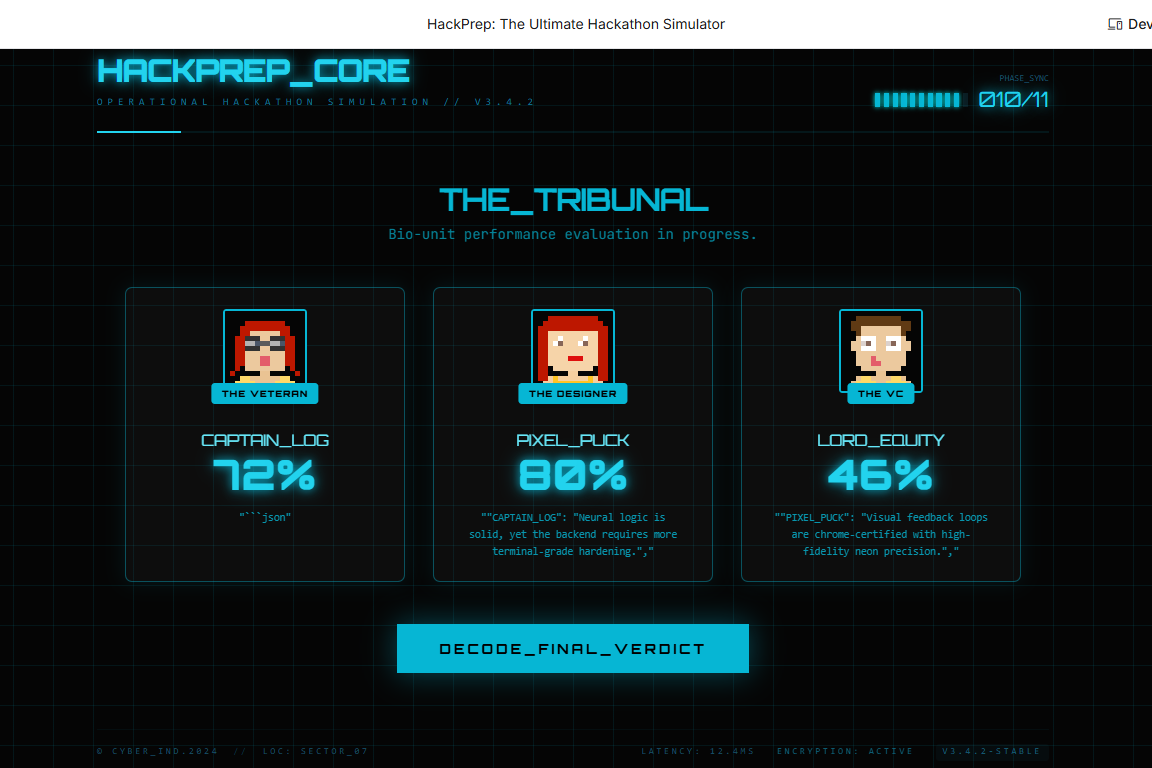
Three AI personas (Veteran, Designer, VC) evaluating projects on code and aesthetics.
Inspiration
As an engineering student, I’ve often seen talented peers hesitate to join hackathons because of the fear of the unknown. The gap between classroom theory and the high-pressure environment of a 24-hour hackathon is massive. I wanted to bridge that gap. I asked myself: What if there was a flight simulator for hackathons? A safe sandbox where you can experience the crunch time, get a random problem statement, and receive instant feedback without the public fear of failure. That is how HackPrep was born—to turn anxiety into action.
What it does
HackPrep is an interactive AI-powered training platform that simulates the full lifecycle of a hackathon. It uses the Gemini 3 API to act as three distinct personas: 1)The Organizer: Generates unique, multi-modal problem statements based on chosen tracks (e.g., FinTech, HealthTech, EdTech). 2)The Mentor: Provides "nudges" rather than answers. It uses Socratic questioning to help users unblock their logic without giving away the code. 3)The Judge: Evaluates the final submission based on creativity, technical complexity, and pitch delivery, providing a quantitative score.
How we built it
We built the frontend using React and TypeScript to create a responsive, multi-step workflow. The application is structured into distinct steps (Config, Mentor, Verdict) to guide the user through the simulation. We used the Gemini 3 API for the core intelligence, leveraging its multimodal capabilities to analyze user diagrams and code.To ensure fair judging, we implemented a weighted scoring algorithm within the AI's system instructions. We defined the final score ( S ) as: $$S = \frac{w_c \cdot C + w_t \cdot T + w_p \cdot P}{10}$$ Where: ( C ) is the Creativity score (1-10) ( T ) is the Technical implementation score (1-10) ( P ) is the Pitch/Presentation quality (1-10)
Challenges we ran into
The "Pixel-Perfect" Trap I got stuck obsessing over UI details instead of core logic. I had to learn to prioritize functionality over aesthetics and accept that for a hackathon MVP, "done is better than perfect." Context Management Keeping the "hackathon state" alive across a long simulation was tough. We had to optimize how we passed conversation history to the API to maintain continuity without hitting token limits.
Accomplishments that we're proud of
We are incredibly proud of the** "Mentor Mode"** tuning. It genuinely feels like sitting next to a senior developer who guides you rather than doing the work for you. We also successfully integrated the scoring metric, which provides users with a tangible benchmark to improve upon, rather than just vague text feedback. Seeing the AI correctly identify a logic error in a user's uploaded code snippet and offering a conceptual fix was a major "aha!" moment for us.
What we learned
Building HackPrep taught us that the power of Generative AI isn't just in content creation—it's in simulation. We learned deeply about the nuances of the Gemini 3 API, specifically how to balance "creativity" (temperature settings) for generating problem statements vs. "precision" for code debugging. We also learned the importance of user experience in educational tools; feedback needs to be constructive and encouraging to keep the user motivated.
What's next for HackPrep
The immediate next step is to introduce "Multiplayer Mode," allowing users to form teams and collaborate on a project in real-time with the AI acting as a team mediator. We also plan to add a "Pitch Perfect" feature where users can upload a video of their pitch, and the AI analyzes their tone, pacing, and clarity to prepare them for live demos. Finally, we want to open up an API so real hackathon organizers can use our "Judge" module to assist in pre-screening submissions.
Built With
- gemini3api
- react
- react-markdown
- typescript
- vite


Log in or sign up for Devpost to join the conversation.