-
-
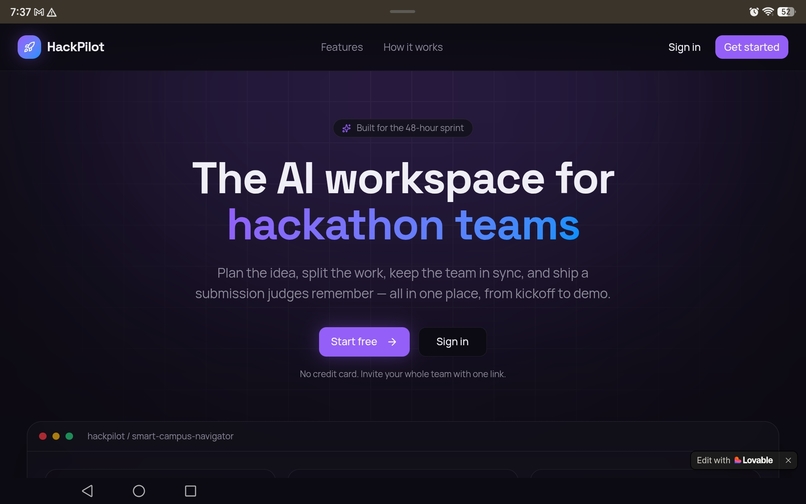
HackPilot
-
-
-
-
-
-
-
-
-
-
-
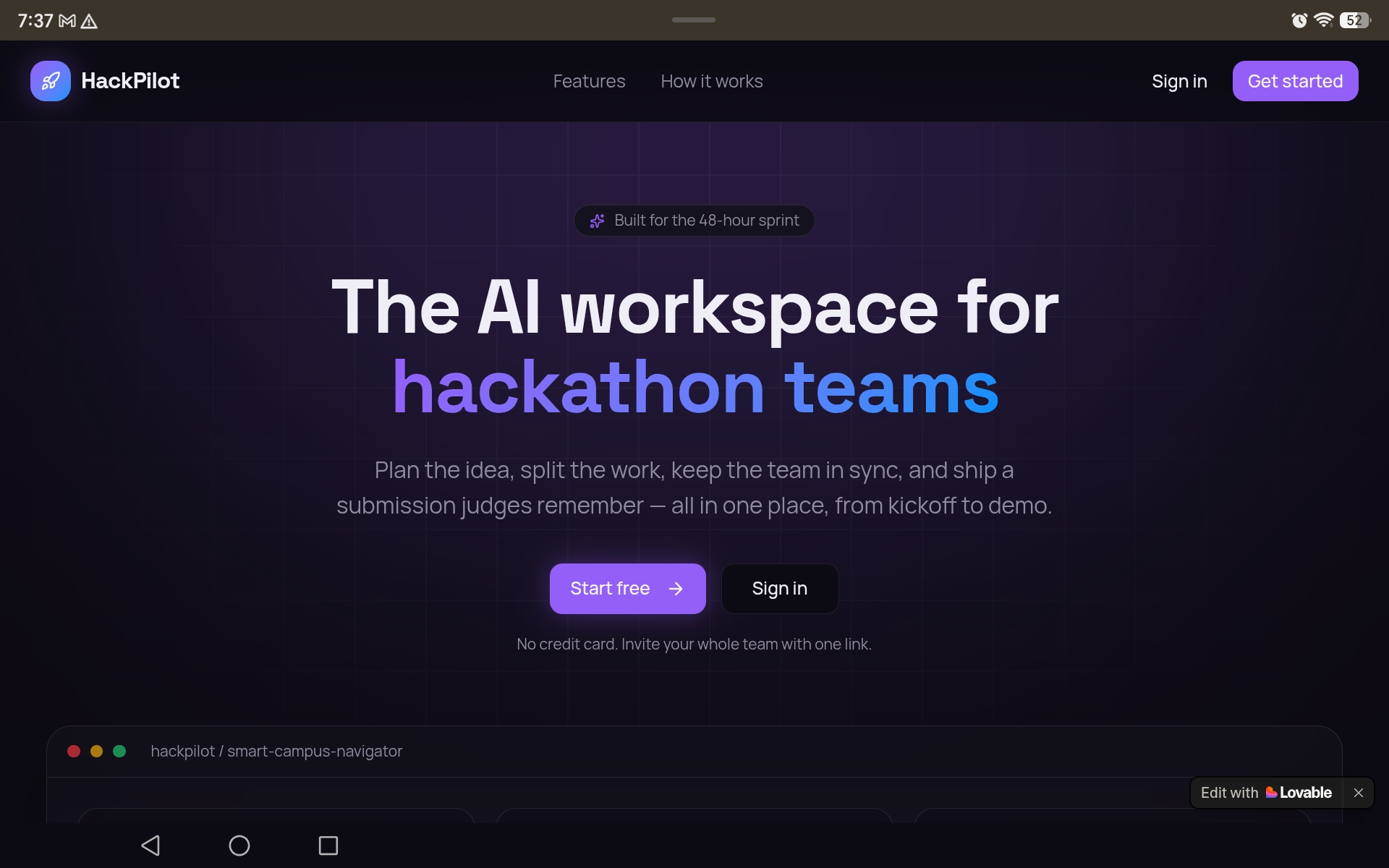
HackPilot — Project Description
Inspiration
HackPilot was inspired by the reality of participating in hackathons: teams have a limited amount of time to turn an idea into a working product, but the work itself is often scattered across many different platforms. Communication happens on WhatsApp or Discord, code lives on GitHub, tasks are tracked somewhere else, documentation is written in another tool, and AI assistance comes from yet another platform.
I realized that during a hackathon, every minute matters. Instead of spending valuable time switching between tools and trying to remember what needs to be done next, teams should have one workspace that understands the entire hackathon journey.
That led to the idea for HackPilot — an AI-powered workspace built specifically for hackathon teams.
What It does
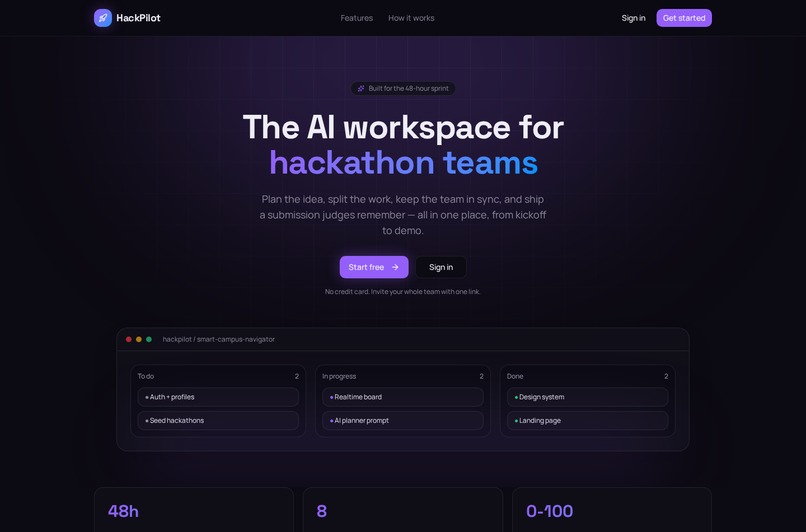
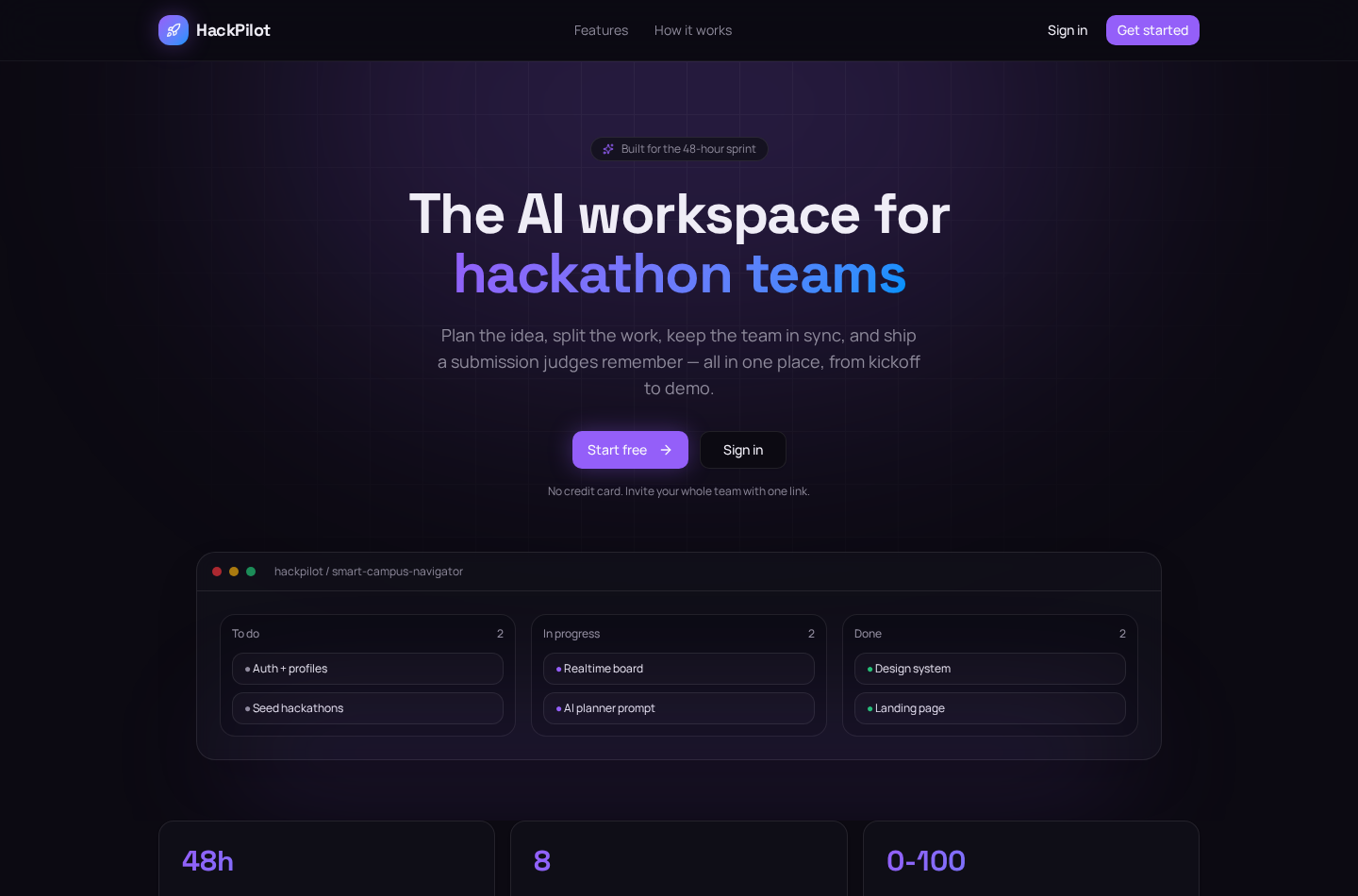
HackPilot brings the main parts of a hackathon workflow into one platform.
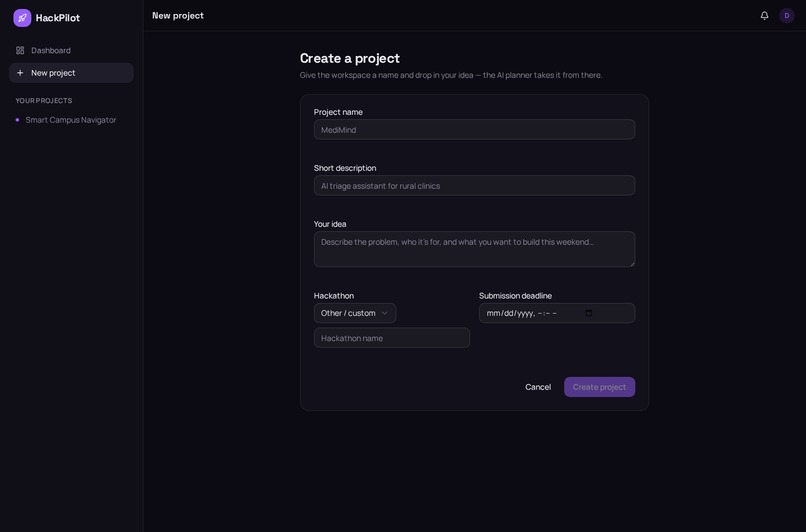
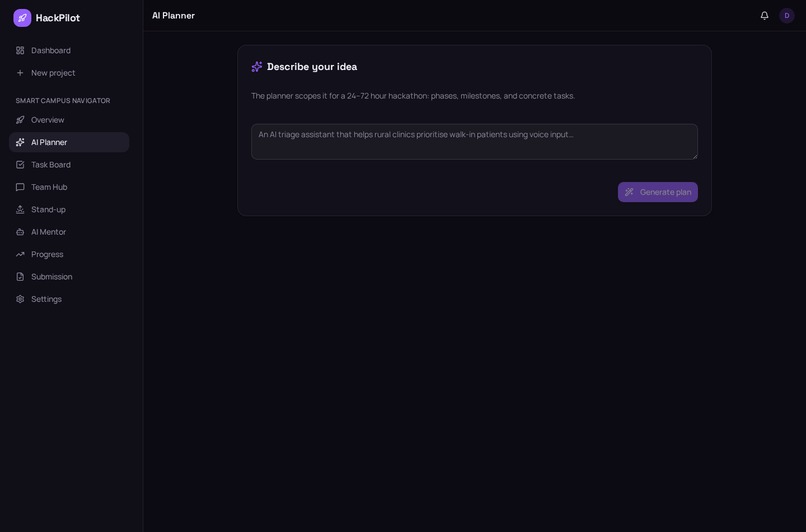
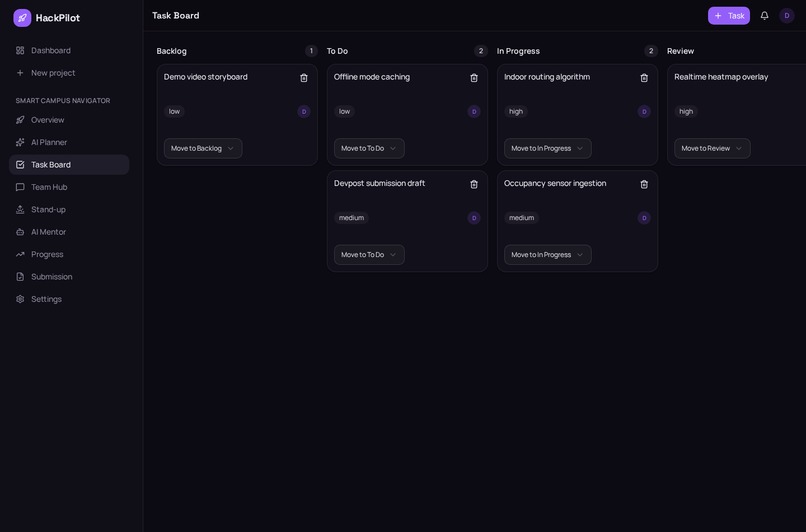
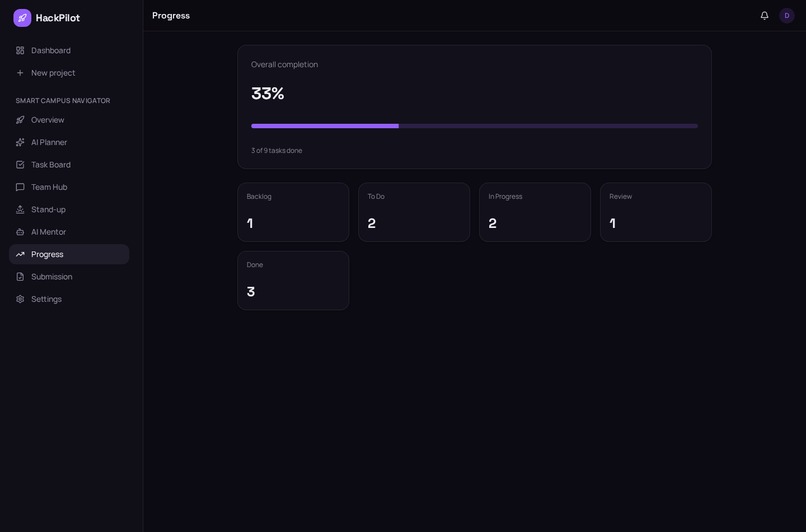
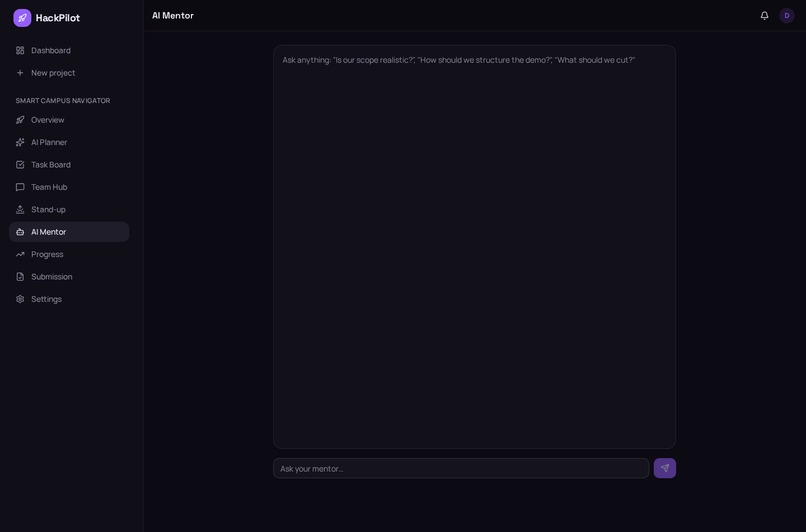
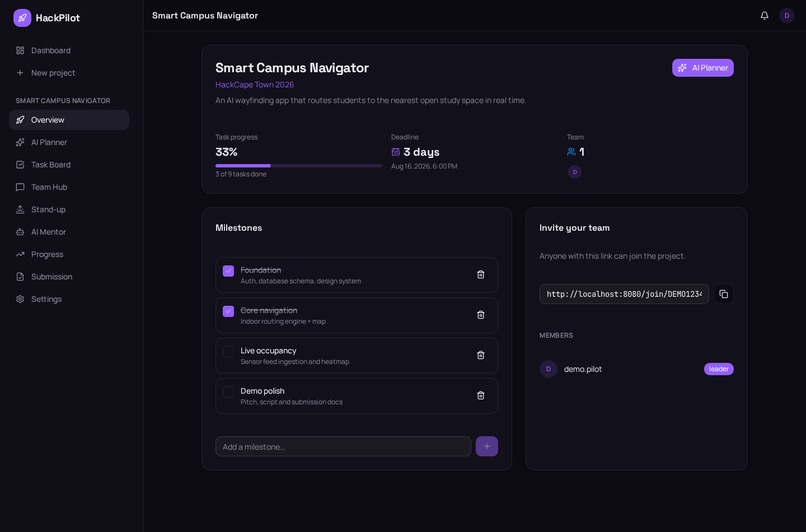
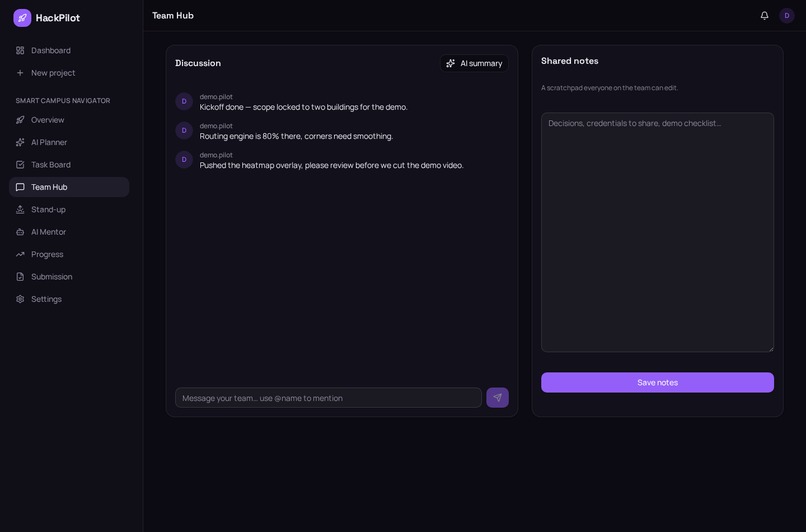
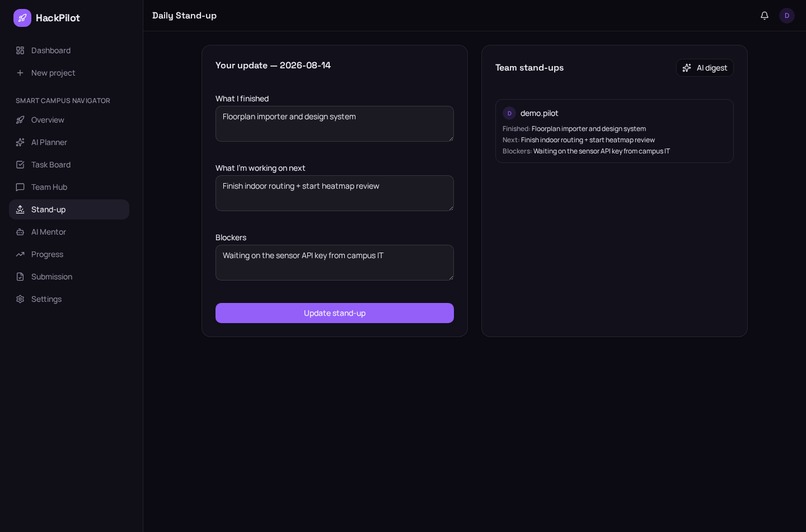
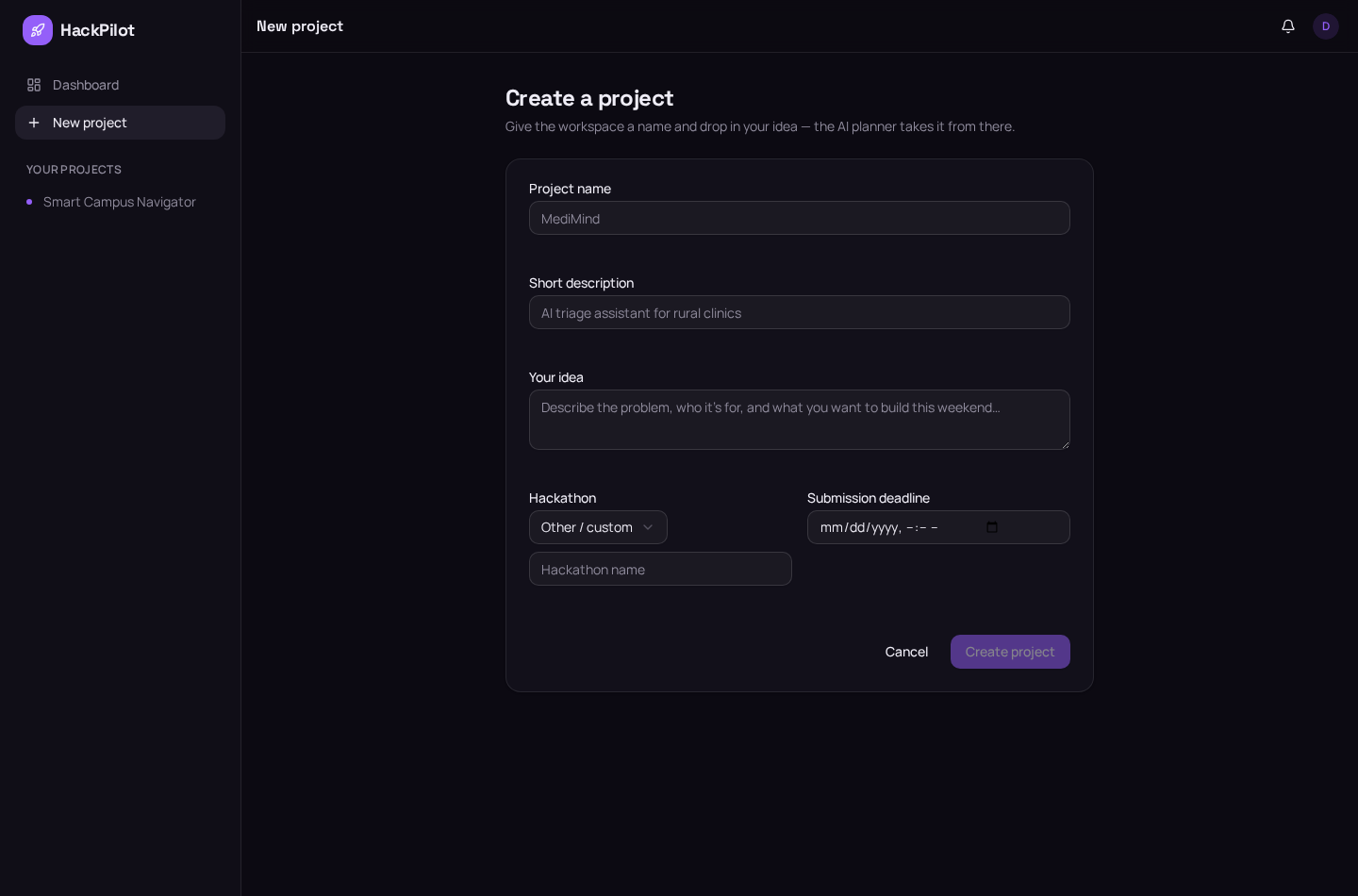
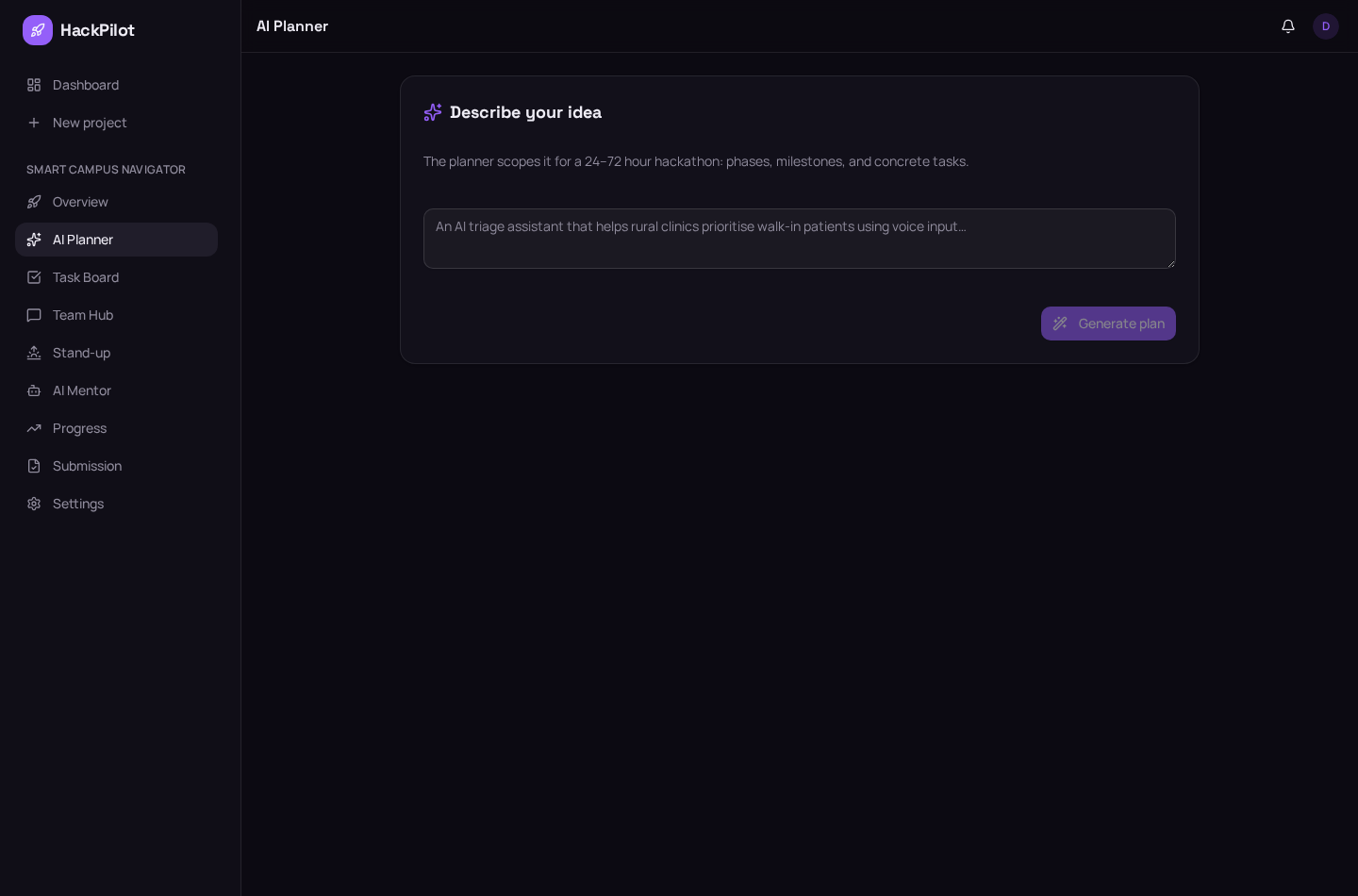
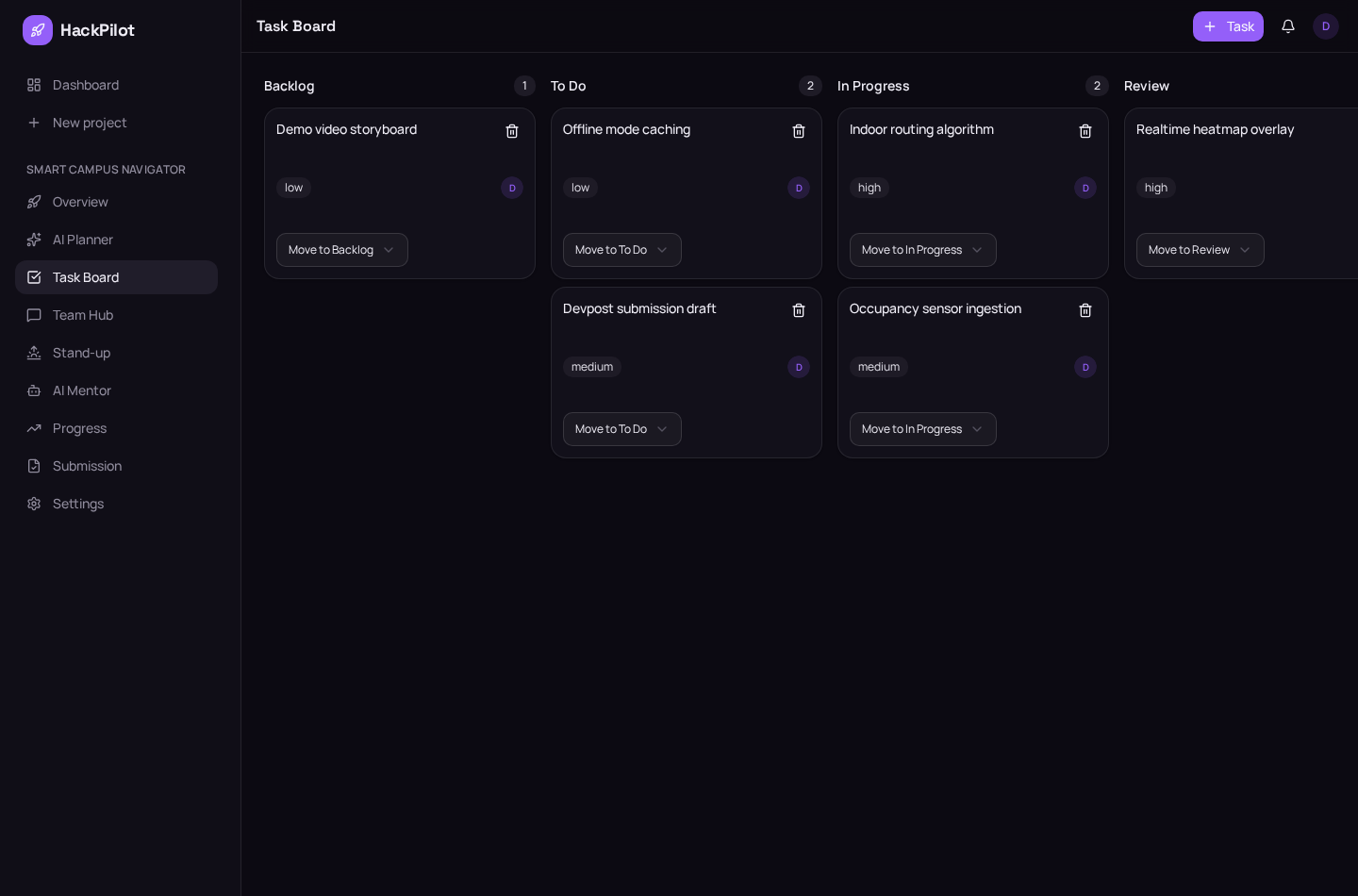
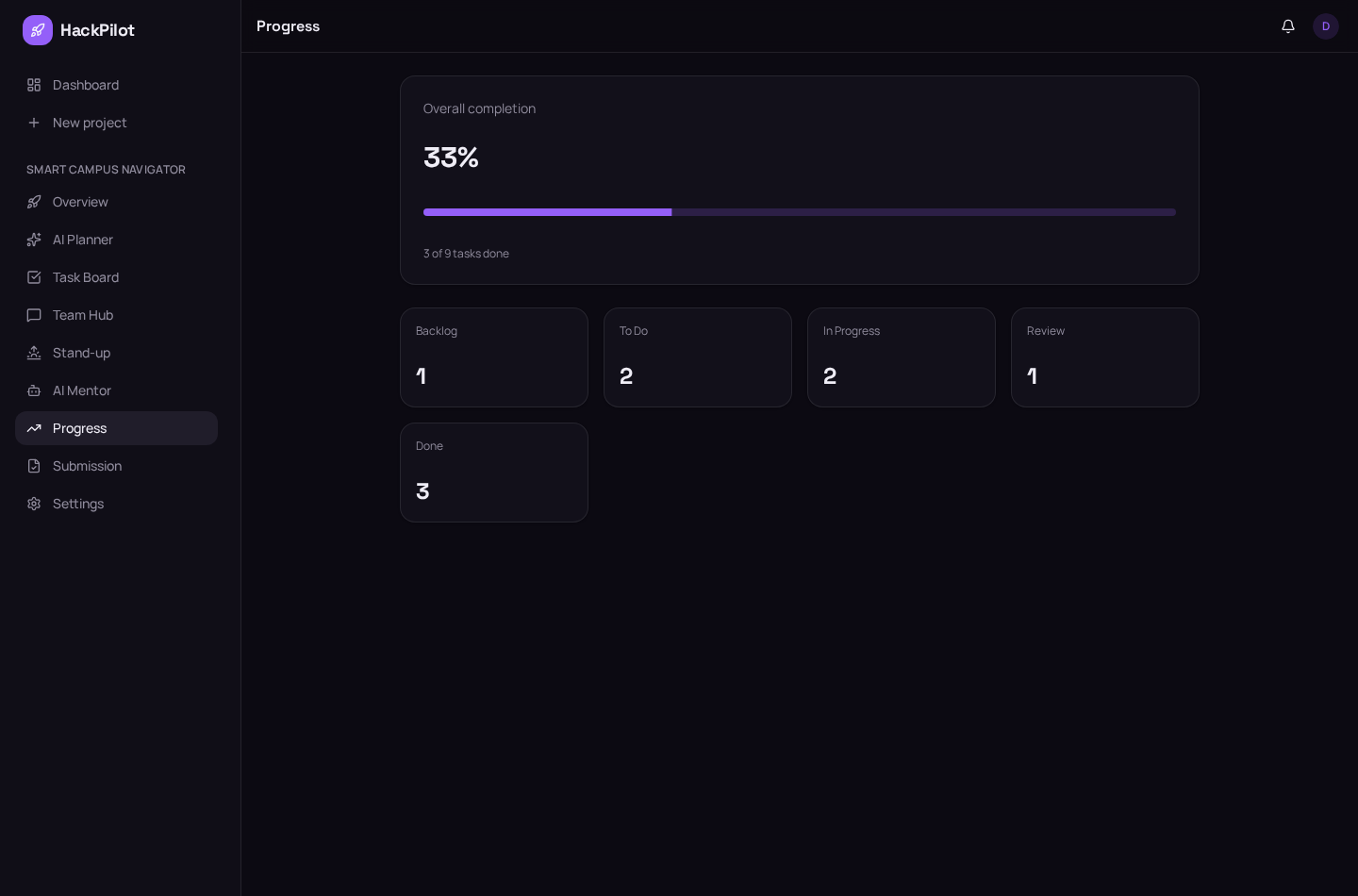
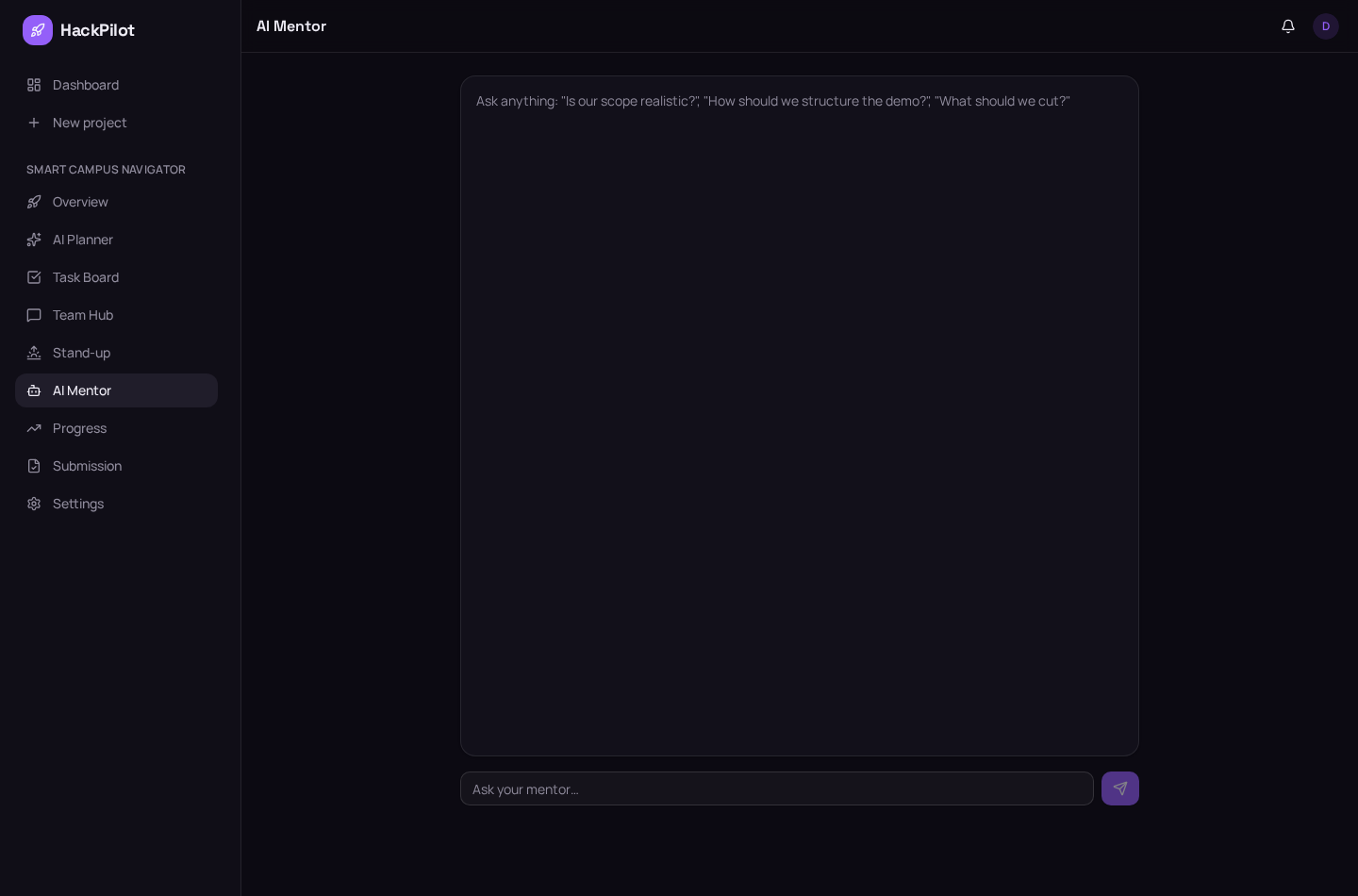
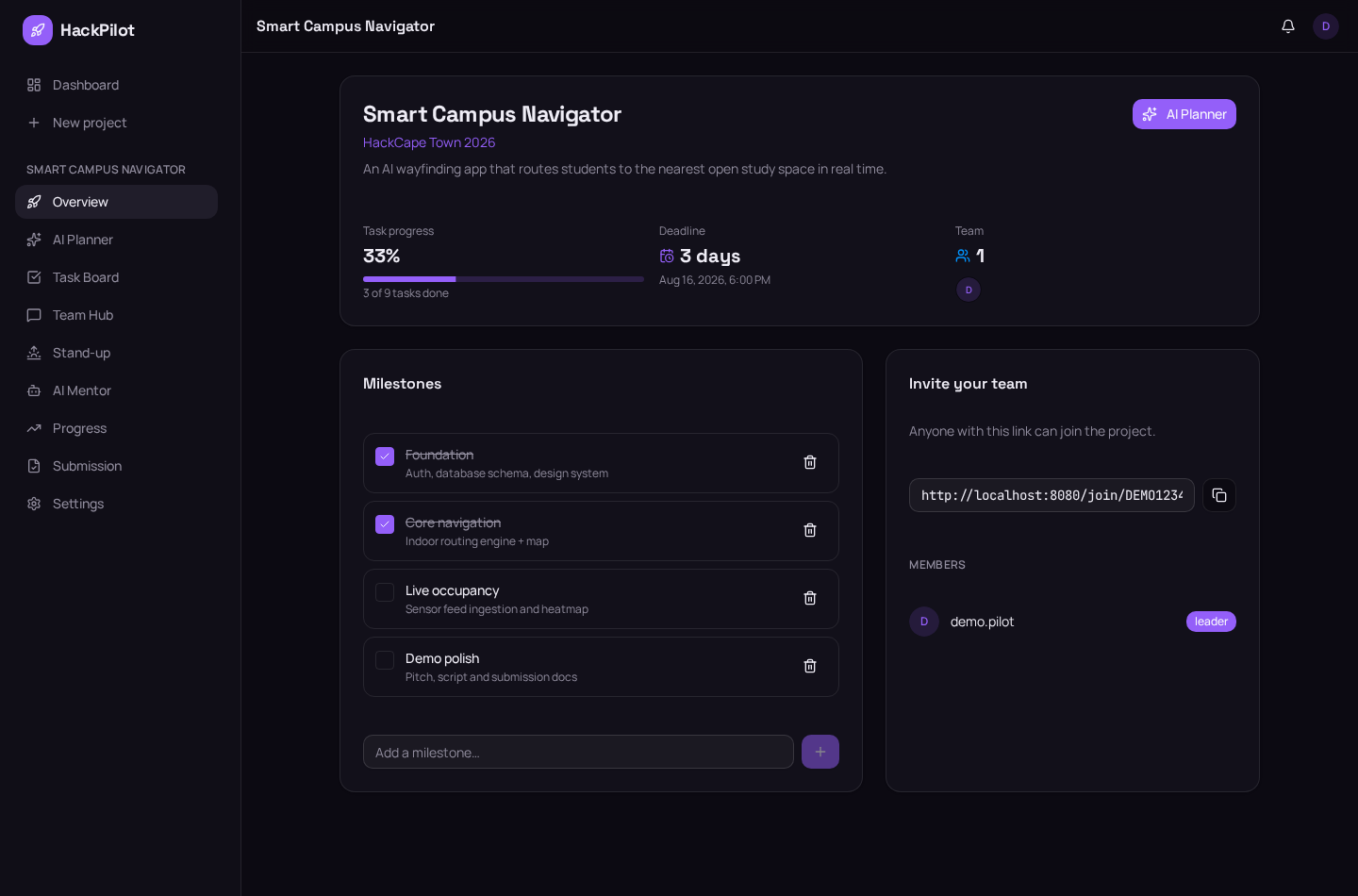
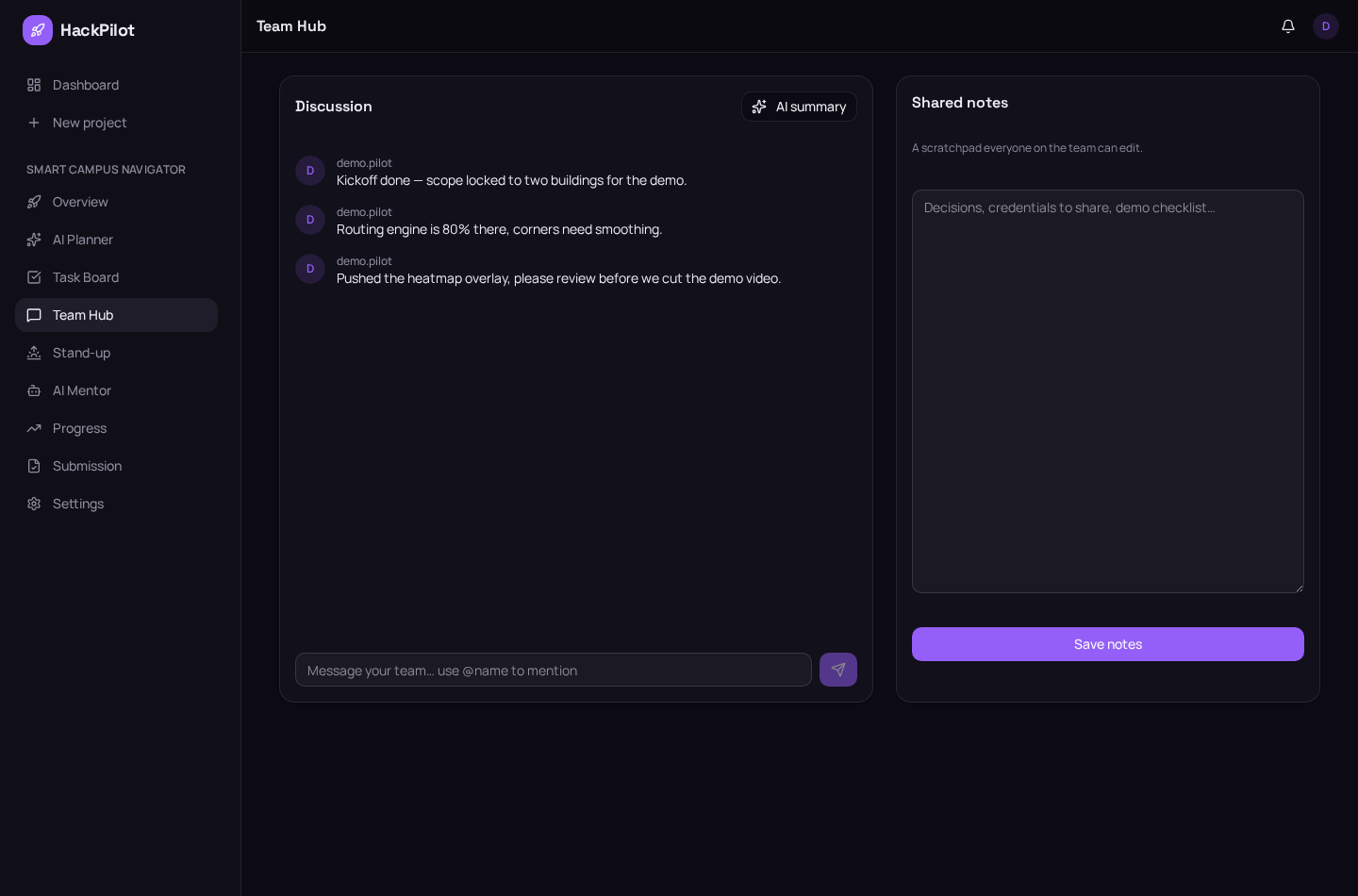
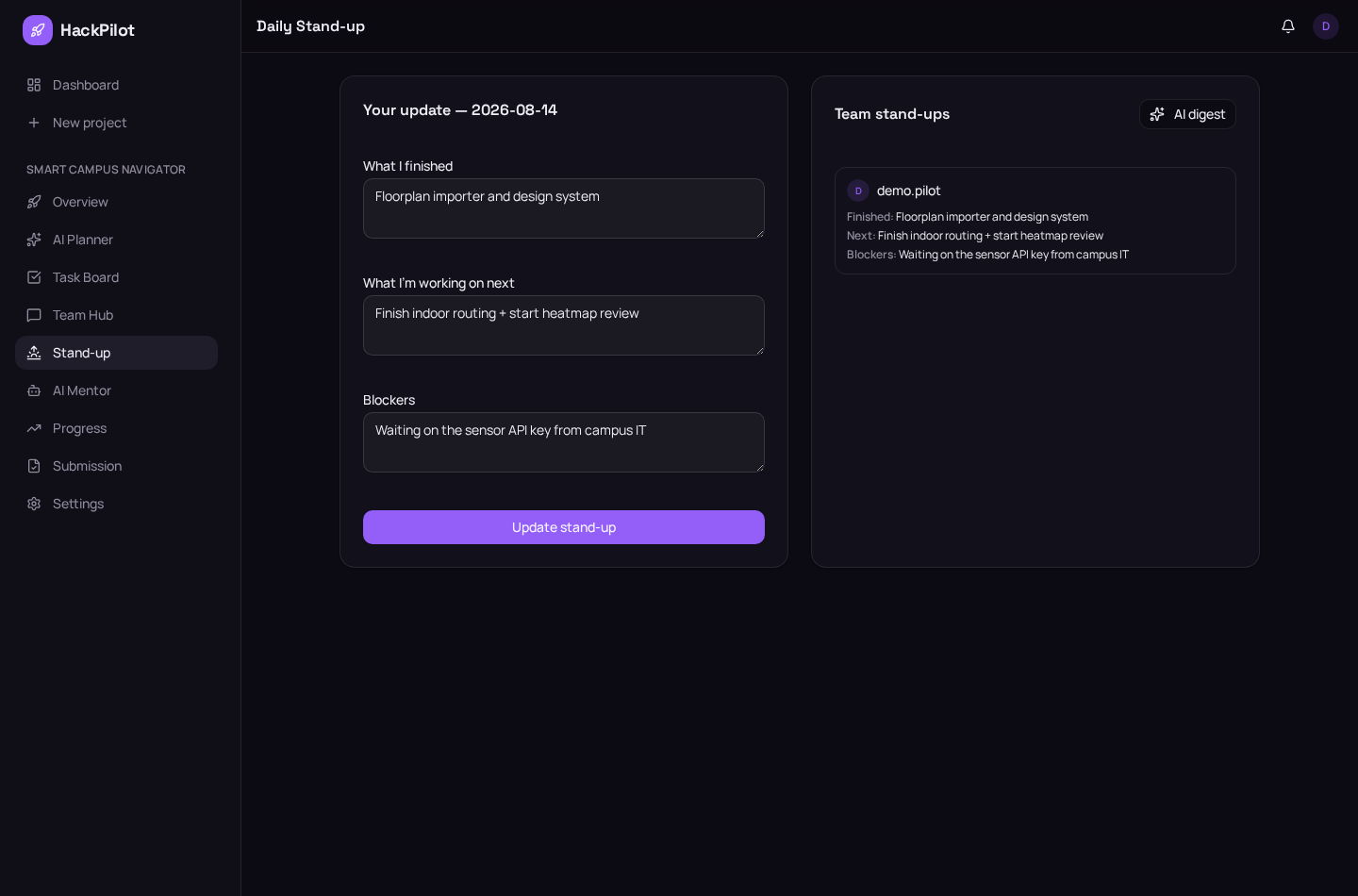
A team can create a project, invite members, enter their idea, and use the AI Project Planner to turn that idea into a structured development plan. The team can then manage its work through a Kanban board, communicate in a shared workspace, complete daily stand-ups, track progress, and use an AI mentor for brainstorming and decision-making.
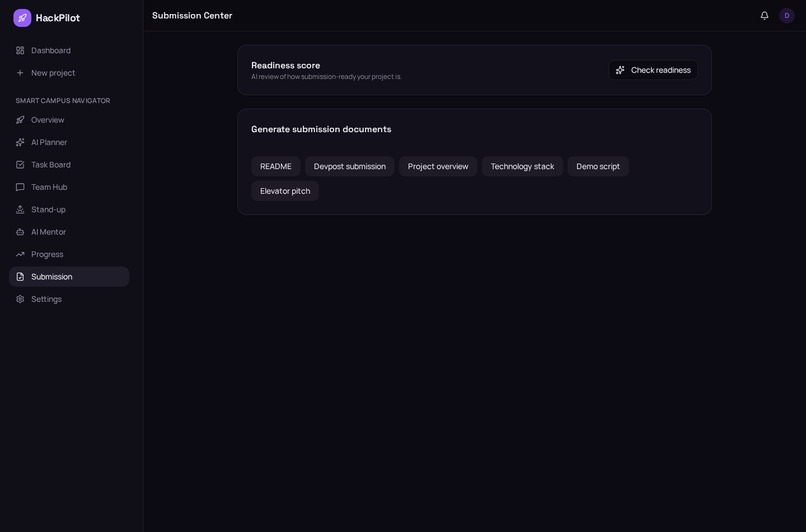
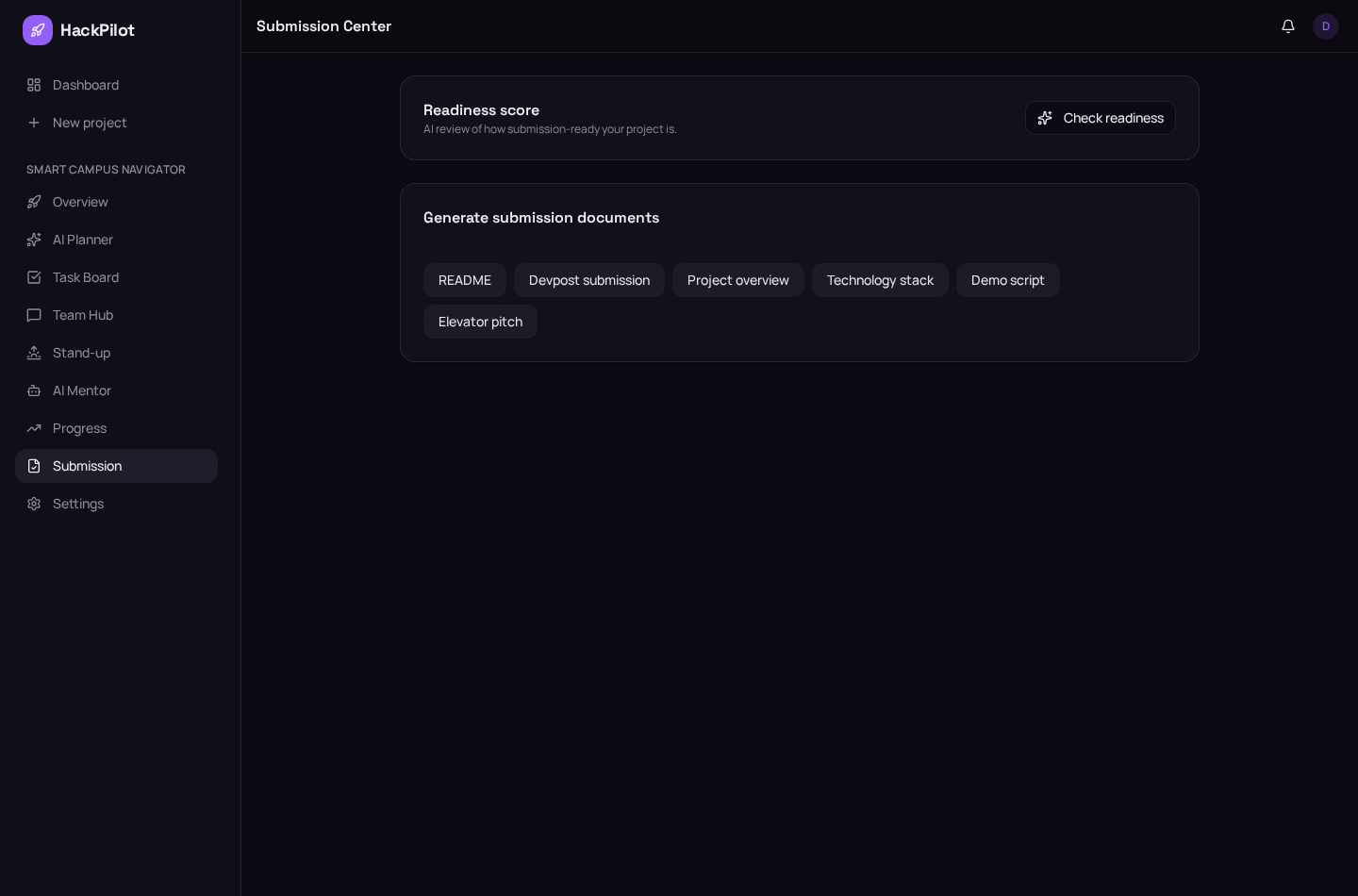
As the deadline approaches, HackPilot also helps teams prepare their submission. It can generate a README, project overview, technology stack explanation, demo script, elevator pitch, and Devpost submission. The AI-powered Readiness Score then evaluates the project across areas such as the prototype, documentation, UI/UX, innovation, demo quality, and code completeness.
The goal is simple: let teams spend more time building and less time managing their workflow.
How I Built It.
I built HackPilot as a modern full-stack web application using React 19, TypeScript, TanStack Start, TanStack Router, TanStack Query, Tailwind CSS, and shadcn/ui.
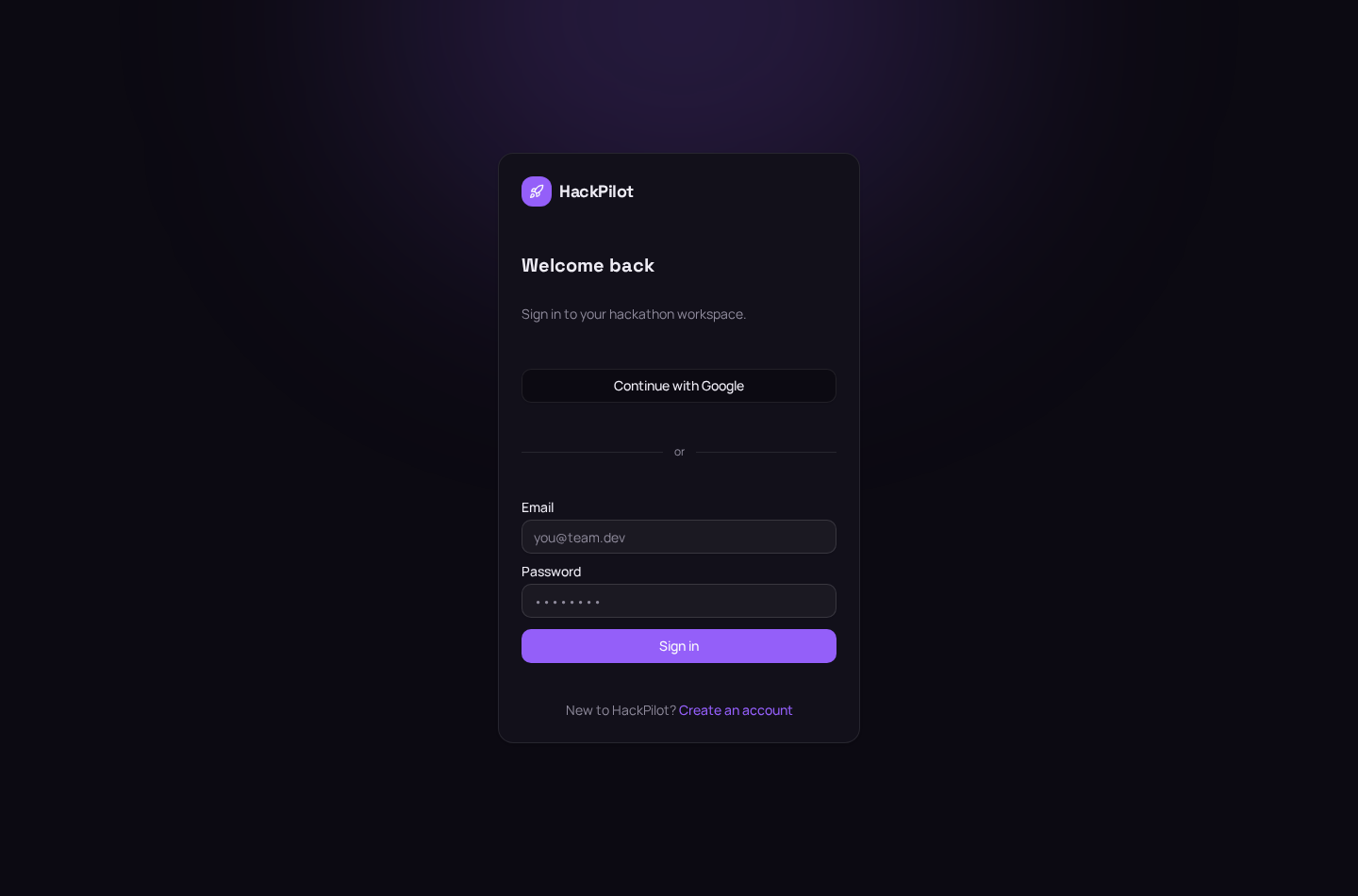
For the backend, I used Lovable Cloud / Supabase, with PostgreSQL for the database, Supabase Auth for authentication, Supabase Storage for files, and Row-Level Security to protect team data.
For the AI functionality, I integrated the Lovable AI Gateway with Gemini 3.6 Flash. AI is used throughout the application rather than being limited to a single chatbot. It helps with project planning, stand-up summaries, mentoring, submission generation, and project readiness evaluation.. I also used Recharts for progress analytics and React Markdown to display rich AI-generated content.
What I Learned
Building HackPilot taught me that creating an AI application is about much more than simply connecting an AI model to a chat interface.
I learned how to design AI features around actual user workflows and how different AI capabilities can work together to support a complete product. I also gained experience working with authentication, database relationships, storage, security policies, real-time collaboration concepts, analytics, and full-stack application architecture.
Most importantly, I learned to think about AI as a product feature that helps users accomplish something, rather than as the product itself.
Challenges we ran into
One of the biggest challenges was designing a platform with many interconnected features while keeping the experience simple. Authentication, projects, teams, tasks, comments, files, stand-ups, AI tools, analytics, and submissions all depend on shared project data, so making these components work together required careful planning.
Another challenge was making the AI outputs genuinely useful. A generic AI response isn't enough for a hackathon team. The AI needs to understand the project's context and produce practical outputs that can immediately be used by the team.
I also had to balance the ambitious scope of the idea with the limited time available during a hackathon. This taught me an important lesson: a great hackathon project isn't necessarily the one with the most features; it's the one that solves a real problem well and demonstrates the solution clearly.
Why HackPilot Matters
Hackathons are about building under pressure. The last thing teams need is additional friction from managing their tools.
HackPilot brings planning, collaboration, execution, AI assistance, progress tracking, and submission preparation into one workspace.
Instead of managing the hackathon, teams can focus on winning it.
What's next for HackPilot
HackPilot is only the beginning. Our next goal is to make HackPilot even more intelligent and proactive. Instead of waiting for teams to ask for help, HackPilot should be able to recognize when a team is falling behind, identify blockers, suggest changes to the development plan, and remind members about important deadlines.
We also want to explore: GitHub integration for automatic code and contribution tracking. Automatic detection of stalled or risky tasks. Smarter judging-criteria analysis for specific hackathons. Automated demo preparation and presentation coaching. AI-generated project timelines that adapt as the team progresses. Deeper integrations with communication and development tools. A mobile experience so teams can stay connected while away from their computers. Our long-term vision is for HackPilot to become an AI teammate for every hackathon team — helping teams plan smarter, build faster, stay aligned, and submit with confidence.
Future Features
GitHub integration Calendar sync AI code review Voice meetings Hackathon discover Organizer dashboard Pitch practice mode
Built With
- css
- gemini
- postgresql
- superbase
- typescript
- vite


Log in or sign up for Devpost to join the conversation.