-
-
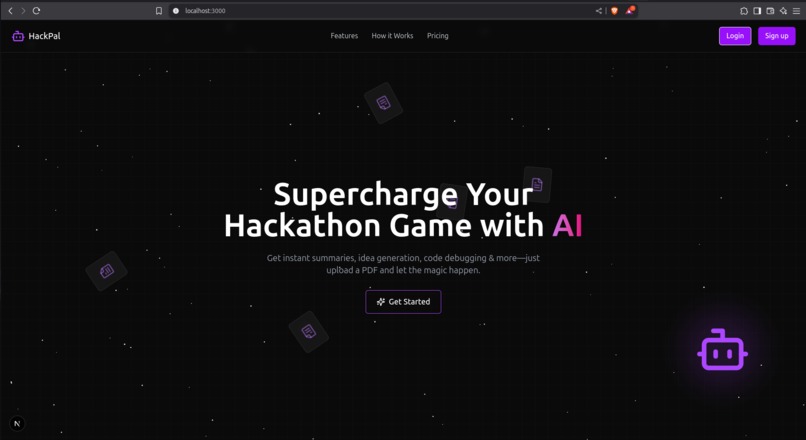
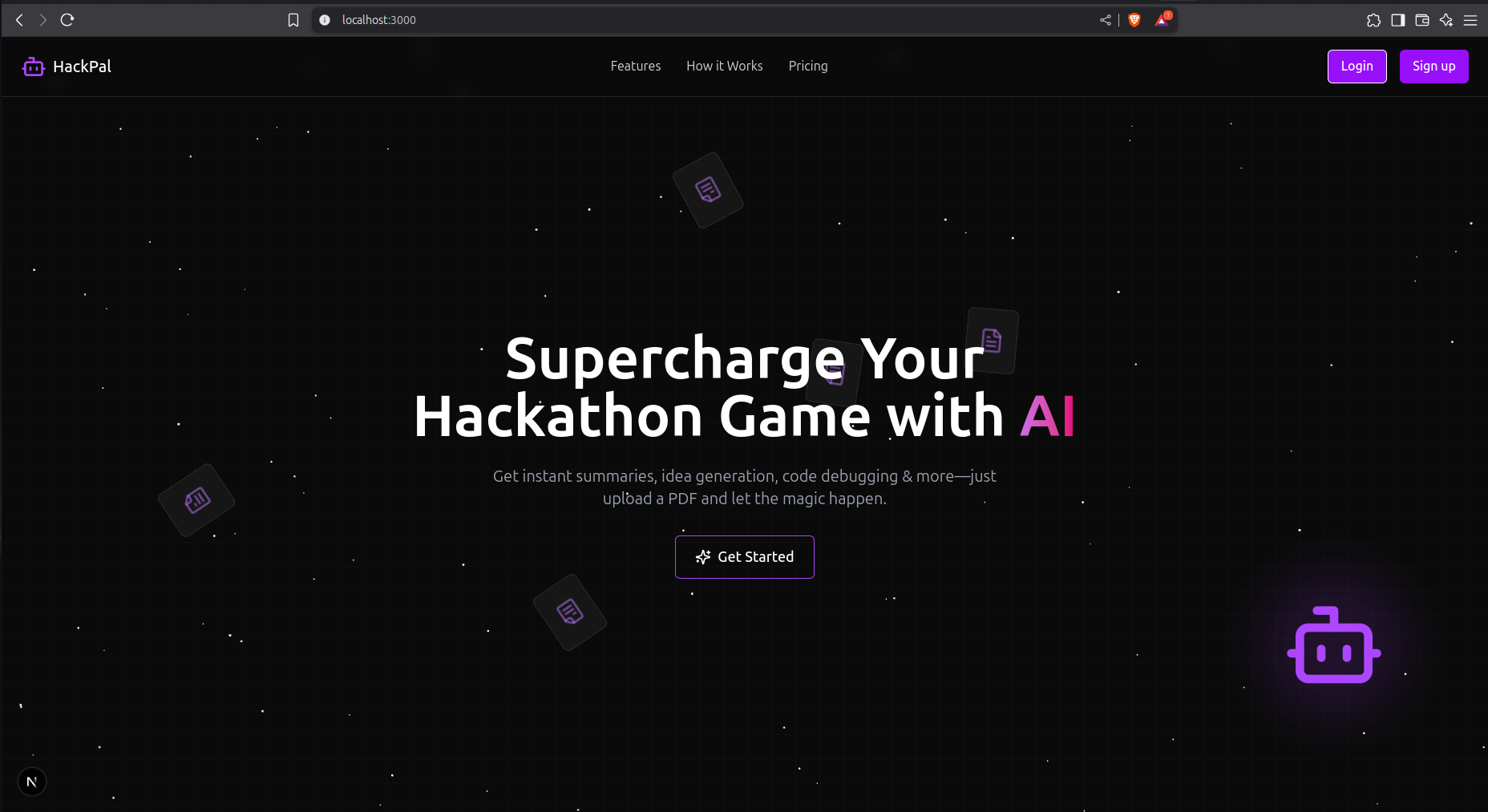
Landing Page
-
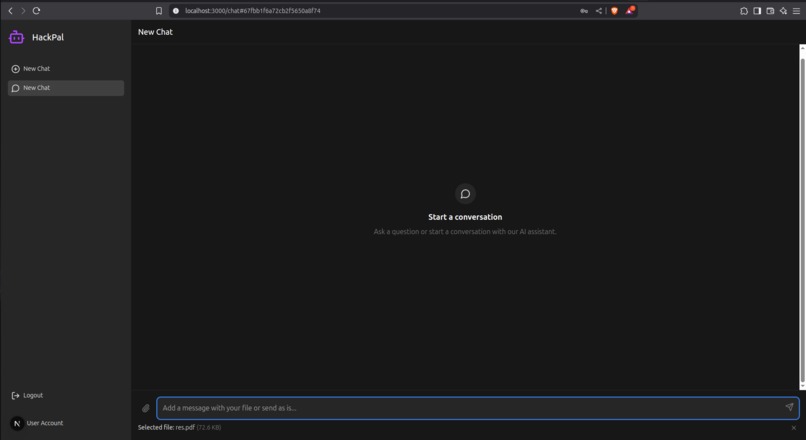
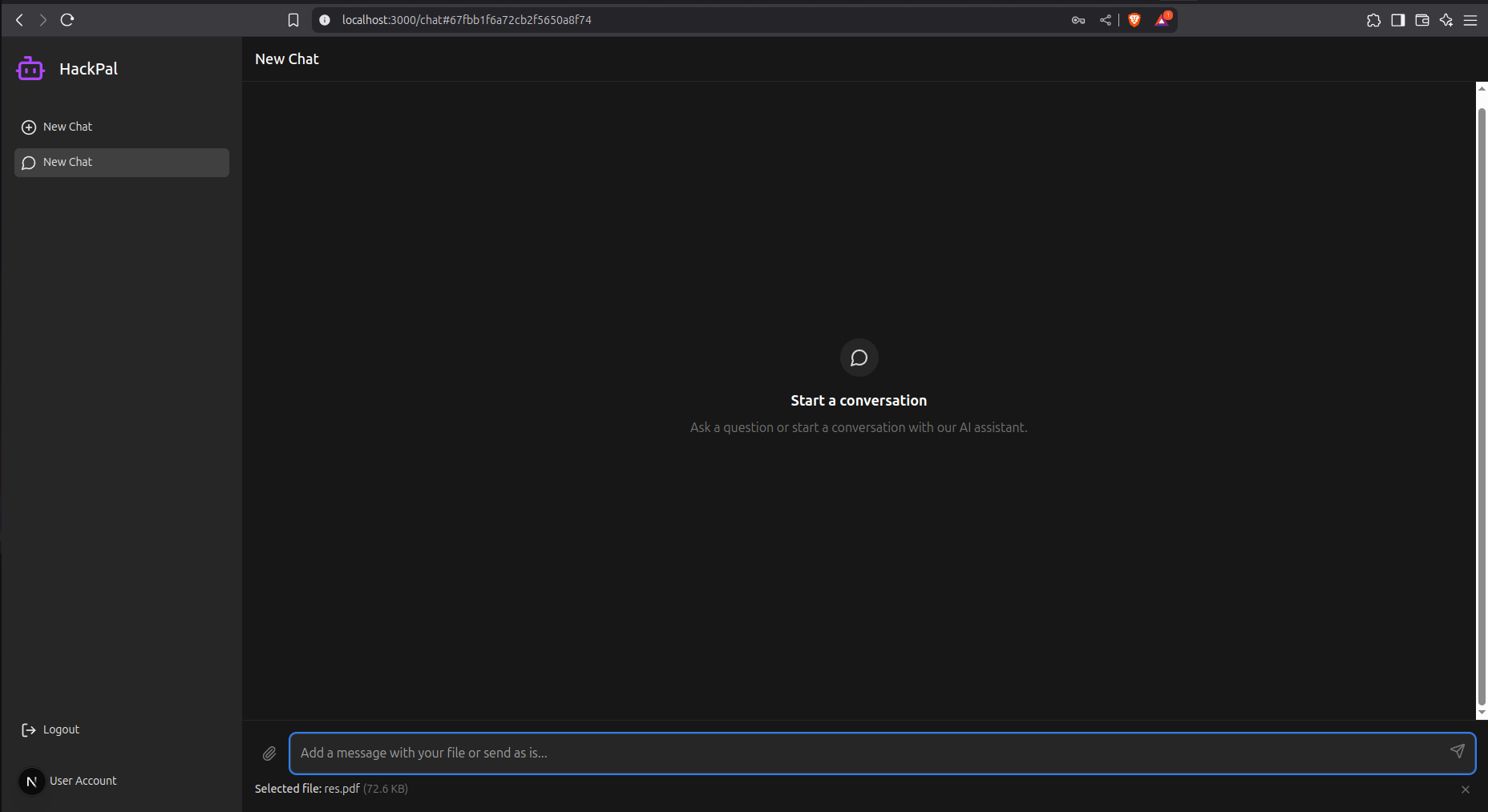
Chat Interface to interact with AI
-
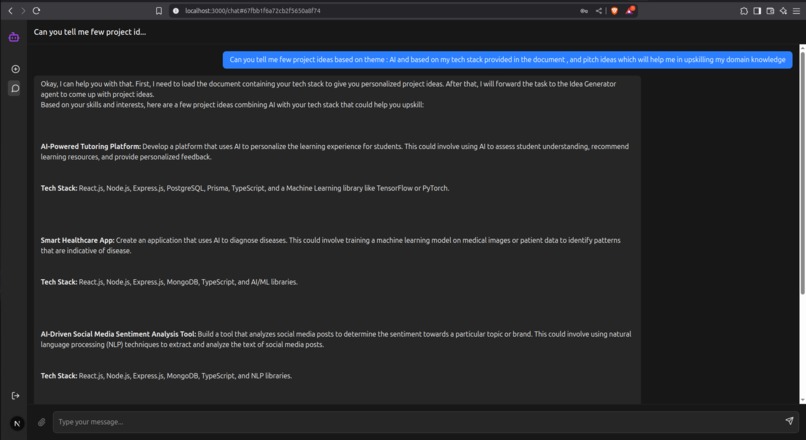
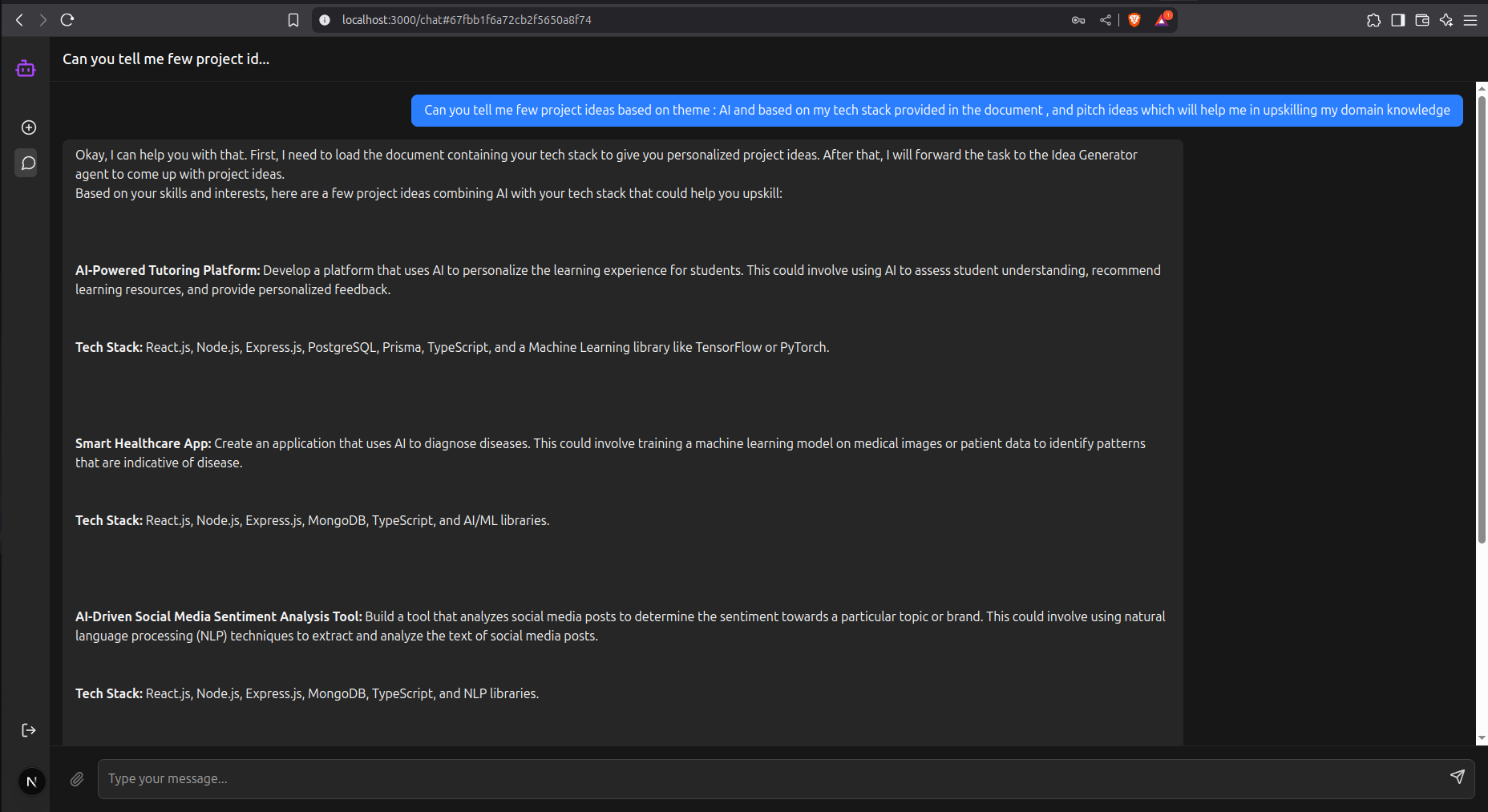
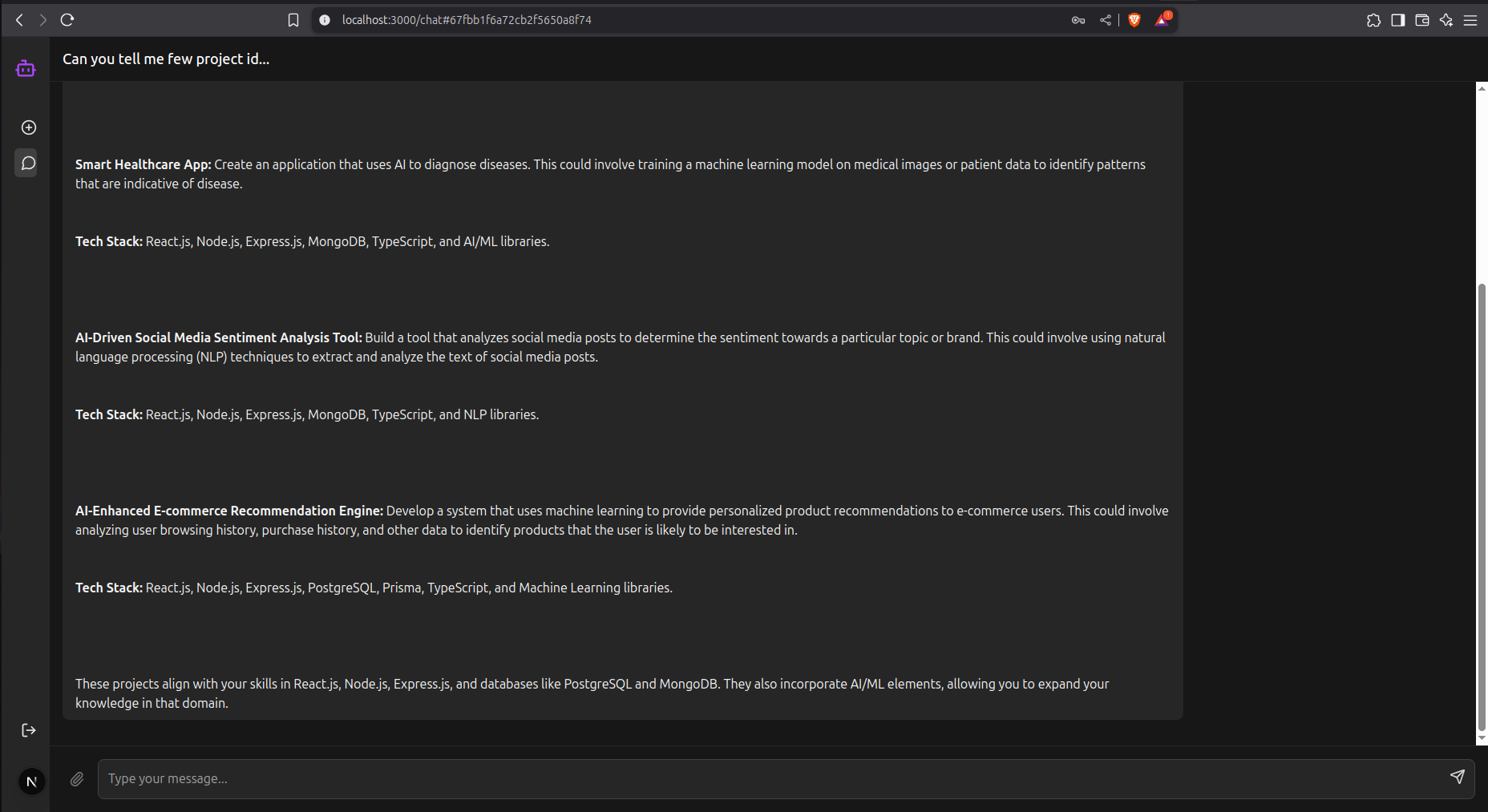
Interaction with idea generator agent - 1
-
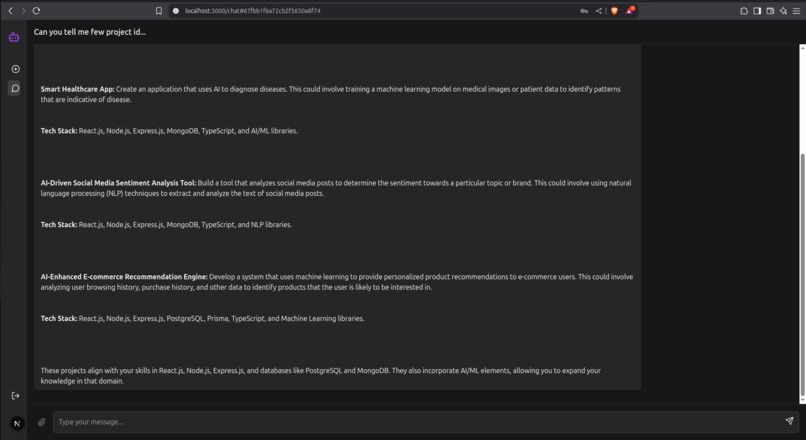
Interaction with idea generator agent - 2
-
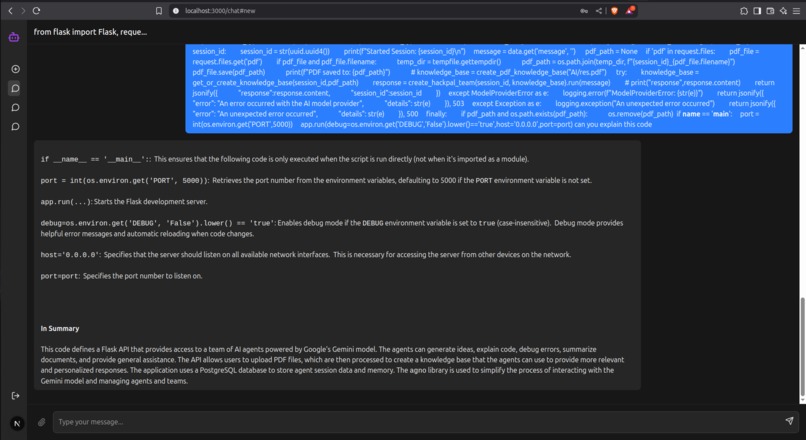
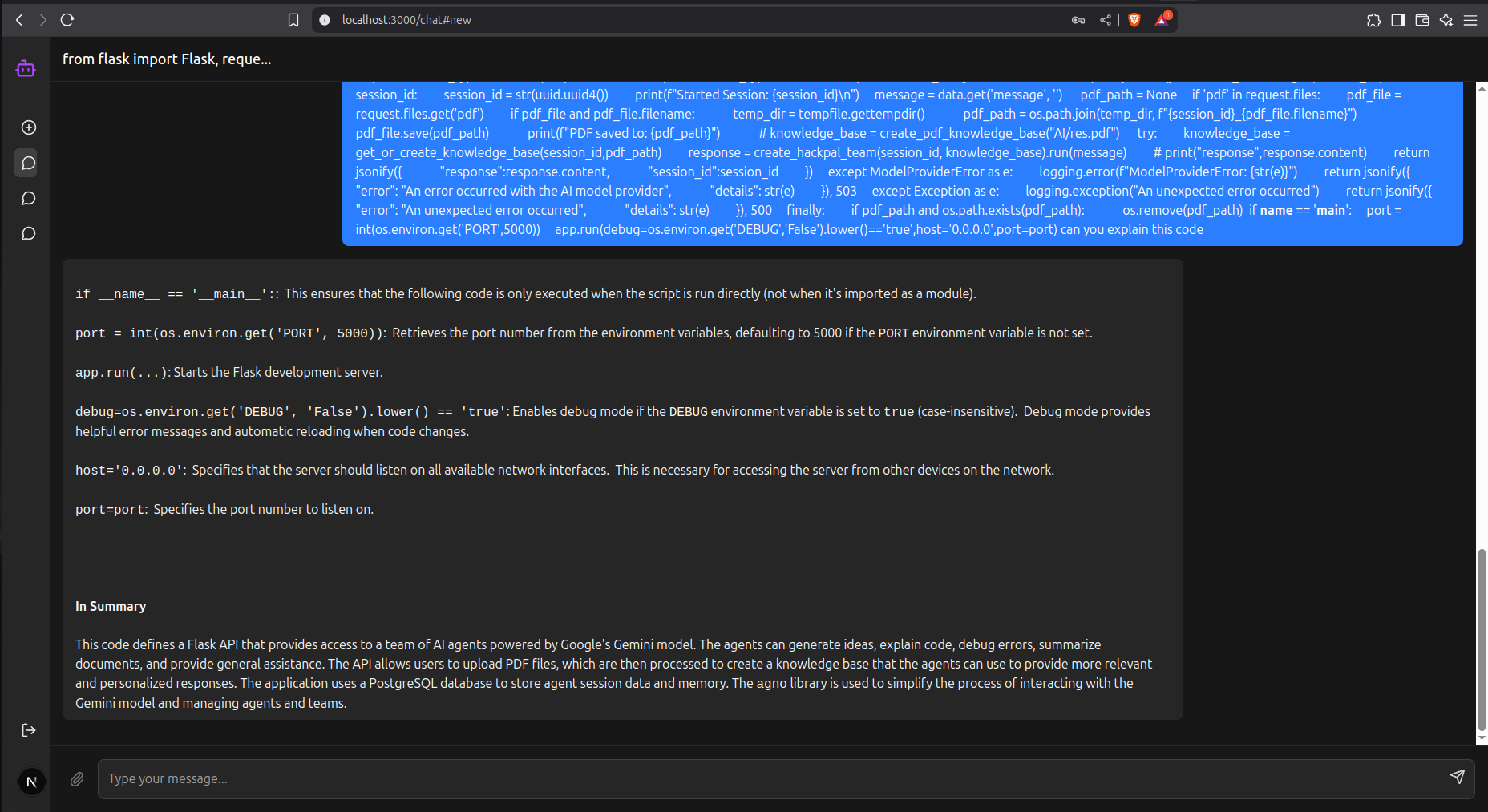
Code explainer agent summarizing the code , can also explain the code line by line
Inspiration
Hackathons are fast-paced, high-pressure environments where teams juggle ideas, tech stacks, and deadlines — often with limited experience in one or more areas. We wanted to build something that acts like a real-time AI teammate, helping participants brainstorm, debug, write content, and build faster. That’s how HackPal was born — an AI-powered toolkit designed to support hackers from idea to demo.
What it does
HackPal is a one-stop AI assistant for hackathon participants. It helps you:
- Brainstorm and refine project ideas
- Generate boilerplate code snippets
- Write compelling pitches, taglines, and documentation
- Get help with tech-related questions instantly
- Create submission-ready content like GitHub READMEs or Devpost sections
All in one chat-based interface, optimized for the fast pace of hackathons.
How we built it
We built HackPal using a modern tech stack combining Next.js 15 and a Flask-based AI service for our AI capabilities. Our architecture includes:
- Frontend: Built with Next.js and enhanced with Tailwind CSS for styling and Framer Motion for animations
- AI Engine: Powered by Google's Gemini 2.0 Flash model through a Flask server
- Multi-Agent System: Implemented using the Agno framework to create specialized AI agents:
- Idea Generator for hackathon project concepts
- Code Explainer for breaking down complex code
- Error Debugger for troubleshooting issues
- PDF Assistant for document analysis
- General Assistant for broader technology questions
We integrated PostgreSQL with pgvector for efficient vector storage and retrieval, enabling semantic search across uploaded documents. The system uses SentenceTransformer for embedding generation, allowing our AI to understand context from documents when generating responses.
For security and authentication, we implemented JWT with bcryptjs, while Axios handles API communication between frontend and backend components.
Challenges we ran into
Contextual Awareness : AI Context Management was a real headache for us. We struggled to balance conversation history with efficient knowledge retrieval, eventually finding that a 10-interaction window worked best. Learning Agno's team-based routing system was particularly challenging as we needed our agents to share context seamlessly. We also wrestled with implementing session-based document management, figuring out how to make our AI remember user-uploaded documents across conversations while maintaining performance. These challenges forced us to deeply explore Agno's architecture, but ultimately helped us build a more robust system with meaningful contextual awareness between our specialized agents.
Document Processing Pipeline: Creating a robust system for uploading, processing, and extracting meaningful information from PDFs required implementing custom knowledge base creation functions
Agent Specialization: Fine-tuning each agent's instructions to create truly specialized behaviors while maintaining a cohesive user experience
Accomplishments that we're proud of
Mastering Agno Framework: Successfully implemented a sophisticated multi-agent system using Agno despite its limited documentation, demonstrating our ability to quickly adapt to new technologies
Contextual Awareness System: Developed an optimal memory management solution with a 10-interaction window that balances conversation history with performance
Document-Aware AI: Built a system that analyzes uploaded documents and incorporates that knowledge into personalized responses
Team-Based Agent Routing: Successfully implemented Agno's team capabilities to create specialized AI agents that collaborate seamlessly
What we learned
Agno Framework Expertise: Gained deep understanding of this cutting-edge agent framework by thoroughly studying documentation and experimenting with its capabilities
Memory Management Optimization: Discovered the critical balance between context retention and performance when designing AI memory systems
Inter-Agent Communication: Learned how to effectively pass context between specialized agents to maintain conversation coherence
Session-Based Document Management: Developed techniques for associating uploaded documents with the correct user context across sessions
AI Integration with Next.js: Mastered the process of connecting Next.js frontend to AI services through API routes, creating a seamless bridge between user interfaces and AI capabilities
Markdown-Based Response Rendering: Implemented react-markdown to transform AI-generated content into beautifully formatted responses with syntax highlighting for code snippets
What's next for HackPal
Expanded Agent Specialization: Adding more domain-specific agents like Design Assistant and Pitch Coach using Agno's extensible architecture
IDE Integration: Creating plugins for popular development environments to provide assistance directly within the coding workflow
Multi-User Collaboration: Developing features for entire hackathon teams to interact simultaneously with shared context
Built With
- aceternity-ui
- agno
- flask
- framer-motion
- gemini
- jwt
- lucide-react
- mongodb
- nextjs
- pgvector
- postgresql
- radix-ui
- react-markdown


Log in or sign up for Devpost to join the conversation.