-
-
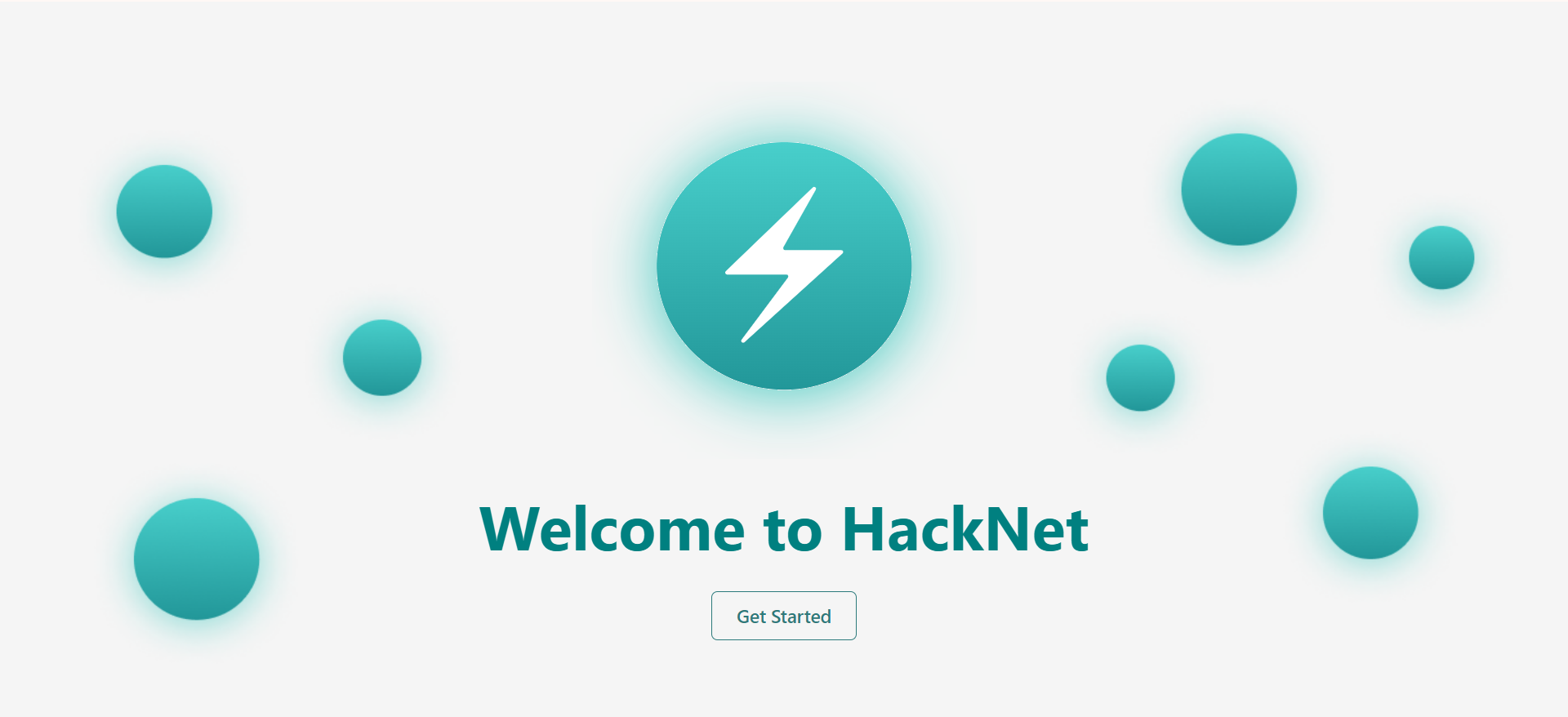
Welcome Page
-
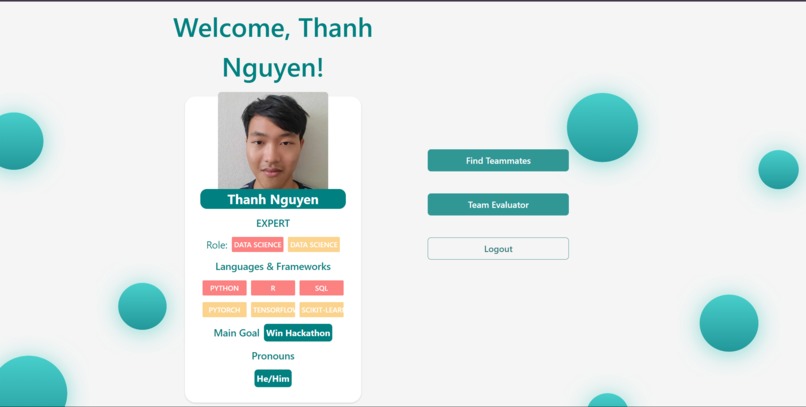
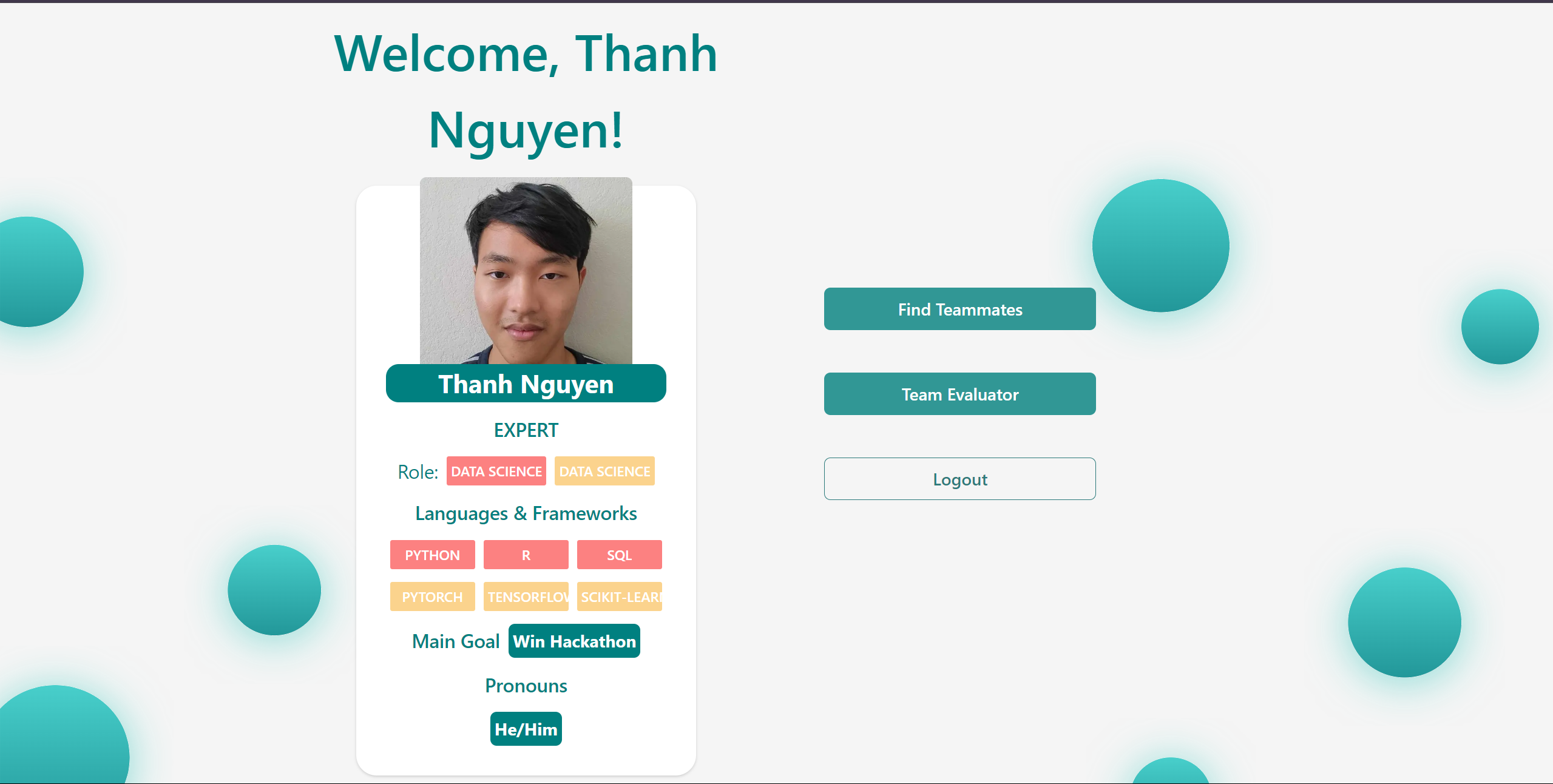
Dashboard
-
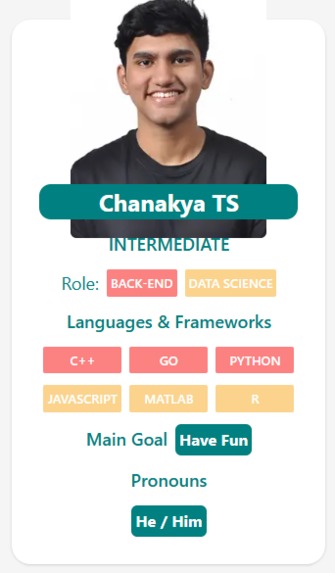
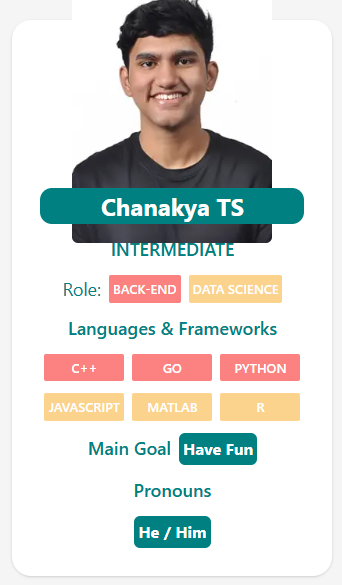
HackNet Card
-
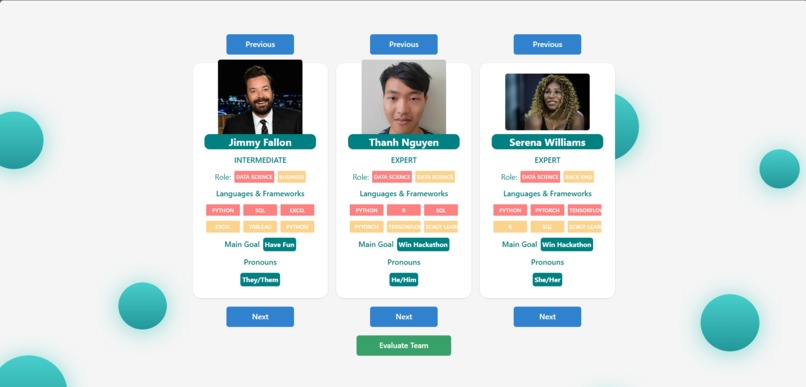
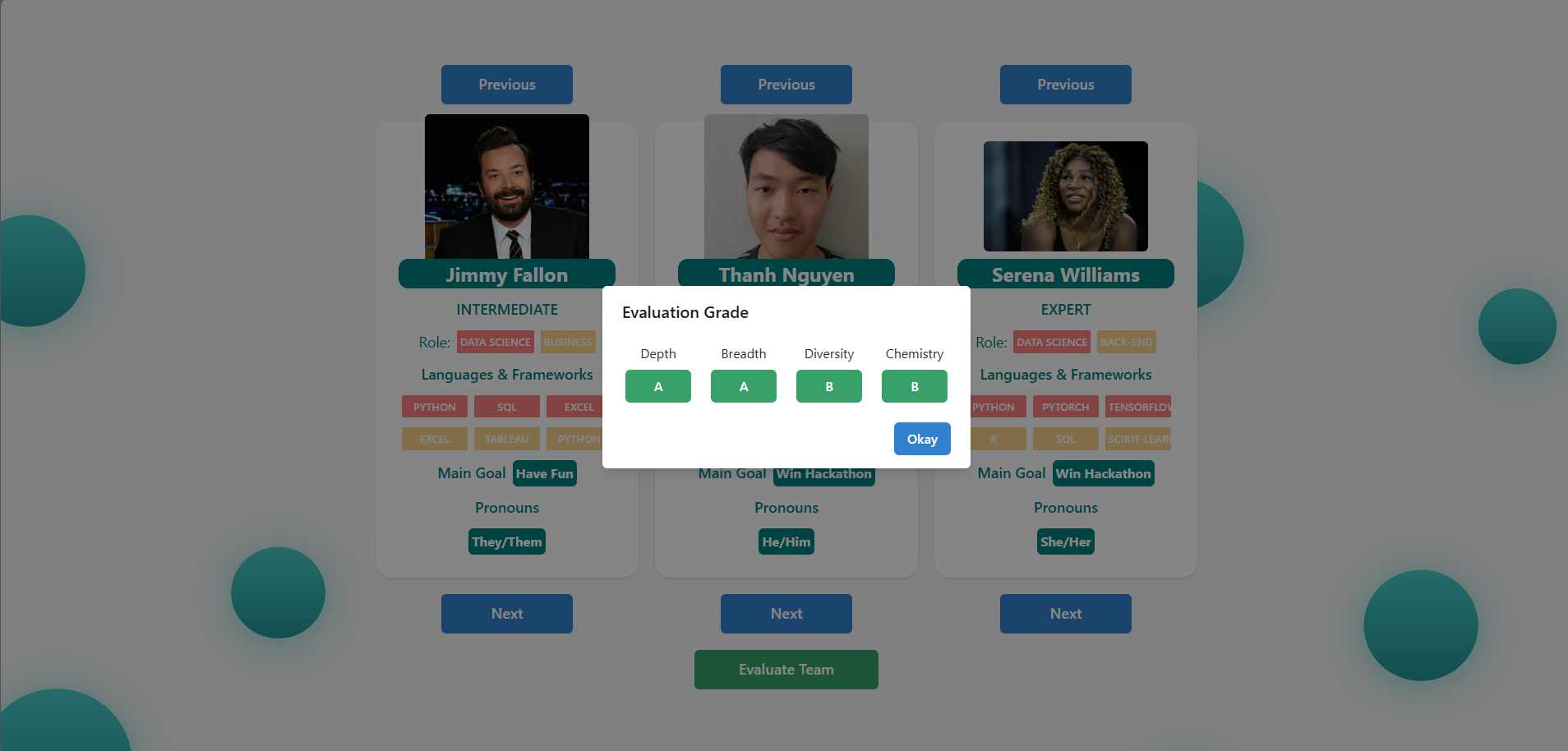
Team Evaluation
-
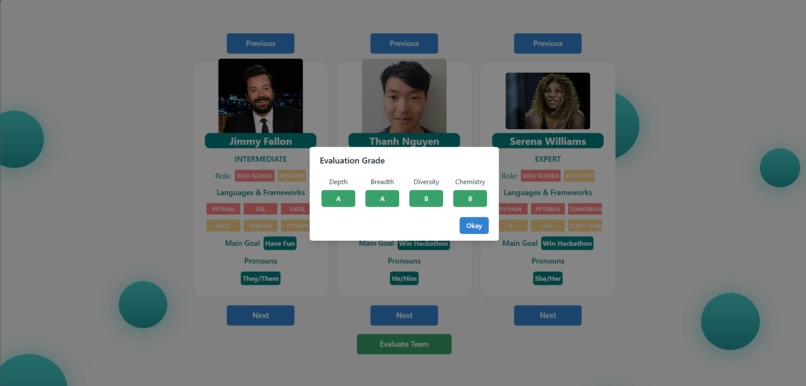
Scores
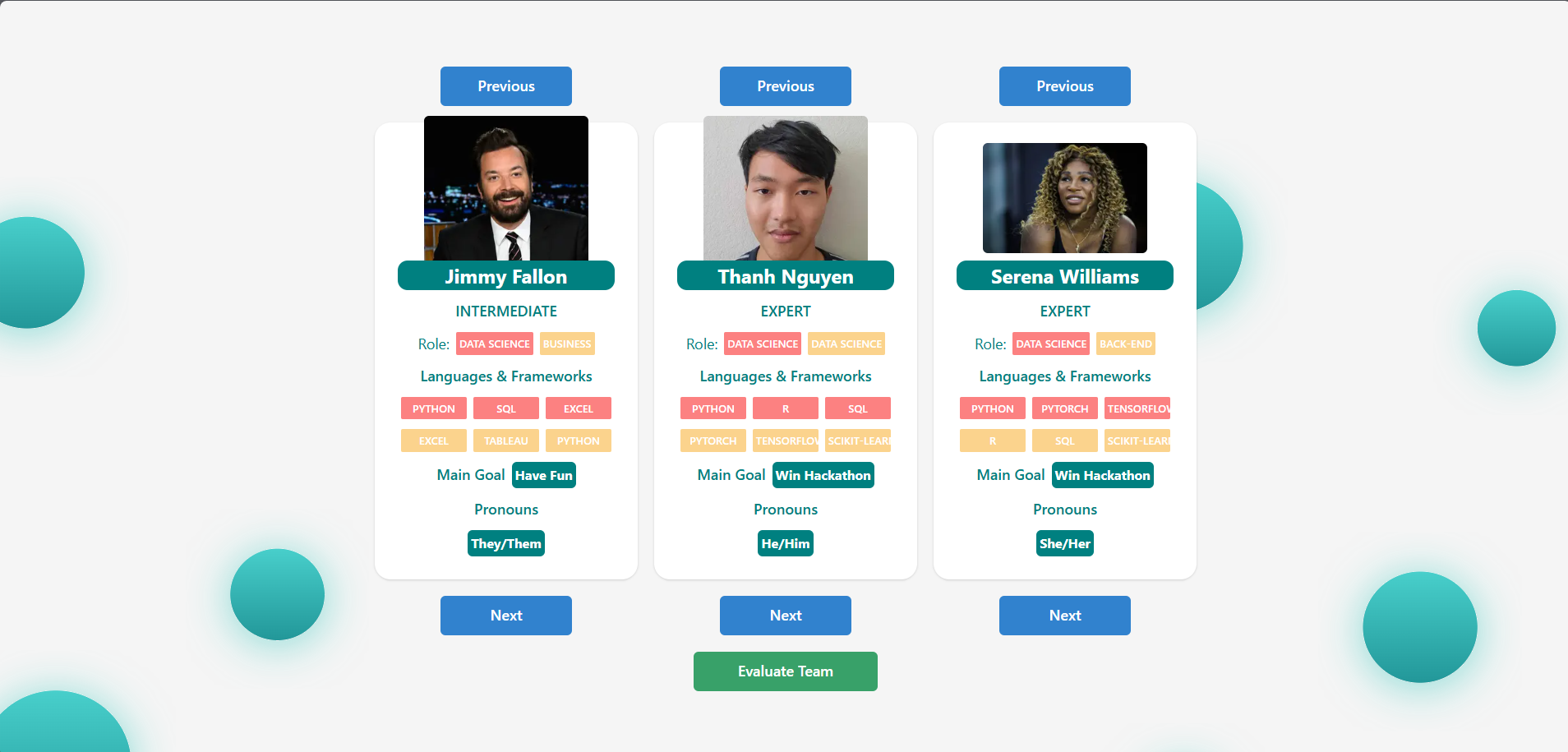
About HackNet
Inspiration
HackNet was inspired by our own experiences at hackathons—scrambling to find teammates in disorganized Discord channels or forming last-minute teams with mismatched skills. We realized there had to be a better way to connect hackers with complementary skills and goals. HackNet's mission is to provide a platform where participants can easily find their dream team, leading to more productive, innovative, and enjoyable hackathon experiences.
What We Learned
Throughout HackNet’s development, we tackled several challenges and gained valuable insights:
Cloud Infrastructure: We learned how to scale a cloud-hosted backend and PostgreSQL database to handle heavy user loads while maintaining fast performance.
Machine Learning Integration: We integrated an LLM (Large Language Model) to parse resumes and extract key information such as skills and experience. Optimizing this feature while maintaining speed and responsiveness was a significant learning experience.
User-Centric Design: Iterating on UI/UX design based on user feedback taught us the importance of crafting a simple, intuitive experience for users.
Team Collaboration: Building HackNet involved managing team collaboration, division of responsibilities, and effective version control on GitHub.
How We Built It
HackNet is designed for performance, scalability, and ease of use. Here’s how we built it:
Backend: We used Python and FastAPI for a lightweight, efficient backend that processes data in real-time.
Database: Our cloud-hosted PostgreSQL database supports fast, reliable read/write operations as the user base grows.
Frontend: Next.js powers our responsive, dynamic interface, delivering a seamless experience on web, iOS, and Android platforms.
LLM Integration: HackNet’s LLM parses uploaded resumes, extracting key information that feeds into our matching algorithm.
Matching Algorithm: Our custom-built algorithm considers skills, interests, and hackathon goals to suggest teammates who complement each other’s strengths.
Challenges We Faced
Building HackNet wasn’t without obstacles. Some of the key challenges we faced included:
Matching Algorithm: Designing an algorithm that balanced skill matching with team diversity took multiple iterations to get right.
Cross-Platform Consistency: Ensuring consistent performance across platforms (web, iOS, Android) required extensive testing and optimization, especially for responsive design.
Backend Scalability: Scaling the backend to handle a growing user base required optimizing API endpoints, database queries, and caching.
Deployment Challenges: Deploying both the frontend and backend to the web presented its own set of challenges, especially in ensuring smooth integration, seamless communication between services, and consistent performance across different environments.
What's Next for HackNet
We’re excited about HackNet’s future and have several ideas for improvement:
Enhanced LLM Features: Expanding the LLM to provide more nuanced matching, including leadership roles and project management experience.
Social Integration: Incorporating platforms like LinkedIn and GitHub to enrich user profiles and improve matching.
Communication Tools: Adding in-app messaging and video conferencing to facilitate team collaboration before and during hackathons.
Advanced Filters: Offering more detailed filtering options, such as location, experience level, and tech stack preferences.
Built With
- ai-applied-text-extract
- css
- generativeai
- next.js
- node.js
- postgresql
- python


Log in or sign up for Devpost to join the conversation.