-
-
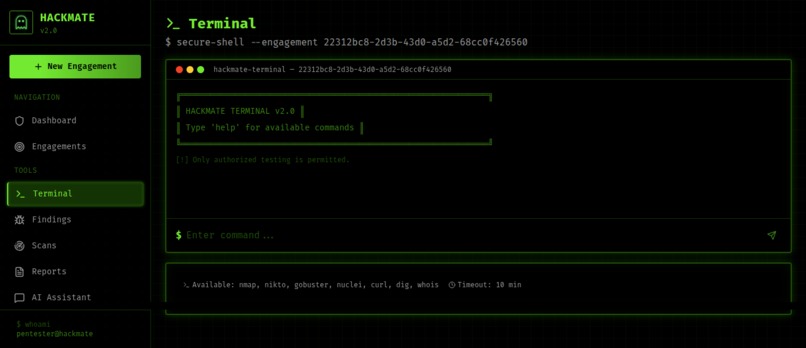
TERMINAL
-
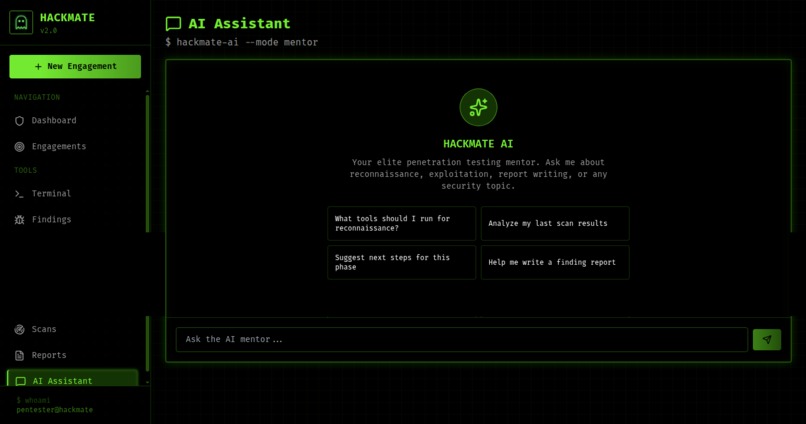
AI-ASSISTANT
-
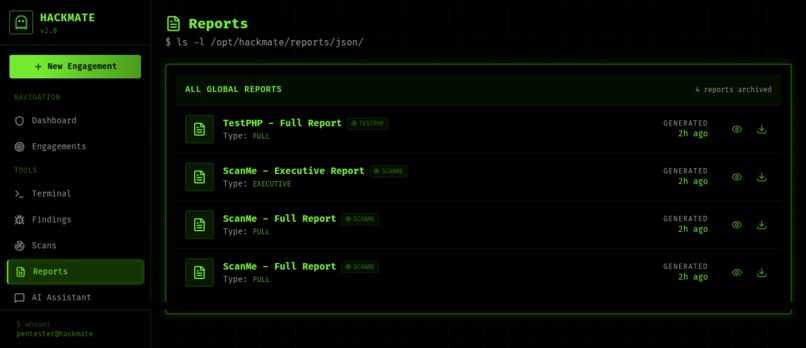
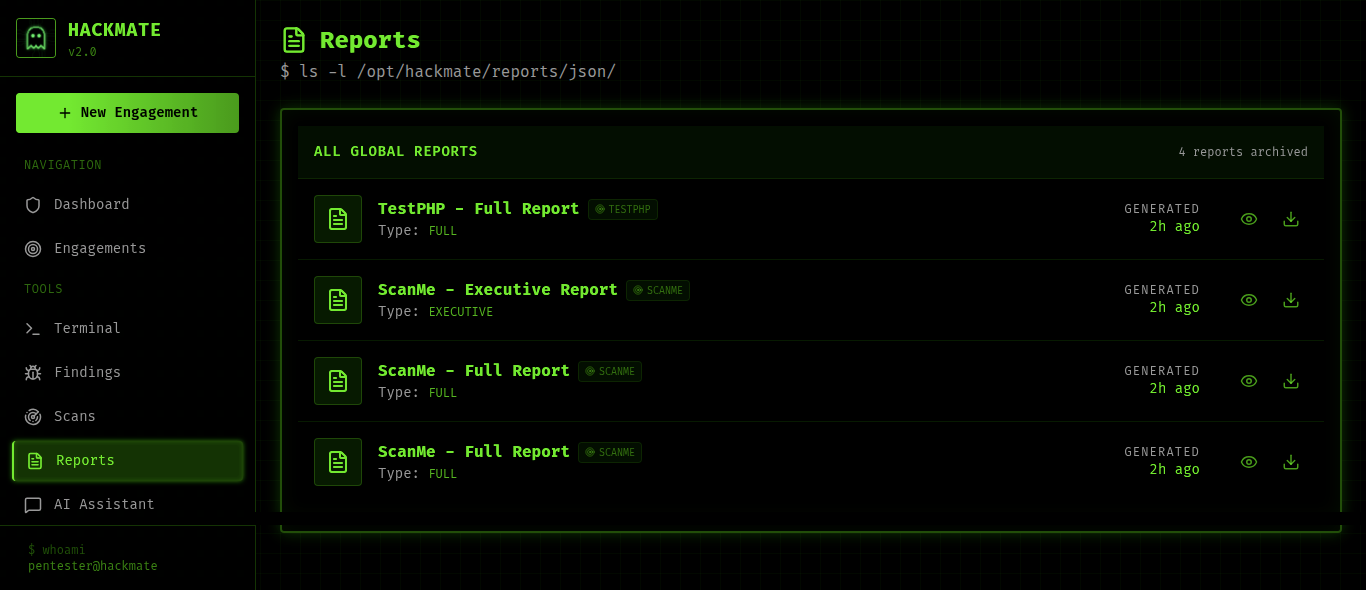
REPORTS
-
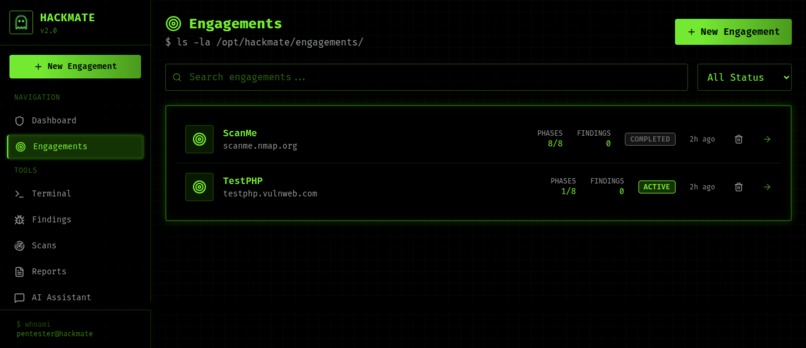
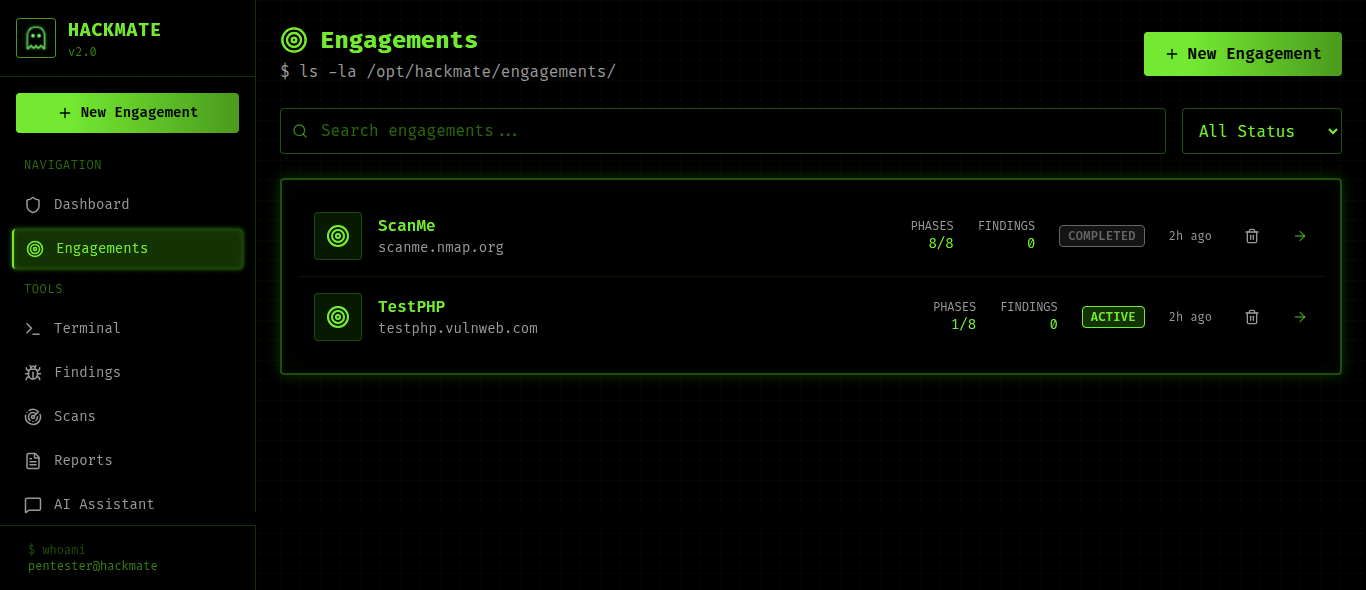
ENGAGEMENTS
-
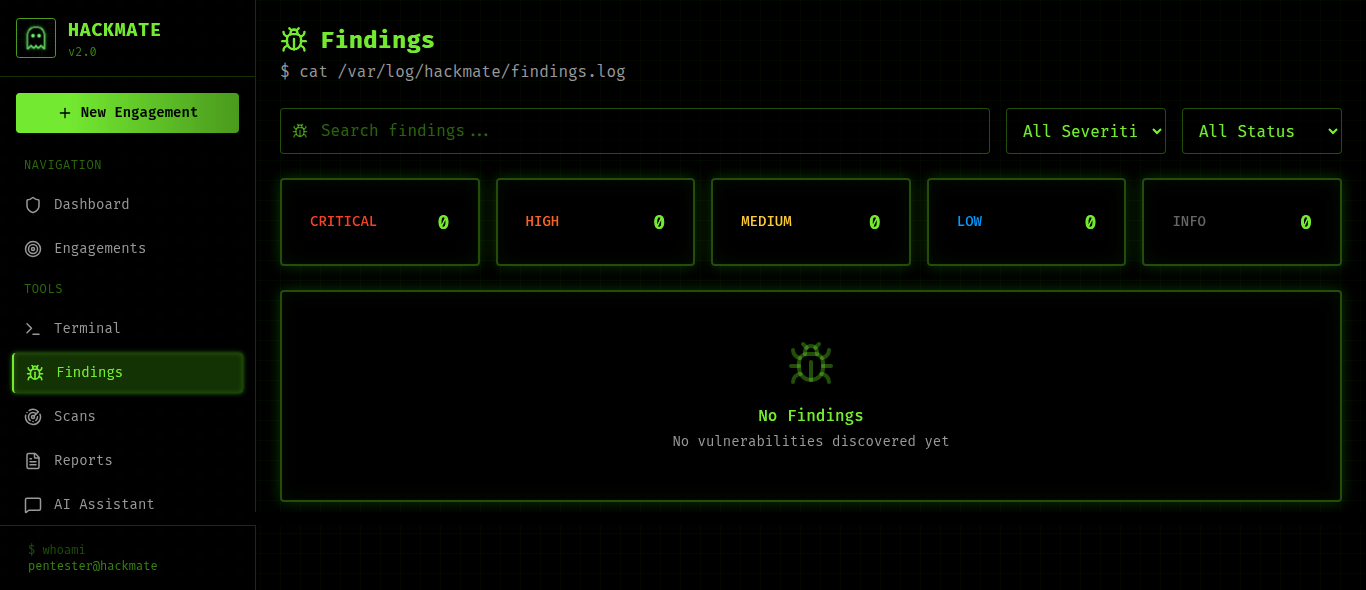
FINDINGS
-
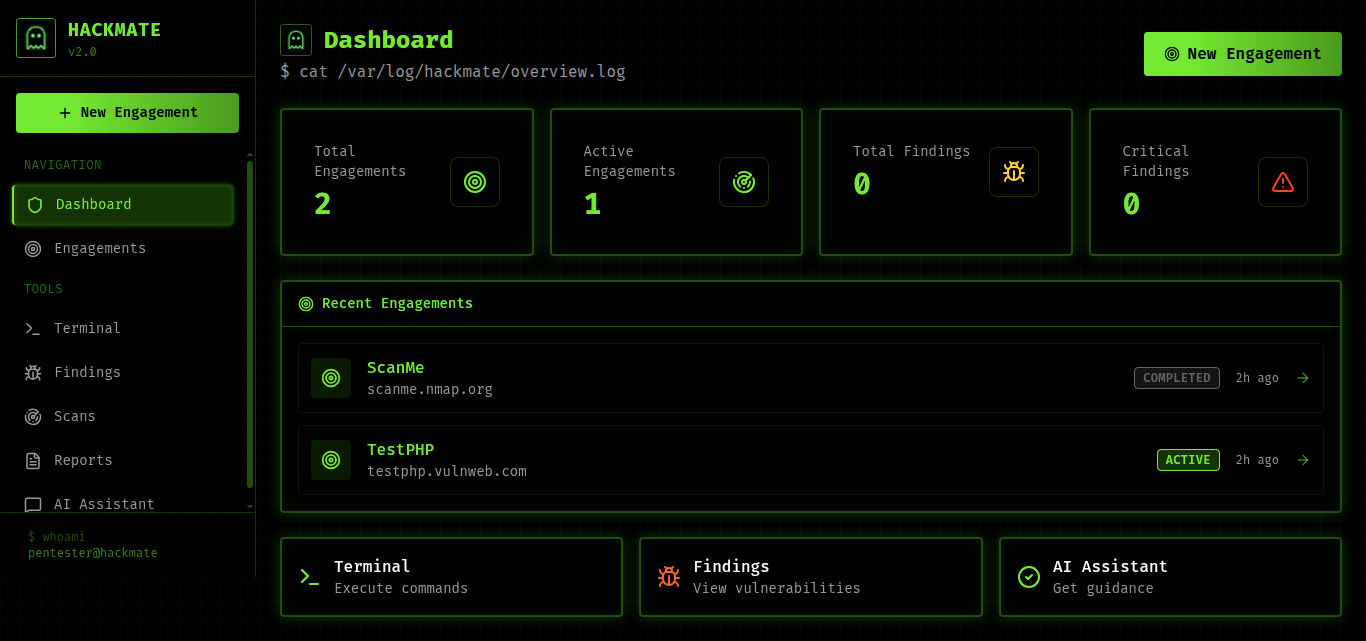
DASHBOARD
The Problem
In cybersecurity, time is the enemy.
Ethical hackers and security professionals spend almost half of a penetration test not on finding vulnerabilities—but on:
- Switching between dozens of tools
- Remembering methodologies and command syntax
- Manually analyzing noisy scan outputs
- Writing long, repetitive reports after the test is done
This creates three major issues:
- Inefficiency: Skilled professionals waste hours on overhead instead of real security work
- Inconsistency: Methodologies like PTES are followed unevenly, especially by juniors
- Accessibility: Entry-level pentesters struggle to know what to do next, even when tools exist
Security tools are powerful—but fragmented, complex, and poorly connected.
The Insight (Aha Moment)
During hands-on penetration testing, one question kept coming back:
What if the tools, the methodology, and the reporting could think together?
Instead of:
- A terminal here
- A checklist there
- Notes in screenshots
- Reports written from scratch
What if there was a single intelligent workspace that:
- Knows the PTES methodology
- Guides the tester step by step
- Understands tool outputs
- Documents everything automatically
That idea became HackMate.
The Solution
HackMate is an AI-powered penetration testing platform that acts as a co-pilot for ethical hackers.
It doesn’t replace the hacker. It amplifies them.
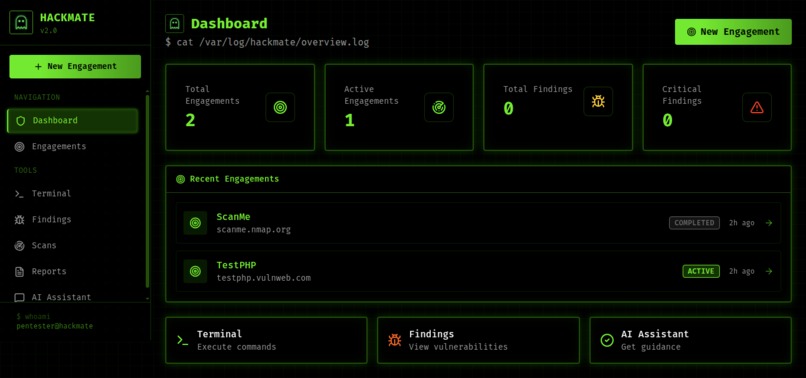
HackMate brings methodology, tools, analysis, and reporting into one intelligent workflow.
How It Works
1. Methodology First (PTES Built-In)
HackMate implements the entire PTES methodology, from pre-engagement to cleanup.
Each phase:
- Explains objectives
- Suggests the right tools
- Tracks progress
- Prevents skipped steps
This makes testing:
- Consistent for experts
- Accessible for beginners
2. Integrated Hacking Terminal
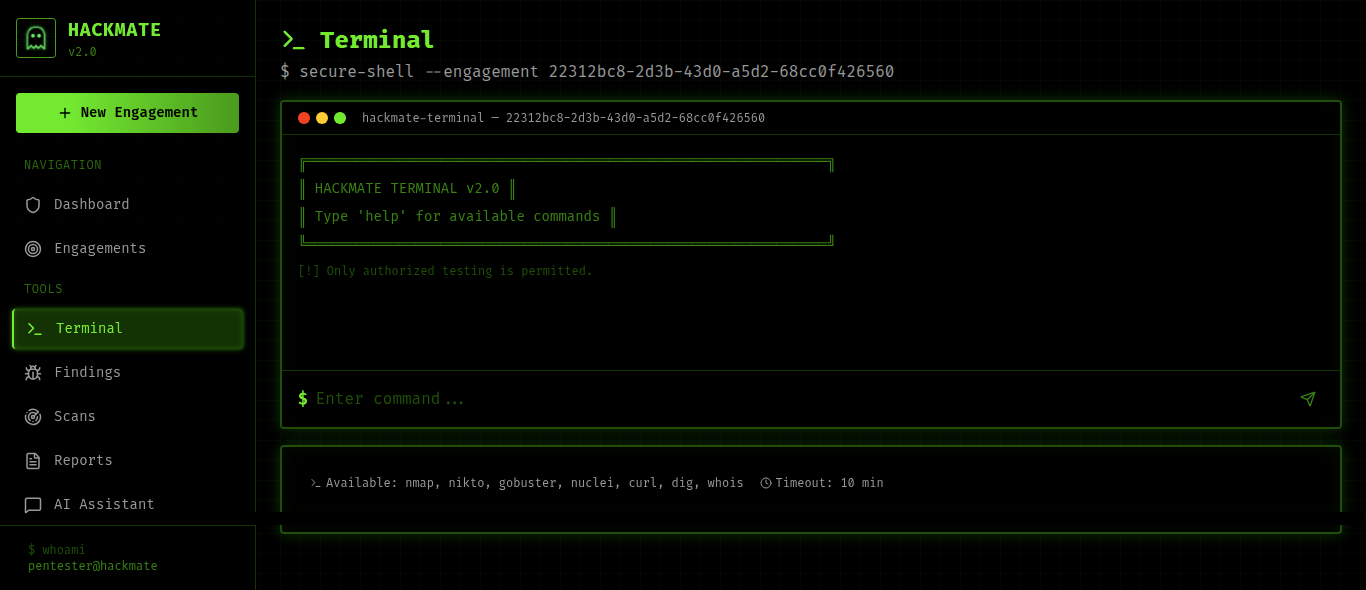
HackMate includes a real browser-based terminal with pre-configured security tools:
- Nmap, Nikto, Gobuster, Nuclei, sqlmap, and more
You run commands directly inside the platform. No context switching. No lost outputs.
Everything is:
- Logged
- Structured
- Reusable
3. AI Pentesting Copilot
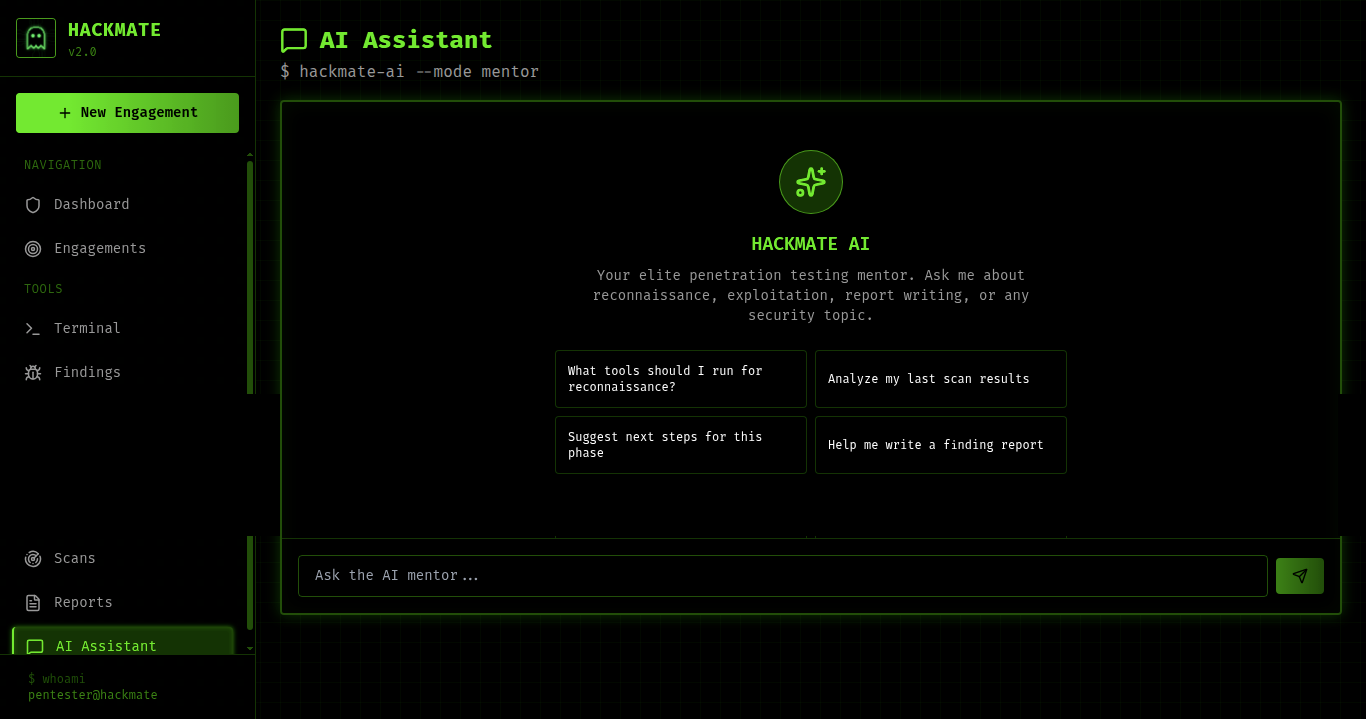
The AI assistant is trained to behave like a hacker mentor, not a generic chatbot.
It:
- Suggests next steps based on the current phase
- Analyzes scan outputs in real time
- Highlights critical findings
- Explains why something matters
Example:
“Port 22 is open with an outdated SSH version. Here’s what to check next, and why it matters.”
The AI guides, but the human decides.
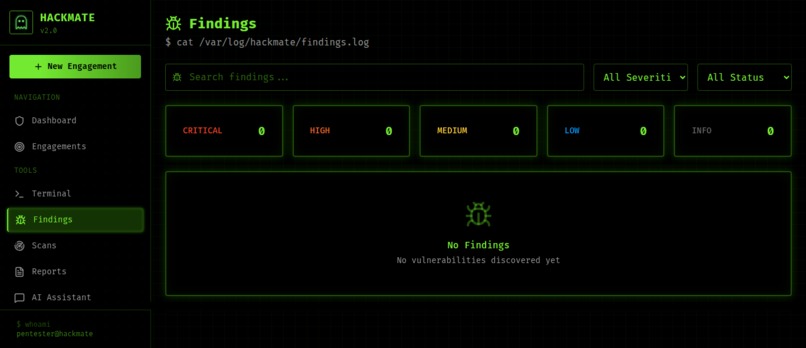
4. Automatic Findings & Reporting
Every vulnerability discovered is:
- Classified by severity
- Linked to evidence
- Stored structurally
At the end, HackMate generates professional reports automatically:
- Executive summary for decision-makers
- Technical report for security teams
What usually takes hours is done in seconds.
Why It Matters
HackMate reduces penetration testing time by nearly 50% while improving:
- Methodology consistency
- Report quality
- Learning speed for junior pentesters
It turns ethical hacking from:
“Powerful but chaotic” into “Powerful and structured”
Why This Is Different
Most “AI security tools”:
- Just attach a chatbot to an existing product
HackMate:
- Embeds AI into the workflow itself
- Understands methodology, tools, and outputs together
- Enforces ethical and responsible use by design
It’s not just AI on top of security. It’s AI inside security work.
Tech Highlights (Brief)
- Frontend: Next.js, TypeScript, Tailwind, xterm.js
- Backend: FastAPI, Python, SQLAlchemy
- AI: Google Gemini (context-aware, constrained, validated)
- Design: Terminal-inspired, professional, accessible
Vision
HackMate’s long-term vision is simple:
Make high-quality security testing accessible, consistent, and efficient—without dumbing it down.
Whether you’re a student learning pentesting, or a professional securing real systems, HackMate becomes your intelligent companion.
Closing
HackMate was built to solve a real problem observed in real security work.
It saves time. It reduces mistakes. It teaches best practices.
And most importantly—it lets hackers focus on what actually matters:
Finding and fixing security flaws before attackers do.
Built With
- fastapi
- gemini
- google-antigravity
- javascript
- python
- shadcn
- sqlalchemy
- sqlite
- tailwind-css


Log in or sign up for Devpost to join the conversation.