-
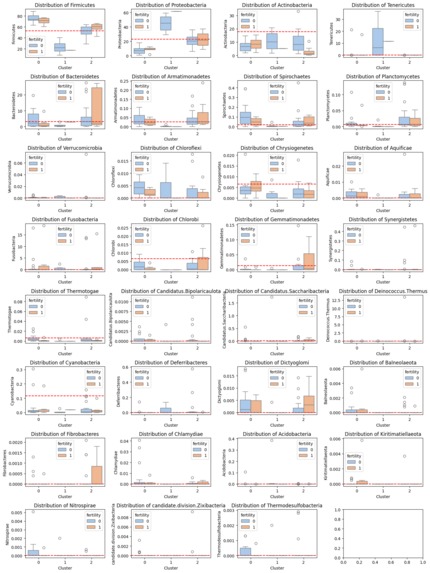
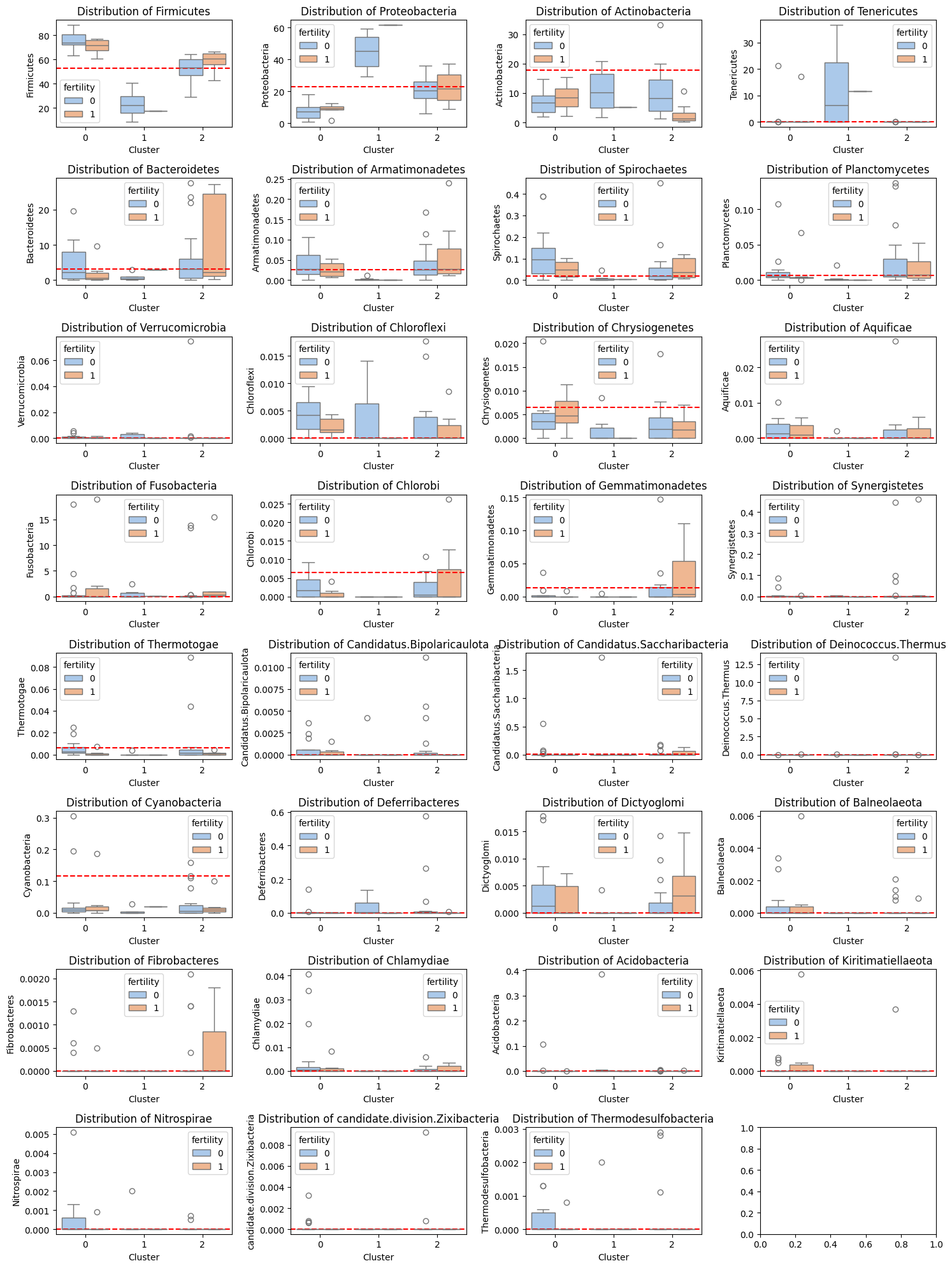
The plot compares feature distributions across clusters. The red dashed line marks a new sample in Cluster 2, Fertility 0.
Inspiration
The inspiration behind "Hacking the Secrets of the Seminal Microbiome" stems from the growing significance of understanding the microbiome's role in human health. As we delve into the intricate world of microbial communities, particularly in the context of seminal fluid, we aim to uncover potential correlations and implications for reproductive health.
What it does
Our project leverages advanced bioinformatics and data analysis techniques to explore and decipher the composition of microbial communities in seminal fluid. By developing a novel computational pipeline, we aim to identify key microbial species, analyze their interactions, and investigate potential associations with reproductive health parameters.
How we built it
The project was built through a multidisciplinary approach, combining expertise in bioinformatics, data science, and reproductive health. We utilized Python for developing our analysis scripts, employed state-of-the-art bioinformatics tools for sequence analysis, and integrated statistical models to draw meaningful insights from the data. Collaborative efforts were crucial as team members brought unique skills to the table, ensuring a comprehensive and well-rounded approach.
Challenges we ran into
Throughout the project, we encountered several challenges, including but not limited to data preprocessing complexities, algorithm optimization, and interpreting the biological significance of our findings. Additionally, coordinating the efforts of a diverse team with varied backgrounds required effective communication and collaboration strategies.
One of the primary challenges we faced was the limited size of the dataset. The scarcity of available data posed challenges in achieving statistical significance and robustness in our findings. We had to employ sophisticated techniques to mitigate the impact of the small dataset size on the reliability of our results.
Accomplishments that we're proud of
We take pride in successfully developing a robust computational pipeline that enables the comprehensive analysis of the seminal microbiome. Our team overcame intricate challenges, implemented innovative solutions, and achieved a significant understanding of the microbial landscape in seminal fluid. The project's potential impact on reproductive health research is a source of great accomplishment.
What we learned
The project provided valuable insights into the complexities of microbiome analysis, highlighting the importance of interdisciplinary collaboration. We gained proficiency in applying bioinformatics tools, interpreting biological data, and addressing challenges inherent in cutting-edge research. Additionally, we learned the significance of adapting and refining our approach based on emerging insights and feedback.
What's next for Hacking the secrets of the seminal microbiome
Moving forward, we plan to expand our research by incorporating additional datasets and refining our analysis techniques. Collaborating with domain experts in reproductive health will be pivotal to validate our findings and explore potential clinical applications. Ultimately, we aspire to contribute to the growing body of knowledge surrounding the seminal microbiome and its implications for reproductive biology and health.
Built With
- data-science
- knn
- machine-learning
- mlp
- python
- random-forest


Log in or sign up for Devpost to join the conversation.