Inspiration
We thank the UCI Machine Learning repository for providing the tagged dataset of users , with the sensor data and tagged with activities .
The wearable technology market is growing at an overwhelming Compound Annual Growth Rate of 65% and by 2020 the wearable market is estimated to grow till $41 bn .
The major chunk of the pie will be harnessed by the data scientists and the analysts who would make sense of the data and provide useful insights into it .
How it works
First we train the classifier on the historical data of the user and then based on the sensor data we classify the user's activity and then after classifying the activity , we update the user preference matrix with the ad that was clicked upon .
We cluster the ads based on the category and then further refine the recommendation results .
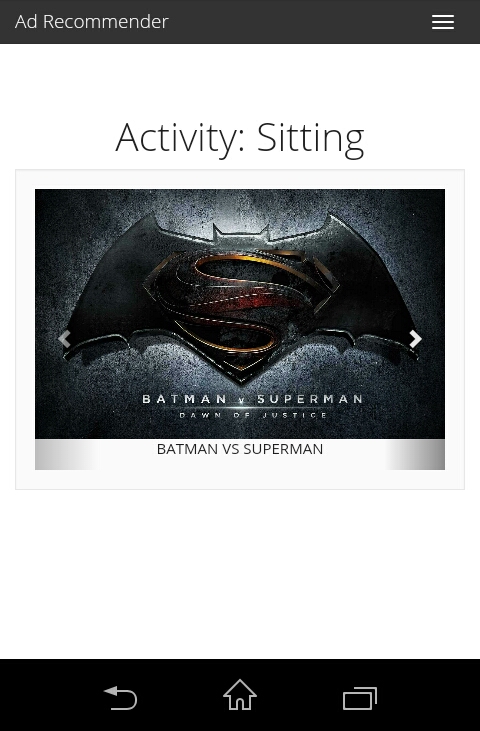
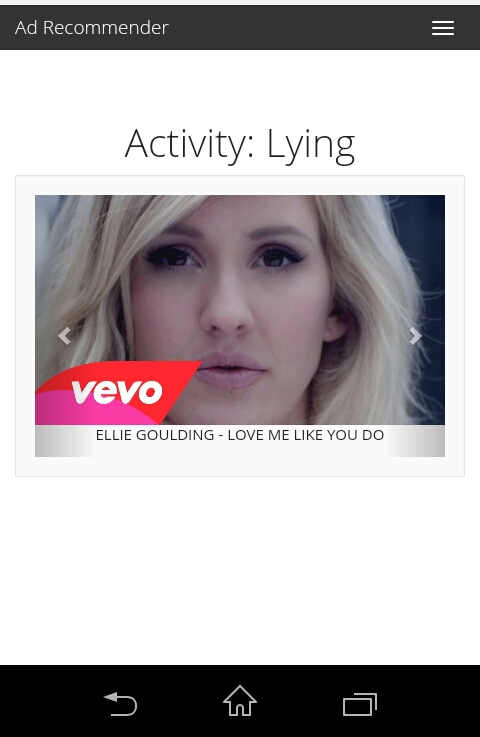
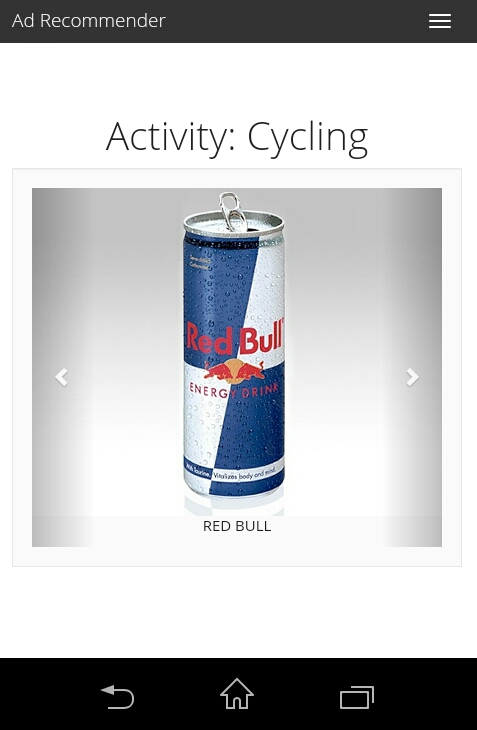
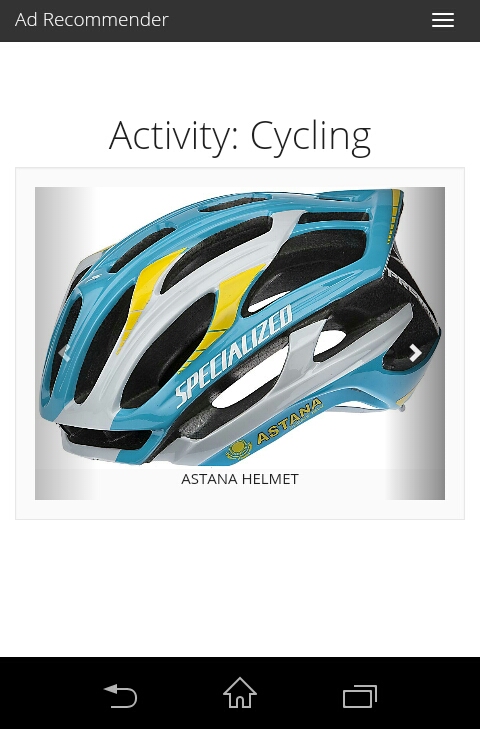
We developed a Carousel based interface to showcase the working of our engine.
Challenges I ran into
- Real time data collection
Accomplishments that I'm proud of
- A dependable recommendation engine that we extended from the existing collaborative filtering algorithm
- We used the UCI Machine Learning Repository data , tagged with activity and the sensor data , and we were able to classify among 24 different activities .
What I learned
How to extend the collaborative filtering algorithm when each user - preference matrix is a vector rather than just a number indicating the rating.
We built a classifier using the data in the UCI Machine Learning Repository telling about the activity based on the sensor data .
What's next for HACKIN
- We would integrate the user's feedback to improve our recommendations .
- We would integrate the Internet Of Things and get the sensor data and make the context classification more accurate .


Log in or sign up for Devpost to join the conversation.