-
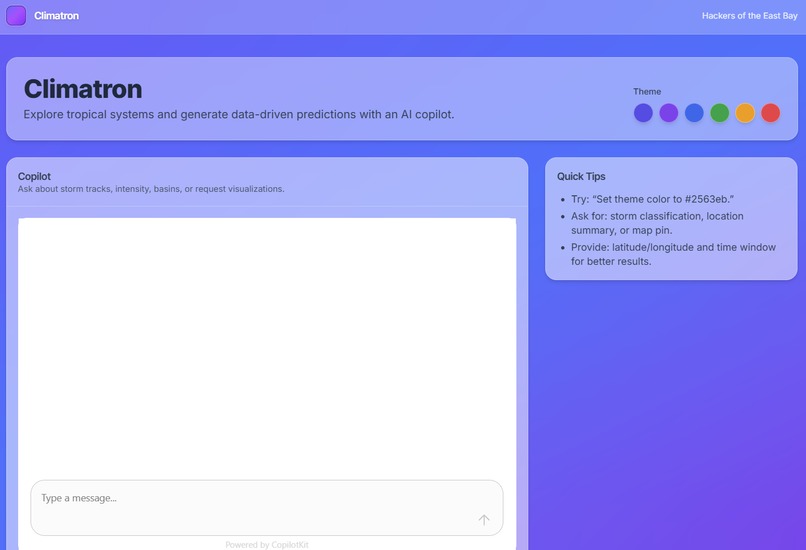
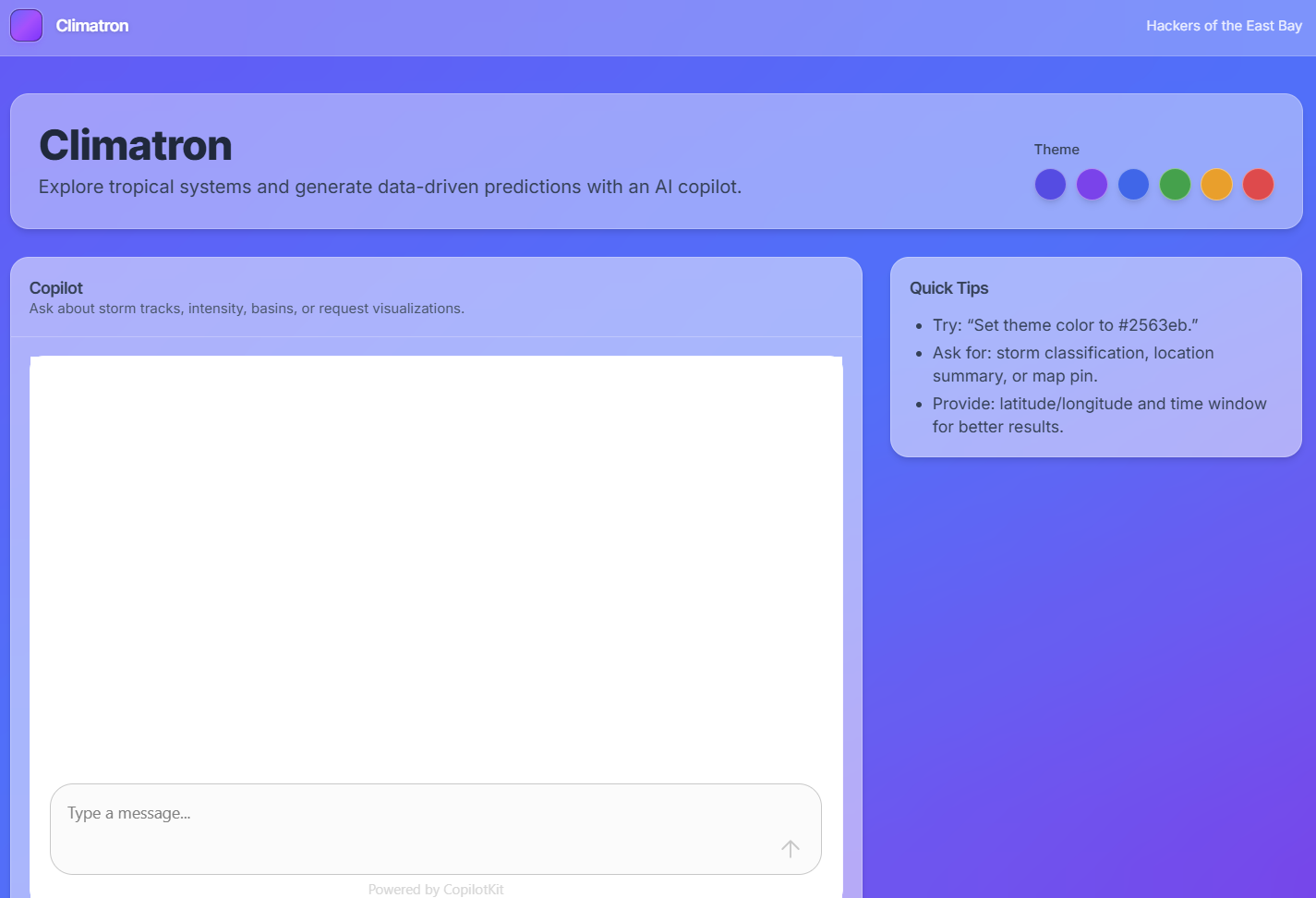
Main web browser of Climatron
Inspiration
We were inspired by the increasing number of severe weather events around the world. Our goal was to build something that could help people better understand and predict cyclones, hurricanes, and typhoons using data. We wanted to combine machine learning with weather science to make a tool that’s both accurate and accessible.
What it does
Our project, Climatron Model Barbu, predicts the strength and movement of tropical storms using data such as latitude, longitude, wind speed, and pressure. Users can input real-time or historical data, and the system uses a trained regression model to estimate storm intensity and potential path. The web interface displays predictions in a clear and interactive way, so users can easily interpret the results.
How we built it
We built the backend with Python, using a regression training module to process storm data and generate predictions. On the frontend, we used AG-UI and TypeScript to create a clean and interactive interface. We also integrated Tavily and Cavily APIs to connect weather data sources and allow the web app to communicate smoothly with the model. Every component was designed to work together efficiently and in real time.
Challenges we ran into
We ran into plenty of issues, but the biggest one was getting the Cavily API to load properly through the web. We also had to handle differences between Python’s data structures and TypeScript’s type system, which caused a few frustrating errors before everything finally clicked.
Accomplishments that we're proud of
What we learned
We learned a lot about connecting APIs, managing data pipelines, and building user-friendly interfaces for technical tools. We also learned the importance of collaboration and communication, especially when tackling problems that didn’t have obvious solutions. Most importantly, we gained a deeper appreciation for how technology can help people prepare for real-world challenges like natural disasters.
Built With
- ag-ui
- ai
- ml
- python
- regression
- tavily
- typescript

Log in or sign up for Devpost to join the conversation.