Inspiration
We were particularly motivated by the challenges faced by cybersecurity professionals and domain administrators in keeping track of their digital assets' security posture. The idea was to create a tool that not only identifies vulnerabilities but also offers a clear, actionable overview, thereby simplifying what can often be a complex and time-consuming process. The goal was to empower users with the ability to proactively manage their domain security, rather than reactively addressing issues after they've escalated .
What it does
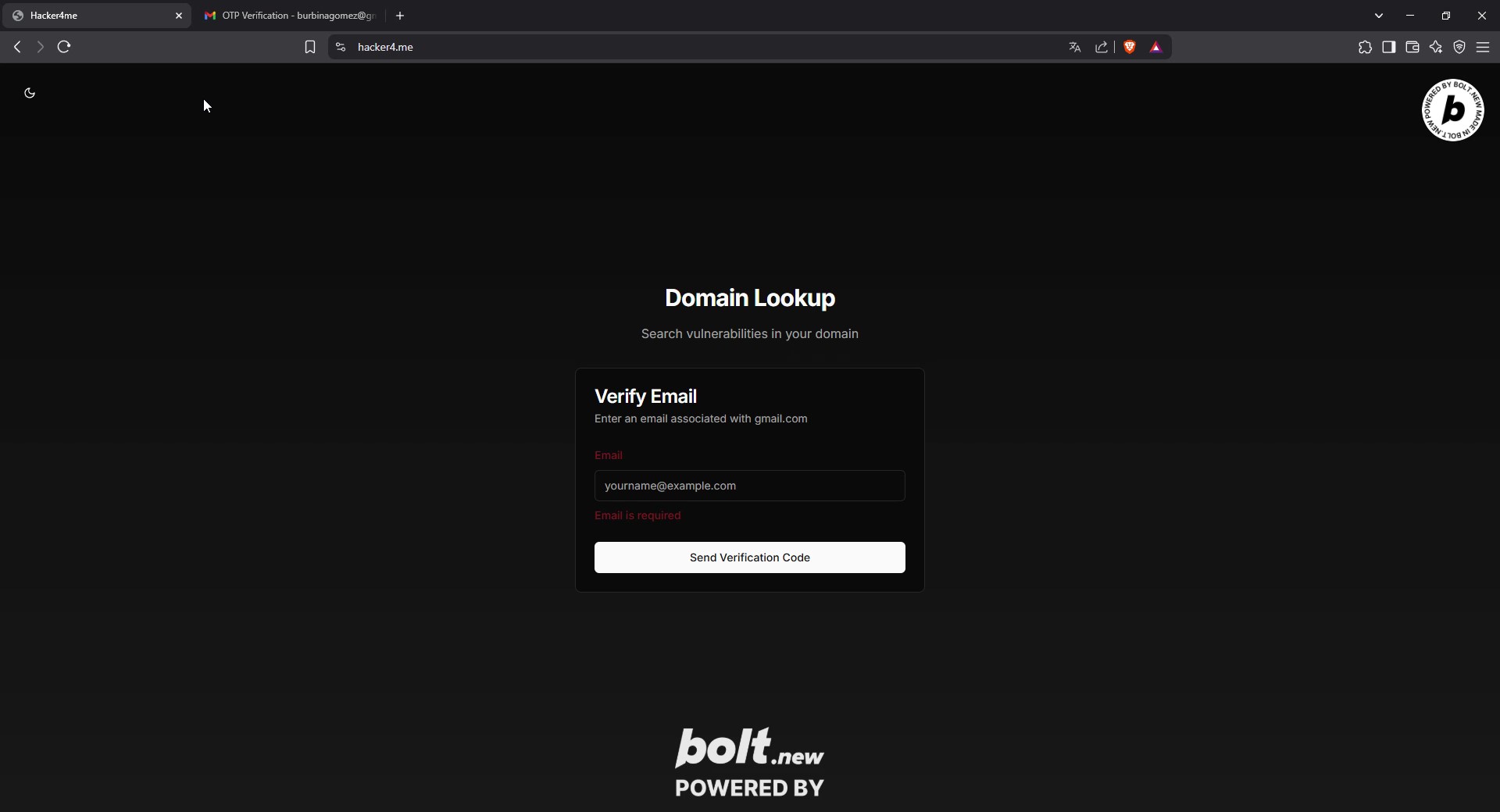
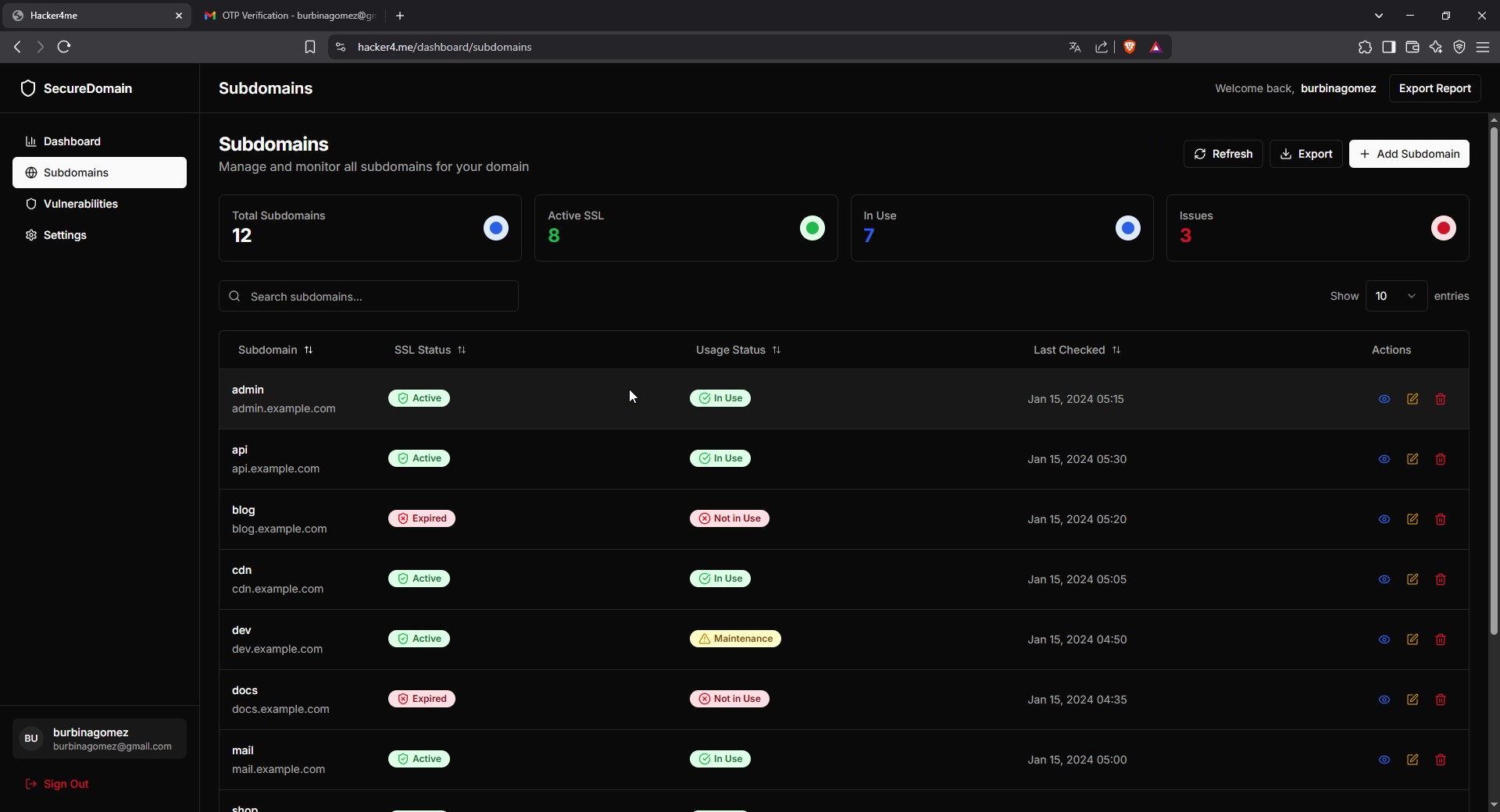
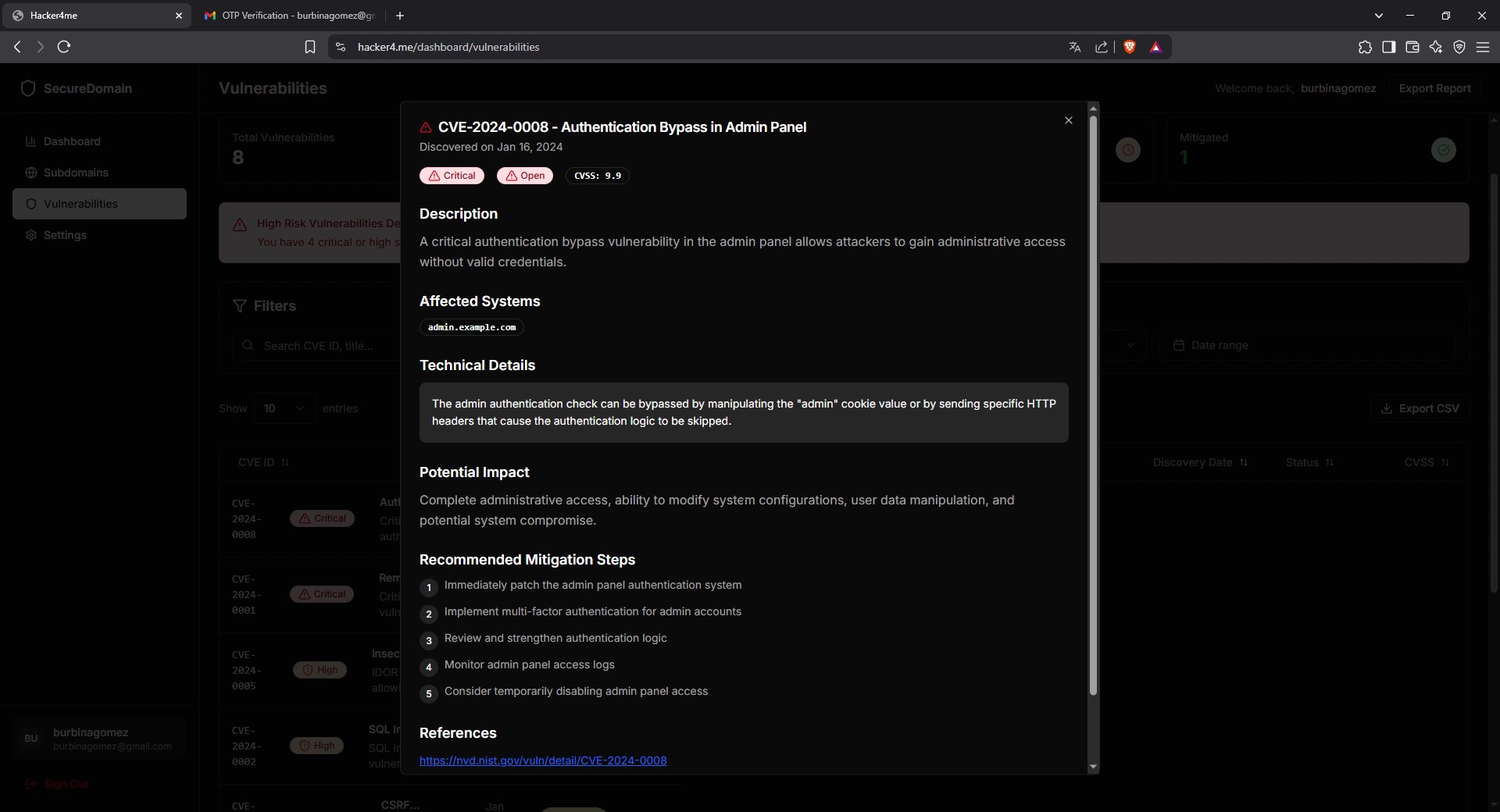
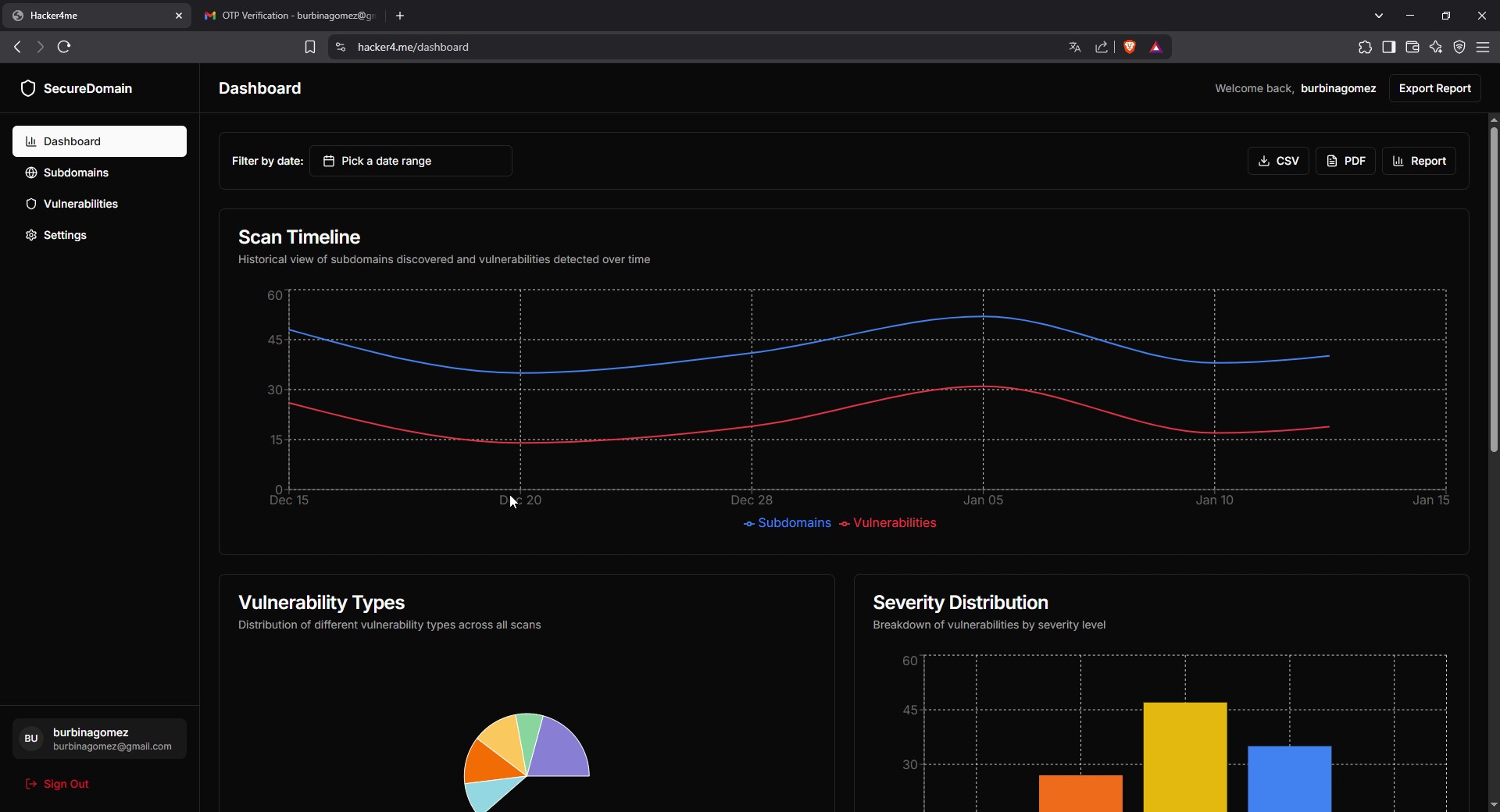
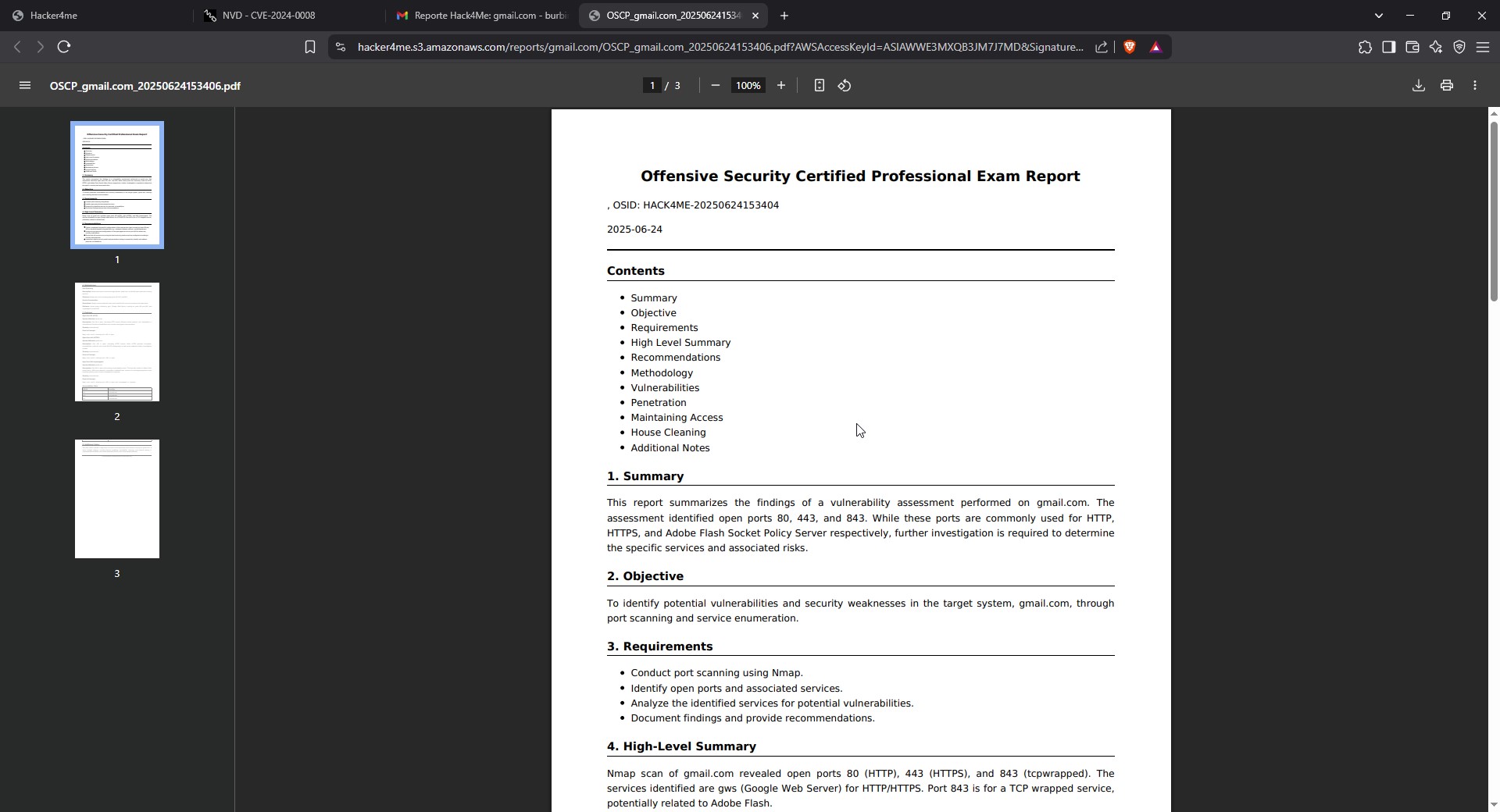
Hacker4me provides a proactive and centralized solution for domain security, offering a clear overview of vulnerabilities, enabling effective management, and supporting continuous monitoring to strengthen an organization's digital defense.
How we built it
The frontend was developed with bolt.new who use Next.js 13, React 18, and TypeScript, ensuring a robust and scalable user interface. For styling, Tailwind CSS was used for rapid UI development, complemented by shadcn/ui components to provide pre-built, accessible UI elements. Data visualization was handled by Recharts, while Lucide React provided the icons. Form management was streamlined using React Hook Form with Zod validation for data integrity, and Framer Motion was integrated for smooth animations.
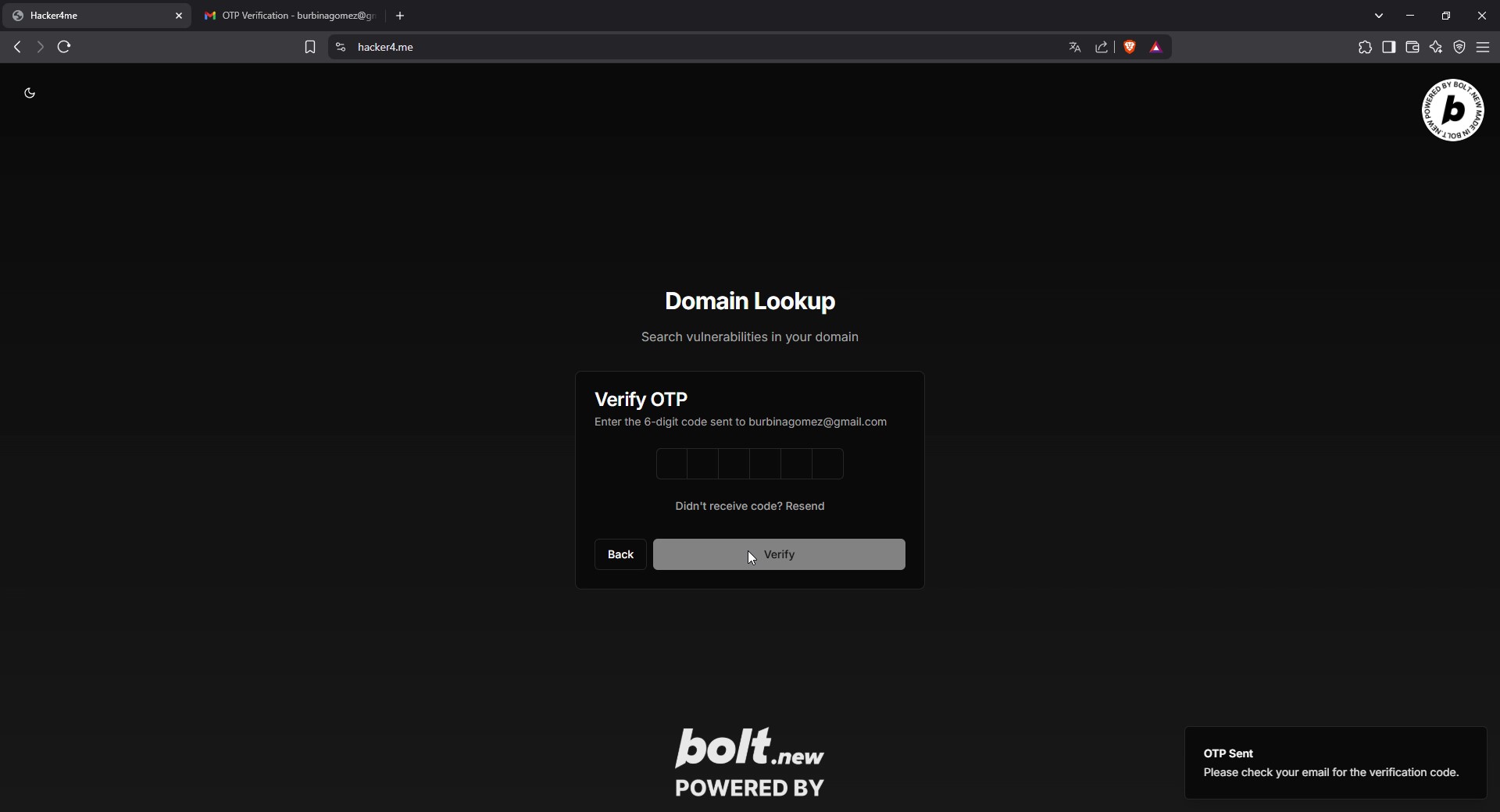
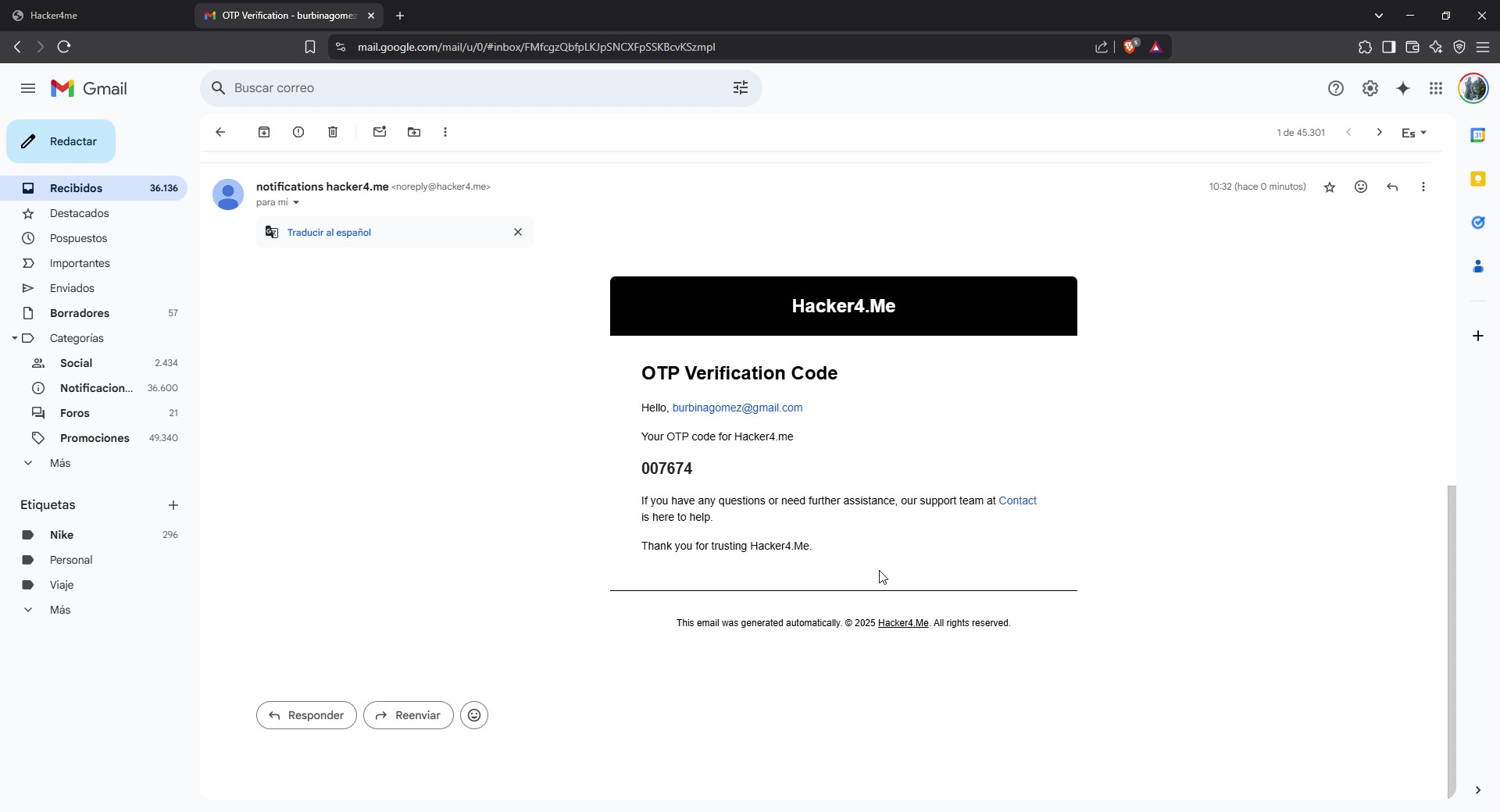
On the backend, Supabase Auth was the core for secure, OTP-based email authentication. The platform relies on a custom API endpoint (indicated by NEXT_PUBLIC_API) for performing automated security assessments, subdomain enumeration, and retrieving vulnerability data.
For scan vulnerabilities we used aws services (ec2)
The development process involved:
Cloning the repository and installing dependencies using npm. Environment setup, which included configuring Supabase URL and API keys in a .env.local file. Supabase setup, involving creating a project, retrieving keys, configuring email authentication, and disabling email confirmation for the OTP flow. Running the development server with npm run dev to build and test the application locally. For deployment we used netlify
Challenges we ran into
Manage gitflow with bolt.new Manage enviroment variables with bolt.new Deploy scan vulnerabilities docker image in aws
Accomplishments that we're proud of
Build a mvp in a month
What we learned
How to build platforms with ai
What's next for hacker4me
We want to offer a professional product for the companies, we will add more services and offers payment plans
Built With
- amazon-web-services
- javascript
- next-js
- supabase
- typescript


Log in or sign up for Devpost to join the conversation.