-
-
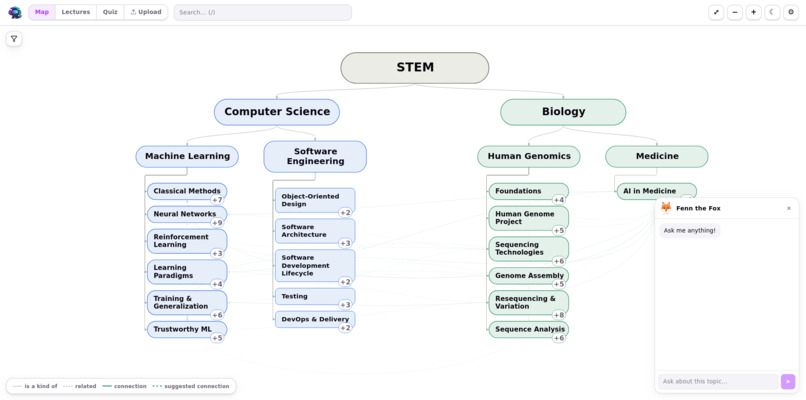
Ask your favorite mascot detailed questions
-
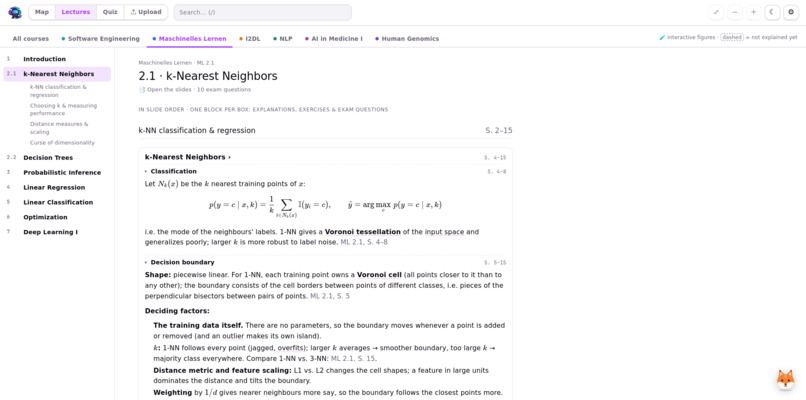
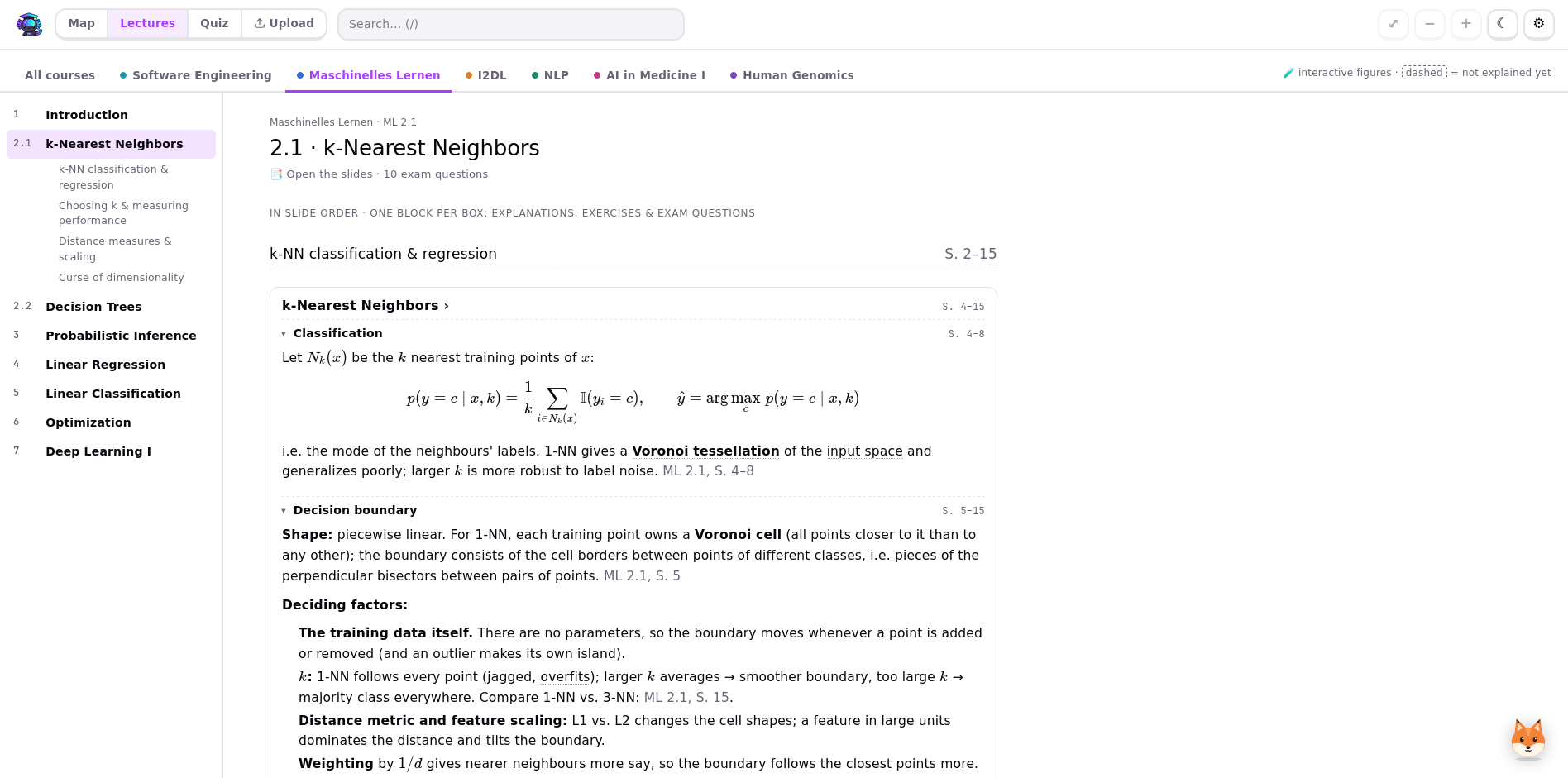
Detailed Interlinked Lecture Content
-
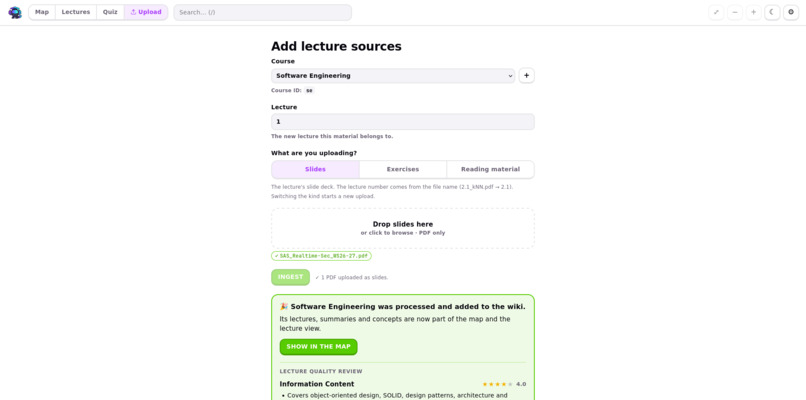
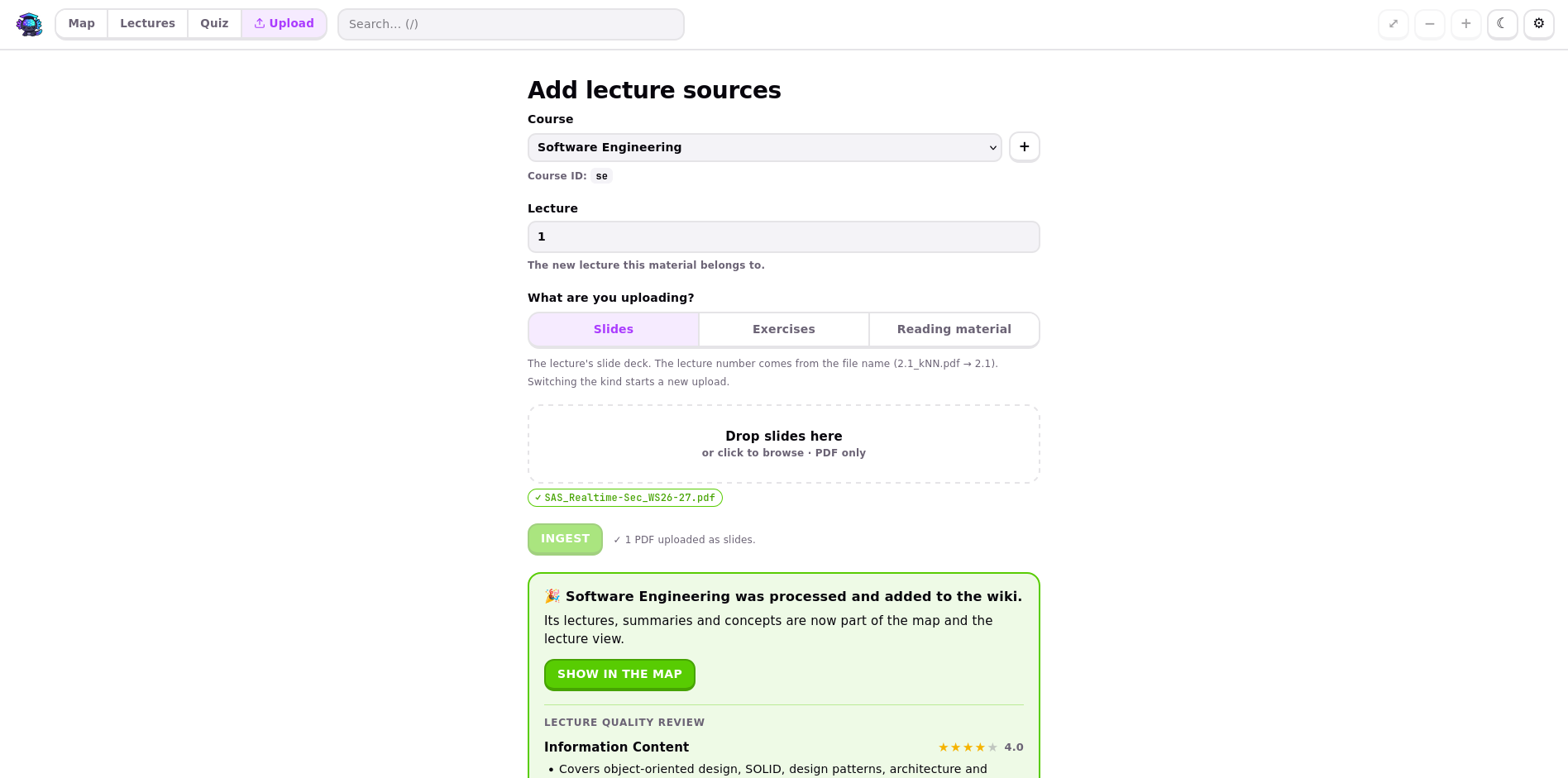
Upload new lectures to instantly generate learning content.
-
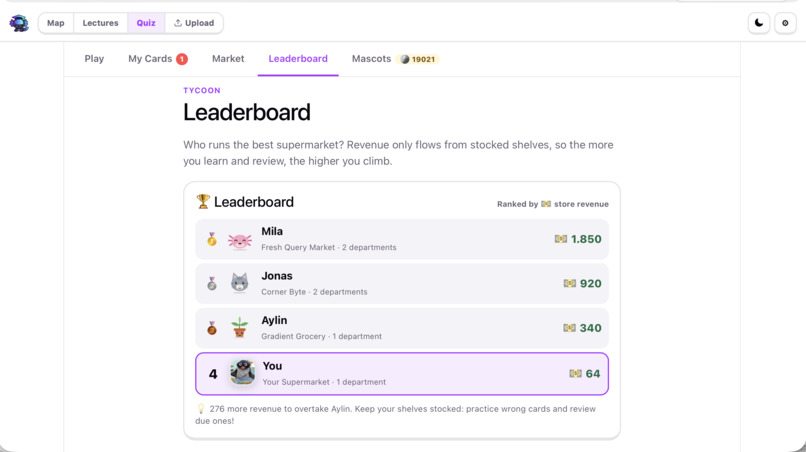
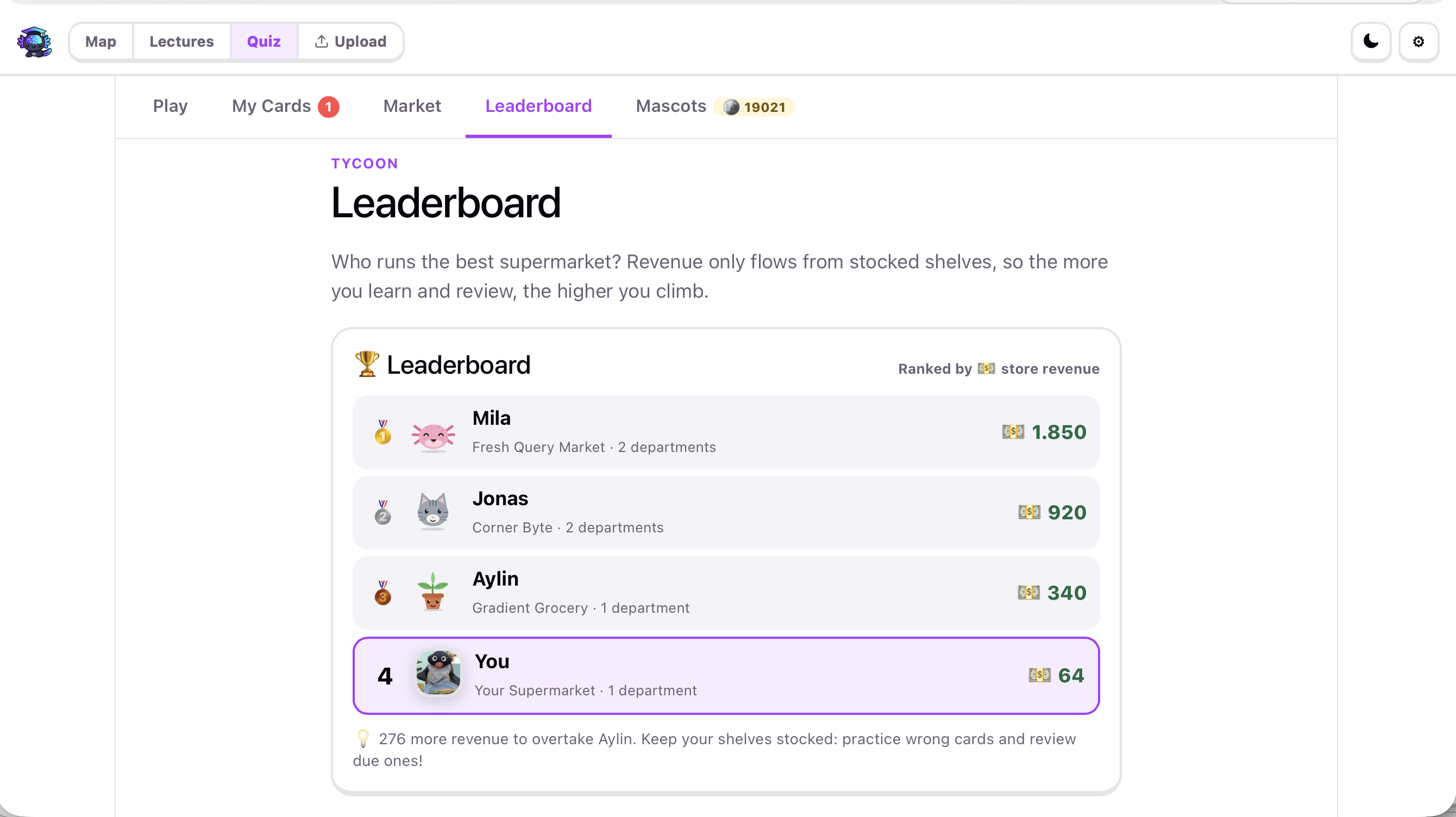
See how your friends perform on the leaderboard!
-
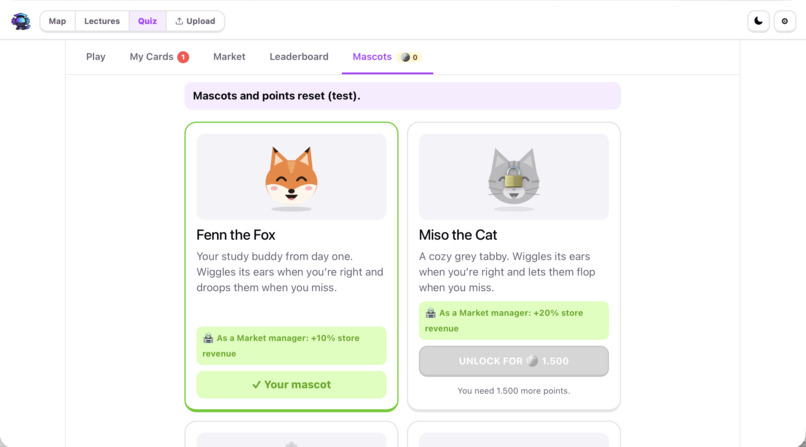
Unlock new mascots!
-
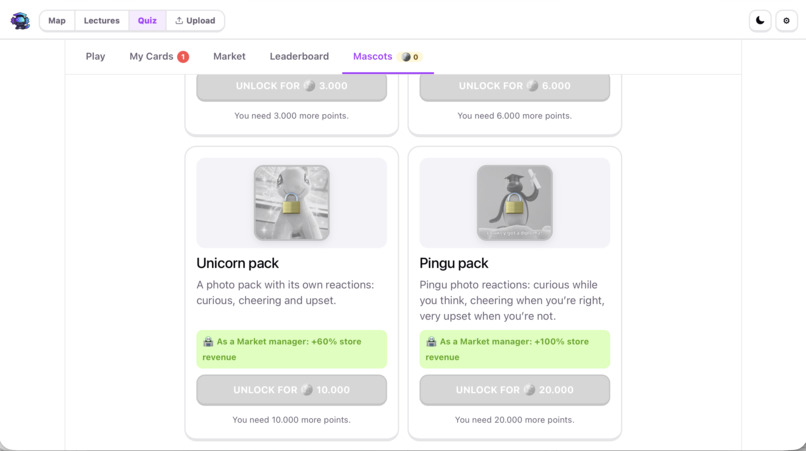
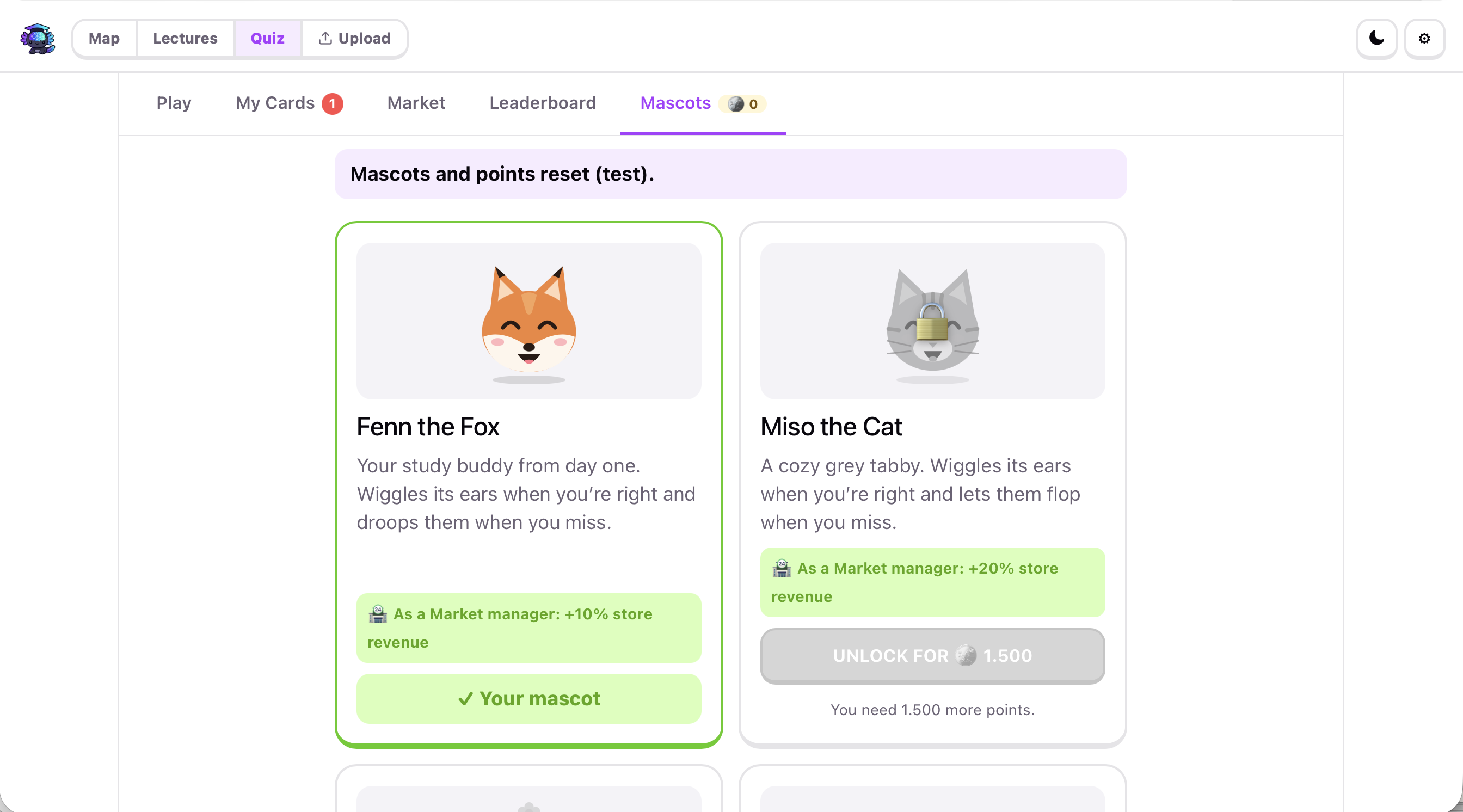
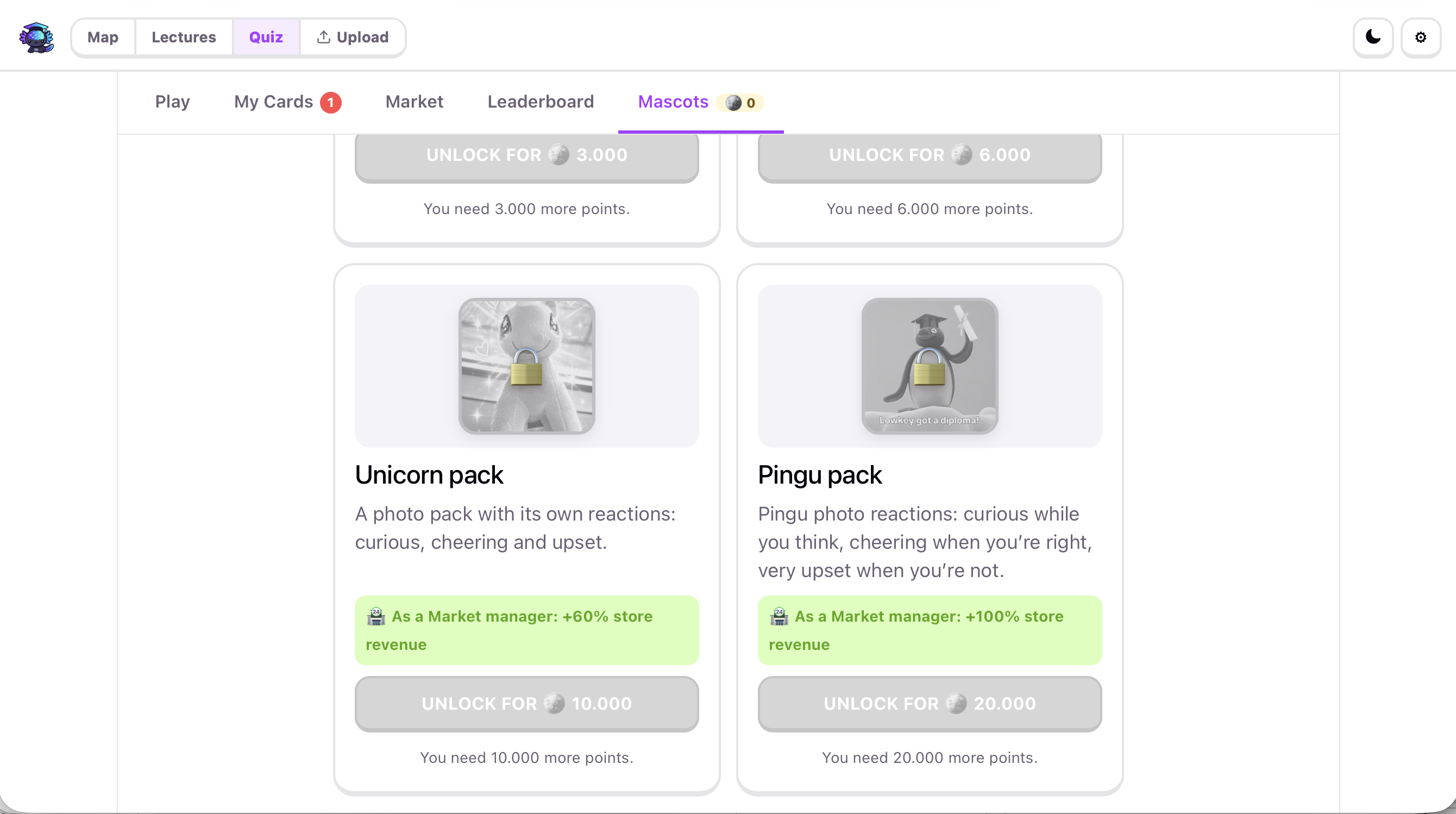
(CUTE Mascots!)
-
Check your knowledge with Quizzes!
-
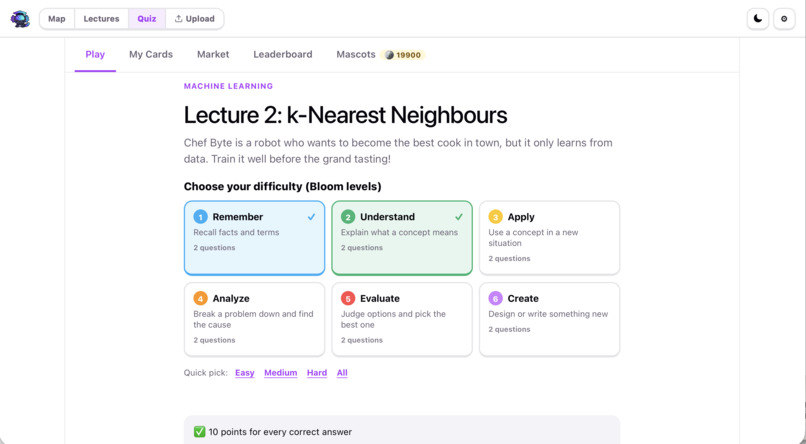
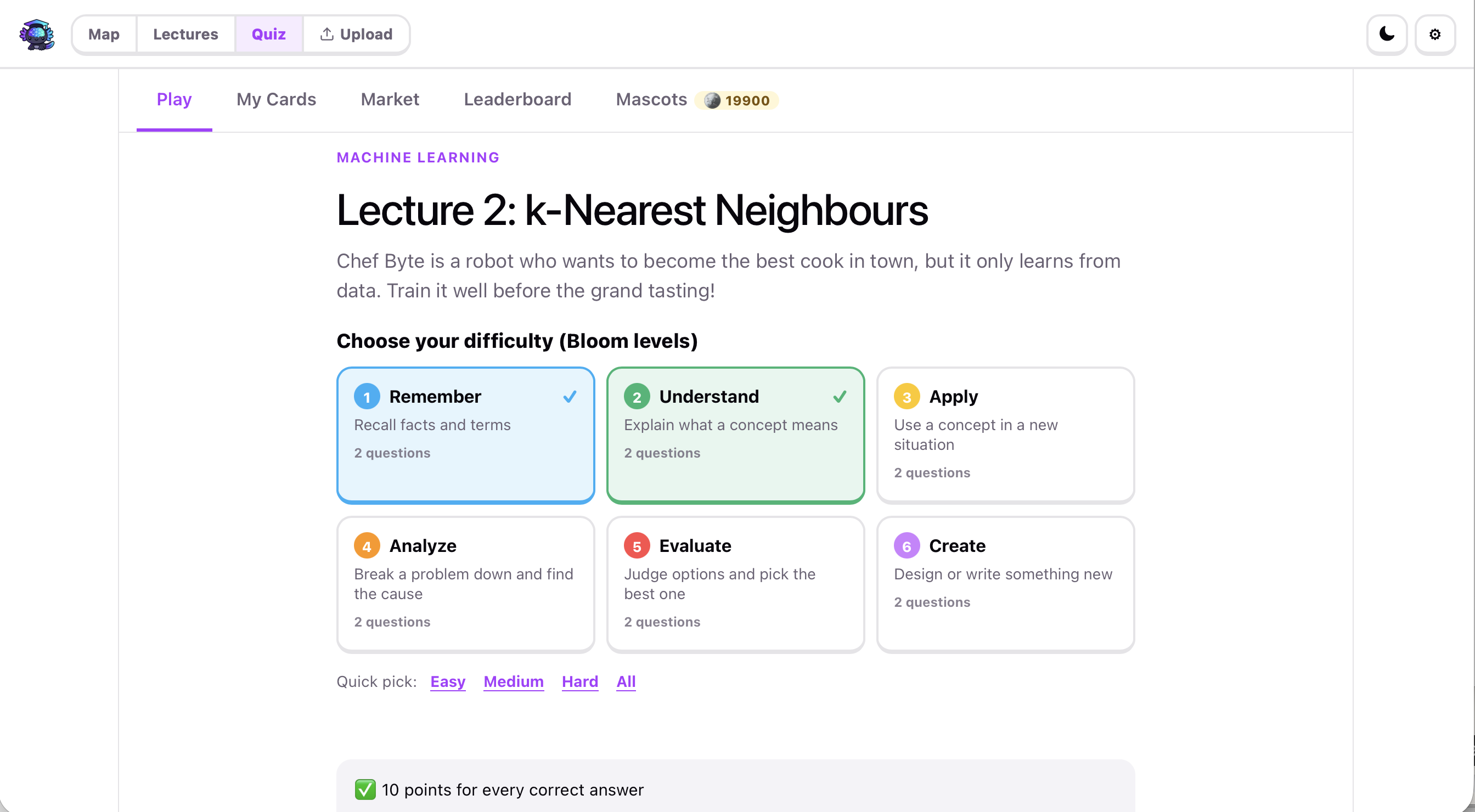
Quizzes with comprehensive questions check if you actually understood the lecture contents.
Inspiration
It's 11 p.m., the exam is tomorrow, and you're on slide 147 of 212, reading the deck for the third time. We've all been there. Re-reading feels like studying, but it's passive, and passive learning doesn't stick. Lecture content is fragmented across PDFs and weeks, concepts that belong together are 80 slides apart, and motivation drops with every page.
We wanted a study companion that does three things at once: shows the big picture of a topic, explains every concept in context, and makes practicing genuinely fun. And it should do all of that without anyone writing it by hand.
What it does
The Nexus turns raw lecture material into a living, interactive study world:
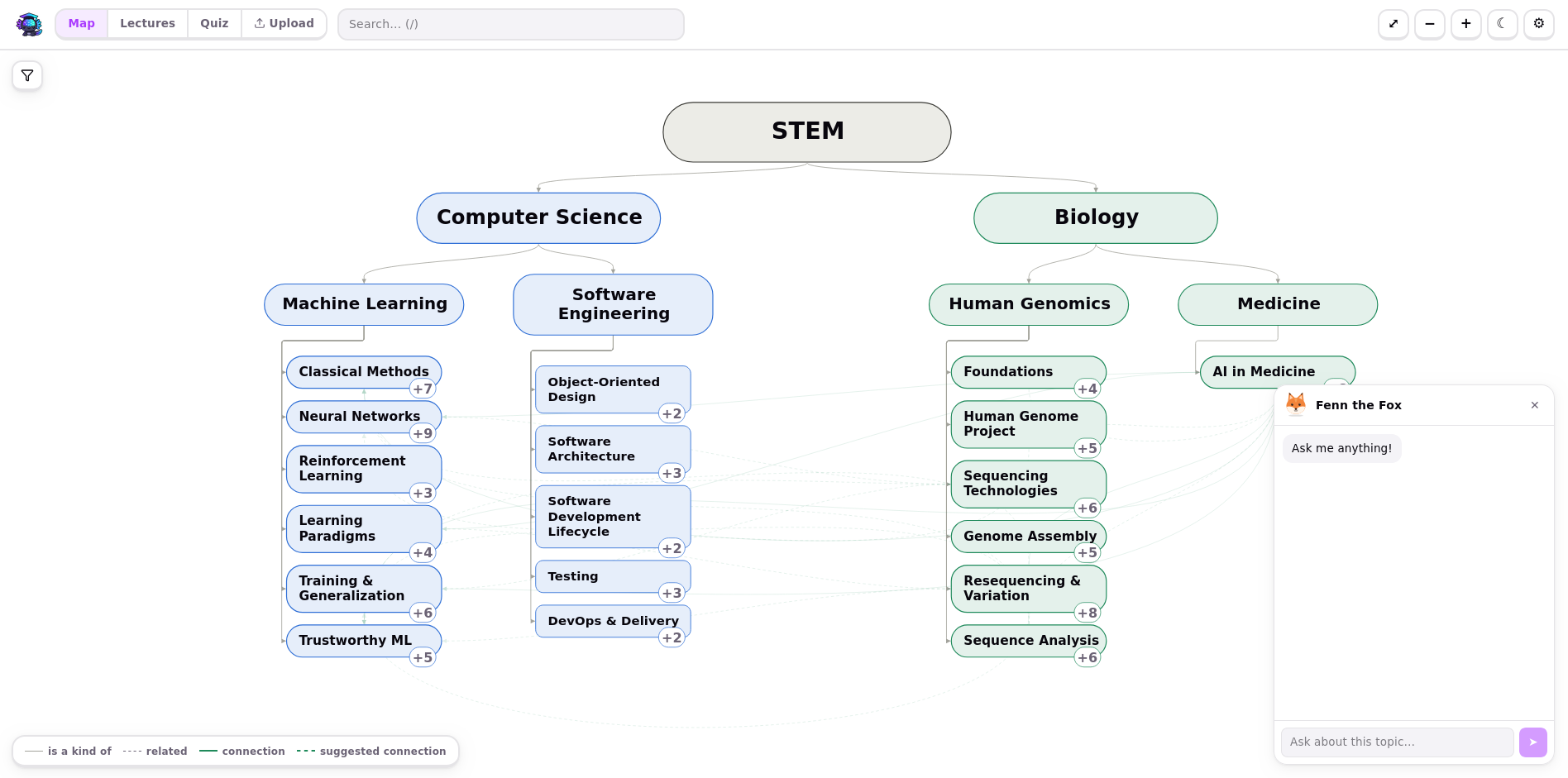
- 🗺️ Knowledge Map: every important concept of a course is a node, and every edge is a real dependency. Click a concept to see what it builds on and what builds on it, across lectures and across courses. Our prototype maps 143 concepts from 45 lectures in 4 courses.
- 📚 Linked summaries: every lecture gets a structured summary where key terms are cross-linked like Wikipedia. Hover a term for a short explanation, and click it to jump into the map. Each lecture also gets an automatic glossary (150+ so far). Math renders properly, e.g. $\hat{y} = \arg\max_c \sum_{i \in N_k(x)} \mathbb{1}[y_i = c]$ for k-NN.
- 🎮 Gamified quiz: a mix of Kahoot, Duolingo and Anki.
- Bloom levels: questions are sorted from remember up to create, and you pick how hard it gets.
- Streaks: a streak multiplies your reward.
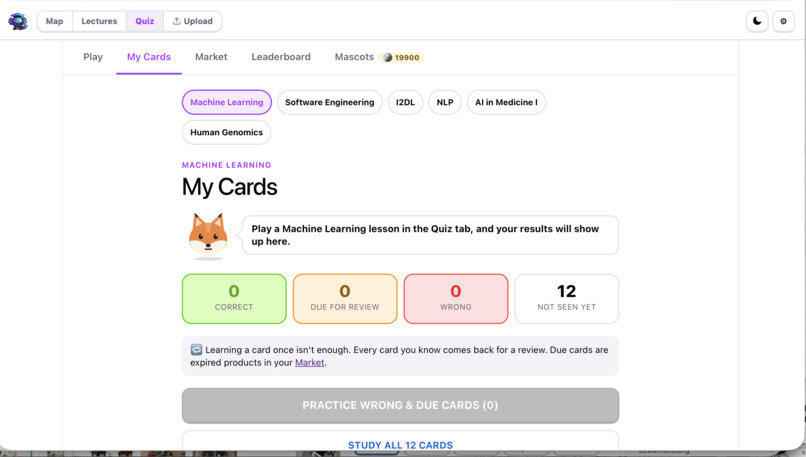
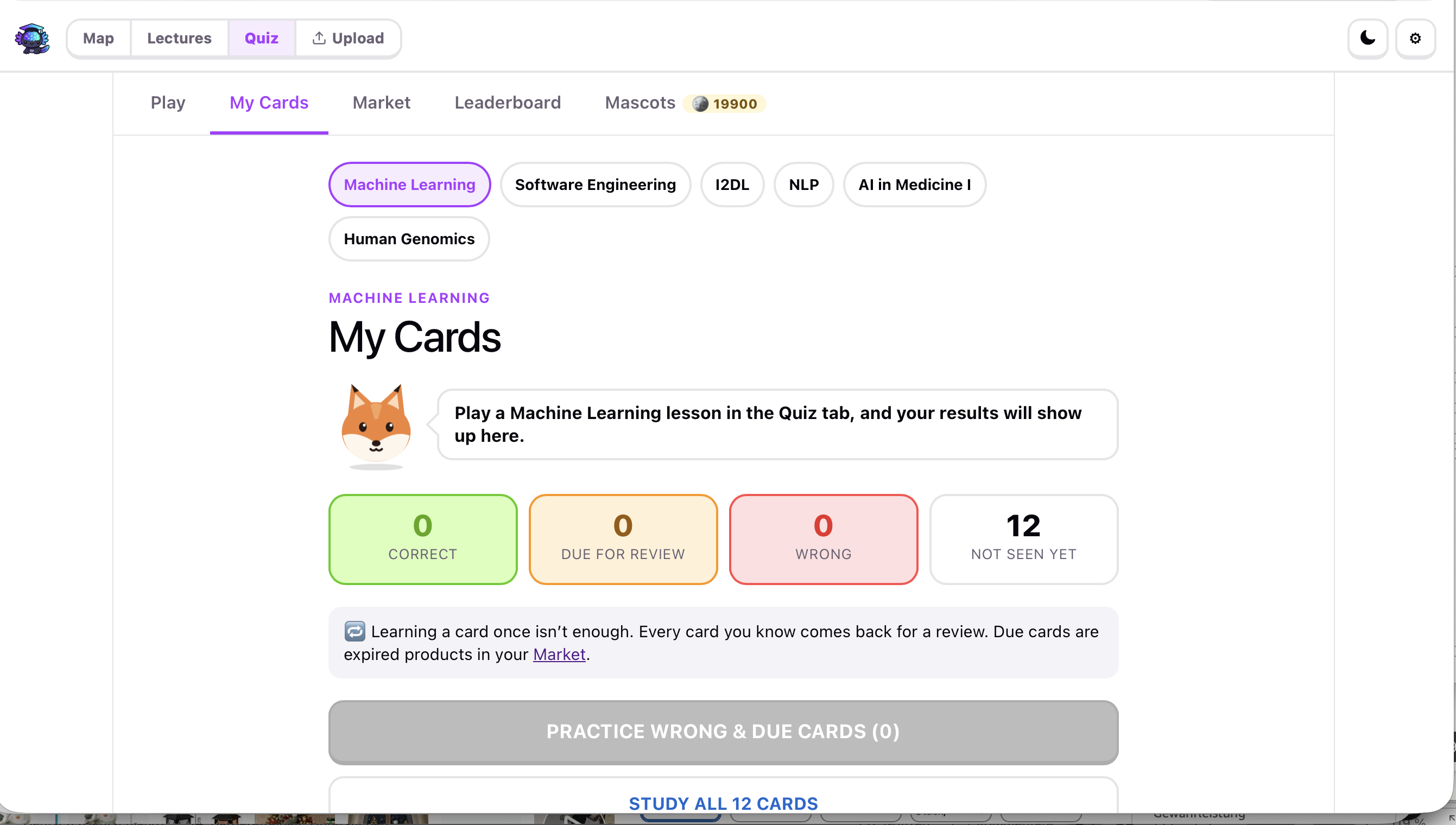
- My Cards: a review deck for everything you got wrong or that is due again.
- Mascots: points buy mascot packs, and yes, one of them is Pingu.
- 🏪 Supermarket tycoon: each course runs one department of your store, and every shelf is one card. A wrong answer empties a shelf, and products expire following spaced repetition. You stock shelves only by learning. Store revenue is a score for the leaderboard and cannot be spent, so the game can never replace the learning.
- 🤖 Agentic AI engine: a lecturer uploads a new PDF, and agents integrate the new concepts into the map, write the summary and glossary, and generate new quiz questions. Upload once, learn everything. No manual work for students, lecturers or the university.
How we built it
- Frontend: React 19, TypeScript and Vite, with Tailwind and shadcn/ui for the shell.
- Knowledge map: hand-built SVG that we lay out and draw ourselves, no graph library.
- Summaries: rendered with
markedand KaTeX. - State: all game state (progress, rewards, market, mascots) lives in small
useSyncExternalStorestores persisted tolocalStorage.
- Backend: a FastAPI service exposes
POST /api/v1/documents/upload(one PDF per request, tagged with course and material type: slides, exercises or reading). Uploads land in a queue,queue/{course}/{kind}/…, which the agent pipeline picks up. The pipeline extracts concepts, links them into the graph and writes summaries, glossary entries and questions back into the knowledge base. - Points: we kept them simple and transparent. A correct answer at streak s (before answering) earns
$$\text{points} = 10 + 10 \cdot s$$
10 points for the correct answer, plus a streak bonus of 10 per answer in your current streak.
- Spaced repetition: a card you know becomes due again after 1, 3, 7, 14, 30 days. Each department of the store earns
$$\text{revenue per hour} = R(\ell) \cdot \frac{\text{stocked shelves}}{\text{all shelves}} \cdot (1 + \beta)$$
where $$R(\ell)$$ is the base income at department level $$l$$ and $$\beta$$ the bonus of the mascot managing it. Forgetting literally costs you sales.
- Pitch mode: for the presentation we built a
/pitchroute inside the app, so the slides run the real product live and clickable in embedded frames.
Challenges we ran into
- Two machines, one tunnel, CORS: the backend ran on a different PC behind a Cloudflare tunnel. Our first uploads failed with "could not reach the server", which turned out to be CORS, not the network. After that we hit a
404 Lecture does not exist, because the frontend "helpfully" slugified course names that the backend compared character by character. - Merging four feature branches in 36 hours: the quiz, the map, the general UI and the upload were built in parallel. Merging them caused CSS class collisions (
.btn,.chip,.empty…). We fixed it by scoping each feature's CSS under its own root with a local reset. - Two routers, one URL: the map owns
location.hashfor deep links, while the quiz uses real paths. The map also builds its SVG imperatively and must never mount twice, so React's StrictMode had to go. - Designing rewards that don't eat the learning: our first supermarket let you buy upgrades with revenue, which meant you could stop learning and still grow. We split the economy into points (earned only by answering) and revenue (a score), and tied shelves to real card mastery.
- Making the streak bonus understandable: "NEXT +50" confused everyone, including us. We iterated until the UI showed exactly the streak bonus, separate from the base points.
- Live demos in slides: slide tools sandbox embeds with no network, so our app couldn't run inside them. The solution was to turn the app itself into the slide deck.
Accomplishments that we're proud of
- A complete, working prototype end to end: map, linked summaries, glossary, quiz, review deck, store, leaderboard, mascots and upload.
- The live upload demo: drop in the Software Engineering slides, and a whole new branch of the knowledge map appears.
- Spaced repetition that you can see: empty and expired shelves make forgetting tangible in a way a due-date list never does.
- A pitch where every feature slide is the real app, live.
What we learned
- Gamification only works if it rewards the behaviour you want. Every mechanic should push toward retrieval practice, not around it.
- Structure beats volume: a concept graph with good links teaches more than another 20 pages of summary.
- Integration is the hard part of a hackathon. Agree on contracts early: API schemas, IDs, CSS scoping and routing.
- CORS errors look exactly like network errors in the browser, and that cost us an hour.
What's next for The Nexus
- Running the agent pipeline on every course, including exercises and old exams, with questions validated against the source slides.
- A live multiplayer mode: a Kahoot-style lecture opener where the whole lecture hall plays on the same map.
- LMS integration (Moodle and similar), so a lecturer's normal upload is all it takes.
- Insights for lecturers: which concepts the class struggles with, straight from the review data.
- A pilot in one real course next semester.
Built With
- fastapi
- garage
- langgraph
- mongodb
- neo4j
- python
- s3
- typescript

