-
-
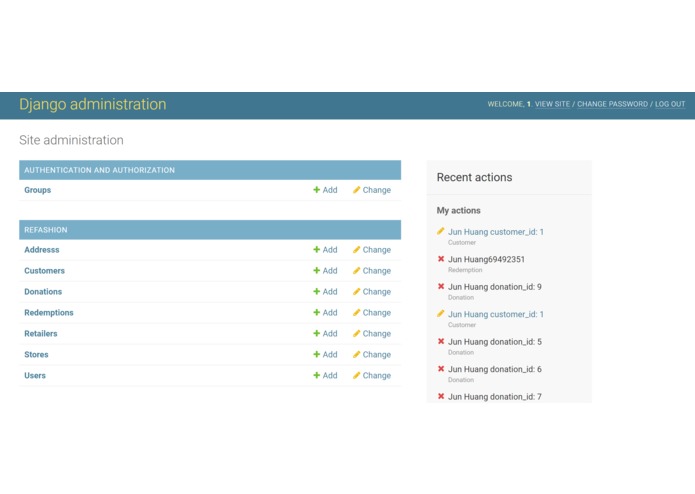
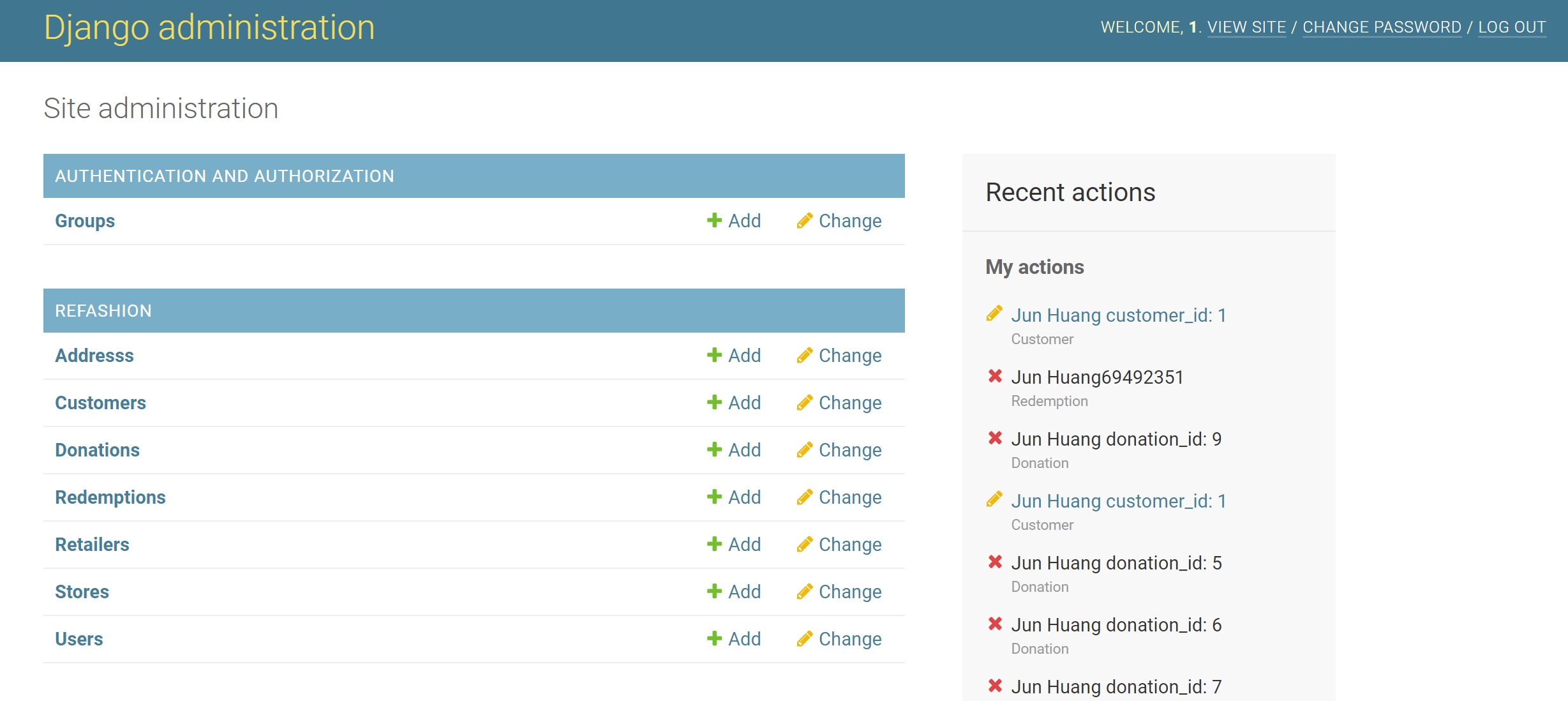
Django admin for the database
-
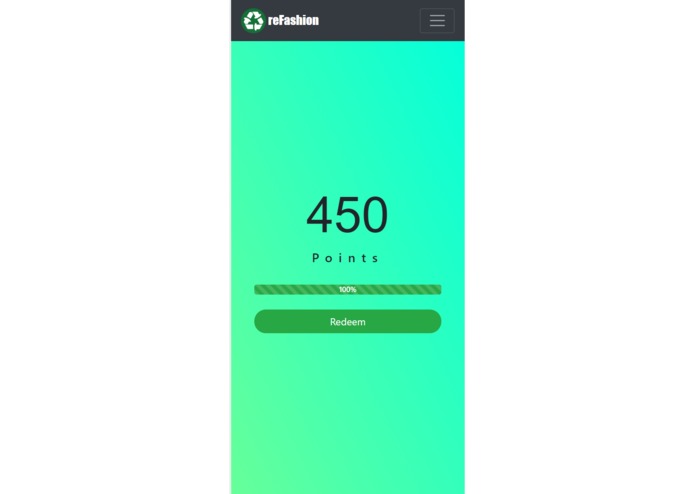
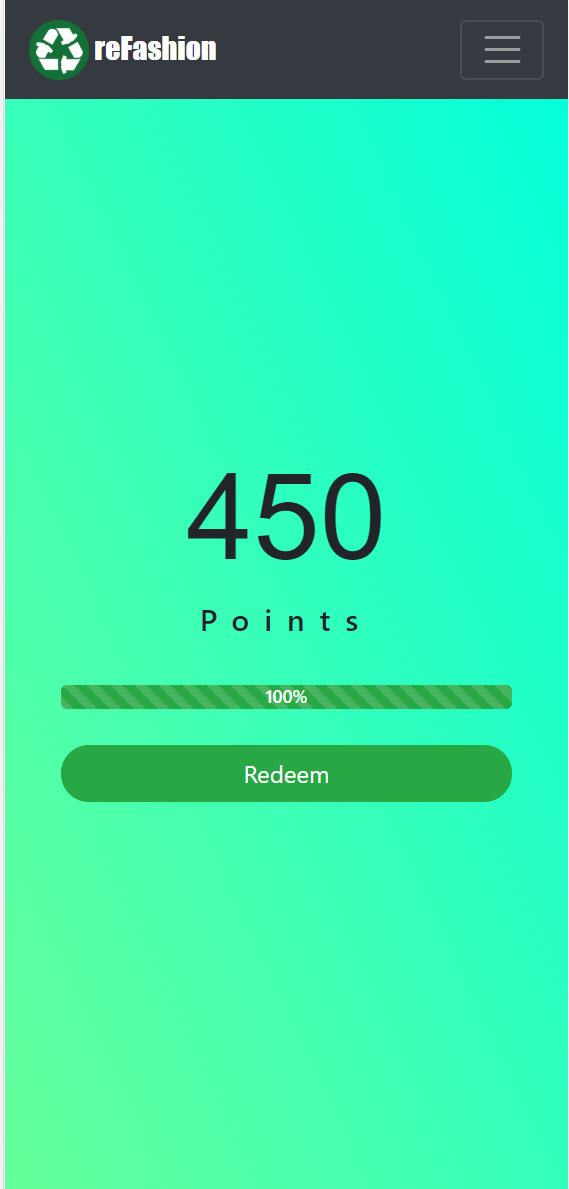
Redeem page
-
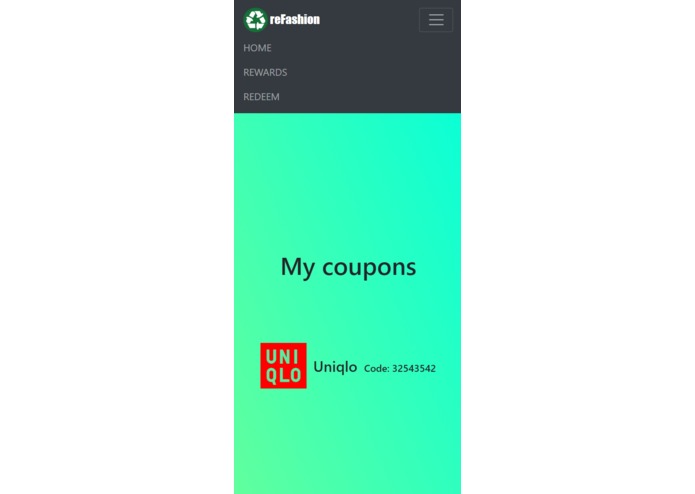
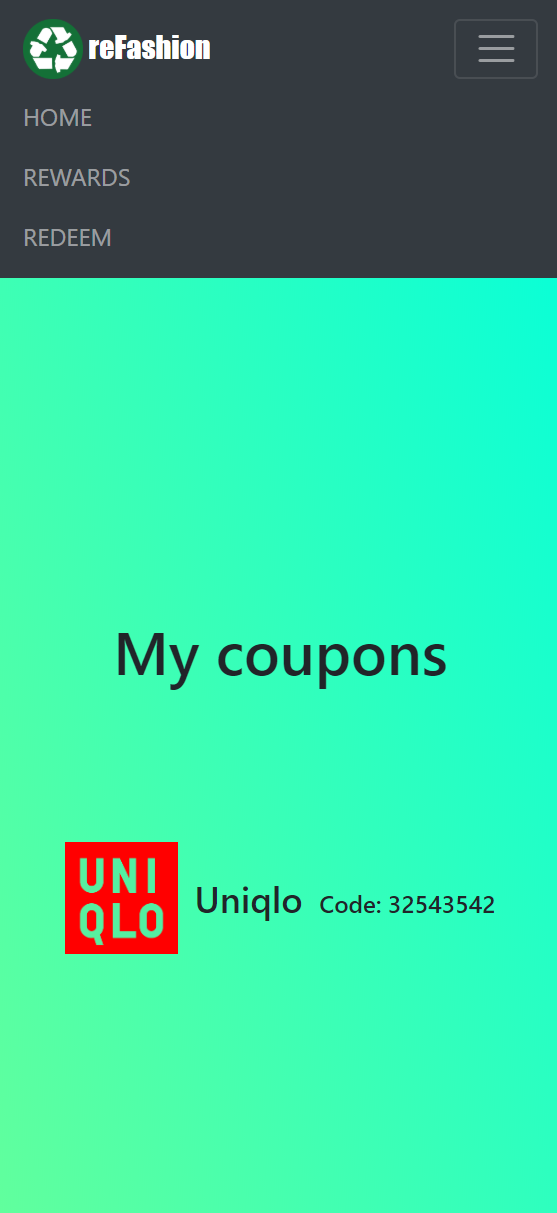
Coupons page
-
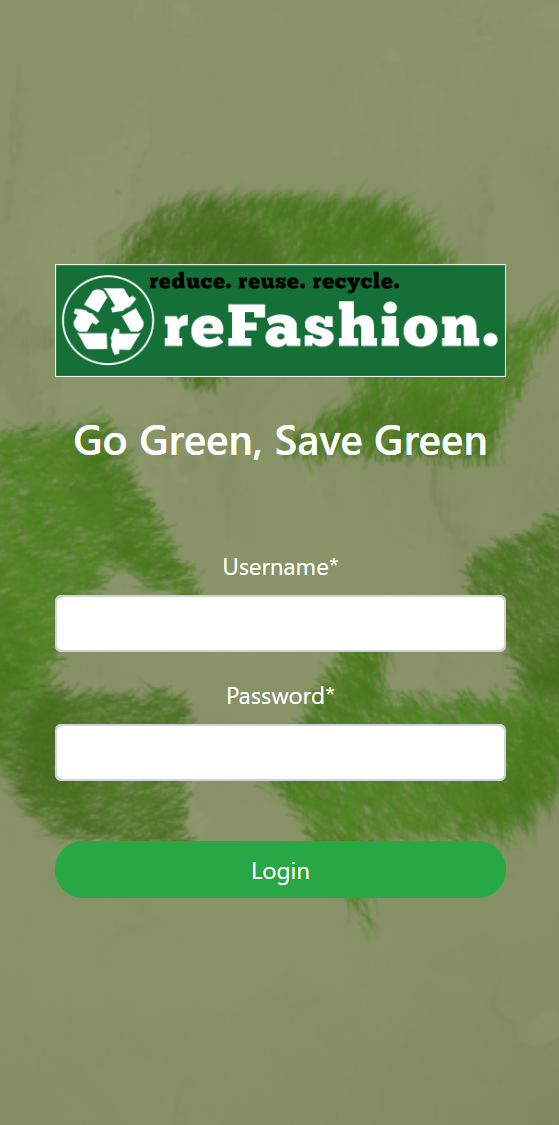
Login page
Has it ever occurred to you that the clothes you’ve outgrown, could be donated for a better cause? In today’s society, fashion generates 4% of waste annually, which is approximately 92 million tons of clothing. The economic crisis of clothing being tossed, burned, or torn up has grown into a bigger problem than most people realize. The incentive to protect the environment starts with companies taking the initiative to create sustainable clothing and people donating their clothes at local retail stores, to reduce landfill waste. In exchange, stores can offer discounts to customers while saving money on making new clothes.
Fashion has always been a factor in everyone’s lives, but is never seen as an issue that directly impacts the environment. As the last generation who can make a difference in the current environmental crisis, us millennials often pay close attention to what harms our planet earth. Thus, we became aware of the amount of waste the fashion industry creates, typically through a method called fast fashion. That’s when we realized that the environmental crisis does not only include “saving the turtles” or awareness to global warming, but rather something so minute as the clothing we wear on a daily basis. Although the mass is aware of the crisis planet earth is in, not everyone is willing to contribute. Therefore, we thought of an idea where participants can benefit from giving back to the planet: recycling and revamping their clothing. Through this process, we gathered ideas from trending applications to create a system where points would be collected as customers donate clothing, measured by weight, to our partner stores. We think that this would create an incentive for users to have the willpower to donate new, used, or unwanted clothes. We gathered that it would not matter whether these clothing were in shreds or not because the materials used can still be reused.
Our main goal is to keep them out of landfills. Throughout this journey, not only did we learn about the fashion industry, but also the fundamentals of styling text in several coding languages. To build reFashion, we used Python-Django for back end and html, css, and bootstrap for front end. Although during the duration of this project we have learned and bonded with our teammates and other groups, challenges still arose. One of which is the lack of coding and programming skills the majority of us have. Due to this, we struggled with database design and integrating the back end portion with front end design. Additionally, having a time constraint was also problematic for us. We had to cut down some of our ideas, such as having a list of participating stores, in order to produce a minimum viable product.

Log in or sign up for Devpost to join the conversation.