Inspiration
Cornerstone exists to immortalise and pass on what makes a family and a culture sacred: recipes, skills, songs, stories. These cornerstones of identity and connection are often quietly lost over time. We wanted to build a platform that makes preserving these building blocks of cultural identity effortless and sharing them with the wider community natural. At its core, Cornerstone exists so that cultural identity doesn’t depend on any one person remembering it: so the things that make a family and a culture so special don’t quietly disappear with time.
What it does
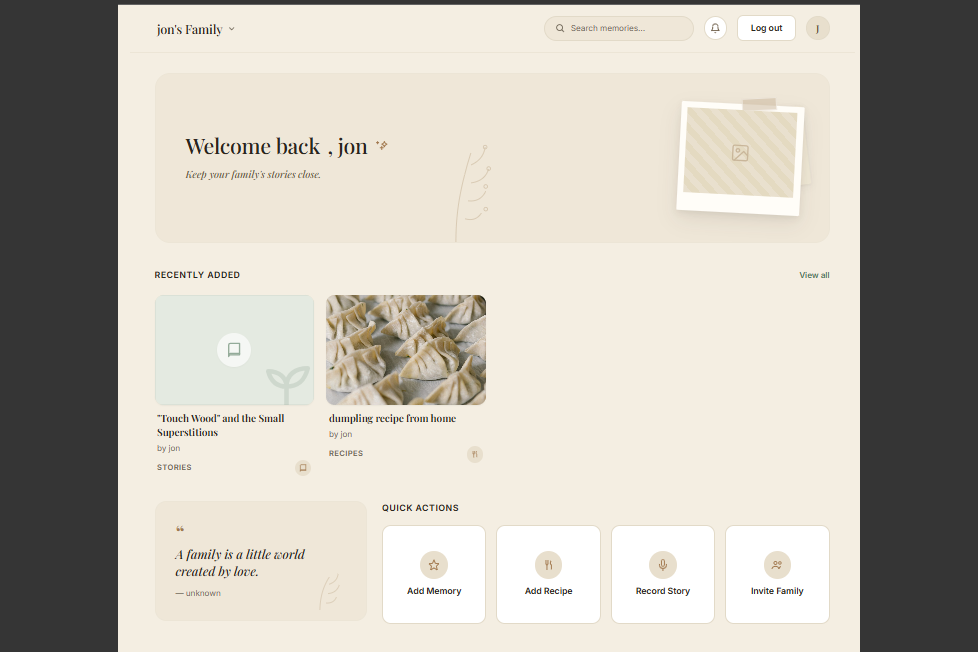
Cornerstone is a web-based platform built around two connected spaces, brought together by a welcoming home page.
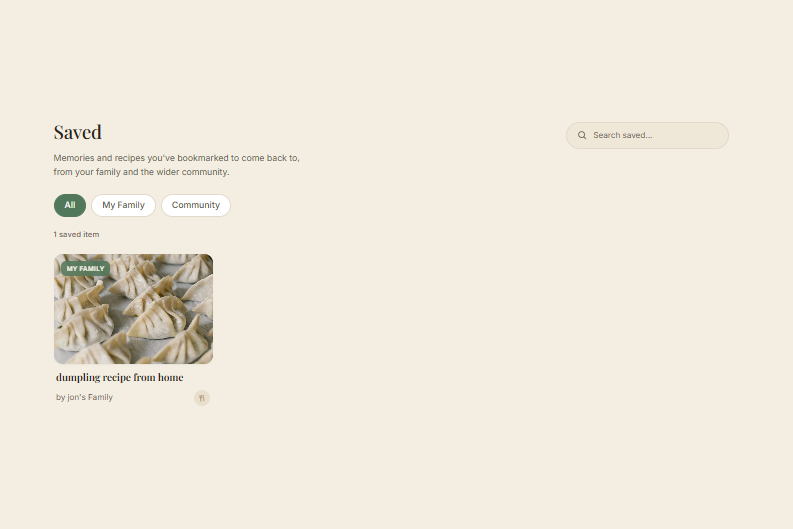
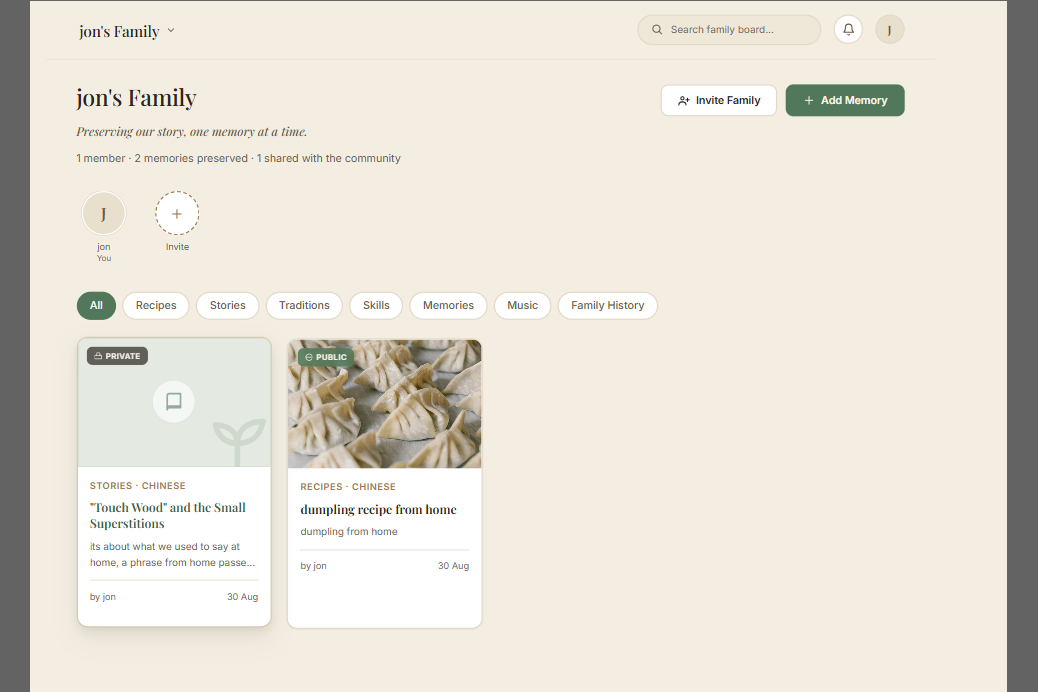
The first is your Family Board: a private space where you can preserve your memories and culture through recipes, skills, songs, videos, stories and so much more between members of your family. You can invite people to your family or join an existing one, so the space grows naturally with the people who share your history.
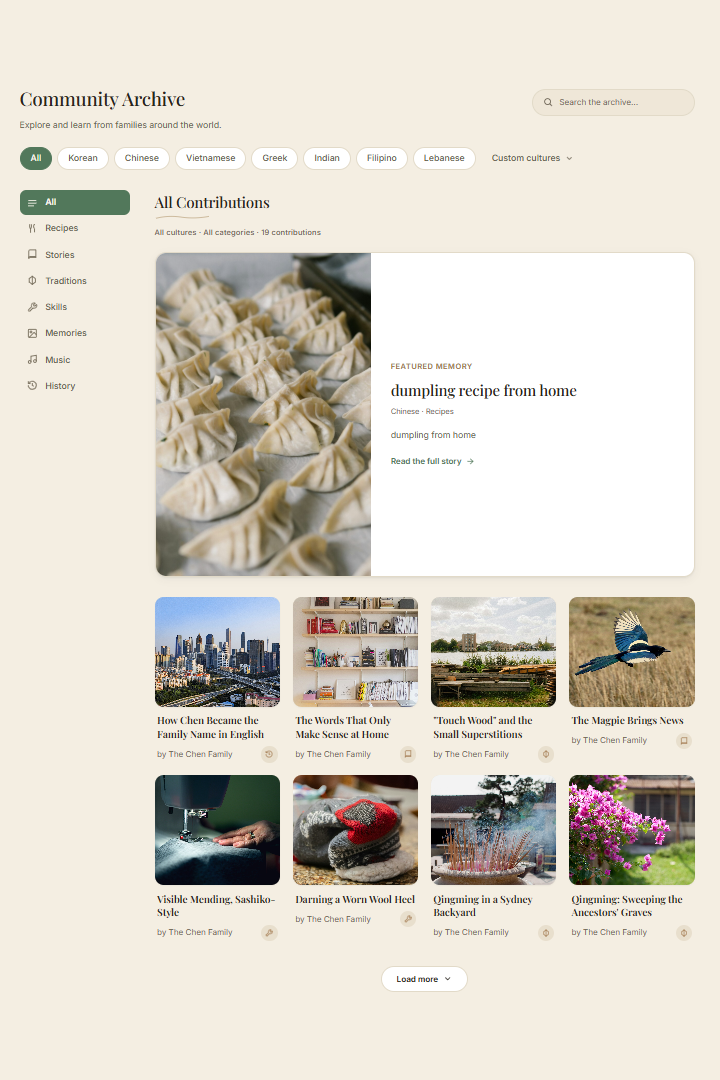
The second is the Community Board: which allows individuals and families to directly share these moments with the broader Cornerstone Community so individuals can connect, understand, and interact with the various cultural traditions and culinary delights of families and cultures beyond their own. Allowing family knowledge to become a vibrant and animated browsable archive of culture from around the world.
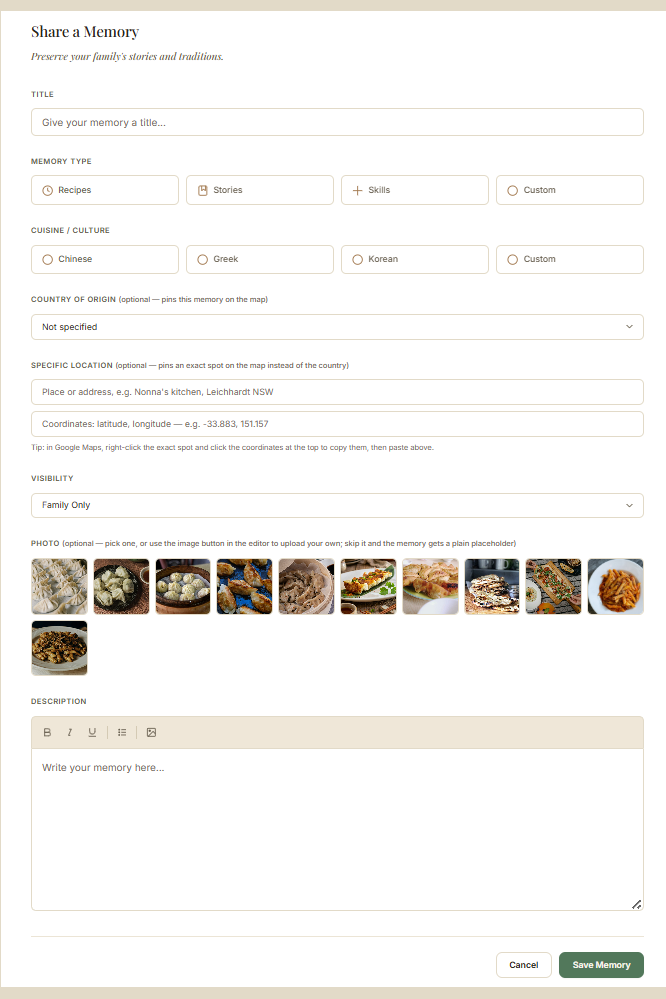
Capturing and sharing a memory is designed to be effortless: add a photo, video, recipe and/or story in seconds using the post button. Add tags specifying the culture and type of media, and choose exactly who it's shared with.
How we built it
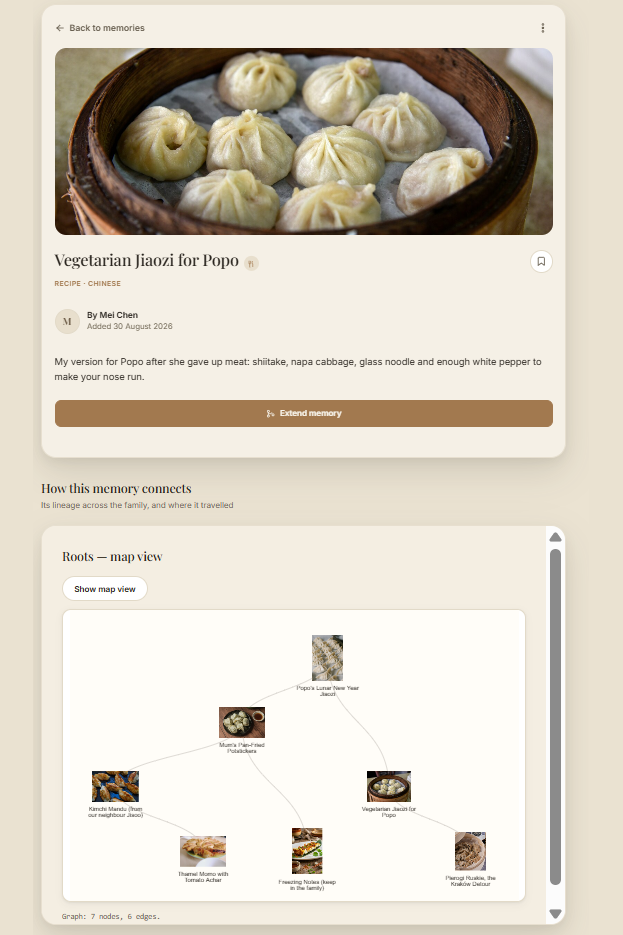
We leveraged AI tools to incrementally develop Cornerstone by first creating the backend, such as the IndexedDB database schema using dexie.js. This allowed us to implement the basic CRUD functions, which led to the development of our graph and map views. The graph view of memories is rendered using the vis-network library, while our map view combines the annotations from Leaflet and the map imagery from OpenStreetView. Our front-end was human designed, which was then developed into functional code with AI.
Challenges we ran into
The primary challenges we encountered were figuring out the accessibility and overall design of the UI interface, as well as brainstorming and developing features that were actually useful for end users of Cornerstone. Additionally, as we began to develop such features, such as ‘endangered memories’, the scope significantly enhanced for the project, which sometimes detracted from the core purpose of building a welcoming platform for cultural connection and sharing. Finally, within the constraints and long-stretch nature of a hackathon (and staying at uni overnight!), we struggled remaining consistent with our efforts and putting our best mind toward it.
Accomplishments that we're proud of
The map and graph views of extended memories are a feature we’re most proud of developing, as it presents a beautiful display of the very cultural connections and interaction that Cornerstone aims to foster. Also, we’re especially proud of the unique UI we decided to go forward with. Its warm, vintage colors evoke a sense of nostalgia, celebrating the pride of every culture shared on the platform.
What we learned
We learned that half of a Hackathon is mentality. Long stretches of time can pass with bursts of absolute productivity, interrupted by naps and slacking off, but before we know it, the deadline is an hour away. We also learned how to work together as a group within a highly compressed timeframe, forcing us to prioritise essential features over perfection.
What's next for Hackathon Submission
Looking ahead, we'd want to make Cornerstone easier for real families to actually adopt and keep using; by polishing the invite process, focus on making it simple for less tech-savvy relatives (like grandparents) to add a story or recipe, and building trust features on the Community Board so people feel comfortable sharing culturally meaningful content publicly. We'd also like to develop "endangered memories" further as a gentle way to encourage families to capture stories from older relatives before they're lost, without turning it into a guilt-driven or overwhelming feature. Longer term, we're excited about partnerships with cultural organisations, museums, or community groups to help seed the Community Board with rich, verified content, and about exploring ways for the platform to celebrate milestones, like anniversaries of a family joining, to keep engagement warm and ongoing rather than one-off. Next submission, we’ll aim to build a proper database and deploy the website for submission rather than simply hosting it locally (and likely not stay at uni overnight!).
Built With
- css
- dexie.js
- git
- html
- javascript
- vis-network

Log in or sign up for Devpost to join the conversation.