-
-
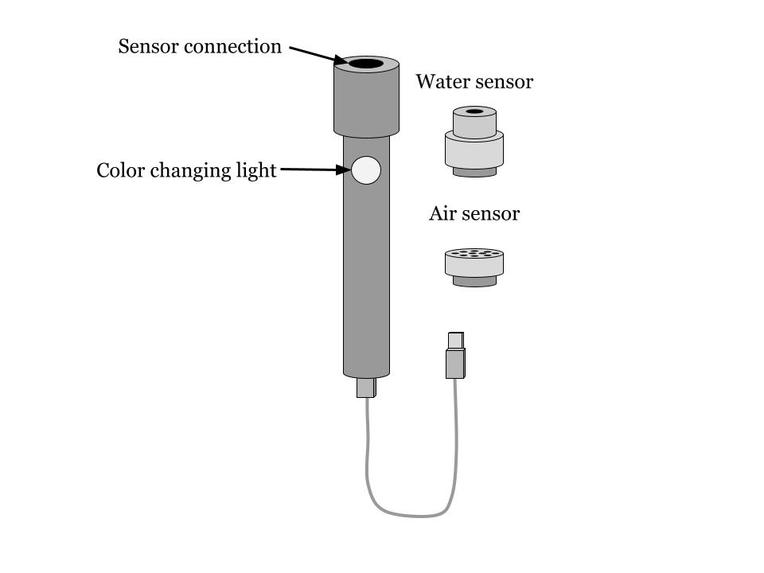
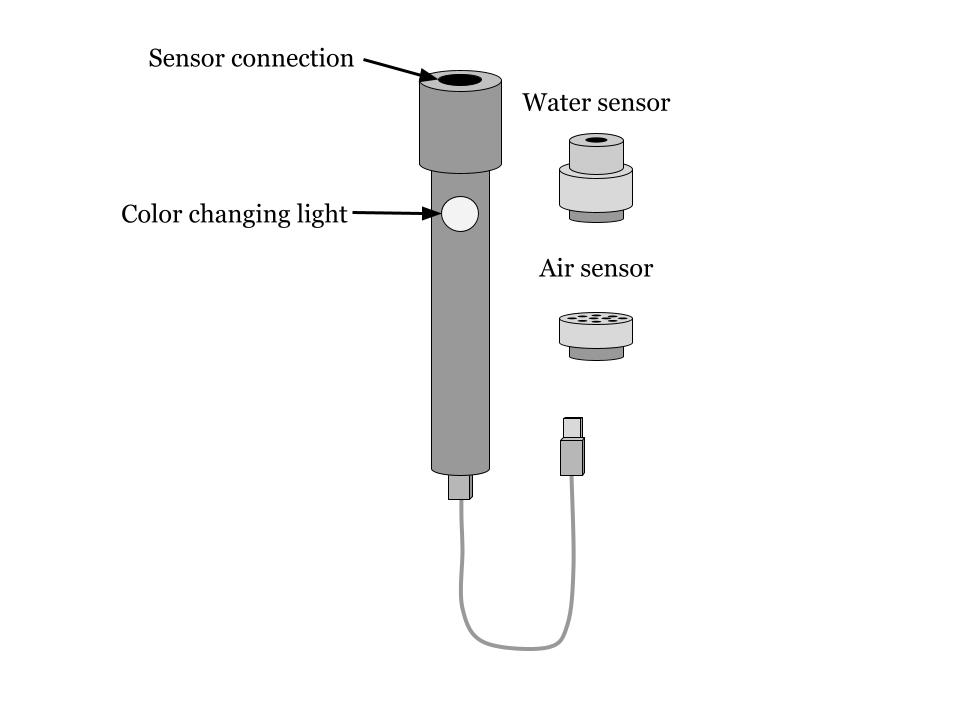
Probe with water and air applications
Inspiration
We designed the Quality Life Probes because of our immense concern for people who lack reassurance that the environments they live in are safe. Specifically, we chose to focus on water and air quality. While our product can be used by campers, survivalists, and hikers (to test the quality of potential drinking sources) as well as people with respiratory problems who are more sensitive to air conditions, the main target audience of our product is people in more rural and impoverished areas who are not guaranteed safety when doing simple, necessary tasks like breathing and drinking water. Given the theme of ‘environment’ for this hackathon, we decided to explore the track of eco-equality and that would not only show the importance of having non-polluted resources but connect more people to said resources. This led us to consider the factors discussed above and therefore create our final product–Quality Life Probes.
What it does
The concept of the Quality Life Probes is designed to indicate the quality of water and the atmosphere. The Quality Water Probe and the Quality Air Probe have three different lights (green, blue, and red) that would be triggered to indicate the quality of water and atmosphere. The Quality Water Probe tests the temperatures, pH levels, dissolved oxygen, nitrates, and phosphate in the water to indicate whether the water quality is up to standards. The green light on the probe equates to the water being safe for consumption. The blue light means that the levels that were measured are slightly off from the requirements of good quality water, but the water is still safe to drink. The red light means the water is contaminated and unsafe to drink. The goal of finding the quality of water is to help prevent getting cholera, hepatitis A, typhoid, polio, and other health problems associated with contaminated water along with spreading awareness of how pollution affects our environment. The Quality Air Probe tests ground-level ozone, carbon monoxide, sulfur dioxide, and nitrogen dioxide. The green light means the atmosphere is healthy to breathe. The blue light means that the levels measured are slightly off but still safe to drink and red means the atmosphere is unhealthy to breathe in and could cause serious health problems. The goal of this measurement is to help prevent emphysema, asthma, and other respiratory diseases, such as chronic obstructive pulmonary disease (COPD) and other health problems while also spreading awareness of how pollution affects our atmosphere.
How we built it
We built this design in Tinkercad, due to needing access to the generic gas sensor required for this build. In Tinkercad, we used a simple breadboard and Arduino Uno circuit with a gas sensor and an LED RGB. The gas sensor measures the amount of gas in the area of the sensor and the LED RGB can change between red, blue, and green. Next, through much trial and error, we were able to code the design so that when the measure of gas in the air is lower than 375 the light is green, showing the air is clean and safe to breathe. When the measure of the gas is from 375 to 515 the light is blue, signifying that the gas has some substances that could be harmful but is still safe to breathe. Finally, when the gas measure is greater than 515 the light will turn red, showing there are dangerous substances in the air and you should not breathe the air in that location if possible.
Challenges we ran into
The biggest challenge during this project was that none of our group had much coding experience. We had little to no coding experience prior to Hackathon. Learning to code in a short amount of time was difficult but exciting! Our passion for helping the environment and others, along with using our creativity, helped us create this project. Attending workshops and asking for help from experts encouraged us to keep working. In the end, the code worked and our project, which we want to continue working on in the future, was completed. Having an end product with a code that works was the best part of the event.
Accomplishments that we're proud of
We are proud of all of the accomplishments in this project including just being able to come up with a good idea and create a working project for it. We are also proud of being able to schedule our time and successfully finish this project in such a short amount of time. One of the biggest accomplishments we had was being able to finish the coding for our circuit. This was a big accomplishment for us because we were stuck, unable to get the sensor to connect and work correctly with the lights. We were very proud when we succeeded due to the struggle we went through trying to get it to work
What we learned
This experience of the hackathon has taught us many things. Most of us didn’t know how to make a Google site or use Canva or Tinckercad. Many moments required a learning curve. We quickly learned how to work and organize a team, as well as how to make a prototype and develop a product from an idea. User interaction and how to make accessing our product easier for the users were things we also ended up learning about. Finally, we discussed AI and different ways to code in the workshops, adding to the knowledge we gained from this experience.
What's next for Quality Life Probes
In the future, Quality Life Probes wants to begin production of a released model after a finalized prototype has been developed and tested. After we have created a fully functional probe that is up to our company’s standards, we aspire to release an accompanying app. This app would act as an extension to our probe, allowing the user to connect the probe to their phone as an interface and gather more information about specific contaminates or concerns. This is discussed further in our site under the Coming Soon tab.
Built With
- canva
- github
- google-drawing
- google-sites
- tinkercad


Log in or sign up for Devpost to join the conversation.