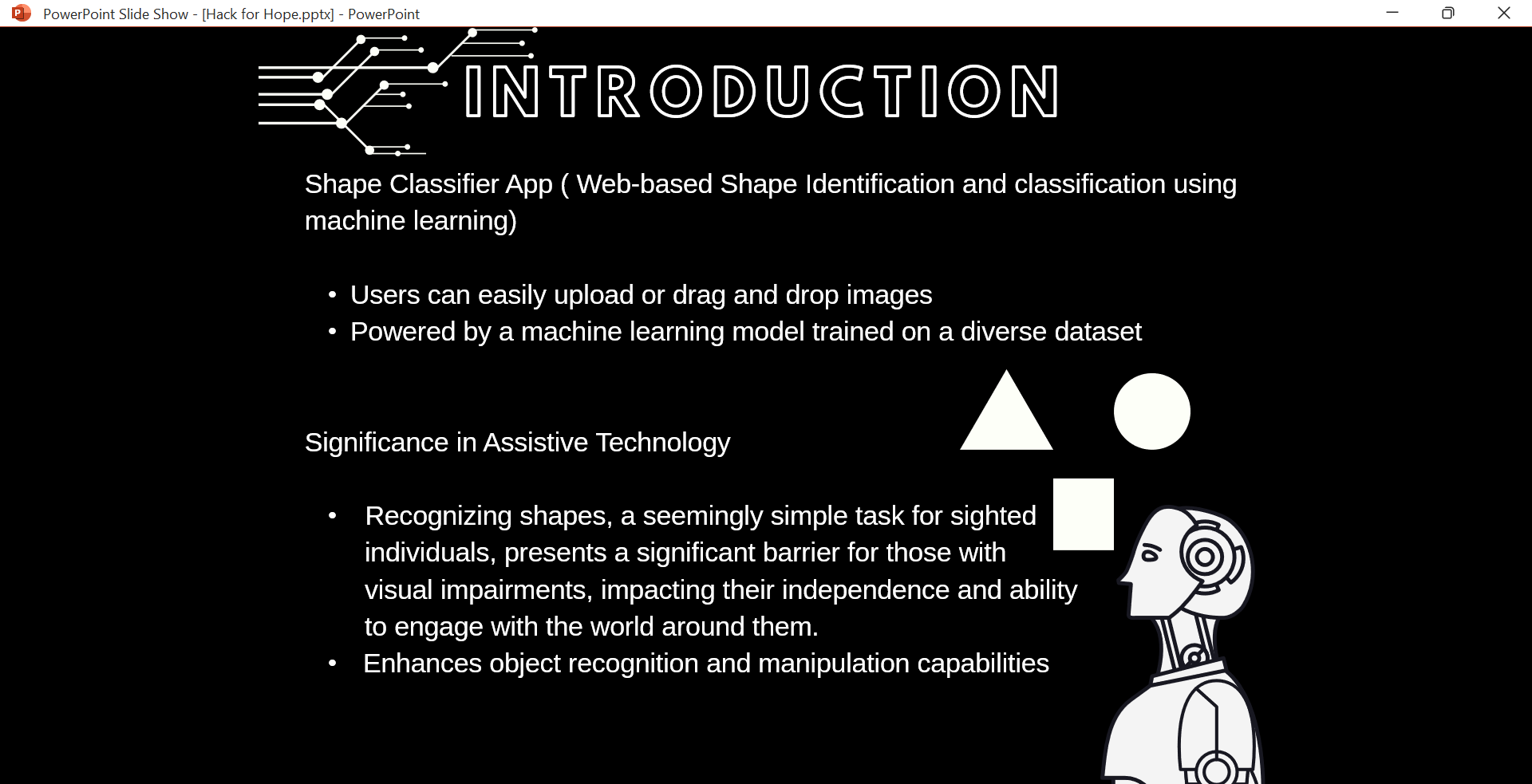
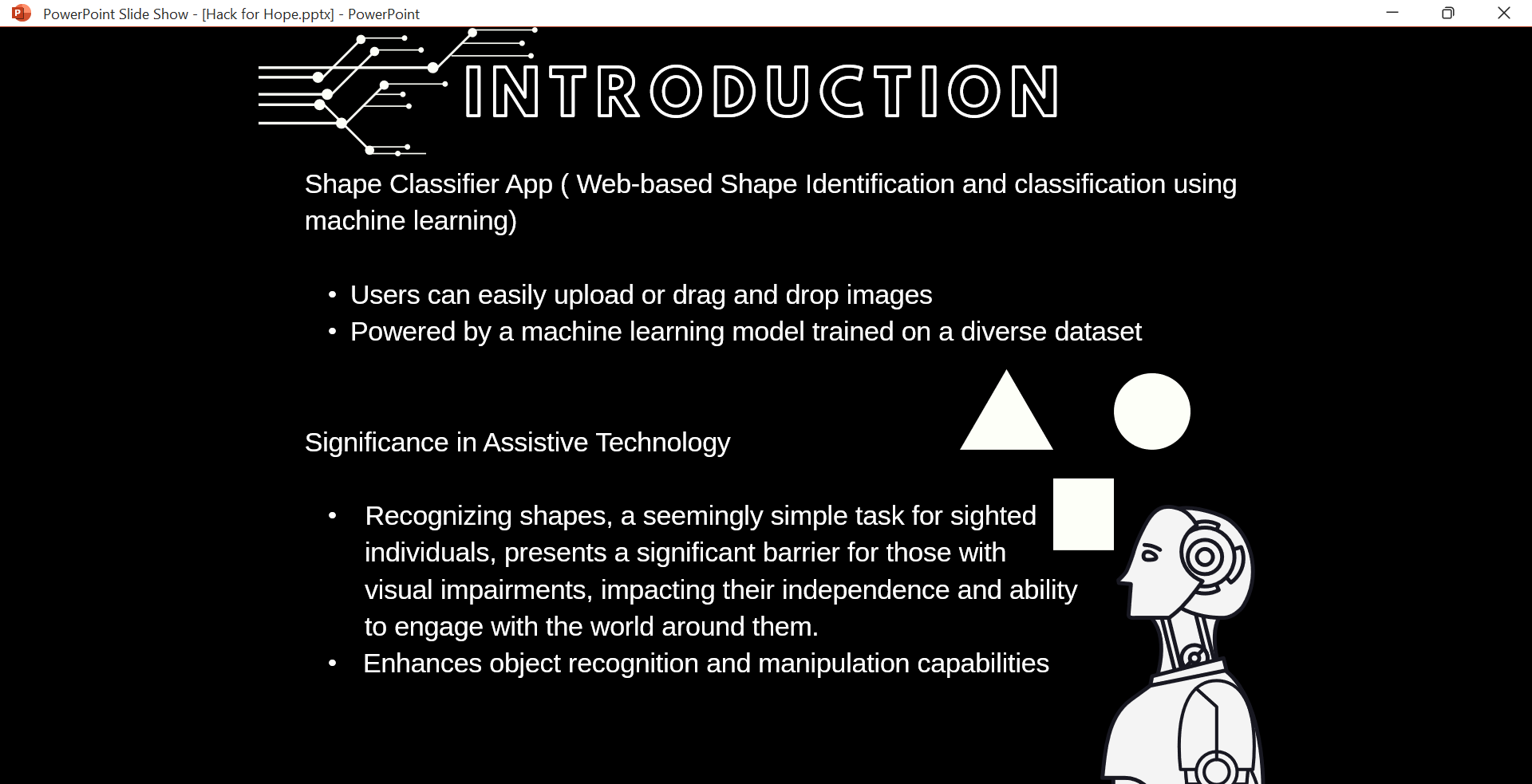
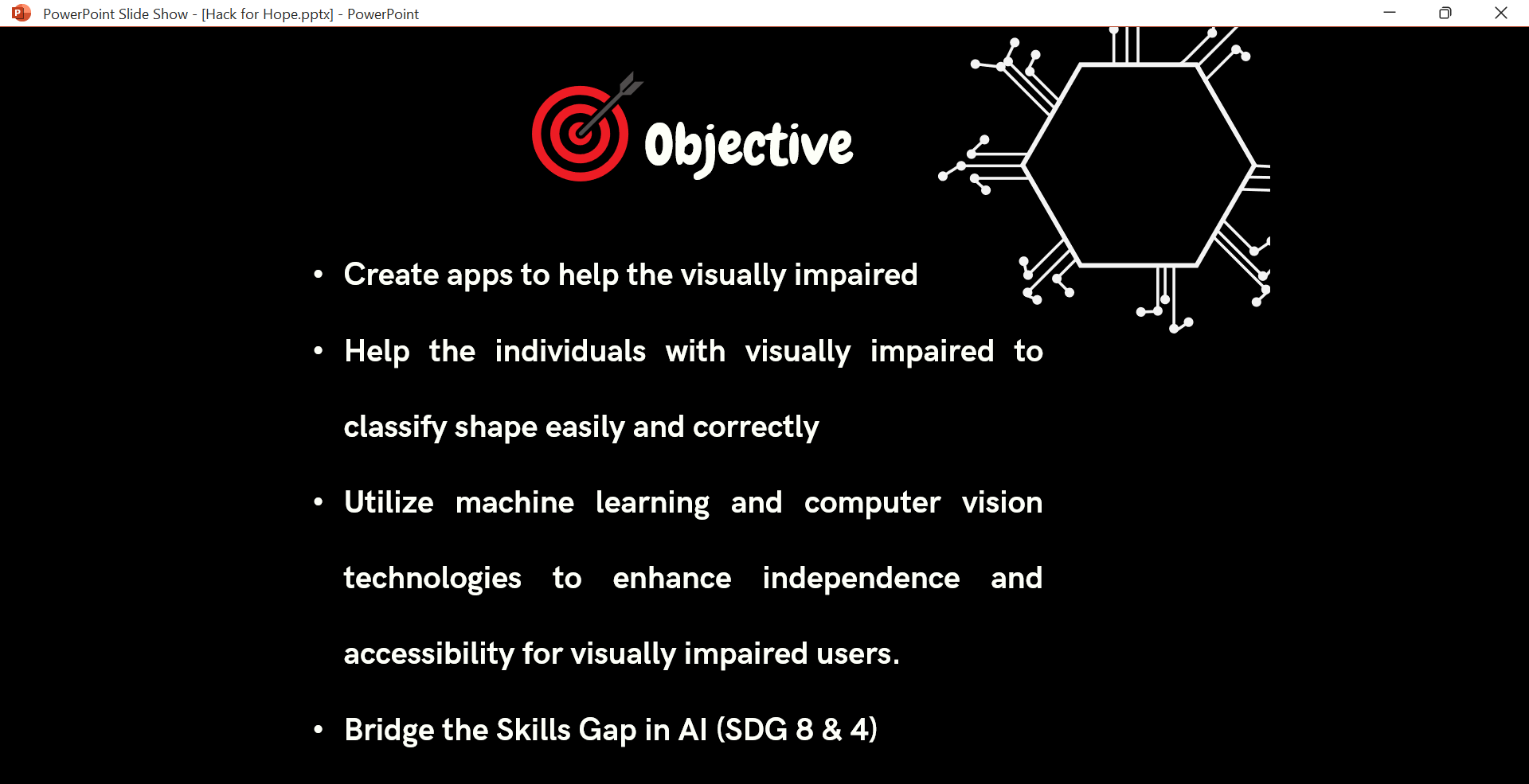
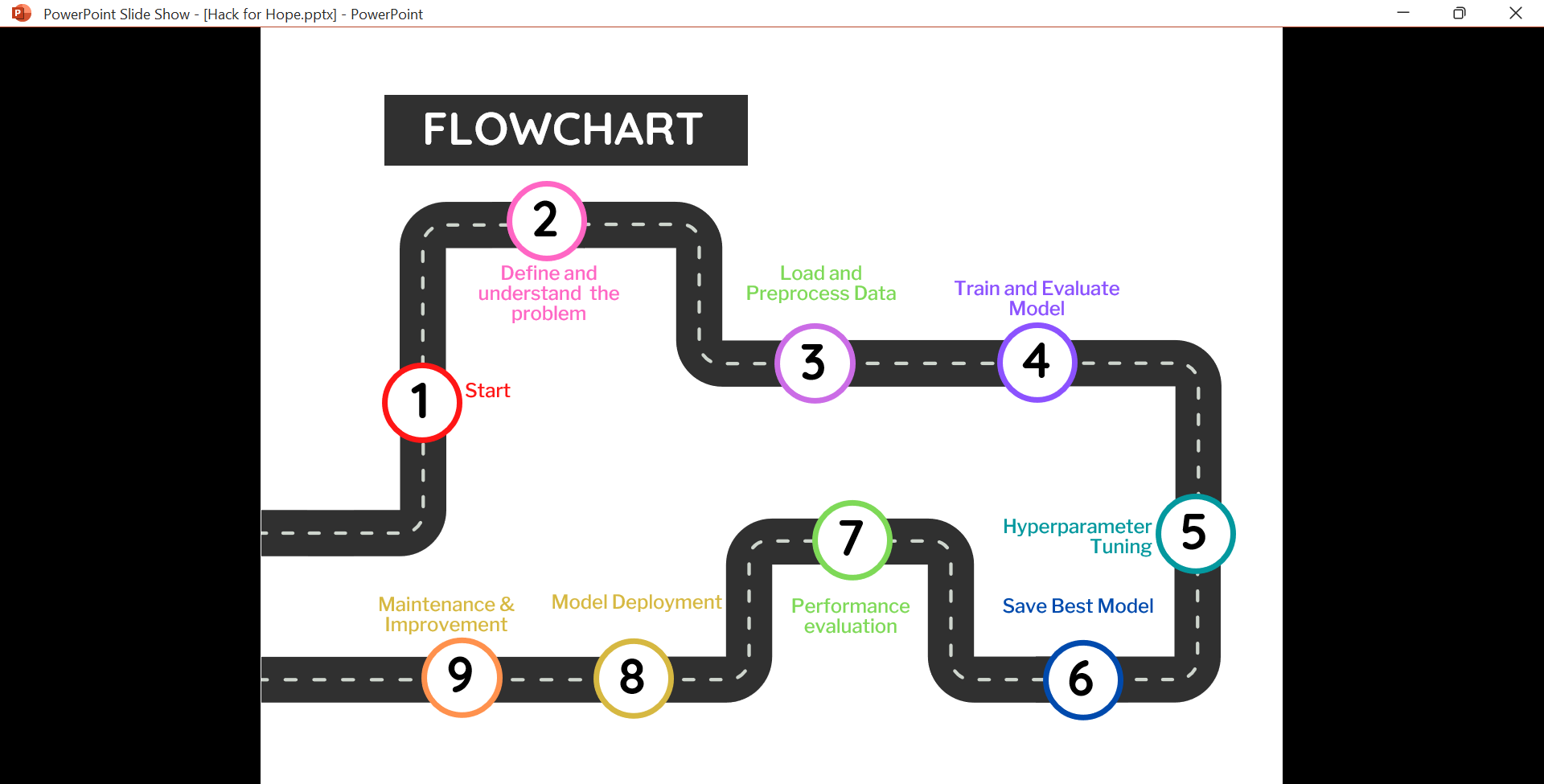
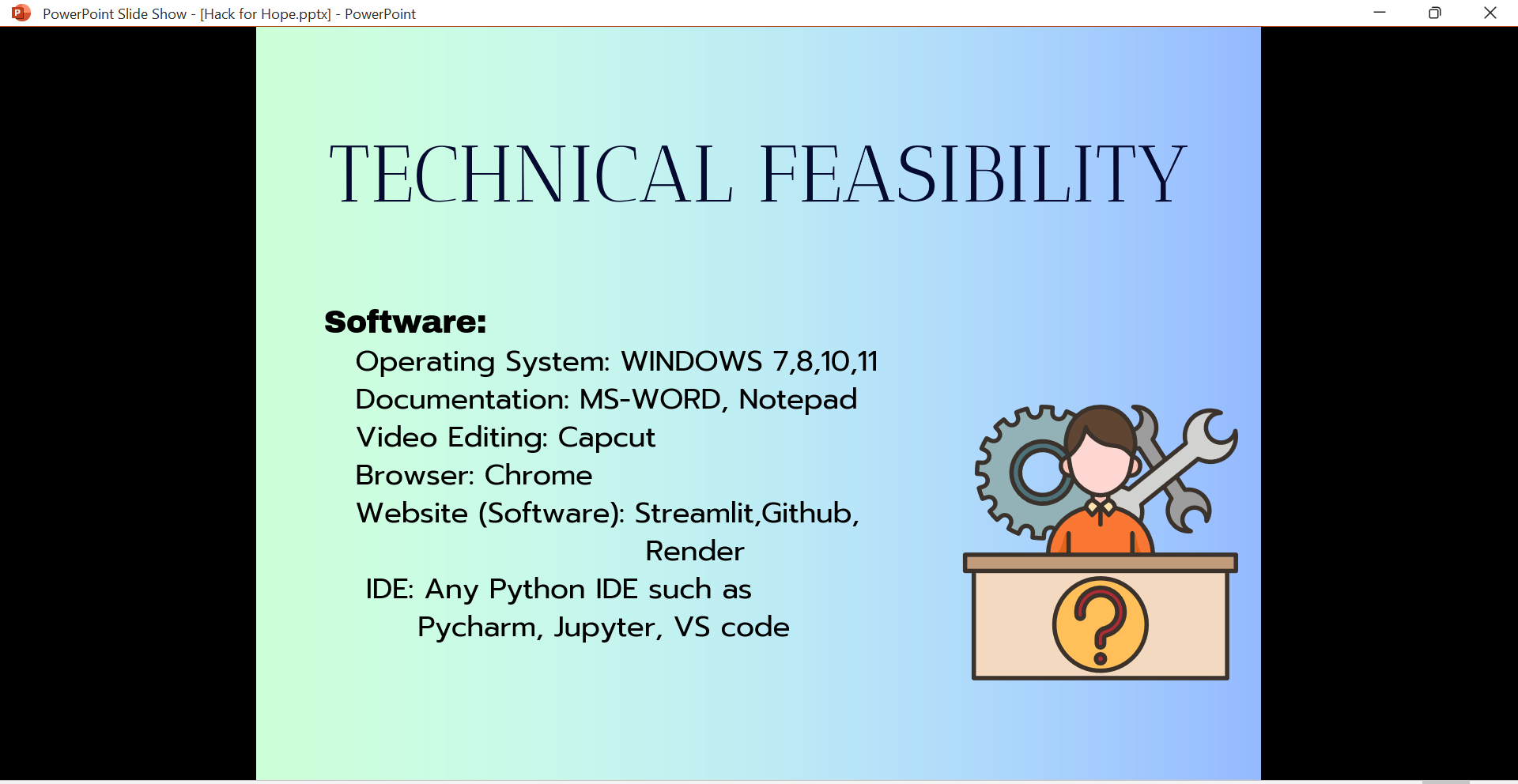
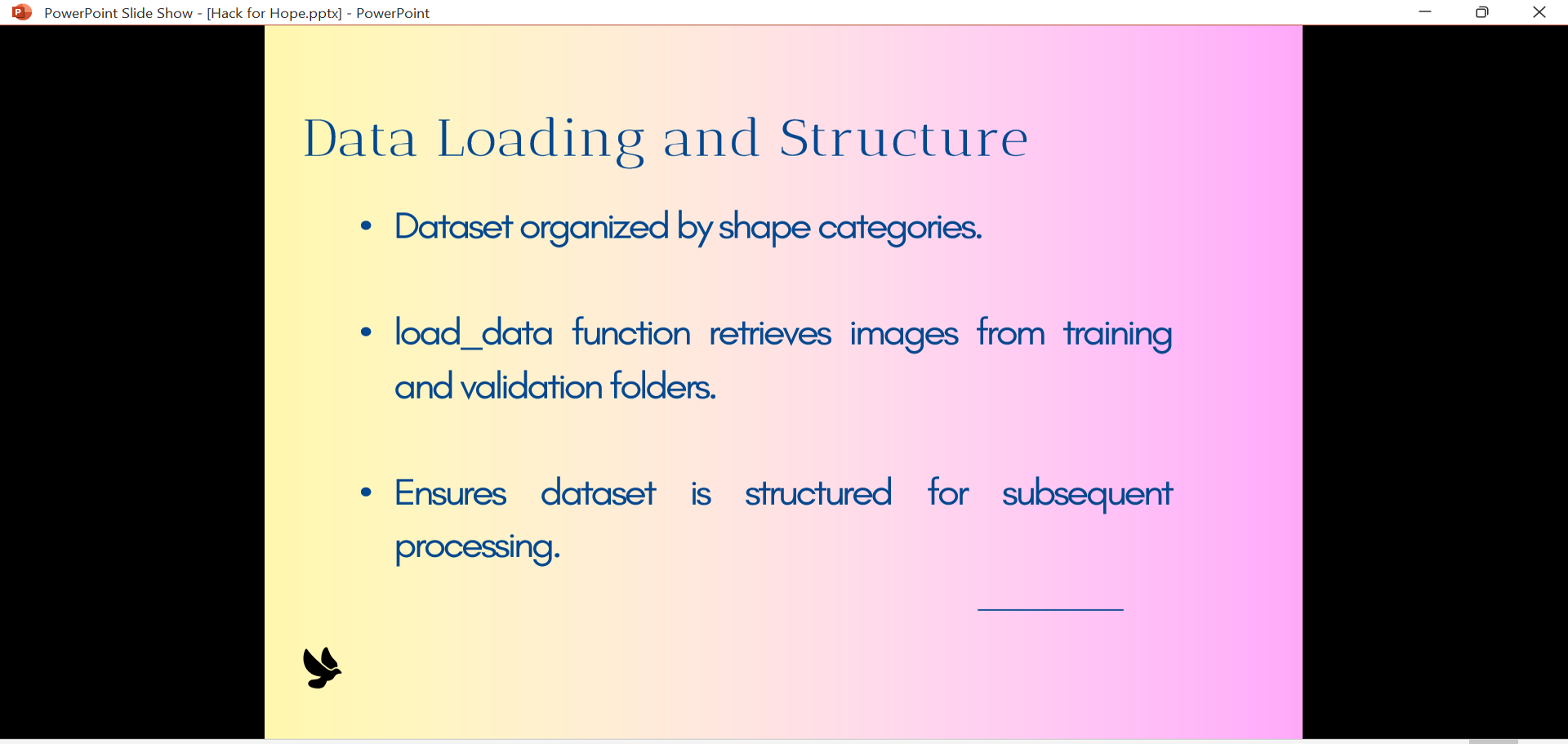
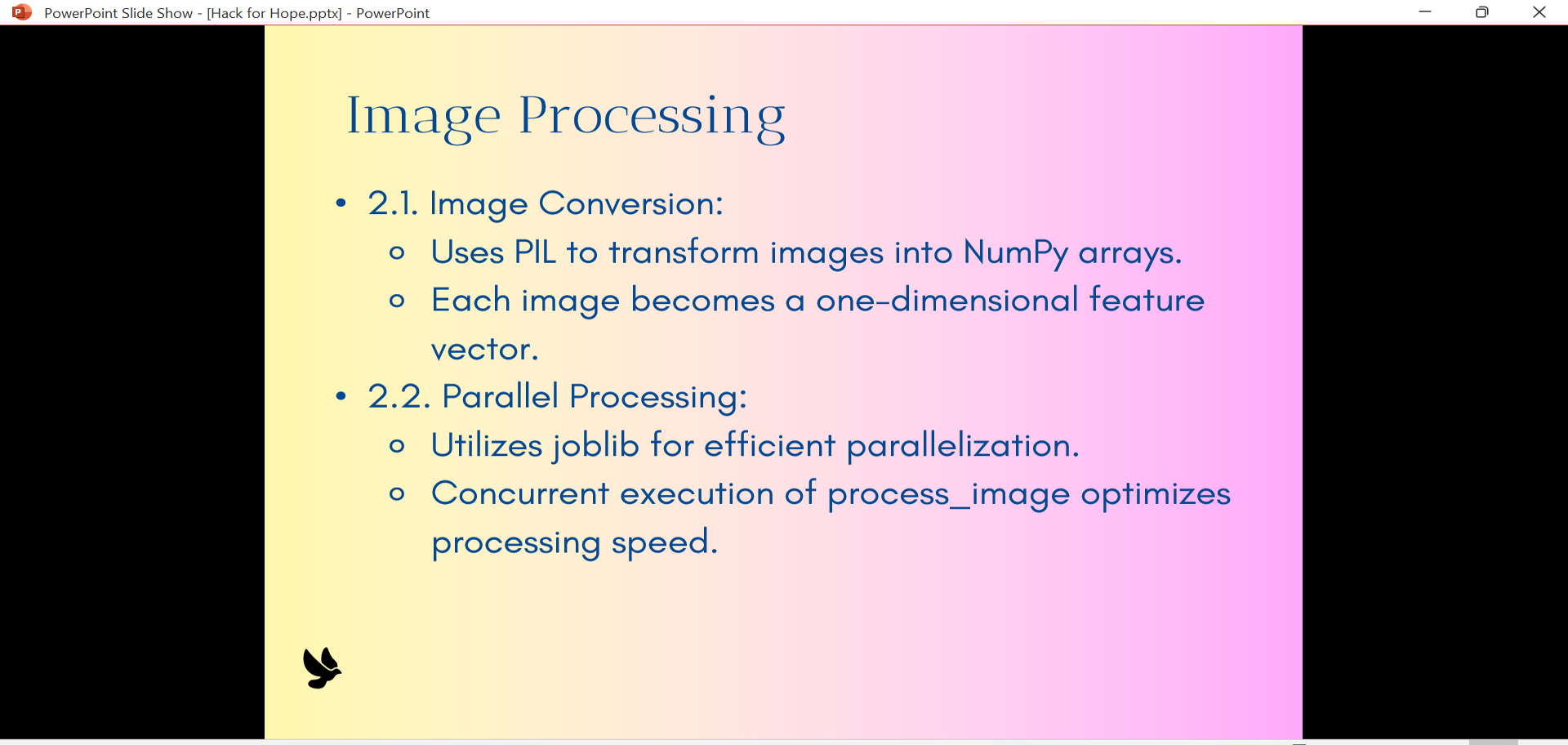
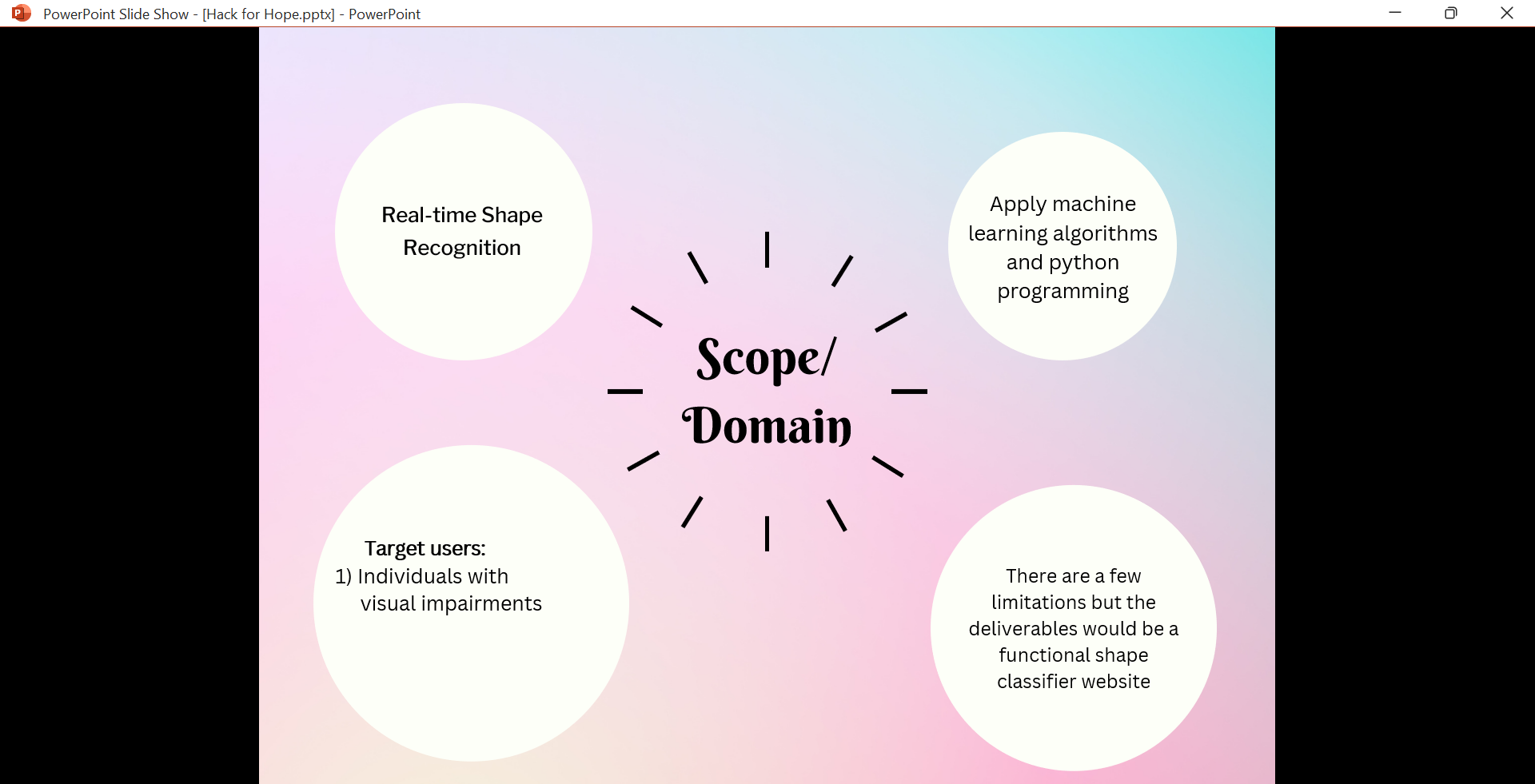
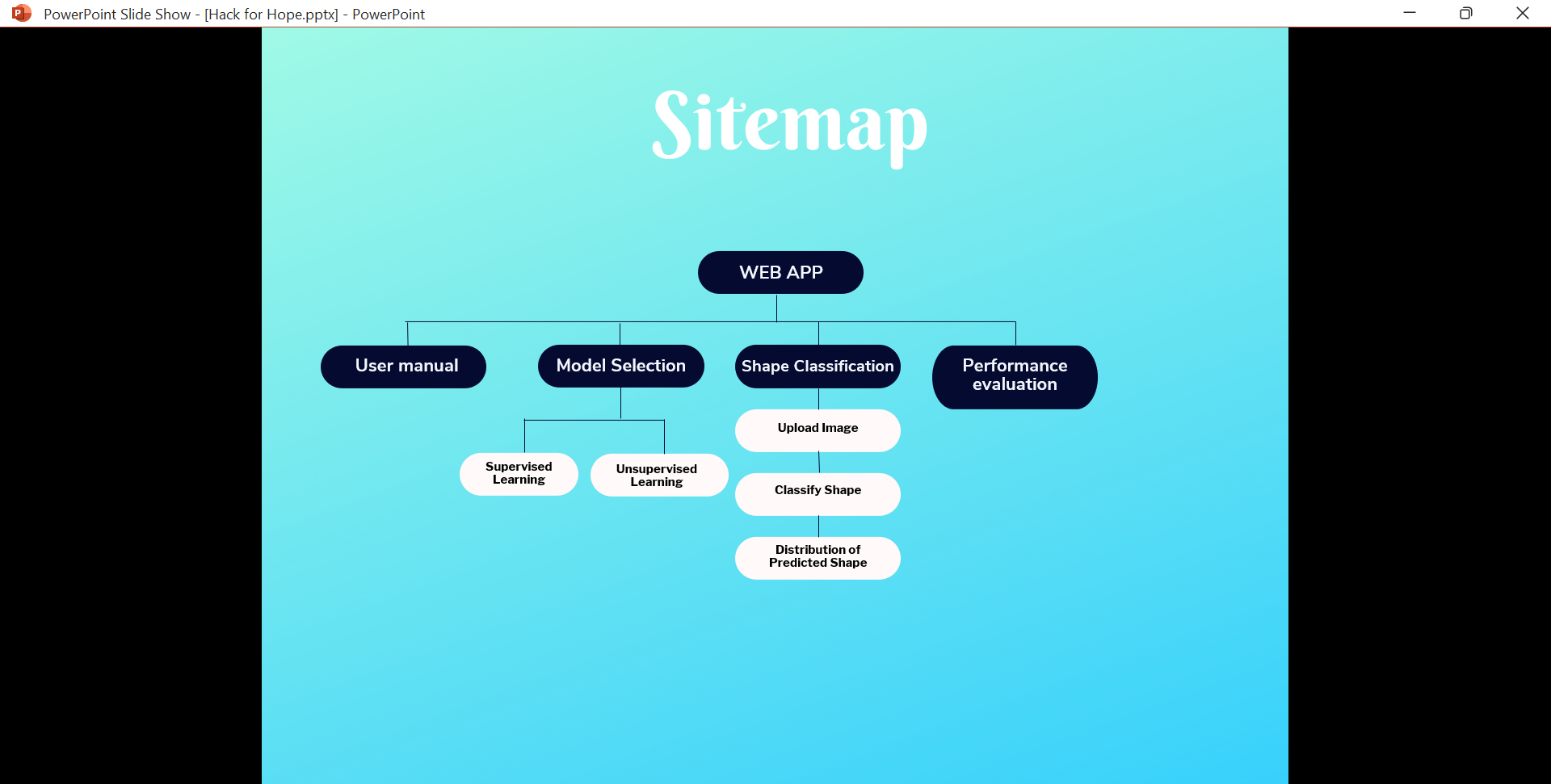
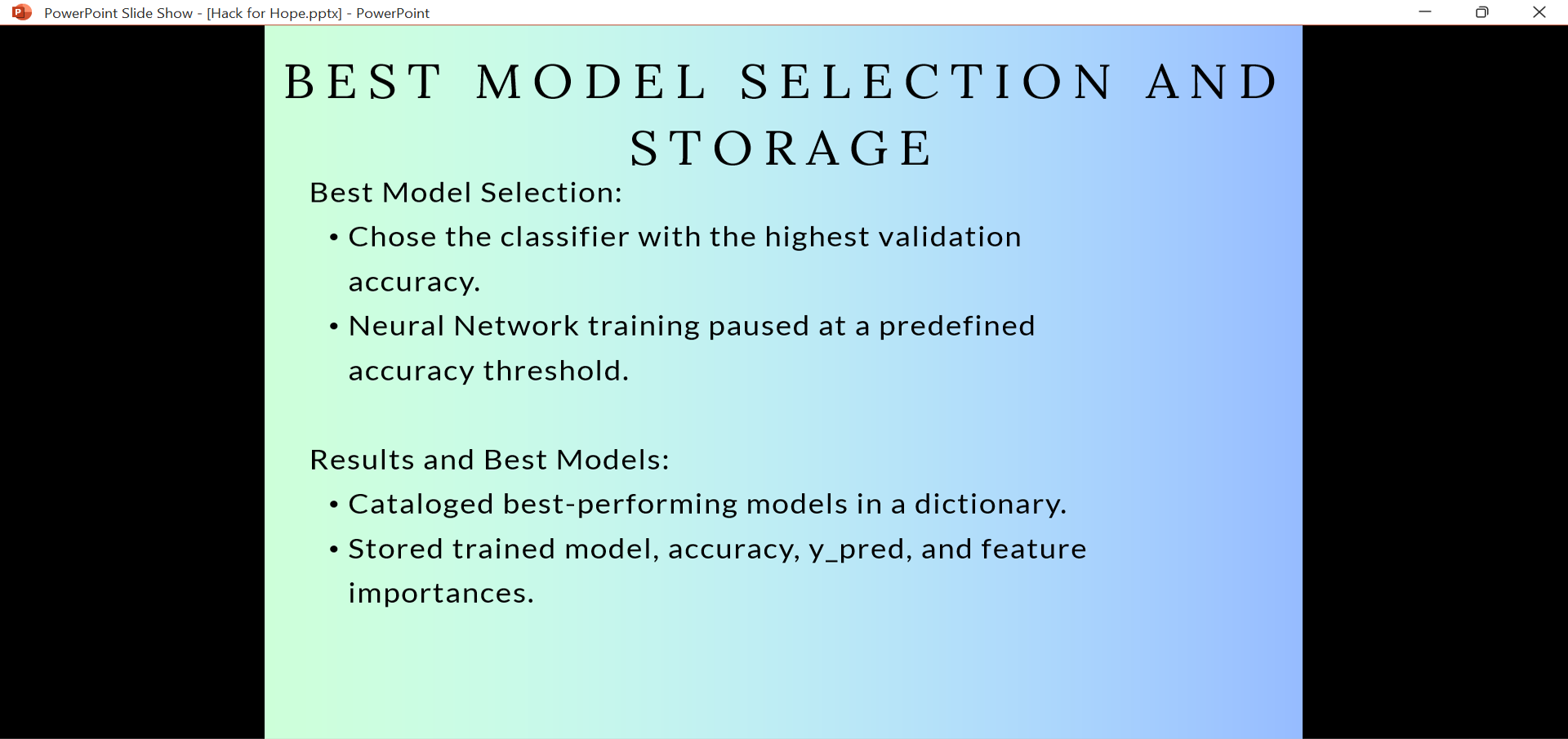
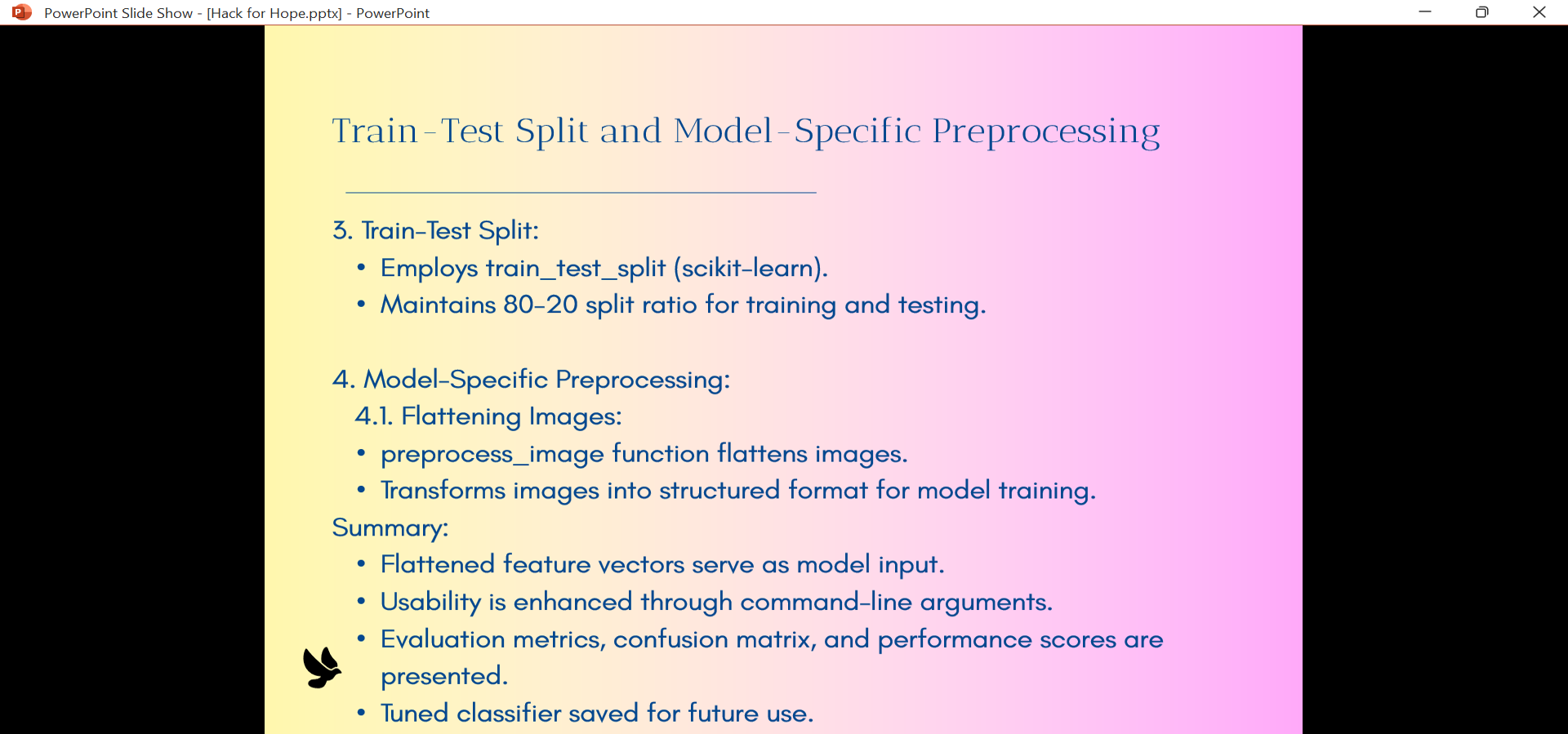
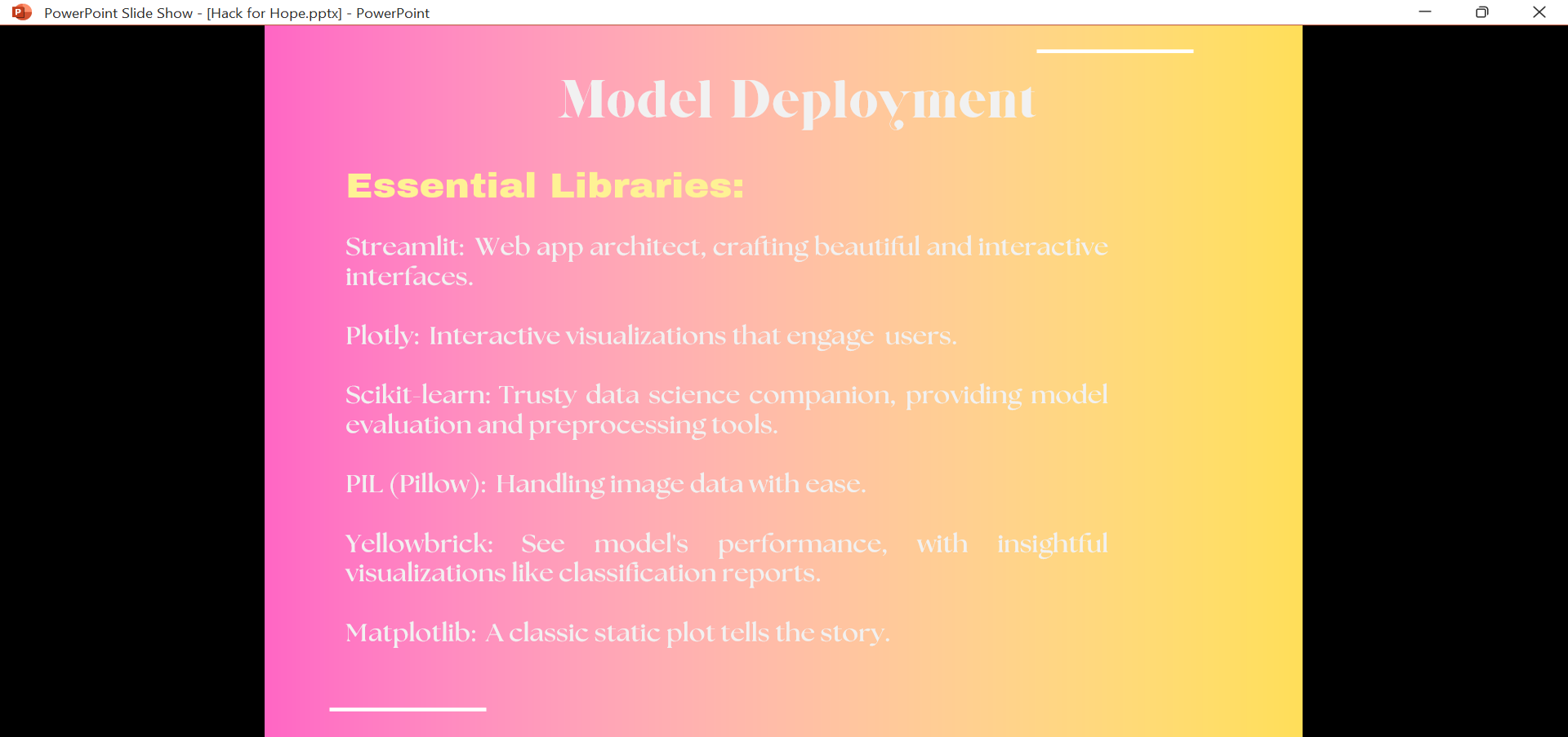
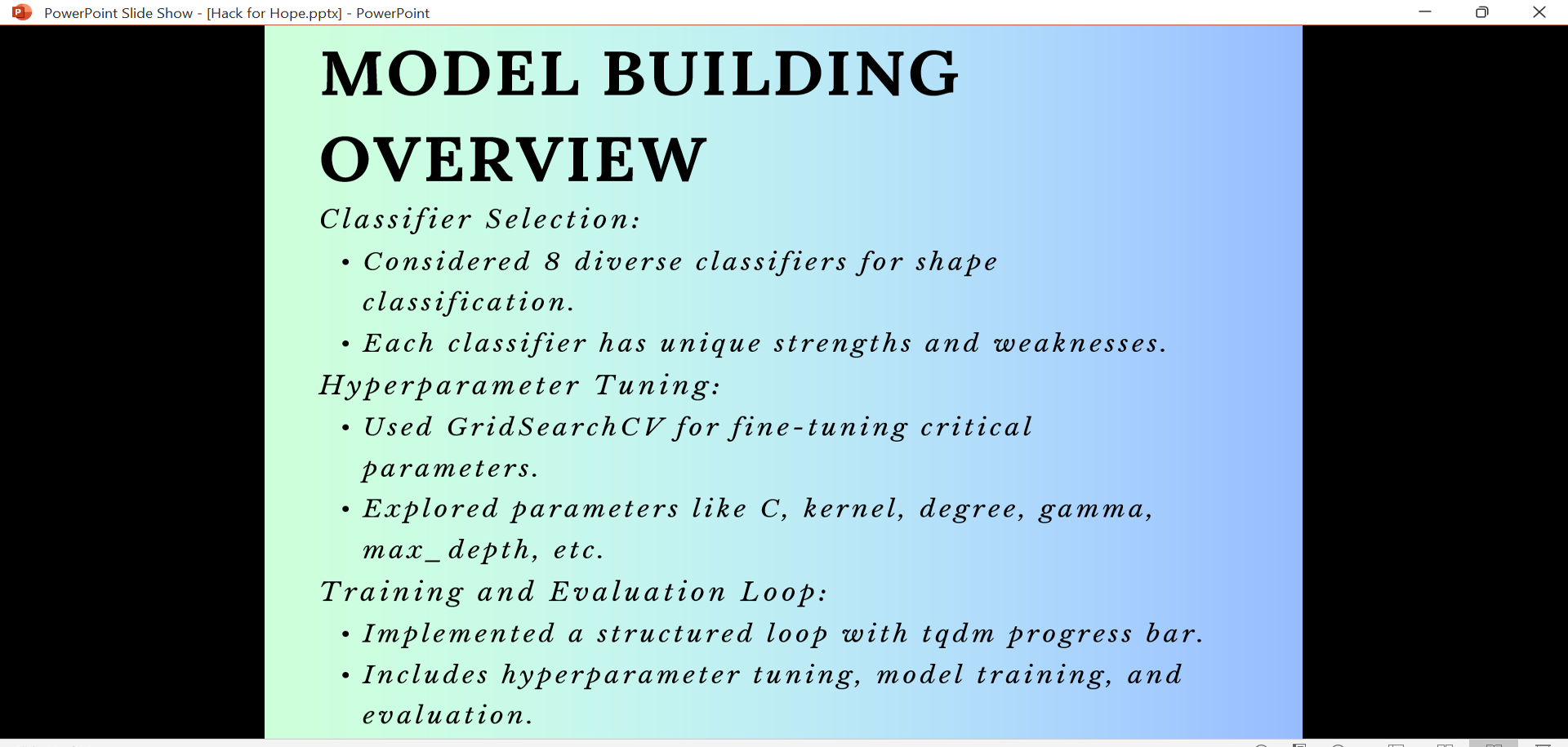
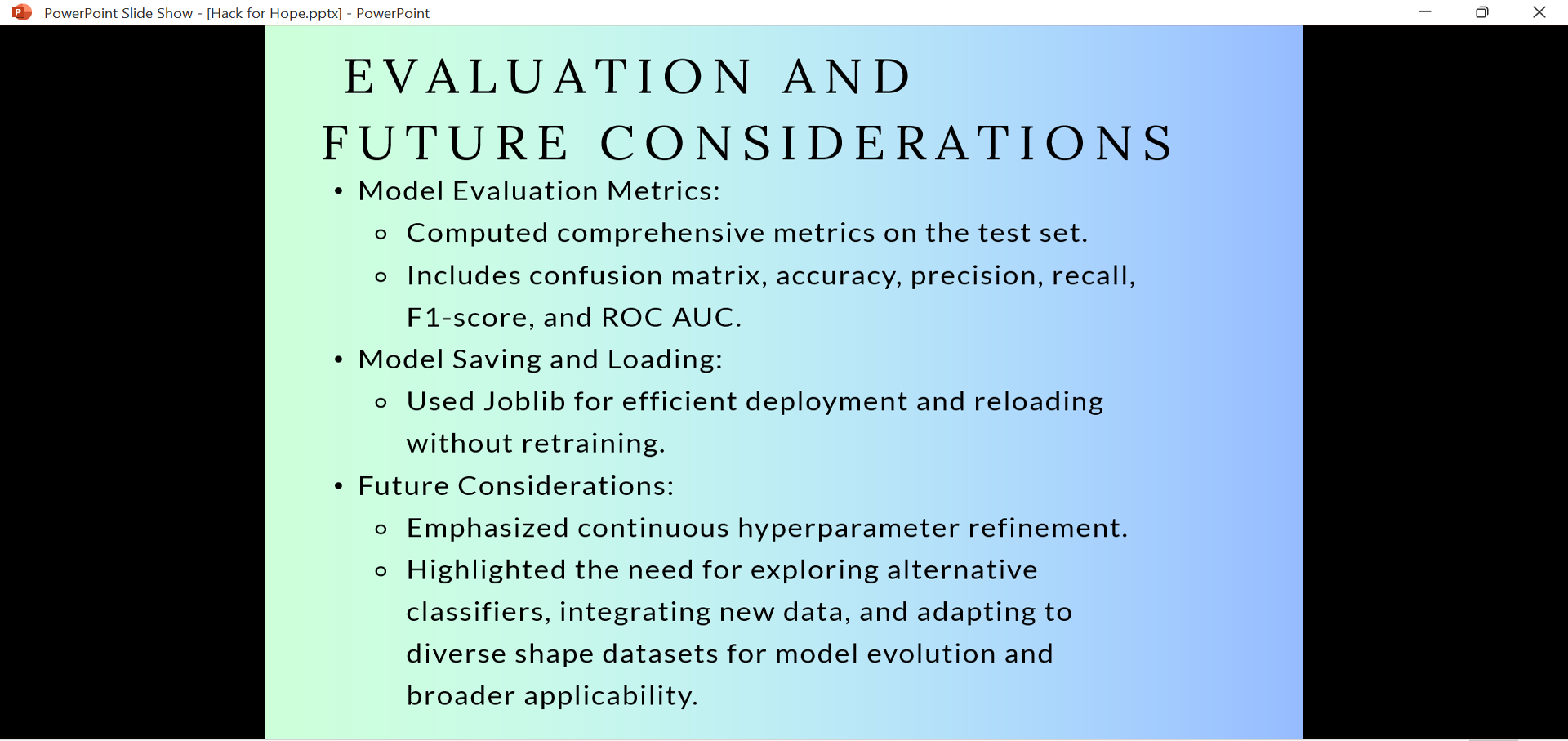
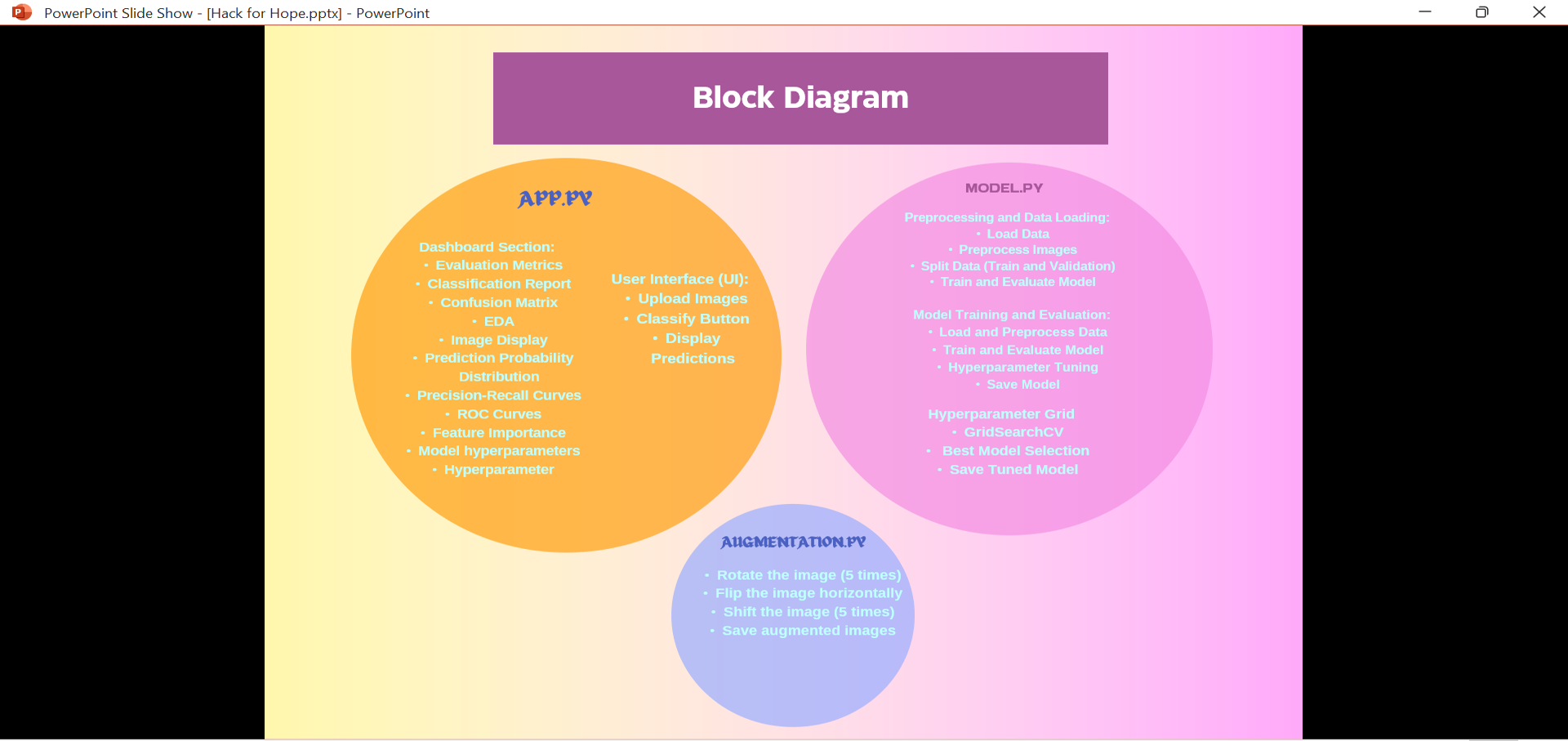
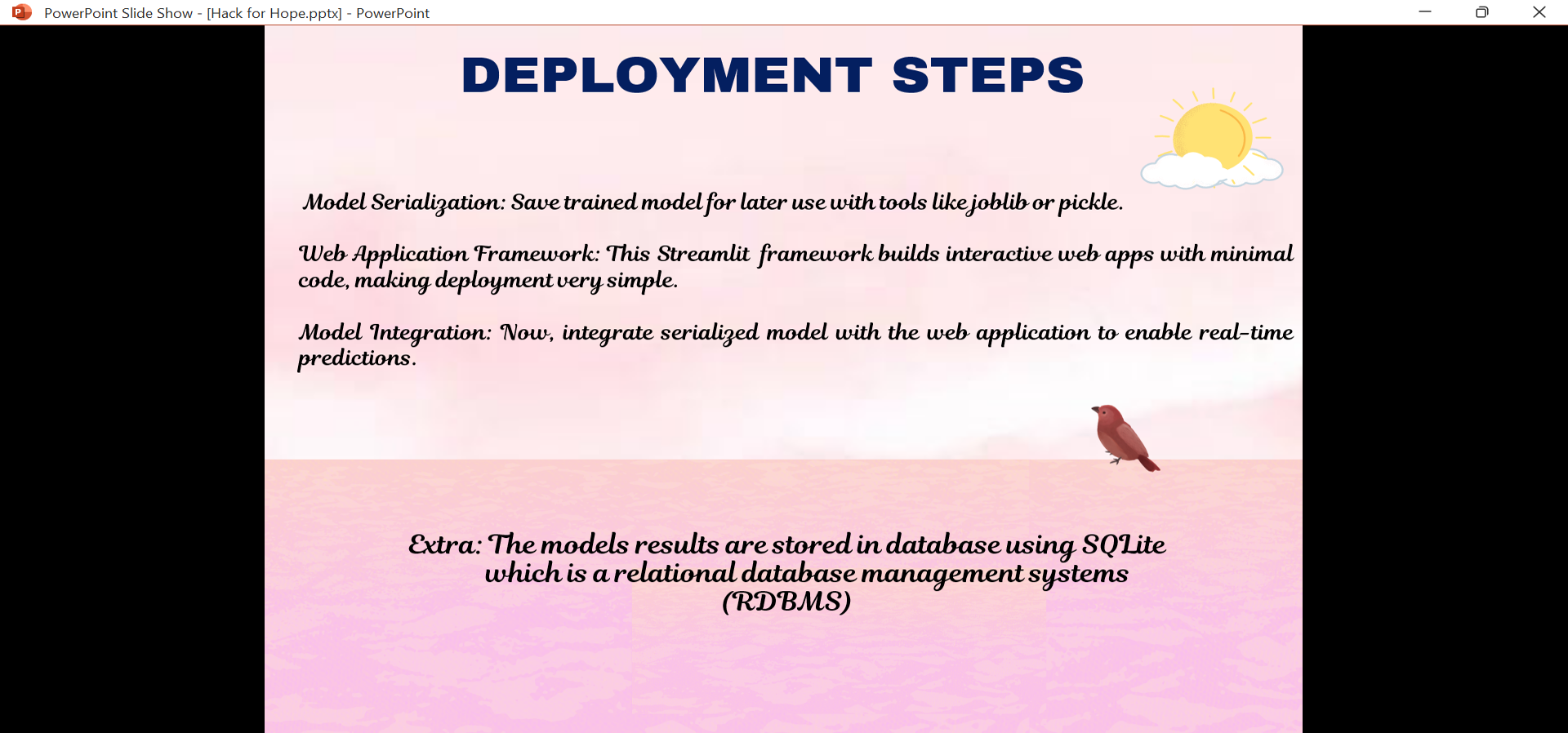
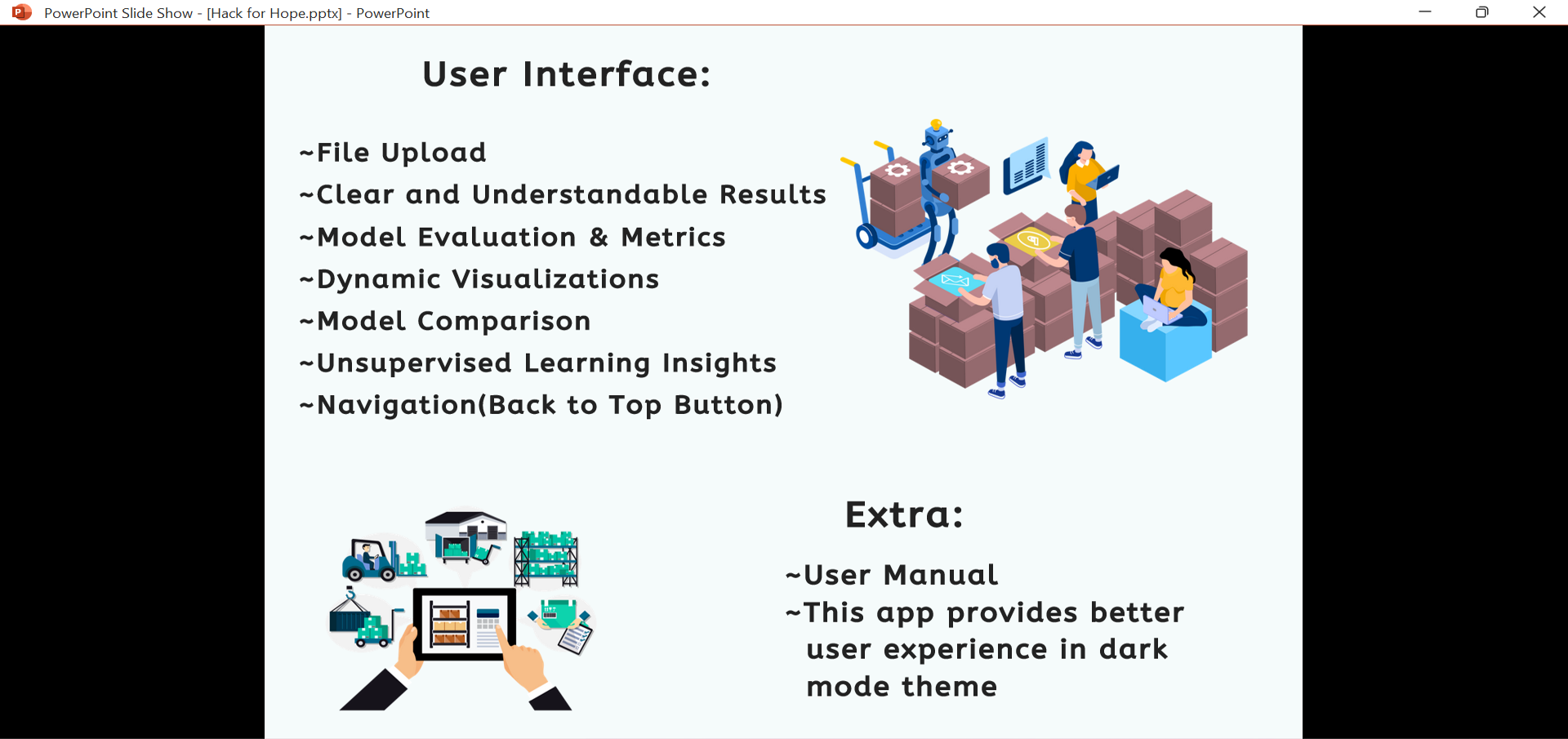
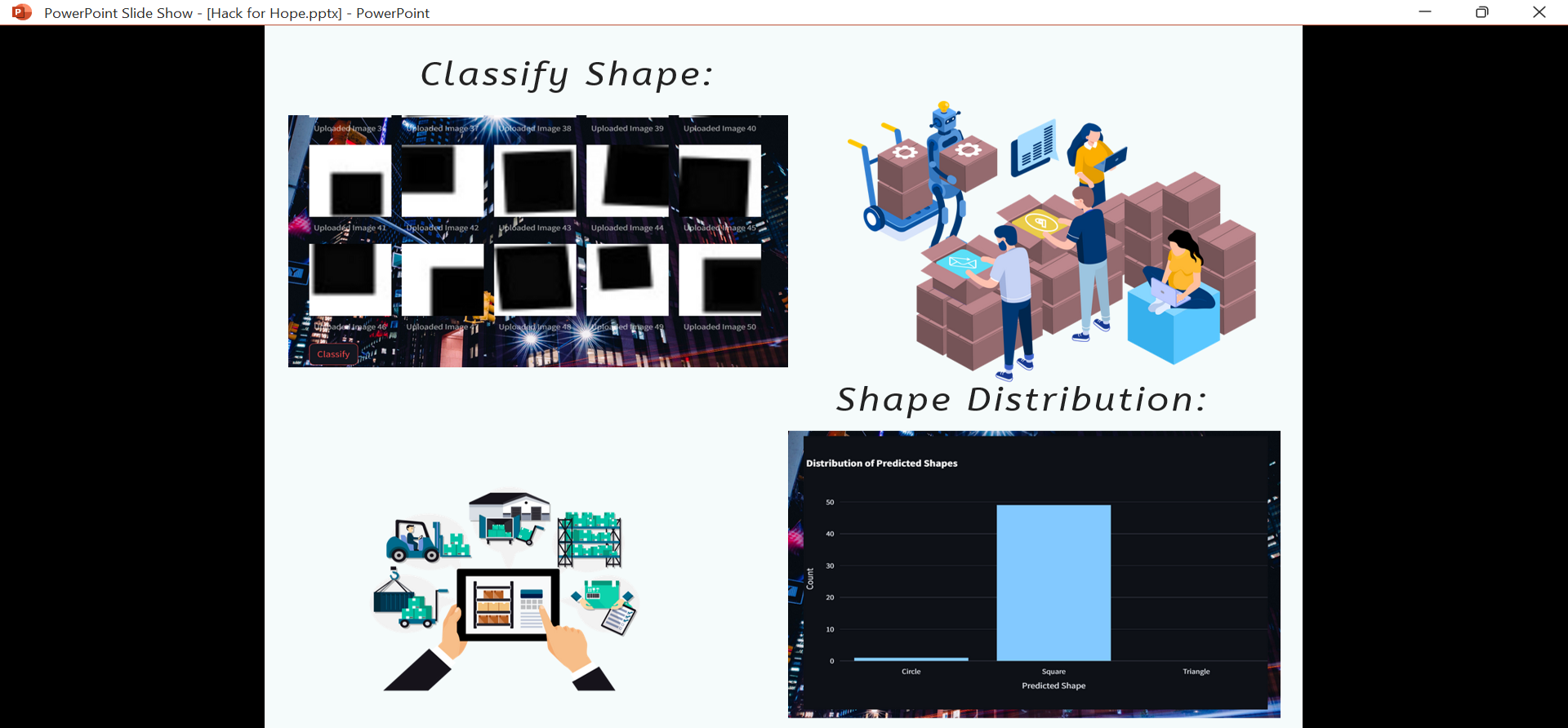
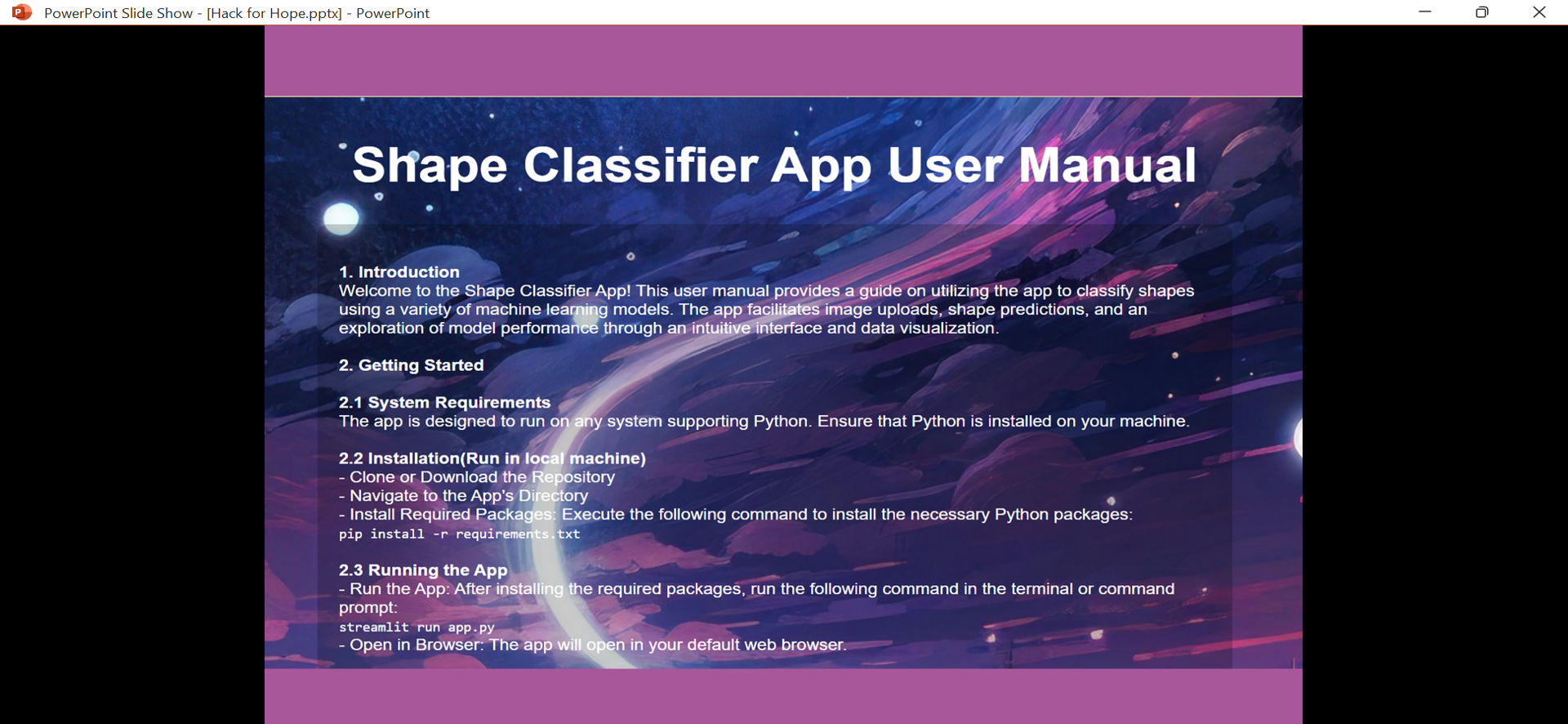
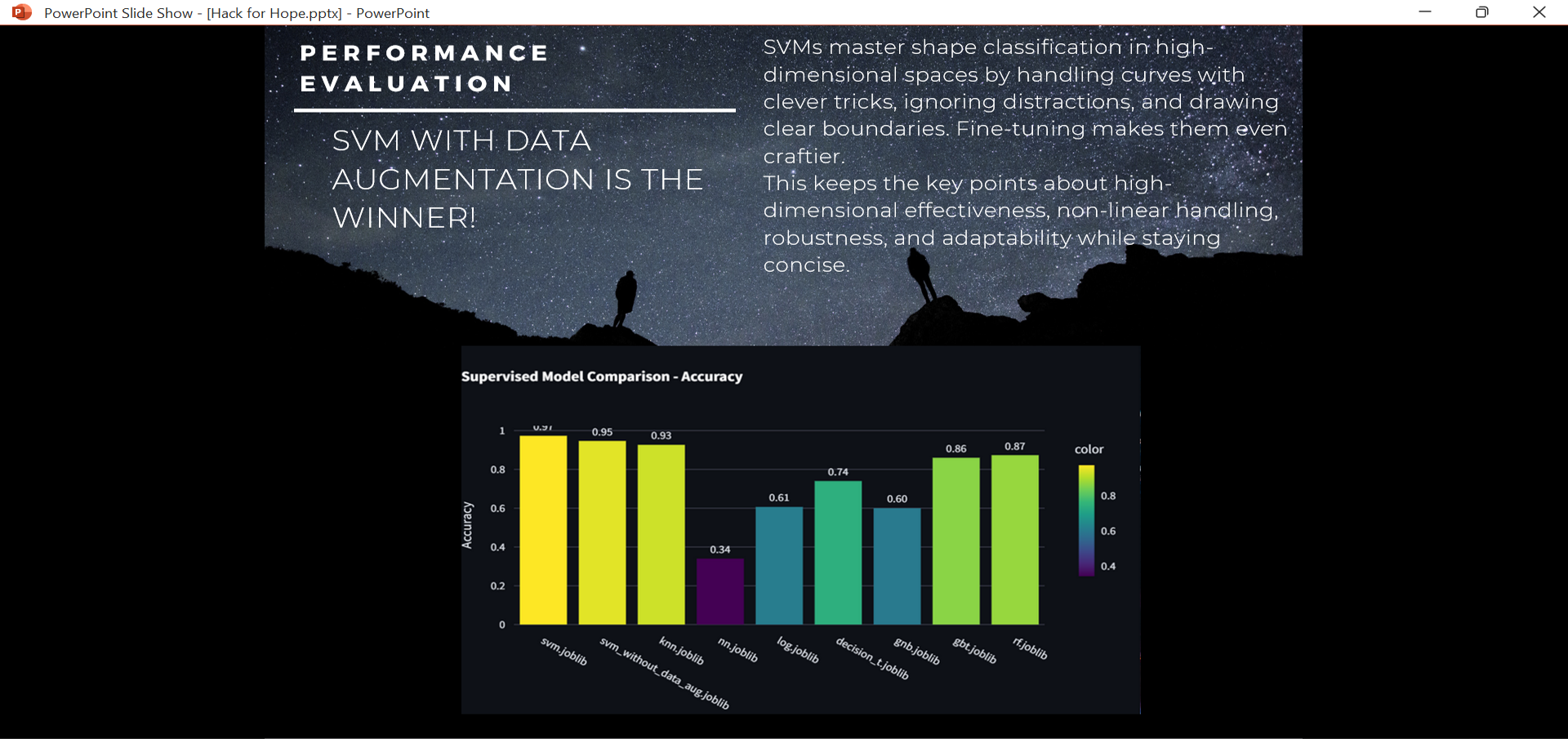
Inspiration: Our inspiration stemmed from the desire to address the daily challenges faced by visually impaired individuals, sparking the development of a shape classifier as a solution to promote accessibility and inclusivity. What it does: The shape classifier utilizes machine learning and computer vision to empower users with real-time shape recognition, fostering independence and facilitating educational opportunities for individuals with visual impairments. How we built it: We built the shape classifier using the Streamlit framework, integrating machine learning models trained on shape datasets to enable accurate shape classification. Our development process involved collaborative brainstorming, coding, and testing to ensure accessibility and functionality. Challenges we ran into: Challenges included optimizing the application for accessibility features, fine-tuning the machine learning algorithms for real-time performance, and ensuring a user-friendly interface for individuals with visual impairments. Accomplishments that we're proud of: We're proud of creating a robust and accessible tool that empowers individuals with visual impairments, as well as fostering a supportive community through collaborative development and user engagement. What we learned: Through the development of the shape classifier, we gained valuable insights into the importance of inclusive design, the potential of machine learning in accessibility technology, and the impact of community-driven initiatives in promoting accessibility awareness. What's next for Hackathon: Moving forward, I aim to further enhance the shape classifier by integrating additional features such as object detection and expanding its educational resources. Additionally, I plan to continue advocating for accessibility and inclusivity in future hackathons and development projects. I hope if I luckily selected as winner, the organiser can help me donate the prize/money to charity/anyone who need it .
Hackathon
Hackathon

Updates

Leave feedback in the comments!
Log in or sign up for Devpost to join the conversation.