Inspiration
Project NARA was inspired by a simple frustration we had with many narrative games: important emotional moments often end at cutscenes.
After something tragic happens, the gameplay usually continues as if nothing changed. The character still feels precise, calm, and fully in control.
We wanted to explore a different idea: what if a character’s psychological condition actually affected how the game is played?
Project NARA was born from that question, combining narrative design, AI reasoning, and gameplay systems into one cohesive experience.
What it does
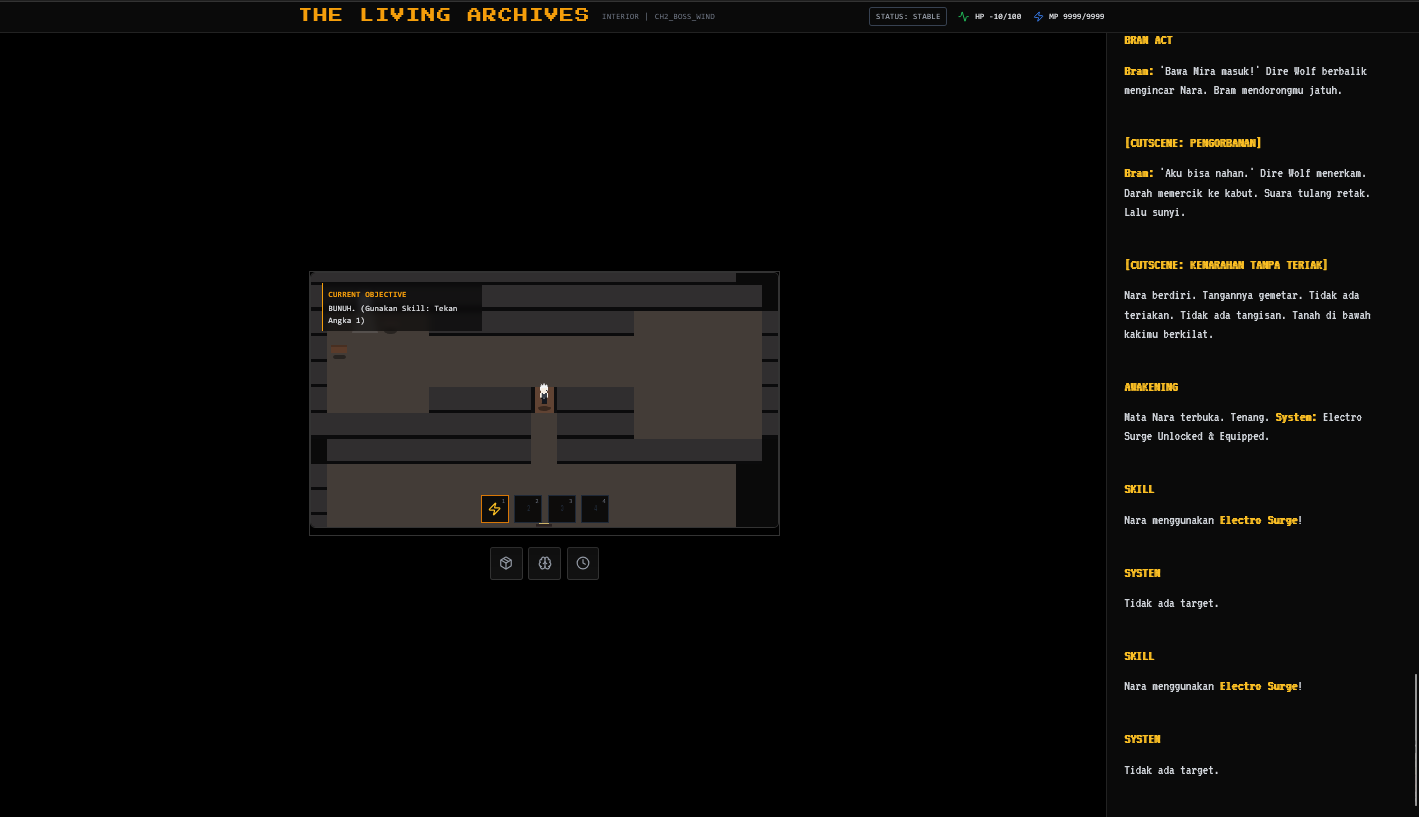
Project NARA is a narrative-driven action RPG where the player’s mental state is a core gameplay system.
Instead of traditional stat-based progression, the game tracks the protagonist’s psychological state (suppressed, focused, unstable, overloaded) and uses it to dynamically affect:
- Player input responsiveness
- Skill availability and behavior
- Enemy and boss reactions
- Fallback behavior during high pressure or system failure
The player never sees explicit mental meters. Instead, they feel the changes directly through gameplay.
Choices made during the story permanently affect combat flow and narrative outcomes, leading to branching paths and endings.
How we built it
We designed Project NARA using a system-driven architecture:
- Prolog is used as a reasoning engine to decide what should happen based on mental state, narrative context, and enemy behavior.
- The reasoning results are exported as structured JSON.
- A game engine (engine-agnostic by design) consumes the JSON to handle visuals, input, audio, and combat execution.
We also implemented a Fallback System: when reasoning fails, becomes unstable, or the character is under extreme pressure, the game does not stop. Instead, control narrows into instinct-based actions, turning failure into a narrative mechanic.
This separation allows us to keep logic, narrative, and presentation cleanly decoupled.
Challenges we ran into
One major challenge was balancing emotional storytelling with responsive gameplay. We had to ensure that psychological effects felt impactful without making the game unplayable.
Another challenge was designing enemies and bosses that interacted meaningfully with mental states, instead of acting as simple damage obstacles.
Finally, translating abstract psychological concepts into concrete gameplay feedback (input delay, skill locks, enemy pressure) required careful iteration and restraint.
Accomplishments that we're proud of
- Designing a mental-state-driven gameplay system without relying on UI meters
- Turning AI reasoning failure into an intentional gameplay mechanic
- Creating enemy and boss designs that support narrative themes
- Building a flexible Prolog → JSON → Engine pipeline
- Developing a complete narrative arc with meaningful branching paths
What we learned
We learned that gameplay systems can carry emotional weight just as strongly as story text or cutscenes.
We also learned the importance of separating decision logic from presentation, which made our design more scalable and adaptable.
Most importantly, we learned that players are willing to engage with uncomfortable, morally complex gameplay when the systems feel honest and consistent.
What's next for Project NARA
Next, we plan to:
- Build a playable vertical slice demonstrating the full mental-state loop
- Expand enemy and boss behaviors using deeper AI reasoning
- Refine branching endings and long-term consequences
- Explore accessibility options for psychological intensity
- Prepare Project NARA for a full prototype or research-based release
Built With
- ai
- game-engine-(engine-agnostic)
- json
- prolog
- system-driven

Log in or sign up for Devpost to join the conversation.