Inspiration
The original idea of the project was to implement an in-house classroom library organizational system. Each group member had fond memories of using classroom libraries, so we thought we could create a system to ease the lives of teachers. However, after further discussion, we determined that we could broaden the scope of this project and apply it to more current applications. Since many classrooms around the nation have started implementing electronic devices such as iPads and laptops, we chose to create a system that tracks them. We wanted to make a system that would be as holistic as possible to ensure proper item handling.
What it does
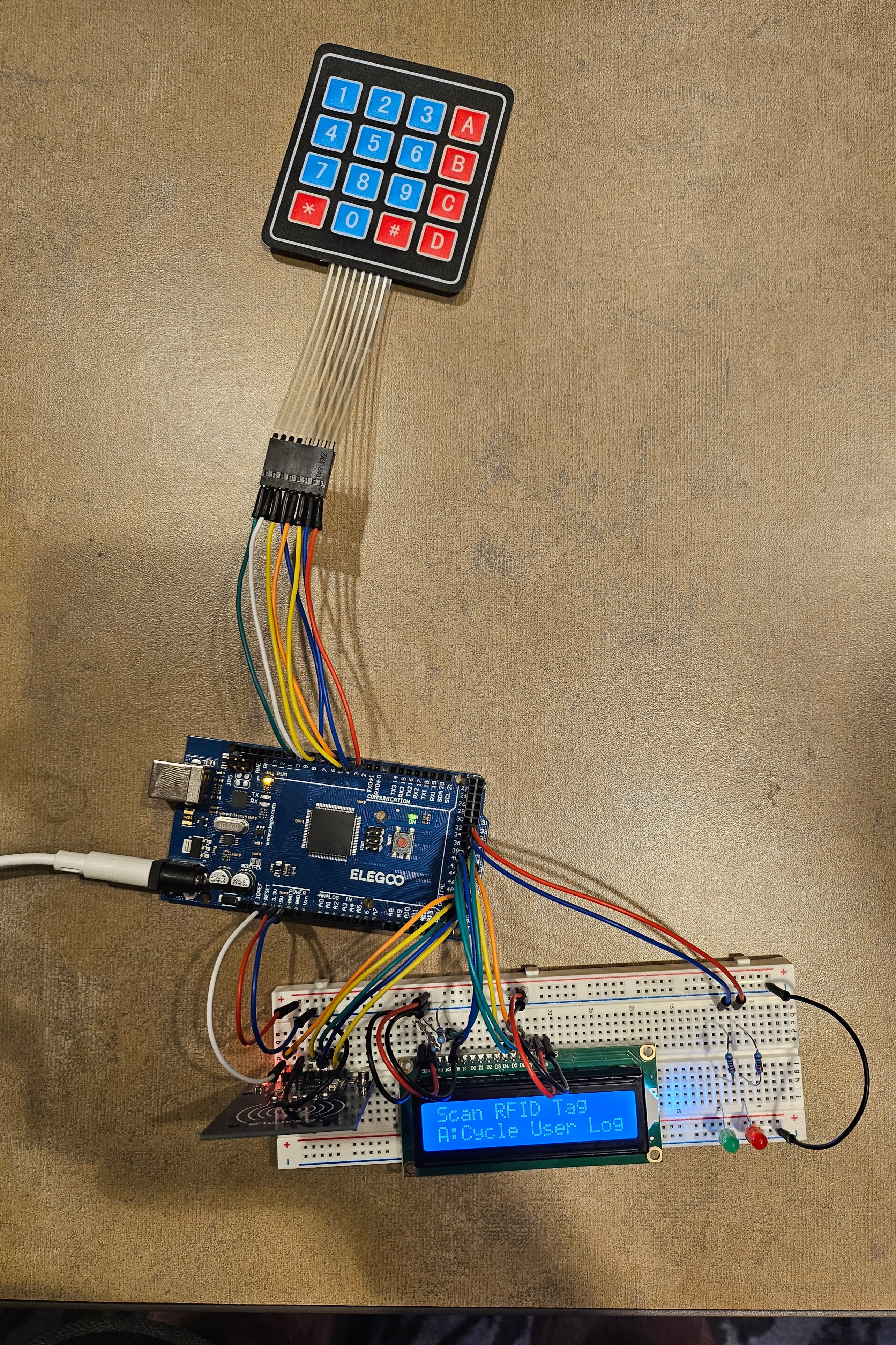
This device is capable of checking items in and out as well as tracking checkout history. Students are able to easily check out and return books using this system. The system utilizes a membrane keypad that allows users to type their unique ID. Additionally, our device features a tracking feature that allows the teacher to see what devices are currently checked out and who has them. The system also records who last used a device. This is useful because if a device is returned damaged, the teacher can see who was responsible. Our device features an LCD to guide users through the process of checking devices in and out. Our device also uses LEDs to notify the user if their input is correct or not.
How we built it
The team started off brainstorming and created a roadmap using a flowchart. The team then begin construction of the device by installing the input components first. These consisted of the RFID scanner and key as well as the membrane keypad. The team then installed the output devices which include the LCD and LEDs. The team ran the sample code first to make sure each device worked independently and then began connecting them all together into a central system. After testing and problem solving, the team created an working project.
Challenges we ran into
The biggest challenge our team encountered involved comparing the UID from the RFID tag and the values that were stored for each item in the code. A small inconvenience was that Arduino IDE and C++ have a few syntax differences. One mistake the team made was improperly setting up the class system for the program. It took a bit of time to catch the error and use a more efficient method,
Accomplishments that we're proud of
This device allows for a full-circle library system. It allows for quick and easy check-in and check-out of devices in an innovative way. A highlight of this system is that it can be used every day by students of a wide age range. Another aspect of this project that we are proud of is that it integrates a variety of devices that provide a multitude of features. We also believe that it provides a safe and secure method through the use of RFID as well as a passcode to ensure that the devices are handled properly.
What we learned
Our group expanded our knowledge of the Arduino IDE and how to combine software and hardware to create a finished product. This competition allowed for a very unique and fun experience of engaging in the engineering design cycle where we planned, built, tested, refined, and demonstrated a finished product. Additionally, this competition required us to think critically and to work efficiently as a team.
What's next for Hackathon
Our team enjoyed participating in this competition as it was a fun yet competitive atmosphere.
Built With
- arduino
- keypad.h
- liquidcrystal.h
- mfrc522.h
- spi.h

Log in or sign up for Devpost to join the conversation.