-
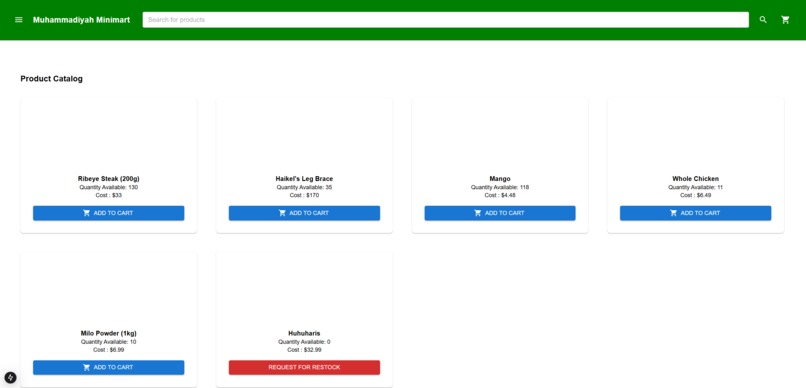
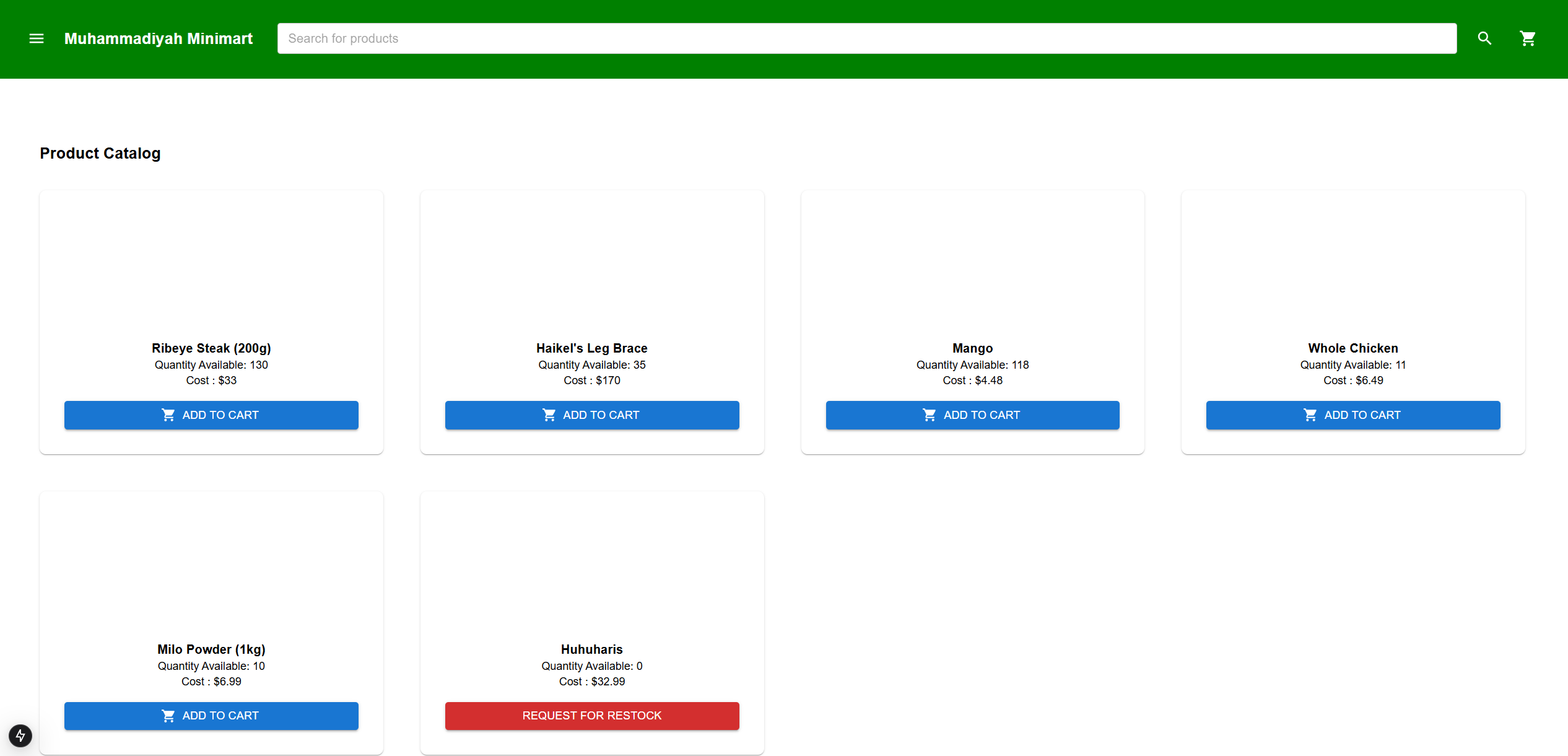
Home Page where users can make purchases
-
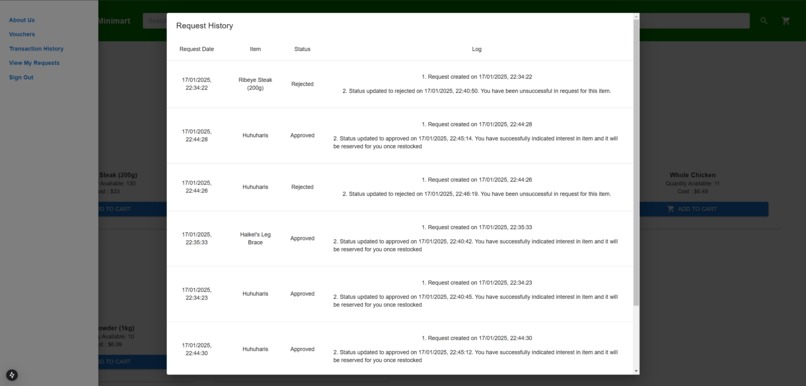
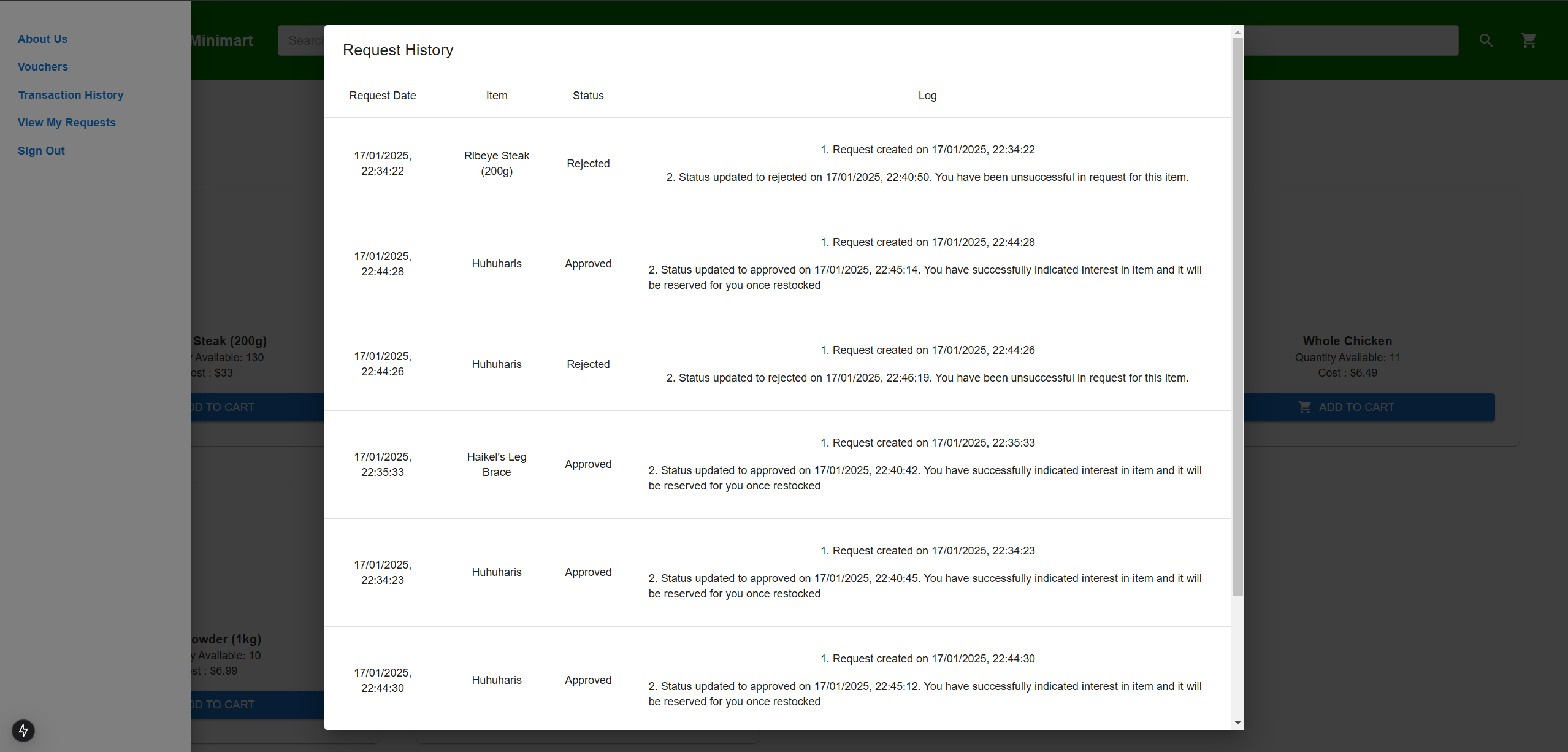
A popup accessible from the home page, allowing users to see the status of their previously requested items
-
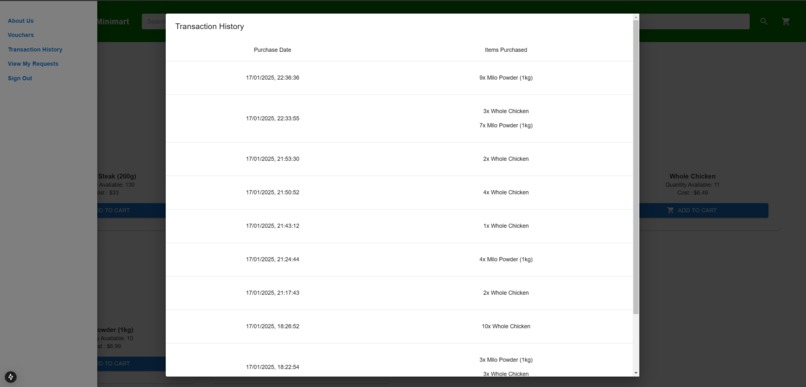
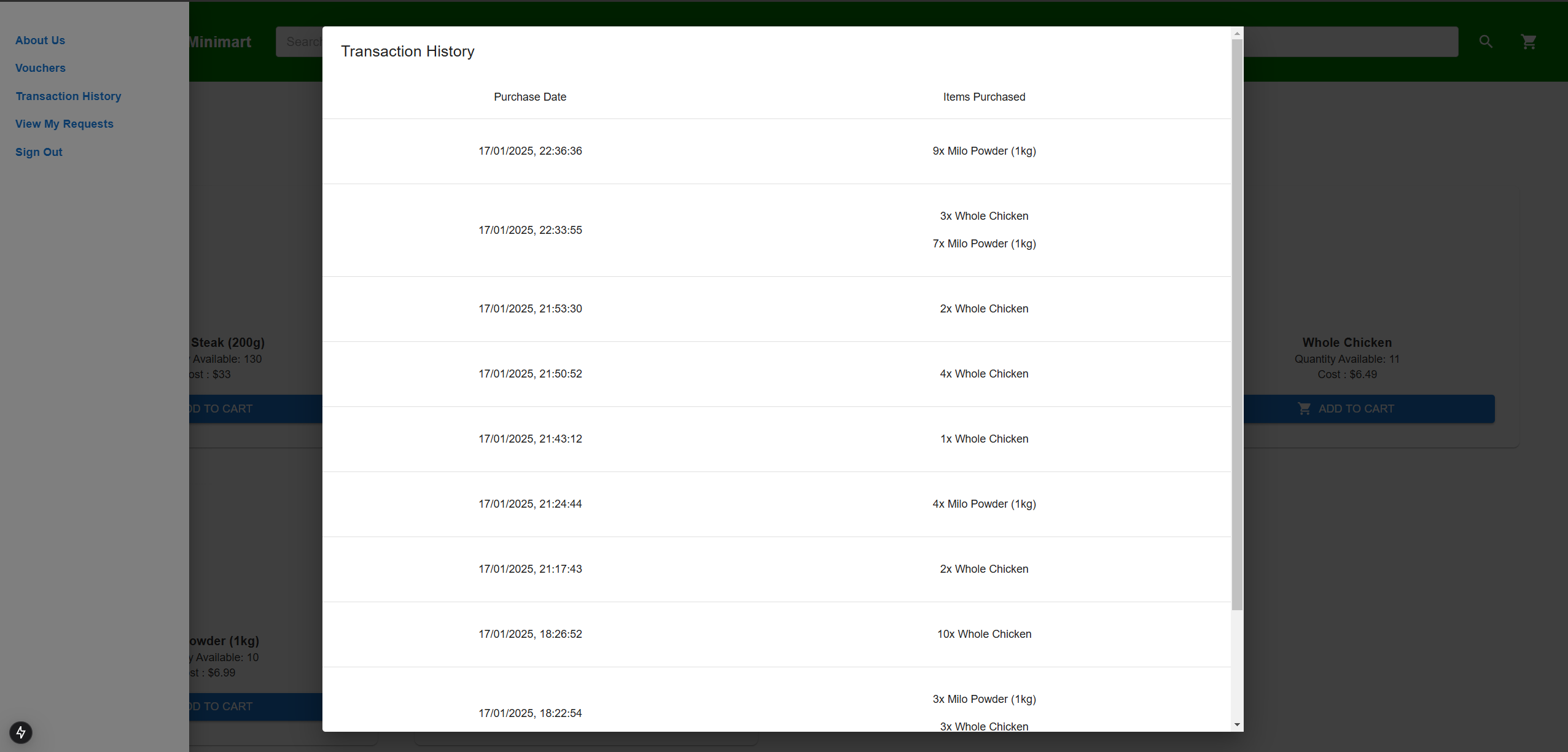
Another popup that allows users to check their transaction history
-
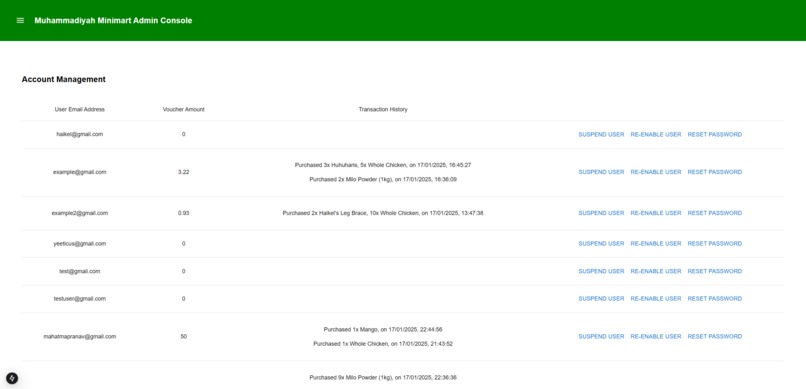
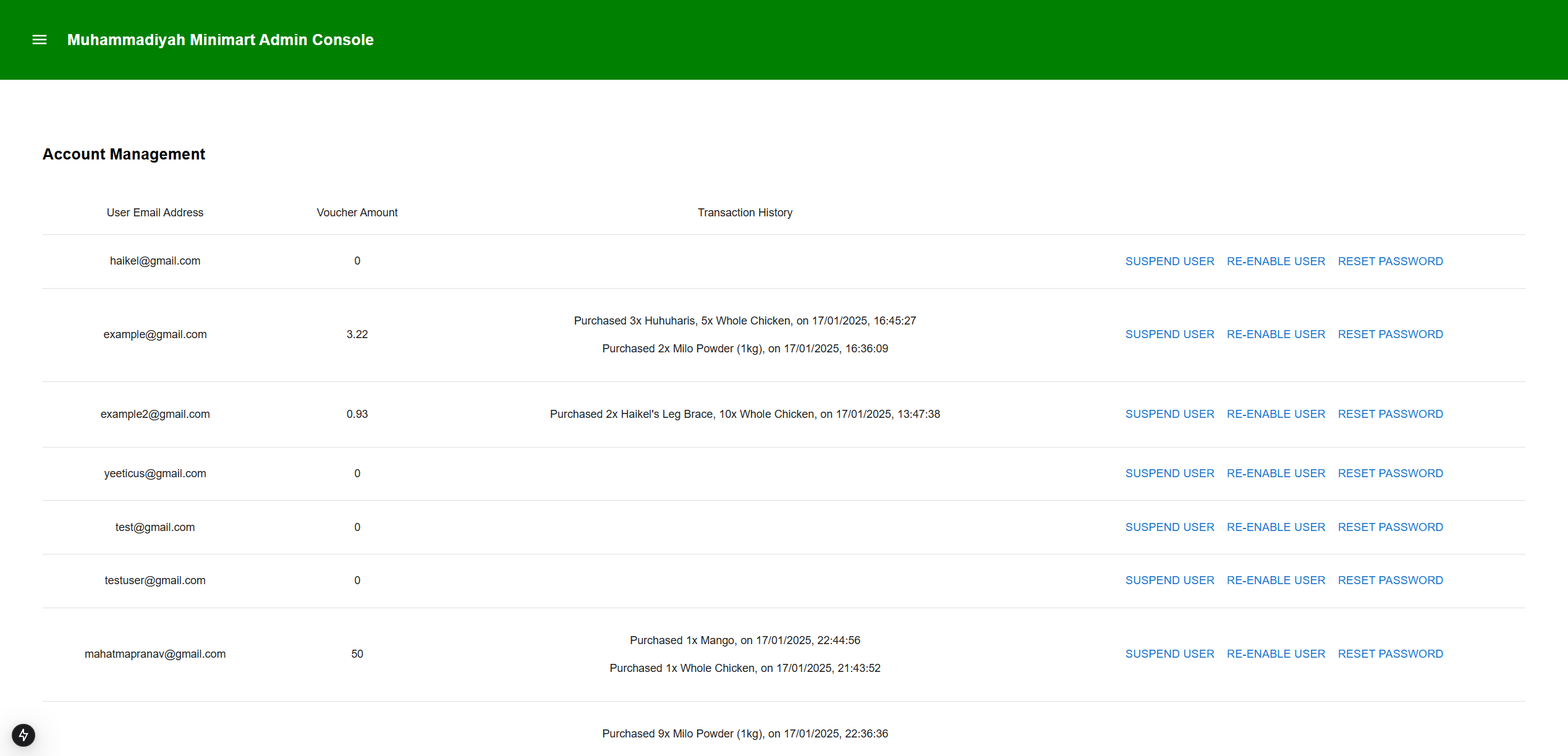
Admin console, allowing admins to suspend users or reset their passwords
-
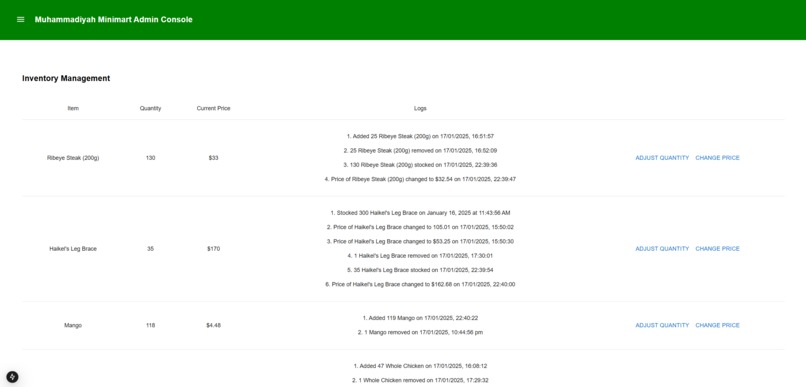
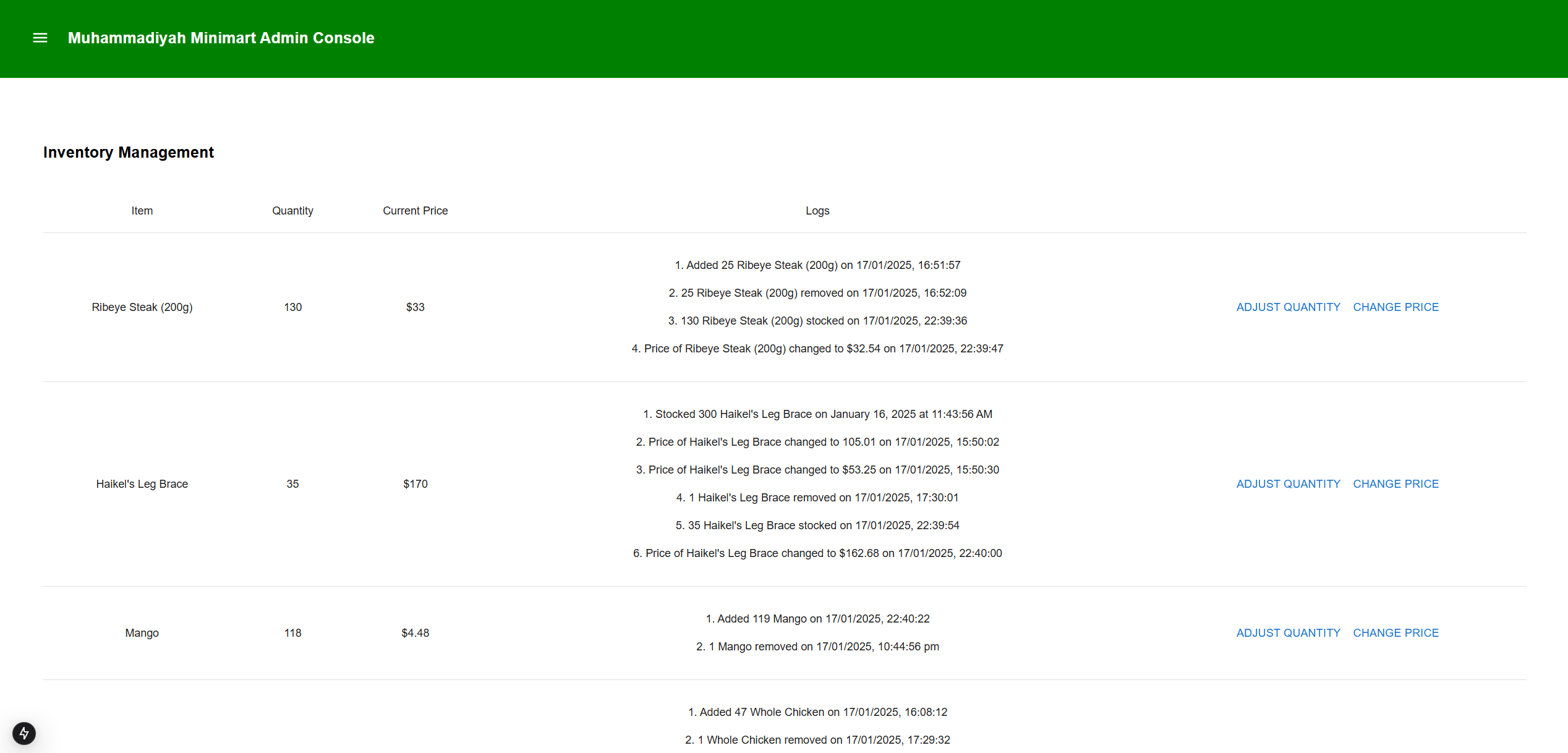
Admin console page, allowing admins to manage the inventory
-
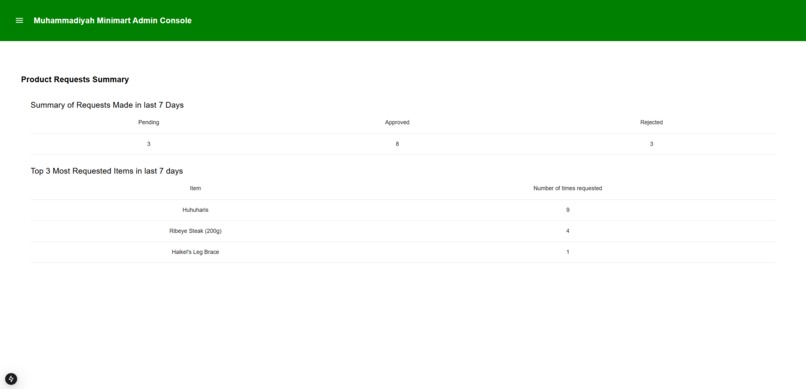
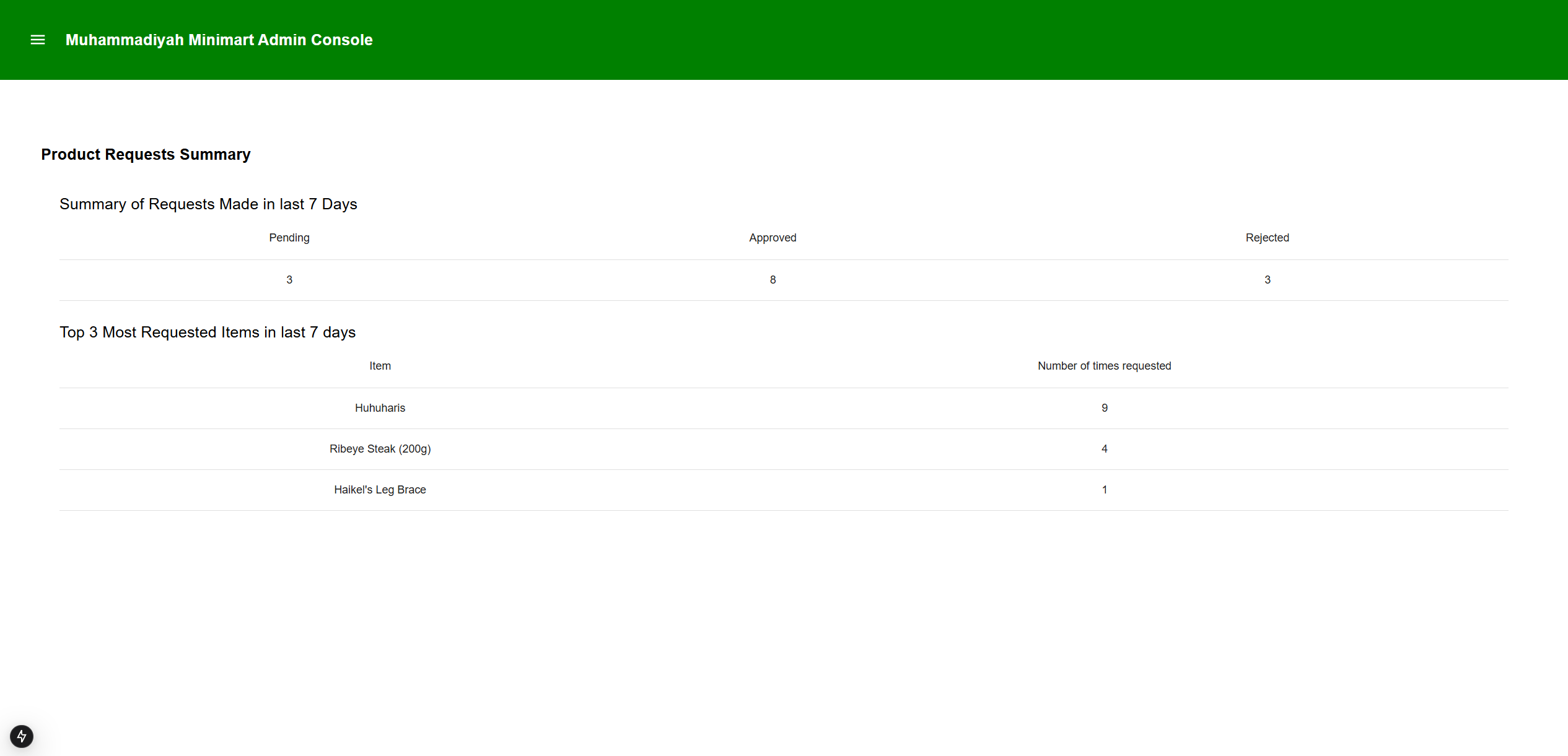
Admin console page, that allows admins to see statistics relating to most requested for items
-
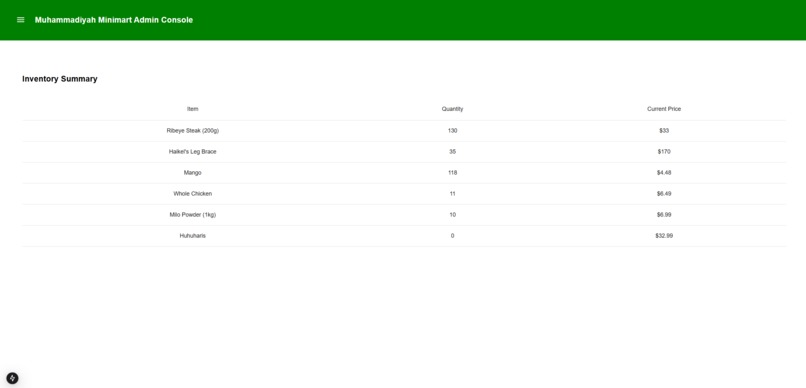
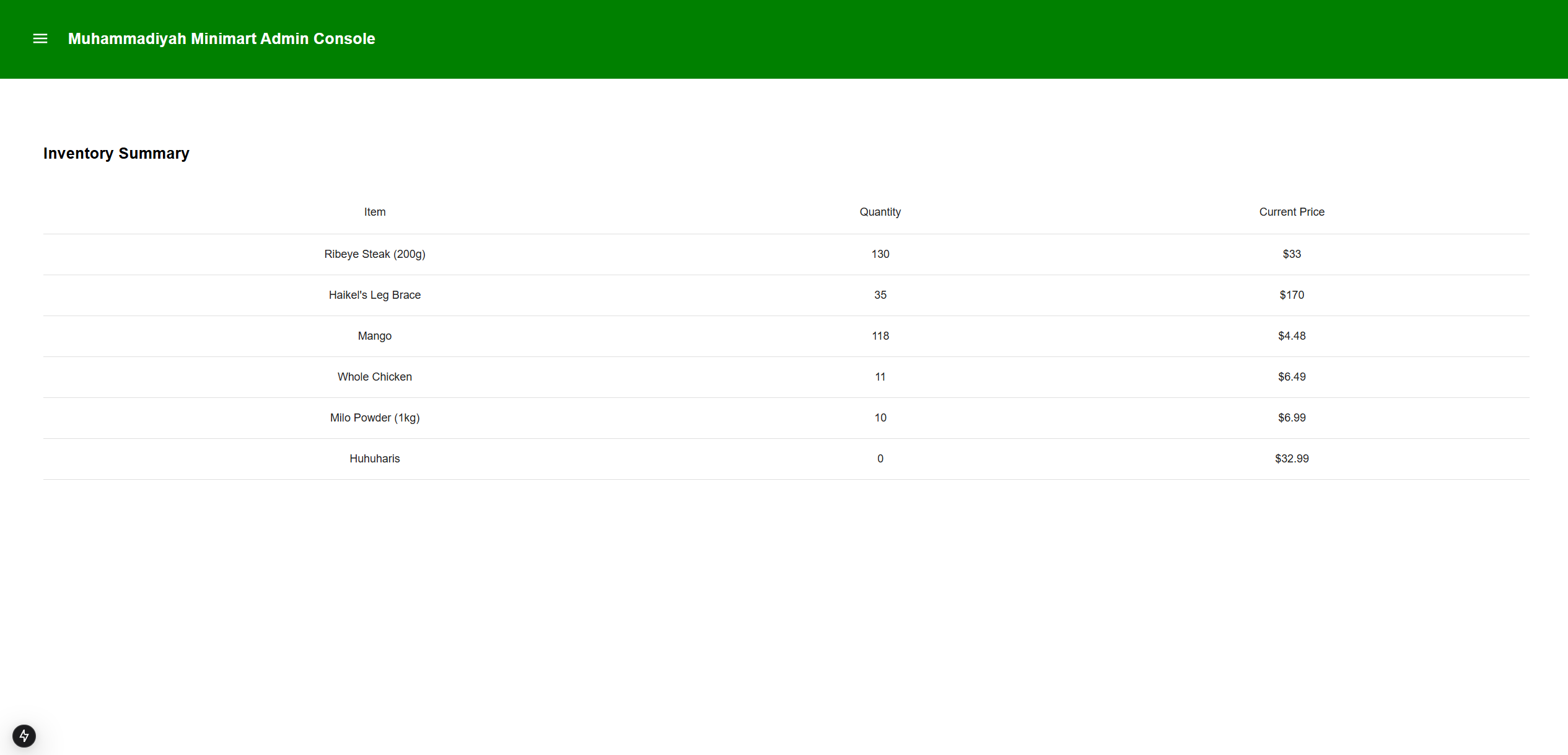
Admin console page that provides admins with an overview of the inventory
-
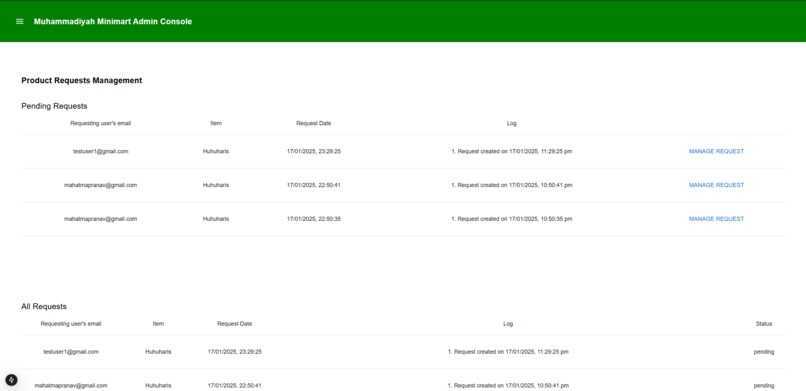
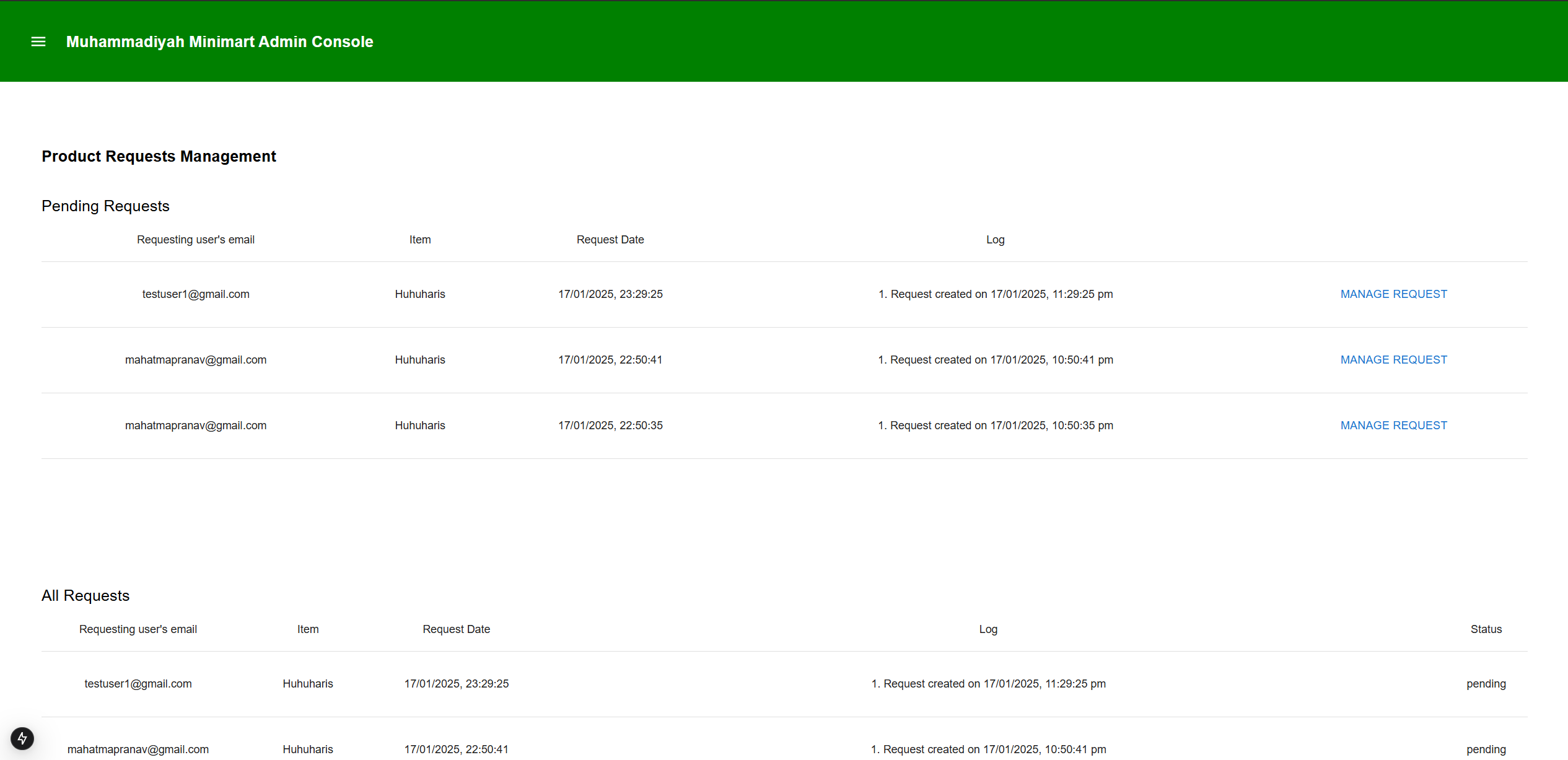
Admin console page that allows admins to respond to users' requests for out of stock products
Inspiration
We were inspired to build a web store that could help Muhammadiyah Minimart as we wanted to ensure that both the well-being of residents and the efficiency of the welfare home’s management are enhanced, so as to foster a harmonious and well-organized environment for all.
How we built it
Our team built our application using React, Next.js and Firebase. We also used Git and Github extensively as our form of version control.
Challenges we ran into
We had so many ideas and it was difficult trying to pick and choose and what to keep and what to leave out, as they were all very good ideas, but could not be implemented in the span of the week. Of course, we hope to continue to expand upon and integrate those ideas in future continuations of this project.
What we learned
What's next for Hack4Good Web-based Minimart
In future developments, we aim to enhance user profiles to include personalised data such that items can be further recommended to residents based on transaction histories. We also aim to improve purchase and payment options as well as enhance the overall inventory management system. We could also provide real-time communication and support features through AI chatbots which could assist with enquiries that the residents may have as well as a feedback system that could assist with further improvements to the web page. On the admin side, we could provide more detailed reports and summaries based on the residents’ transaction history to allow for better business analytics. Furthermore, we aim to segregate the database for the residents and administrators on the Firebase authentication backend to allow for easier data management in the overall website.
Built With
- api
- css
- firebase
- firestore
- git
- github
- html
- javascript
- mui
- next.js
- react
- tailwind
- typescript

Log in or sign up for Devpost to join the conversation.