-
-
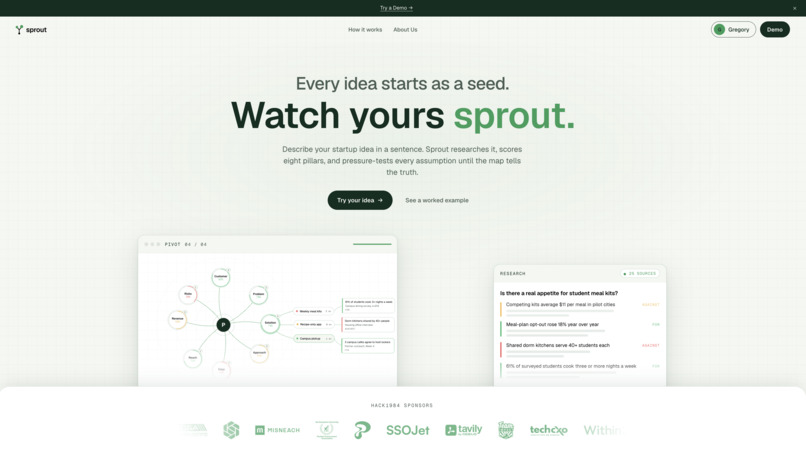
Homepage
-
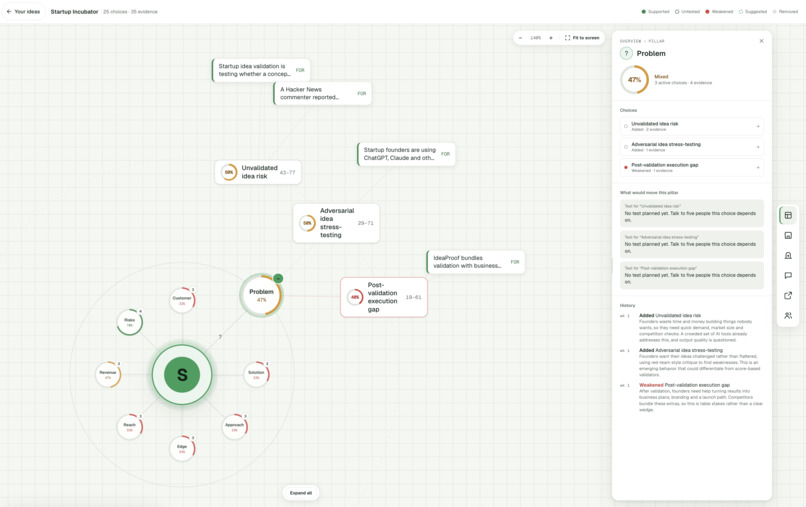
Idea Map
-
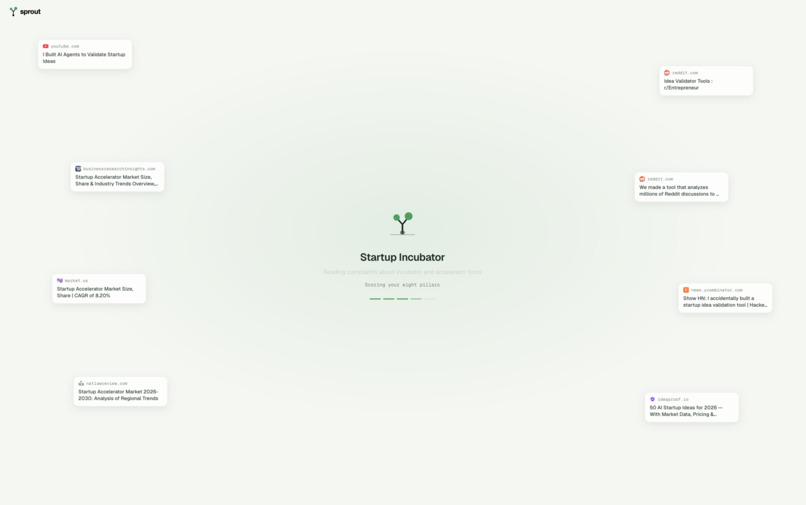
Incubator
Inspiration
We were inspired by our own struggles as potential startup founders. With so many ideas with a limited amount of time on our hands, we have always gotten stuck wondering what idea to purse. Sprout solves that.
What it does
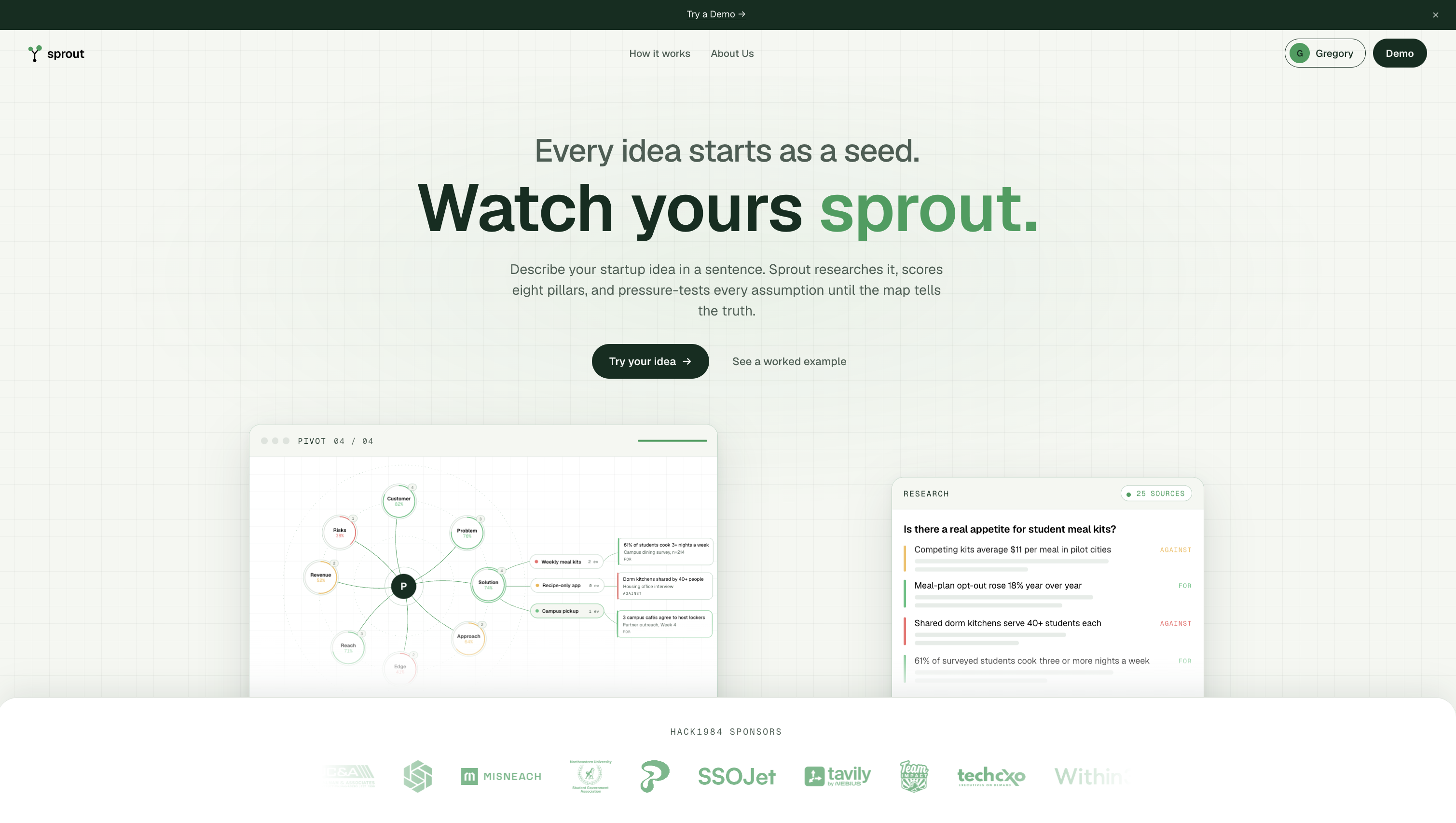
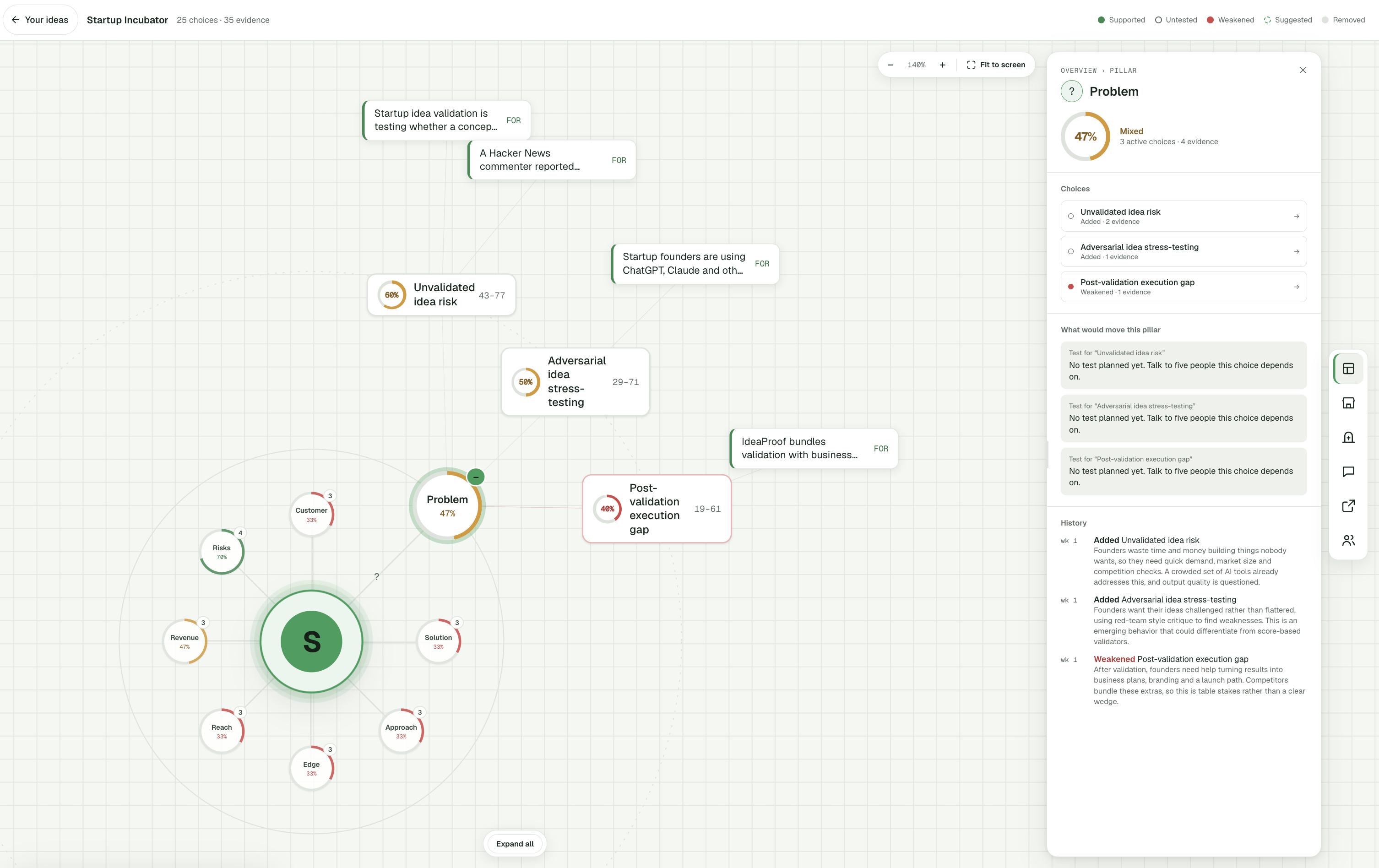
Sprout lets you input an idea for a startup or a nonprofit, and gives you a living map of everything that idea needs to succeed. Every idea grows into a tree built on eight pillars: customer, problem, solution, approach. edge, reach, revenue, and risk), each researched against the live web using Tavily and scored honestly on how much evidence supports it. Then we have even more features to get your idea to sprout. A hundred simulated customers show you how your price affects them, and your team's real hours and skills decide what's buildable, and a graveyard of companies that already died doing this comes back to "haunt" the branches they recognize. Nonprofits get the same shape with different questions: people served instead of customers, funding instead of revenue.
How we built it
Sprout runs on Next.js 16 and TypeScript with a Supabase database, with the research using Tavily and Claude for the reasoning. We used an agentic workflow with us making the high level design choices and Claude doing the coding.
Challenges we ran into
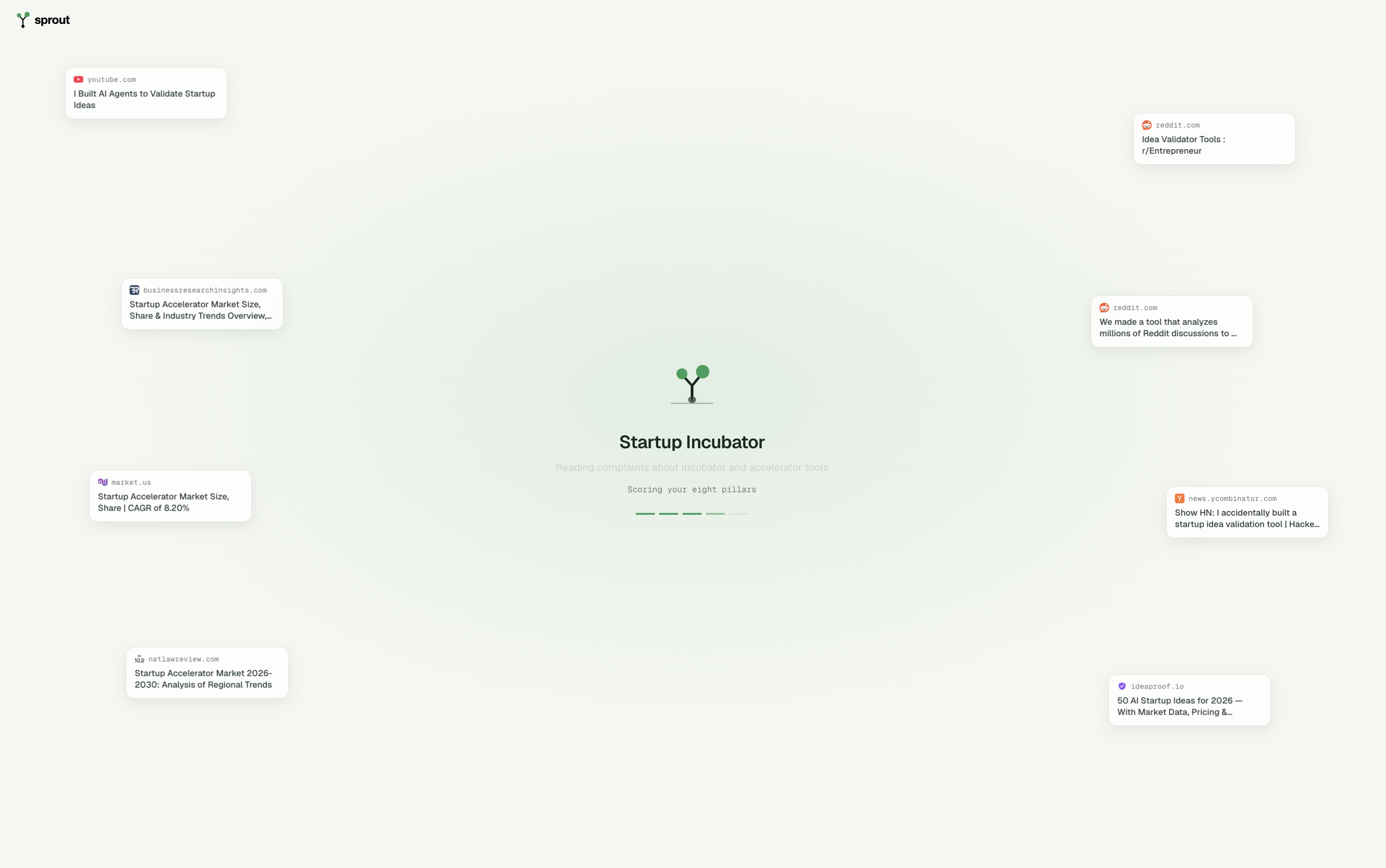
We changed LLM providers twice. First we built on Claude, used all of our API credits, then switched to Gemini's free tier which was only 20 requests per day. So we had to pay for more Claude API credits. Also, the first working version was too slow to demo. A full researched tree took about 30 seconds, so we had to restructure. We decided to generate our pillers concurrently and also research before generation finished. This is a tradeoff because it uses more API calls but also makes our product more efficient.
Accomplishments that we're proud of
We are proud of all of our research being authentic. You can type in any prompt, and it will yield research all with citations. Nonprofit reserarch runs on actual IRS Form 990 filings. You may think this might be slow because of the extensive amount of research our product does, but it can create a fully researched tree in about 16 seconds, a hundred simulated customers in about 19 seconds, and verified against the real API rather than mocks.
What we learned
We learned that latency is actually an architecture, not a model-choice problem. Our naive solution was to try to use a faster model, but the solution actually lied in restructuring by generating pillars in parallel groups and moving research extraction off the critical path. Wealso learned to verify the end state, not the command. Multiple times in the project a step reported success even though nothing ha dactually changed, such as a push that succeedded because the branch hadn't moved, or a merge that was a no-op. So checking the thing itself afterward is critical to accuracy,
What's next for Hack1984 Surge Project
Maybe we can let the graveyard talk back. Currently they haunt the branches they recognize, but we could make then answerable, which would entail clicking the ghost and hearing why they died. Also, we would like to start marketing our project and connecting it to real startup founders for feedback. We could also do some UX testing to see if our UI is user-friendly.
