Inspiration
The spark came from frustration. We have century-old biological knowledge just sitting in textbooks, while the world faces urgent crises, such as contaminated water, antibiotic resistance, and microplastics choking ecosystems. I wondered: What if we treat cells like programmable machines and use them to solve problems directly? Synthetic biology felt like the perfect bridge, merging code-like precision with living systems to build solutions that are both innovative and sustainable.
What it does
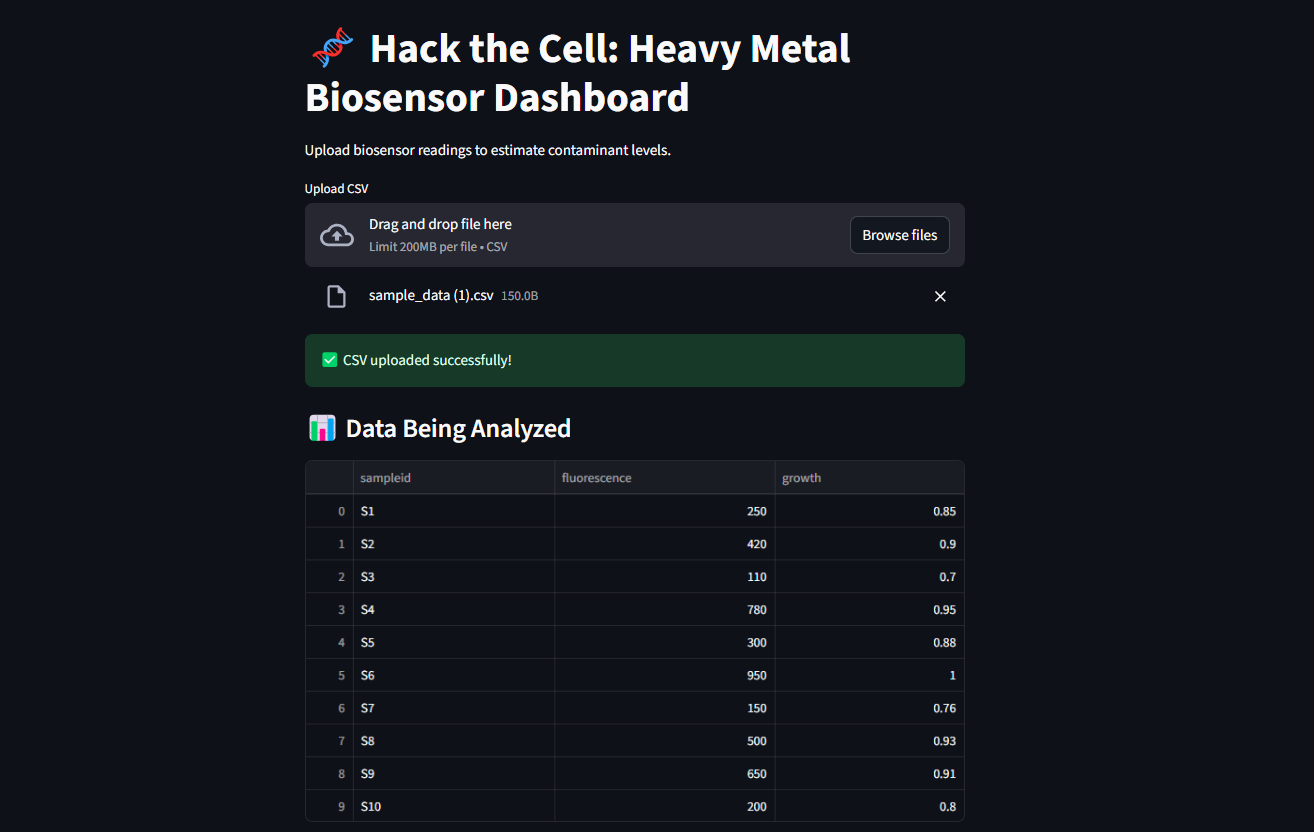
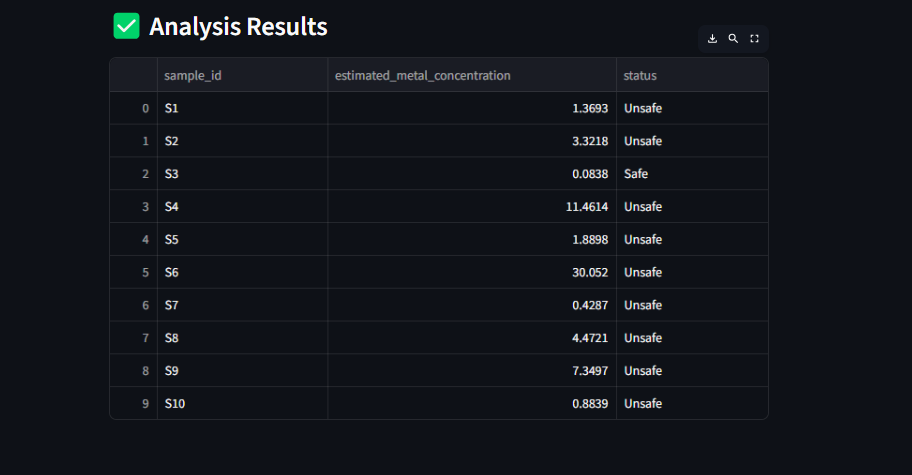
Hack the Cell is a platform that engineers living cells to detect and respond to real-world problems. Our first application: A biosensor E. coli strain that fluoresces when heavy metals (like lead or cadmium) are detected in water. A companion analytics dashboard that collects and analyzes fluorescence data to estimate contaminant levels and flag unsafe samples. Think of it as a living sensor network that turns biology into a tool for health, environment, and industry.
How I built it
Design phase – Selected a metal-sensitive promoter, linked it to a superfolder GFP (sfGFP) reporter, and optimized gene sequences using codon optimization tools. Construction – Assembled the gene circuit via Gibson Assembly, transformed into safe lab E. coli strains, and verified constructs with sequencing. Testing – Measured fluorescence over time in microplates using a Raspberry Pi-based DIY reader; created dose-response curves for calibration. Data modeling – Applied Hill equations for signal-to-concentration mapping and Bayesian models to handle experimental noise. Deployment – Built a FastAPI backend + Streamlit dashboard for real-time reporting, with results stored in PostgreSQL and accessible via QR code.
Challenges I ran into
Leaky gene expression at low contaminant levels → solved with stronger repressors and protein degradation tags. Batch variability in results → implemented calibration controls for each test run. Low-cost hardware issues like signal bleed → redesigned optical paths and added emission filters. Regulatory concerns → kept all work BSL-1, with strict waste deactivation and no environmental release.
Accomplishments that I'm proud of
Achieved accurate detection of heavy metals at environmentally relevant concentrations. Built a working, low-cost plate reader from off-the-shelf parts. Created a calibration pipeline that reduces false positives and negatives in noisy biological data. Designed the system to be ethically and environmentally safe from the ground up
What I learned
Biology isn’t deterministic; variability is normal, and designing around it is key. Ethics must be baked in from day one, especially in synthetic biology. User experience matters in lab tools; scientists need intuitive dashboards, not just raw CSVs. Combining wet-lab and software skills can multiply impact far beyond either alone.
What's next for Hack the Cell: Solving Real-World Problems with Biology
Expand biosensor capabilities to detect multiple pollutants (arsenic, nitrates, microplastics). Develop an offline inference mode so rural labs can run tests without internet. Collaborate with environmental agencies and citizen science groups for field pilots. Open-source hardware designs and genetic constructs for educational and community use.

Log in or sign up for Devpost to join the conversation.