Inspiration
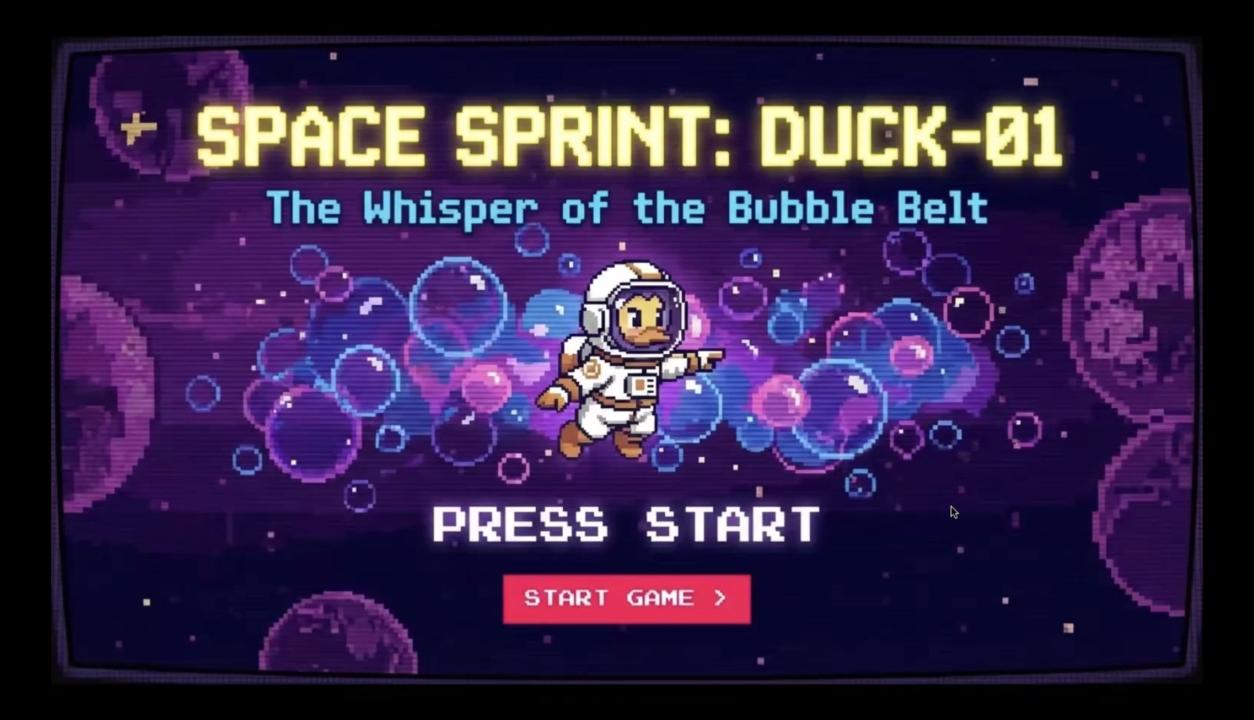
Most platformer games focus on movement, combat, or collectibles. We wanted to explore a different idea: What if players could control the laws of physics instead? The inspiration came from classic pixel platformers and physics sandbox games. We imagined a world where gravity isn’t fixed — it’s something you actively manipulate. That idea evolved into Hack-space-duck, a physics-switching platformer where players change the universe in real time to overcome obstacles. And yes — our astronaut is a duck 🦆.
What it does
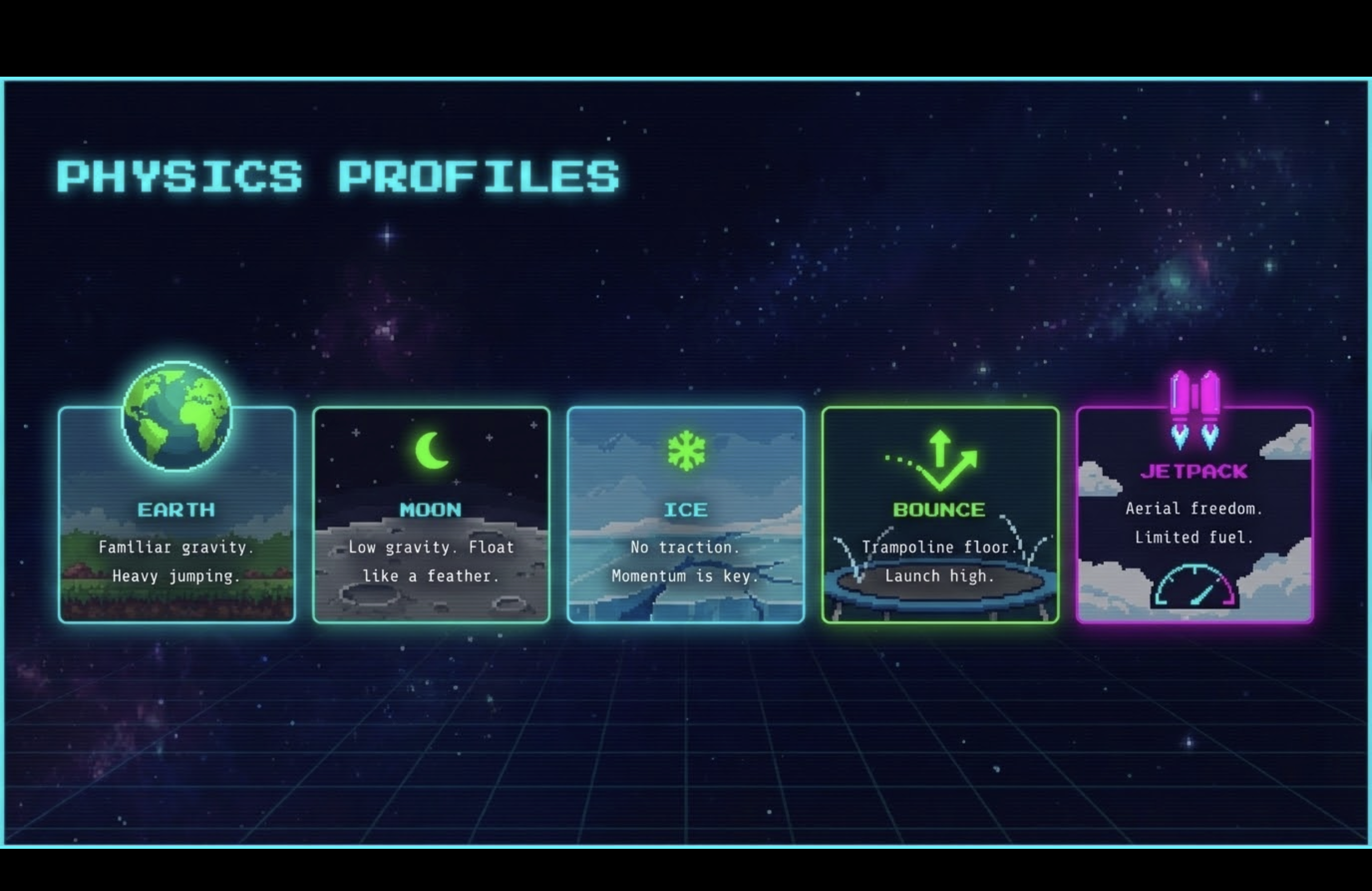
Hack-space-duck lets players switch between five physics modes at any moment:
- 🌍 Earth Mode – familiar gravity for precise platforming
- 🌙 Moon Mode – low gravity for long jumps
- ❄️ Ice Mode – zero traction, momentum-based movement
- 🔁 Bounce Mode – trampoline floors for vertical launches
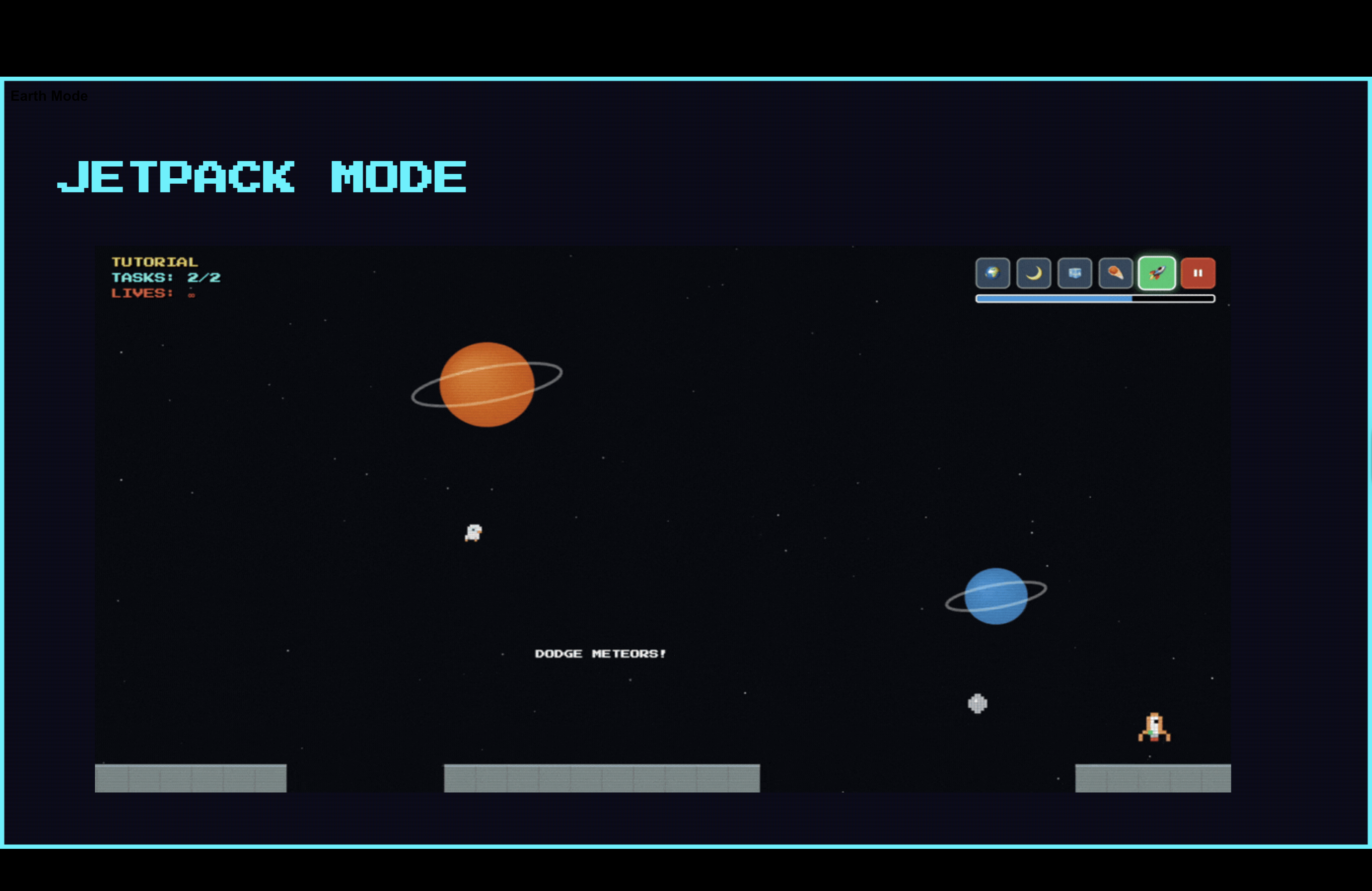
- 🚀 Jetpack Mode – free flight with limited fuel
Players combine these modes on the fly to solve puzzles, avoid hazards, and navigate space. 🎯 Objective: Collect energy stones, fuel the rocket, and help our duck return home. Gravity isn’t a rule — it’s a tool!
How we built it
We built Hack-space-duck as a web-based game using:
- HTML5 Canvas
- JavaScript / TypeScript
- Custom physics switching system
- Cursor AI for rapid prototyping
- Vercel for deployment
Each physics mode dynamically modifies gravity, friction, jump force, and special abilities in real time.
Challenges we ran into
⚡ Real-time physics switching:
Switching modes mid-movement initially caused unstable velocity.
We solved this by smoothing transitions and normalizing momentum.
🎯 Level balance:
Some modes made early levels too easy.
We redesigned layouts multiple times to force creative combinations.
⏱ Scope control:
We cut extra features to focus on polishing the core mechanic.
Accomplishments that we're proud of
- Implemented five fully switchable physics systems
- Designed levels with multiple valid solutions
- Built a complete playable demo during the hackathon
- Created a mechanic-driven experience instead of a traditional platformer
Most importantly — people actually enjoy playing it!!!
What we learned
- Small physics changes dramatically affect player experience
- Rapid prototyping beats over-planning
- Systems design matters more than adding features
- Playtesting early saves huge time later
We also learned that the best gameplay comes from experimentation.
What's next for Hack-space-duck
Next, we’d love to add:
- More levels and environmental puzzles
- New physics profiles and hazards
- Better visual feedback for mode switching
- Speedrun and challenge modes
- A deeper story for our space duck
Our long-term goal is to grow Hack-space-duck into a full physics-driven indie game. Thanks for playing 🚀
Built With
- css
- cursor
- git
- github
- html5
- javascript
- node.js
- typescript
- vercel


Log in or sign up for Devpost to join the conversation.