Inspiration
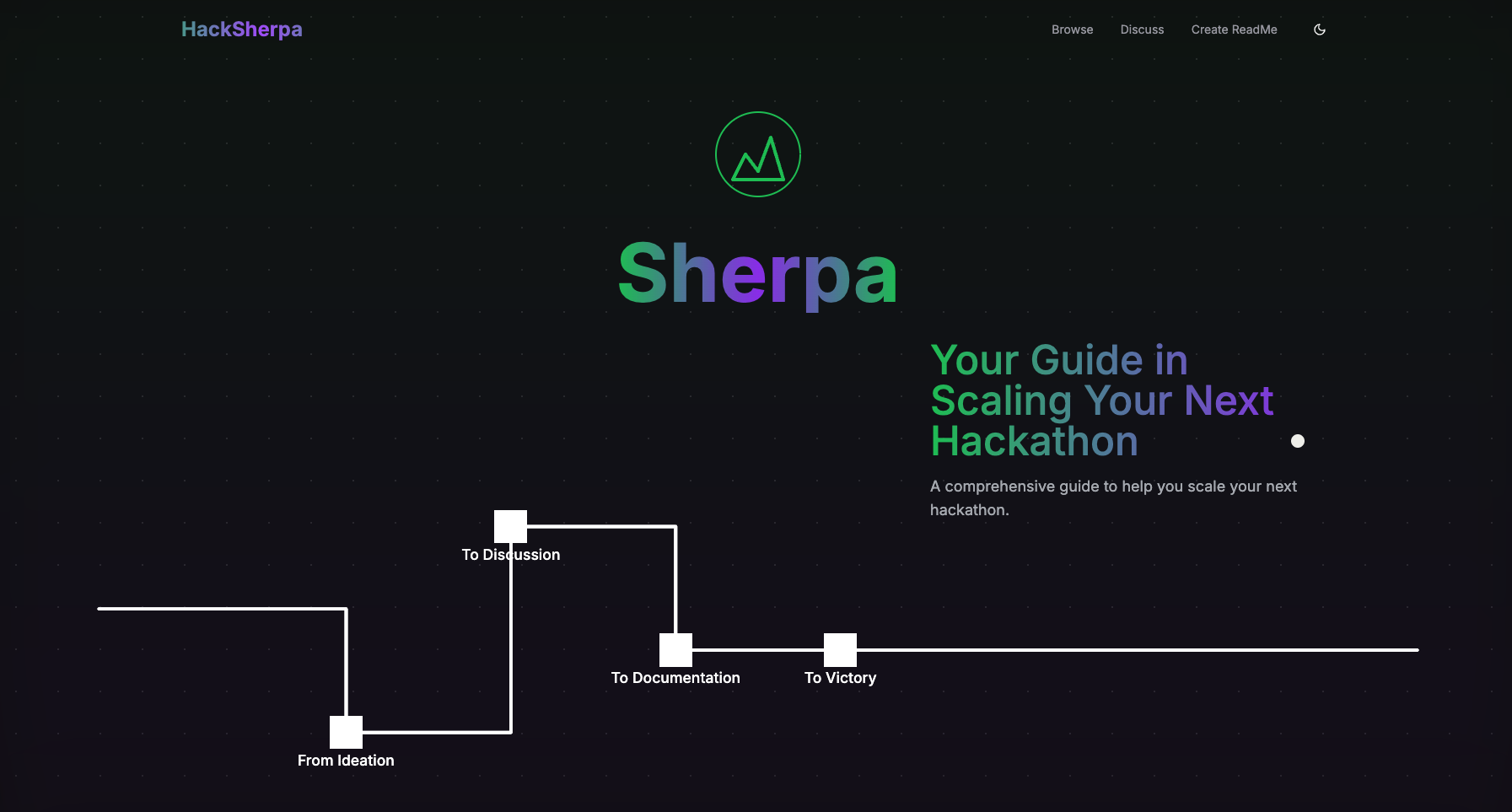
HackSherpa was created to simplify hackathon challenges. We noticed that teams often struggled with generating ideas, choosing the right tech stack, and creating compelling presentations.
What it does
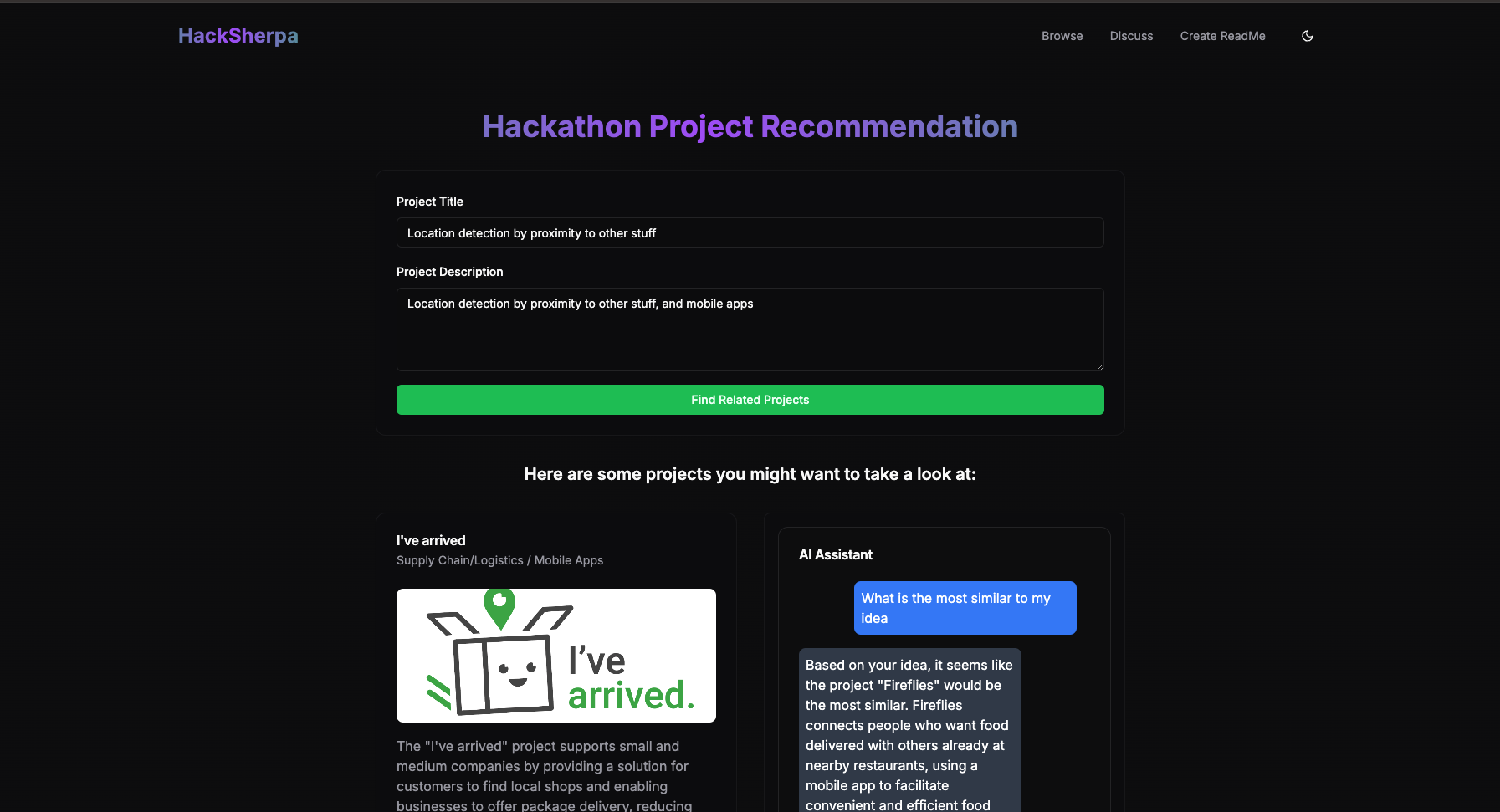
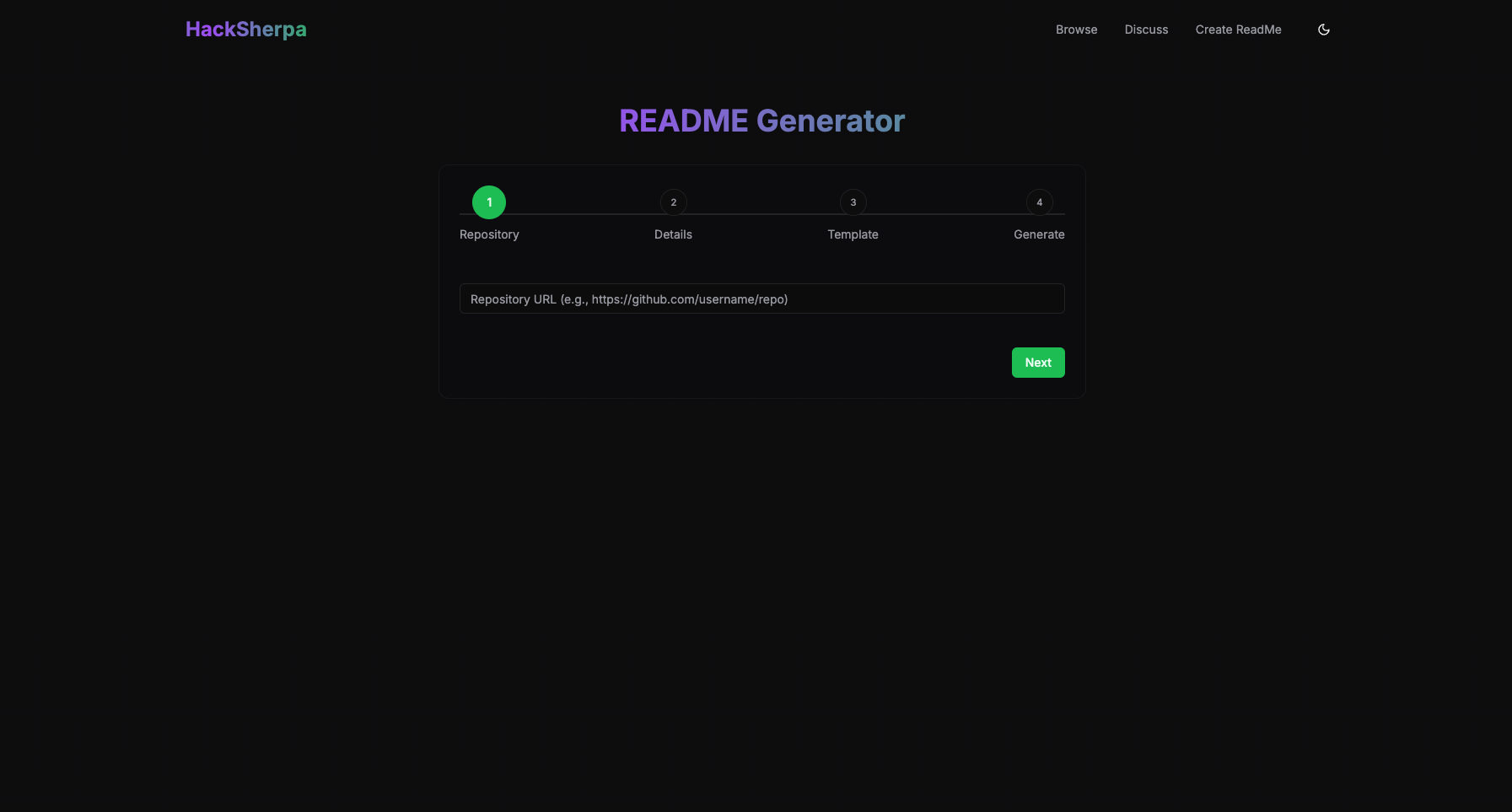
To help, we built a tool that streamlines the process from start to finish. By scraping data from DevPost, HackSherpa collects insights from past projects, which fuel our Project Idea Assistant. This assistant offers fresh project ideas, recommends tech stacks, and checks if similar projects have succeeded before. Additionally, our Readme and Presentation Generator turns these ideas into polished documentation and slide decks, so teams can focus on innovation rather than paperwork. HackSherpa is the result of a passionate collaboration in data scraping, intelligent data analysis, and design, all aimed at empowering hackathon participants to succeed with confidence and clarity.
How we built it
We began by developing a robust system to scrape project data from DevPost. This allowed us to gather valuable insights from past hackathon projects, forming the foundation of our database. With this data in hand, we created the Project Idea Assistant, which uses intelligent data analysis to extract trends, suggest fresh project ideas, recommend suitable tech stacks, and check for similar past projects. Next, we built the Readme and Presentation Generator. This module takes the raw ideas and transforms them into structured, polished documentation and slide decks using pre-defined templates and data-driven content generation. Finally, we integrated these components into a cohesive, user-friendly web application, resulting in a tool that empowers hackathon participants to succeed in their future hackathons.
At the end our program Utilized: Python for scraping and Data Science, also for the backend application of making the Readme. Supabase for Vector Storage and as our Database, React and Next.js for the Frontend.
Challenges we ran into
The first challenge was that we had to drop a feature due to there being inadequate time to fine tune Our AI Agent. Second challenge was that we had miscommunication and had to end up dropping the SQL Database. We overcame these challenges by Reassessing our options and we ended up using Vector Search two also makeup for SQL Queries.
Accomplishments that we're proud of
Our Integration of User Experience and LLMs/Agents.
What we learned
We learned about many technologies, namely Supabase.
What's next for Hack Sherpa
First thing we would do is expand our set by improving the Readme Generator, adding a Presentation Generator, Creating a SQL data base for cataloging and finally expanding to a microservice architecture for High Availability.
Built With
- flask
- groq
- javascript
- next.js
- openai
- react
- supabase
- tailwind.css
- typescript


Log in or sign up for Devpost to join the conversation.