-
-
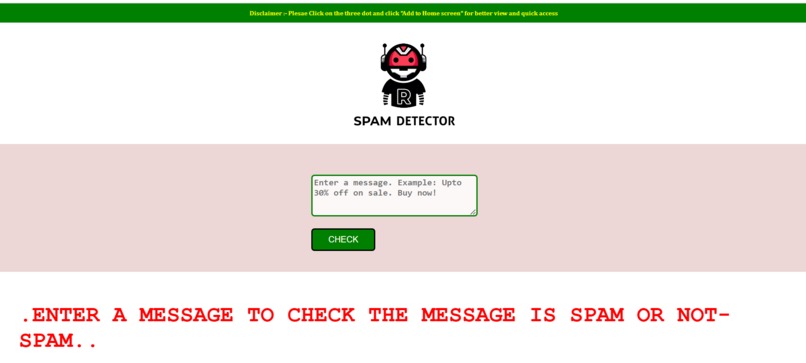
Website
-
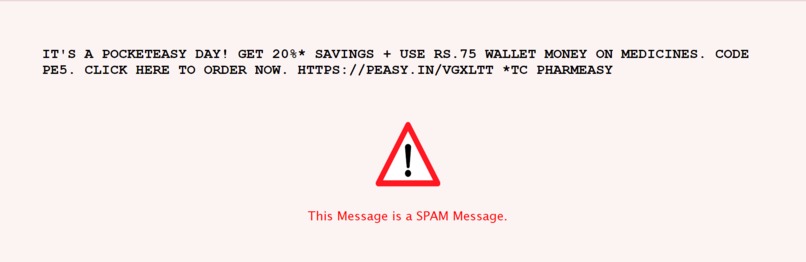
Spam Message
-
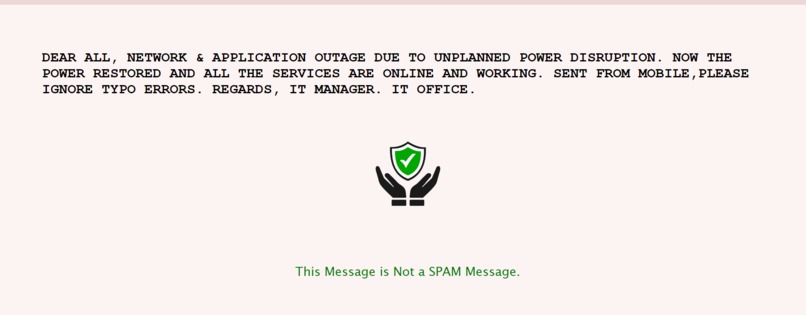
Valid Message
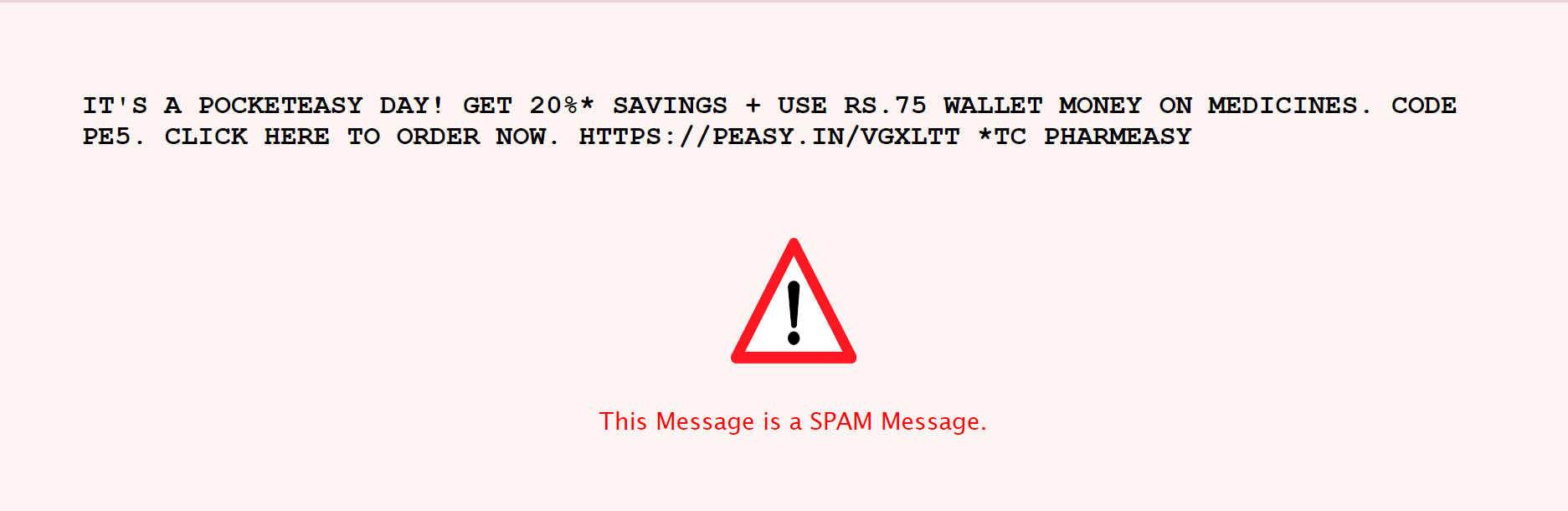
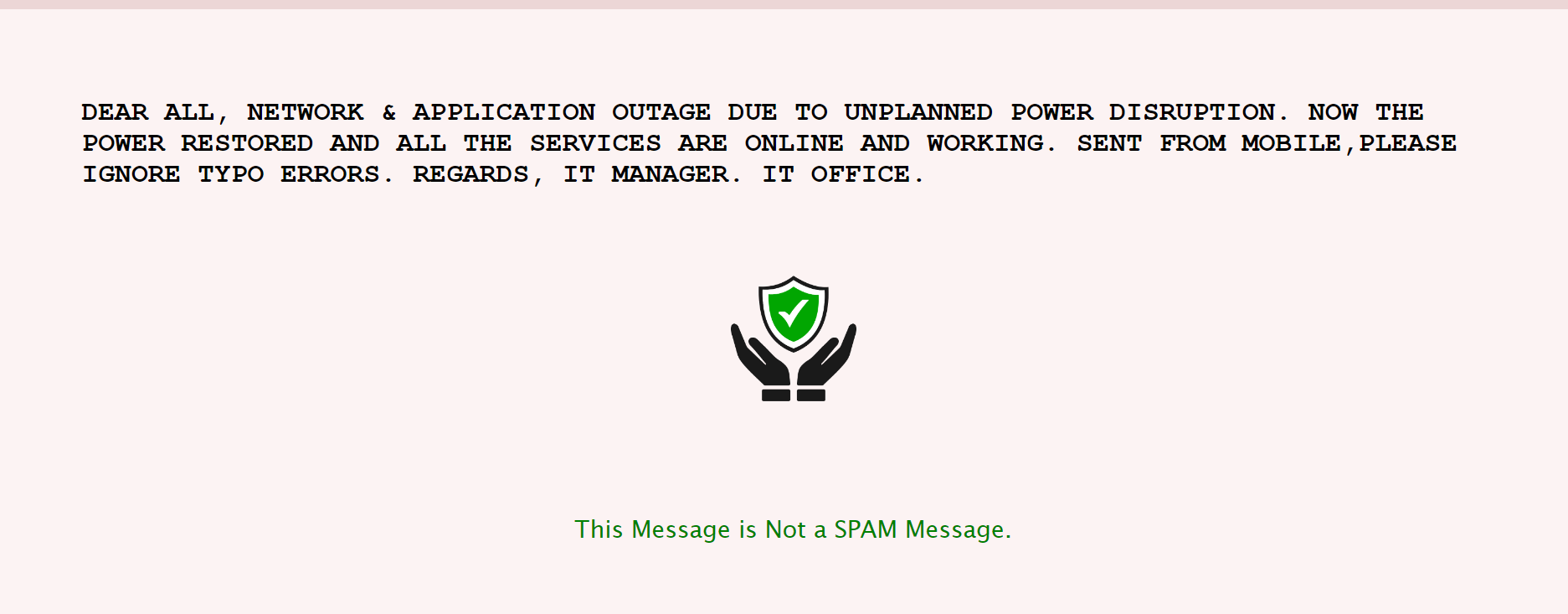
EMAIL/SMS Spam Verifier
Spam is generally categorized as unwanted emails that get sent to people’s inbox.
Often, spam email is sent for commercial purposes. While some people view it as unethical, many businesses still use spam. The cost per email is incredibly low, and businesses can send out mass quantities consistently. Spam email can also be a malicious attempt to gain access to your computer.
Some email addresses on your mailing list can bring you business while others can bring you trouble. Identifying emails that can increase your marketing costs and lower your sender reputation is the first step towards building a great mailing list that turns out to be an invaluable marketing asset. That’s why it’s important to separate the good from the ugly! With this thought in the mind it became clear to us that spam Email/SMS needed to be filtered out so, that we know which the the genuine ones.
Our Email Verifier checks whether the Email/SMS received by us is Malicious or not. In today's world Emails/SMS are being sent with the intent of harming the other persons computers or even to gain access to them or sometimes simply to advertise their products by constant spamming. This is where our Verifier comes into play.
Here, in this project we are trying to solve the problem of how we distinguish between the receiving mail to us is spam or not by using machine learning. So that Customers have understood the value of spam and are taking active measures in blocking them entirely. Anti-spam filters catch different types of emails that can cause problems and send them straight to the spam folder without them even skirting your inbox.
This Verifier was built using Machine Learning with Naïve-Bayes Algorithm by training a Data-Set to work to Raw Data that is received from the user. Later, a suitable model is constructed and then is used for preprocessing and filtering of the data. Naïve-Bayes is used in the Model Usage to create a supervised learning setting (Machine Learning Technique). The Model that is created is known as the probability model and is used for the classification of the Email/SMS Data. NOTE: The Naïve-Bayes Algorithm depend on the probability model.
Since, our project was not built on a smaller-scale the challenges faced where not of the highest-degree but minimal. Like,
- Deciding on which Algorithm to use.
- Training the Dataset.
- Building the Probability Model
- Analyzing the Performance Parameters.
The Project turned out to be quite successful with an Accuracy rate of 93%.
We were able to the values of teamwork, how to come up with a valid solution to a Real-World problem that has affected so many people in the past and is still affecting the people in the present and yet has gone unnoticed, and the awesome experience we could achieve during this entire competition.
Next Steps for us would be to,
- build a massive database of malicious links, and spam filter looks for them when analyzing incoming emails.
- to work on increasing the accuracy rate even more.
[link](https://spam-detector-robot.herokuapp.com/)
Built With
- anaconda
- css
- html5
- javascript
- machine-learning
- procfile
- python

Log in or sign up for Devpost to join the conversation.