Skratch – AI Startup Co-Founder
About the Project
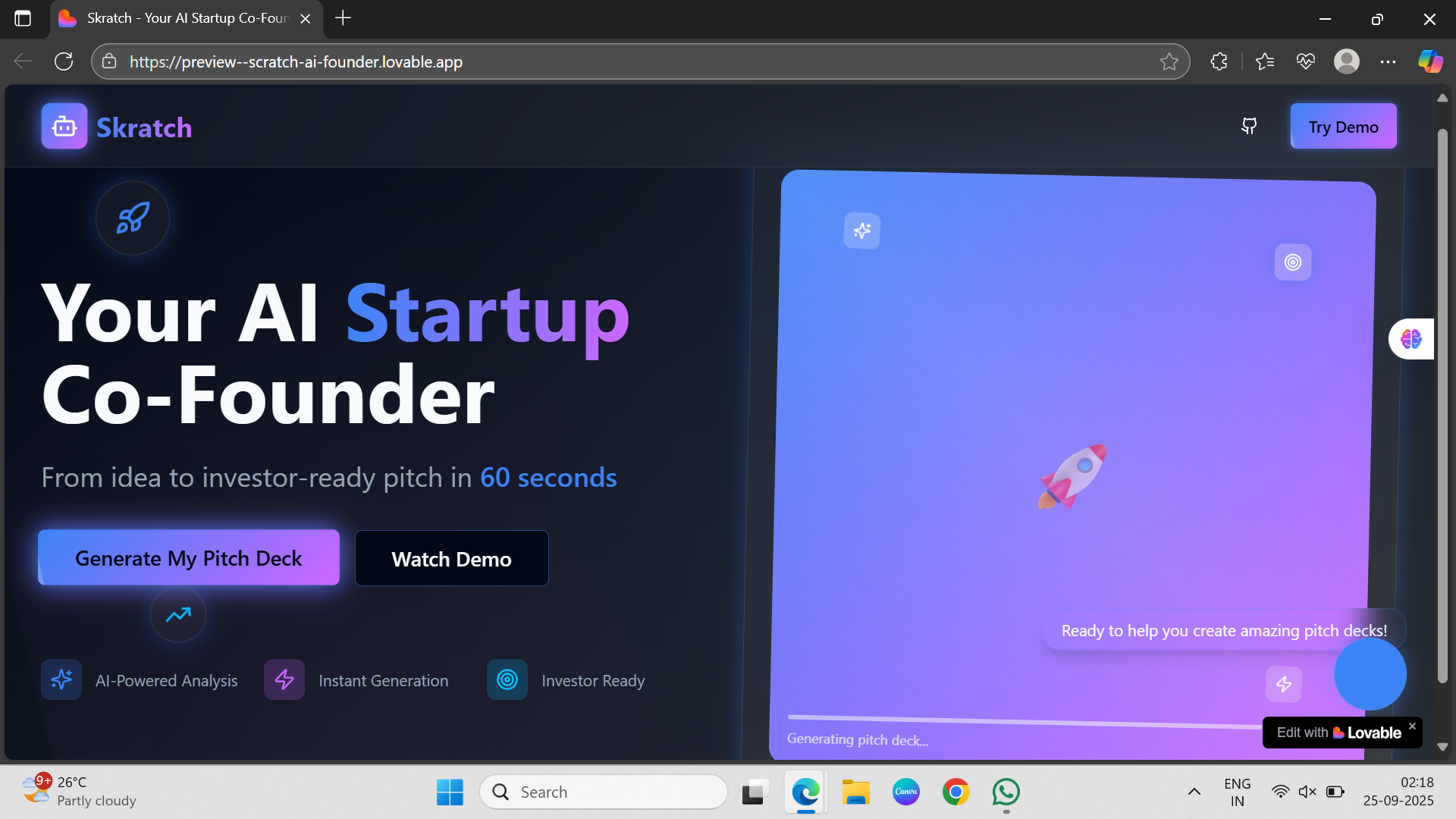
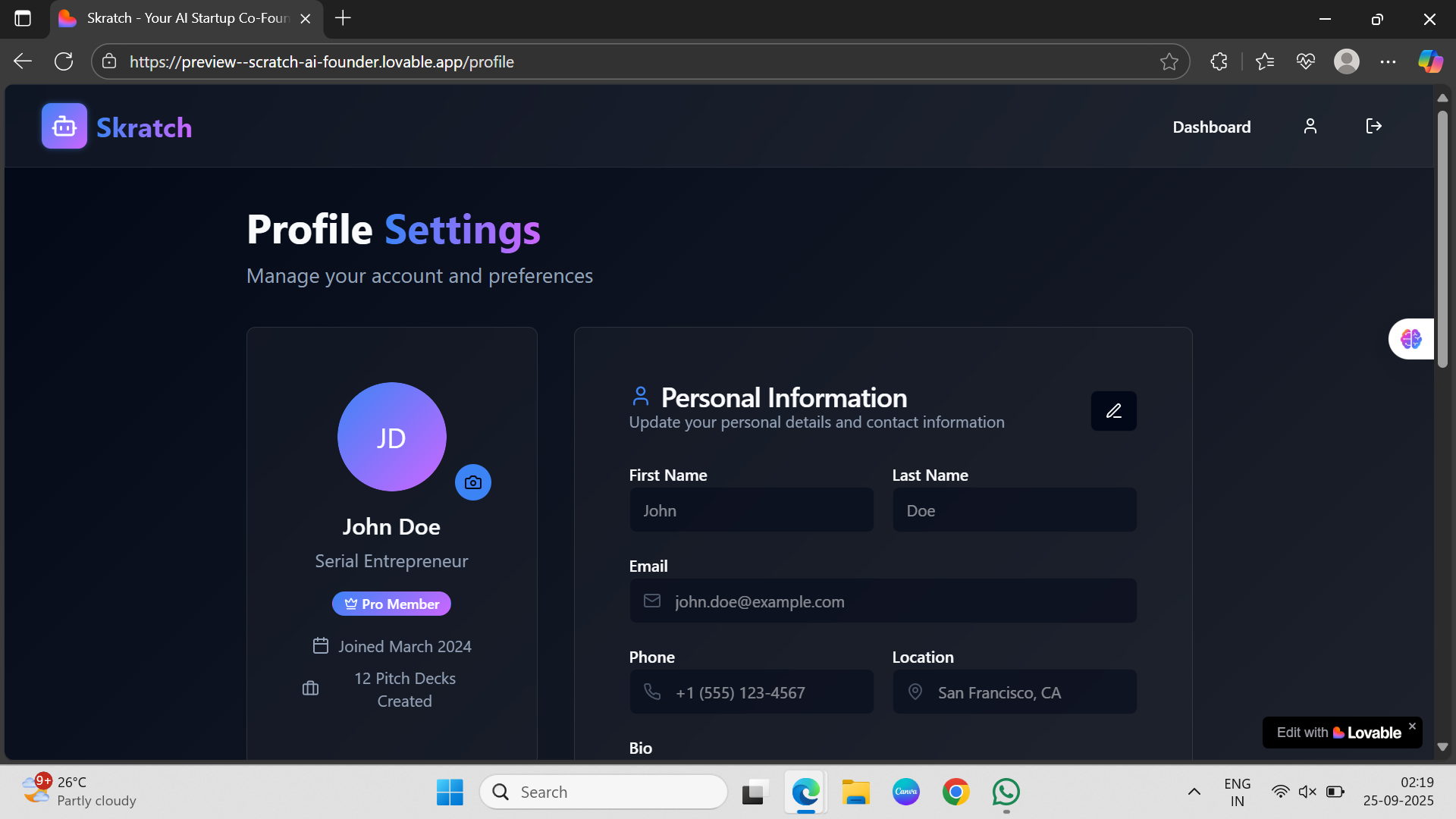
Skratch is an AI-powered platform designed to be your virtual startup co-founder. It helps entrepreneurs take their idea from concept to investor-ready pitch deck in under 60 seconds, while also providing AI-driven Q&A and rehearsal support.
Inspiration
The idea came from observing two major pain points in the startup ecosystem: Founders often struggle to quickly convert ideas into professional pitch decks. Many early-stage entrepreneurs lack guidance on anticipating investor questions. I wanted to create a tool that democratizes access to AI startup expertise, enabling anyone to ideate, pitch, and rehearse like a seasoned founder—without needing a large team or design skills.
What We Learned
Building Skratch taught me a lot about full-stack AI SaaS design: Designing futuristic UI/UX with neon-glow aesthetics and glassmorphism panels. Implementing interactive prototypes that simulate AI-generated pitch decks. Working with AI language models for dynamic content generation and investor Q&A. Handling responsive design for both desktop and mobile while keeping a high wow-factor. Applying user-centric micro-interactions to make the platform feel alive. We also learned to iterate quickly, prioritizing features that create immediate user delight, like animated deck previews and glowing CTA buttons.
How we Built It
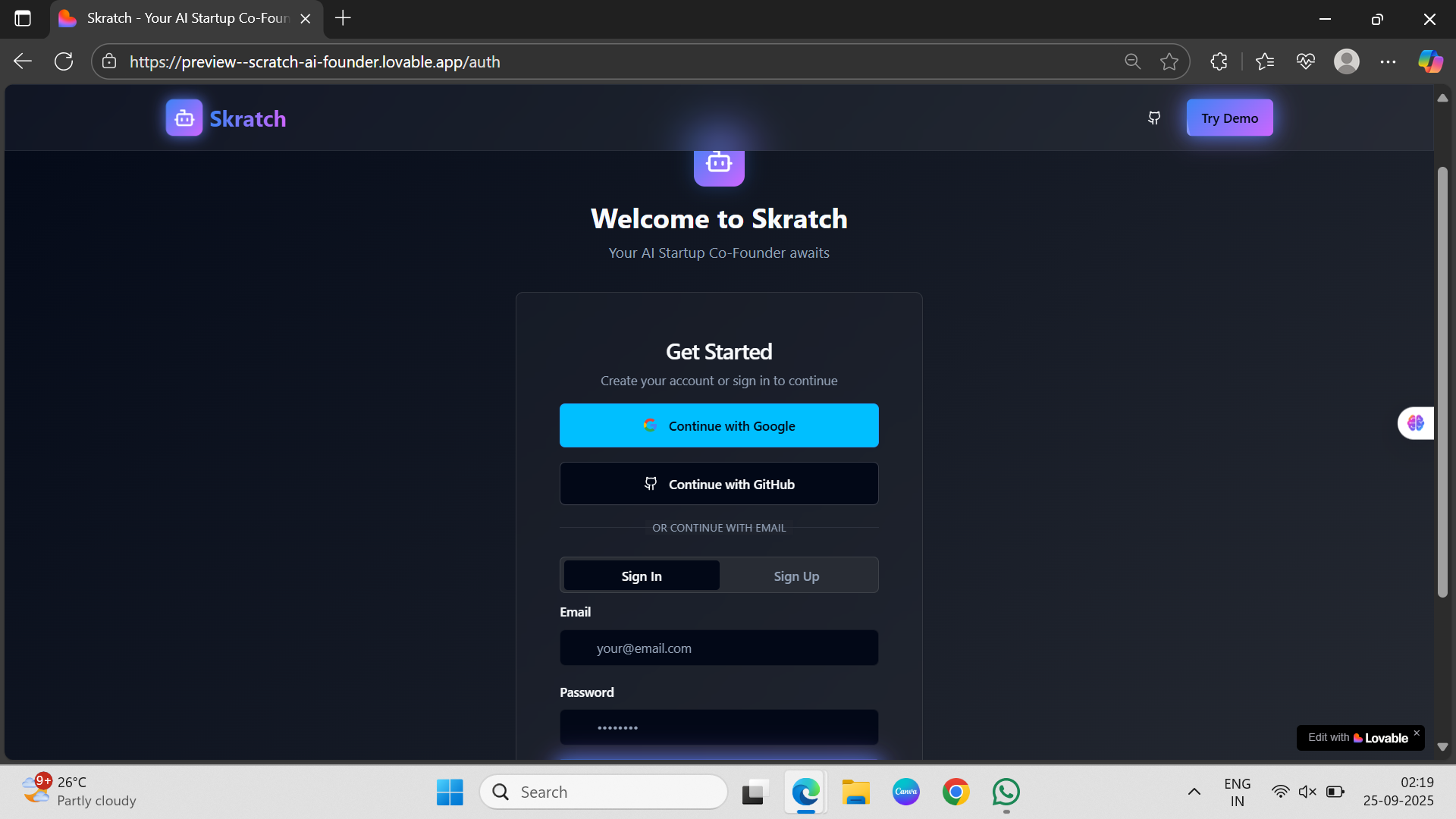
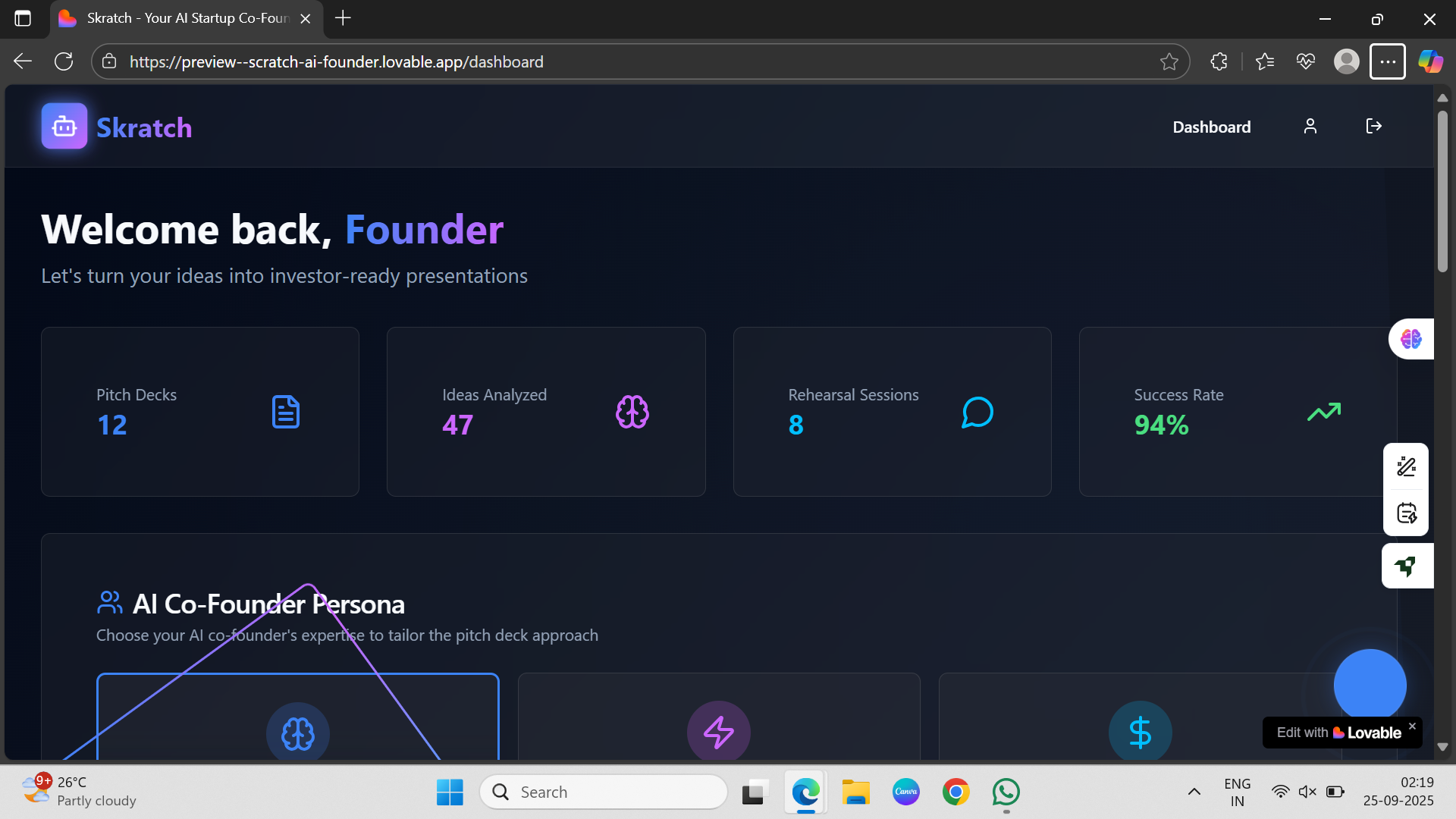
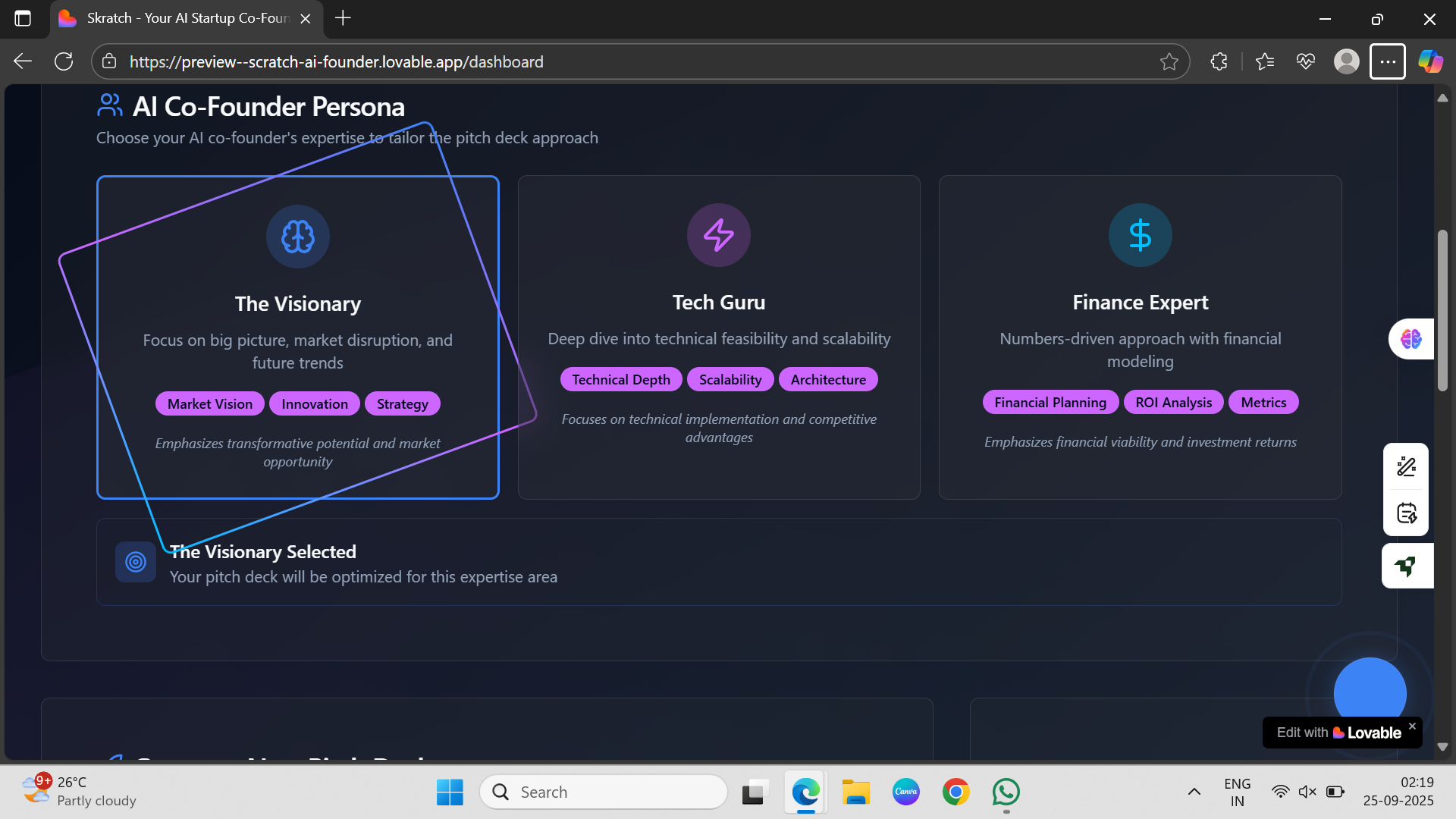
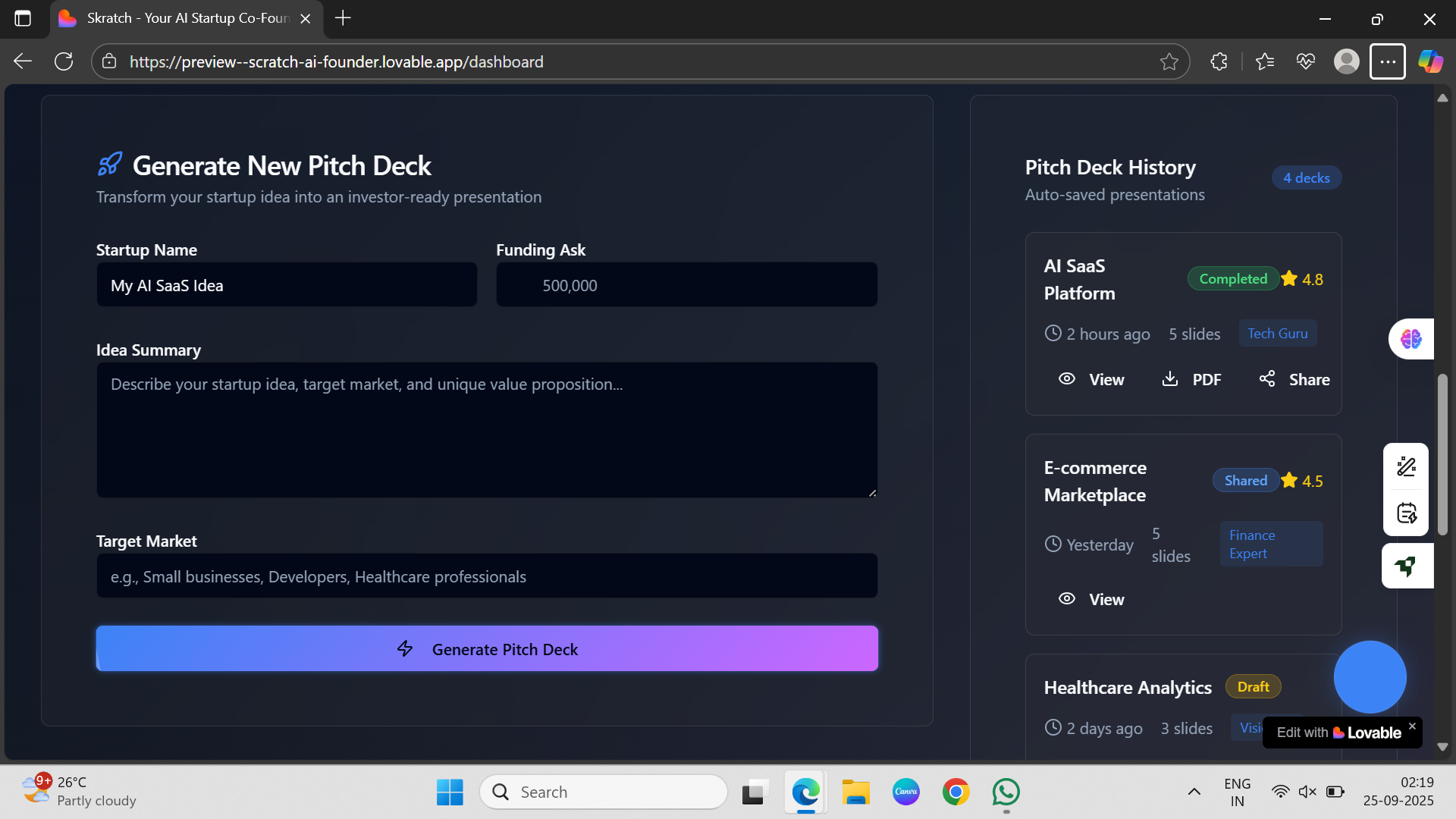
The project was built in stages: UI/UX Design Used Figma to create the web app mockup and 5-slide pitch deck. Employed dark theme + neon accents, glassmorphism cards, and animated micro-interactions. AI Content Generation Integrated GPT-based models to generate pitch decks and investor Q&A. Created input forms for startup name, idea summary, target market, and funding ask. Interactive Prototype Designed interactive flows in Figma: Hero → Input Form → Generated Deck → Q&A → Rehearsal Chat. Added hover effects, glowing buttons, and animated slide previews for a wow-factor demo. Pitch Deck Developed a 5-slide high-impact deck with dark theme, neon gradients, glass panels, and animated charts. Included problem, solution, market/business model, funding ask, and optional team/testimonials slides.
Challenges Faced
Balancing aesthetics and usability – Neon glow and futuristic elements looked amazing but could overwhelm users if not carefully balanced. Interactive prototype complexity – Simulating AI-generated outputs in Figma required clever component structuring and animations. Responsiveness – Making glassmorphic panels, floating elements, and hover effects work across mobile and desktop was tricky. Feature prioritization – Had to decide which features would make the biggest demo impact without overcomplicating the hackathon build.
Optional Metrics / Math
Generated a pitch deck in under 60 seconds Typical AI Q&A response accuracy:
85% Prototype interaction frames: 30 micro-animated elements

Log in or sign up for Devpost to join the conversation.