-> Source files and video demonstration below
Inspiration
As students, we have a lot of homework due, and during this important time where grades can matter, we want to make sure no homework is left as a zero in the gradebook. Yet, it can be hard to keep track of all the work especially across a lot of classes. There are already a lot of todo list tools online, but one problem we noticed is that it can often be hard to know which tasks must be done know in the sea of tasks on ur list. That's why we wanted to implement a way to make sure your never miss a deadline!
What it does
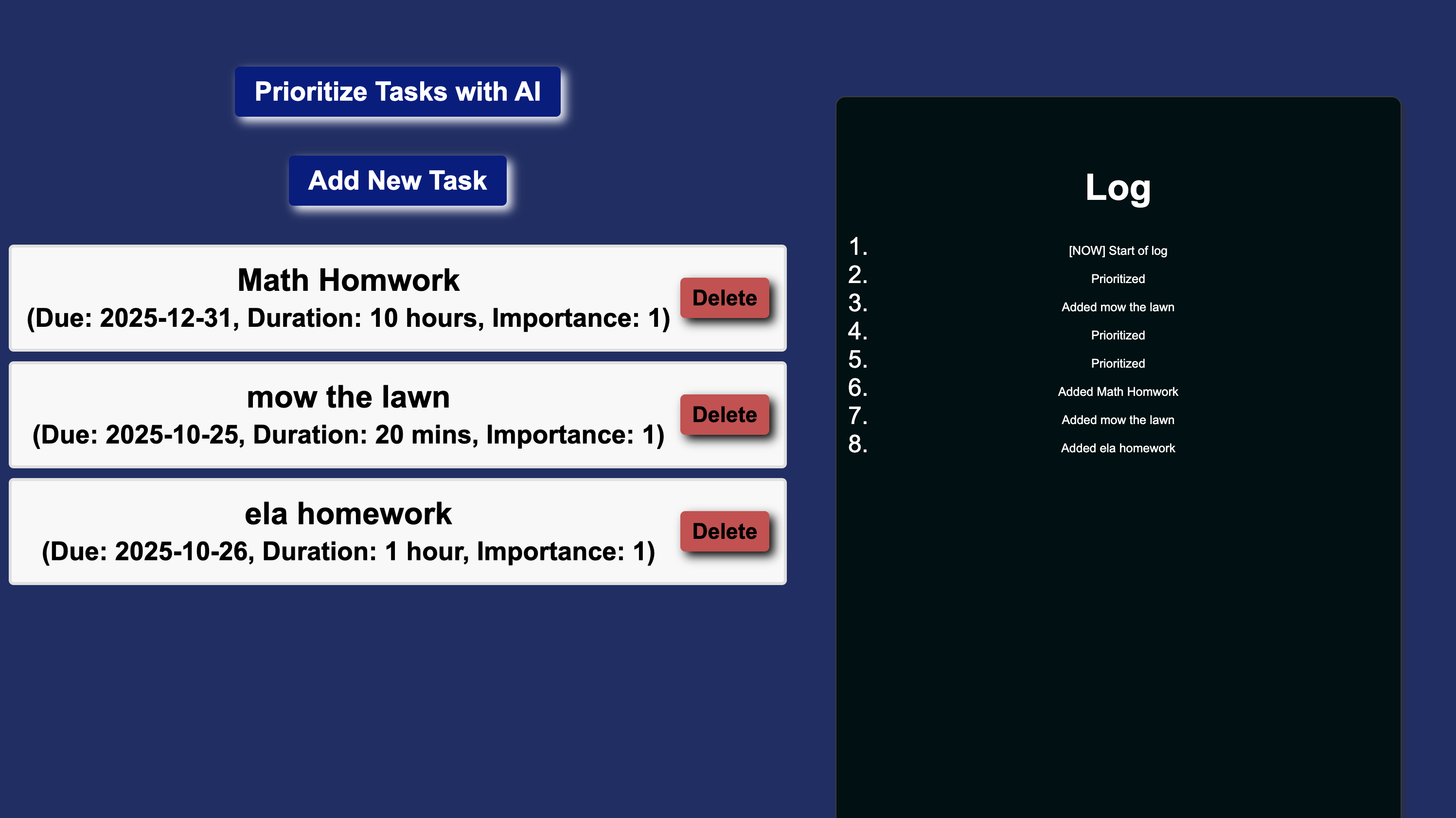
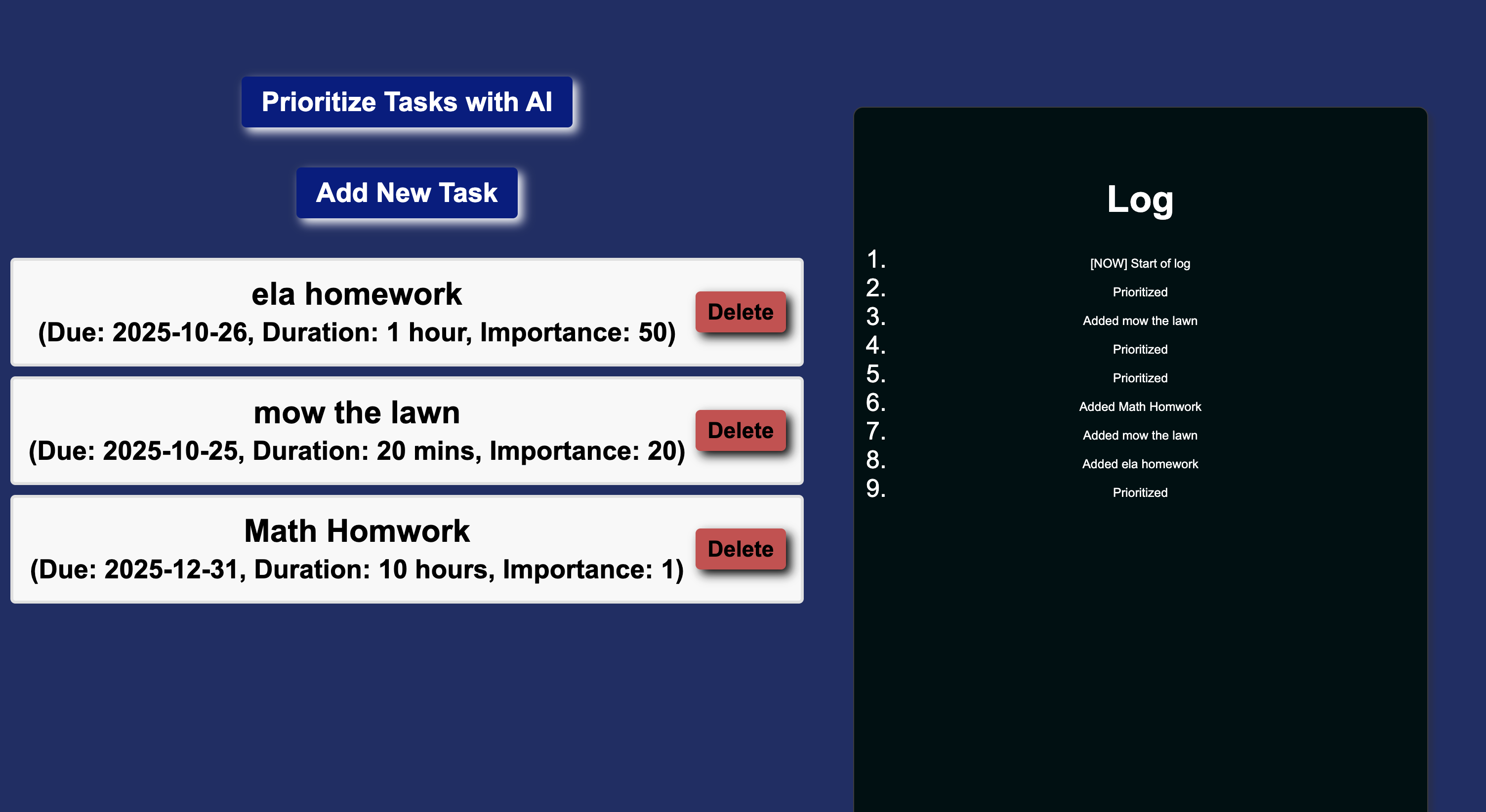
Our todo list has incorperated ChatGPT mode: 3.5-turbo, to help organize the tasks based on importance, given how long the task takes and how soon it is due. This greatly automates the process of organizing tasks and the benefits of AI's flexibility is included in our tool! To be specific, the AI recieves the data of the todo list, and returns a JSON file with corresponding importance values, and the website sorts it based off the importance.
How we built it
We started by dividing the work between the three team members we had. Evan worked on the backend of the code, doing things like implementing and reprogramming the LLMs, while Zihong and Max worked on the UI of the code. Max and Zihong started by creating the homepage and then made the interface for the chatbot. Then, Max and Zihong created the planner portion, creating a rudimentary version of the planner. While this was happening, Evan was implementing the 3.5-turbo model to make it more specific for our program. Evan made to focus on the importance of each task and able to reorder which one should be done first. Later, Evan implemented the backend into the UI and connected everything together. From there, Max and Zihong made sure to touch up the front end and make sure everything looked cleaner and nicer.
Challenges we ran into
OpenAI API keys are meant to kept secret, and figuring out a way to keep the key strictly backend meant that we needed to do extra research. The solution we came up with was to create our own API. Implementing our own API came with its own set of challenges, including fetching from the API for some reason did not return any value. We figured out that we were missing a .res function. Debugging through printing variable to the console helped us solve many other smaller difficulties we ran into while develping this tool.
Accomplishments that we're proud of
We are proud that we were able to implement AI into a daily use tool.
What we learned
The course to code this tool included much research. Some knowledge we obtained along is way is how to create an API, keeping sensitive information (like API keys) safe from frontend users.
What's next for Hack Gwinnett
N/A
Video demonstration: https://drive.google.com/file/d/1Kq9KPHkhQp3keW-uCPQ2r3NgXHNULzHP/view?usp=sharing Source files: https://drive.google.com/file/d/1wVXrAxdFNf5PIYNdlh5Z7SKUvy3kf8R1/view?usp=sharing *the source files were too large to submit through devpost

Log in or sign up for Devpost to join the conversation.