Inspiration
Our inspiration for BoneSci came from the growing need to leverage AI and computer vision in the medical field — specifically for detecting bone abnormalities. Diagnosing issues like metastasis, fractures, or structural anomalies from nuclear bone scans is critical, but manual analysis can be time-consuming and prone to human error. We set out to explore how AI could improve the speed and accuracy of these diagnoses.
What it does
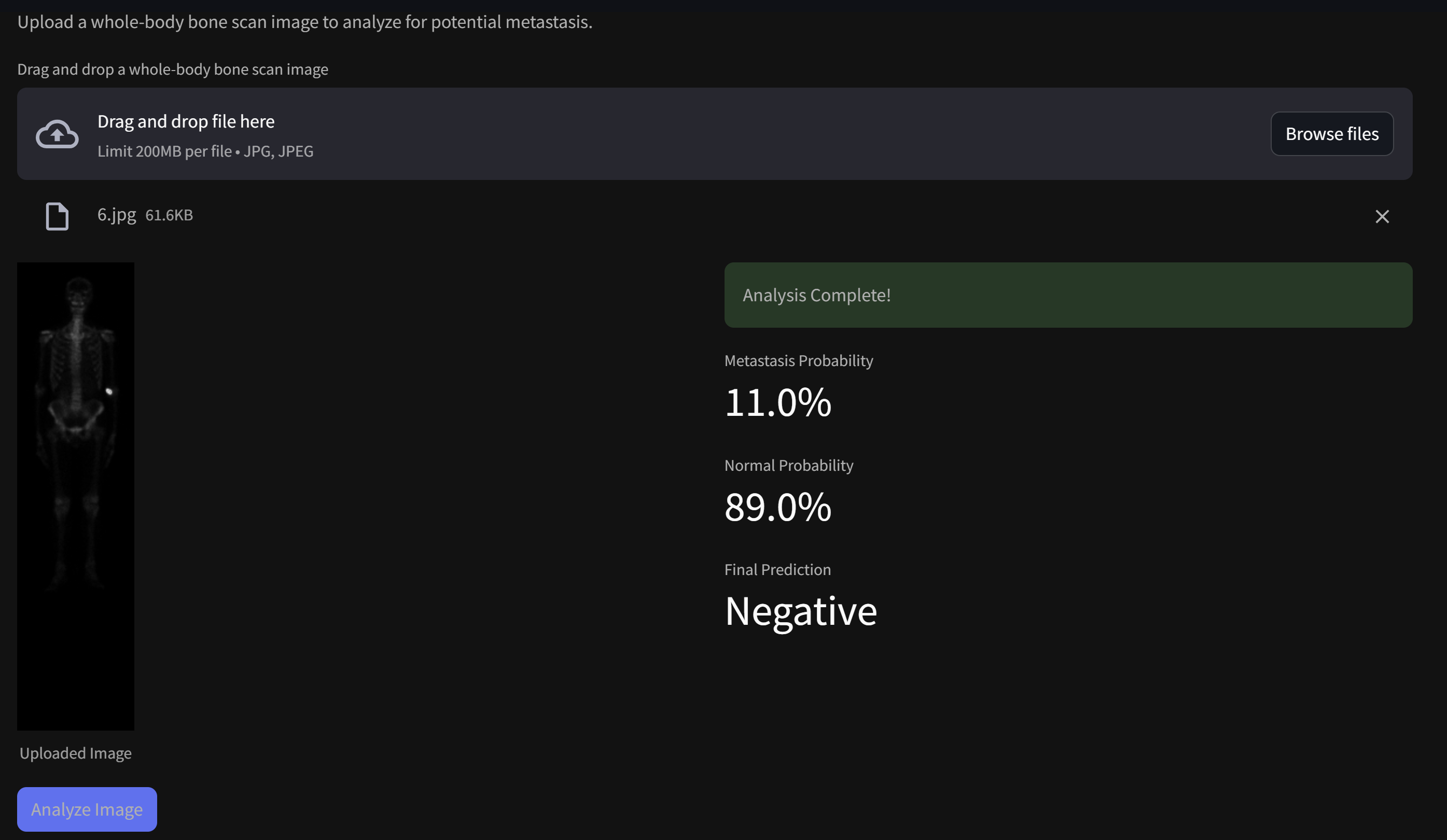
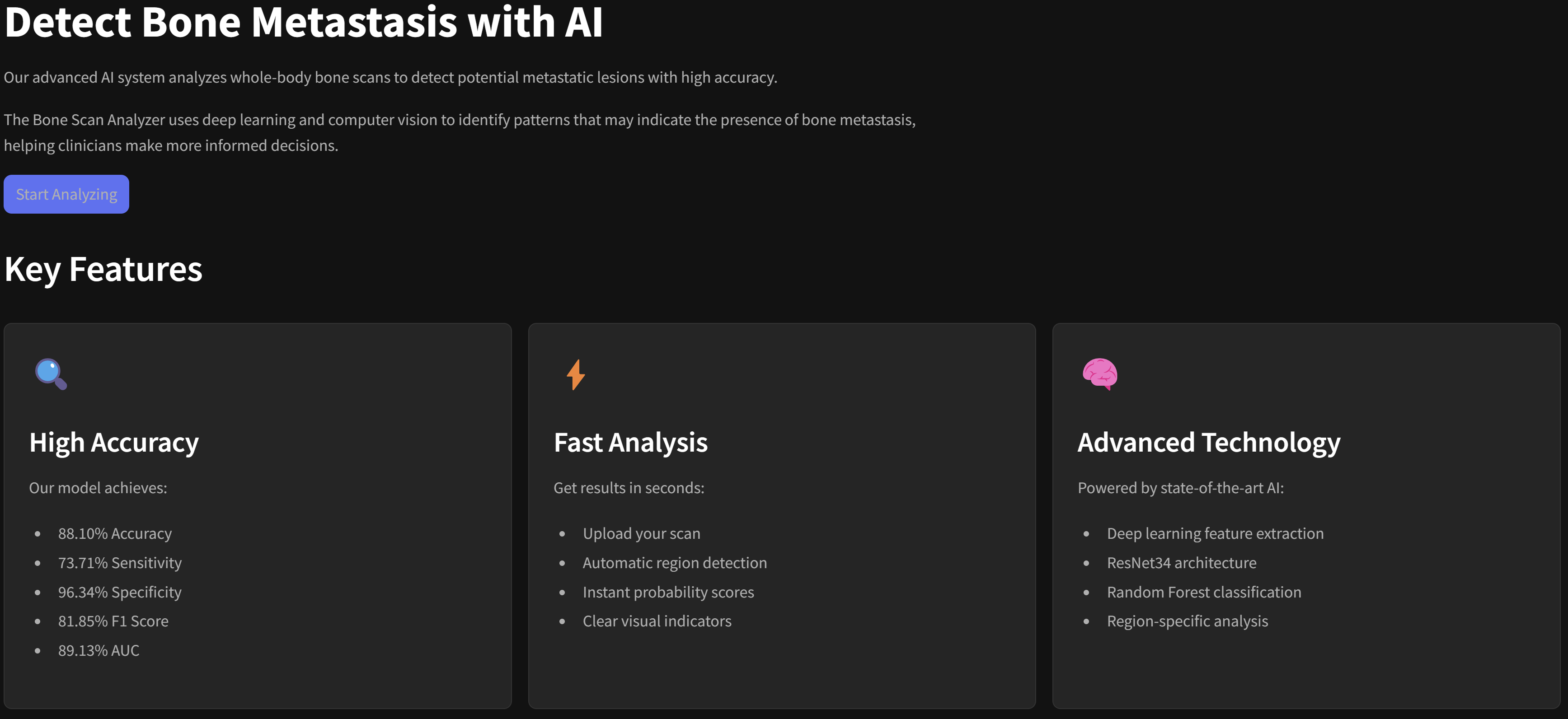
BoneSci uses deep learning to detect abnormalities in bone scans. It features a custom-trained ResNet34 model focused on high-yield anatomical regions commonly used to identify bone pathology.
- Automatically analyzes full-body bone scans
- Assists radiologists by prioritizing high-risk cases
How we built it
We implemented a region-specific deep learning system inspired by a published research paper in medical AI. Key components include:
- ResNet34 CNN architecture tailored for each body region
- Custom preprocessing for grayscale scans
- 3-channel conversion of bone scans to match model input
- A front-end interface for uploading scans and visualizing predictions
Challenges we ran into
- Finding the right research foundation to replicate with confidence
- Understanding complex methodologies and adapting them to our own dataset
- Handling medical image preprocessing and formatting for deep learning
Accomplishments that we're proud of
- Fully implemented a state-of-the-art paper in under 24 hours
- Developed a working front-end demo for real-time testing
- Achieved region-specific modeling to increase diagnostic accuracy
What we learned
- How to translate academic research into a practical AI tool
- The value of anatomically targeted modeling in medical applications
- Deepened our skills in computer vision, Keras, and model evaluation
- Importance of collaboration between medicine and engineering
What's next for BoneSci
- Real-time segmentation for quicker detection during live scans
- Clinical accuracy improvement to work toward FDA-grade performance
- Multi-label support for detecting various types of bone abnormalities
- Integration with medical systems (e.g., PACS, DICOM viewers)

Log in or sign up for Devpost to join the conversation.