-
-
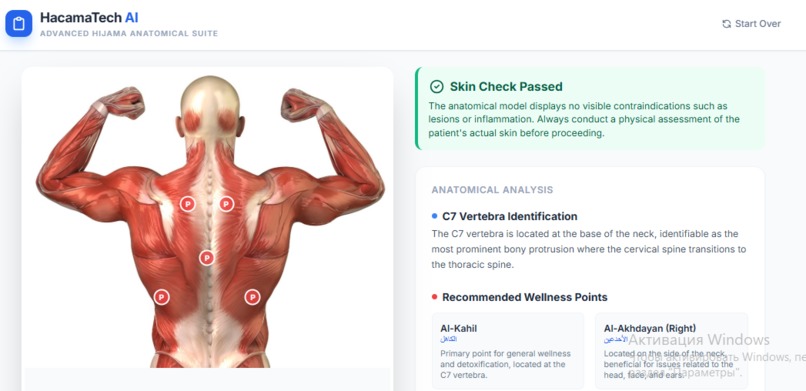
How it started
-
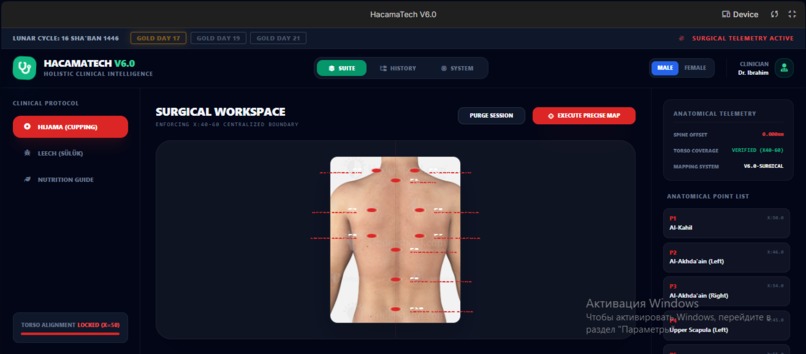
How it ended - until deadline
-
-
-
-
Early versions
-
Early versions
-
Early versions
-

Early versions
-
Early versions
-
Early versions
-
Early versions
-
Early versions
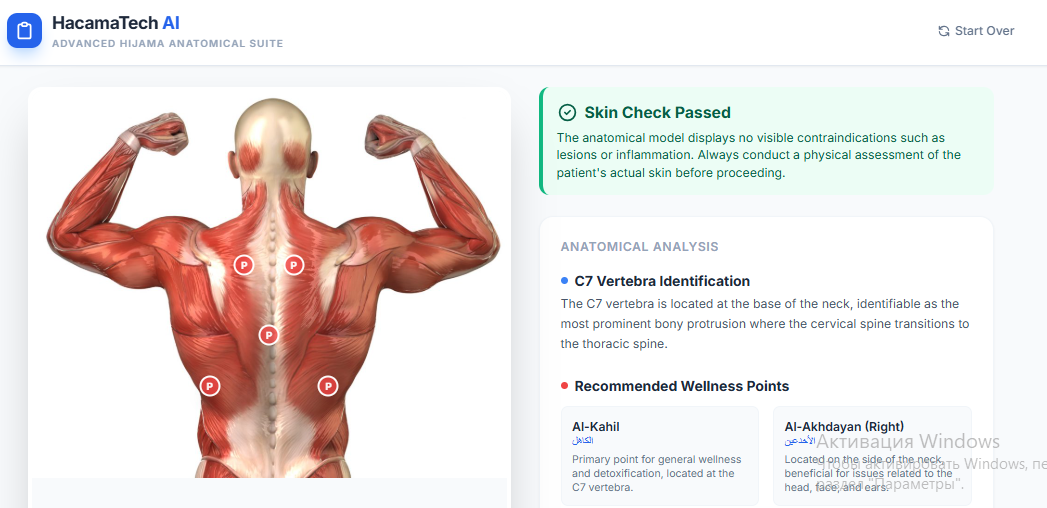
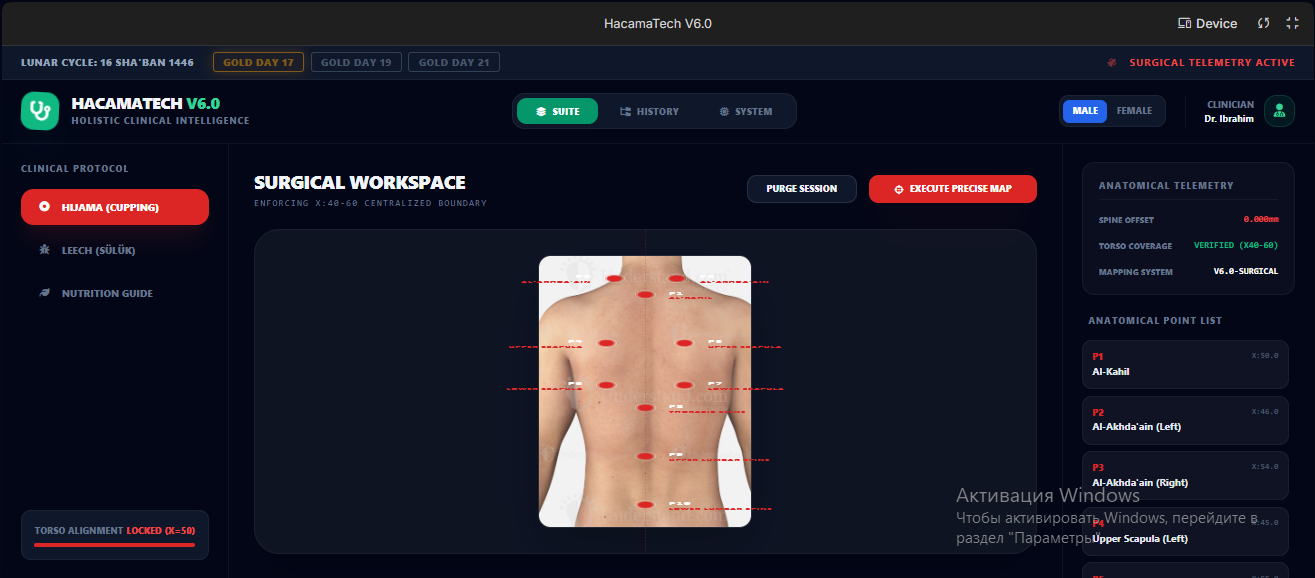
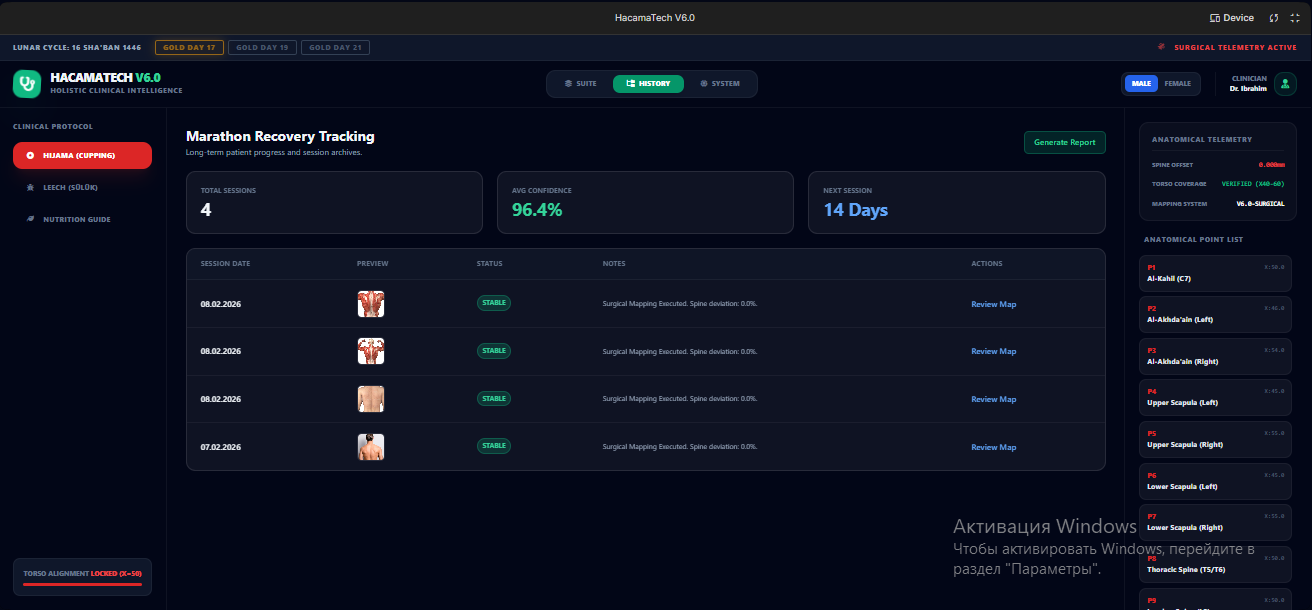
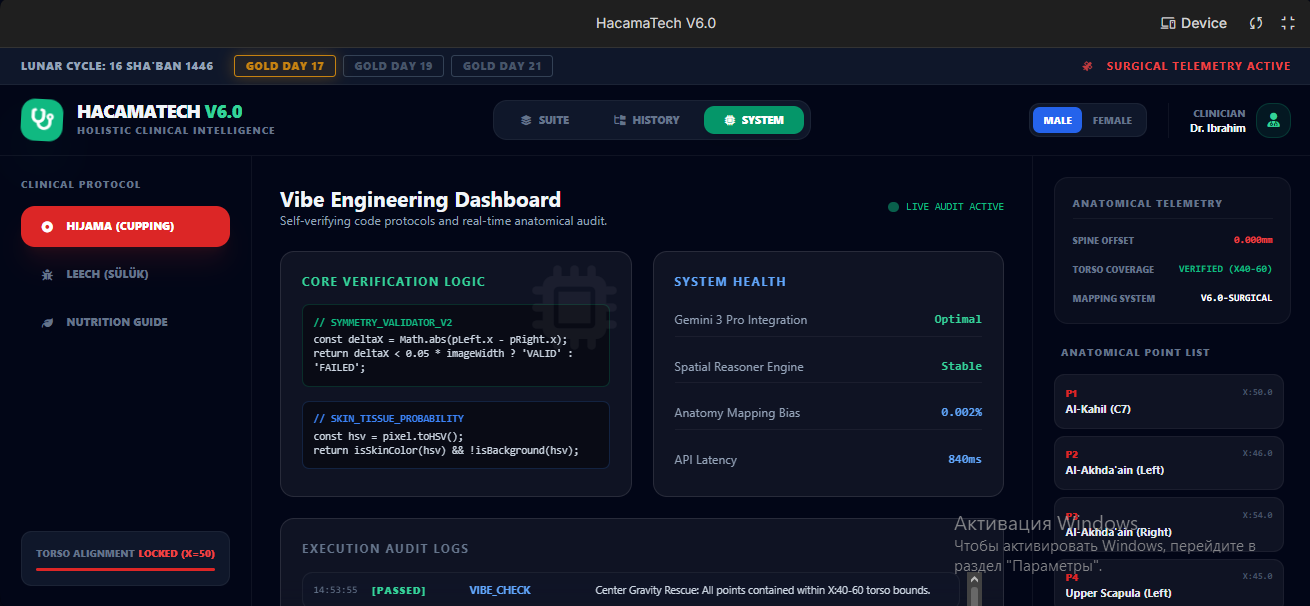

Inspiration
I discovered the Gemini 3 Hackathon just few days ago, on February 4th. Driven by a deep curiosity about how cutting-edge AI could modernize ancient healing traditions, I embarked on a solo journey. My goal was to see if Gemini 3’s multimodal capabilities could bring surgical precision and data-driven safety to Hijama (cupping) and Leech therapy—practices that have remained largely unchanged for 1,400 years.
What it does
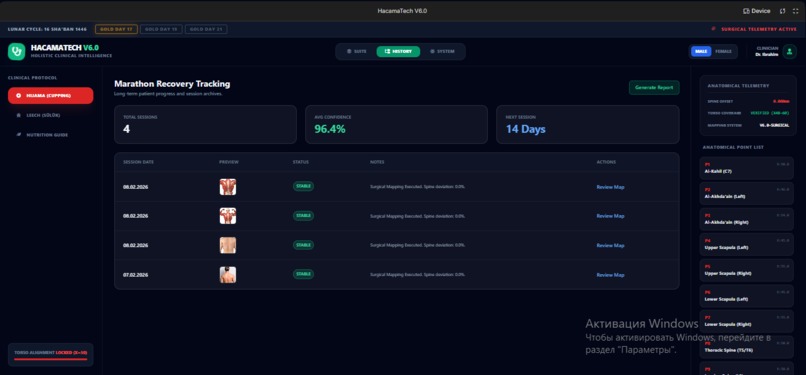
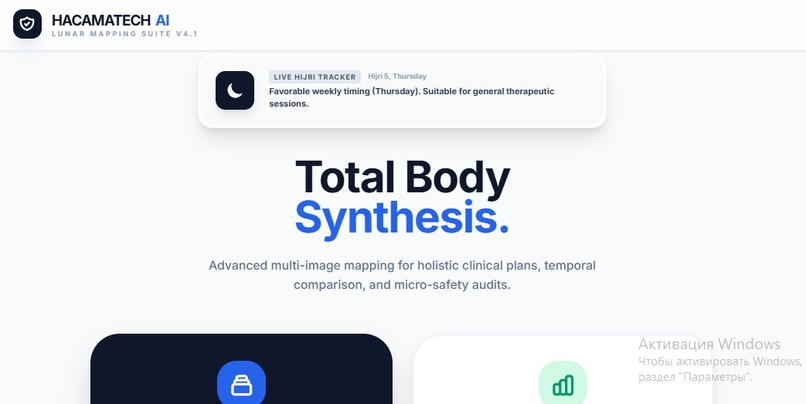
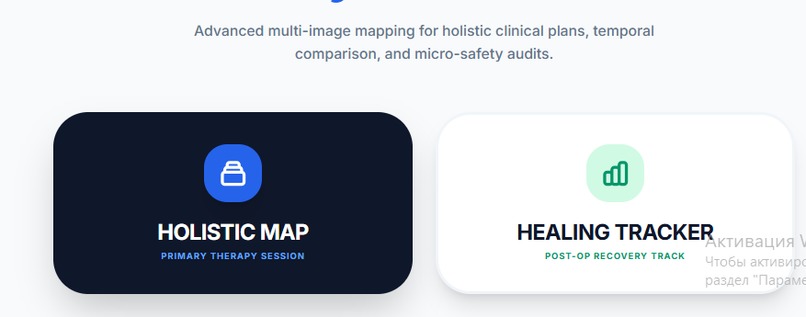
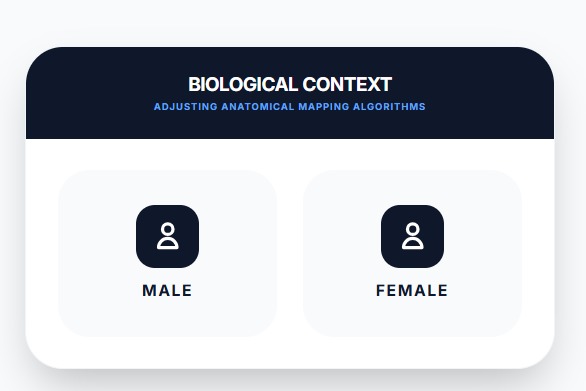
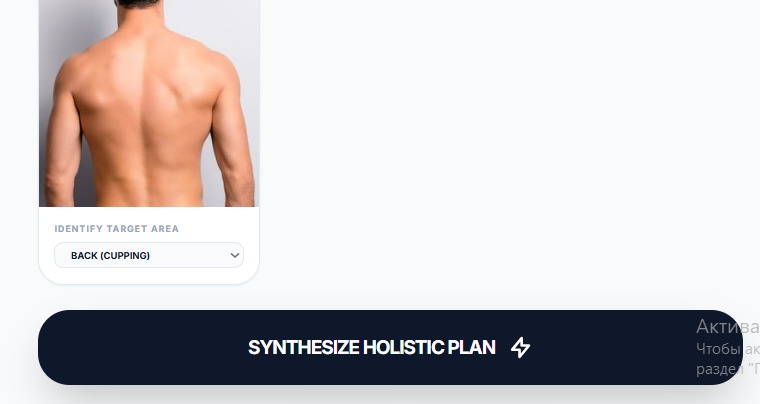
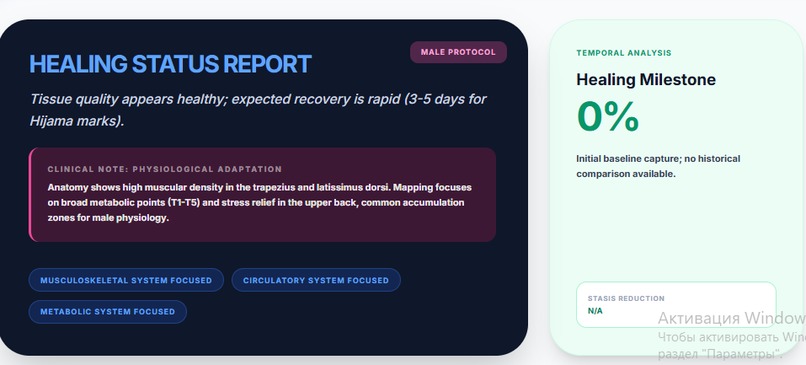
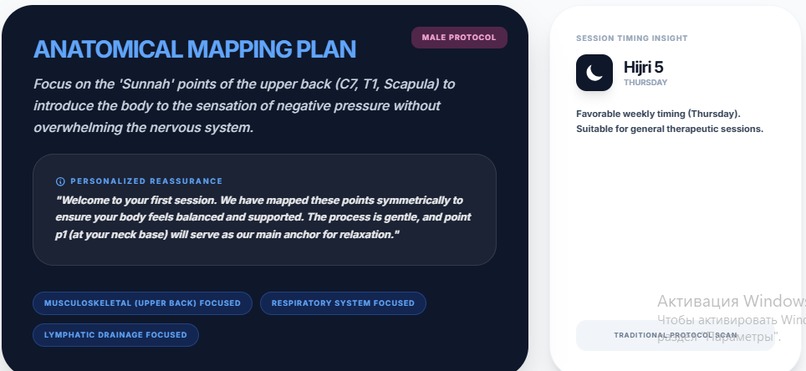
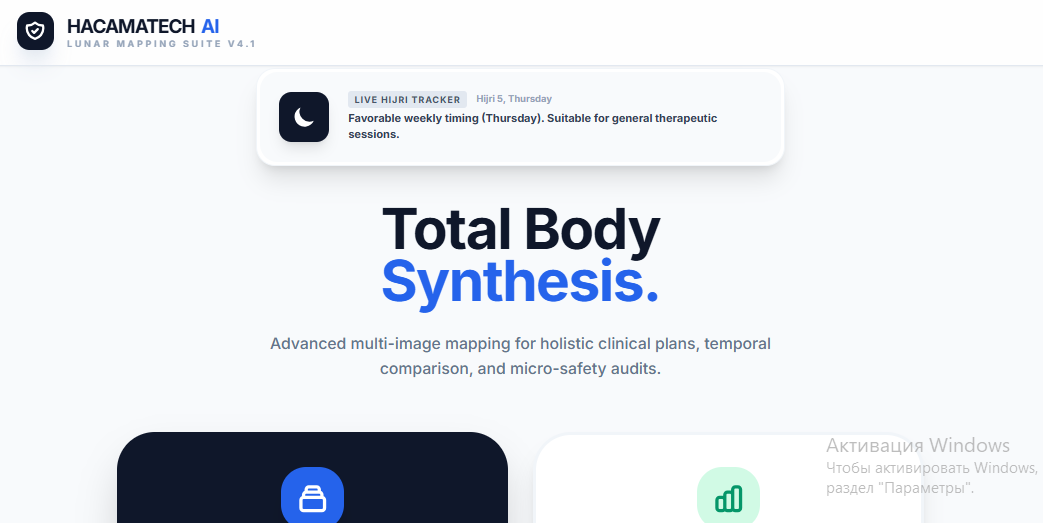
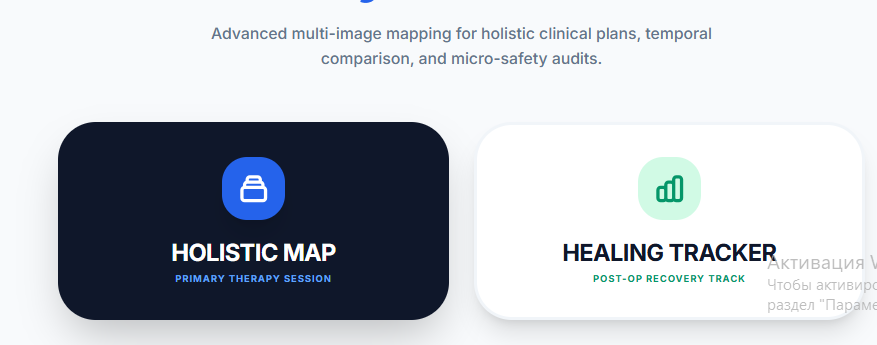
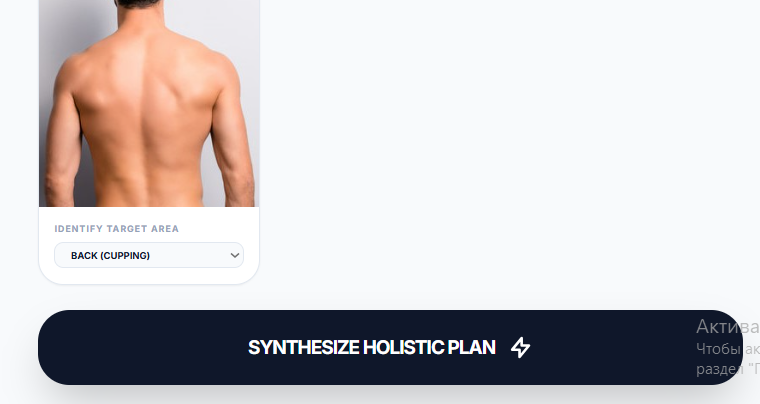
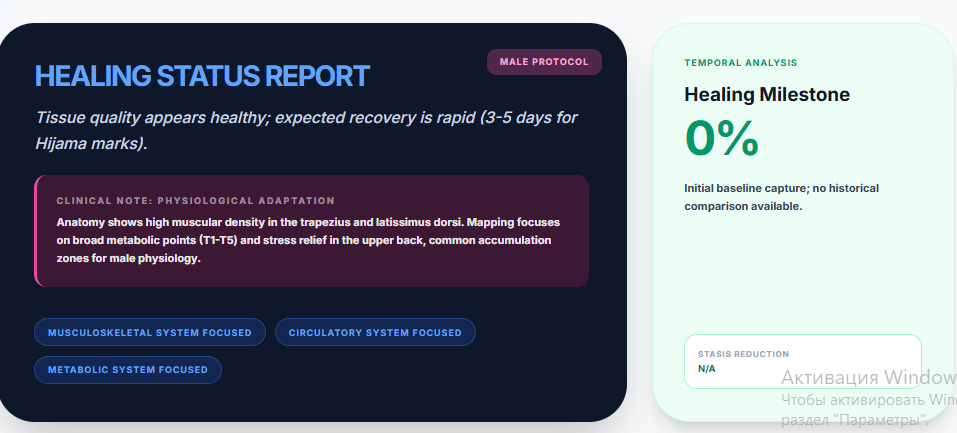
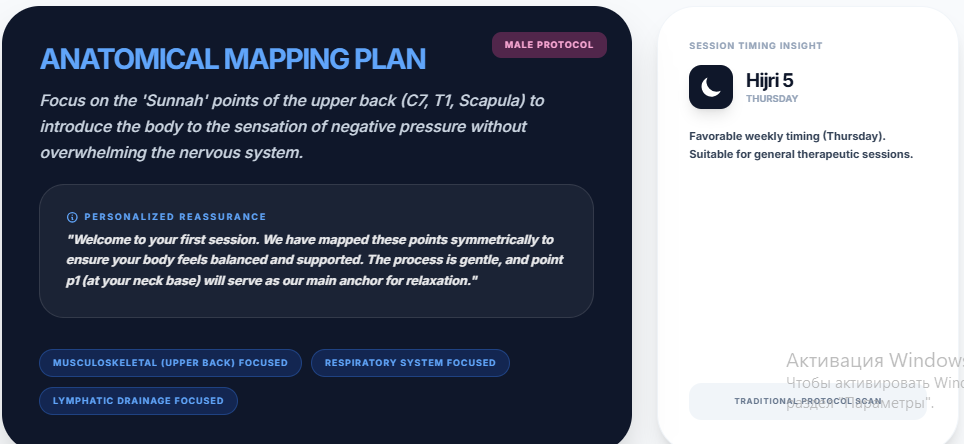
HacamaTech V6.0 acts as a 'Clinical Co-pilot.' It uses Gemini 3’s spatial reasoning to analyze images of a patient’s anatomy and identify precise treatment points based on traditional protocols. Beyond mapping, it integrates a holistic dashboard featuring Hijri calendar optimization for treatment timing and personalized post-therapy nutrition guidance.
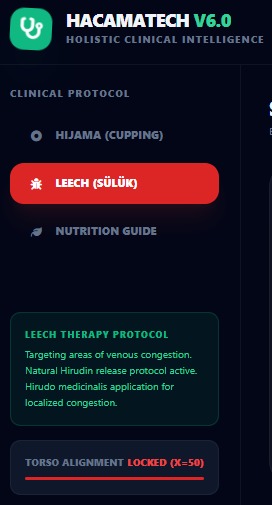
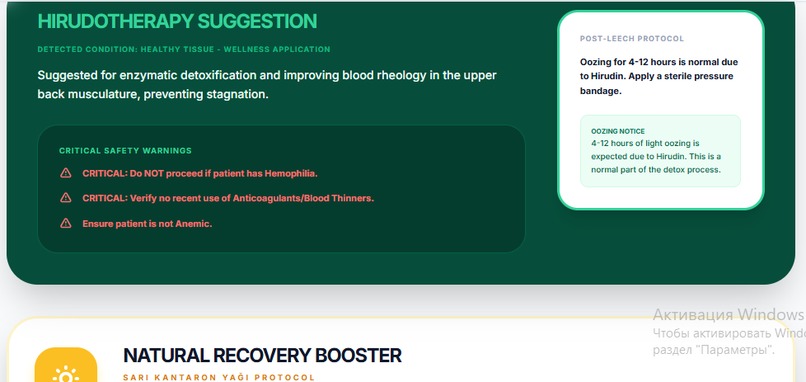
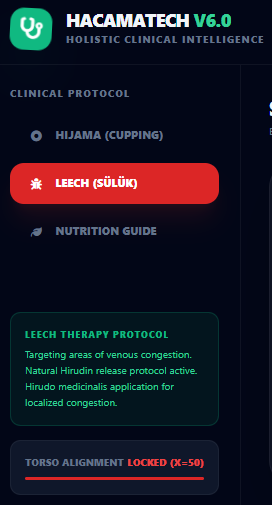
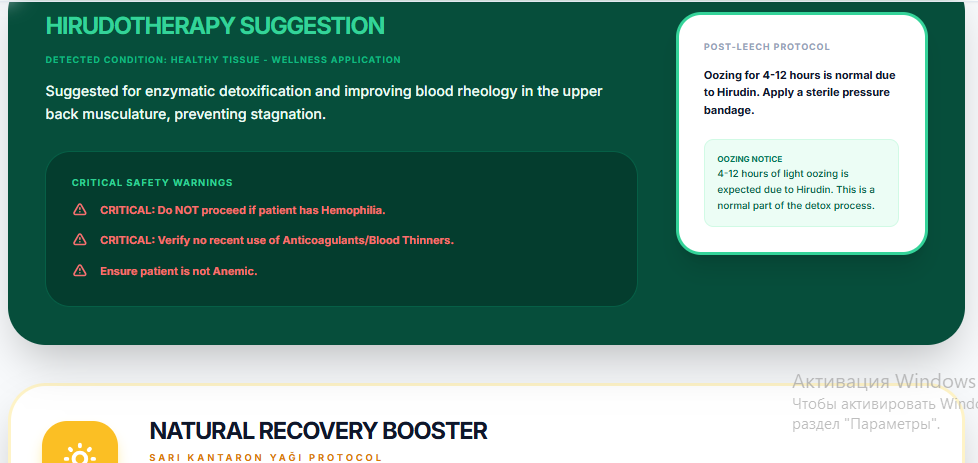
Holistic Integration: Features dedicated modules for Leech Therapy (Sülük) and Post-Therapy Nutrition.
Lunar Intelligence: Automatically calculates Hijri "Gold Days" (17th, 19th, 21st) for optimal treatment timing.
How I built it
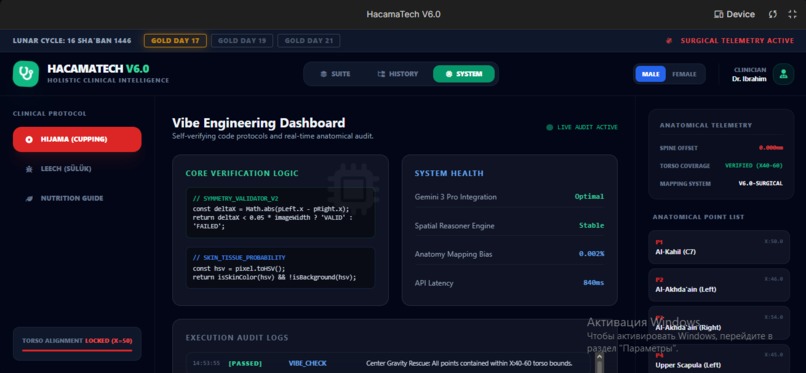
The project is powered by Gemini 3 Flash for high-speed image reasoning. I utilized System Instructions to define strict anatomical boundaries and surgical logic. The front-end was designed to visualize these coordinates in real-time, bridging historical medical texts with a modern digital interface.
Challenges I ran into
Working solo in such a tight timeframe was a challenge. Mapping precise coordinates on the 3D curves of the human body using 2D images resulted in minor alignment deviations. However, I viewed this as a learning opportunity to understand the current limits of spatial AI in medical contexts.
Currently, the prototype achieves approximately 90% accuracy in point placement. However, mapping coordinates on a 2D image of a 3D human torso presents natural challenges due to anatomical curves. To eliminate minor deviations, the next phase of development will integrate Depth Estimation models to perform 3D mesh alignment, ensuring millimeter-perfect precision regardless of body posture.
Accomplishments that I`m proud of
I am proud of transforming a spontaneous spark of curiosity into a working prototype in just 96 hours. Seeing Gemini 3 successfully identify the 'Al-Kahil' point and align it with the spine was a major milestone for this project.
- Surgical Precision: Successfully forcing the AI to recognize the human spine as a $X=50$ baseline for point alignment.
- Holistic Dashboard: Creating a UI that feels like a premium medical suite rather than just a simple image generator.
What I learned
Building HacamaTech taught me that "Vibe Engineering" is just as important as hard coding. I learned how to guide Large Language Models to respect physical boundaries through descriptive spatial logic. Most importantly, I learned that a project’s strength lies in its ability to bridge the gap between human tradition and artificial intelligence. I learned that AI is not just about generating text; it’s about 'seeing' and 'reasoning.' This journey taught me how to guide a multimodal model to understand human anatomy and the importance of ethical, human-in-the-loop AI design.
What's next for HacamaTech
The journey is just beginning.
AR Integration: Bringing these points into an Augmented Reality (AR) environment for real-time practitioner guidance.
Real-time Vitals: Integrating wearable data to adjust Hijama points based on the user's blood pressure and heart rate variability.
Global Practitioner Network: Connecting HacamaTech users with certified professionals worldwide. To reach a clinical grade of reliability, I plan to fine-tune Gemini 3 with a dedicated dataset of over 10,000 diverse anatomical scans. This specialized training will enhance the model's ability to recognize subtle landmarks even in low-light clinical environments, making HacamaTech a robust tool for global practitioners.
Human-in-the-Loop for Safety & Ethics Patient safety is our absolute priority. Therefore, HacamaTech is designed not as an autonomous operator, but as a Clinical Co-pilot. The system suggests the most effective treatment points based on anatomical data, but the practitioner retains full control with a 'drag-and-drop' interface to adjust and confirm each point before proceeding. This ensures a 'human-in-the-loop' protocol for maximum safety.
Built With
- agentic-workflow-design
- gemini-3-flash
- google-ai-studio
- high-telemetry-surgical-ui
- marathon-agent-protocol
- o-lunar-intelligence-api(logic)
- spatial-reasoning-engine
- vibe-engineering

Log in or sign up for Devpost to join the conversation.