Inspiration
We were inspired to create HaBits because we wanted to make health tracking both engaging and personalized. With so many fitness and health apps available, we noticed a gap in how they engage users with their data and motivate healthy habits in a way that fosters community. By integrating data from the iOS Health app, we wanted to give users an easy way to monitor their progress across key health categories—like sleep, meditation, and steps—in a visually intuitive and competitive way. Our goal is to make health tracking more social, personal, and fun, helping users improve their habits while connecting with their friends and competing on a leaderboard. We believe that building good habits becomes easier when you can track your progress and share the journey with others.
What it does
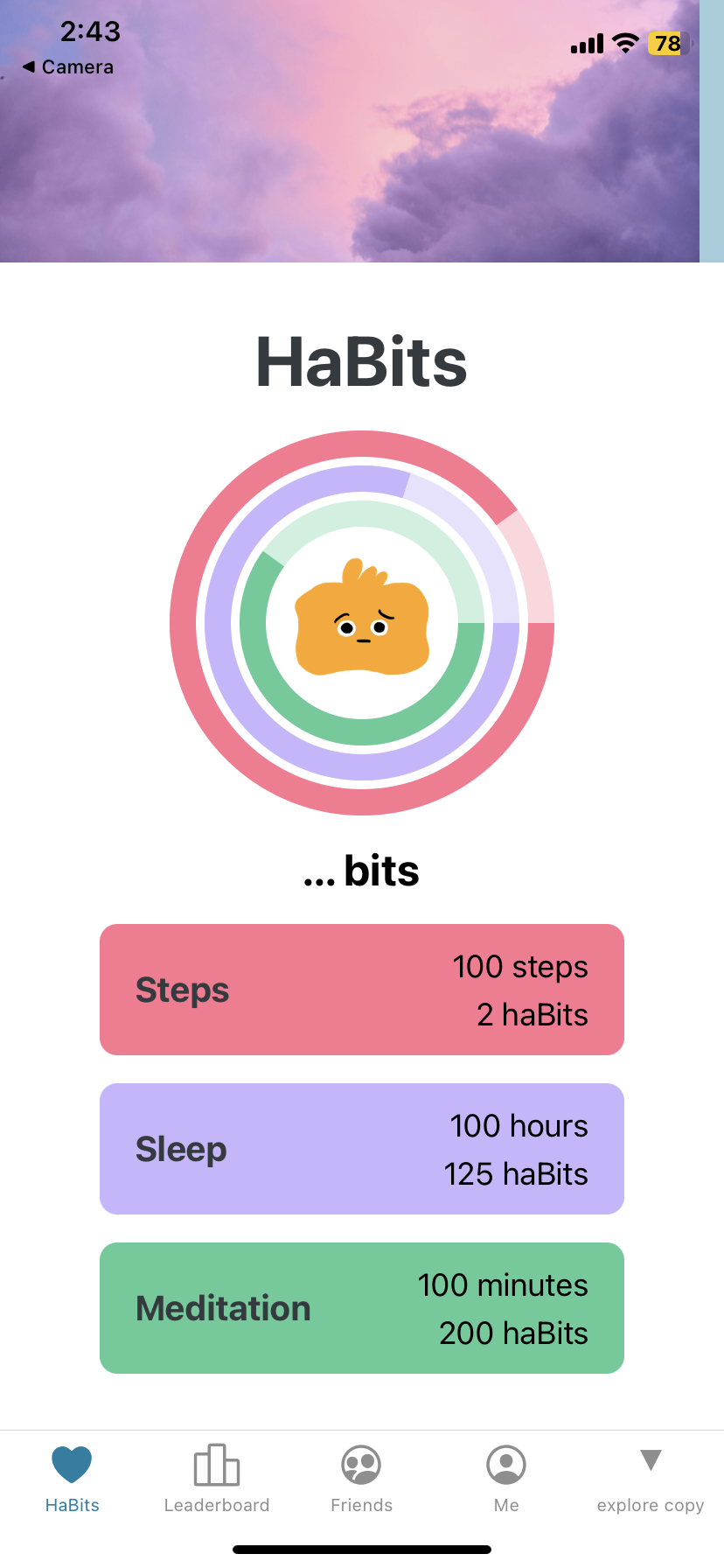
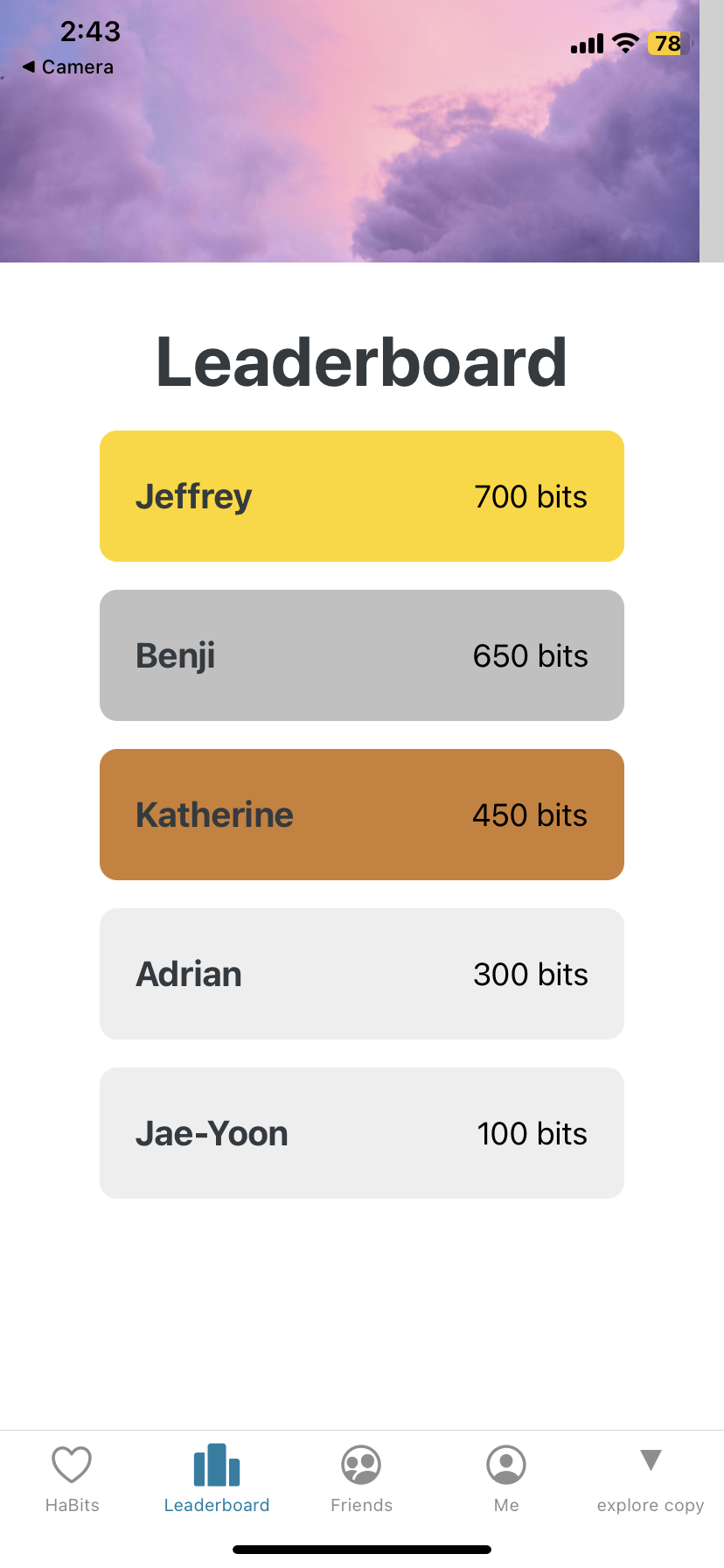
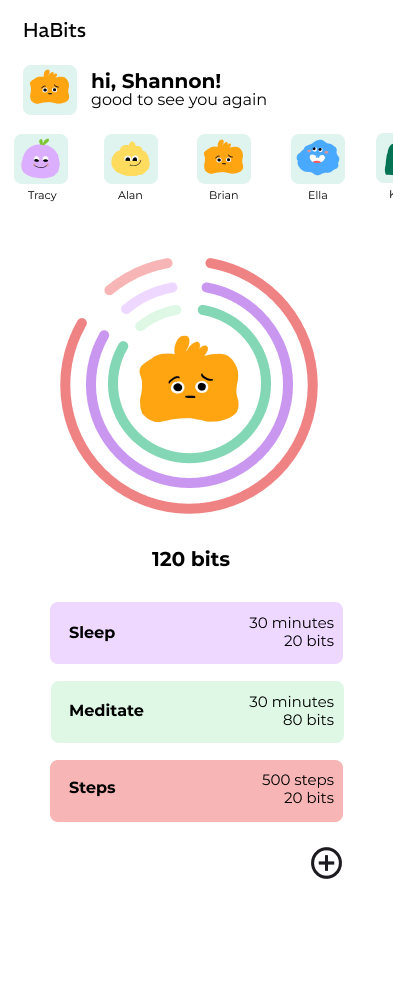
HaBits is a personalized health tracker that syncs with the iOS Health app to monitor users' sleep, meditation, and steps. It visualizes this data using progress circles, giving users an easy way to understand their daily goals and how well they are doing. Additionally, the app features a leaderboard where users can compare their progress with friends, fostering healthy competition and community support. We are also developing a feature where users can scan pictures of their food, and our machine learning model will estimate calorie intake based on the food’s appearance. This will allow users to track their calorie consumption relative to their BMI, ensuring they're meeting their nutritional needs.
How we built it
We built HaBits using React Native, TypeScript, and Expo to create a cross-platform mobile app that works seamlessly on both iOS and Android devices. We integrated Apple HealthKit to gather users' health data, including their sleep, meditation, and steps. For real-time updates and leaderboard functionality, we used Firebase, allowing users to stay connected with their friends and track their progress live. The food scanning feature, which is under development, uses a machine learning model to detect calorie intake based on photos of food. We designed the app with a focus on user experience, leveraging tools like Figma for prototyping, ensuring a sleek and intuitive interface.
Challenges we ran into
One of the main challenges we encountered was connecting to the iOS Health app and accurately retrieving health data. Ensuring that we could securely access users' sleep, meditation, and step data while respecting their privacy and permissions required careful navigation of the Apple HealthKit API. We also had to handle potential data syncing issues and ensure the app functions smoothly across different devices.
Accomplishments that we're proud of
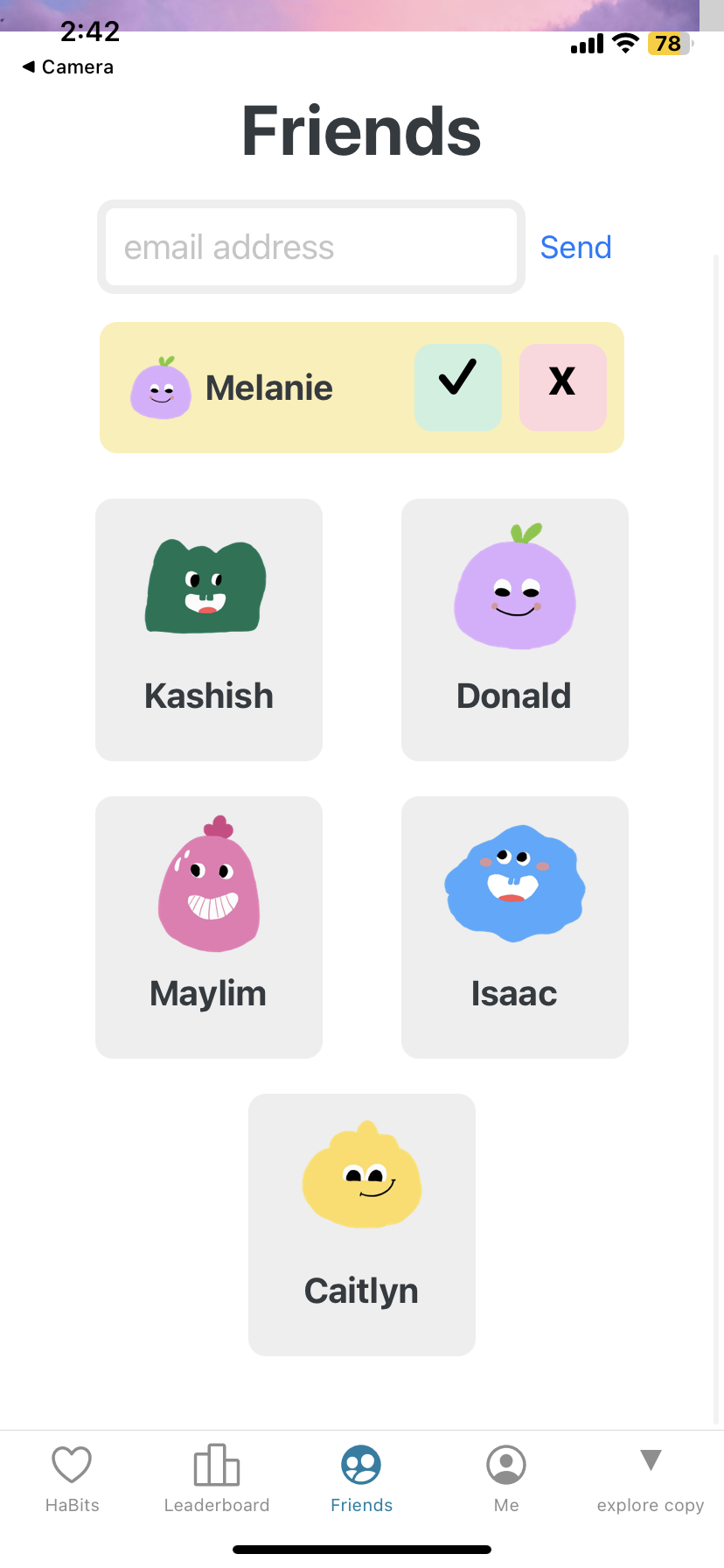
We’re proud of successfully creating a social aspect with our leaderboard feature, which encourages users to stay motivated. We're also excited about our plans for the food scanning feature, which demonstrates how AI can play a role in helping users monitor their nutrition with minimal effort. Another accomplishment was our design; we received great feedback on how intuitive and visually appealing the app is.
What we learned
Building HaBits was a valuable learning experience, especially since it was our first time working with React Native and Expo. We quickly adapted to these new technologies and learned how to build a mobile app that could seamlessly function across both iOS and Android platforms. The experience also taught us how to work efficiently as a team, coordinating between frontend, backend, and machine learning tasks to bring all the components together smoothly. Collaborating on complex features like integrating HealthKit data and Firebase for real-time updates required strong communication and problem-solving. Overall, we learned the importance of flexibility and teamwork when tackling unfamiliar technologies and how to combine our skills to create a cohesive product.
What's next for HaBits
Next, we plan to expand the app’s functionality by integrating more health categories, such as hydration and stress levels, for a more holistic health tracking experience. We are also focused on improving the food scanning feature by enhancing the accuracy of calorie detection and expanding it to recognize portion sizes. Additionally, we plan to introduce features like personalized challenges and wellness tips based on the user’s data, making the app a more comprehensive health assistant. Finally, we’re looking to implement more social features, like group challenges and wellness goals, to further engage users in improving their health together.


Log in or sign up for Devpost to join the conversation.