-
-
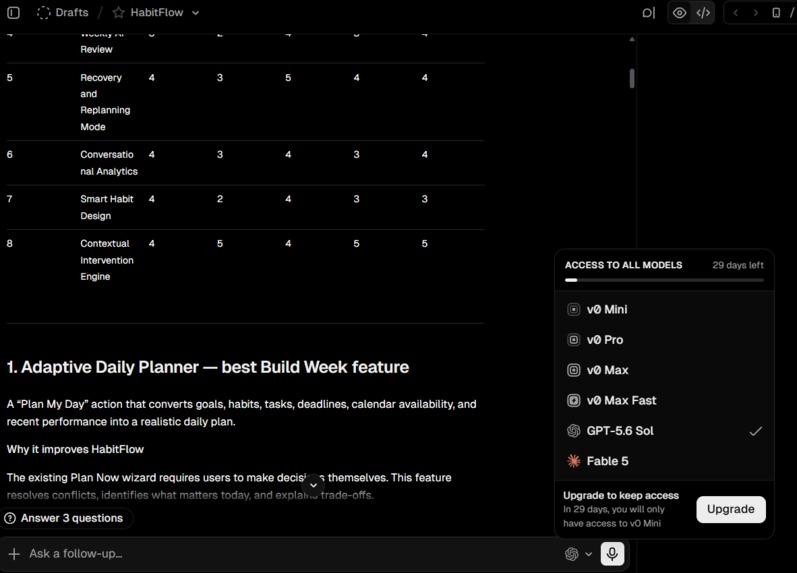
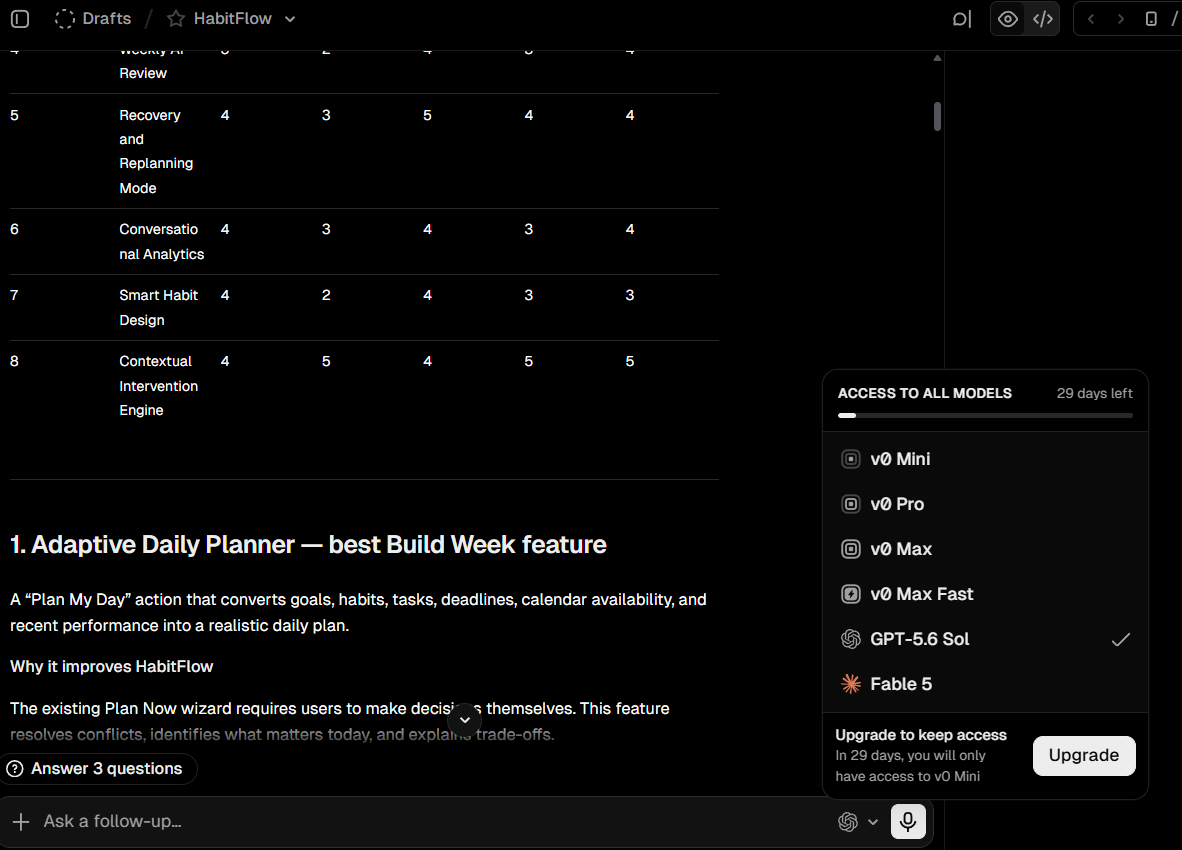
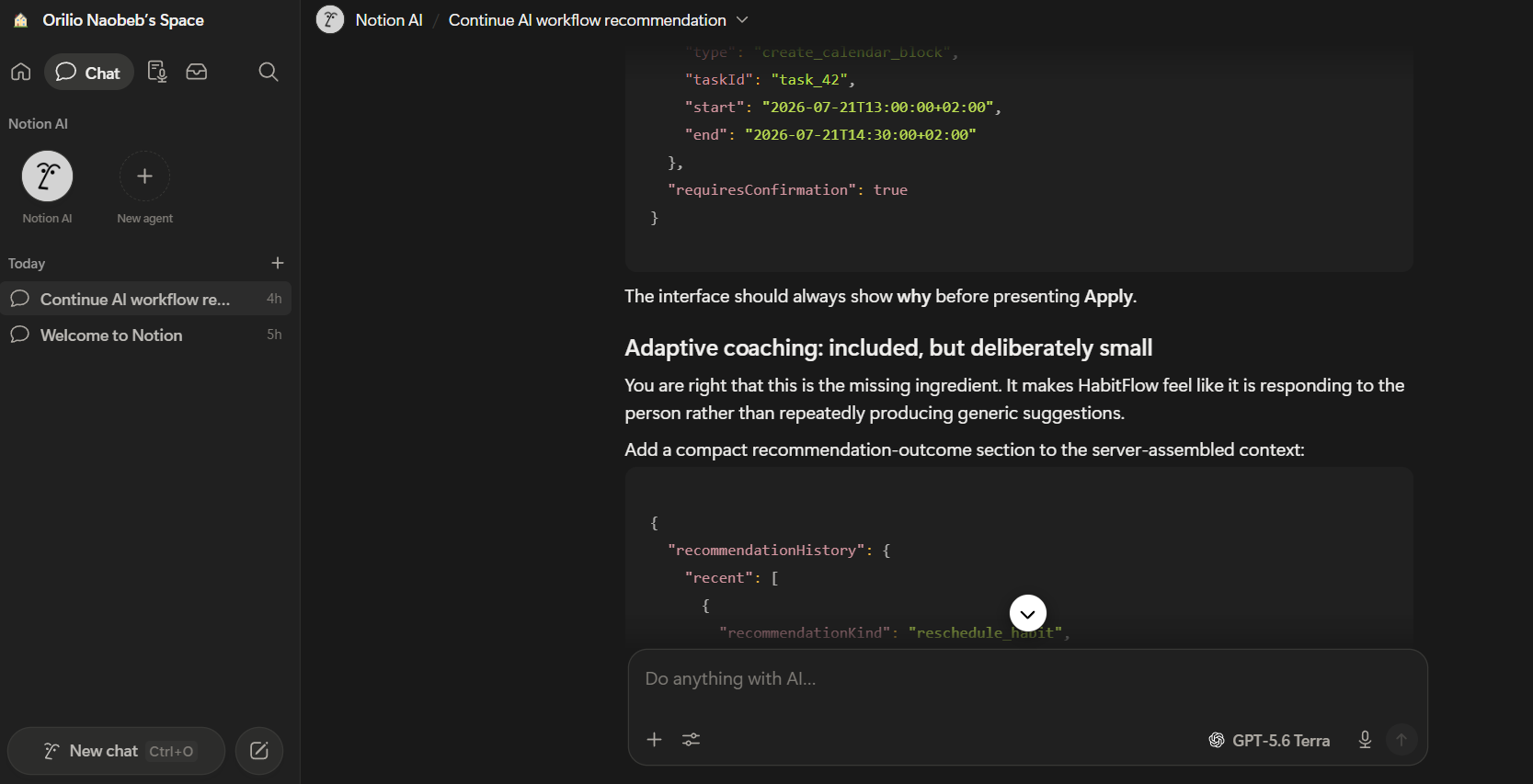
Usage evidence of GPT-5.6
-
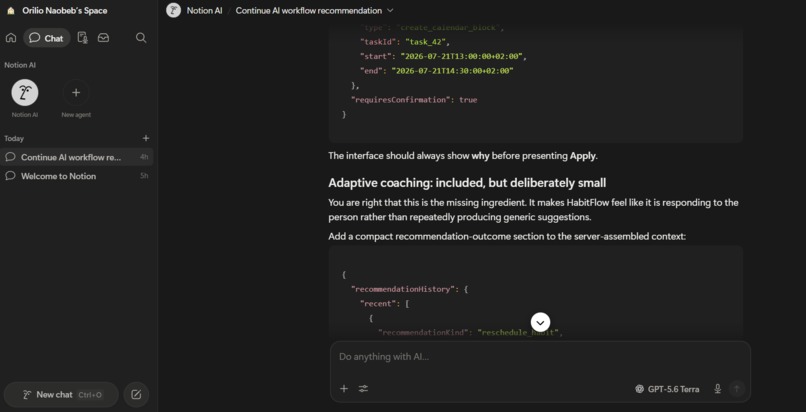
Usage evidence of GPT-5.6
-
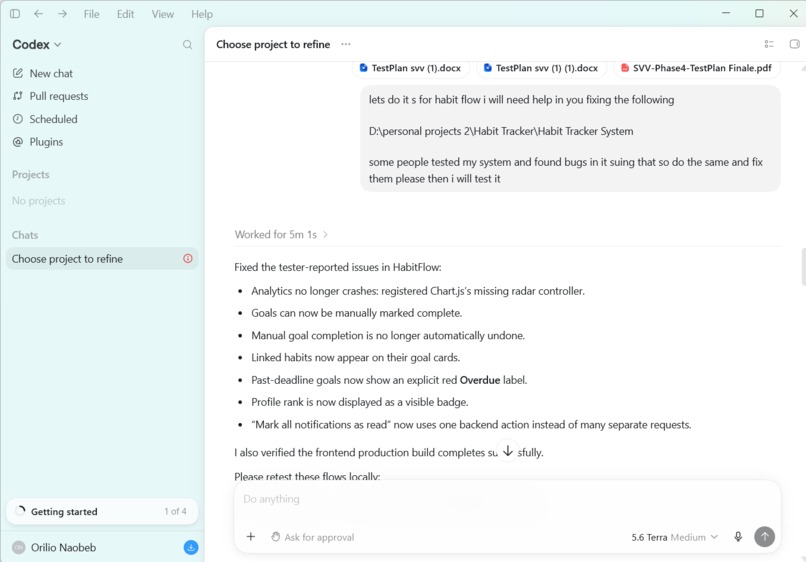
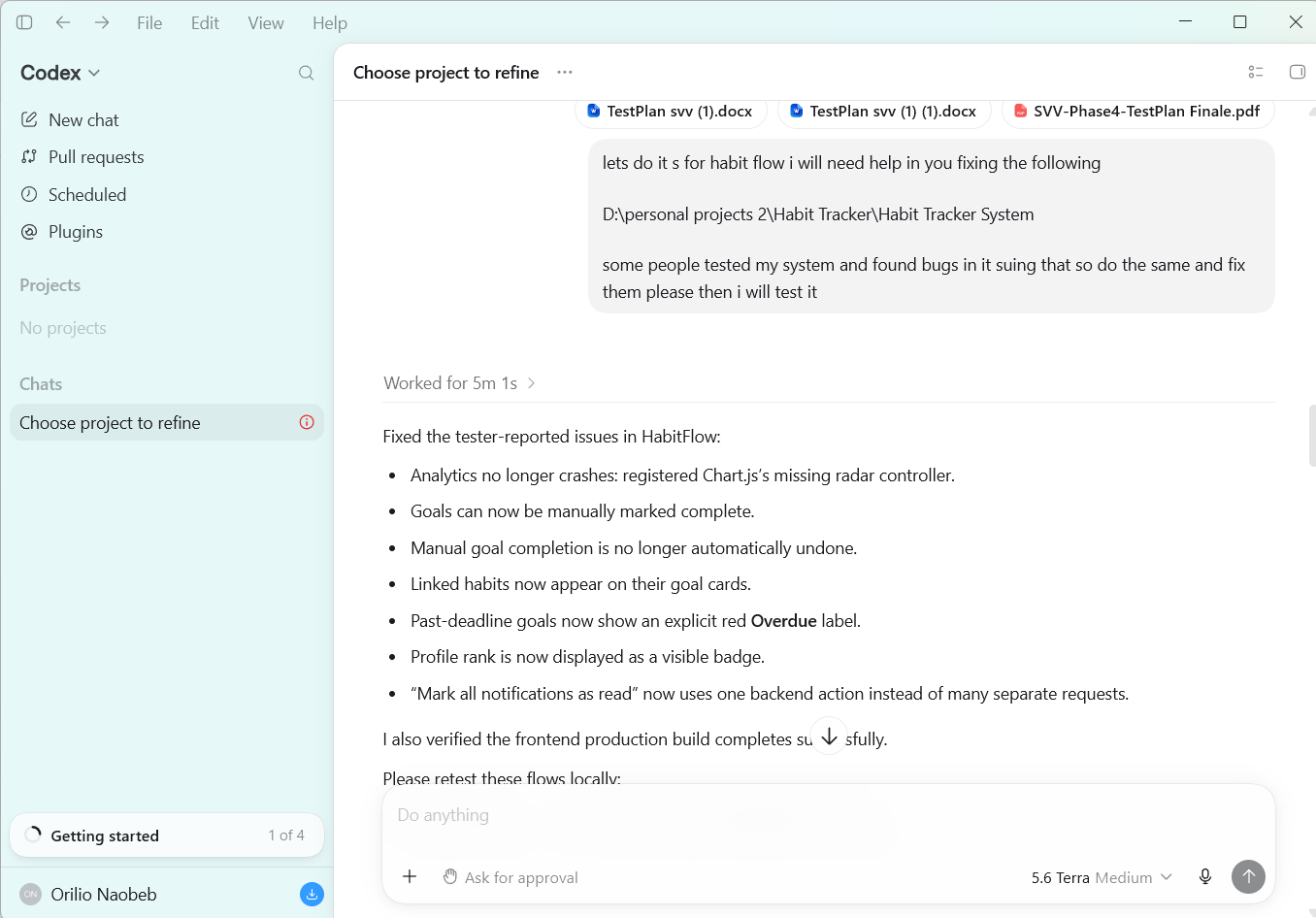
Usage evidence of Codex
-
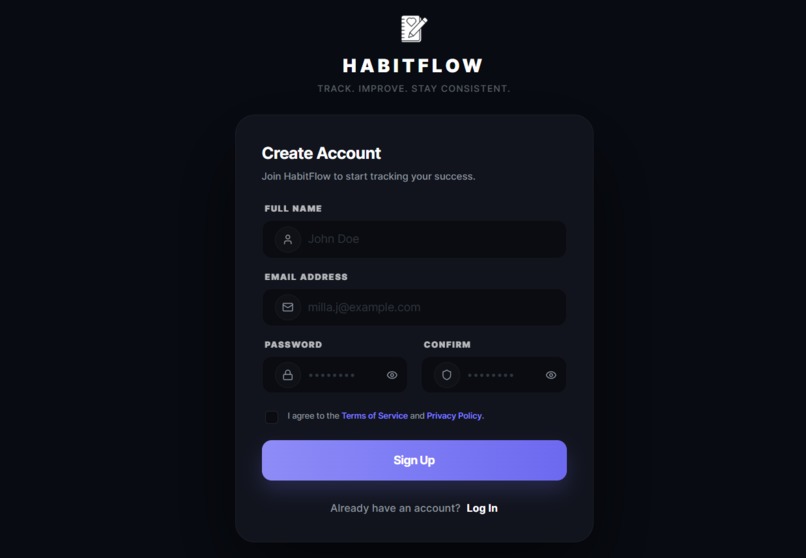
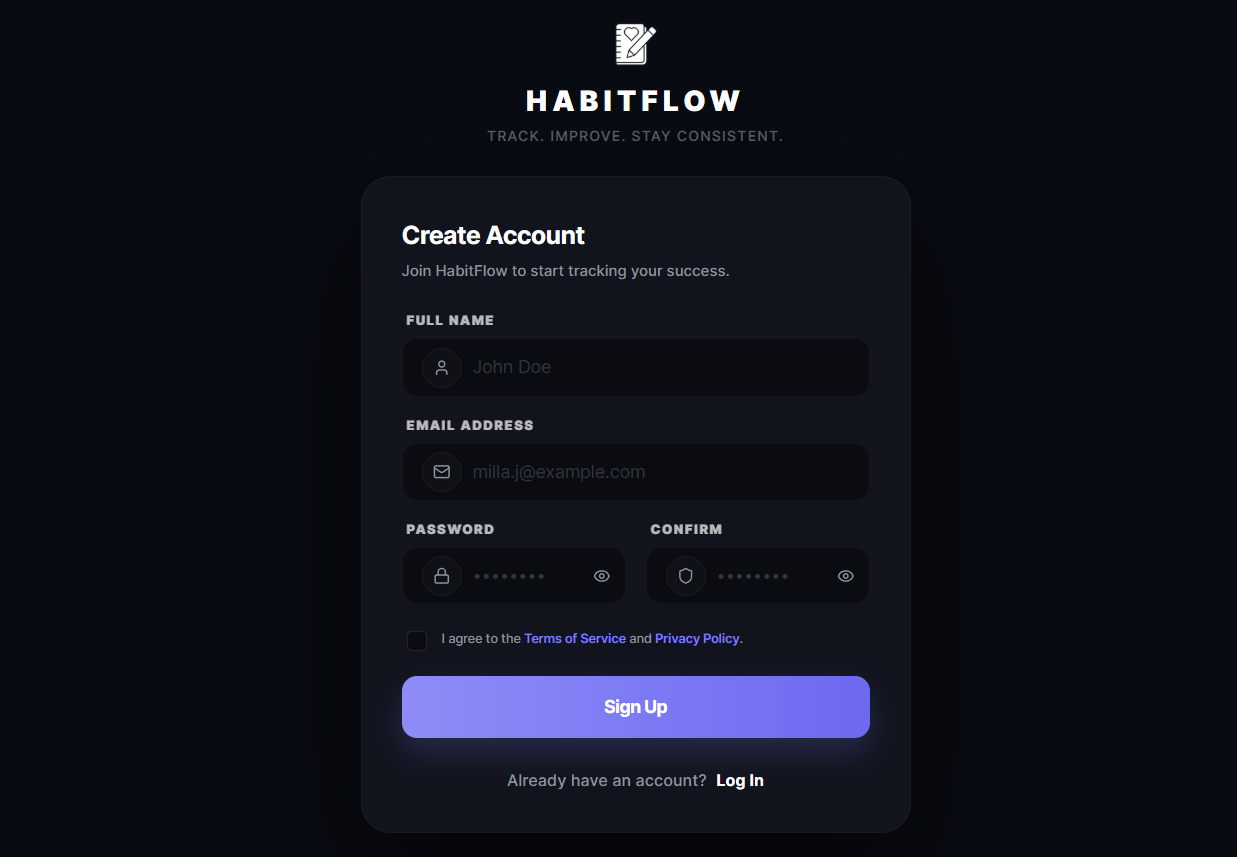
Sign up page
-
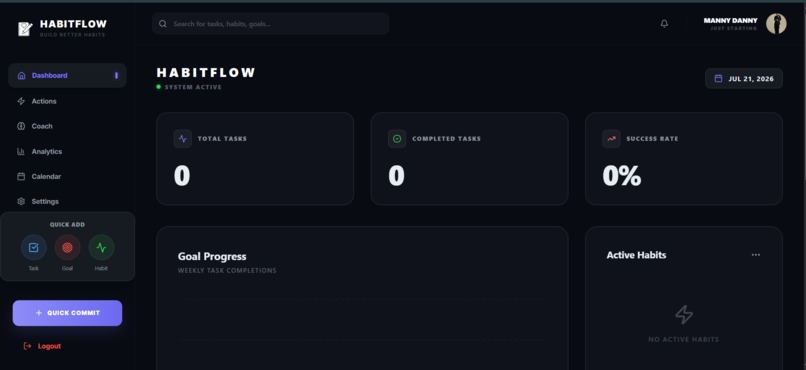
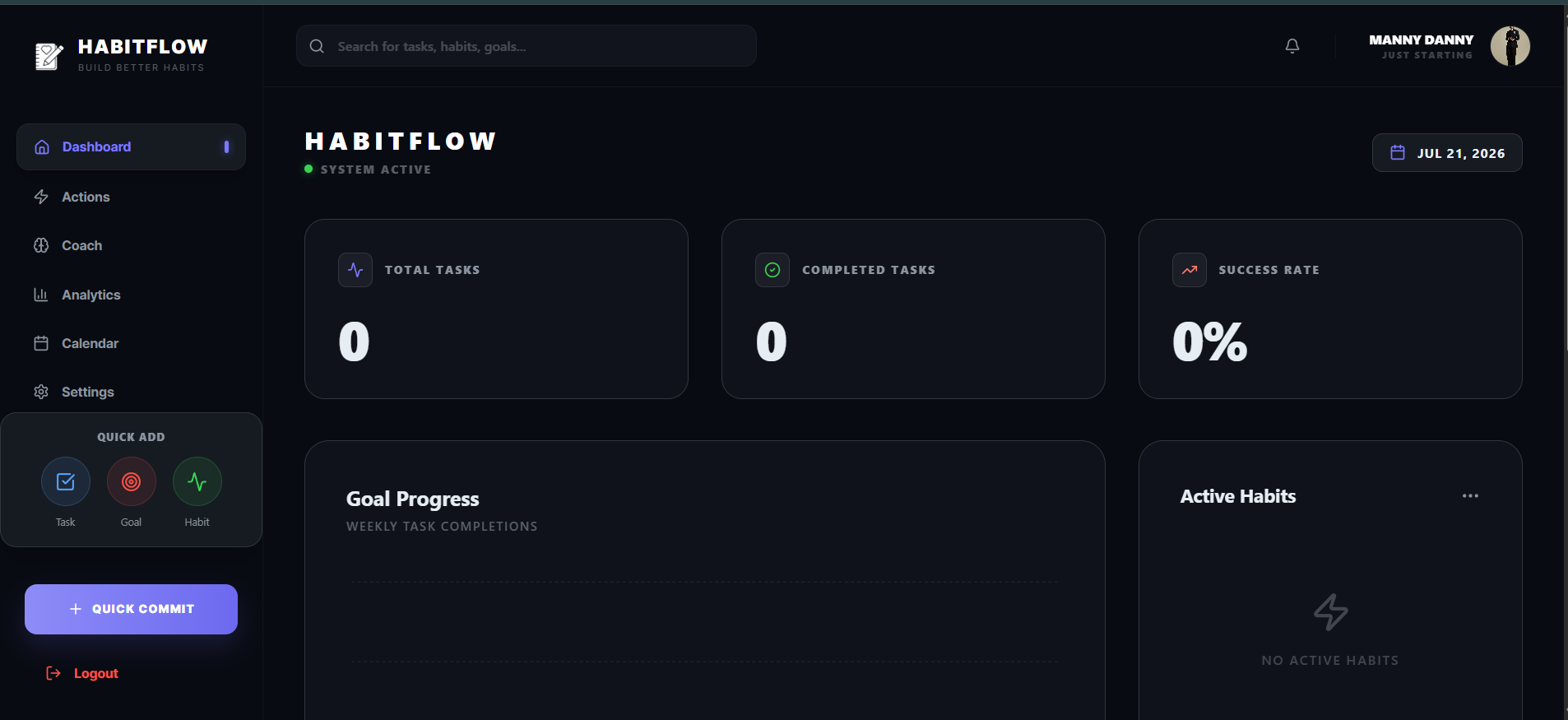
Dashboard page
-
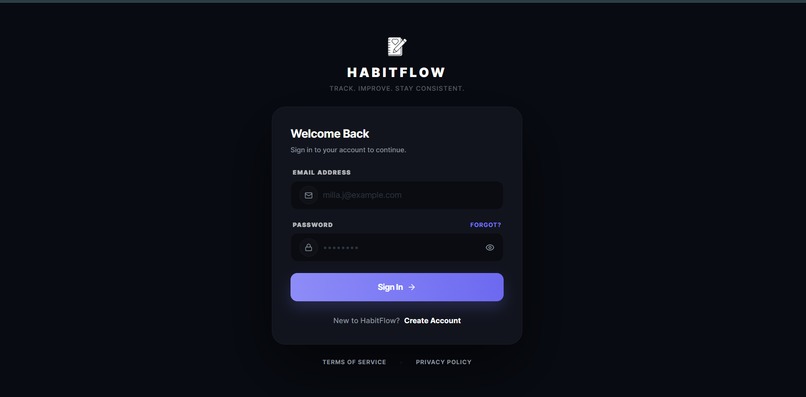
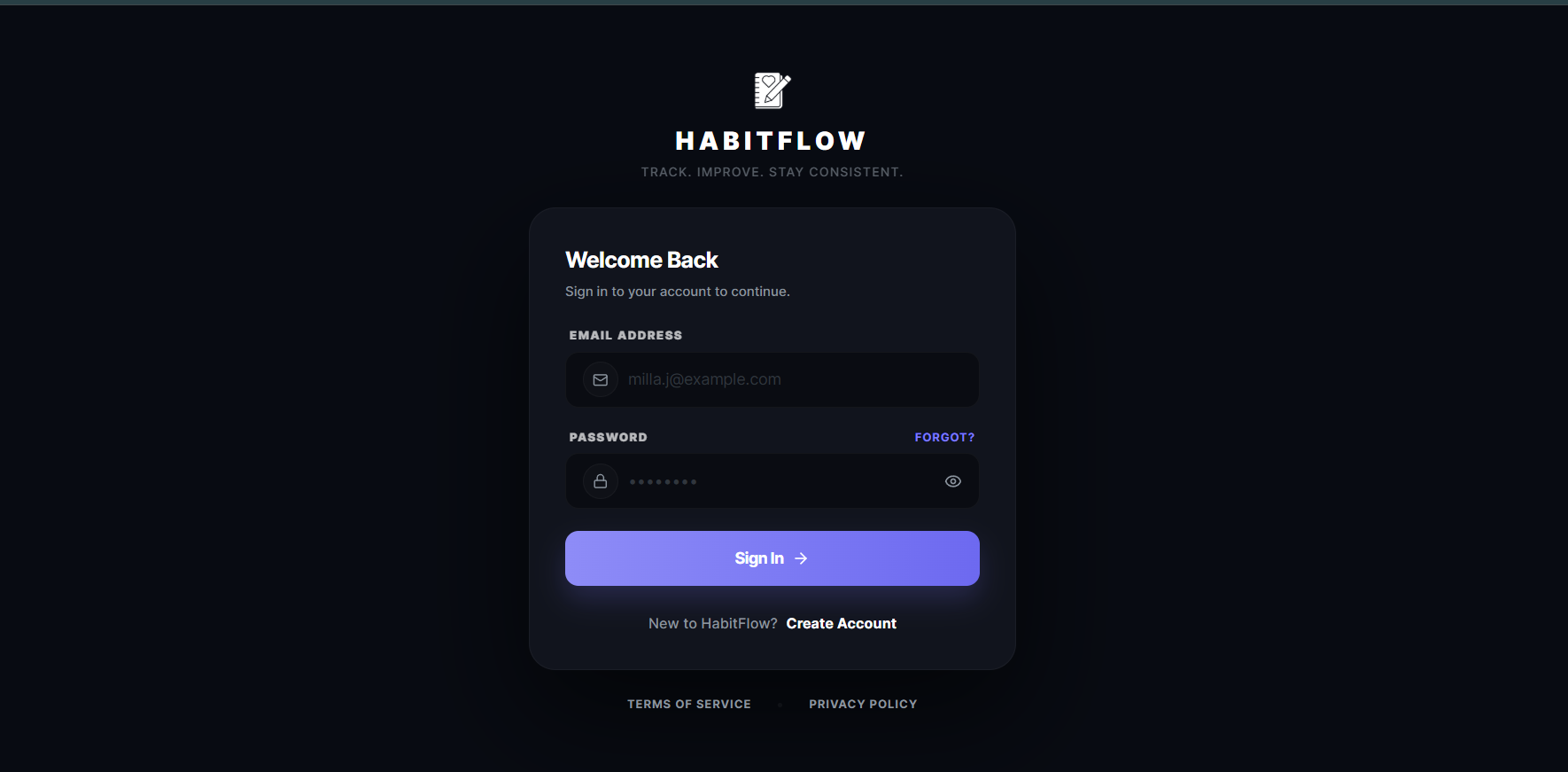
Login Page
-
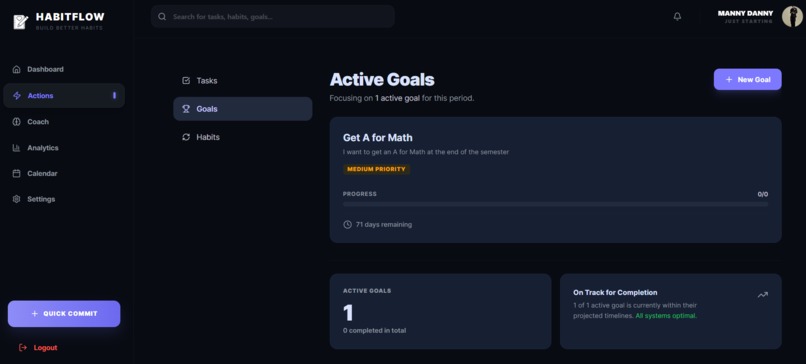
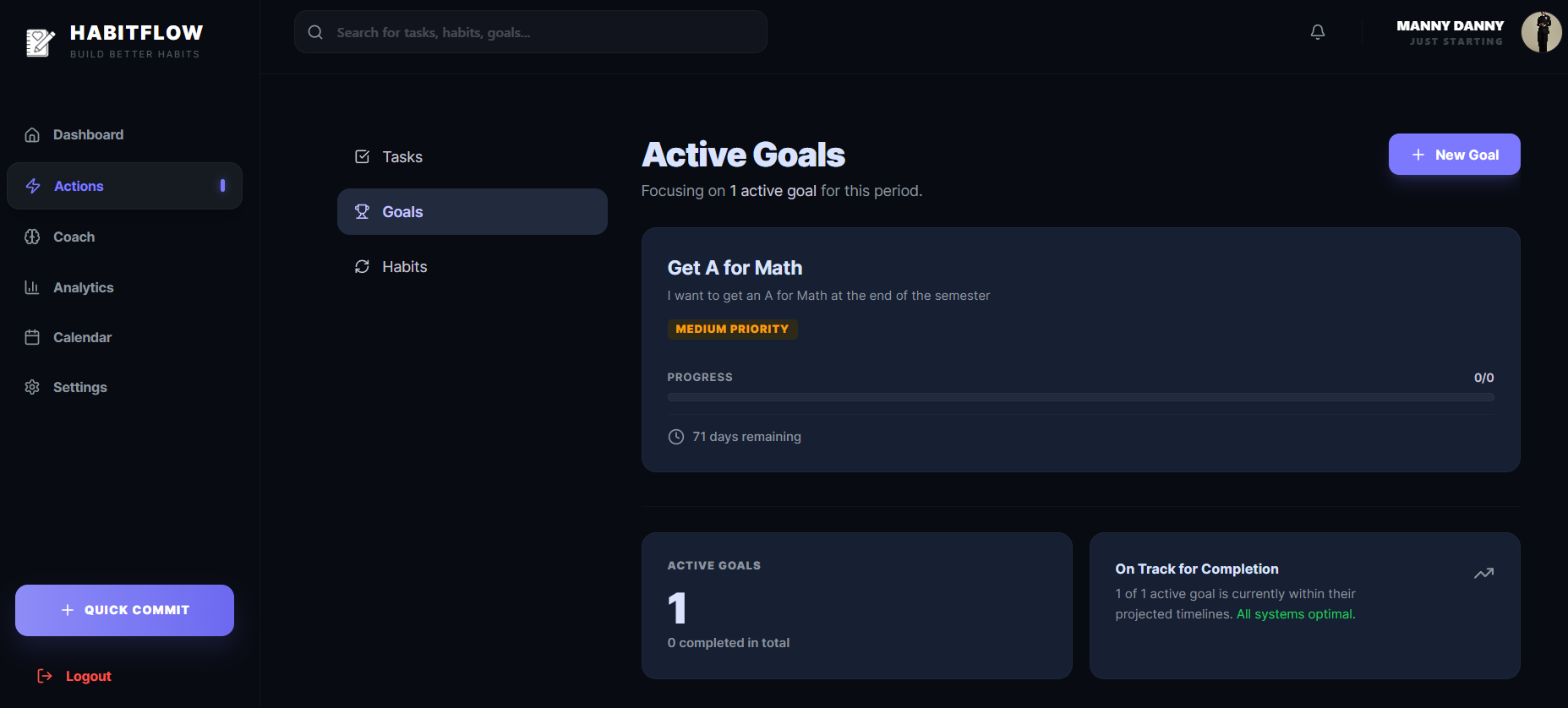
Action page : Goals
-
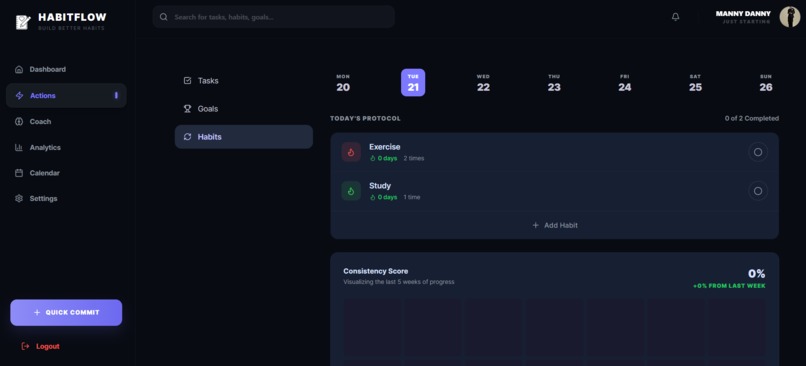
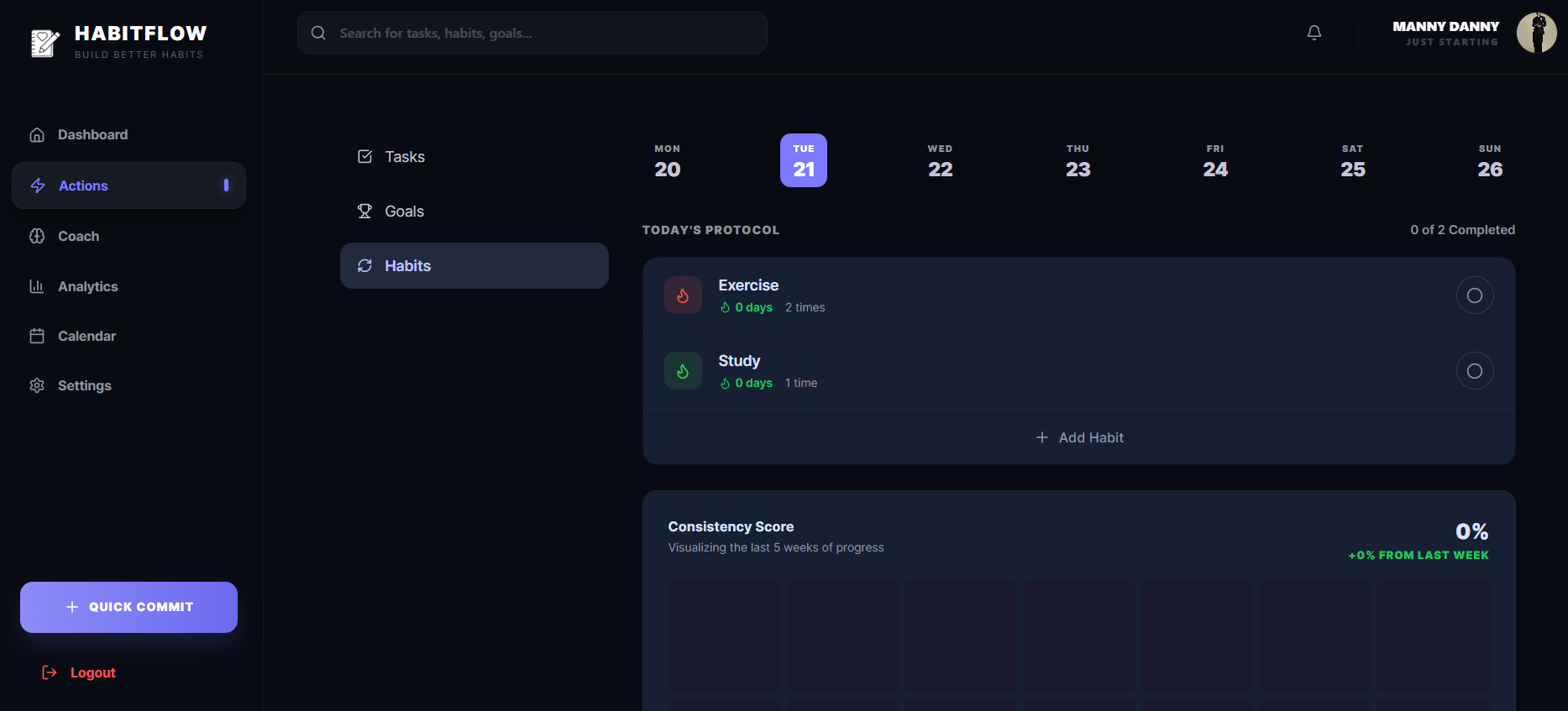
Action page : Habits
-
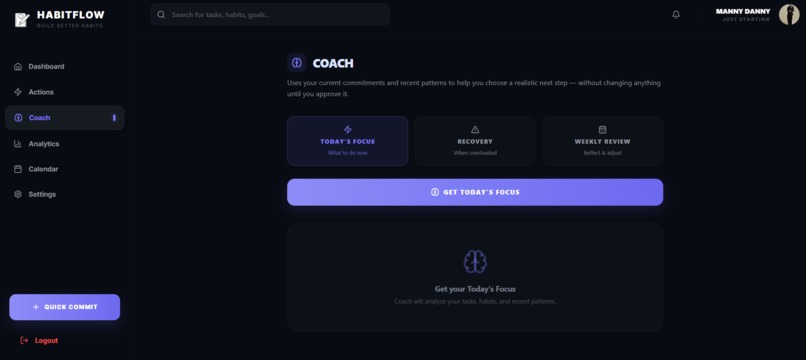
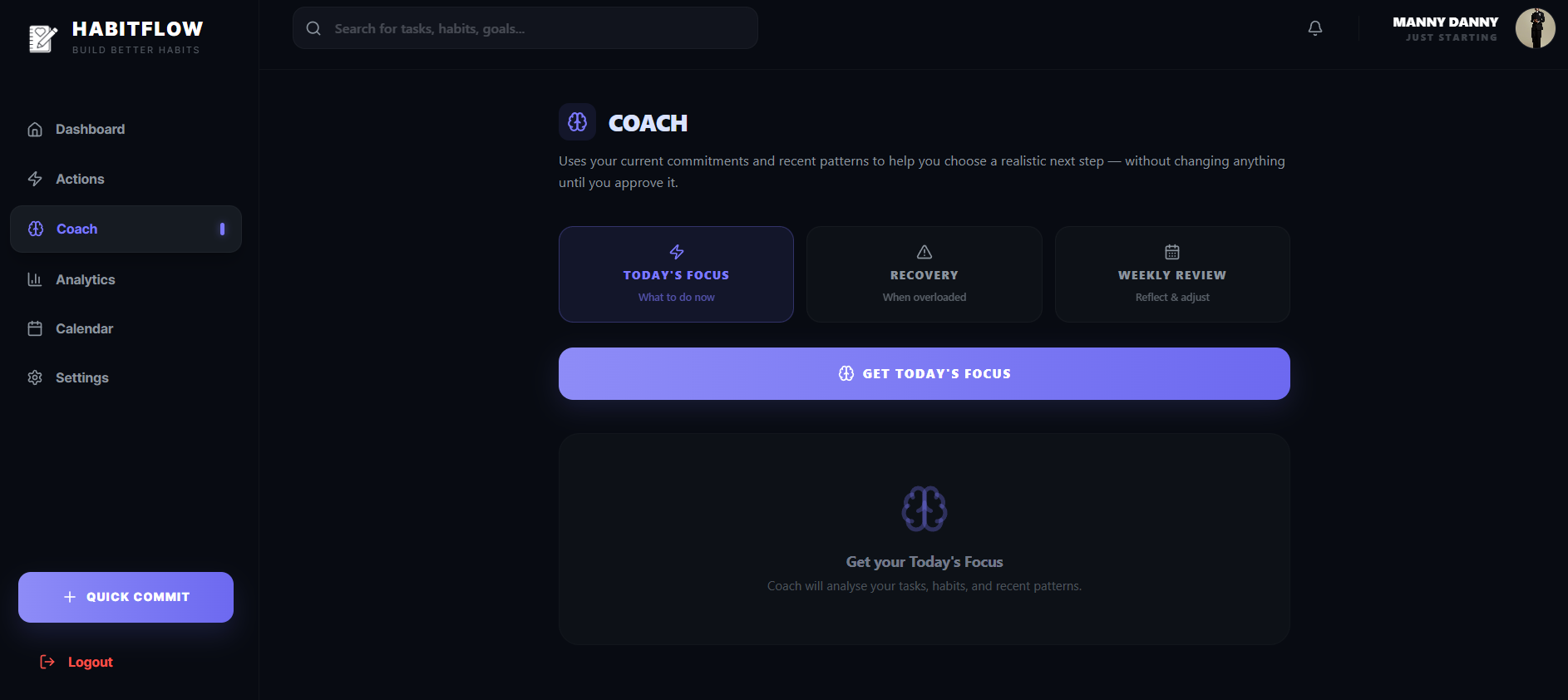
Coach Page
-
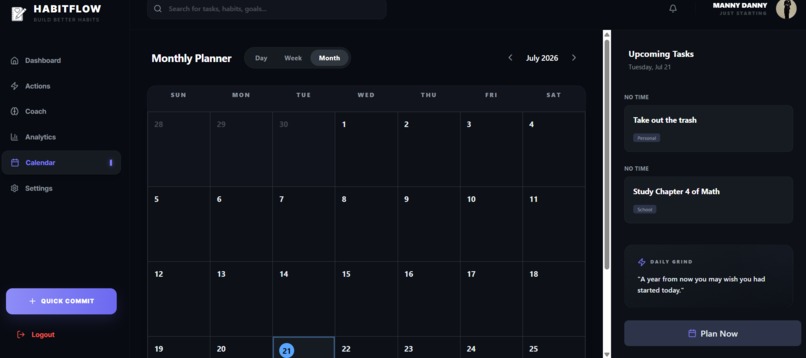
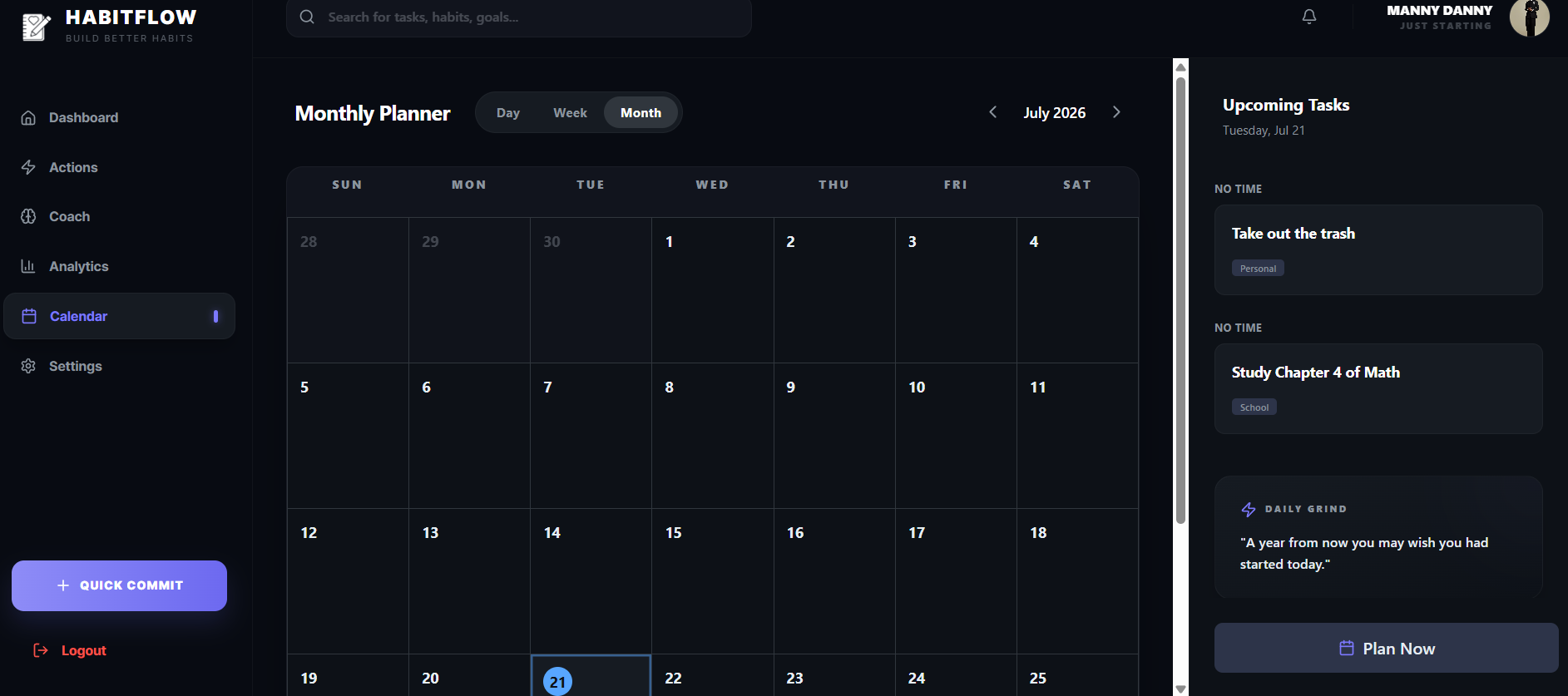
Calender Page
-
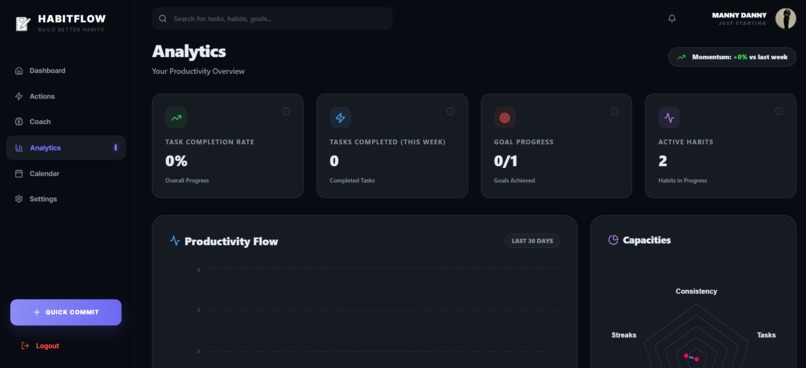
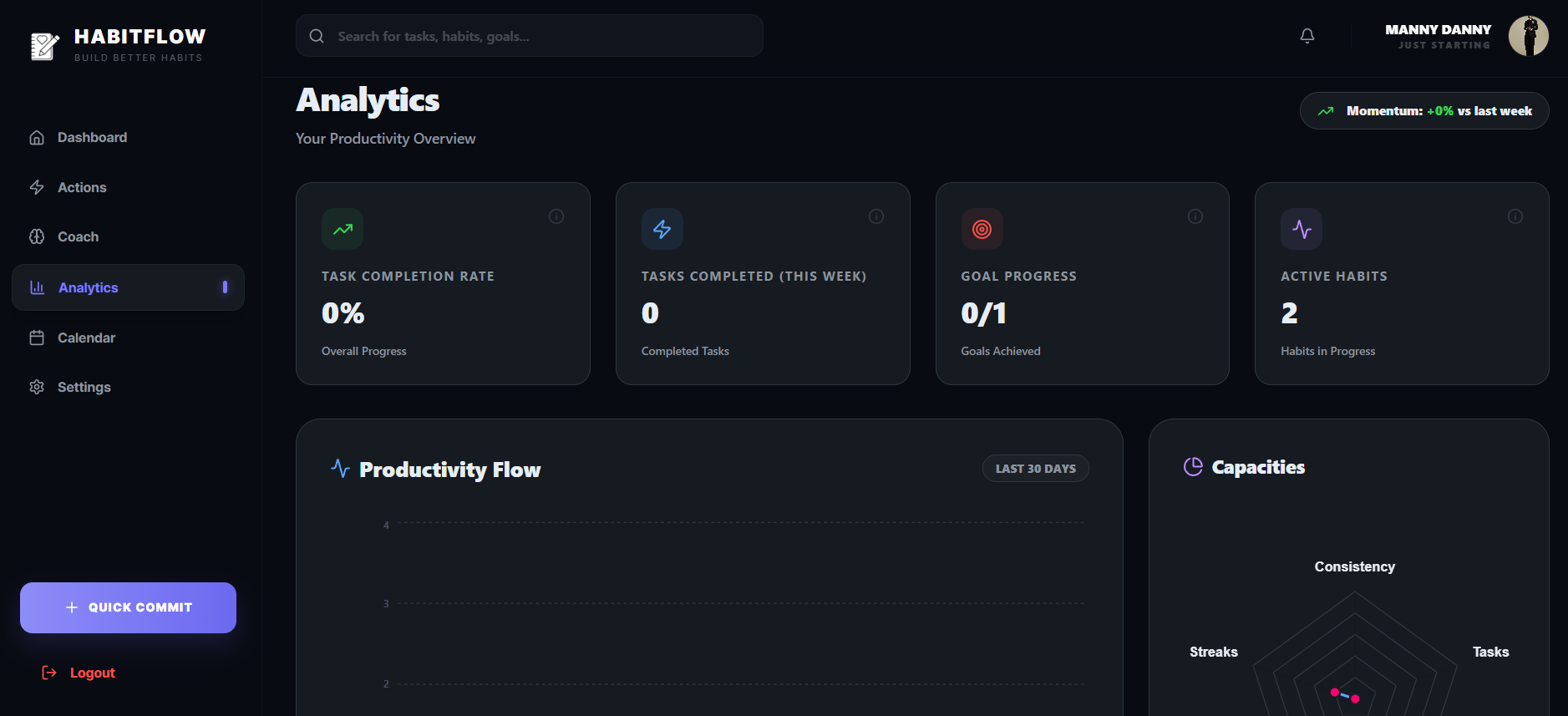
Analytics Page
-
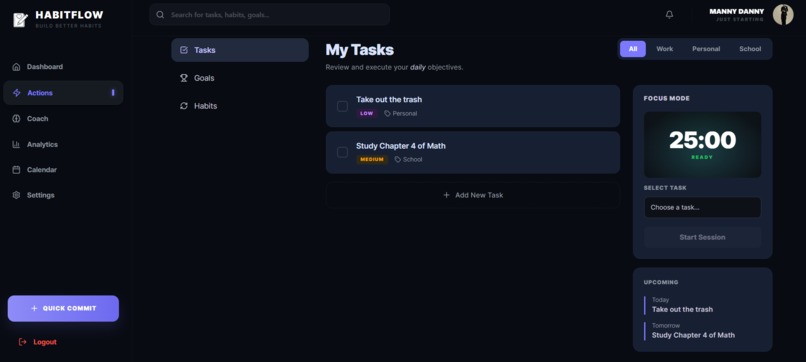
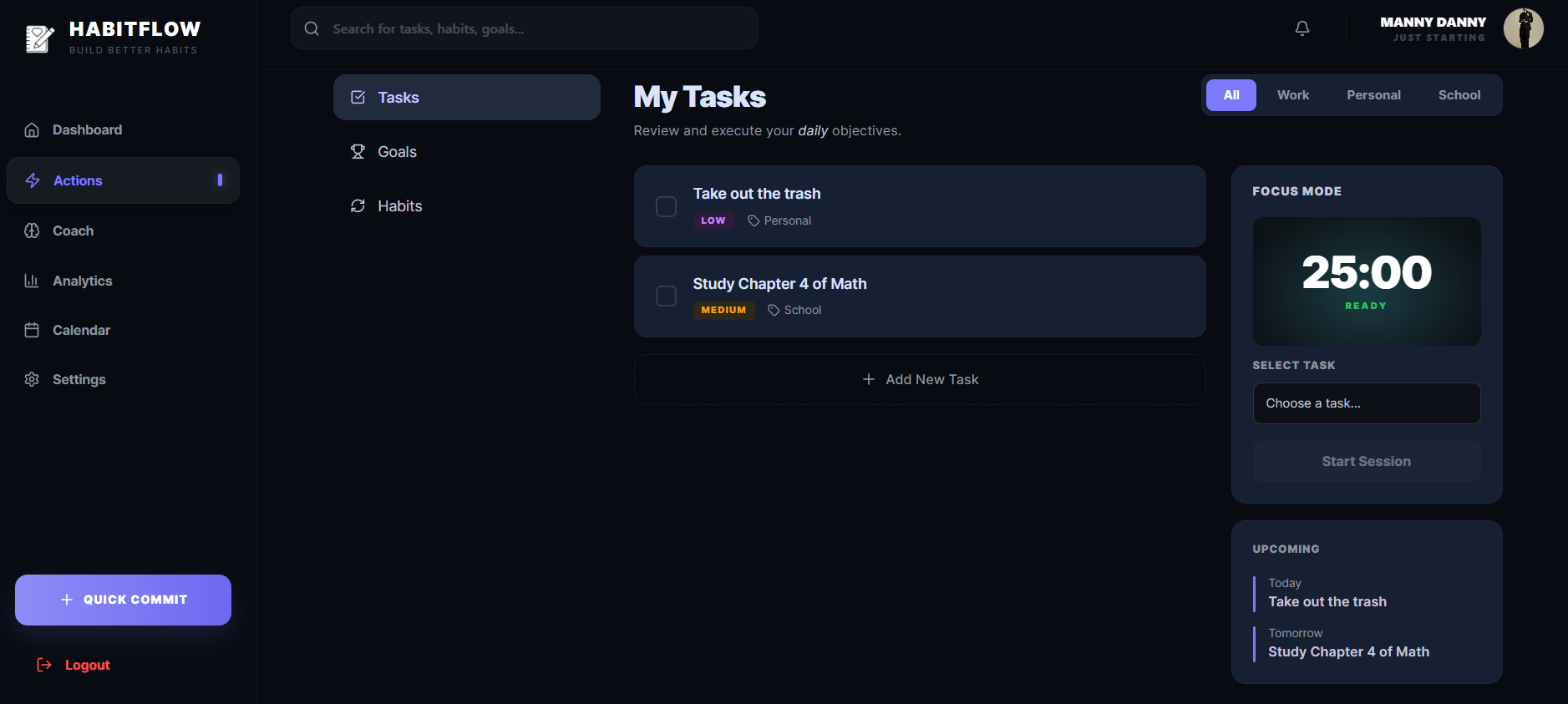
Action page : Task
Inspiration
The core inspiration behind HabitFlow came from a sudden realization that I had become more stagnant than before in my life. I felt my potential was being wasted due to a lack of growth and poorly managed time and efforts. Initially, I explored various methods to improve my situation, such as the 75 Hard Challenge and some Excel sheets I found online that I thought could help. However, I quickly discovered that these methods weren’t effective for me; they felt disengaging and lacked the encouragement I needed to push forward, even though I recognized that discipline and motivation were important factors.
So, I asked myself, why not leverage my talents and gifts to create something that serves the same purpose while addressing the gaps I noticed in other methods? This led me to start designing the user interface, planning the system architecture, and coding the application. I received initial guidance from GPT-5.5 on the free tier and tested it with a small, select group of users, which helped me produce the first functional prototype of my idea. I later utilized Codex and GPT-5.6 Solo and Terra to expand the concept, turning habit tracking and goal chasing into a journey that one can enjoy while improving and growing as an individual.
What it does
HabitFlow is an intelligent personal productivity system that helps individuals track habits, goals, and tasks while providing personalized, explainable coaching to plan realistically, recover from setbacks, and build sustainable routines.
How I built it
The development of HabitFlow started with a brainstorming session to define its functionality, the problems it would solve, and the required architecture. I chose React, TypeScript, FastAPI, and PostgreSQL as the core technologies and designed the application logic to ensure smooth interactions among subsystems like authentication, habit management, goal tracking, and analytics.
To structure these ideas, I used Mermaid to create visualizations, including flowcharts, pages maps and user journeys, which were essential for validating the app's navigation and structure. I also researched modern productivity app designs on Dribbble and used Google’s Stitch for rapid UI prototyping, eventually refining it in Figma.
The development took a backend-first approach, building the FastAPI REST API, database, and business logic before working on the React frontend. During this phase, I utilized GitHub for version control and relied on tools like Antigravity AI Code editing IDE with OpenAI GPT-OSS-120B, GitHub Copilot and Open Code’s GPT-5.1 Mini for code explanations, debugging, and task automation, ensuring every AI suggestion was carefully reviewed.
I shared the application with users and testers to gather feedback, which led to several refinement cycles focusing on usability and functionality.
Participation in OpenAI Build Week provided an opportunity to enhance HabitFlow by integrating new tools. Instead of starting from scratch, I focused on improving quality and intelligence. Codex helped analyze tester feedback, debug the code, and propose changes, significantly speeding up the refinement process.
I then employed GPT-5.6 to evaluate the app technically and from a user experience perspective. Together, we designed enhancements, including adaptive daily planning and personalized productivity reviews, transforming HabitFlow from a basic productivity tracker into an intelligent productivity coach. It now not only tracks user habits but also offers personalized guidance to help users make better decisions and build sustainable habits.
Challenges I ran into
The main challenges I encountered were the continuous debugging and refinement required throughout development. Small implementation issues, unexpected bugs, and UI inconsistencies often required revisiting both the frontend and backend to ensure the system functioned as intended and provided a smooth user experience.
Another significant challenge was the initial planning phase. Transforming the concept of a simple Excel-based habit tracker into a fully featured web application required careful thought around the application's architecture, workflows, and feature set. Through iterative planning, prototyping, and refinement, I was able to evolve the original idea into the HabitFlow platform.
Accomplishments that I am proud of
I am most proud of successfully transforming a simple idea that began as an Excel-based habit tracker into a fully functional full-stack web application. Seeing the original concept evolve into HabitFlow, with integrated features such as habit tracking, task management, goal setting, analytics, notifications, calendar scheduling, and reporting, has been one of the most rewarding aspects of the project.
I am also proud that the application's testing and evaluation phase identified relatively few critical issues, giving me confidence that the overall architecture, implementation, and integration of the various components were well designed. The feedback I received allowed me to focus primarily on refining the user experience and addressing smaller improvements rather than resolving major system failures, which reinforced the value of careful planning, iterative development, and continuous testing throughout the project.
What I learned
One of the biggest lessons I learned was the importance of viewing a project from an outside perspective. Having potential users and student testers evaluate HabitFlow proved to be invaluable, as they identified issues and usability concerns that I had overlooked after spending so much time developing the application. Although the overall number of bugs was relatively low, some of the issues identified were critical enough to negatively impact the user experience and overall system functionality. This reinforced the importance of testing with real users and continuously refining the application based on their feedback.
I also learned the value of simply pursuing an idea and enjoying the development process. What started as a simple Excel-based habit tracker gradually evolved into a full-stack web application because I allowed myself to explore new technologies, experiment with different solutions, and continuously learn throughout the project. Rather than treating development as a chore, I learned to see every challenge as an opportunity to build new skills, apply my knowledge, and create something meaningful.
What's next for HabitFlow
The next step for HabitFlow is to continue refining the application through user feedback and iterative improvements to enhance both its functionality and user experience. I also plan to increase awareness of the platform by sharing it with a wider audience and gathering insights from real users to guide future development.
Looking ahead, I hope to expand HabitFlow into a production-ready application that is available on the Google Play Store, Apple App Store, and the web, making it accessible to anyone looking to build better habits, improve their productivity, and achieve their personal goals through an intelligent and user-friendly platform.
Built With
- codex
- fastapi
- figma
- github-copilot
- gpt-5.1-mini
- gpt-5.6
- gpt-oss-120b
- mermaid
- openai
- postgresql
- python
- react
- typescript
- visual-studio-code
- vite

Log in or sign up for Devpost to join the conversation.