-
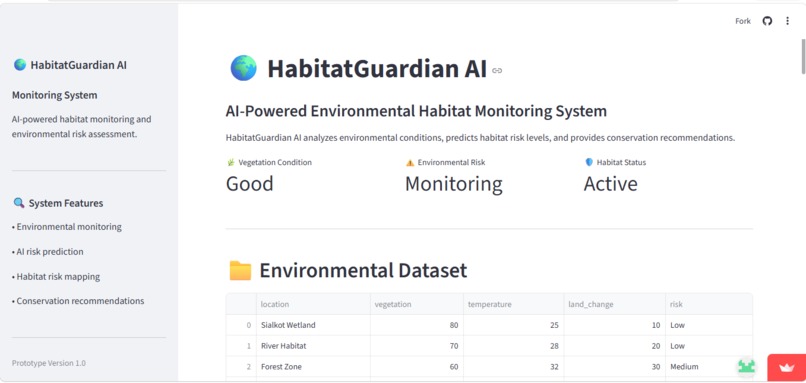
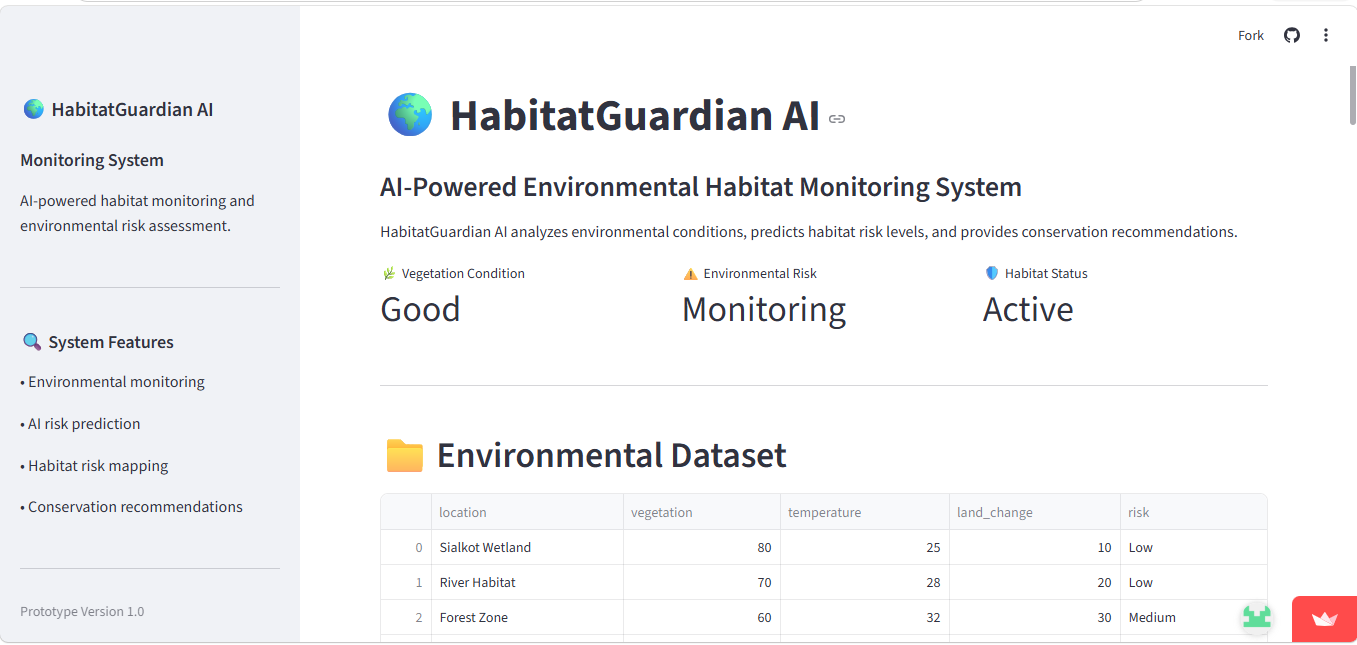
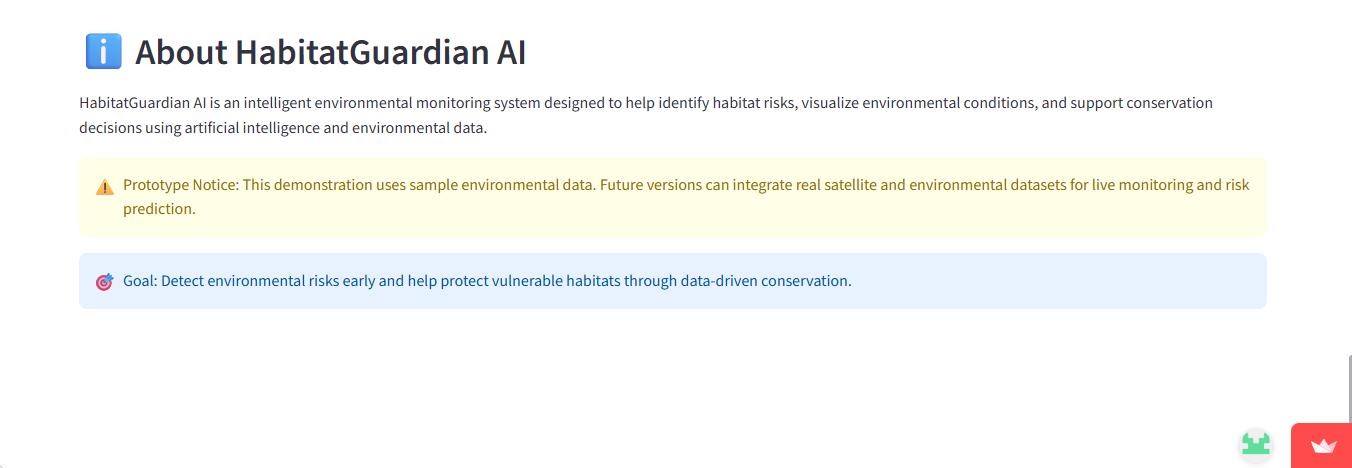
An AI-powered system for monitoring habitat conditions and environmental risks.
-
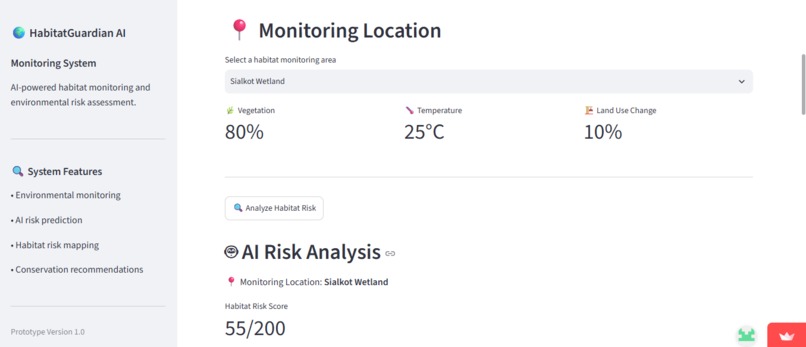
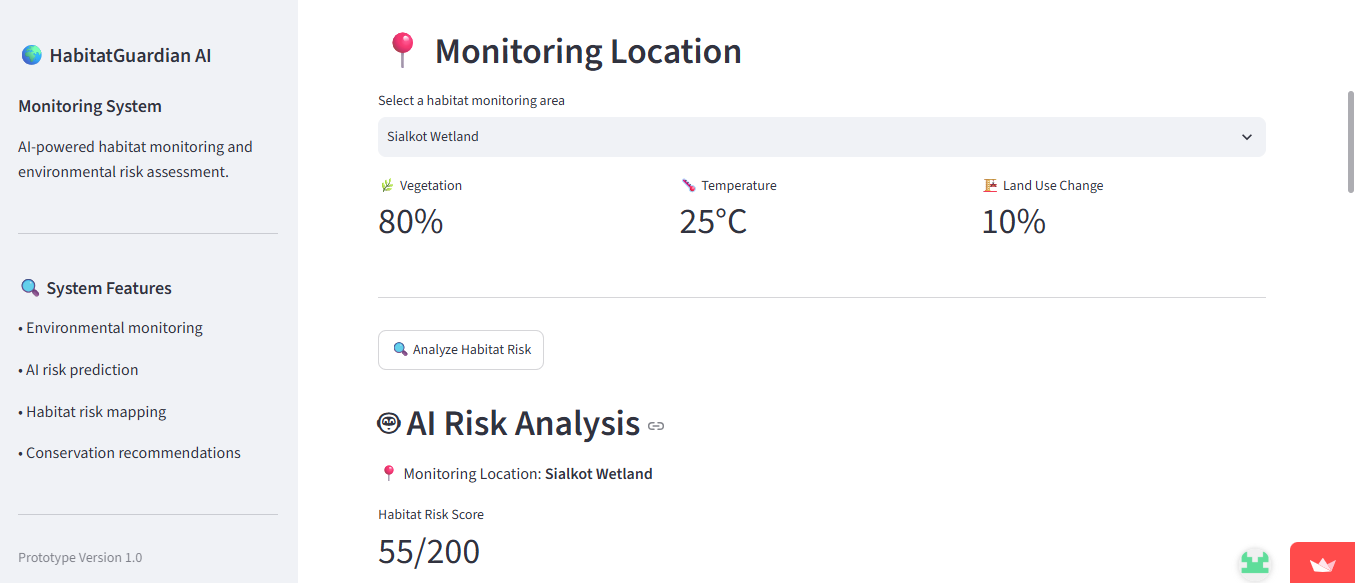
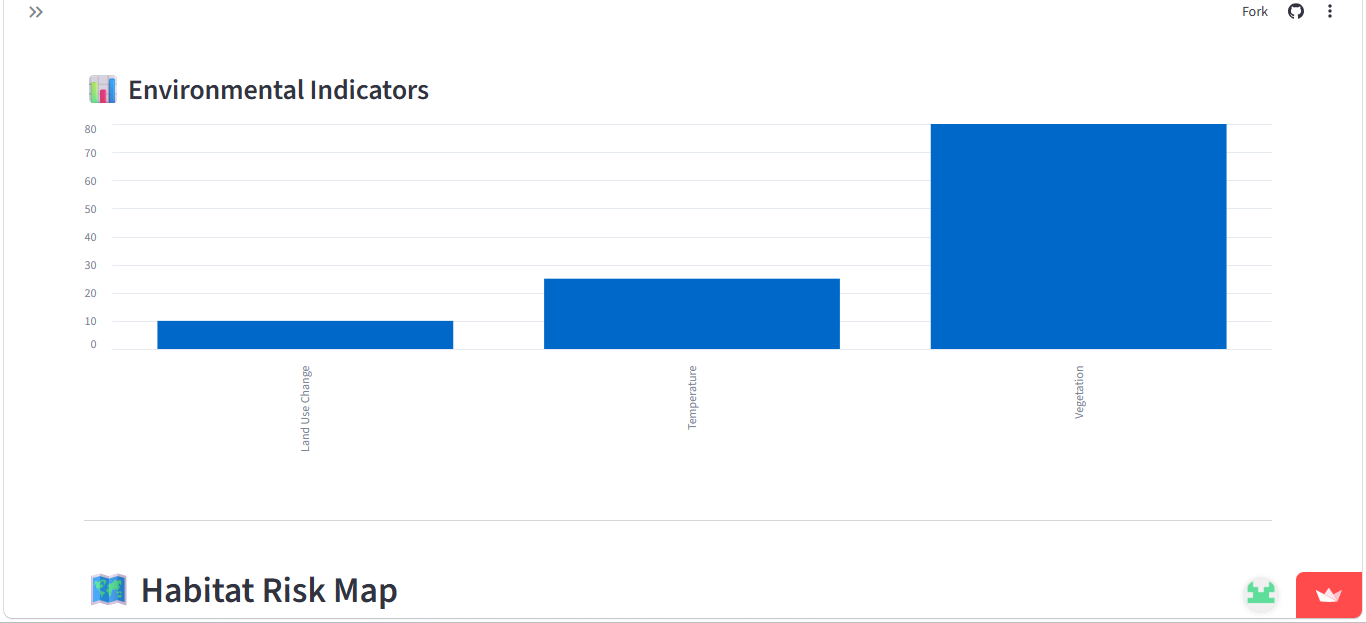
Users provide environmental factors such as vegetation level, temperature, and land-use change for analysis.
-
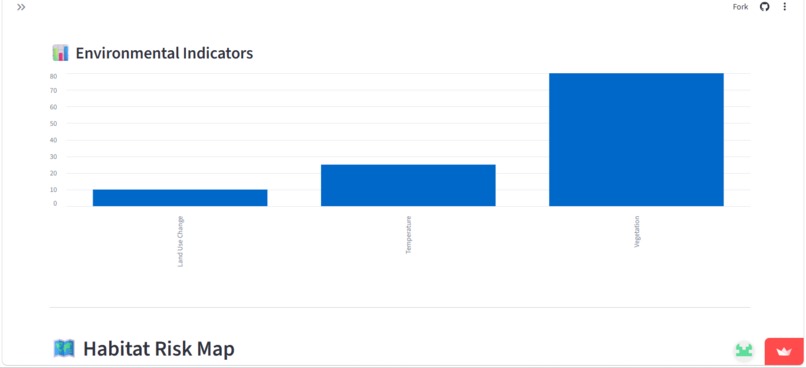
The system analyzes environmental conditions to identify the potential habitat risk level
-
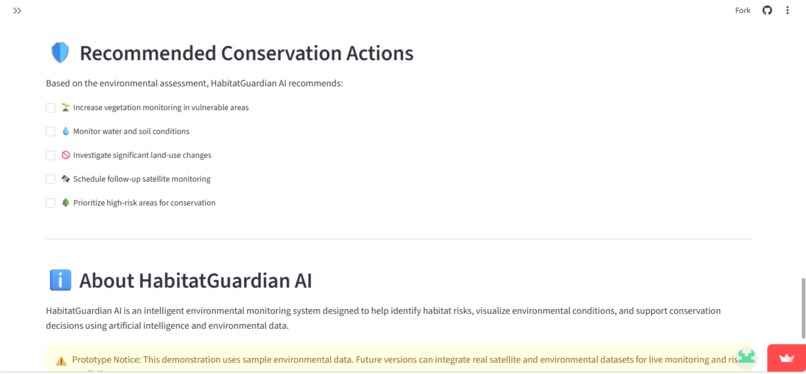
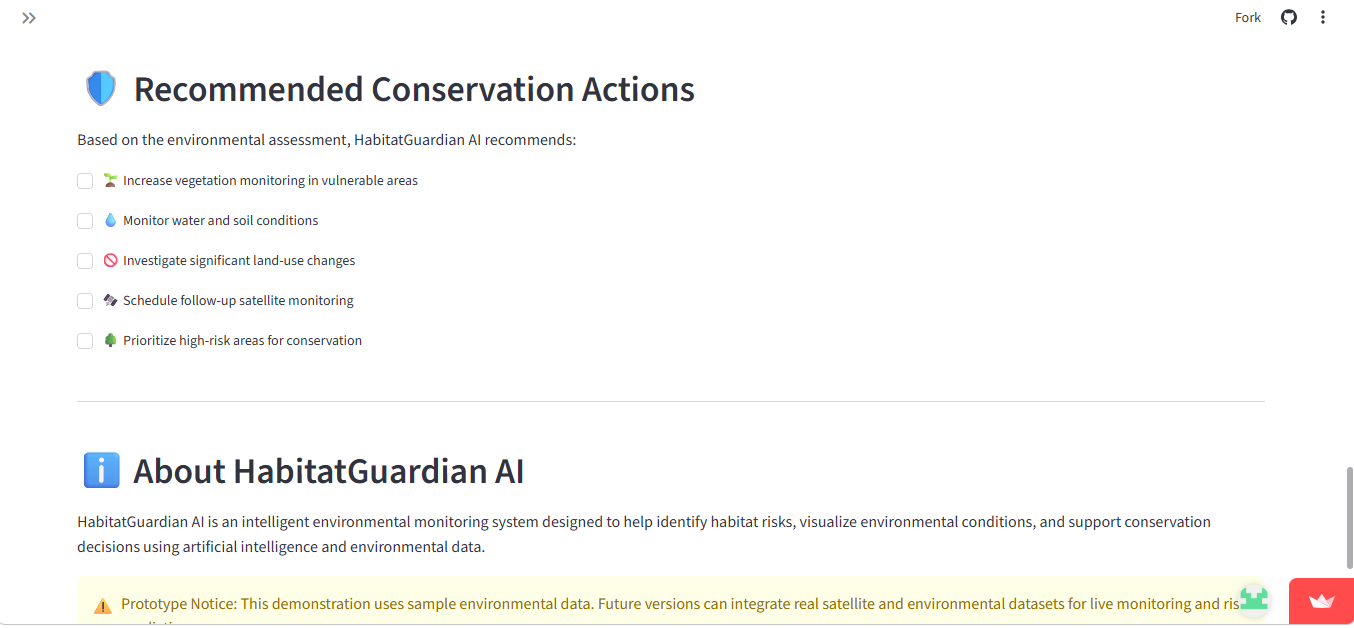
HabitatGuardian AI provides recommendations to support environmental awareness and conservation action.
-
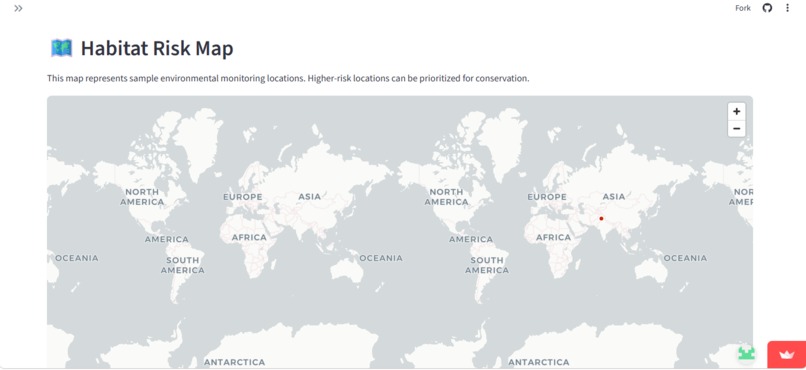
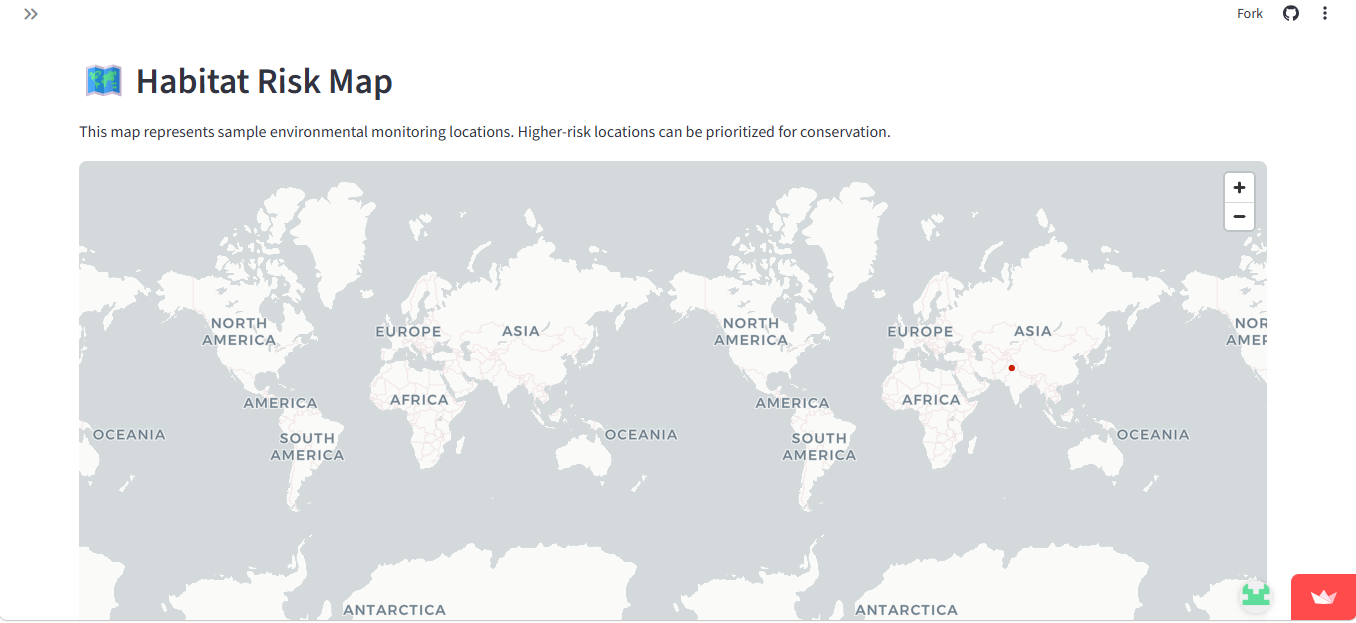
Habitat risk map for conservation planning.
-
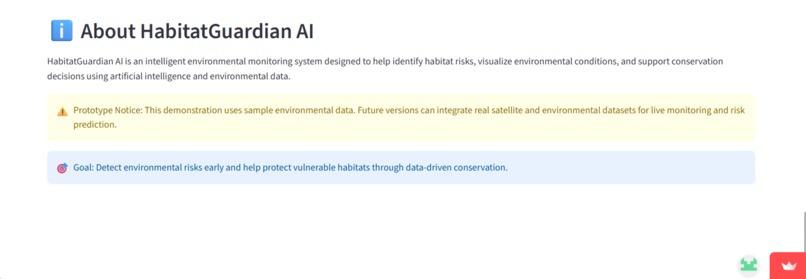
“Identifying habitat risk areas for effective conservation planning.”
Inspiration
What it does
How we built it
Challenges we ran into
Accomplishments that we're proud of
What we learned
What's next for HabitatGuardian AI
HabitatGuardian AI
Inspiration
Our planet's ecosystems are facing increasing pressure from habitat degradation, vegetation loss, rising temperatures, and land-use changes. These environmental problems can become serious before they are identified and addressed.
This inspired me to create HabitatGuardian AI, an AI-powered environmental habitat monitoring system that analyzes environmental conditions, identifies potential habitat risks, and provides conservation recommendations.
My goal was to explore how artificial intelligence and technology can help people better understand environmental risks and contribute to protecting ecosystems.
What it does
HabitatGuardian AI allows users to enter environmental information such as:
- Vegetation Level
- Temperature
- Land Use Change
The system analyzes these conditions and provides:
- Environmental habitat risk analysis
- Habitat risk score or risk category
- AI-powered risk assessment
- Conservation recommendations
The project makes environmental risk information easier to understand through a simple and interactive web application.
How I built it
I built HabitatGuardian AI using Python and Streamlit.
The application uses environmental data and AI/machine learning concepts to analyze habitat conditions and assess environmental risk. Users provide environmental information through the Streamlit interface, and the system processes the data to generate a risk analysis and conservation recommendations.
I used GitHub to manage the project's source code and Streamlit to deploy the application as a live web demo.
Technologies Used
- Python
- Streamlit
- Artificial Intelligence
- Machine Learning
- Data Analysis
- GitHub
- Environmental Data
Challenges I faced
One of the biggest challenges was connecting the environmental risk analysis with a simple and user-friendly web interface.
During development, I also faced technical issues such as code errors, indentation problems, variable errors, and ensuring that the prediction and risk analysis worked correctly.
I solved these challenges by testing the application step by step, debugging the Python code, improving the application structure, and testing the deployed application.
Another challenge was presenting environmental information in a simple way so that users could easily understand the habitat risk and recommended conservation actions.
What I learned
Through this project, I learned more about:
- Applying AI and machine learning to environmental problems
- Building interactive applications with Streamlit
- Analyzing environmental data
- Debugging Python applications
- Deploying a web application
- Using GitHub for source code management
Most importantly, I learned how technology can be used to address real-world environmental challenges and support efforts to protect our planet.
Environmental Impact
HabitatGuardian AI supports the theme "Build tech that protects the planet."
By analyzing habitat conditions and identifying potential environmental risks, the project demonstrates how AI can support environmental monitoring and conservation awareness.
The goal of HabitatGuardian AI is to encourage earlier attention to environmental threats and make environmental risk information more accessible.
What's Next
In the future, HabitatGuardian AI could be improved by adding real-time environmental data, additional habitat indicators, satellite or geographic information, and more advanced AI models.
These improvements could make the system more useful for environmental researchers, conservation organizations, and communities working to protect ecosystems.
Built With
- analysis
- artificial
- data
- githubpandas
- intelligence
- learning
- machine
- python
- streamlit

Log in or sign up for Devpost to join the conversation.