-
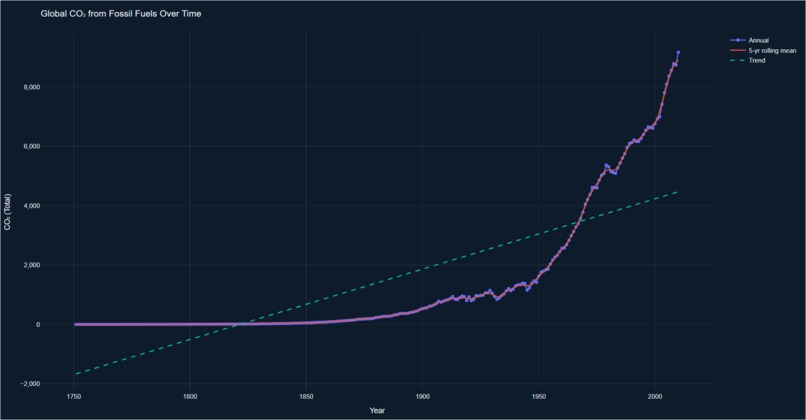
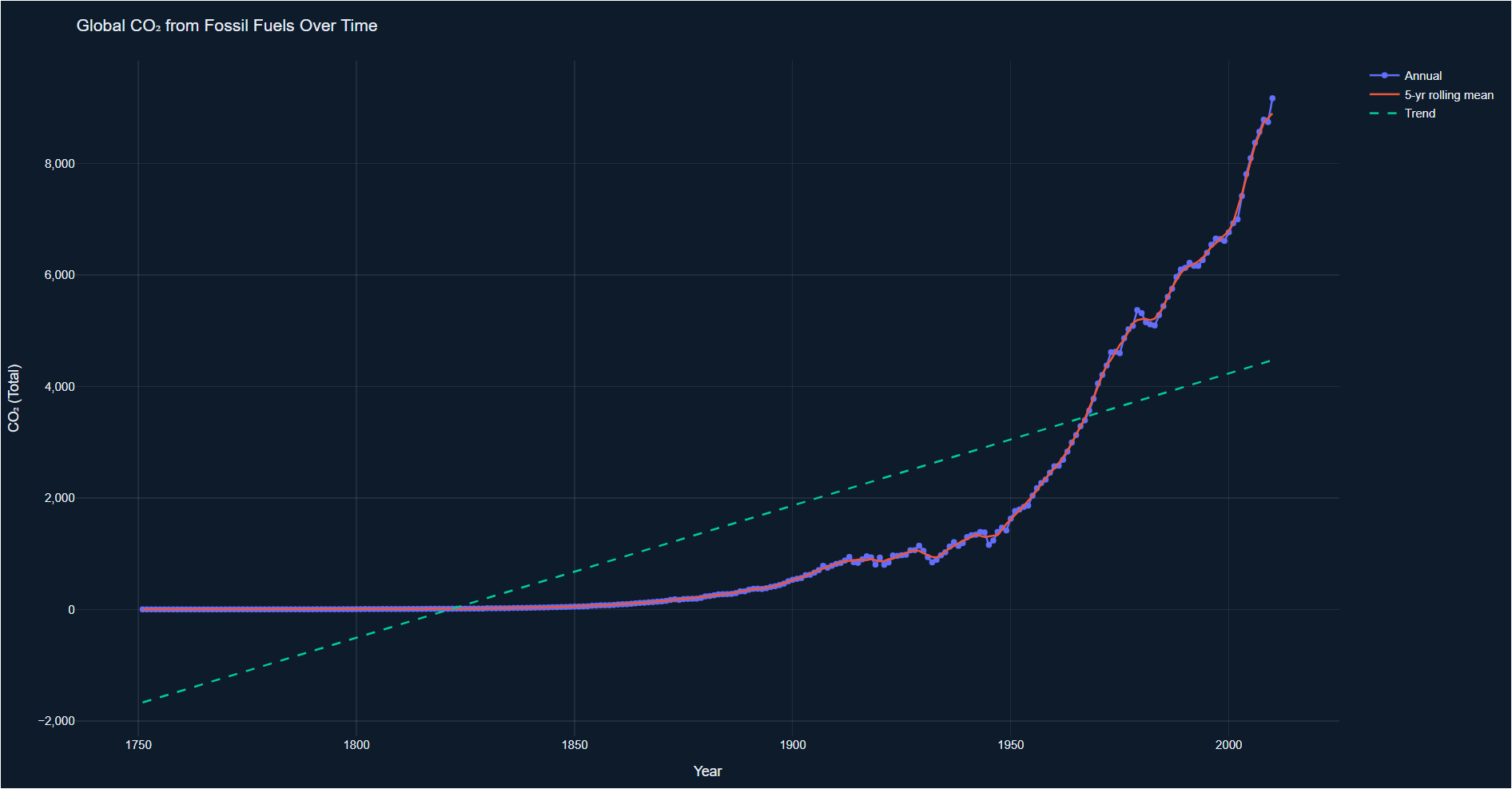
This graph depicts global CO₂ from fossil fuels since 1750, showing annual totals with a 5-year mean and a clear long-term rise.
-
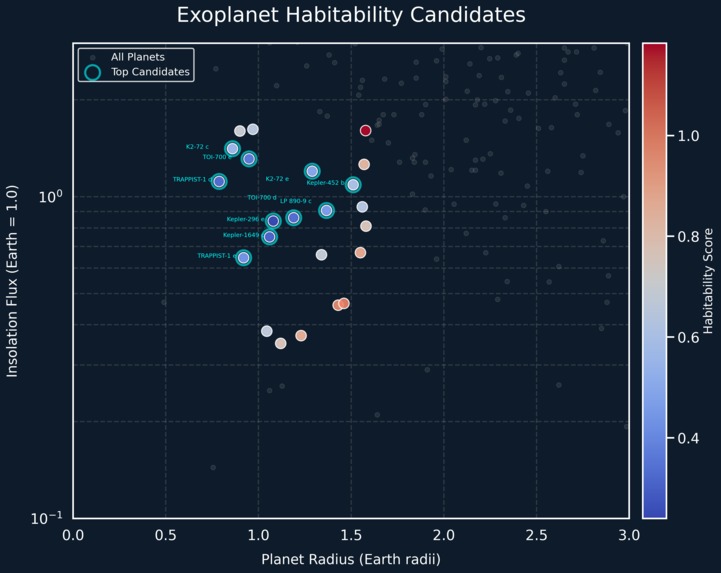
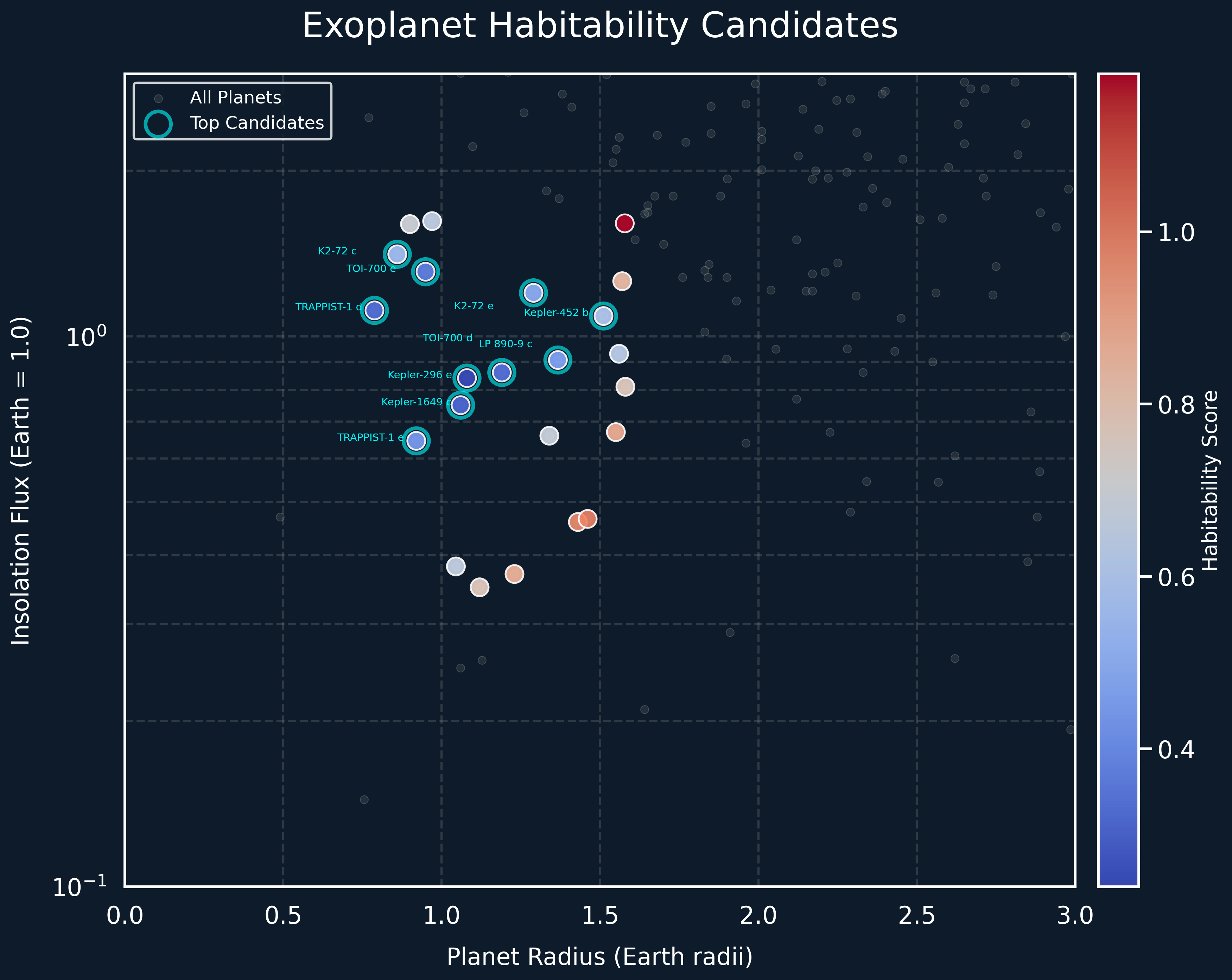
Top-10 exoplanets: radius (x) vs insolation flux (y). Color shows habitability score (blue = best).
-
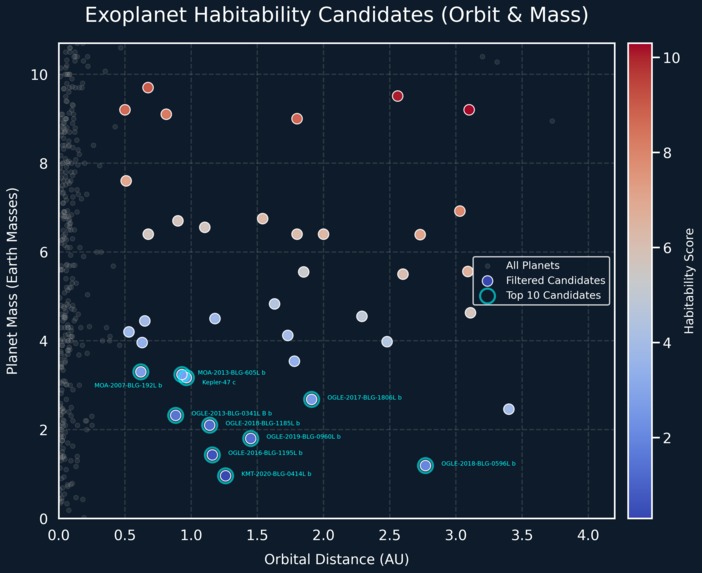
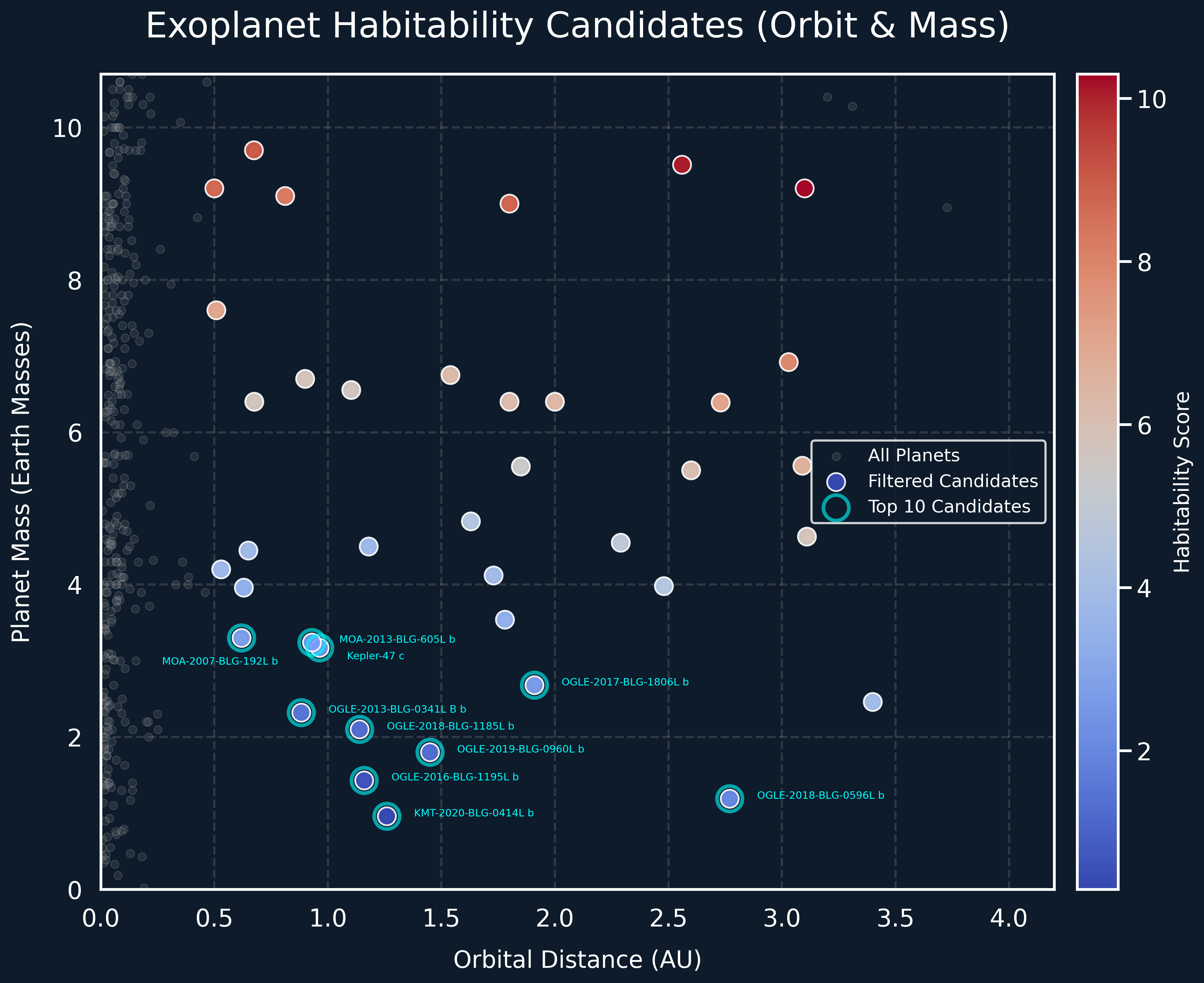
Top-10 exoplanets: orbital distance (x) vs planet mass (y). Color shows habitability score (blue = best).
-
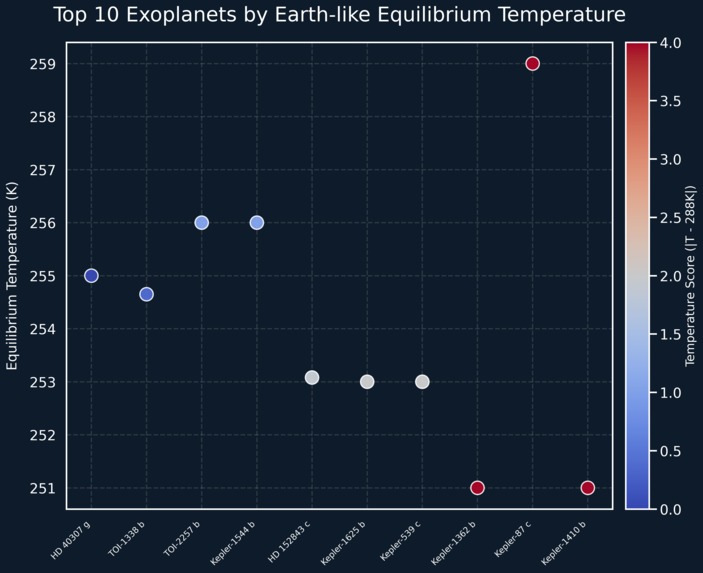
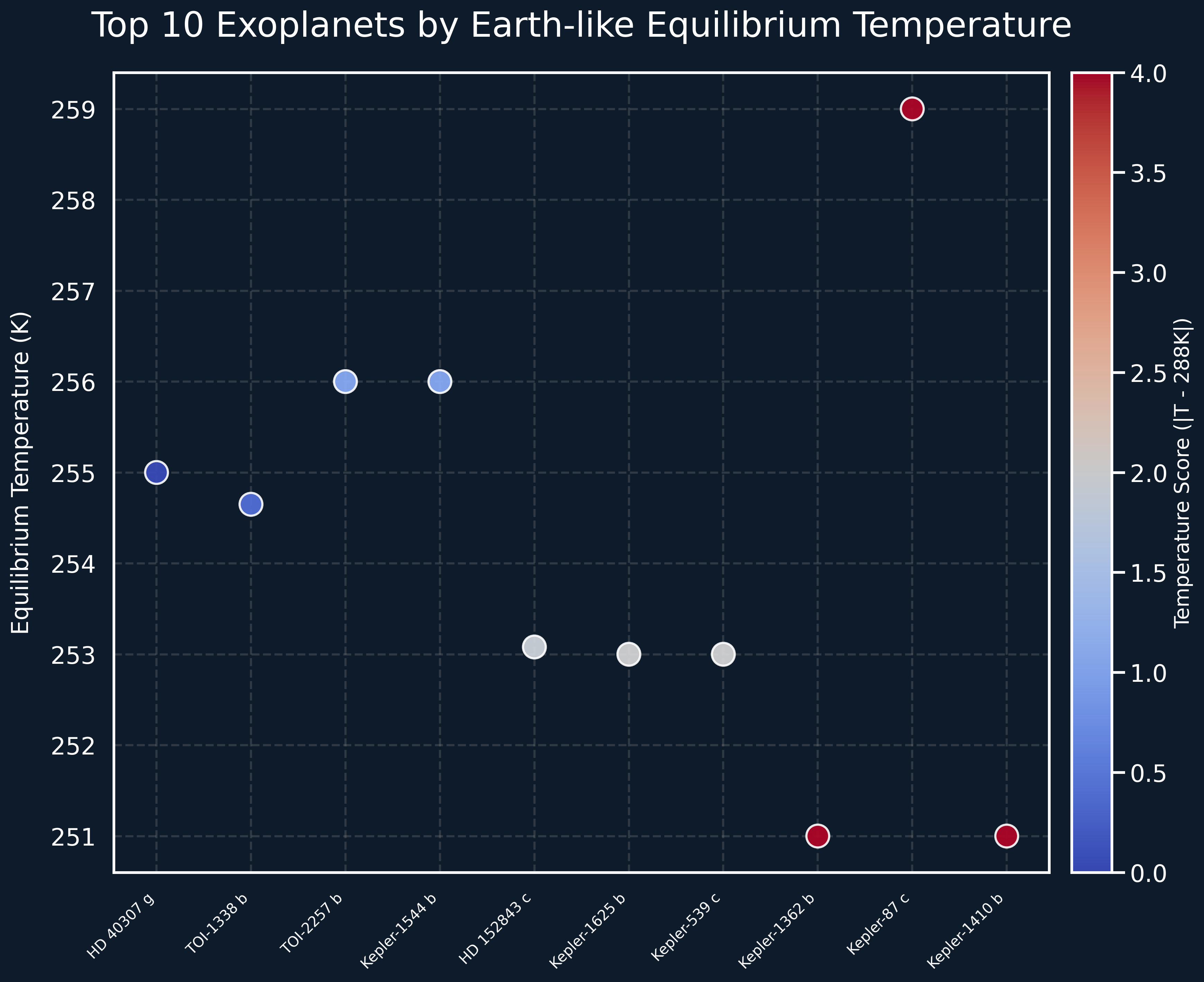
This graph depicts the top 10 exoplanets with near-Earth equilibrium temperatures (≈251–259 K); color shows deviation from Earth (255 K).
ExoHabit: A Human-Centric Map to the Stars
What inspired us
We love the cosmos—and we care about people. With Earth’s life-support systems under strain, we asked: if we ever needed it, which known worlds look most livable for humans? That spark became ExoHabit.
What our project does
NASA’s archive lists tens of thousands of exoplanets with ~387 columns each. We built a transparent 0–1 habitability score using the five most telling features—insolation flux, equilibrium temperature, radius, mass, and orbital distance—to surface a Top 10 shortlist for potential human relocation.
How we built it
- Grounding the “why”: Researched Earth’s habitability trends to frame urgency.
- Data pipeline: Pulled NASA’s
pscompparsvia TAP, cleaned/standardized, kept required fields, converted to Earth-relative units. - Scoring model: Literature-informed preference curves per feature + interpretable weights → single 0–1 score (0 ≈ Earth-like).
- Visualization: Three Python programs—trend dashboards, candidate comparisons, and a ranked shortlist—optimized for clear, judge-friendly visuals.
- Validation: Sensitivity checks to see how rankings shift as weights change.
Challenges we faced
- Scale & sparsity: Efficiently filtering a wide, uneven catalog without losing promising candidates.
- Clarity: Turning dense science into clean plots—iterating Matplotlib/Plotly designs until insights were obvious at a glance.
What we’re proud of
For most of us, it was our first hackathon and our first time teaming up. We’re proud of how we communicated, divided work, and shipped a research-based scoring equation that brought many moving parts together.
What we learned
- What truly makes Earth habitable—and which proxies (like equilibrium temperature or insolation flux) best signal human-livable conditions.
- How to balance trade-offs: sometimes you down-weight nice-to-haves to emphasize human-critical factors (gravity/temperature/light).
What’s next
- We can expand features/weights, add uncertainty and stellar-activity/radiation checks, and open-source the code.
Built With
- google-colab
- html
- kaggle
- linear-regression
- machine-learning
- matplotlib
- nasa-exoplanet-archive
- numpy
- pandas
- plotly
- python
- seaborn
- vscode


Log in or sign up for Devpost to join the conversation.