-
-
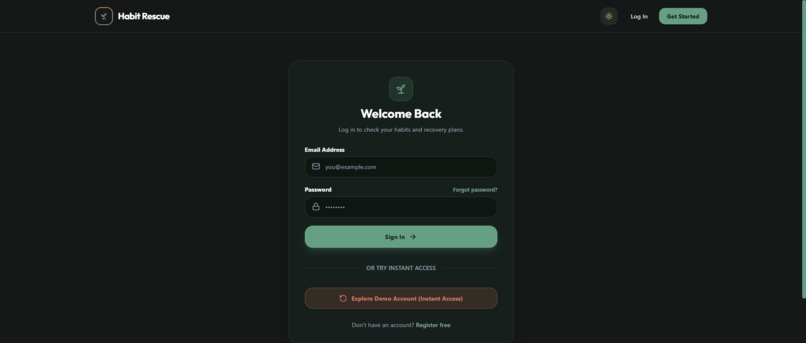
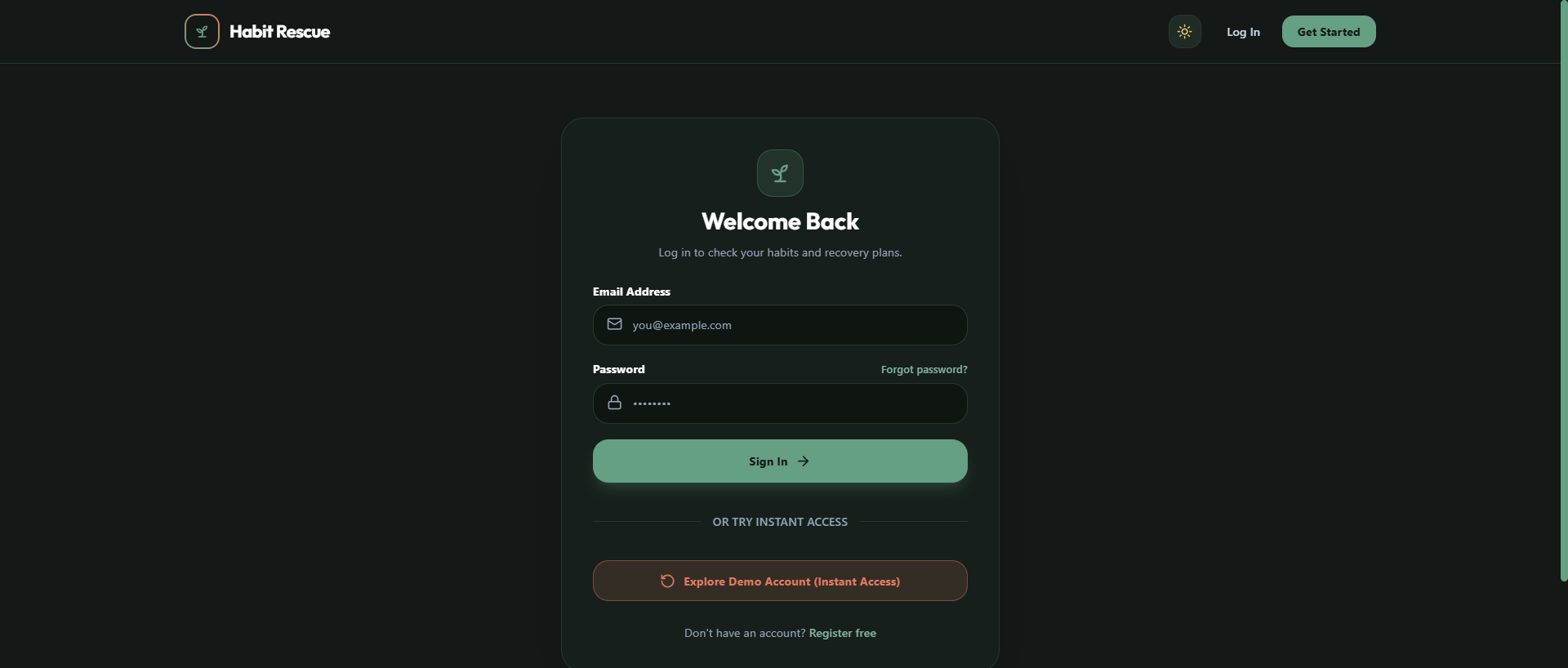
Login page
-
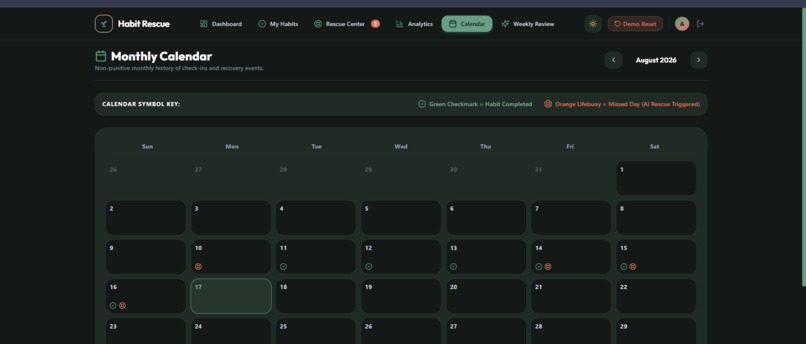
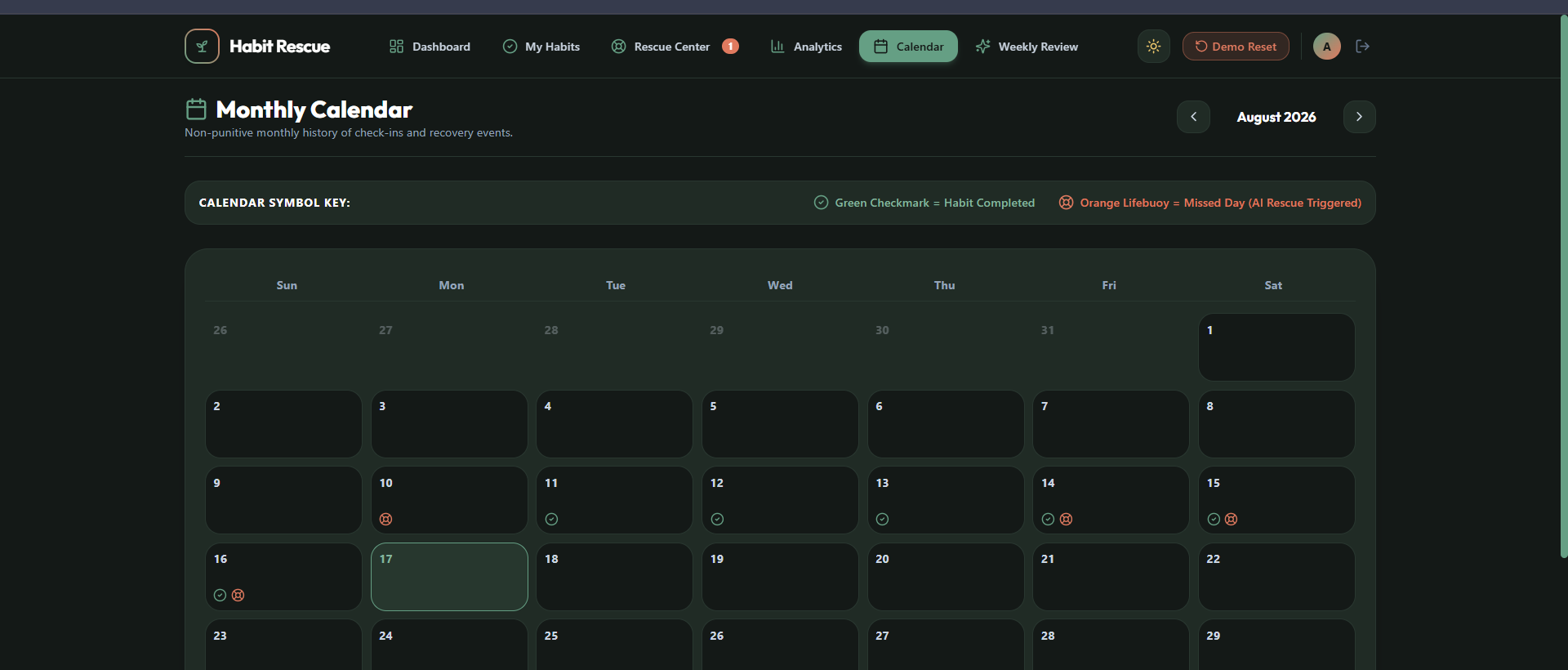
Calendar page to track the streak
-
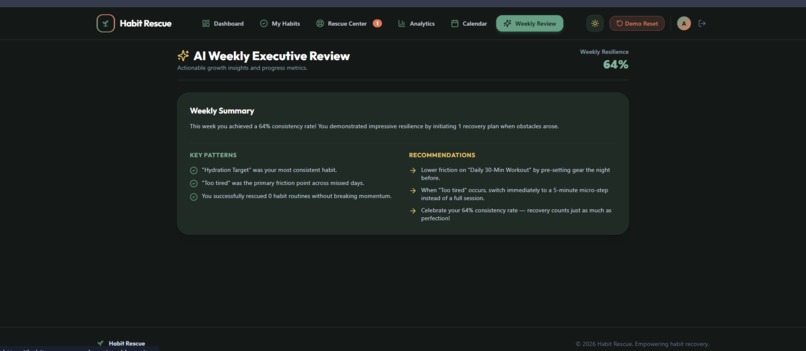
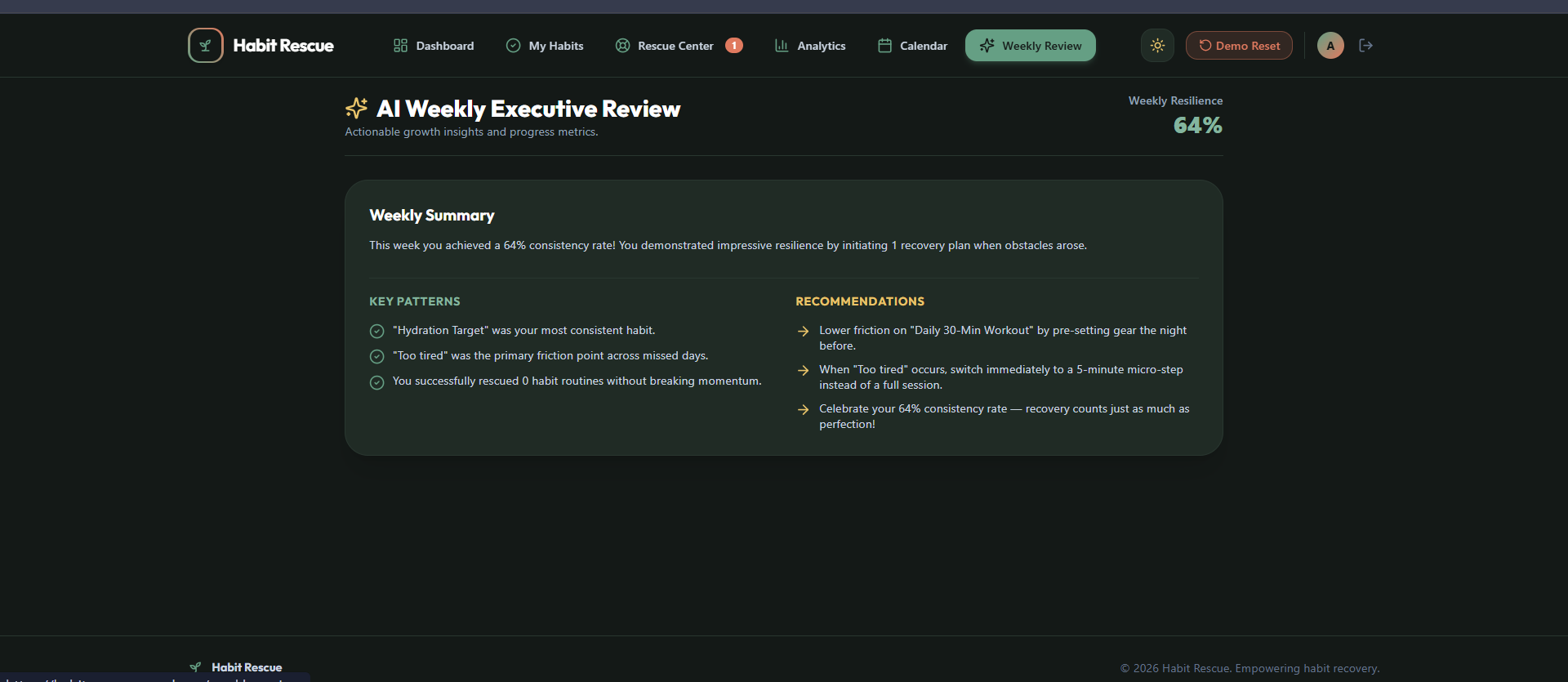
Weekly review page
-
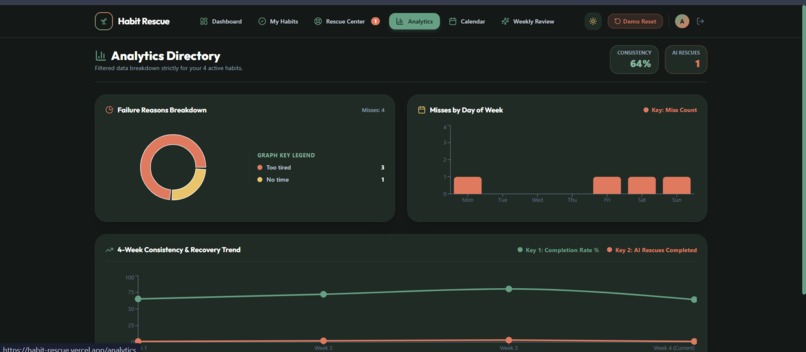
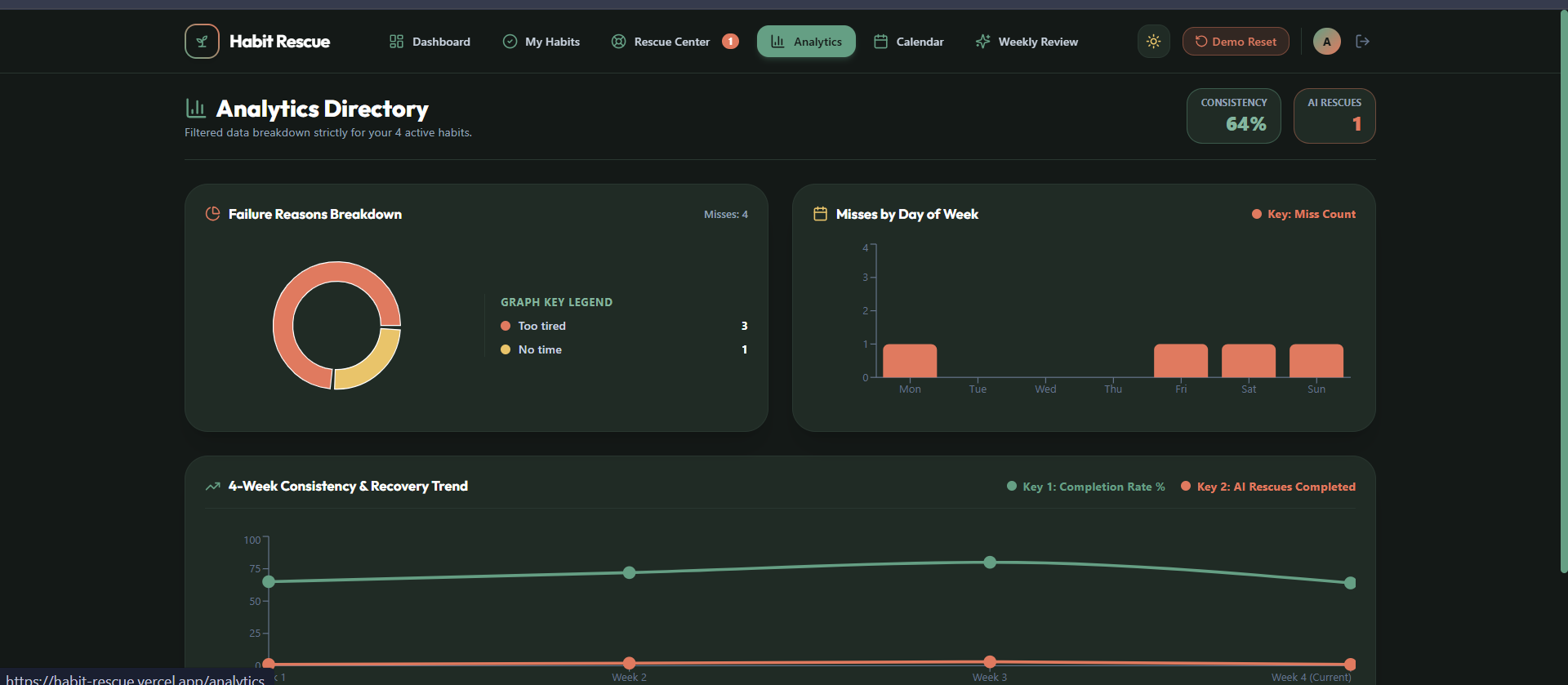
Analytics page that tells the summary of the habits and their analytics
-
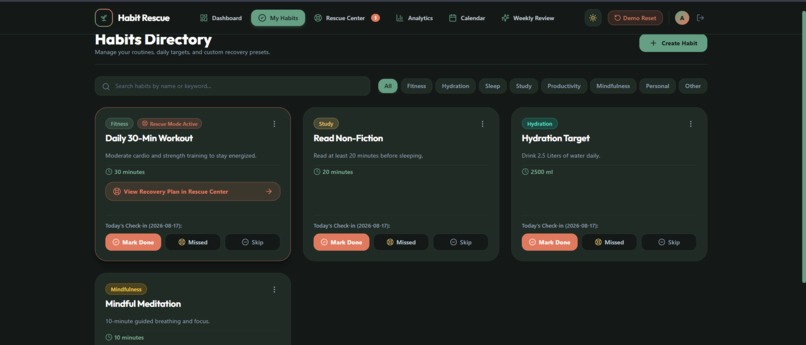
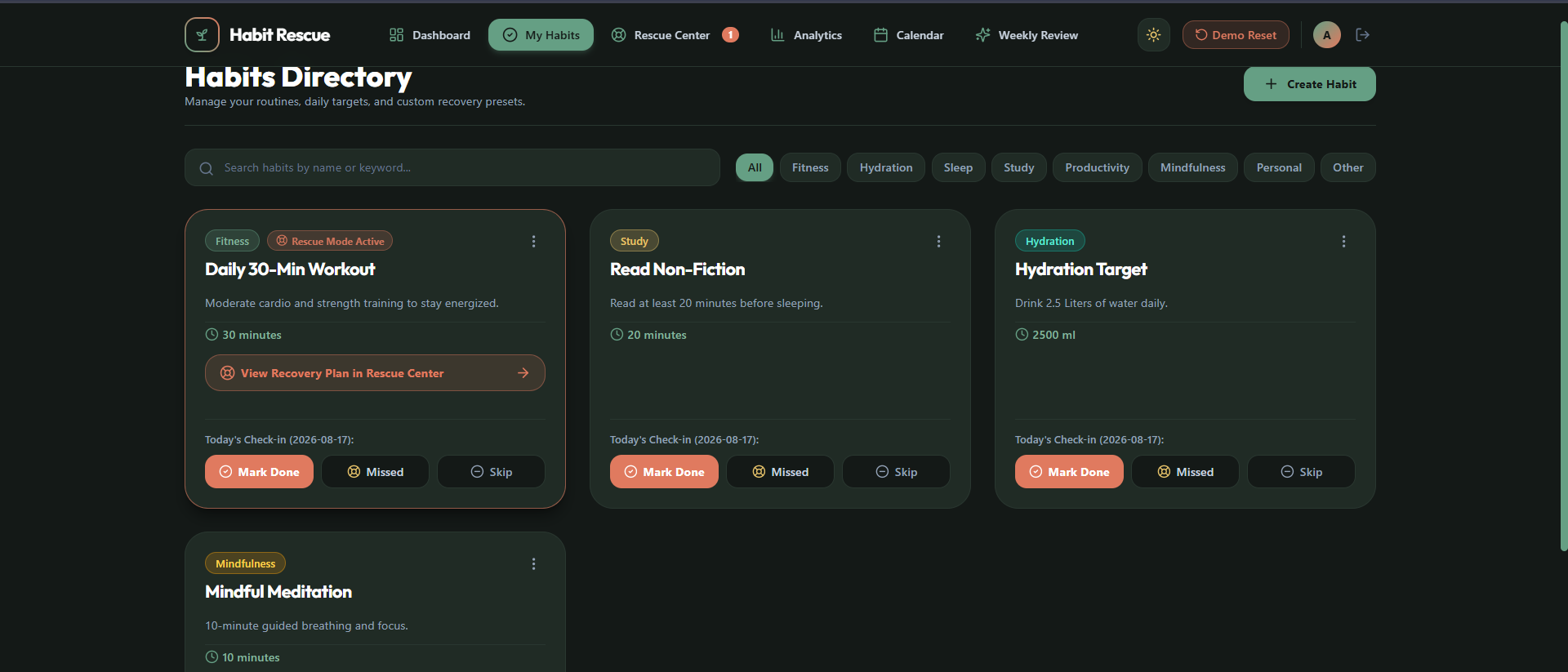
Habits page in dark mode
-
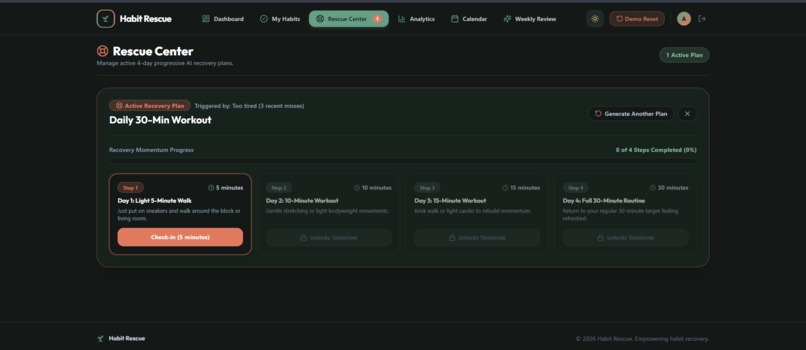
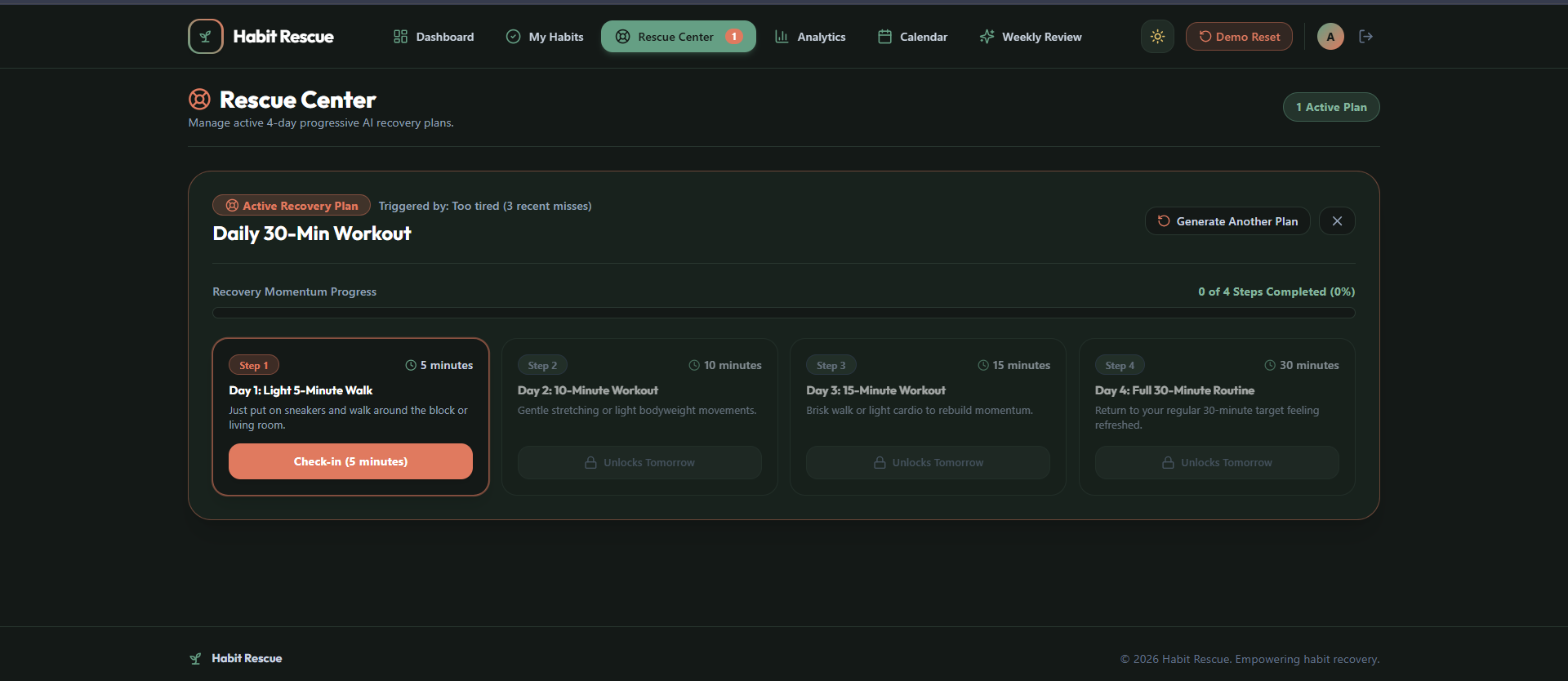
AI recovery plan page
-
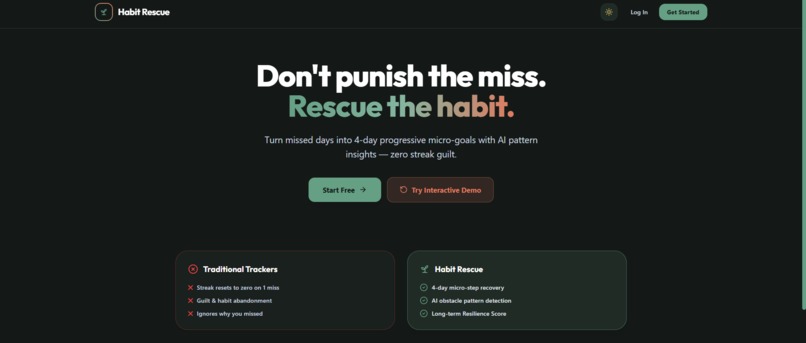
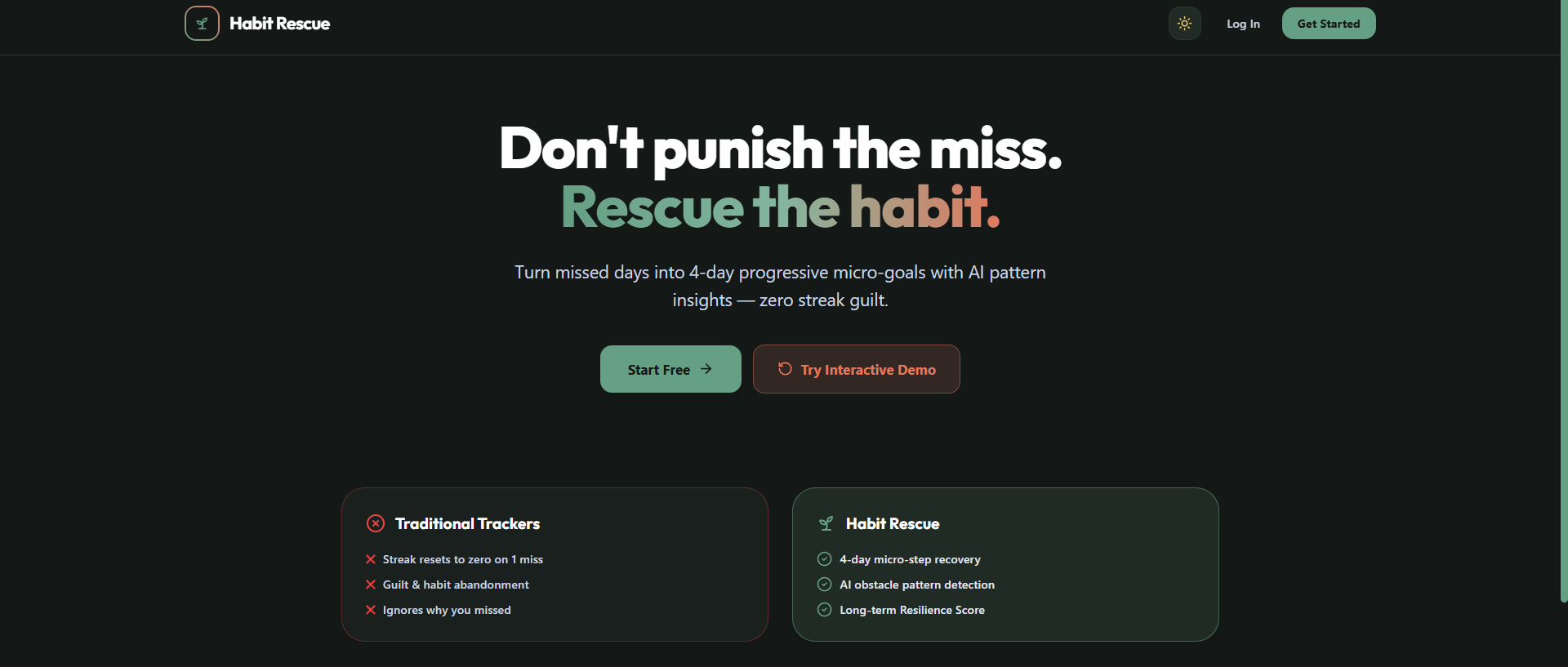
Landing page of the web app habit rescue
-
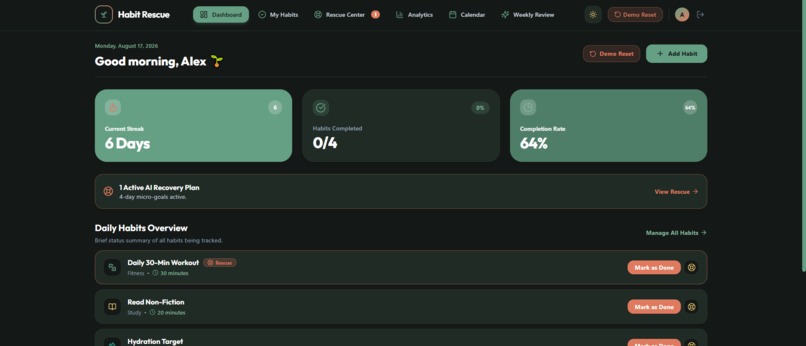
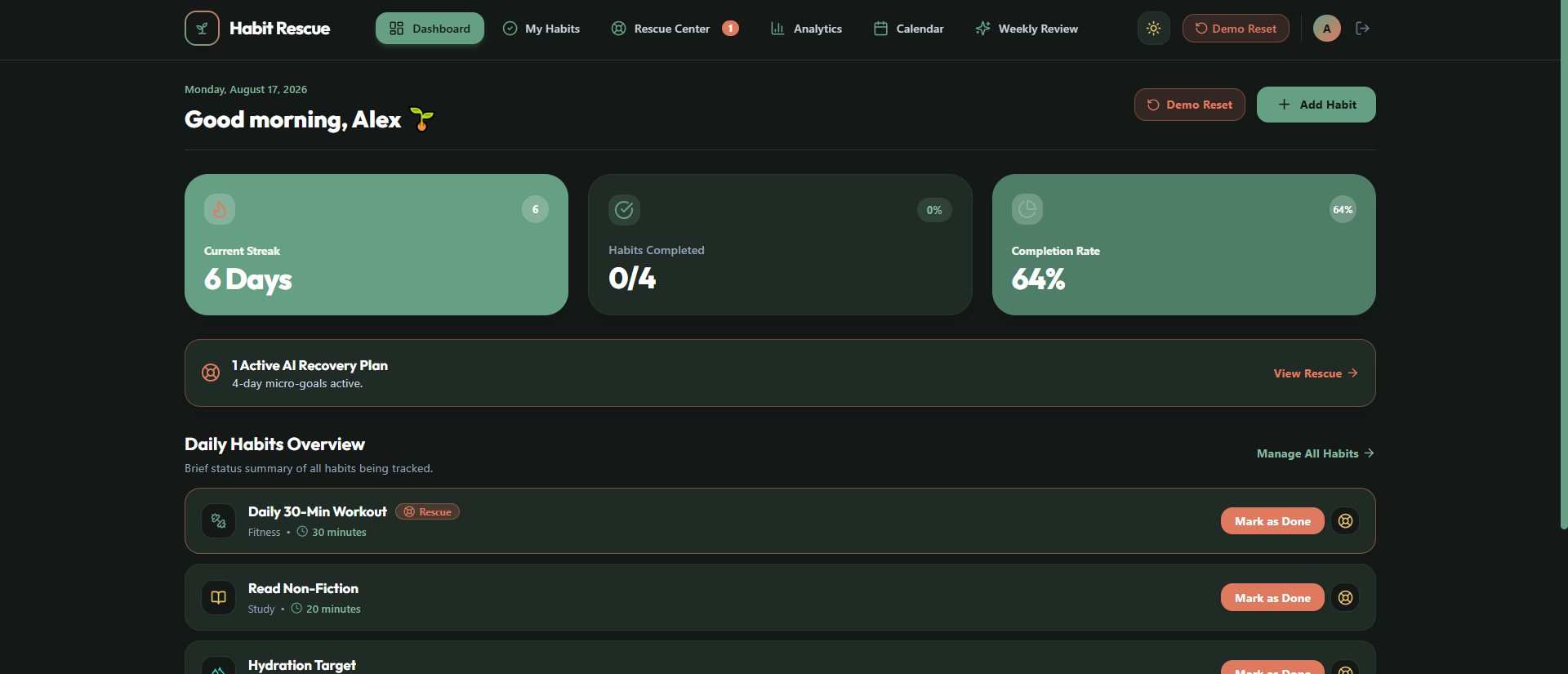
Dashboard in dark mode
-
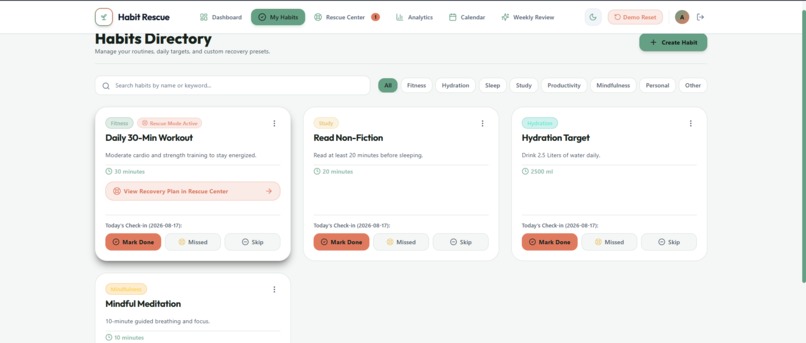
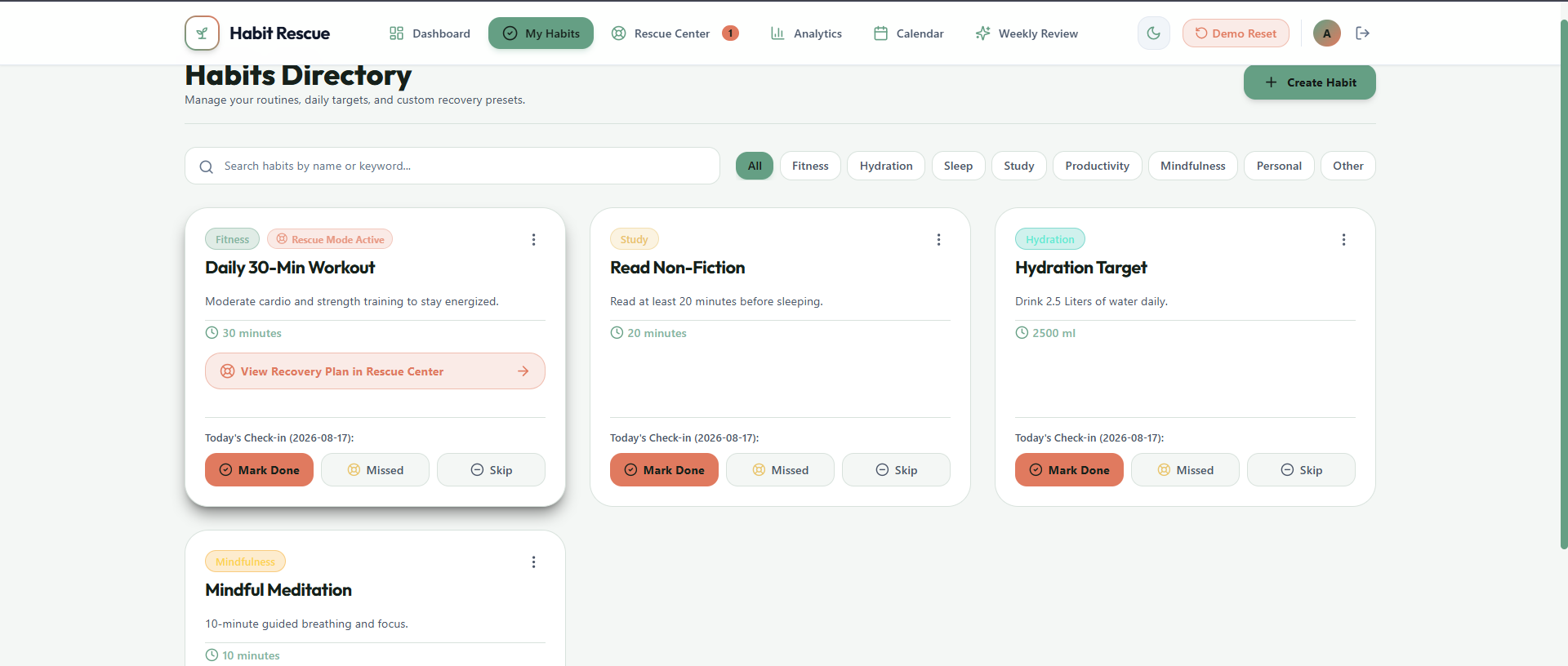
Habits page in light mode
-
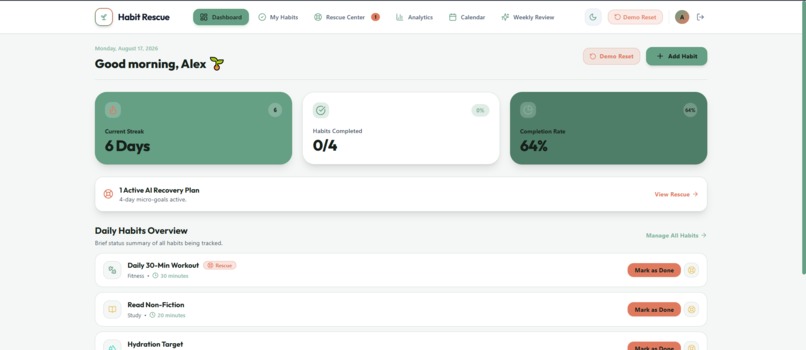
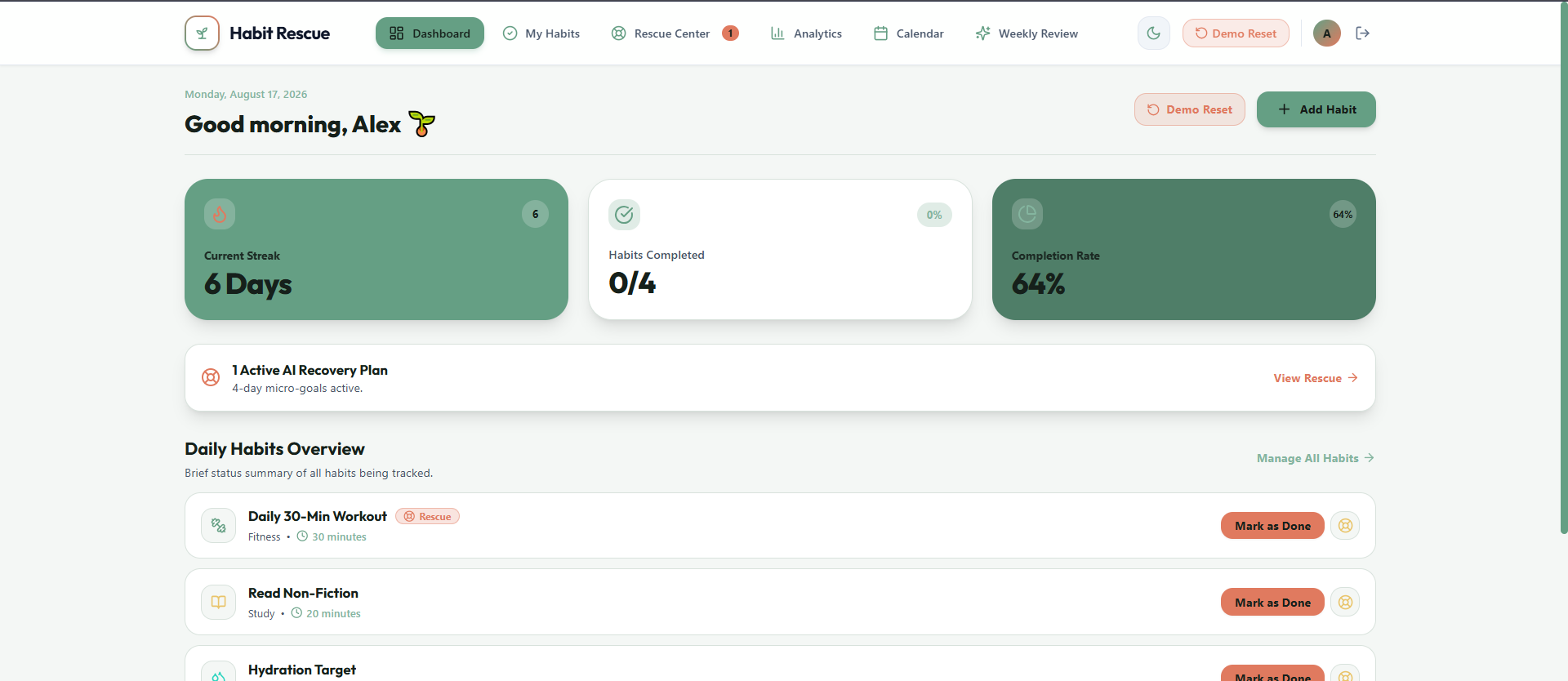
Dashboard in light mode
Inspiration
We’ve all experienced the excitement of starting a new routine—whether it’s morning meditation, daily reading, drinking enough water, or working out. You build momentum for two straight weeks, and you feel great.
Then, real life happens. You get a fever, work late on an urgent deadline, or simply feel completely exhausted. You miss a single day.
In traditional habit trackers, that single missed day wipes out your entire streak back to 0. Seeing a zero creates a destructive "all-or-nothing" psychological trap: "I already ruined my streak, so why bother today?" That streak guilt causes countless people to abandon healthy habits entirely.
Inspired by behavioral psychology and James Clear’s Atomic Habits ("Missing once is an accident. Missing twice is the start of a new habit"), we asked ourselves: What if an app treated a missed habit not as a failure, but as valuable information?
We built Habit Rescue to replace shame with science—helping users build lifelong resilience rather than fragile, robotic streaks.
What it does
Habit Rescue is an empathetic habit companion that transforms missed routines into actionable momentum:
Daily Check-In & Live Overview: Track daily routines with real-time metrics—including live consecutive streaks, today’s completion fraction (e.g., 3/5), and overall consistency rate.
Empathetic Miss Logging: When a habit is missed, instead of penalizing you, the app asks: "What got in the way today?" (Fatigue, tight schedule, low motivation, feeling unwell, etc.).
Google Gemini AI 4-Day Micro-Recovery Plans: Powered by Gemini 3.7 Flash, the AI creates an ultra-low-friction 4-day ramp-up plan.
Paced Rescue Center: Steps unlock one day at a time to prevent bingeing and burnout. Users can accept proposals, regenerate fresh variations, or dismiss plans as they see fit.
Root-Cause Analytics & Calendar: Visualizes recurring obstacle patterns (e.g., discovering that fatigue triggers missed workouts primarily on Thursdays) and provides a non-punitive monthly calendar celebrating both completions and successful AI rescues.
How we built it
Frontend: Built with React 18 and Vite for blazing-fast performance and modular component architecture. Styling & Theme System: Crafted with Vanilla Tailwind CSS utilizing a custom Warm Zen Botanical palette (Sage Emerald, Terracotta Orange, Sand Gold, and Mineral Obsidian), featuring a complete, high-contrast Light & Dark Mode toggle. Generative AI Engine: Integrated Google Gemini 3.7 Flash (gemini-3.7-flash via Google AI Studio API) using structured JSON output prompts to serve as an embedded behavioral psychologist. Includes a deterministic heuristic fallback engine ensuring 100% offline reliability. Backend & Real-time Database: Firebase Authentication handles secure email/password auth and one-click instant demo access, while Cloud Firestore synchronizes habits, check-in history, and active rescue plans across devices in real time.
Challenges we ran into
AI Prompt Engineering for Behavioral Balance: Crafting a prompt that didn't just give generic advice, but calculated precise, mathematically stepped micro-durations (e.g. 15% -> 35% -> 65% -> 100%) while preserving an empathetic, human tone.
State Synchronization & Cascade Deletion: Ensuring that when a habit is deleted or completed, its associated AI recovery plans, logs, and calendar entries update instantaneously across the context state and Firestore without leaving "ghost" plans behind.
True Dynamic Metric Calculations: Replacing static or hardcoded placeholder numbers with 100% live, calculated user metrics (such as calculating true consecutive day streaks and handling edge cases like zero-habit accounts gracefully).
Accomplishments that we're proud of
Zero-Guilt User Experience: Transforming a negative moment (missing a habit) into a positive, proactive experience within seconds. Live Gemini 3.7 Flash Integration: Achieving lightning-fast, structured JSON recovery plan generation directly tailored to the user's specific habit parameters and obstacle reasons. Frictionless UI/UX: The intuitive flow where completing a habit automatically dismisses its active rescue plan and resets the habit to normal status without requiring manual cleanup from the user. Aesthetic Polish: Creating an accessible, calming visual design across both dark obsidian and bright mineral light themes that feels welcoming and intentional.
What we learned
Psychology in UI Matters: Changing small details—like swapping a scary "Streak Broken: 0" badge for a proactive "AI Rescue Activated" prompt—fundamentally changes a user's relationship with self-improvement. Structured Generative AI in Production: How to enforce strict JSON schemas with modern LLMs like Gemini 3.7 Flash while pairing them with reliable fallback logic to guarantee zero downtime. Non-Punitive Tracking: Designing products around human imperfection makes them far stickier and healthier than designing for artificial perfection.
What's next for Habit Rescue
Smart Wearable Integrations: Syncing with Apple Health, Garmin, and Fitbit to detect high-stress or low-recovery sleep days and proactively suggest lighter micro-goals before a miss even happens. AI Voice Check-in: Letting users tap a mic and verbally vent why their day was hard, with Gemini automatically parsing the obstacle and setting up their rescue plan. Community Rescue Circles: An optional, empathetic group space where friends can cheer each other on during 4-day recovery ramps. Native Mobile Apps: Bringing Habit Rescue to iOS and Android via React Native with lock-screen micro-step widgets.


Log in or sign up for Devpost to join the conversation.