-
-
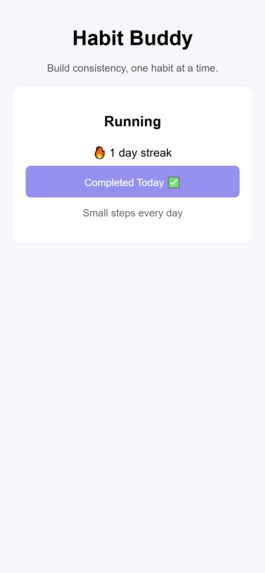
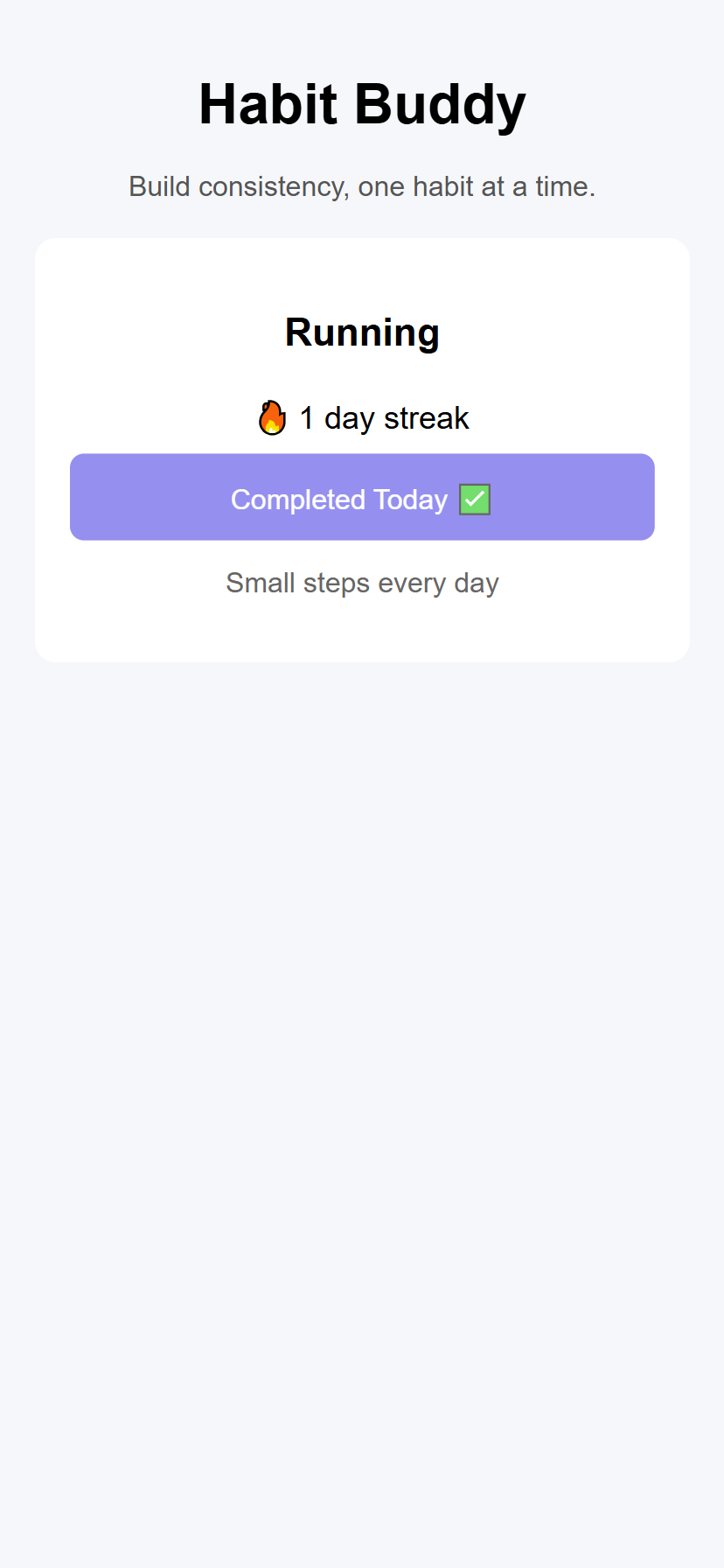
This is the screen which user sees after marking the habit as complete
-
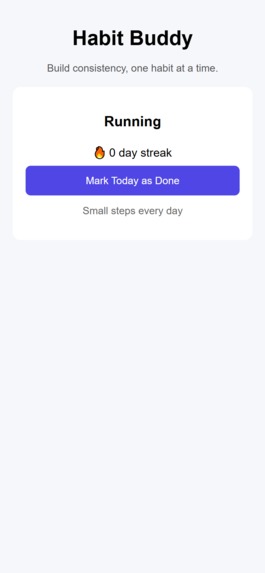
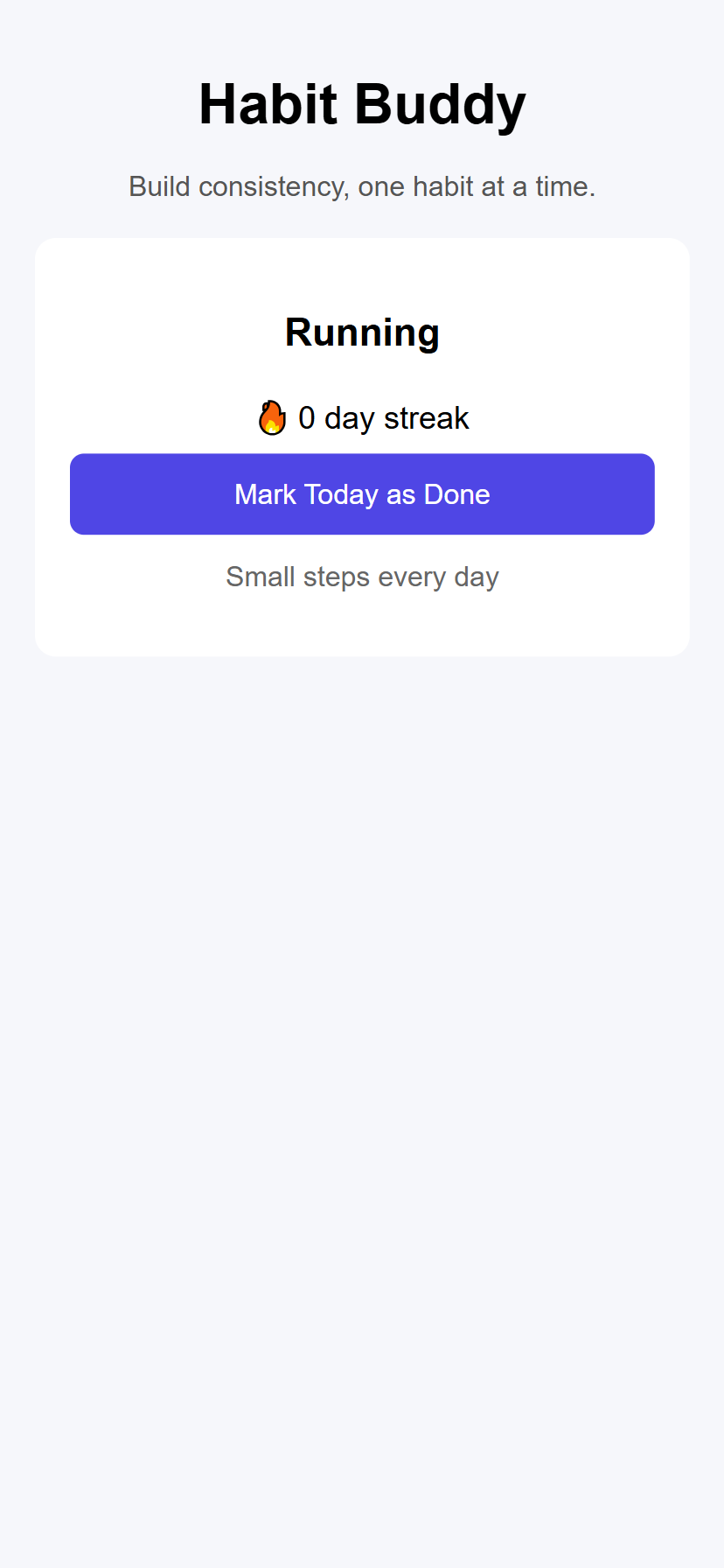
This is the screen where user can mark whether today he has completed the habbit or not
-
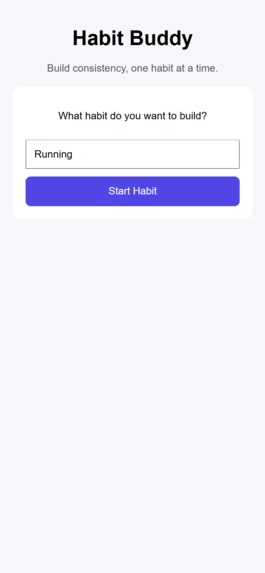
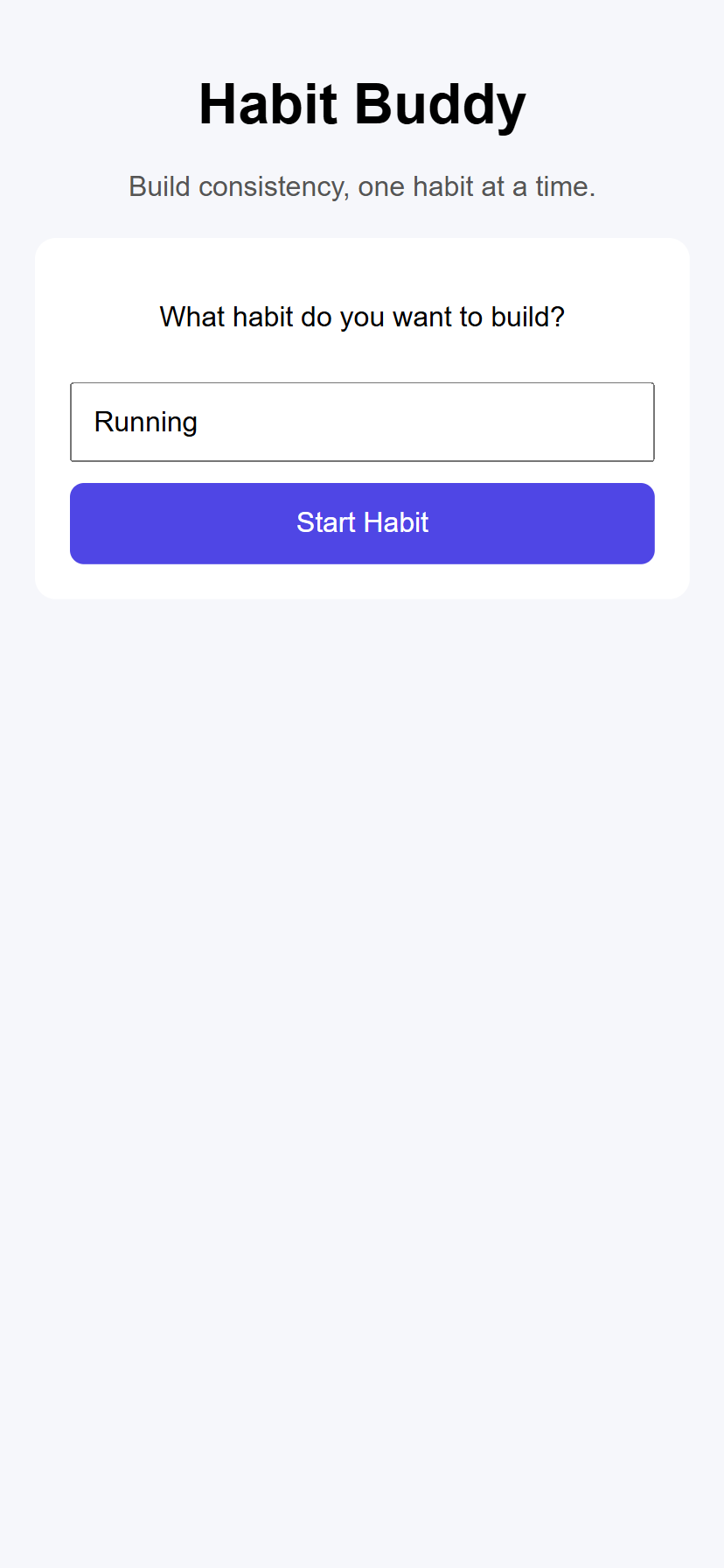
This is the demo image which says I want to add running as my daily habit
-
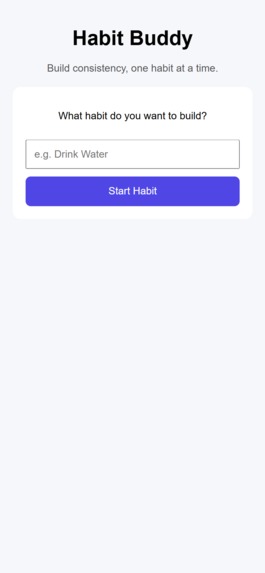
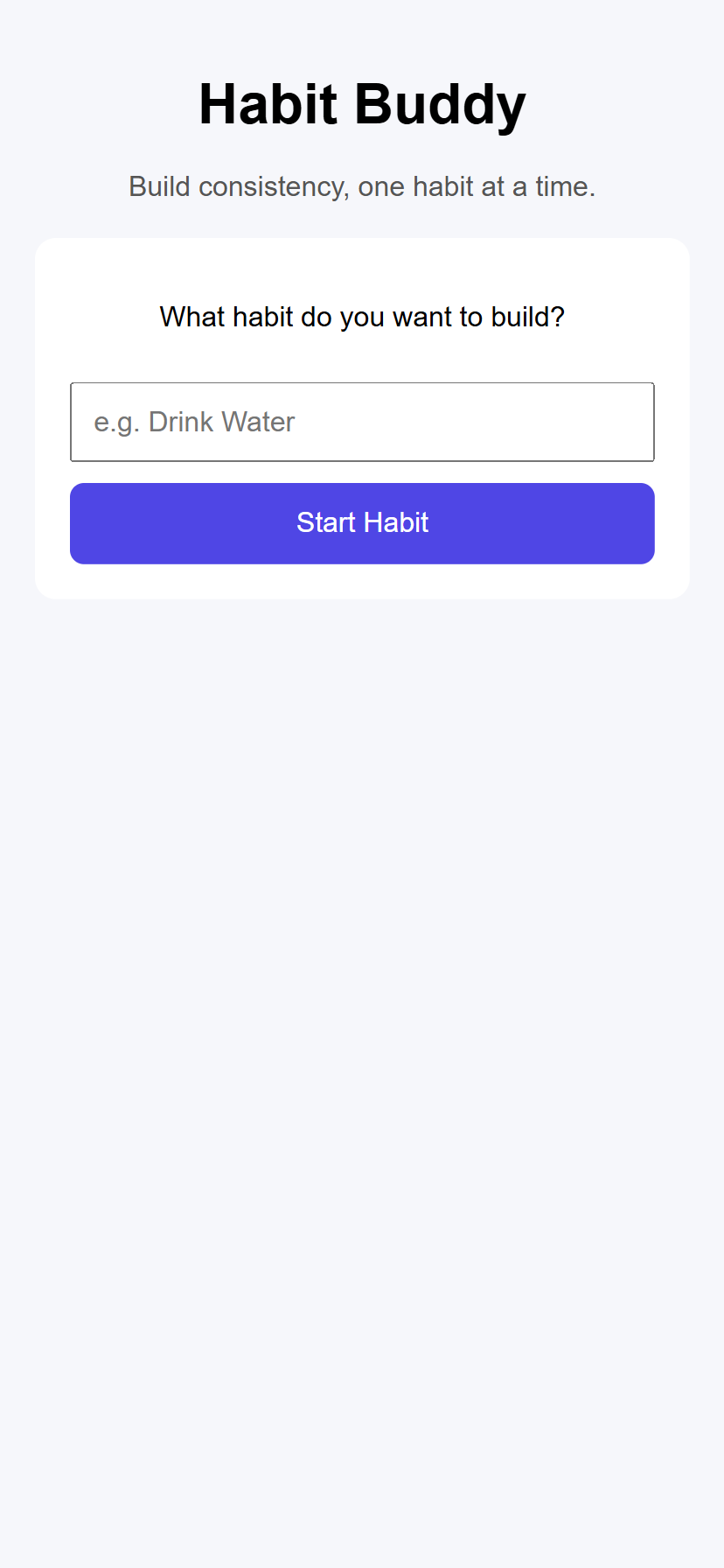
This is the home page, where when you visit the first time you have to enter a habit name which you want to do daily
Inspiration
Many habit-tracking apps try to do too much by allowing users to track multiple habits at once. While exploring these apps, I realized that this often leads to cognitive overload and inconsistency, especially for beginners. I wanted to build something simpler that encourages focus and daily action rather than complexity.
What it Does
Habit Buddy is a minimal habit-tracking web application that allows users to focus on building one habit at a time. Users can create a habit, check in once per day, and build a streak over time. The interface is intentionally simple and mobile-friendly so that users feel encouraged to return daily.
How I Built It
I built Habit Buddy as a full-stack MERN application.
The frontend is developed using React with a mobile-first design approach.
The backend is built using Node.js and Express, with MongoDB used for data storage.
To keep the project beginner-friendly and avoid authentication complexity, the app generates a unique user identifier in the browser and stores it locally. This allows each user to have their own habit data without requiring a login system.
The application is deployed with the frontend hosted on Vercel and the backend hosted on Render.
Challenges I Faced
One of the main challenges was managing user-specific data without implementing full authentication. I solved this by using a locally generated user identifier and filtering backend data based on that identifier.
Another challenge was keeping the project scope intentionally small. It was tempting to add multiple habits and advanced features, but I learned that focusing on clarity, completion, and usability leads to a better final product—especially in a beginner-focused hackathon.
What I Learned
Through this project, I learned how to:
- Build and connect a full-stack MERN application
- Design with intentional constraints
- Create mobile-first, user-friendly interfaces
- Manage simple multi-user logic without authentication
- Deploy and test real-world web applications
Future Challenges
As the project grows, some challenges to address in future versions include:
- Implementing secure user authentication and accounts
- Supporting multiple habits per user while maintaining simplicity
- Adding reminders or notifications without overwhelming users
- Scaling the backend to support a larger number of users
- Enhancing data insights while keeping the interface minimal


Log in or sign up for Devpost to join the conversation.