Inspiration
Finding a home today is overwhelming. Buyers face thousands of listings that rarely match their real needs, budgets, or lifestyles. Many overpay, settle for the wrong neighborhood, or compromise on space and commute because search tools are inefficient and noisy.
At the same time, agents spend significant time chasing low-intent leads, filtering mismatches, and managing inquiries that rarely convert. This wastes time, marketing spend, and trust.
HaBayt was inspired by the need for a regulated, intelligent ecosystem that aligns serious buyers with the right homes and the right agents, while reducing mismatches, cost, and friction.
We were also motivated by spam inquiries and low-intent behavior that distort demand and reduce trust. HaBayt introduces a learning layer that prioritizes genuine buyers and detects risky patterns.
What it does
HaBayt is a self-improving AI real estate routing and matching system.
Instead of showing thousands of listings, HaBayt:
- profiles buyer intent, budget, and needs
- routes them through specialized agents
- recommends only properties they are most likely to choose
The system tracks interactions (clicks, saves, inquiries, selections) and updates its routing and ranking policies over time.
For buyers:
- fewer irrelevant listings
- better neighborhood and budget alignment
- faster decisions
For agents:
- higher-quality leads
- less wasted time
- better conversion
HaBayt also includes a risk-awareness layer that detects suspicious or low-intent patterns and adjusts routing accordingly, improving efficiency and trust.
How we built it
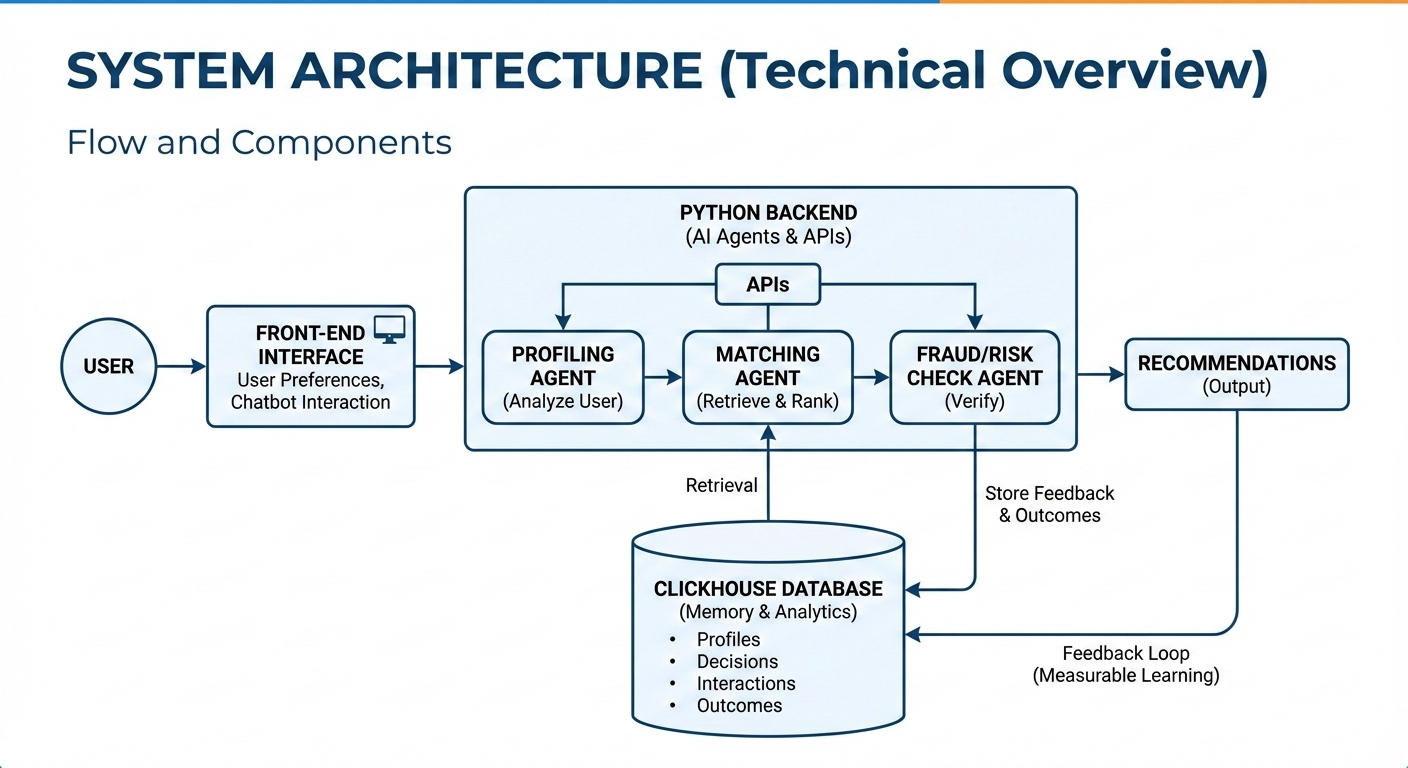
We built HaBayt as a full-stack agent system.
Data layer: We created a structured database in ClickHouse to store:
- buyer profiles
- listings
- interactions
- agent decisions
This acts as the system’s memory and analytics engine.
Agent layer (Python):
- Profiling agent
- Routing agent
- Recommendation agent
- Feedback loop
- Risk/fraud detection logic
These agents query ClickHouse, generate recommendations, and log outcomes to improve future decisions.
Interface layer:
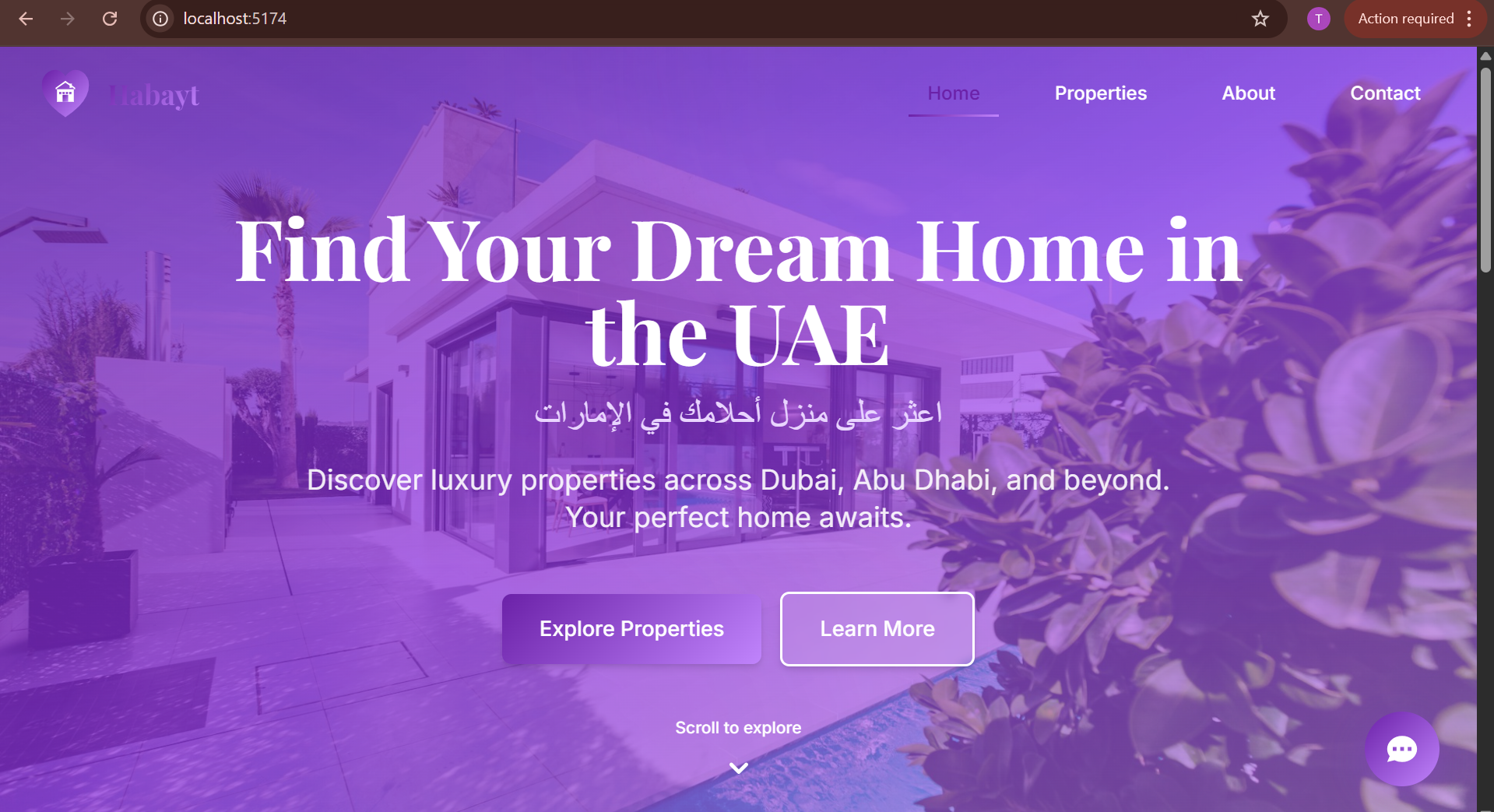
A front end collects user preferences and displays recommendations.
A backend connects the UI to the agents and database.
Each recommendation cycle feeds data back into ClickHouse, allowing iterative improvement.
Challenges we ran into
- Integrating ClickHouse with backend services and ensuring stable data flow
- Connecting a new front-end framework with a Python backend
- Designing meaningful metrics
- Severe time constraints
With more time, we would expand learning strategies, strengthen fraud detection, and refine the UI.
Accomplishments that we're proud of
- Built a full end-to-end working prototype
- Implemented a measurable self-improving agent loop
- Integrated front end, backend, and analytics memory
- Demonstrated improved recommendation accuracy across iterations
What we learned
We gained experience in:
- ClickHouse as an analytics memory engine
- multi-agent AI architecture
- full-stack integration
- simulating learning systems
What's next for HaBayt
- Integrating ElevenLabs voice interaction
- Improving speech-to-text and conversational search
- Expanding ranking and routing models
- Stronger fraud and low-intent detection
- Live user testing
- Agent analytics dashboards
Our vision is a regulated, intelligent real estate infrastructure that reduces waste of money and time, improves decision quality, and builds trust across the ecosystem.
Built With
- amazon-web-services
- claudeopus4.5
- clickhouse
- fast-api
- html5
- javascript
- python
- react
