-
-
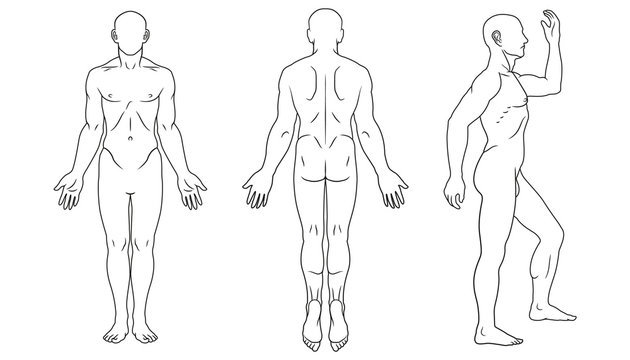
image-mapping candidate
-
Inspiration Our motivation stemmed from a desire to develop an app that addresses minor health issues for users, where "minor" refers to non-emergency and less severe conditions. This inspiration arose from our experiences as international students facing high healthcare costs without comprehensive insurance. Often, medical visits can be costly, even when no serious health concerns are identified. To address this, we created the Health Advisor AI Agent. This tool assists users in determining the necessity of a doctor's visit and provides reliable medical guidance. Our application combines modern chat functionality with interactive body maps, aiming to improve health understanding and awareness among users who are mindful of their health.
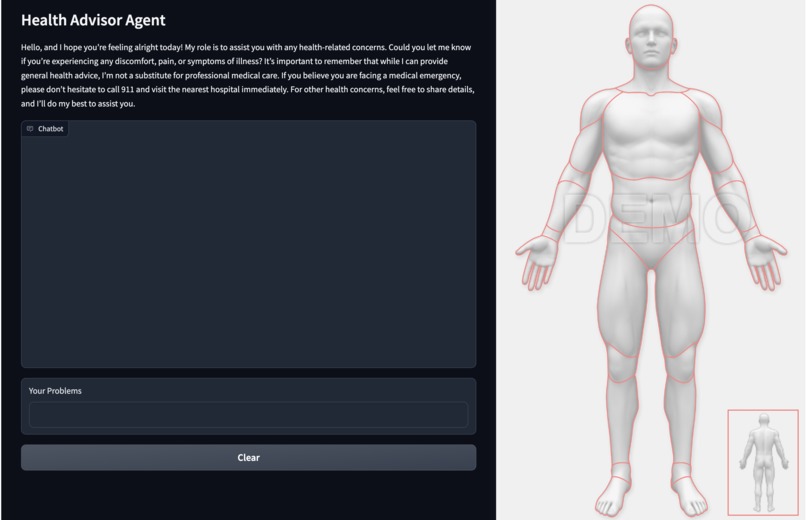
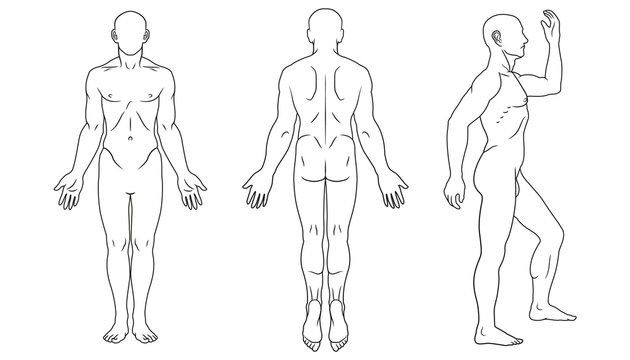
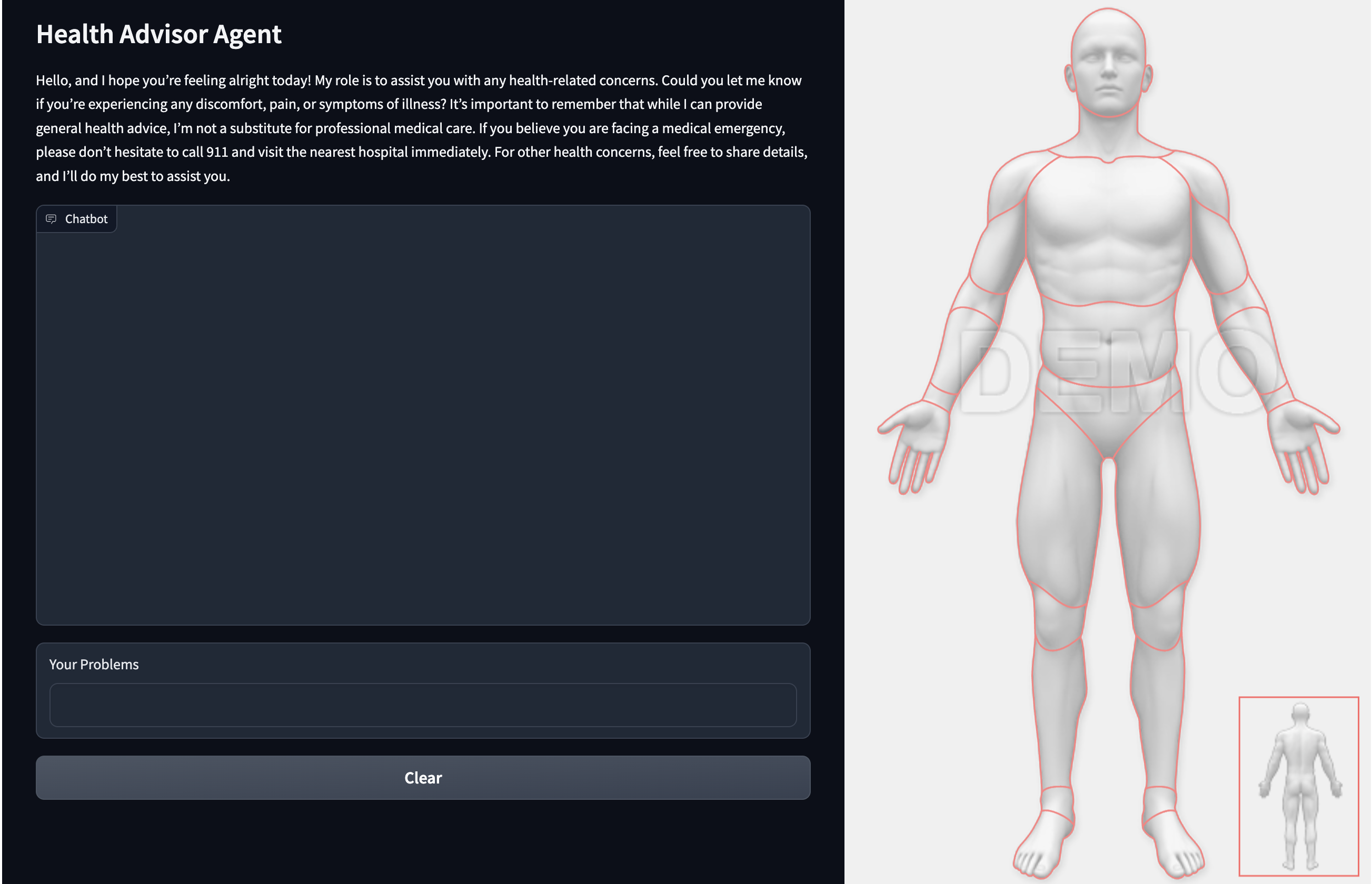
What it does Our project introduces two primary approaches for symptom analysis and disease diagnosis. Firstly, a chatbox, inspired by Gradio, offers a broad spectrum of responses - ranging from casual to highly professional - depending on the user's input. Users can either describe various symptoms or seek reliable advice for known conditions. Secondly, an interactive body map enables users to explore links between body parts and common symptoms. This feature is backed by a robust backend, using Python's sklearn library and Kaggle datasets, to classify symptoms and predict potential diseases.
How we built it We employed a full-stack development approach, integrating React and Python with various open-source APIs to leverage the capabilities of Language Models, Classification algorithms, and HTML image mapping. Technology: Python, React (js), LLM, WebMD, Google Search and Duck Duck Go, ReAct: Synergizing Reasoning and Acting in Language Models, Gradio, and Webflow.
Challenges we faced Our team, comprising three developers with limited full-stack experience, found it challenging to bring the project's ambitious goals and complex front/back-end components to fruition. The body map component was particularly challenging, consuming much of our debugging time. Additionally, sourcing appropriate health datasets and open-source tools was a minor hurdle. A critical concern was ensuring accuracy in disease diagnosis, given the potential risks of misdiagnosis based on limited symptoms.
Our proud achievements
- Developing an AI agent specialized in health, providing accurate and beneficial insights.
- Building a web application from the ground up, including full-stack development.
- Exploring image mapping technologies.
- Addressing a significant and practical health-related problem.
Lessons learned
- Enhanced debugging techniques for React components.
- Assessing the reliability of Kaggle datasets and comparing the efficacy of various sklearn classification models.
Future plans for HA We aim to focus on UI/UX development, prioritizing user interaction and experience. Market validation will be a key step to ensure our product's relevance to users. By expanding our team with dedicated developers, we plan to refine and sophisticate our medical advice system.


Log in or sign up for Devpost to join the conversation.