-
-
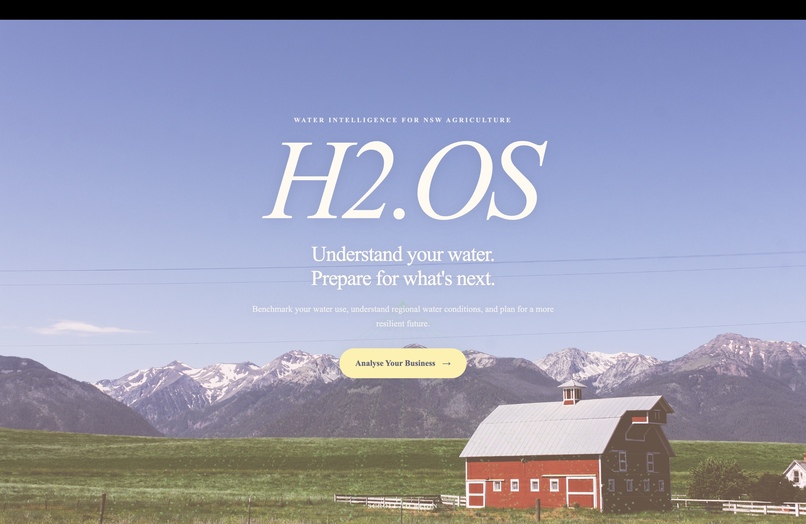
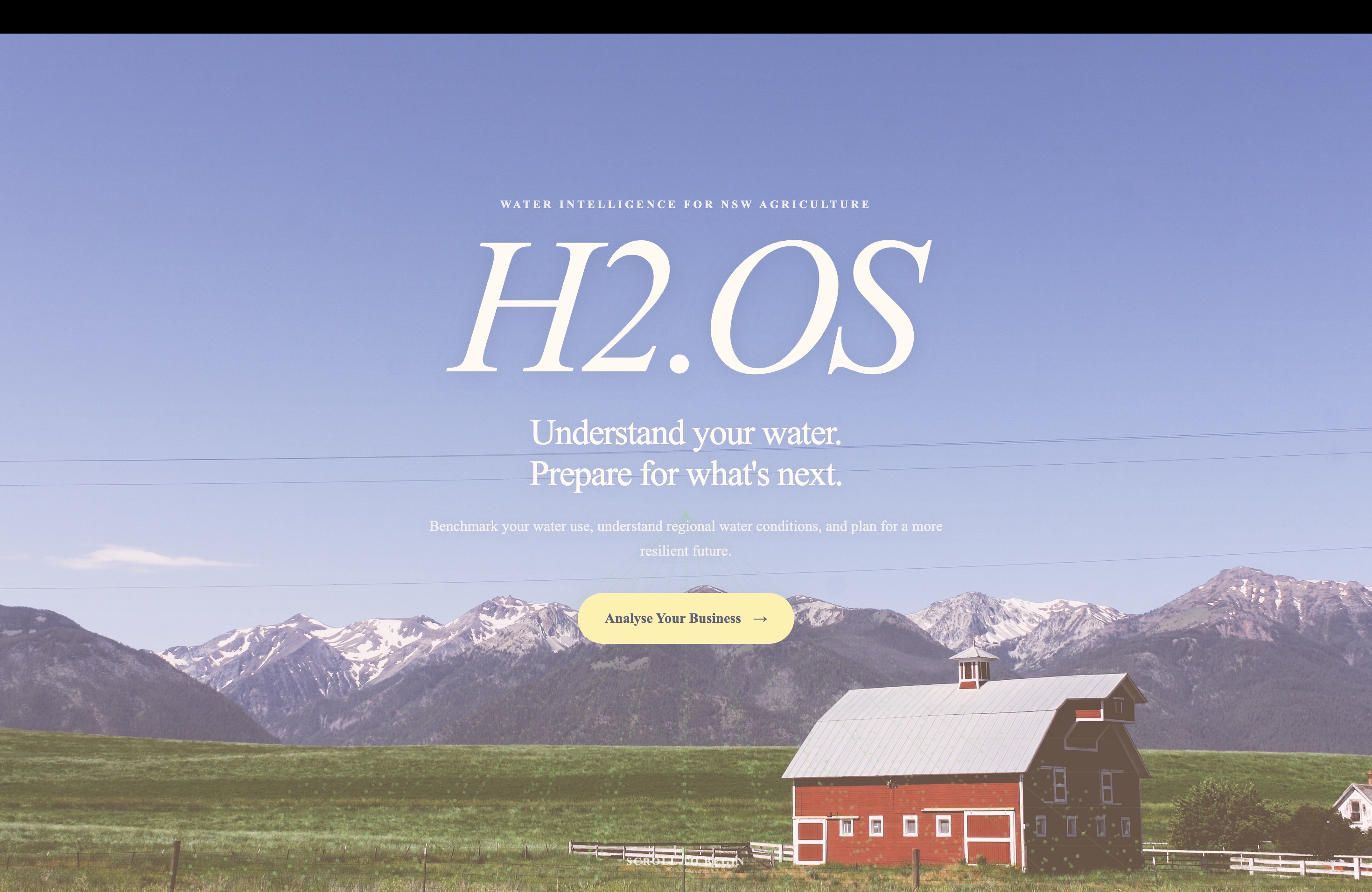
Home Page
-
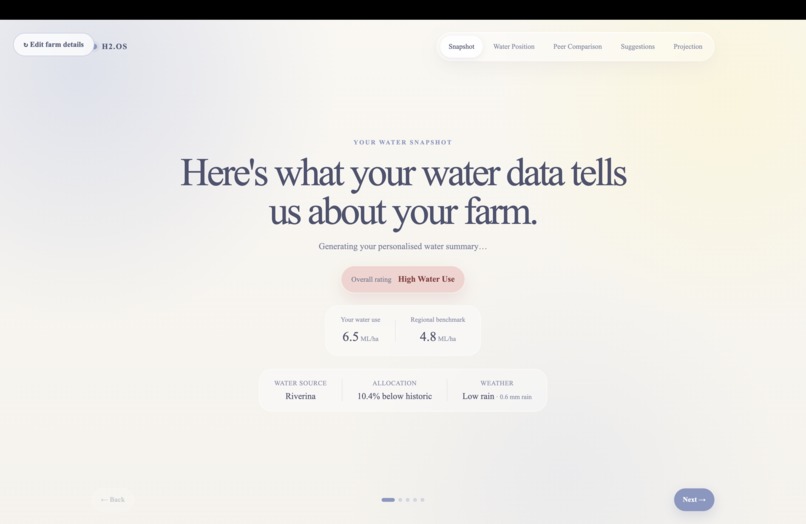
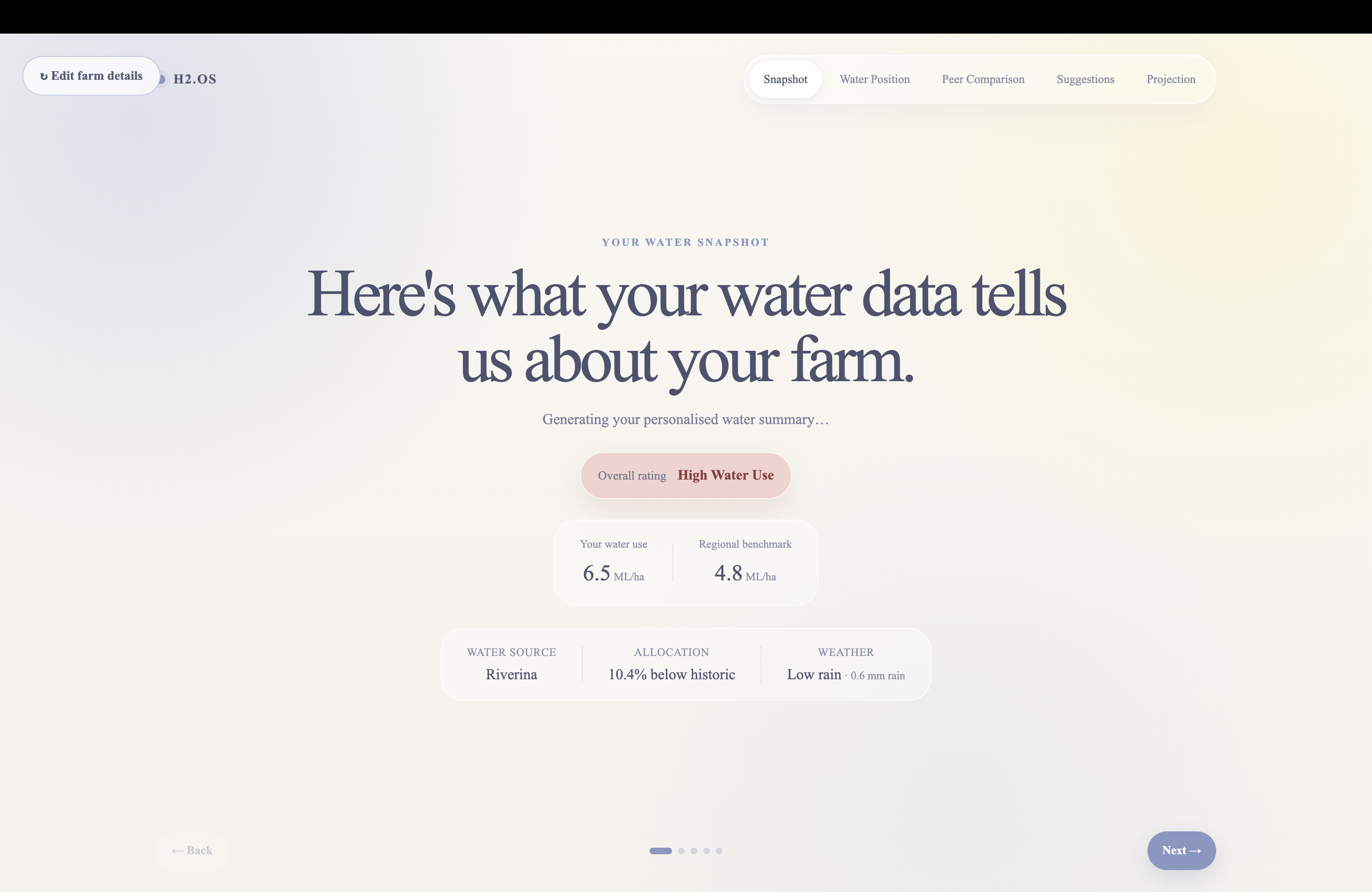
Risk Assessment
-
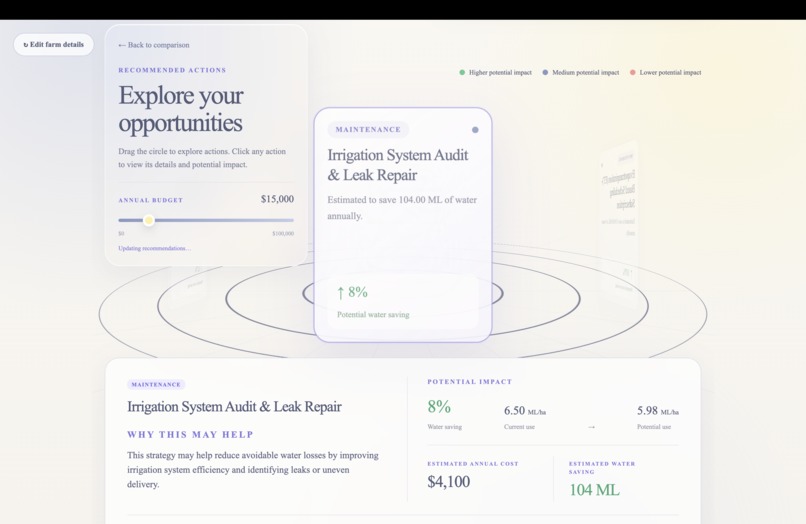
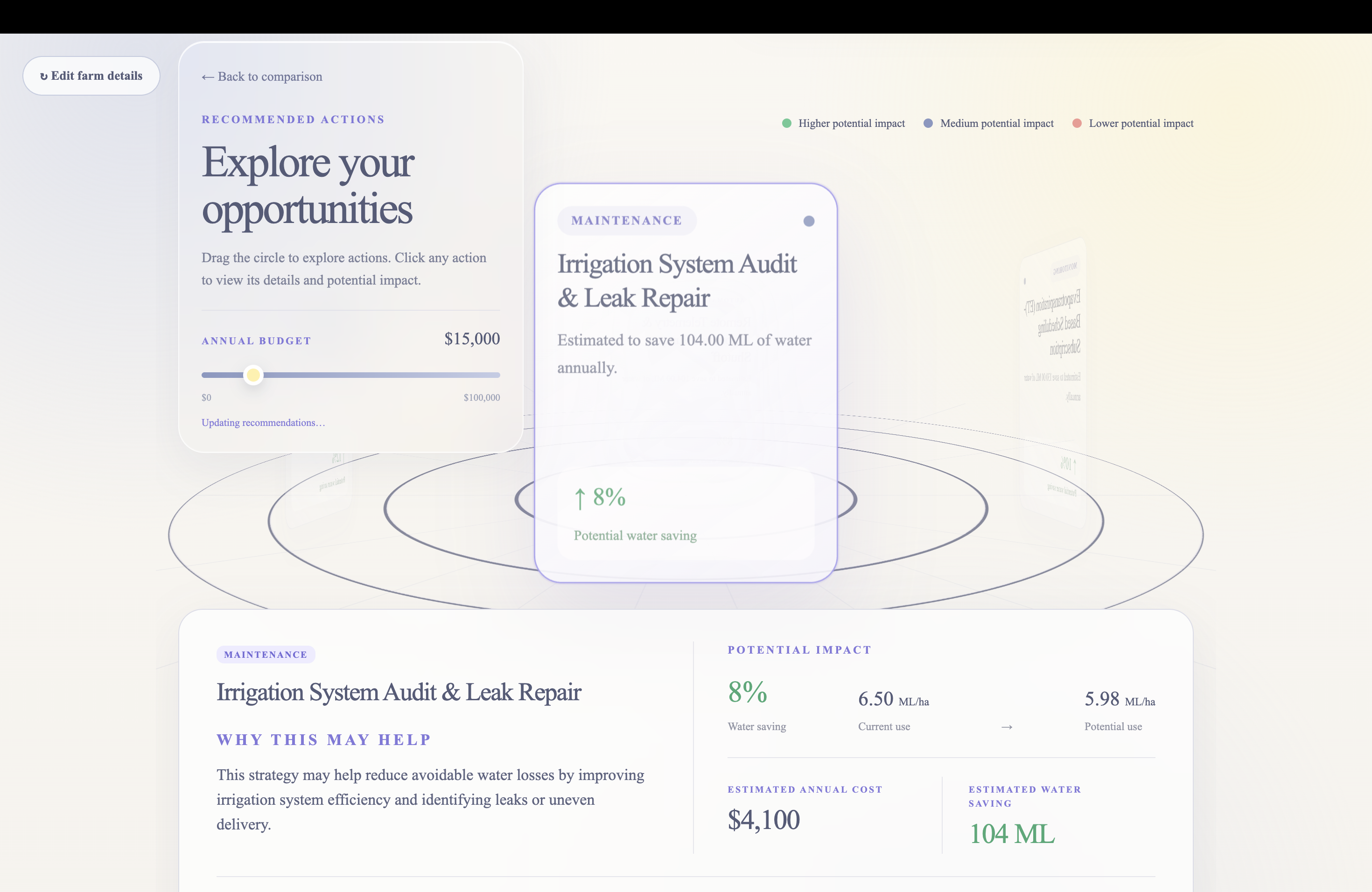
Optimise Strategies
-
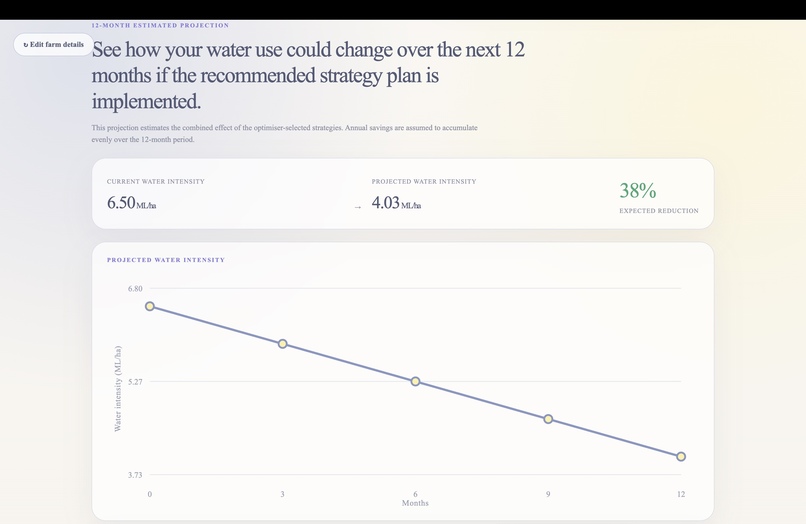
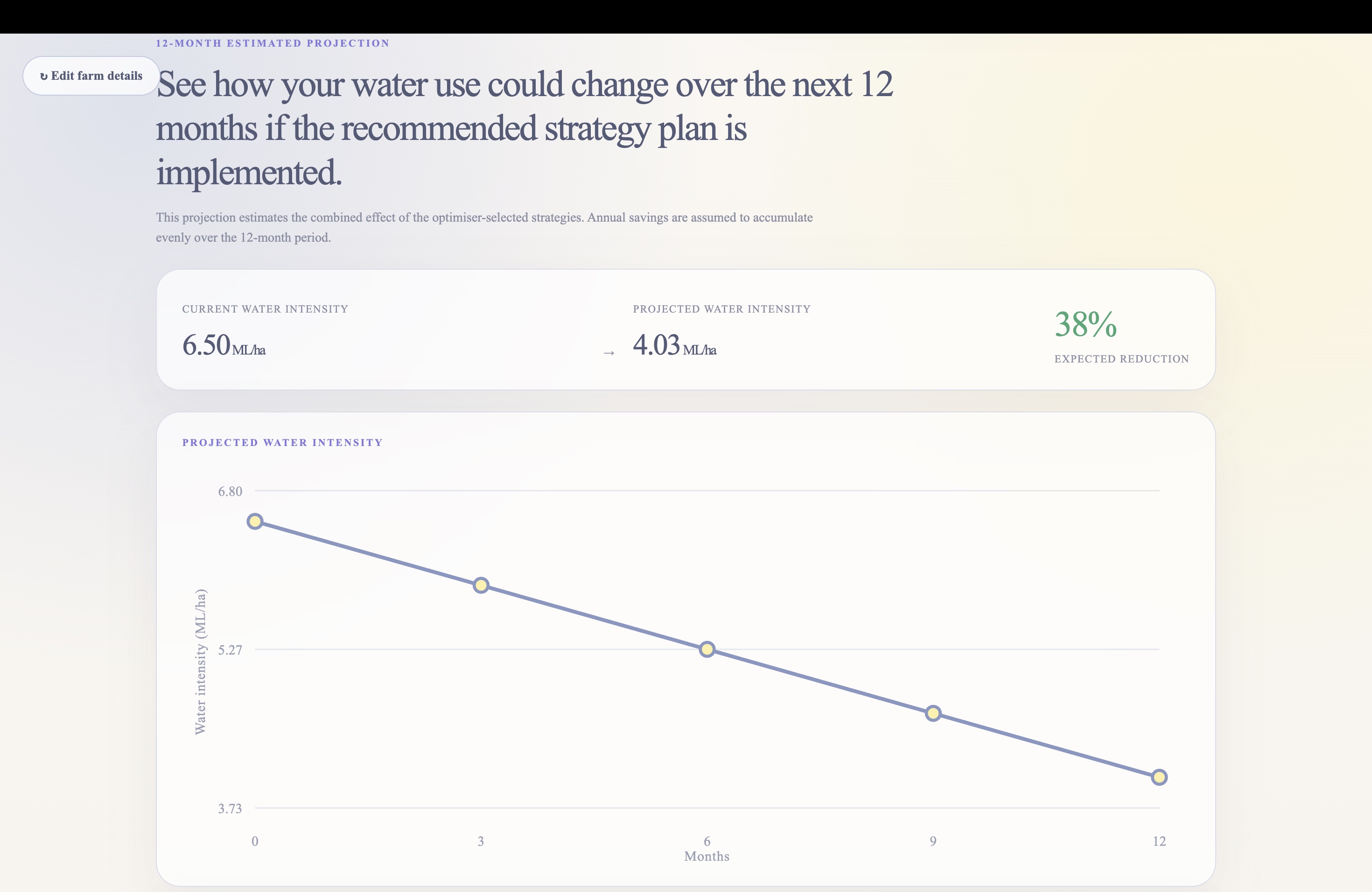
Predictive Modelling
Inspiration
Water is foundational to our lives, but it's abstract enough that it's hard to know if it's being used efficiently or wastefully. This is especially true for farmers, whose water needs shift entirely depending on crop, climate, and location, making "efficient" nearly impossible to define. Water is one of the blocks that makes up our world, so what happens when that block becomes unstable?
What it does
H2.OS is a smart water efficiency platform that helps farmers understand, benchmark and optimise their water use. Farmers answer a short questionnaire about their farm, and H2.OS returns:
- A personalised risk assessment benchmarked against similar farms and current regional water conditions
- Clear, LLM-powered explanations that make complex water data easy to understand
- An optimised set of water-saving strategies based on cost, expected savings and the farmer’s goals
- A predictive model estimating expected water intensity for their specific crop, region and water conditions
How we built it
Government + Weather Data: Ingested ABS water-use datasets, live WaterNSW dam and allocation data, and Open-Meteo weather/rainfall to calculate real evapotranspiration-based water needs.
Regional Benchmarking Engine: Mapped each farm to its NSW Local Land Services region and computed a statistical z-score against similar crops and farms nearby, turning raw water numbers into a true regional comparison, not a generic average.
Predictive Modelling: Trained a scikit-learn model to predict expected water intensity and savings from crop, region, and water-allocation conditions, alongside a savings optimiser that recommends strategies to hit a target reduction.
Plain-English Layer: Integrated Google Gemini to translate raw statistics into a 2–3 sentence "what this means" summary, generated asynchronously so results render instantly.
Frontend: React + TypeScript (Vite), with a multi-step questionnaire flow and animated Pixi.js visuals, backed by a FastAPI + Postgres backend.
Challenges we ran into
The biggest challenge was representing something as vague as "correct" water use, there's no ground truth for what a farm should use, only what similar farms do use. So we had to build a statistical benchmark from scratch and figure out how to incorporate AI to translate those numbers into something farmers can actually act on.
Accomplishments that we're proud of
A working end-to-end prototype that turns messy, scattered government data into a clear, statistically-grounded water benchmark using a predictive model and AI-generated explanations, not just a lookup table.
What we learned
Real-world datasets that were never designed to talk to each other, building statistical benchmarks from limited data, integrating live APIs and full-stack development
What's next for H2.OS
Expand the benchmark to cover more crops and regions beyond NSW, and refine the prediction model with more farm data so recommendations get sharper as more farmers come on board.
Built With
- fastapi
- google-gemini
- joblib
- pandas
- pixijs
- postgresql
- pytest
- python
- react
- scikit-learn
- scipy
- sqlalchemy
- statsmodels
- tailwind-css
- typescript
- uvicorn
- vite


Log in or sign up for Devpost to join the conversation.