💧 h2-oh-no
By Team Performative Males
🚨 Problem
Over 2 billion people worldwide lack access to safe drinking water. In rural communities, late detection of contamination often causes:
- Outbreaks of waterborne diseases
- High mortality rates due to slow response
- Difficulty for governments and NGOs to locate critical areas
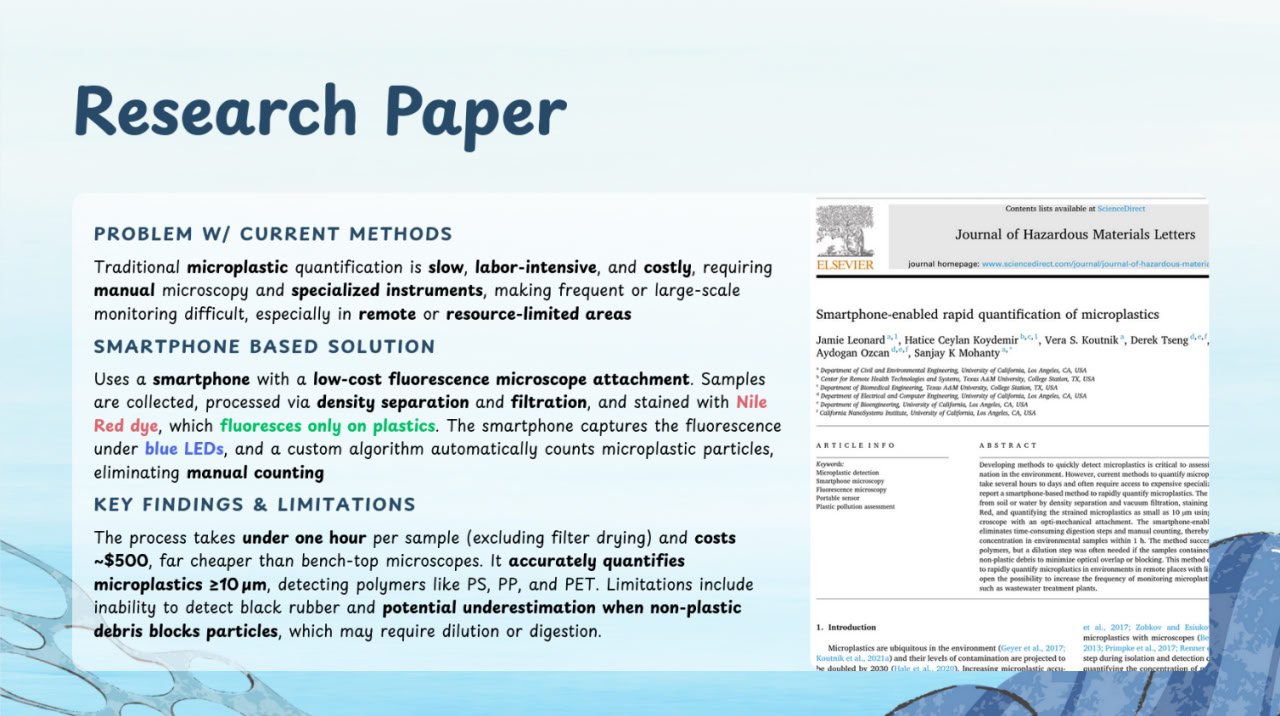
Traditional testing is slow, centralised, and often unavailable in remote regions.
✅ Our Solution: h2-oh-no
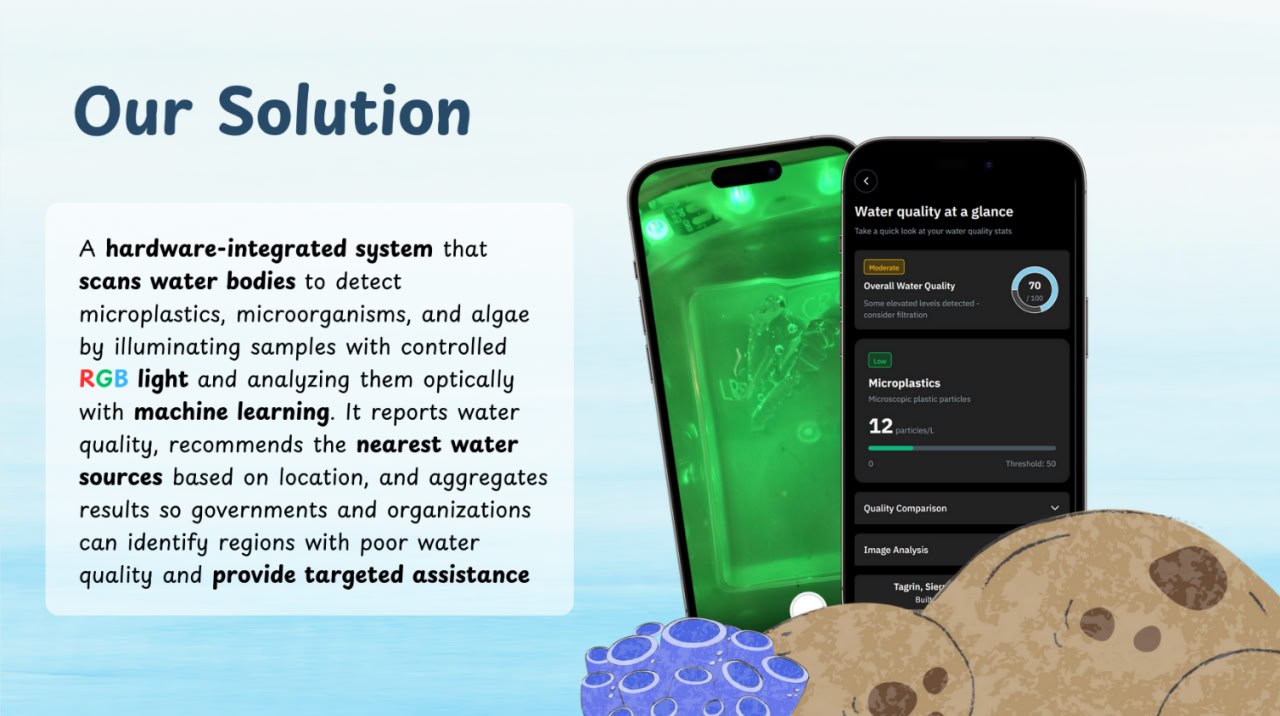
h2-oh-no is a low-cost, hardware-integrated water quality monitoring system for fast, decentralised detection of contamination.
How it works
- Illumination & Capture → Water samples are lit with controlled RGB light from a WS2812 LED strip.
- Optical Analysis → ML models (YOLOv8 + Gemini) detect microplastics, microorganisms, and algae through light scattering/absorption.
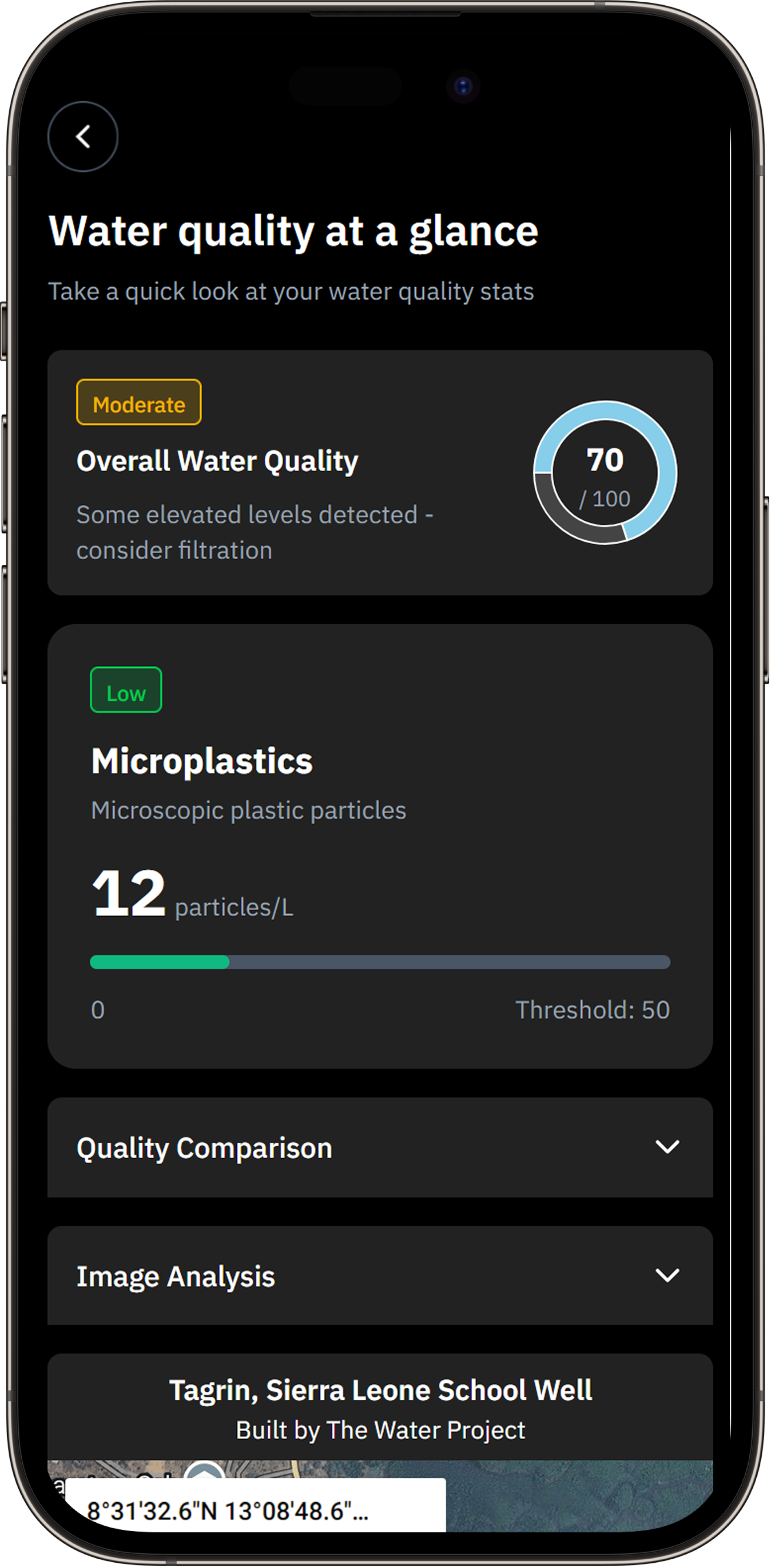
- Reporting & Alerts → Results appear instantly with recommendations for safe nearby sources. Data is also uploaded to a central platform.
- Insights → Aggregated data highlights hotspots, helping governments and NGOs act quickly.
🛠️ Tech Stack
- Hardware: ESP32 microcontroller + WS2812 LED strip
- Backend: Flask server with Gemini + YOLOv8 for ML-based optical analysis
- Frontend: Next.js web app with visualisations
- Infrastructure: Polling system for reliable task management
📊 Impact
- 2B+ people rely on unsafe water sources
- 485,000 deaths/year from diarrhoeal diseases caused by unsafe water (WHO)
- Lab results often take days to weeks; h2-oh-no delivers answers on the spot
🌍 Vision
Affordable monitoring devices in rural communities worldwide, feeding into a global contamination heatmap for governments, NGOs, and health organisations.
💡 Inspiration
Rural communities often only realise water is unsafe once people fall sick. We wanted a simple, affordable tool for early detection.
🚧 Challenges
- Sourcing a proper microscopic lens on short notice in Singapore
- Converting theory into a practical build with limited parts
- Working under time and resource constraints
🏆 Accomplishments
- Functional AI model with measurable accuracy
- Simple and clean frontend
- Cost-efficient hardware design
📚 Lessons learned
- Source hardware early when building in Singapore
- Hardware work is tougher than expected
- Good preparation saves time during short builds
🔮 Next steps
- Improve detection accuracy and robustness
- Integrate better optics and sensors
- Field test with local water samples
- Scale up towards a global contamination heatmap
⚡ Team Performative Males believes no one should die from unsafe water when technology can change that.
Built With
- flask
- nextjs

Log in or sign up for Devpost to join the conversation.