Project Story
About the Project
AfterKooler was created to address a common issue faced by many computer users: discomfort and distraction caused by overheating during long hours of work or gaming. As someone who spends significant time at the desk, I often found myself struggling with rising temperatures, which not only made the workspace uncomfortable but also hindered productivity.
Inspiration
The inspiration for AfterKooler came during a particularly intense work period when my computer frequently overheated, leading to unexpected shutdowns and breaks. Frustrated by the lack of an affordable and effective solution, I decided to develop a device that could automatically regulate the workspace temperature, ensuring a comfortable and uninterrupted environment.
What I Learned
Throughout this project, I gained valuable insights into embedded systems and temperature monitoring. Working with the Arduino Uno R3, I enhanced my skills in programming microcontrollers and integrating various hardware components. I also learned the importance of energy efficiency and user-friendly design, ensuring that the device would seamlessly fit into any workspace without causing disruptions.
How I Built the Project
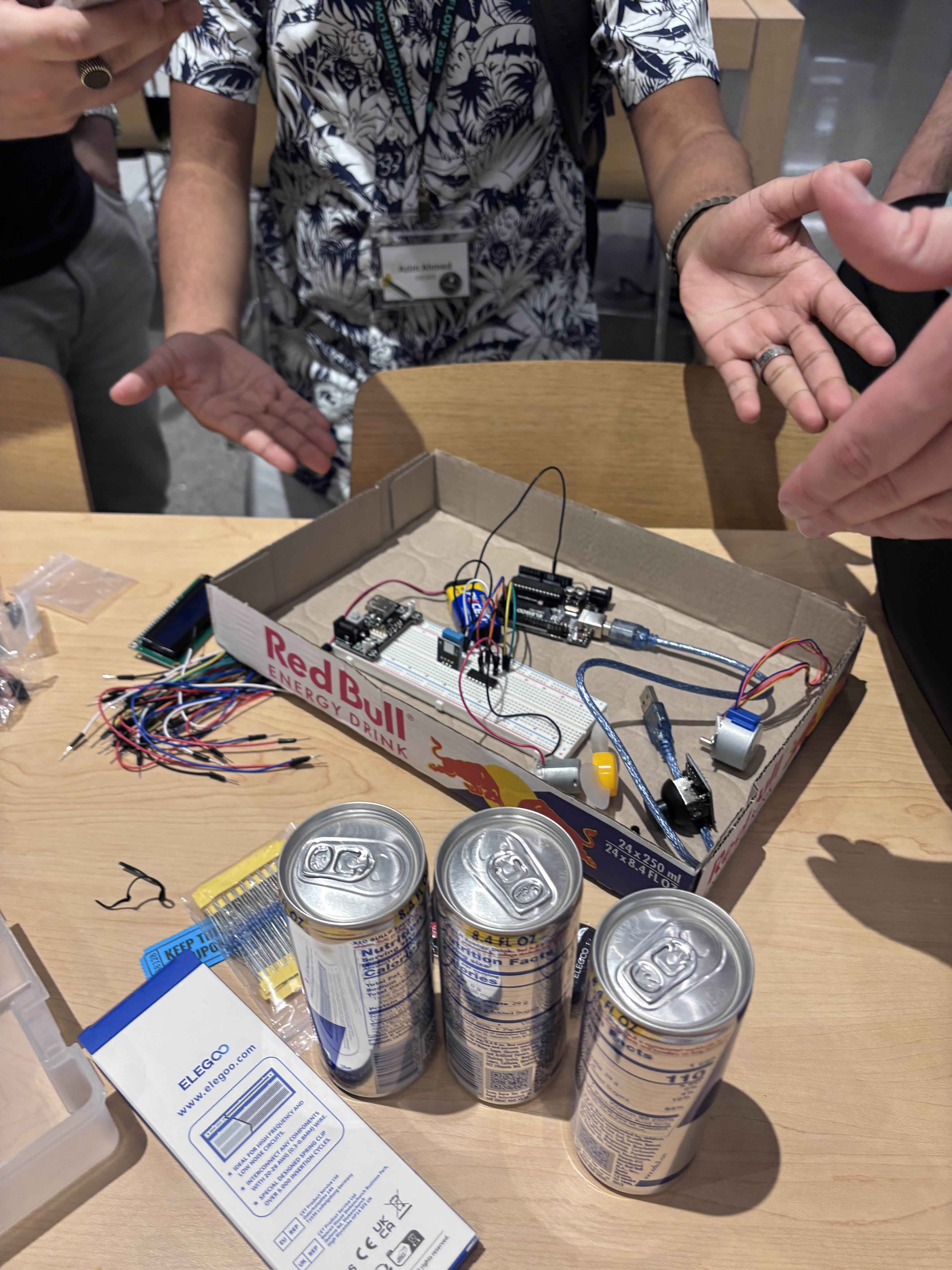
I began by selecting the Arduino Uno R3 for its reliability and extensive community support. AfterKooler consists of a temperature sensor connected to the Arduino, which continuously monitors the ambient temperature around the computer. When the temperature exceeds a predefined threshold, the Arduino activates a small fan to provide immediate cooling.
The device was designed to plug directly into the computer’s USB port, drawing power without the need for additional adapters. I initially prototyped the circuit on a breadboard before moving to a more compact design using a custom PCB. The final product features a sleek casing that houses all components neatly, ensuring it doesn’t clutter the workspace.
Challenges Faced
One of the main challenges was ensuring accurate temperature readings in different environments. I had to calibrate the sensor to account for varying room temperatures and different levels of computer usage. Another obstacle was optimizing the fan’s power consumption to maintain energy efficiency without compromising cooling performance.
Additionally, integrating the device seamlessly into the user’s desk setup required careful design considerations. I wanted AfterKooler to be both functional and aesthetically pleasing, which involved several iterations of the casing design to achieve the right balance between form and function.
Conclusion
Building AfterKooler was a rewarding experience that combined my passion for electronics with a practical solution to a real-world problem. It taught me valuable lessons in hardware design, programming, and user-centric development. Today, AfterKooler not only keeps workspaces cool but also serves as a testament to the power of DIY projects in enhancing everyday life.


Log in or sign up for Devpost to join the conversation.