-
-
Gynora logo
-
-
-
Inspiration
Polycystic Ovary Syndrome — or PCOS — is one of the most common hormonal conditions affecting young women today. It often shows up as irregular periods, acne, weight gain, fatigue, or mood swings. But here’s the problem: Most girls either ignore these symptoms or don’t realize they could be linked to a deeper issue. The gap between noticing symptoms and getting diagnosed is often too wide — and that’s exactly the gap Gynora aims to bridge. We wanted to create a tech-enabled, accessible, and supportive solution that helps girls take charge of their hormonal health early, confidently, and intelligently.
What it does
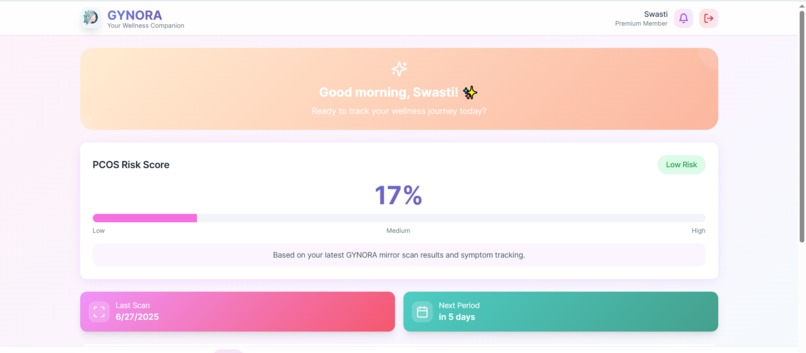
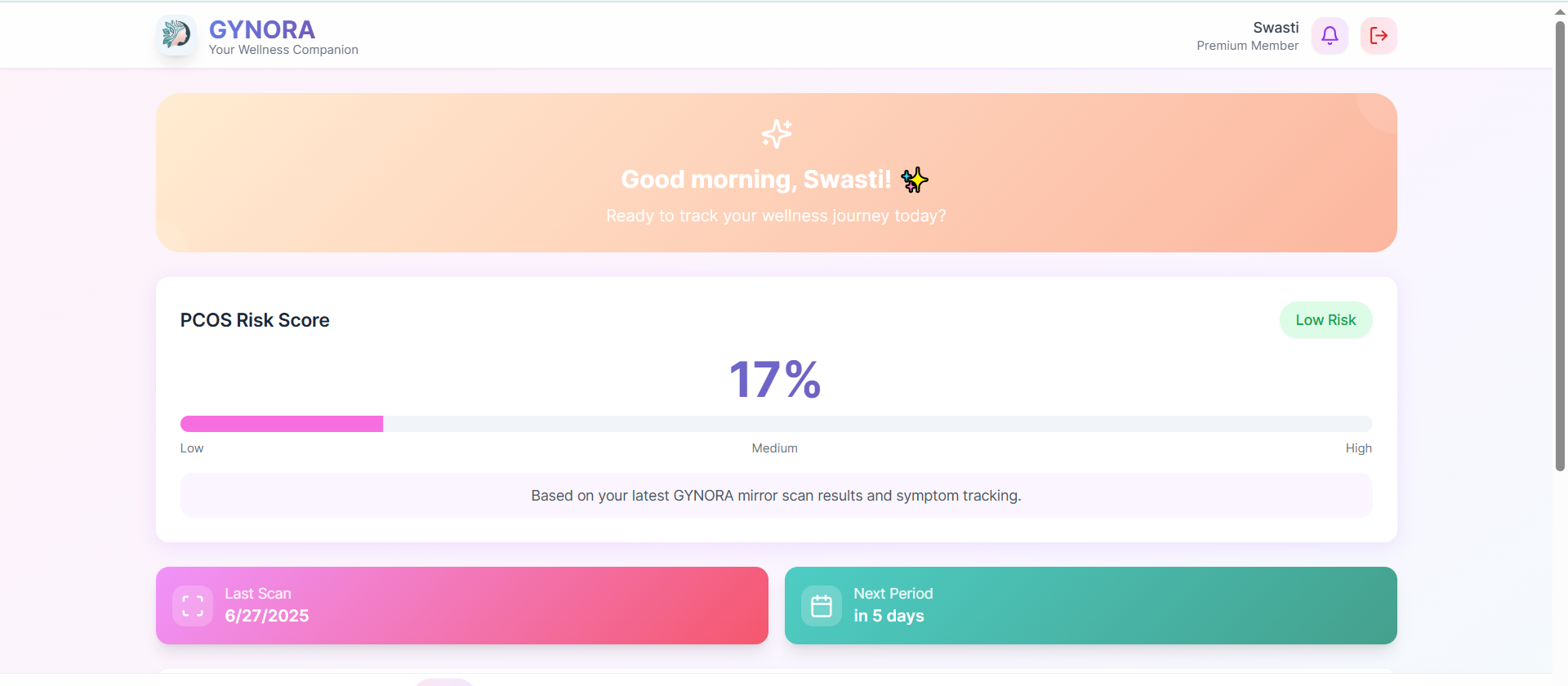
Gynora is an AI-powered hormonal health platform that detects early signs of PCOS through two major tools:
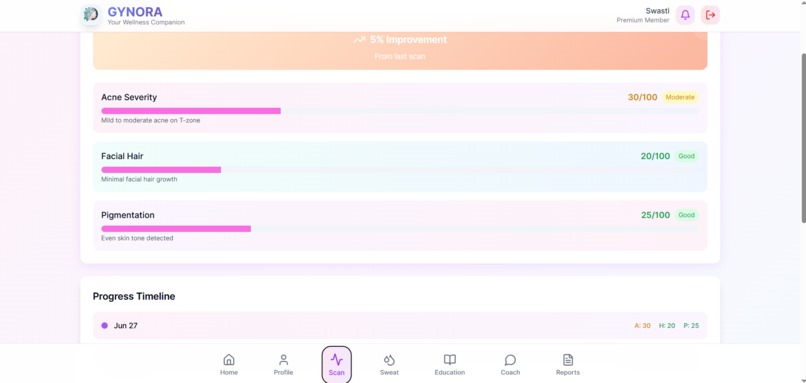
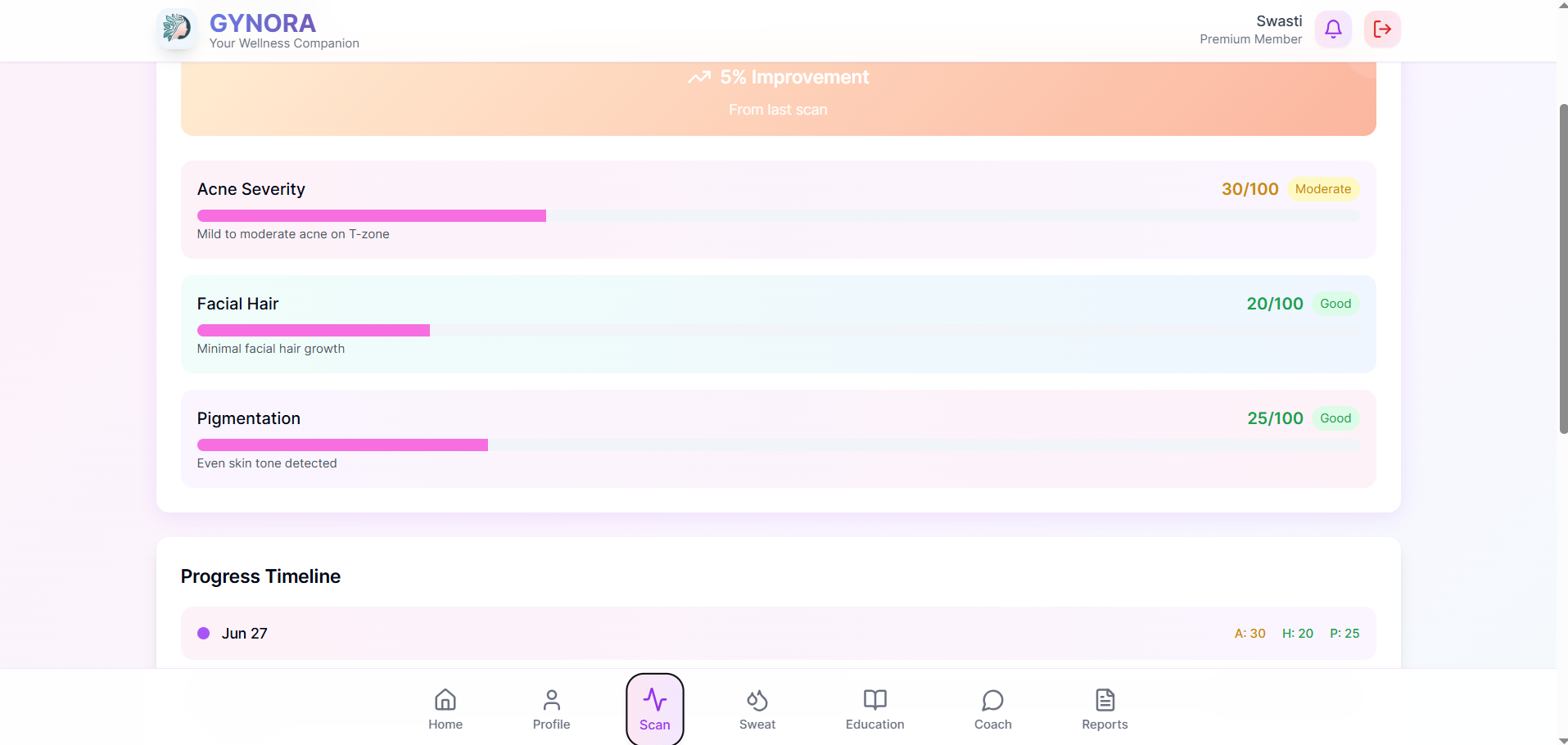
- A smartphone app that uses AI-based facial scanning, symptom logging, and lifestyle tracking to estimate PCOS risk.
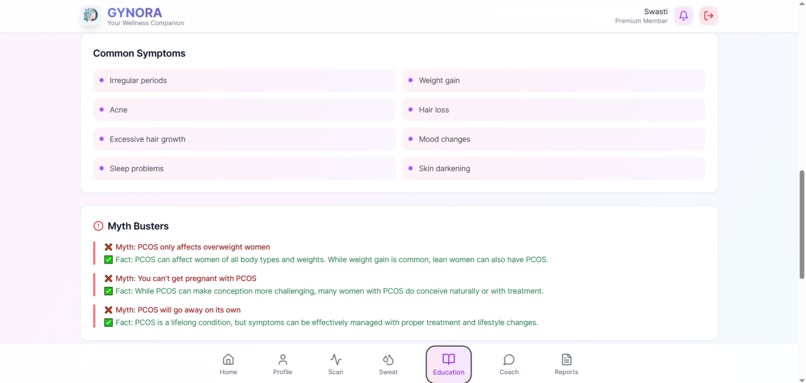
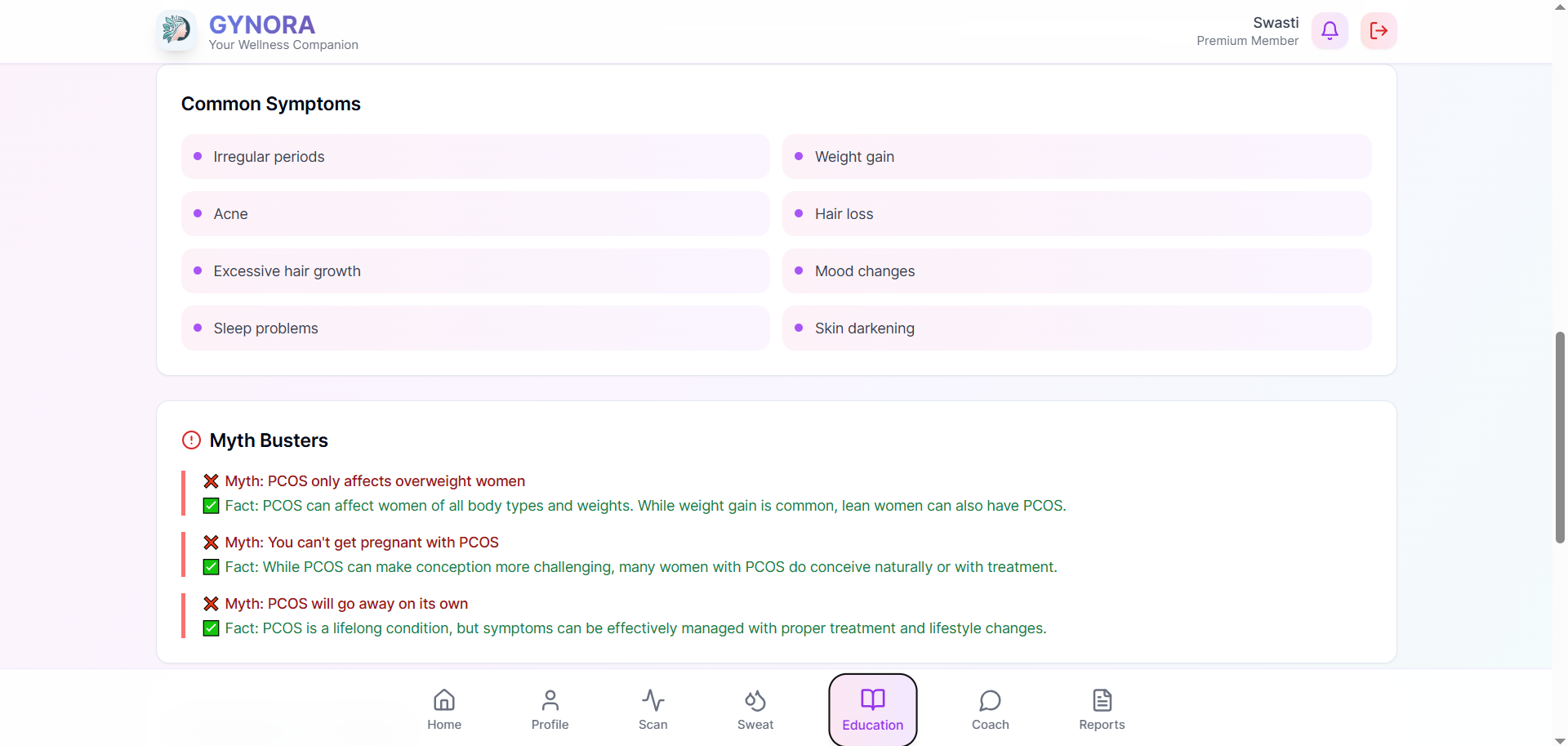
- An affordable 4-in-1 home testing kit that analyzes sweat or saliva for hormonal markers (like cortisol, glucose, salt, and pH). The app combines this data into a personalized PCOS risk score, provides insights via an AI health coach, and generates downloadable health reports. It also includes a Learning Zone, smart reminders, and period tracking — making it a complete hormonal health assistant.
How we built it
- Frontend: Built using React Native, ensuring a smooth mobile experience.
- AI Facial Scan: Trained with datasets for acne, pigmentation, and facial hair detection using TensorFlow and integrated with the phone’s camera.
- Backend & Analytics: Cloud-hosted on Firebase with secure data handling and real-time AI computations.
- Home Testing Kit: Developed using paper-based colorimetric sensors to detect hormonal changes through sweat/saliva.
- PDF Report Generator, Chatbot (AI Health Coach), and Dashboard UI were integrated for user convenience.
Challenges we ran into
- Designing a reliable and non-invasive hormonal test that works with sweat/saliva.
- Achieving a balance between medical accuracy and user privacy.
- Training the facial scan AI to detect subtle signs like pigmentation with minimal error.
- Ensuring that all features remain lightweight and functional across mid-range smartphones.
- Building trust around a health product designed for young users.
Accomplishments that we're proud of
- Created a fully working prototype with 90%+ internal validation accuracy for PCOS prediction.
- Successfully integrated a hardware-software solution — the mobile app and test strip work in sync.
- Designed a clean, friendly user interface that’s easy to use for teen and young adult users.
- Added a supportive AI health coach that doesn't just diagnose, but empowers.
What we learned
- Hormonal health is deeply personal, and users need clarity, simplicity, and empathy in health tools.
- Even small things like reminders and motivational messages can improve user engagement.
- Building hardware + AI integration is challenging but extremely rewarding when users feel empowered.
- The importance of privacy, data transparency, and ensuring no judgmental language in health apps.
What's next for Gynora
- Partnering with gynecologists and healthcare institutions to validate and refine the tool further.
- Expanding into other hormonal conditions like thyroid imbalance and teenage hormonal health.
- Developing Bluetooth-enabled strips for automatic reading and input.
- Launching Gynora for Him — a hormonal health tracker and coach for boys and men.
- Building an active community inside the app for peer support, expert Q&A, and awareness drives.
Built With
- firebase
- geminiapi
- react-native
- supabase
- tensorflow


Log in or sign up for Devpost to join the conversation.