-
-

GYNAI
-
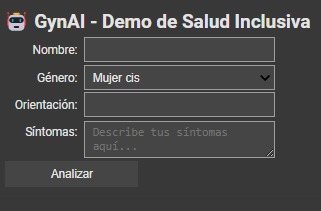
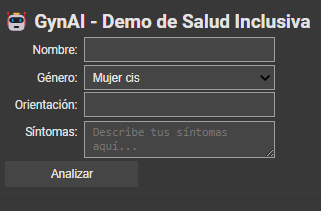
DEMO INTERFACE
-
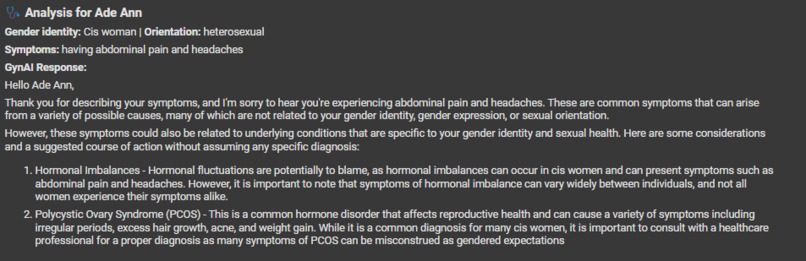
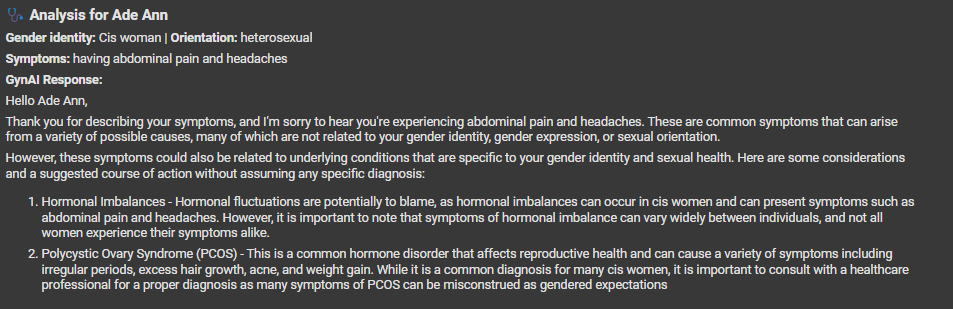
RESULT 1
-
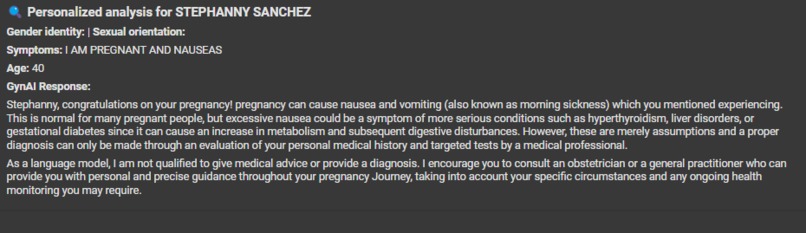
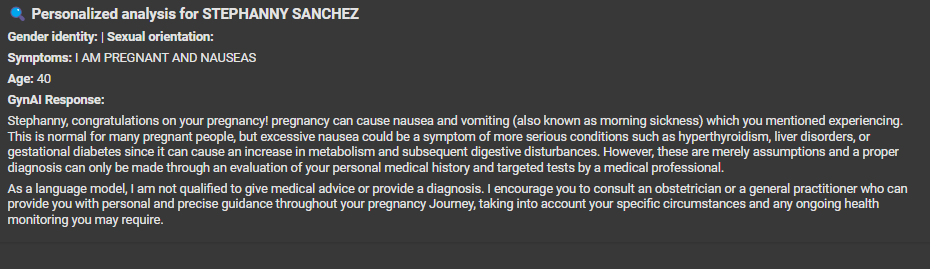
RESULT 2
-
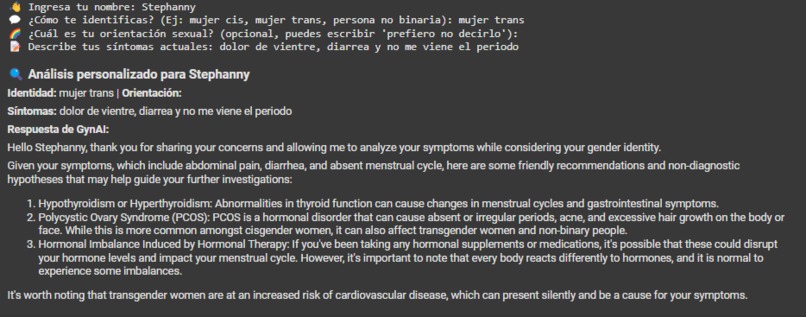
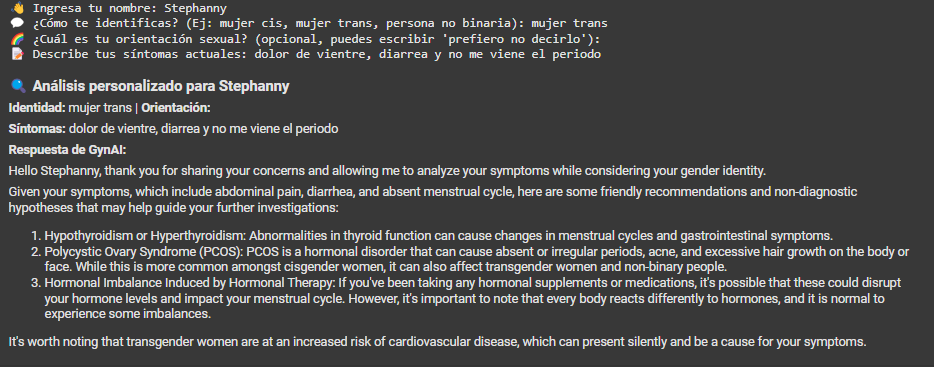
RESULT 3
-

BRAINSTORMING


Inspiration
Have you ever stared at a lab report, anxious about that “abnormal” label, while waiting days for a formal diagnosis? Traditional diagnostic turnarounds can take 4–7 days, leaving you in a state of uncertainty. Inspired by this gap in healthcare, we created GynAI—an AI-powered tool that transforms how you understand your health data. Designed for women, transgender individuals, and men , GynAI not only clarifies whether your lab results fall within normal ranges but also evaluates your self-declared symptoms to highlight potential risks. From chronic conditions, hormone imbalances (such as PCOS and thyroid disorders), and STIs, to the often-overlooked risk of cardiovascular disease—where up to 60% of women may be at high risk—our platform offers immediate, actionable insights at your appointment. By integrating a user-friendly questionnaire with your lab findings and cardiovascular data, GynAI bridges the gap between complex medical information and personal health awareness, empowering you to take charge of your well-being.
What it does
GynAI collects your self-declared symptoms, lab results, and cardiovascular data via a comprehensive, user-friendly questionnaire, specifically capturing details that may indicate chronic conditions such as diabetes, hypertension, and allergies. Using advanced AI algorithms, the tool analyzes your inputs in real time to assess the likelihood of various issues providing actionable insights for early intervention and possible questions you can ask at your doctor's appointment.
How we built it
🔹 1. Input Layer – Data Collection
👤 User Inputs:
- Demographics: age, sex assigned at birth, gender identity, menstrual cycle, weight, etc.
- Symptoms: chest pressure, fatigue, anxiety, dizziness, irregular periods, cold intolerance, etc.
- Medical Records: blood pressure, TSH, T3, T4, glucose, IgE, cholesterol, etc.
🔐 Security & Format:
- Inputs stored temporarily (if needed), with encryption
- Optional on-device inference depending on platform
🔹 2. Preprocessing Layer
🧪 Data Handling:
- Normalization of lab values into standardized units (SI, US)
- Contextual Embedding for symptoms using medical embeddings (e.g., BioBERT, ClinicalBERT)
- Missing Data Imputation: mean/mode fill-in or flagging if critical
🔹 3. Prediction Engine
🤖 A. Symptom-Based Models
- Goal: Estimate likelihood of conditions using symptoms + risk factors
- Approach: Logistic regression or shallow neural nets trained on synthetic EMR data (e.g., MIMIC-III, simulated Canadian datasets)
🔍 Conditions Detected:
- Heart Attack: gender-specific symptom profiles
- PCOS: using Rotterdam criteria proxy
- Thyroid Disorders: based on symptoms + labs
- Allergies: symptom patterns + IgE markers
🔹 4. Natural Language Layer (LLMs)
🧠 Model: Cohere
Input: user responses, symptoms, lab data, prediction output
Functions:
- Translate raw predictions into plain-language explanations
- Auto-generate doctor questions (e.g., “Should I be tested for PCOS?”)
- Answer health-related FAQs
🧪 Example Prompt to LLM:
“Explain why this user might be at risk of hypothyroidism given their lab values (TSH: 6.1, T3: low, symptoms: cold intolerance, fatigue)”
🔹 5. Output Layer – UI Feedback
ver interface
🗣️ User-Facing Output:
- Plain-language explanations of risks and conditions
- Recommended next steps
- “Ask your doctor” checklist auto-generated for user prep
🔹 6. Ethics & Bias Mitigation
⚖️ Built-In Protections:
- Reminder: Predictions ≠ Diagnoses
- Inclusive input: asks for gender identity, not just binary sex
- Monitors and adjusts for demographic biases
- Avoids sexist assumptions (e.g., “men feel pain, women feel anxiety”)
🔁 Feedback Loop:
- User updates confirmed diagnosis
- Allows model fine-tuning (if user consent & privacy policy allows)
📌 GynAI is designed for educational and assistive purposes only. No part of the system should be used as a substitute for professional medical advice.
Challenges we ran into
- Reliance on imperfect biomakers, in some cases of test.
- Variability in clinical presentations
- Data Quality and Generalization
- Limited external validation
- False positives and clinical usability
- Integration into clinical workflows
- Ethical and regulatory considerations
Accomplishments that we're proud of
-Integration of data of women cis and trans. -Advanced data preprocessing documents. -Extraction of clinical insights. -Analysis of dynamic tracking. -Clinical support, but not as a medical personnel. -Early suspiction of illness
What we learned
We learned to use the LLM Cohere to create models of conversation and consulting and to train then to understand symptoms and explain conditions clearly, being respectfull with Canada safety, and helping women to detect early problems, since hormonal to sexual illness .


Log in or sign up for Devpost to join the conversation.