-
-
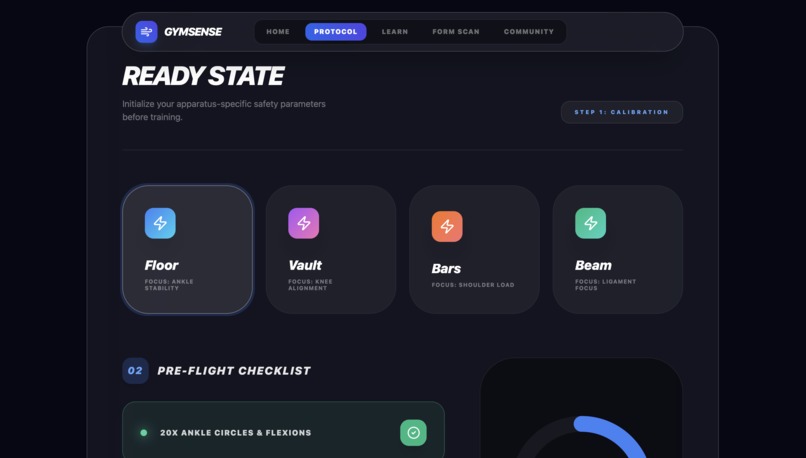
Pre-training preparation
-
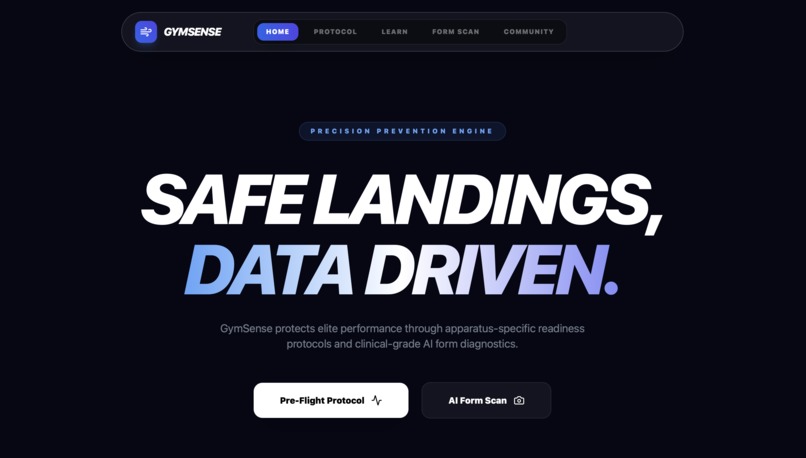
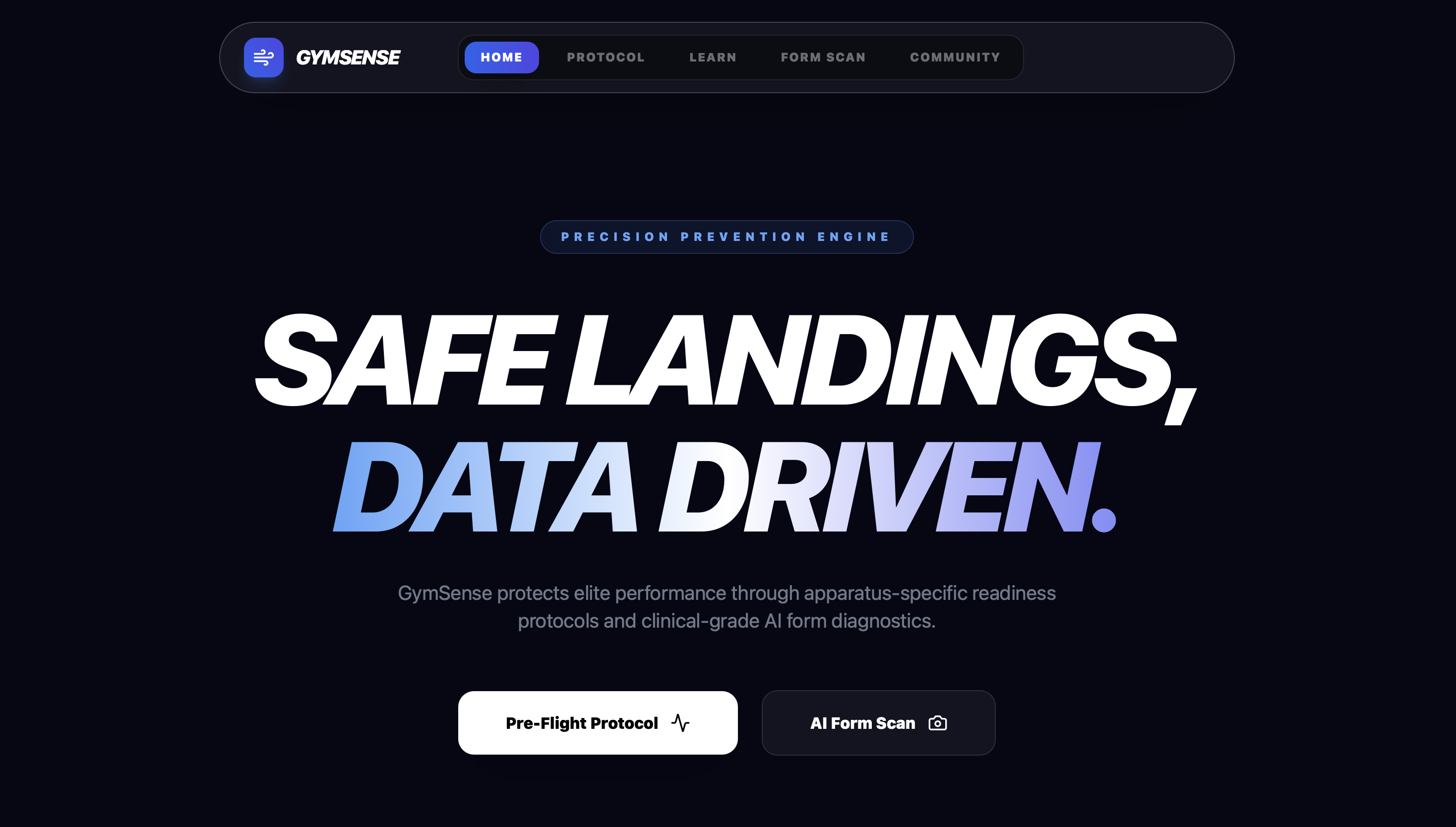
Homepage
-
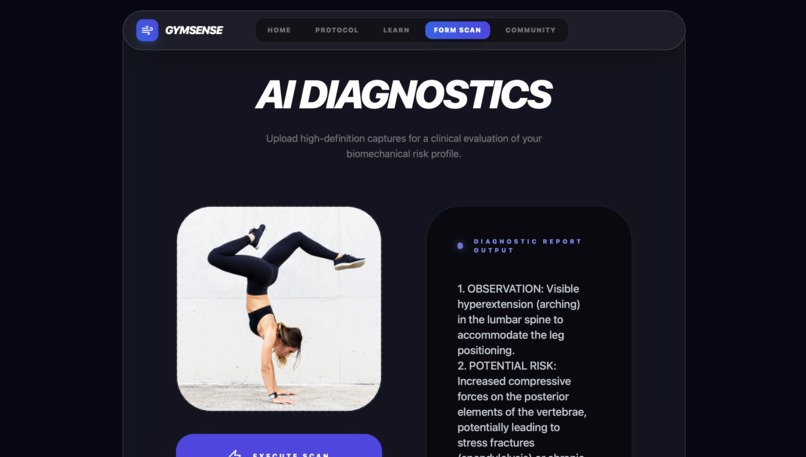
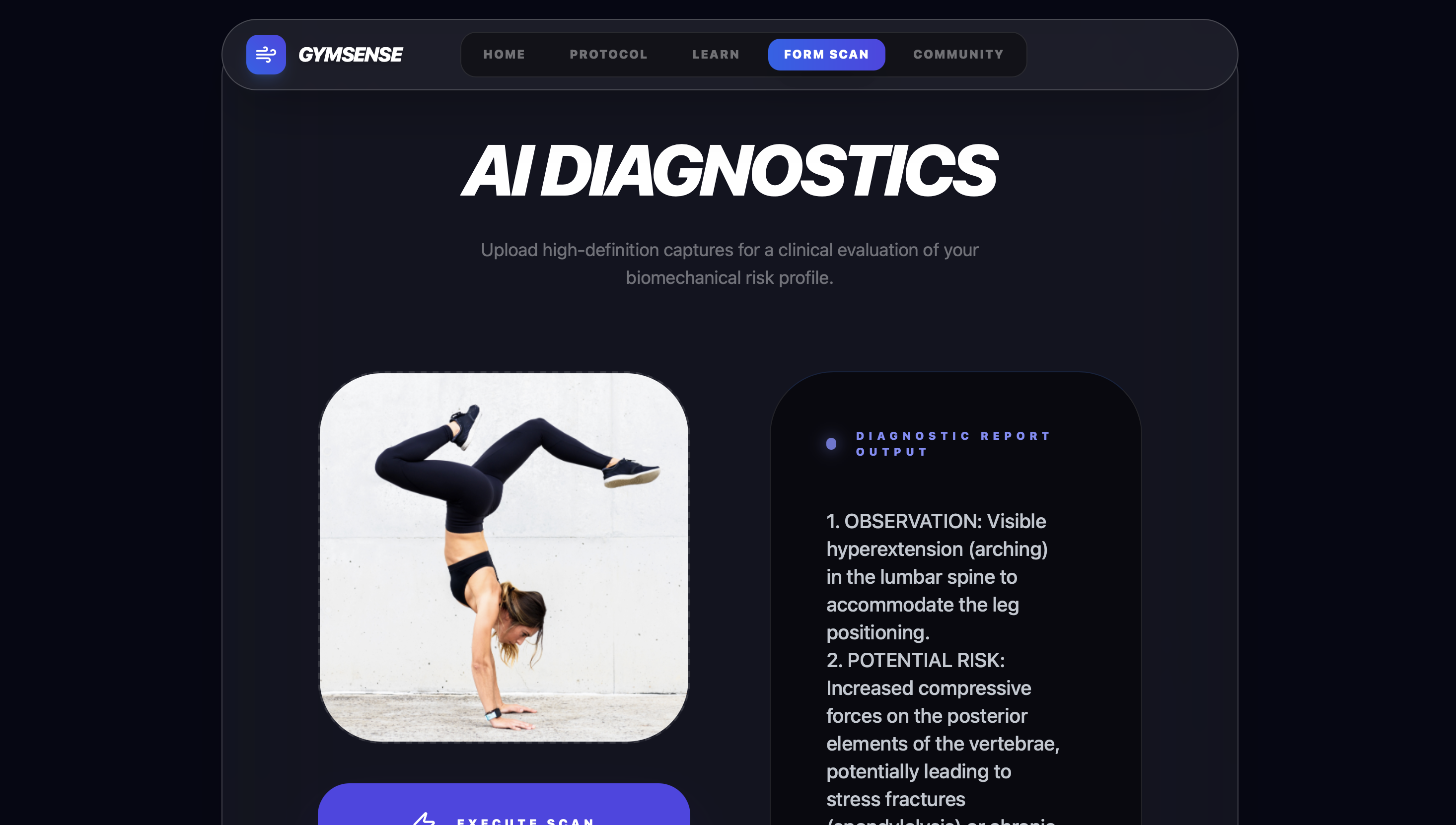
AI form analyser
Inspiration
This project is deeply personal. As a high-level gymnast who medalled at the British Championships in 2025, I have lived the reality of the sport’s physical toll. Despite the incredible athleticism required, gymnastics often suffers from a "research gap." While sports like football or basketball receive massive technical and medical investment, gymnastics, a sport where athletes frequently experience extreme forces, is often overlooked. In gymnastics, the deceleration is so rapid that the resulting force can exceed 15 times an athlete's body weight. Furthermore, with software engineering remaining a primarily male-dominated field, sports with high female participation like gymnastics rarely receive the same level of innovative software attention as more male-dominated sports. I built GymSense to change that narrative and provide my community with the tools they deserve.
What it does
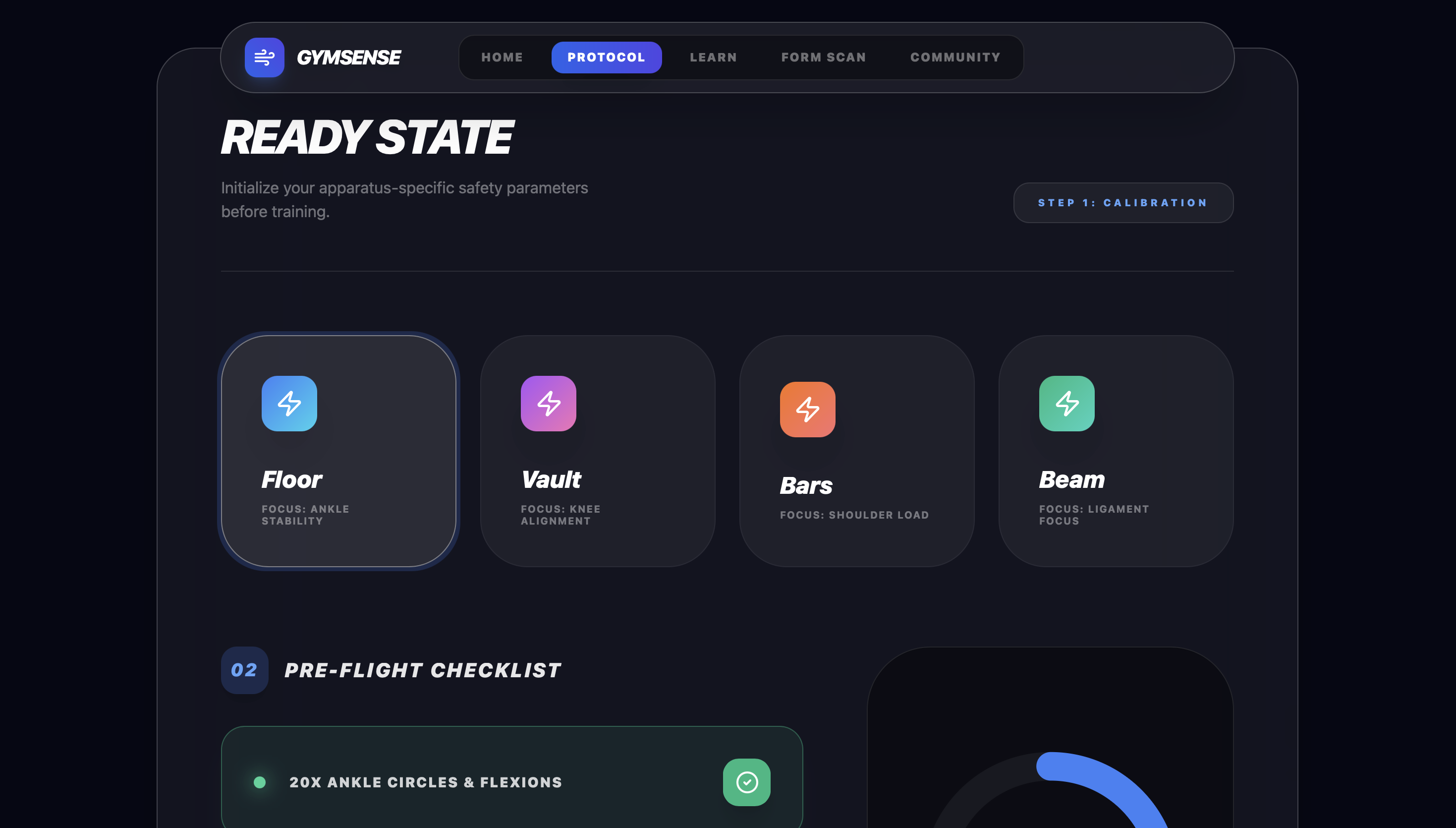
GymSense is a comprehensive injury prevention tool for gymnasts of all levels. It provides 4 main functionalities to athletes: pre-training protocol, AI form analysis, drills hub and community page. The pre-training protocol allows gymnasts to effectively prepare for each apparatus at training with 4 simple steps to warm-up and activate properly, both mentally and physically, reducing the risk of injury in the subsequent training. The AI form analysis highlights potential weaknesses in the gymnast's form, identifying future injury causes before they even happen! The tool outlines the observation, explains the potential risk, and provides a correction to reduce the risk of it developing into an injury. This tool is revolutionary and provides real-time, 100% personal injury prevention guidance. The drills hub provides simple exercises for the 2 most vital body parts for injury prevention in gymnastics: the ankles and core. These are drills gymnasts can do at home to prepare their body for the demanding training of gymnastics. The community page allows gymnasts to share tips and tricks with each other, starting an open conversation about injury prevention and encouraging gymnasts to take the lead in their own health within the sport.
How we built it
Working solo, I had to be intentional with my tech stack to ensure high performance and reliability: Frontend: Built with React 18 and Vite, using a "Liquid Glass" design system via Tailwind CSS to create a modern, professional interface. Intelligence: I integrated Google Gemini 2.5 Flash to act as a virtual coach. It analyses uploaded images to detect risks like knee valgus or spinal hyperextension that are often invisible to the untrained eye. Backend: Firebase securely handles data for the community functionality and anonymous authentication, allowing athletes to share safety tips securely. Precision UI: I used custom SVG math to build the readiness wheel, ensuring the visual feedback matched the circumference of the progress track.
Challenges we ran into
The biggest challenge was wearing every hat: developer, designer, and subject matter expert. AI Calibration: Teaching an AI to understand the nuances of a gymnastics "shape" required extensive prompt engineering to ensure the feedback was safe, clinical, and helpful. Solo Scoping: I had to prioritise features that would provide the most immediate value to a gymnast in the gym, focusing on the pre-flight protocol as the core engine.
Accomplishments that we're proud of
I am incredibly proud of successfully bridging the gap between elite athletics and computer science. Building a fully functional full-stack application that utilises Vision Language Models as a solo developer is a significant technical milestone. I’m also proud of the "Pre-Flight" concept itself, creating a system that acknowledges the massive G-forces gymnasts face and gives them a structured, data-driven way to manage that risk. As a female athlete in tech, creating a platform for a sport that is so often ignored by the wider software industry feels like a major win for representation and athlete safety.
What we learned
Technically, I mastered the art of integrating AI into a real-time React environment and learned how to use Firebase as a robust backend for data. Professionally, I learned the importance of Domain-Driven Design. My experience as a British Championship medalist allowed me to build features that a non-gymnast engineer might never think of, such as apparatus-specific joint activation. I also deepened my understanding of biomechanical physics, specifically how to translate clinical observations into AI system instructions to provide actionable cues like "neutralising the lumbar spine" rather than generic advice.
What's next for GymSense
The version built for this hackathon is just the beginning. Moving forward, I want to evolve GymSense into a comprehensive wearable-integrated platform: Sensor Integration: Incorporating IMUs (Inertial Measurement Units) to track actual G-force impact during landings in real-time. Video Frame Analysis: Implementing frame-by-frame breakdown for tumbling passes to pinpoint exactly where a technique breaks down. Coach-Athlete Portal: Expanding the Firebase backend to allow coaches to monitor the "Ready State" of their entire squad from a single dashboard.
GymSense is my contribution to a safer, more tech-forward future for the sport I love.


Log in or sign up for Devpost to join the conversation.