-
-
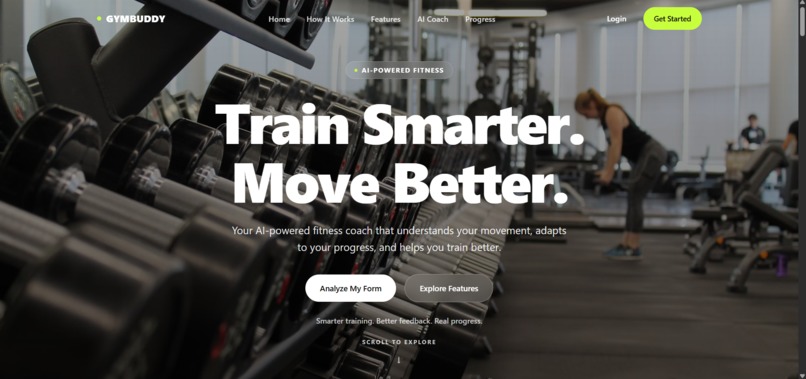
Landing Page
-
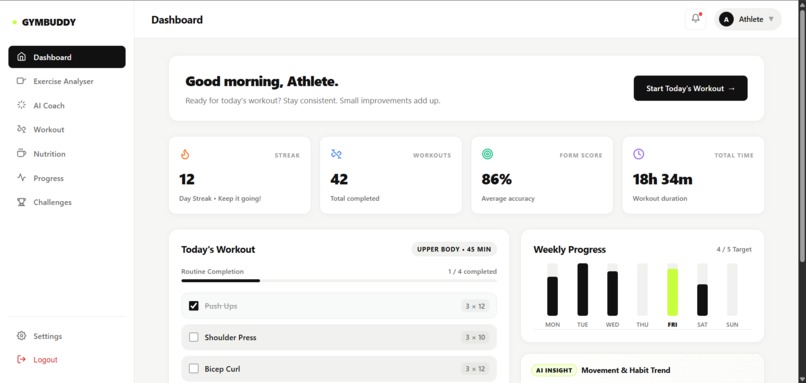
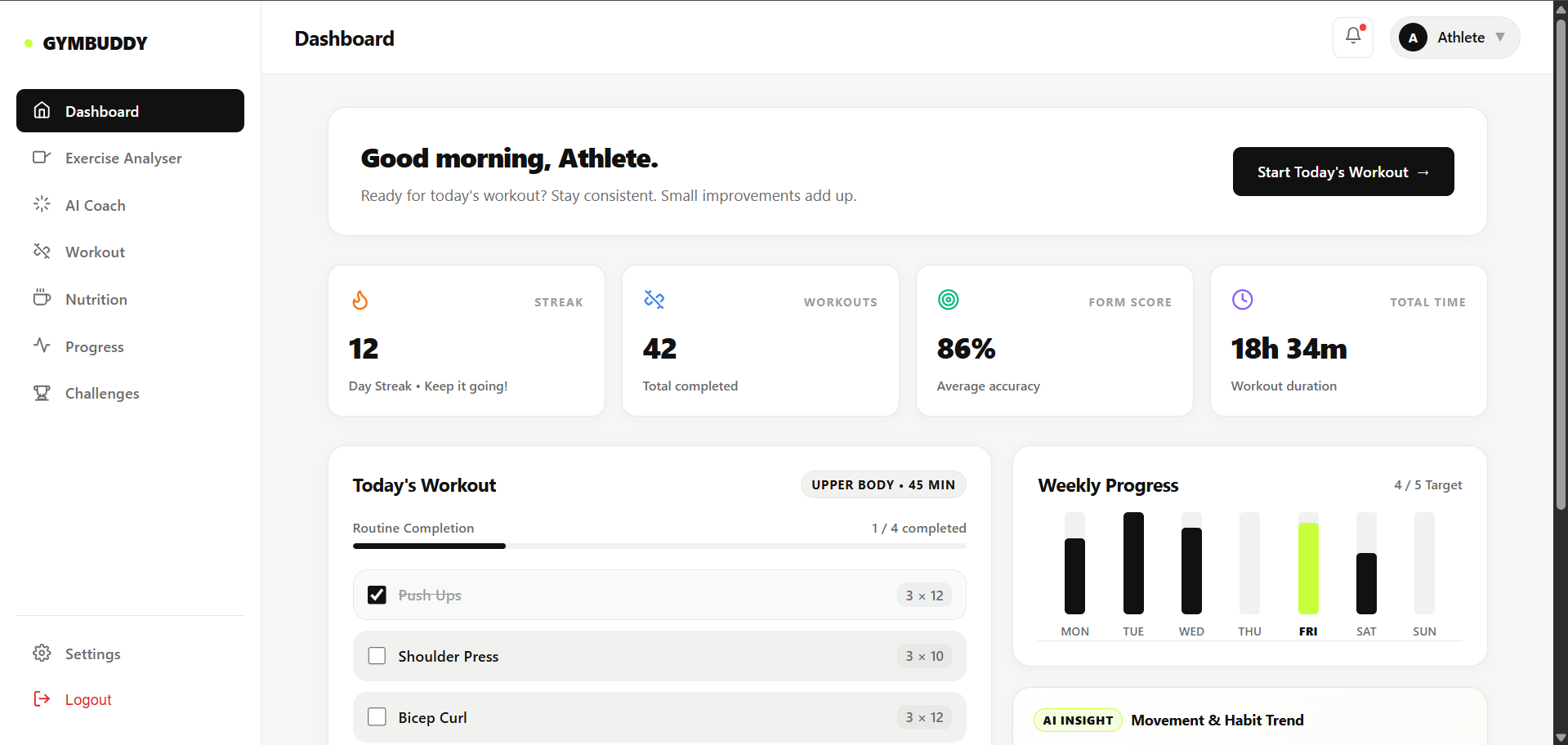
DASHBOARD
-
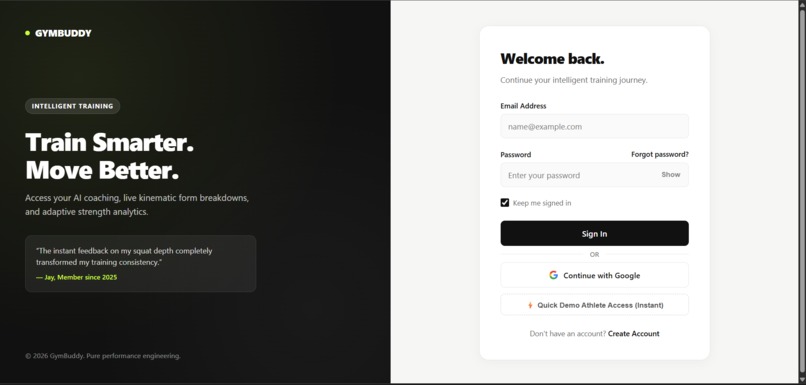
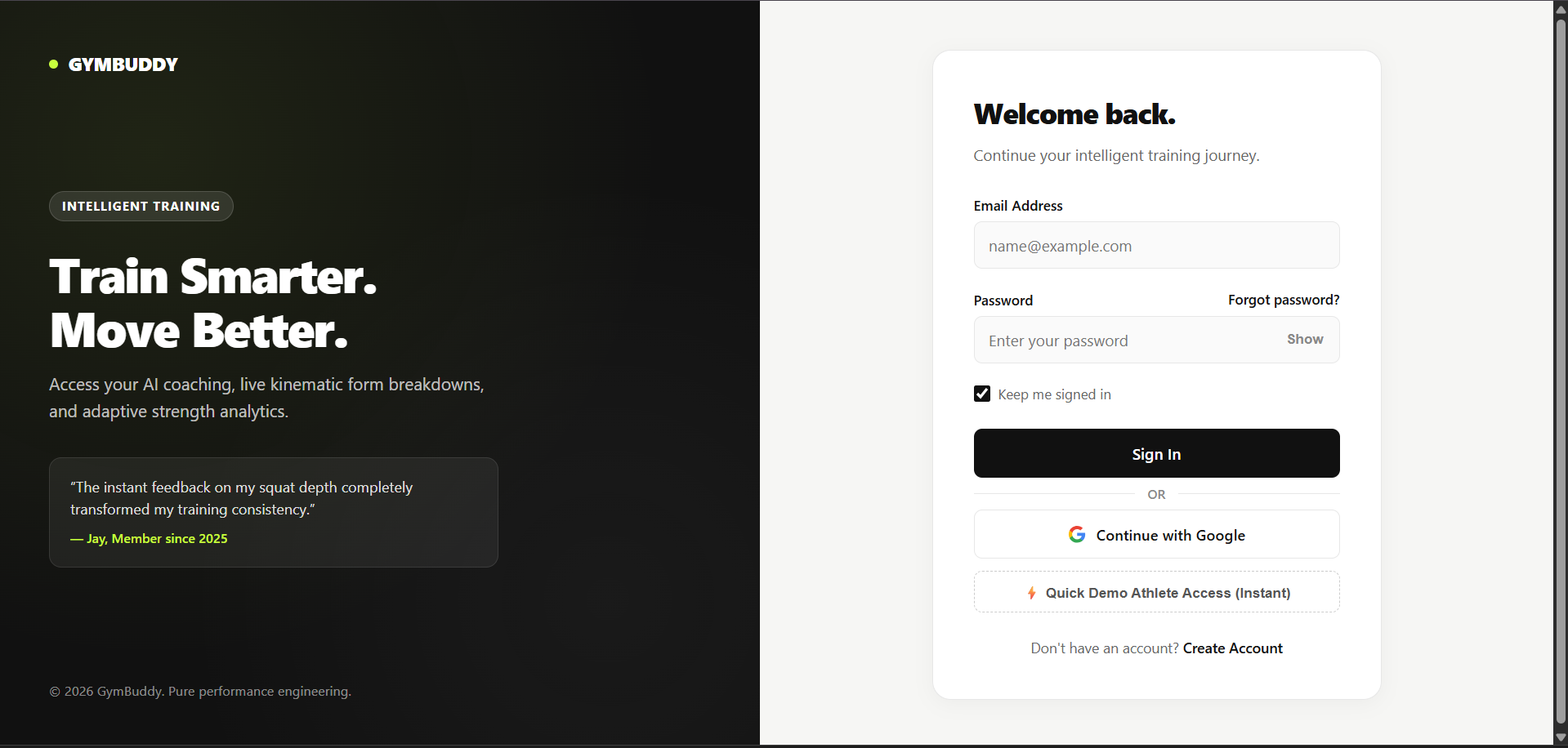
login Page
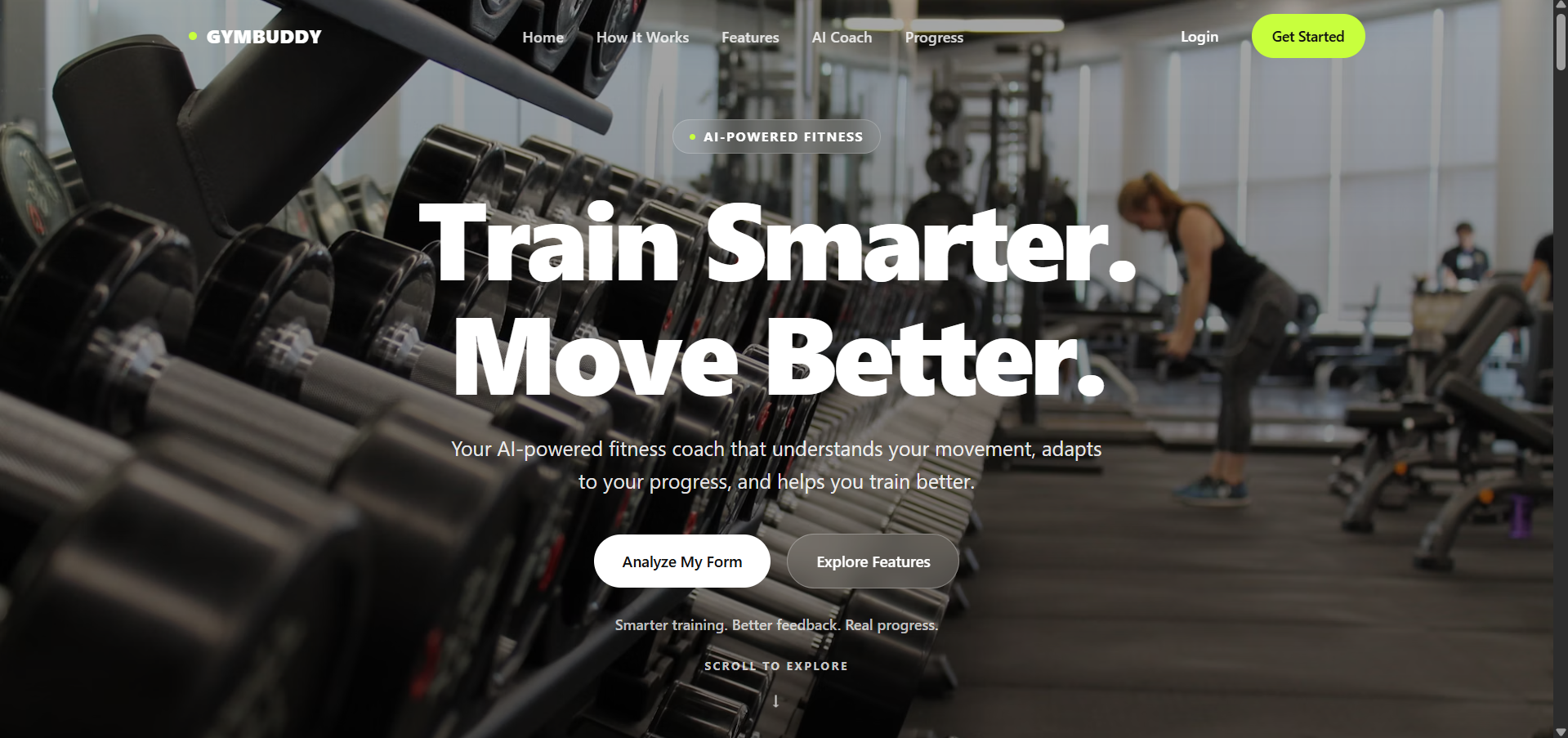
Inspiration
Fitness apps are everywhere, but many of them focus mainly on counting steps, calories, or workouts. We wanted to solve a more practical problem: people often don't know whether they are exercising correctly or how to adapt their fitness routine to their actual needs.
We were inspired by the idea of making AI feel like a personal fitness companion—one that can understand exercise form, analyze meals, guide workouts, and track progress in one place.
That led us to build GymBuddy — Your AI fitness companion for smarter workouts and better form.
What it does
GymBuddy combines AI-powered fitness analysis, personalized workouts, nutrition analysis, and progress tracking into one platform.
🎥 Exercise Analyser
Users can upload an exercise photo or video. Gemini analyzes the uploaded media and provides:
Form score Movement analysis Strengths Mistakes Improvement suggestions AI-generated report
The uploaded media is also displayed in the Live Kinematic section so users can see exactly what was analyzed.
🥗 AI Nutrition
Users can upload a photo of their meal. Gemini identifies the food and provides dynamic, AI-generated estimates for:
Calories Protein Carbohydrates Fat Fiber Detected foods Nutrition insights 🏋️ Workout Sessions
Users can follow interactive workouts, track sets and repetitions, complete exercises, and use a built-in rest timer between sets.
🤖 AI Coach
GymBuddy provides an AI fitness assistant that can answer fitness questions and provide personalized guidance based on the user's goals and activity.
📊 Progress
The application tracks real user activity such as workouts, form scores, streaks, and other fitness metrics to visualize improvement.
🏆 Challenges
Users can participate in fitness challenges and track their progress toward different goals.
The platform also includes Firebase authentication, Google Sign-In, personalized profiles, and user-specific data storage.
How we built it
We built GymBuddy as a full-stack web application using:
HTML5, CSS3 & JavaScript for the frontend Firebase Authentication for secure user authentication Firebase Firestore for storing user profiles, workouts, nutrition data, analyses, and progress Firebase Storage for user-uploaded media Google Gemini API for exercise analysis, nutrition analysis, AI coaching, and personalized insights Node.js / Express.js for the backend API layer Render for deployment
We designed the application around a simple workflow:
User → Upload/Input → AI Processing → Structured Result → Firebase → Personalized Dashboard
A major focus was making the AI features feel like real product functionality rather than simply displaying an AI response.
Challenges we ran into
One of our biggest challenges was connecting AI capabilities to real user workflows.
For example, in the Exercise Analyser, we needed to make sure the user's uploaded photo or video was successfully processed before showing the AI report. We also wanted the exact uploaded media to remain visible in the Live Kinematic section.
The Nutrition feature presented another challenge. We initially had to ensure that nutritional values were not static or hardcoded. The final implementation dynamically displays the values generated from the user's actual uploaded meal.
We also faced challenges around:
Firebase authentication and user sessions Google Sign-In Secure file uploads Connecting Gemini with the backend Storing user-specific data Handling loading and error states Protecting private user data Deploying the application on Render Making the application responsive across devices Accomplishments that we're proud of
We're proud that GymBuddy evolved from an idea into a fully functional AI fitness platform.
Some highlights we're particularly proud of:
Built a working AI-powered Exercise Analyser Integrated real photo/video uploads Added AI-generated exercise feedback Created the Live Kinematic media preview Built working AI meal analysis Added dynamic nutrition information instead of hardcoded values Built interactive workout sessions Added a rest timer between workout sets Implemented Firebase authentication and Google Sign-In Created personalized user profiles Connected user activity to Firebase Built progress and challenge tracking Successfully deployed the application
Most importantly, we created a single platform where exercise, nutrition, coaching, and progress work together instead of existing as disconnected features.
What we learned
This project taught us that building an AI application is not just about integrating an API.
We learned how to turn AI capabilities into meaningful user experiences.
We learned about:
Gemini API integration AI-powered image and video workflows Prompt engineering Firebase Authentication Firestore data modeling Firebase Storage Secure API architecture Frontend-backend communication Asynchronous file processing Error and loading-state management Responsive web development Deployment and debugging on Render
One of our biggest lessons was that the quality of an AI application depends heavily on the workflow around the AI, not just the AI model itself.
What's next for GymBuddy
GymBuddy is just the beginning.
Our next goal is to make the platform even more intelligent and personalized.
We plan to explore:
Real-time exercise feedback Automatic rep counting More advanced movement/pose analysis Personalized adaptive workout plans Voice-based AI coaching Wearable and fitness-device integration More detailed nutrition tracking Personalized weekly AI fitness reports Advanced progress analytics Smarter exercise recommendations based on available equipment Improved AI-based form comparison over time
Ultimately, we want GymBuddy to evolve from an AI fitness application into a personal fitness companion that understands the user's journey and continuously adapts to it
Built With
- ai
- api
- authentication
- css3
- express.js
- firebase
- firestore
- gemini
- html5
- javascript
- node.js
- rest
- storage
- studio

Log in or sign up for Devpost to join the conversation.