Inspiration
Around 30% of seniors aged 65 and older live alone, placing them at significantly higher risk for unnoticed falls, medical emergencies, and missed medication. Many incidents go unreported for hours simply because no one is there to help, and caregivers cannot provide constant monitoring. We wanted to address this gap by creating a companion robot that could physically stay close to seniors, keep them safe, respond in emergencies, and give families peace of mind. That motivation led to the creation of Gyde, a device meant to serve as both a guardian and a daily companion.
What it does
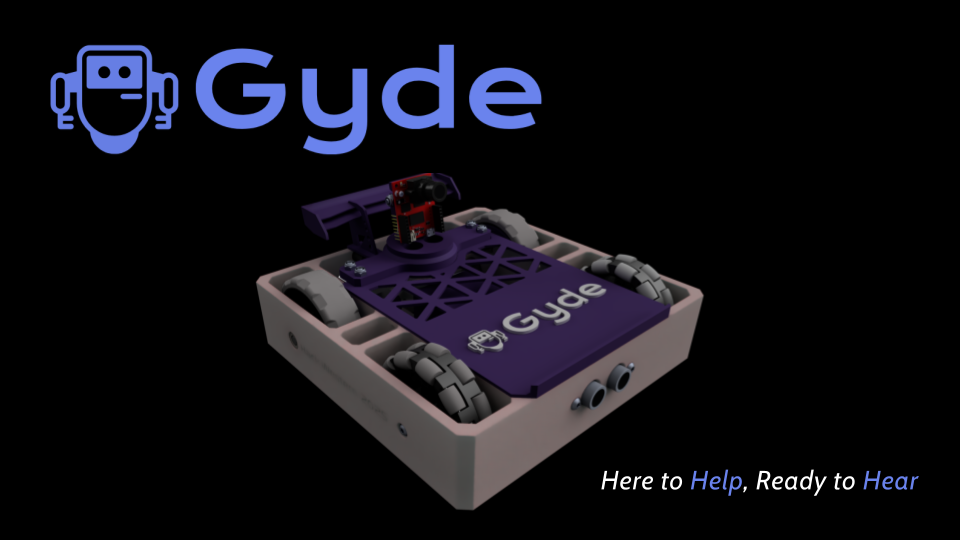
Gyde is an AI mobile companion robot designed to provide continuous support, tracking, and safety for older adults. It autonomously follows a person while maintaining a safe distance, detects falls or sudden inactivity, and immediately calls emergency contacts when necessary. An agent automatically phones a loved one when a crisis is detected.
On a day-to-day, Gyde also understands natural voice commands, allowing seniors to simply speak to it as they would to a virtual assistant. Users can say “call my son,” “start following,” or “remind me in an hour to take my medication,” and an agent processes it instantly, offering intuitive control without needing screens or buttons.
By dramatically reducing the time between emergencies and assistance—from potentially hours to seconds—Gyde provides a new level of security and companionship for seniors living independently.
How we built it
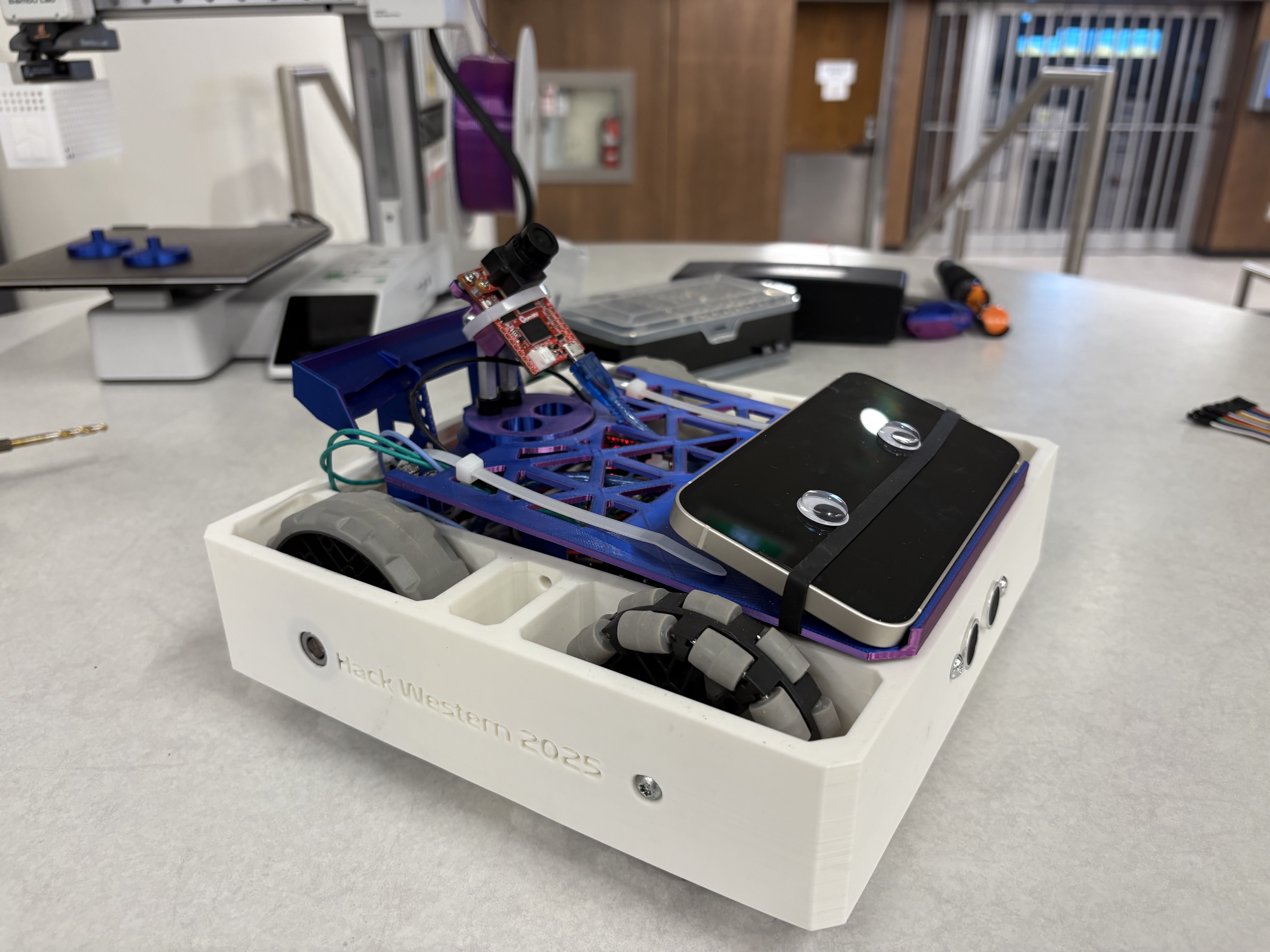
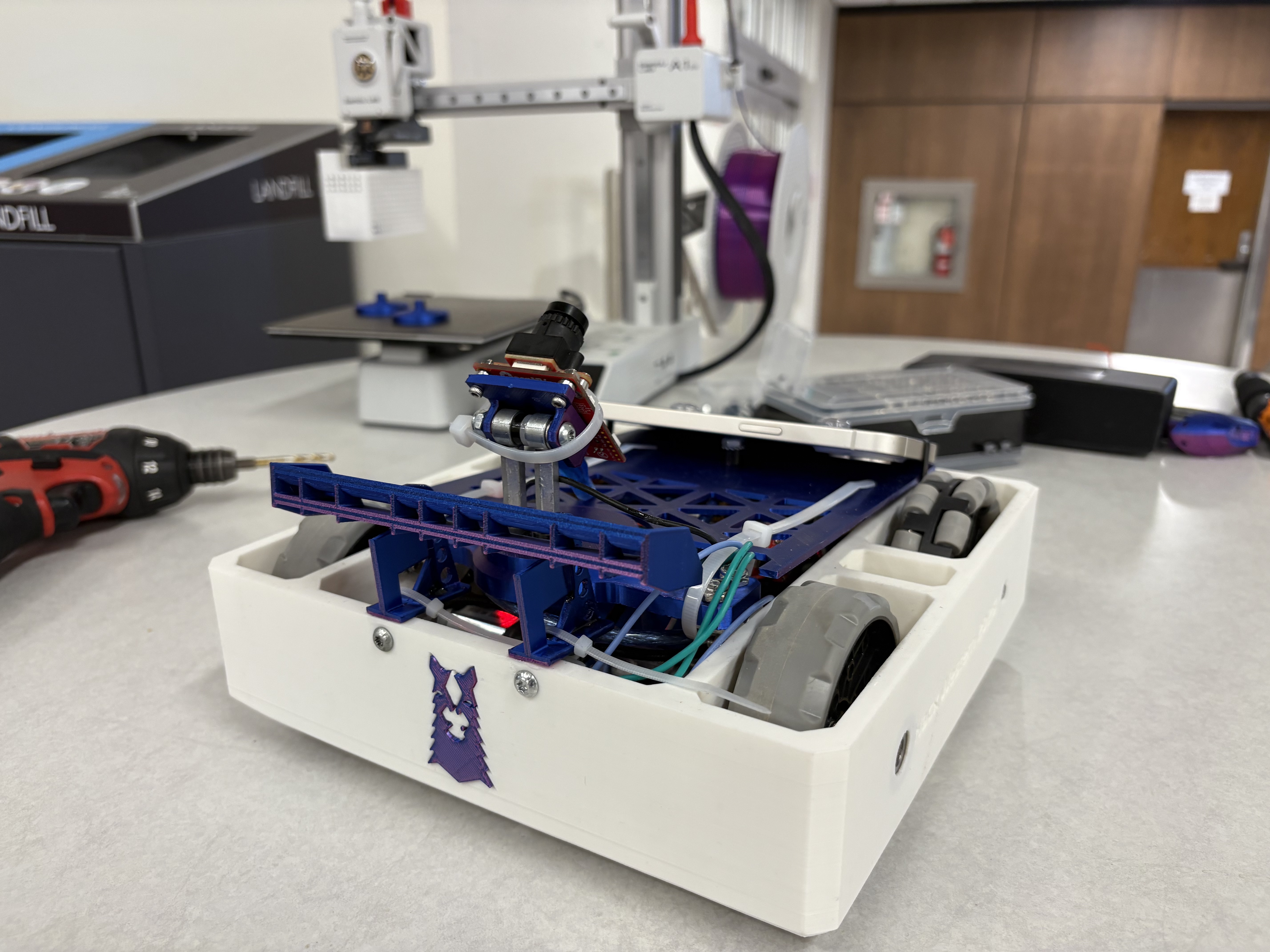
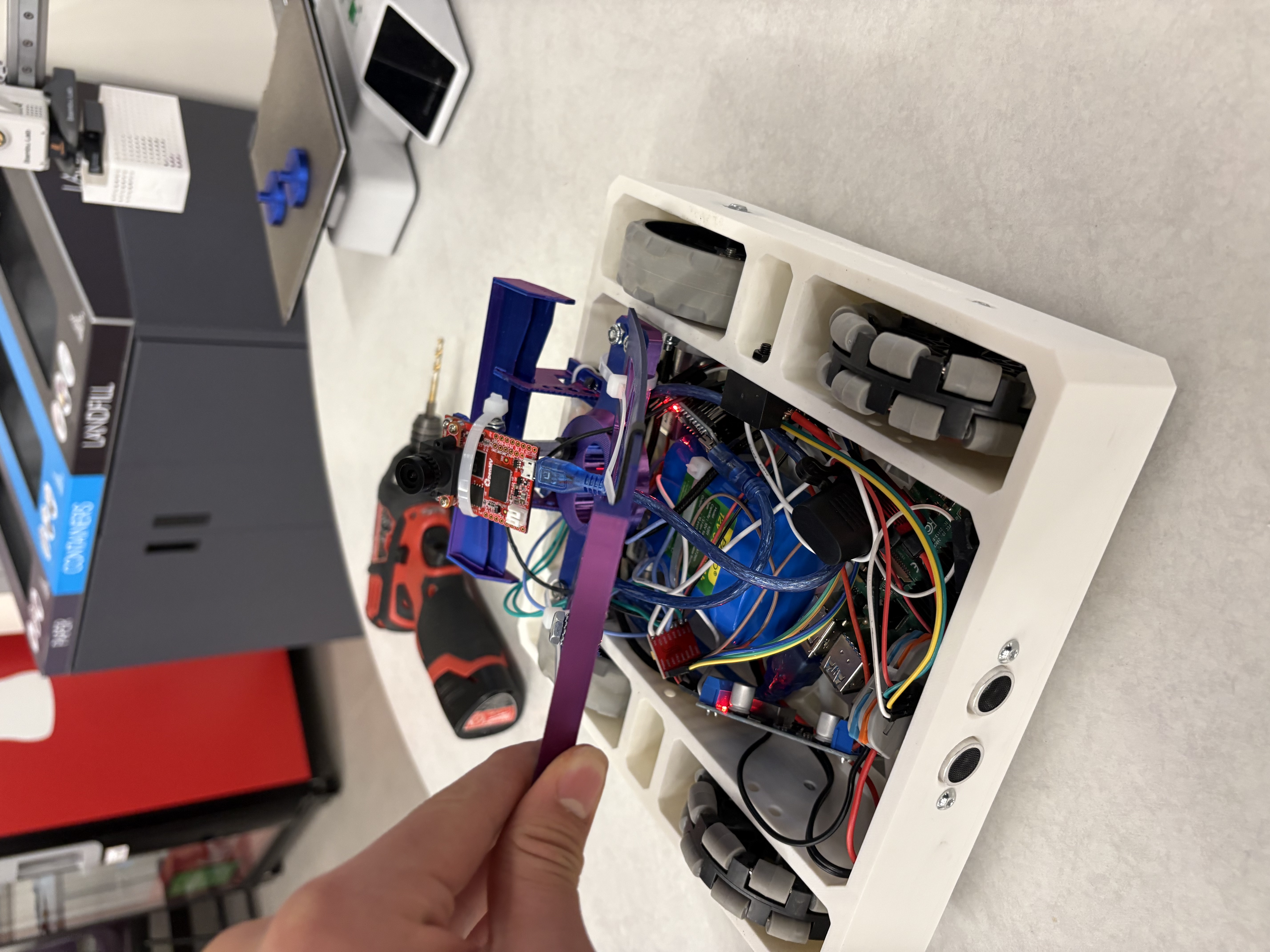
The robot’s chassis is a custom 3D-printed frame mounted on a 12V dual-motor drivetrain. Ultrasonic sensors constantly measure distance to ensure Gyde never gets too close or too far from the user, preventing collisions and maintaining a consistent follow range. An OpenMV camera handles person detection, depth estimation, and heading adjustments, sending positional data to a Raspberry Pi responsible for navigation and decision-making. The Pi runs a PID controller to fine-tune Gyde’s movement, with commands executed by an Arduino Nano that controls the motors. Meanwhile, a smartphone supplies the microphone and speaker necessary for natural-language interaction. On the software side, OpenMV not only tracks the user but also monitors for falls or medical emergencies. When such an event is detected, the Raspberry Pi processes the input and automatically triggers an appropriate action—such as calling a loved one. At the same time, the phone streams audio and is processed by an LLM to be capable of interpreting spoken commands, including activating and deactivating the robot and calling through Twilio; this gives users effortless control over Gyde’s behavior.
Challenges and what we learned
One major challenge was working within the limited computing power of the Raspberry Pi and OpenMV camera. Because we wanted to preserve user privacy, cloud processing was not an option: meaning all vision and inference had to run locally. Without access to accelerators, our frame rate dropped significantly, making person-tracking too slow to provide stable feedback for our PID controller. The delayed feedback caused overshooting and inconsistent movement. To address this, we optimized the entire pipeline by offloading heavier models to the Raspberry Pi 4, using the OpenMV for lightweight detection, and creating a hybrid processing flow that maximized the strengths of both devices. This allowed us to achieve reliable, fully local pose estimation with response times fast enough for smooth tracking. Solving this taught us the importance of efficient pipeline design and carefully planning how computational resources are allocated.
Accomplishments that we're proud of
We’re especially proud that Gyde successfully tracks a person in real time, maintains safe distance automatically, and detects emergencies accurately. Creating a fully mobile companion robot with synchronized perception, navigation, and conversational intelligence was a major milestone. We’re also proud of implementing autonomous emergency calling, which enables Gyde to autonomously contact a loved one when something goes wrong—a feature that has real potential to save lives. This project was rewarding being able to bridge numerous systems together.
What's next for Gyde
Next, we want to develop a custom mobile app that allows family members to monitor Gyde remotely, receive real-time alerts, and view emergency summaries. We also plan to add more advanced fall-detection models, improved obstacle-avoidance intelligence, and extended battery life for all-day operation. Longer term, we hope to integrate features like medication-dispensing and location-based reminders. Our goal is to continue refining Gyde into a fully featured, trustworthy companion that empowers seniors to live safely and independently.
Built With
- 3dprinting
- agent
- arduino
- opencv
- openmv
- pid
- purepursuit
- raspberrypi
- twilio
- ultrasonic


Log in or sign up for Devpost to join the conversation.